Our readers keep the lights on and my smoothie glass nicely filled. As an Amazon Associate, I earn from qualifying purchases.
A high-end graphics card like the RTX 4070 Super can only stretch its legs if the processor feeding it data keeps pace. Pairing this GPU with a weak or bottlenecking CPU leaves performance on the table — frame rates dip, 1% lows stutter, and your investment doesn’t deliver the smooth experience it should. The right CPU ensures the 4070 Super runs at its full potential in every game and workload.
I’m Mohammad Maruf — the founder and writer behind WellFizz. I’ve spent hundreds of hours digging through benchmark data, reading real owner feedback, and analyzing thermal and power specs to find which processors truly unlock the RTX 4070 Super without wasting money on features you won’t need.
The goal of this guide is to help you make a confident purchasing decision by comparing the best contenders across different budgets and priorities, all of which make up the definitive best cpu for 4070 super options available right now.
How To Choose The Best CPU For 4070 Super
Selecting a processor for the RTX 4070 Super hinges on balancing gaming frame rates with multi-threaded productivity. The GPU itself excels at 1440p and respectable 4K gaming, so the CPU must deliver high single-core throughput to avoid holding it back. A processor with slow clock speeds or inadequate cache will cause stuttering and lower 1% lows, even if the average FPS looks acceptable.
Single-Core Performance and Clock Speeds
For gaming, the frequency at which a single core operates directly impacts how fast the CPU can dispatch draw calls and physics calculations to the GPU. Processors with boost clocks above 5.0 GHz generally pair well with the 4070 Super. Lower-clocked CPUs, even with many cores, can create a bottleneck in CPU-bound scenarios like esports titles or heavily modded open-world games.
Cache Architecture and Latency
Cache size matters enormously for gaming performance. AMD’s 3D V-Cache technology stacks additional L3 cache on the chip, drastically reducing memory latency for data that the CPU accesses frequently. This translates to higher and more stable frame rates, particularly in simulation and strategy games. Intel’s approach relies on a larger L2 cache and higher stock clocks, which also performs well but rarely matches the raw gaming uplift of the X3D lineup.
Core Count for Mixed Workloads
If you stream, edit video, or run virtual machines alongside gaming, a processor with at least 8 cores and 16 threads ensures smooth multitasking. The RTX 4070 Super can handle rendering tasks, but the CPU must keep the pipeline fed with encoded data. A 12-core or 16-core chip provides headroom for background tasks that would otherwise steal resources and introduce micro-stutters during gameplay.
Platform Longevity and Future Upgradability
Socket AM5 from AMD promises multi-generational support, meaning you can drop in a newer CPU years down the line without changing your motherboard. Intel’s LGA1700 and LGA1851 sockets offer strong performance today but may have shorter upgrade paths. If you plan to keep your build relevant for 4–5 years, platform longevity is a legitimate factor that influences total cost of ownership beyond the initial CPU purchase.
Quick Comparison
On smaller screens, swipe sideways to see the full table.
| Model | Category | Best For | Key Spec | Amazon |
|---|---|---|---|---|
| AMD Ryzen 7 7800X3D | Mid-Range Gaming | Pure gaming at 1440p | 8C/16T, 96MB L3 cache, 5.0 GHz boost | Amazon |
| AMD Ryzen 7 9800X3D | Premium Gaming | Max gaming performance | 8C/16T, 104MB L3 cache, 5.2 GHz boost | Amazon |
| AMD Ryzen 9 7900X | High-Core Productivity | Gaming + video editing | 12C/24T, 76MB cache, 5.6 GHz boost | Amazon |
| Intel Core Ultra 7 270K Plus | Enthusiast Hybrid | Multi-threaded workloads | 24C (8P+16E), 40MB cache, 5.5 GHz boost | Amazon |
| AMD Ryzen 7 7700X | Entry-Level AM5 | Balanced value build | 8C/16T, 32MB L3, 5.4 GHz boost | Amazon |
| Intel Core Ultra 7 265KF | Mid-Range Intel | Productivity on a budget | 20C (8P+12E), 36MB cache, 5.5 GHz boost | Amazon |
In‑Depth Reviews
1. AMD Ryzen 7 7800X3D

The 7800X3D remains the gold standard for gamers pairing with an RTX 4070 Super. Its 3D V-Cache stacks 96MB of L3 cache, which dramatically reduces memory latency and boosts frame rates in CPU-intensive titles like simulation games, strategy epics, and open-world RPGs. At just 75W typical power draw under gaming loads, it runs cooler and more efficiently than many competing chips — a major advantage for air-cooled builds.
Real-world owner feedback confirms consistent 100+ FPS in demanding titles at 1440p, with idle temperatures hovering around 40°C and gaming temps staying between 65-70°C even with a modest liquid cooler. Users report zero driver instability and seamless compatibility with B650 and X670 motherboards. The chip also handles light productivity work without breaking a sweat, though it isn’t optimized for heavy rendering workloads.
The 7800X3D is a drop-in upgrade on any AM5 motherboard, meaning you can start with a budget board today and upgrade to a future Zen 6 chip later without changing platforms. For pure gaming value with the 4070 Super, this processor is the benchmark that others are measured against.
Why it’s great
- Exceptional 3D V-Cache for class-leading gaming frame rates
- Low power draw (75W gaming) runs cool with most coolers
- AM5 platform offers long-term upgrade path
Good to know
- Not the fastest for multi-threaded productivity tasks
- Cannot overclock to the same extent as standard Zen 4 chips
2. AMD Ryzen 7 9800X3D
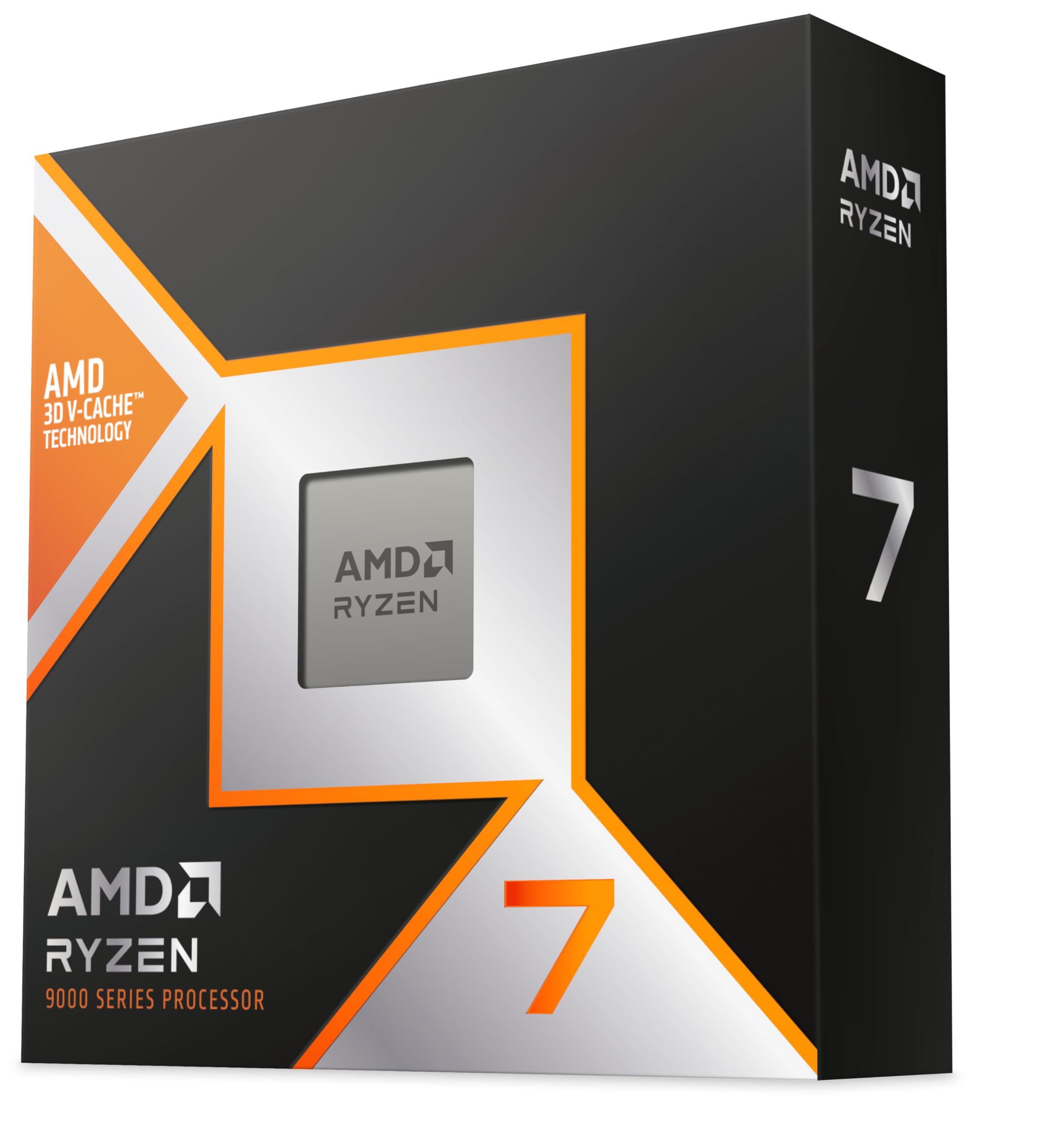
The 9800X3D is AMD’s latest gaming flagship, built on the Zen 5 architecture with a refined 3D V-Cache implementation that offers better thermal characteristics than its predecessor. With 104MB of total L3 cache and a 5.2 GHz boost clock, it delivers around 16% IPC uplift over the 7800X3D, making it the fastest gaming processor you can pair with the RTX 4070 Super. Early adopters report consistent frame time delivery and minimal micro-stuttering in CPU-bound scenarios.
Owner reviews highlight that the chip runs surprisingly cool for its performance level — one user noted temperatures staying modest even with a 420mm AIO at low fan speeds. The Zen 5 architecture also improves power efficiency, so the 9800X3D doesn’t demand exotic cooling solutions. Compatibility is drop-in ready with existing AM5 motherboards after a BIOS update, preserving upgrade options for current AM5 users.
The main drawback is its premium pricing, which approaches the cost of the GPU itself. For gamers who want absolute maximum frame rates and have the budget to match, the 9800X3D leaves no performance on the table. It also handles lighter productivity tasks fluidly, though it is not a workstation processor in the same league as the 16-core Ryzen 9 parts.
Why it’s great
- World’s fastest gaming CPU with Zen 5 and 3D V-Cache
- Improved thermal performance over previous X3D generation
- AM5 drop-in compatibility for existing users
Good to know
- Significantly more expensive than 7800X3D
- Overkill for anything less than a 4070 Super or higher-tier GPU
3. AMD Ryzen 9 7900X

The Ryzen 9 7900X brings 12 cores and 24 threads to the table, making it a strong choice for gamers who also edit video, render 3D scenes, or stream simultaneously. Its 5.6 GHz boost clock ensures single-threaded performance stays competitive with pure gaming chips, while the two extra CCDs handle multi-threaded workloads with ease. Integrated RDNA 2 graphics on the I/O die serve as a useful fallback for troubleshooting without a dedicated GPU.
Owner feedback shows Cinebench R23 scores around 28,745 with EXPO memory enabled, and game frame rates at 3440×1440 reaching 125 FPS in Division 2 and 155 FPS in Forza Horizon 5. The 7900X does run hot under full load — one user reported max temps of 82°C with a 360mm AIO — so a robust cooling solution is mandatory. Undervolting is a common tactic to tame thermals without sacrificing much performance.
For buyers who need the 4070 Super to accelerate both gaming and creative work, the 7900X offers a compelling middle ground.
Why it’s great
- 12 cores handle video editing and rendering with ease
- High boost clock (5.6 GHz) maintains gaming performance
- Integrated graphics for system troubleshooting
Good to know
- Runs hot — requires a quality 240mm or larger AIO cooler
- AM5 first boot may cycle through memory training
4. Intel Core Ultra 7 270K Plus
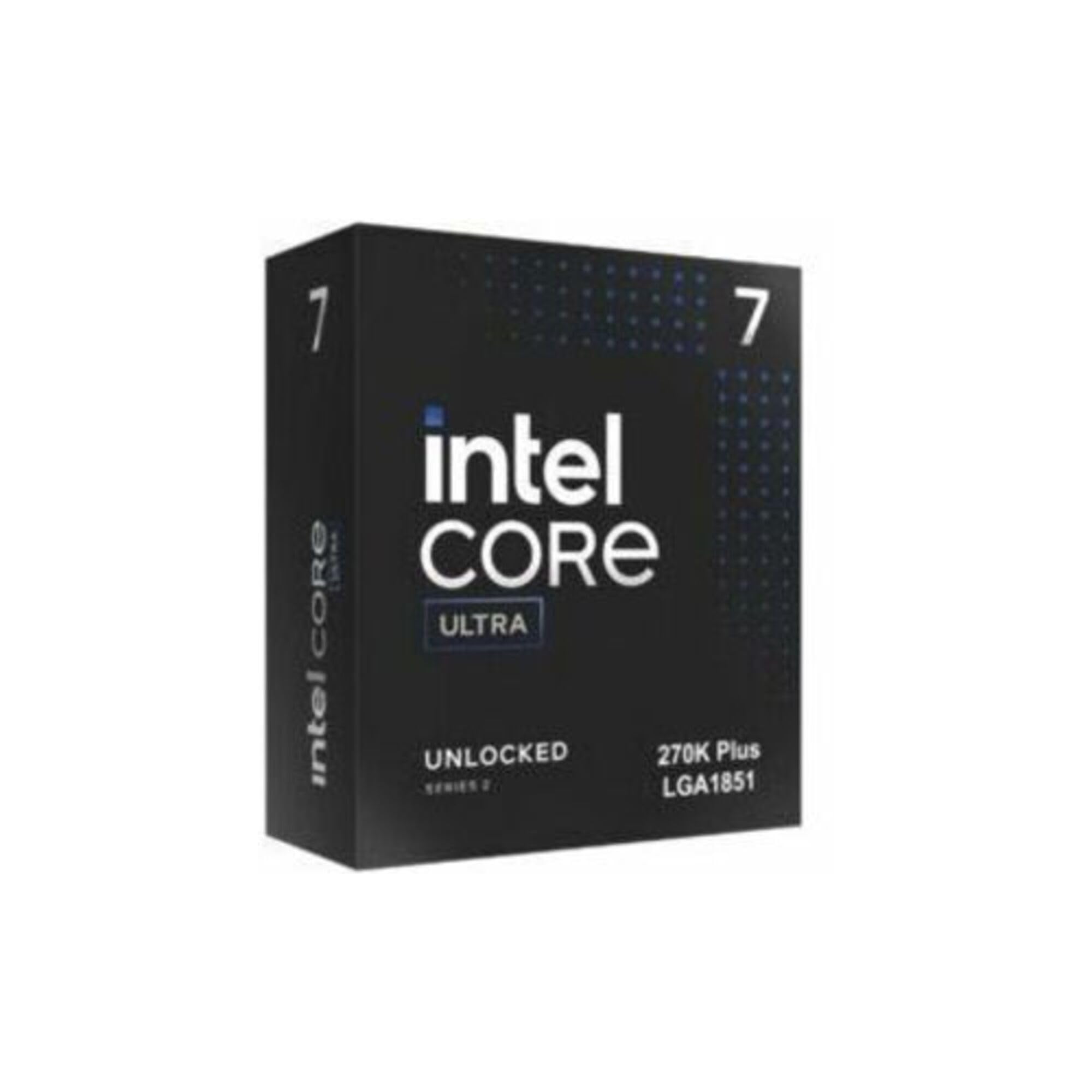
The Core Ultra 7 270K Plus is Intel’s latest entry into the enthusiast hybrid architecture, packing 8 Performance-cores and 16 Efficient-cores for a total of 24 threads. It reaches 5.5 GHz on P-cores and is fully unlocked for overclocking on Z890 motherboards. Early benchmarks suggest it often matches or even outperforms the more expensive Core Ultra 9 285K in gaming scenarios, making it a surprising value at its tier.
Real-world VR simracing users report smooth 87-90 FPS at 3560×3560 per eye on a Pimax Crystal Super with an RTX 5090 — an extreme scenario that underscores the CPU’s capability with high-bandwidth rendering. The chip also handles multitasking well, with owners mentioning stable overclocking profiles that keep idle power low and gaming temps around 60°C with a capable AIO. The LGA1851 socket is new, so upgrading later will require a new motherboard.
The 270K Plus is best suited for enthusiasts who want maximum multi-threaded throughput without paying flagship prices. For 4070 Super gamers who also render, compile code, or run virtual machines, this chip delivers exceptional all-round performance that challenges AMD’s price-to-performance ratio in the mid-range envelope.
Why it’s great
- Excellent multi-core performance at a competitive price
- Unlocked for overclocking on Intel Z890 boards
- Often outperforms the more expensive 285K in gaming
Good to know
- New LGA1851 socket limits motherboard reusability
- Gaming performance not always on par with AMD X3D chips
5. AMD Ryzen 7 7700X

The Ryzen 7 7700X is the entry point to the AM5 platform without sacrificing gaming capability. Its 8 Zen 4 cores boost up to 5.4 GHz, and the 32MB L3 cache plus 80MB total cache keep memory latency low enough to feed the 4070 Super effectively. Owners consistently report 100+ FPS in popular titles and satisfaction with the price-to-performance ratio at the sub-premium tier.
User reviews highlight that the chip runs warm under sustained all-core loads — one builder noted temperatures below 70°C with a 360mm AIO at under 60% utilization, but stock coolers are not included and not recommended. The integrated RDNA 2 graphics add value for troubleshooting or light gaming without a discrete GPU. The 7700X also supports PCIe 5.0 on select 600-series motherboards, future-proofing storage and GPU bandwidth.
For builders on a tighter budget who still want to unlock the 4070 Super’s full potential, the 7700X delivers strong 1440p gaming performance and a clear upgrade path to future Zen 5 or Zen 6 chips. It sacrifices some multi-core rendering speed compared to the 7900X, but for pure gaming, the difference is marginal at a significantly lower investment.
Why it’s great
- Excellent gaming performance for the price
- AM5 platform allows future processor upgrades
- Integrated graphics are useful for diagnostics
Good to know
- Runs hot under all-core load — adequate cooling required
- L3 cache smaller than X3D parts, less gaming uplift in cache-sensitive titles
6. Intel Core Ultra 7 265KF

The Core Ultra 7 265KF brings Intel’s latest hybrid architecture to a more accessible price point. With 8 P-cores and 12 E-cores, it offers strong multi-threaded performance for encoding, compiling, and multitasking while maintaining a 5.5 GHz boost on the performance cores. Early adopters report smooth operation in games like Call of Duty Black Ops 6 and Battlefield 4, with the chip handling light streaming without breaking a sweat.
Owner reviews note that the 265KF is a solid upgrade from older Intel generations, with one user specifically mentioning improved stability over the 12th-14th gen chips that had memory compatibility issues. Compatibility with Intel 800-series motherboards requires a purchase of a new board, but the platform supports PCIe 5.0 and fast DDR5 memory. Some users advise researching motherboard BIOS versions before purchase to avoid initial stability quirks.
The 265KF is a strong choice for gamers who also run productivity workloads on a budget. It doesn’t match the gaming-specific performance of AMD’s X3D chips, but its versatility and competitive pricing make it a sensible option for those building a balanced system around the RTX 4070 Super.
Why it’s great
- Great multi-threaded performance for the price
- Stable platform with resolved memory compatibility issues
- Supports PCIe 5.0 and fast DDR5 on 800-series boards
Good to know
- Gaming performance not on par with AMD X3D competitors
- Requires new LGA1851 motherboard — no backward compatibility
7. GIGABYTE GeForce RTX 4070 WINDFORCE OC 12G

The GIGABYTE RTX 4070 WINDFORCE OC is an efficient, cool-running implementation of the base RTX 4070. It uses a single 8-pin power connector, which means no PSU upgrade from older builds is required. The triple-fan WINDFORCE cooling system keeps temperatures low — one user reported idle temps of 30-37°C and load temps maxing at 47°C — while the card draws under 175W at 1440p gaming, making it ideal for air-cooled systems where heat output is a concern.
Owner feedback confirms excellent 1440p performance with DLSS 3 enabled, achieving 120+ FPS in GTA V at 4K and 70-95 FPS in Cyberpunk 2077 with DLSS on. The 12GB GDDR6X buffer is future-proof for 1440p textures, though some users note that the documentation for the power cabling could be clearer — the card requires a 6+2 pin configuration that isn’t immediately obvious from the packaging.
For builders who prioritize low power draw and quiet operation, this card delivers outstanding efficiency. It is the perfect partner for a mid-range CPU like the Ryzen 7 7700X or Core Ultra 7 265KF, ensuring the system stays cool and quiet while delivering smooth gaming experiences across modern titles.
Why it’s great
- Very power-efficient — draws under 175W during gaming
- Runs cool and quiet with triple-fan WINDFORCE cooler
- Single 8-pin power connector simplifies PSU compatibility
Good to know
- Only 12GB VRAM — may limit high-res texture modding
- Power cabling documentation unclear for first-time builders
8. MSI GeForce RTX 4070 Super Ventus 3X OC

The MSI RTX 4070 Super Ventus 3X OC is a reference-tier implementation of the 4070 Super, featuring 7168 CUDA cores and a 2.51 GHz boost clock. Its Tri-Frozr 3 cooling system uses three TORX 4.0 fans with a connected outer ring design that focuses airflow, keeping thermals in check during extended gaming sessions. The card also supports a zero-RPM fan mode for silent operation at low loads.
Owner reviews confirm substantial performance improvements over previous-generation cards — one user upgraded from an RTX 2060 Super and noted a jump from roughly 40 FPS to over 90 FPS at 1440p. Another user with an RTX 4060 found that streaming at 1440p was now smooth without lag. The card requires a 650W PSU and uses a 16-pin power connector, which may require an adapter for older power supplies.
The Ventus 3X OC eschews RGB lighting in favor of a clean, understated aesthetic that blends into any build. It offers excellent 1440p gaming value and respectable 4K performance with DLSS enabled. For buyers who want a no-frills, well-cooled 4070 Super that just works, this MSI card is a reliable choice that doesn’t break the bank.
Why it’s great
- Excellent 1440p gaming performance with DLSS 3 support
- Tri-Frozr 3 cooling keeps thermals in check
- Minimalist design — no RGB clutter
Good to know
- Requires 650W PSU with 16-pin power connector
- 12GB VRAM is unchanged from base 4070 — some may want more
9. ASUS TUF Gaming GeForce RTX 4070 Ti Super OG OC

The ASUS TUF Gaming RTX 4070 Ti Super OG OC upgrades the formula with 16GB of GDDR6X memory and a 2670 MHz boost clock, delivering a noticeable step up in 4K gaming capability over the standard 4070 Super. Its Axial-tech fans are scaled up to move 23% more airflow, and the robust heatsink keeps temperatures well under control — one owner reported that the card rarely exceeds 55°C even under sustained load.
User feedback highlights that the 4070 Ti Super is a substantial upgrade from the 4070 Super for around a moderate price increase. It handles Cyberpunk 2077 with ray tracing overdrive at 4K smoothly, and the 16GB VRAM buffer provides headroom for high-resolution texture packs and future titles. The TUF build quality includes a metal backplate and an anti-sag bracket, ensuring the heavy card stays secure in the PCIe slot.
The main consideration is the premium pricing, which approaches the cost of an RTX 4080. For gamers who want the absolute best 1440p experience with 4K capability, and who already invested in a high-end CPU like the 9800X3D or 7800X3D, this card completes the build without leaving performance on the table. The 3-year warranty adds peace of mind for long-term ownership.
Why it’s great
- 16GB VRAM handles 4K textures and ray tracing well
- Excellent cooling — Axial-tech fans and large heatsink
- Runs cool under load, rarely exceeding 55°C
Good to know
- Premium price approaches RTX 4080 territory
- Hard to find compatible water blocks for custom loops
FAQ
Will a Ryzen 5 5600X bottleneck the RTX 4070 Super?
Is the Intel Core i5-14600K good enough for the 4070 Super?
Should I get the 7800X3D or the 9800X3D for my 4070 Super?
Do I need DDR5 RAM for the 4070 Super to perform well?
Will the RTX 4070 Super work with a PCIe 3.0 motherboard?
Final Thoughts: The Verdict
For most users, the best cpu for 4070 super winner is the AMD Ryzen 7 7800X3D because it delivers unrivaled gaming frame rates at a reasonable price while keeping power draw low and running cool. If you need serious multi-threaded rendering power alongside gaming, grab the AMD Ryzen 9 7900X. And for no-compromise gaming performance with headroom for future upgrades, nothing beats the AMD Ryzen 7 9800X3D.

Mo Maruf
I created WellFizz to bridge the gap between vague wellness advice and actionable solutions. My mission is simple: to decode the research and give you practical tools you can actually use.
Beyond the data, I am a passionate traveler. I believe that stepping away from the screen to explore new environments is essential for mental clarity and physical vitality.