Our readers keep the lights on and my smoothie glass nicely filled. As an Amazon Associate, I earn from qualifying purchases.
Driving a 5/8-inch bit into a cured concrete foundation tests a tool’s true character. Standard drills bounce and stall, but a proper corded hammer drill delivers the impact energy needed to make short work of masonry, block, and slab. The right choice here determines whether you finish a project in hours or spend a day fighting kickback and burnt bits.
I’m Mohammad Maruf — the founder and writer behind WellFizz. This guide is built from weeks of cross-referencing motor amperage, impact energy ratings, chuck systems, and real-world user data from hundreds of verified projects, from setting anchor bolts to chipping tile.
Whether you are a professional contractor or a determined DIYer, finding the best corded hammer drill requires balancing power, weight, and durability against your specific job demands.
How To Choose The Best Corded Hammer Drill
Selecting the right corded hammer drill goes beyond simply picking the highest amp number. You need to match the tool’s impact mechanism, chuck system, and ergonomic features to the hardness and volume of the material you plan to drill.
Standard Hammer Drill vs. SDS Rotary Hammer
A standard corded hammer drill uses a mechanical clutch that vibrates the chuck laterally. This design works for occasional drilling into brick or light concrete with standard round shank bits. An SDS-plus rotary hammer uses a piston-driven mechanism that delivers true impact energy directly through the bit. For repeated holes in reinforced concrete, stone, or for chipping applications, the SDS rotary hammer is significantly faster and transmits less vibration to your hands.
Motor Power and Impact Energy
Amperage gives you a general idea of motor strength, but the critical metric for masonry is impact energy, measured in foot-pounds or joules. A unit rated at 2.6 ft-lbs of impact energy will drill through a 5,000 PSI concrete slab while a 7-amp unit with only mechanical hammer action will struggle. Evaluate the concrete drilling diameter spec — measured in inches — as this directly tells you the largest hole the tool can reasonably produce.
Chuck System and Bit Compatibility
Standard 1/2-inch keyed or keyless chucks accept round-shank masonry bits but can slip under heavy load. SDS-plus chucks lock the bit securely with a push-and-twist motion, providing better energy transfer and faster bit changes. Some SDS models include a keyless adapter for standard bits, giving you a dual-function tool for drilling into wood and metal as well.
Ergonomics and Safety Features
An overload clutch disengages the drive when the bit binds, protecting your wrist from sudden torque reaction. A 360-degree auxiliary handle gives you secure two-handed control in any drilling angle. Active vibration control in the grip area reduces hand fatigue during extended use. For overhead drilling, prioritize a unit weighing under 8 pounds.
Quick Comparison
On smaller screens, swipe sideways to see the full table.
| Model | Category | Best For | Key Spec | Amazon |
|---|---|---|---|---|
| Bosch RH328VC | Rotary Hammer | Professional concrete drilling | 2.6 ft-lbs impact energy | Amazon |
| Berserker 26FA | SDS Rotary | Budget-friendly rotary power | 4.5 Joules of impact energy | Amazon |
| DEWALT DW130V | Spade Handle | Heavy mixing and drilling | 9 Amp motor | Amazon |
| Bosch 1191VSRK | Compact Hammer | Light masonry and home use | 4.1 pounds weight | Amazon |
| DEWALT DW511 | Standard Hammer | Mid-range versatility | 1.5 inch wood capacity | Amazon |
| Makita HP1640 | Standard Hammer | Ergonomic brick drilling | 6 Amp motor | Amazon |
| Makita DHR241Z | Cordless SDS | Job site portability | 21 torque settings | Amazon |
In‑Depth Reviews
1. Bosch RH328VC SDS-plus Rotary Hammer

The Bosch RH328VC is a serious piece of equipment for anyone who drills concrete professionally. Its 8.0-amp motor churns out a genuine 2.6 ft-lbs of impact energy, which means a 1/2-inch hole through 5,000 PSI concrete with rebar takes roughly 15 seconds, not ten minutes. The active vibration control in the mechanism and grip keeps hands fresh even when you are drilling a dozen anchors for a rack system.
The three-mode selector offers rotation only, rotary hammer, and hammer only, making this a viable tool for light chipping and tile removal. The Vario-Lock feature lets you rotate the chisel bit to 12 different positions, which is critical for demolition work. An integral clutch minimizes torque reaction when the bit catches rebar or a void, protecting your wrist from sudden jerks.
The 360-degree auxiliary handle and depth gauge give you total control, and the SDS-plus bit system locks bits in without a chuck key. Some users noted the rubber cushion on the chuck can show wear after heavy use, but the overall build quality supports years of job-site work. This tool runs cool even during extended drilling sessions and comes with a durable carrying case.
Why it’s great
- Industry-leading vibration reduction
- Genuine 2.6 ft-lbs impact energy for reinforced concrete
- Three operating modes plus Vario-Lock chisel positioning
Good to know
- Requires SDS-plus bits or an adapter for standard shanks
- Heavier than a compact hammer drill
2. Berserker 26FA SDS-Plus Rotary Hammer
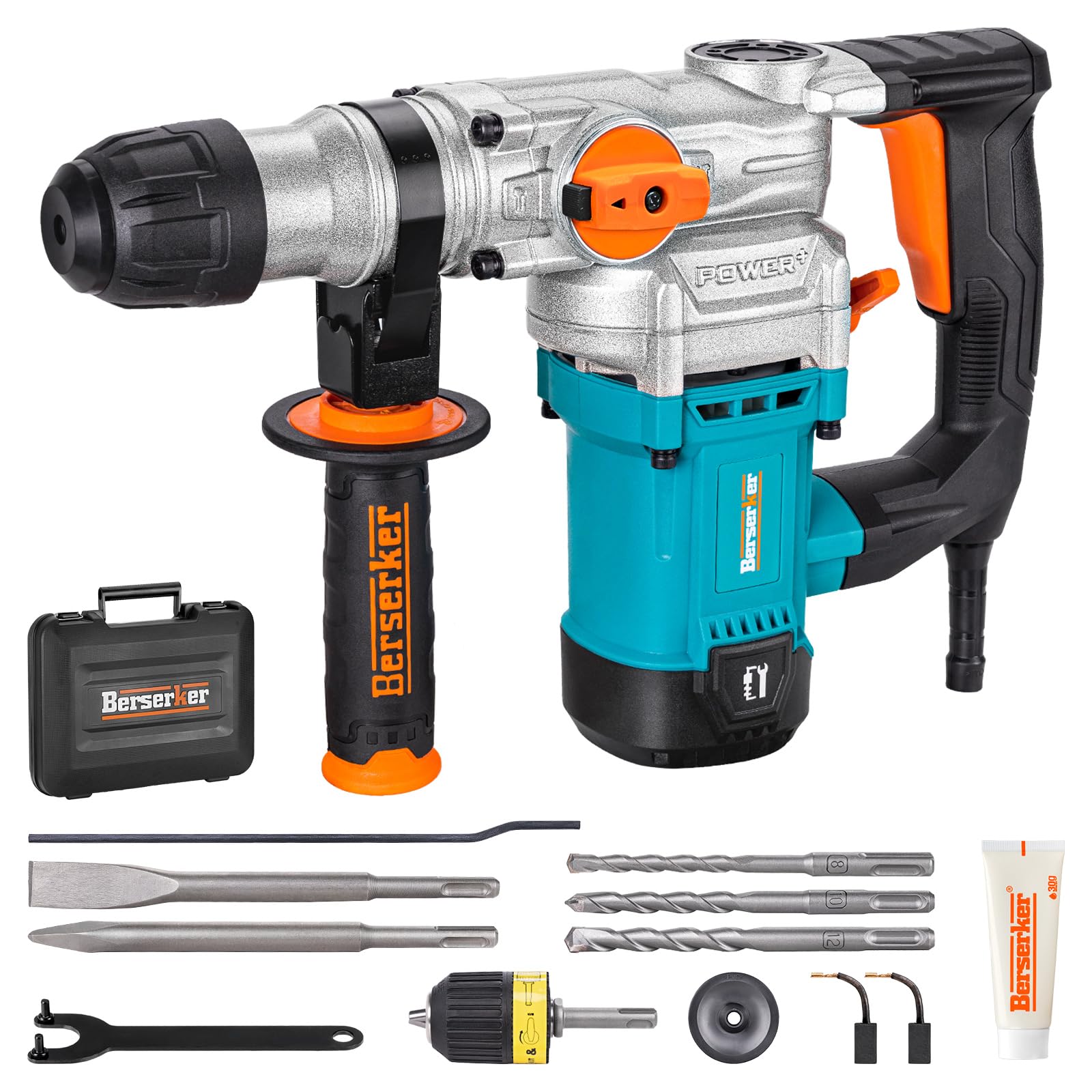
The Berserker 26FA delivers 4.5 Joules of impact energy from its 1,050-watt motor, positioning it as a serious budget-friendly rotary hammer that doesn’t cut corners on raw cutting force. Users have successfully drilled 5/8-inch holes 2.5 inches deep into high-PSI concrete, and the tool handled 16 holes in ten minutes without stalling. The three-mode operation — rotation only, hammer with rotation, and hammer only — makes it a dual-purpose unit for both drilling and tile chipping.
The 360-degree adjustable side handle provides comfortable two-handed control, and the overload clutch engages when the bit snags, preventing wrist injury. The aluminum alloy housing adds durability; one reviewer noted the tool survived a fall onto concrete without damage. The package includes three SDS-plus bits, two chisels, a keyless 1/2-inch adapter for standard bits, and a carrying case, giving you a complete kit out of the box.
At 9.5 pounds, it is on the heavier side for overhead work, but the weight aids downward pressure during concrete drilling. Some users reported the mode selector markings on the drill-only setting lack clear indicators, and the unit benefits from periodic greasing of the mechanism. The 24-month warranty offers peace of mind for a cost-effective investment in real rotary power.
Why it’s great
- High impact energy at a budget-friendly tier
- Includes adapter for standard drill bits
- Comprehensive accessory kit included
Good to know
- Requires periodic greasing for best performance
- Heavy for extended overhead drilling
3. DEWALT DW130V Spade Handle Drill

The DEWALT DW130V is a spade-handle drill built for high-torque applications like mixing thinset, concrete, and drywall mud, as well as drilling large-diameter holes. Its 9-amp motor delivers power at a low 0-550 RPM, trading speed for exceptional twisting force. One user reported mixing 60 five-gallon buckets of concrete for a fence project without any signs of motor strain, highlighting its reliability under heavy loads.
The variable speed reversing switch offers fine control when starting a bit or mixing batch materials. At 7.5 pounds, it is lighter than many purpose-built mixers but still provides enough heft to stay planted in the material. A three-position side handle and a two-position rear handle let you adjust your grip for different tasks, from overhead drilling to two-handed mixing.
This is not a standard hammer drill, so it lacks a mechanical hammering action for concrete. However, its torque profile makes it a solid companion for drilling large holes in wood and metal, and it doubles as a dedicated mixing tool. The 3.8-pound shipping weight in the specs is likely an error; the actual operating weight is listed as 7.5 pounds. This is a specialized tool for users who need mixing performance in a portable format.
Why it’s great
- High torque for mixing and large-diameter drilling
- Adjustable front and rear handles for ergonomic control
- Durable motor with overload protection
Good to know
- No hammer action for masonry drilling
- Low RPM range limits fast drilling in wood
4. Bosch 1191VSRK Hammer Drill

The Bosch 1191VSRK weighs only 4.1 pounds, making it one of the lightest corded hammer drills on the market. This weight does not come at the cost of capability — a 7-amp motor delivers enough punch for 1/2-inch holes in poured concrete for anchor bolts. Users consistently report that it punches above its weight, drilling through masonry, metal, and wood with dependable control and without overheating under moderate use.
The 360-degree auxiliary handle and built-in quick-release depth gauge offer a full range of movement and accurate drilling depth. The two-mode selector switches easily between rotation-only and hammer-drill modes. This machine is designed for small-diameter applications around the home or light commercial work, where maneuverability into tight spaces matters more than raw impact energy.
This model uses a standard 1/2-inch chuck rather than an SDS system, so it is best suited for round-shank bits. The included carrying case, chuck key, and depth gauge make it a complete, ready-to-go kit. For a contractor needing a backup drill or a homeowner drilling a few dozen holes into brick, this Bosch delivers a high performance-to-weight ratio that reduces fatigue.
Why it’s great
- Exceptionally lightweight for a corded hammer drill
- Compact design fits into tight drilling spaces
- Performance-to-weight ratio is top of its class
Good to know
- Standard chuck limits bit compatibility with SDS systems
- 7-amp motor is not meant for heavy rebar concrete
5. DEWALT DW511 Hammer Drill
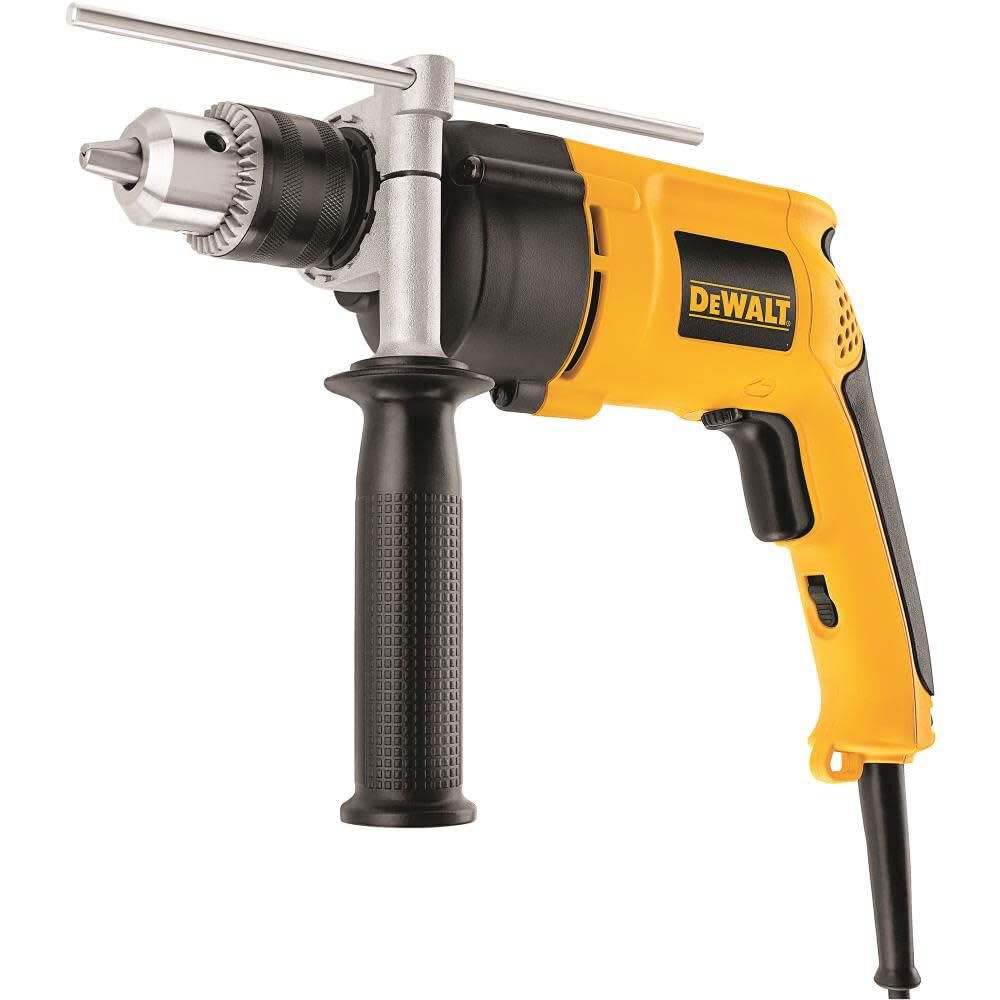
The DEWALT DW511 balances power and weight at 7.8 amps and 4.3 pounds, making it a versatile option for a range of materials from wood to brick. Its dual-mode selector switches between standard drilling and hammer drilling, and the variable speed trigger allows precise control when starting a hole on a slick tile surface. Users drilling into block foundations found it completed the job quickly and competently without the need for a more expensive rotary hammer.
The 360-degree side handle with a depth rod provides increased control and depth accuracy, and the lightweight design reduces user fatigue during longer sessions. One review noted this drill outperformed weaker battery-powered units and a single-direction drill when boring 50 holes into a tough stump in five minutes, though the motor emitted a burning oil smell initially. The chuck key attaches to the cord, preventing loss.
This is a mid-range hammer drill that fills the gap between a basic corded drill and a dedicated SDS rotary unit. It handles 1/2-inch holes in brick and light concrete effectively, but heavy usage with large masonry bits can cause overheating. For the DIYer who occasionally needs to drill into foundation walls or set anchors, this DeWalt provides reliable performance at a reasonable tier.
Why it’s great
- Lightweight and easy to handle for extended use
- Variable speed trigger for precise bit starting
- Proven reliability for brick and block drilling
Good to know
- Can overheat with heavy masonry bits
- Not designed for concrete drilling with rebar
6. Makita HP1640 Hammer Drill

The Makita HP1640 is a traditional hammer drill with a 6-amp motor that excels at drilling into brick and concrete block for home applications. The rubberized soft grip handle reduces hand fatigue compared to hard plastic designs, and users report no hand numbness or overheating after drilling for five continuous minutes. A 2-foot bit showed no wobble when the chuck was tightened evenly around the bit, indicating good concentricity.
The dual-mode operation swaps between rotation only and hammering with rotation, and the variable speed trigger helps when centering a bit. The large, keyed chuck comes with a key that is hard to misplace, a small but tangible convenience. This model drills up to 5/8-inch in concrete and 1-3/16 inches in wood, which covers most anchor bolt and cable pass-through needs.
This is a pure corded tool — no battery to fade — and the carbon brushes are designed for extended service life. It lacks an overload clutch and active vibration control, so it is not the best choice for all-day overhead work or drilling into poured concrete foundations. For the homeowner drilling into brick for shelving or mounting a TV, it offers a comfortable, reliable experience at a mid-range tier.
Why it’s great
- Ergonomic rubberized grip reduces vibration fatigue
- Good drilling performance for brick and block
- Stable chuck with no wobble on long bits
Good to know
- No overload clutch for bind protection
- 6-amp motor is on the lower end for concrete
7. Makita DHR241Z Cordless Hammer Drill

The Makita DHR241Z is a cordless SDS-plus hammer drill that provides cord-free convenience for job sites where power outlets are scarce or climbing extension cords is a hazard. Its 18-volt motor delivers enough power to penetrate stucco, light concrete, and masonry for inspections and light mounting. Users switching from corded rotary hammers to this unit note that the lack of a cord is genuinely liberating in confined spaces like attics or crawl spaces.
The 21 torque settings and drill mode give you precise control over fastening and drilling into softer materials. A single-handle keyless chuck makes bit changes fast, and the dual LED lights illuminate the drill point in dim areas. At 7.3 pounds with a battery, it is heavier than a compact corded drill but still manageable for one-handed use in short bursts.
This is a bare-tool purchase — the battery and charger are sold separately, so factor that into your overall cost if you do not already own Makita 18V LTX batteries. It lacks the impact energy of a corded rotary hammer, so it will not replace a tool like the Bosch RH328VC for thick reinforced concrete. For tradespeople who already invest in the Makita platform, this tool pays for itself quickly by eliminating cord management.
Why it’s great
- Full cordless freedom for remote job sites
- Dual LED lights for working in low visibility
- Compact size fits into tight work spaces
Good to know
- Battery and charger not included
- Not a replacement for high-power corded SDS hammers
FAQ
Can I use a standard masonry bit in an SDS-plus rotary hammer?
What is the difference between a hammer drill and a rotary hammer?
How much impact energy do I need for drilling into concrete?
Final Thoughts: The Verdict
For most users, the best corded hammer drill winner is the Bosch RH328VC because it delivers genuine 2.6 ft-lbs of SDS-plus impact energy with class-leading vibration control, making it a pro-grade tool for daily concrete work. If you want an affordable rotary hammer with a comprehensive accessory kit, grab the Berserker 26FA. And for sheer mixing torque and drilling power in a spade-handle design, nothing beats the DEWALT DW130V.

Mo Maruf
I created WellFizz to bridge the gap between vague wellness advice and actionable solutions. My mission is simple: to decode the research and give you practical tools you can actually use.
Beyond the data, I am a passionate traveler. I believe that stepping away from the screen to explore new environments is essential for mental clarity and physical vitality.