Our readers keep the lights on and my smoothie glass nicely filled. As an Amazon Associate, I earn from qualifying purchases.
Virtual reality gaming is the most punishing workload you can throw at a processor. Unlike flat-screen gaming, where a mid-range chip can often get the job done, VR demands a sustained, high-frequency output that can handle two high-resolution renders simultaneously without a single dropped frame. The wrong CPU introduces stutter, latency, and outright nausea-inducing judder that ruins immersion.
I’m Mohammad Maruf — the founder and writer behind WellFizz. I’ve spent hundreds of hours analyzing benchmark data, thermal reports, and real-world VR gaming scenarios to identify which processors actually deliver the consistent frame pacing this demanding use case requires.
This guide breaks down the nine top contenders, from budget-friendly quad-core chips to premium high-core-count beasts, to help you find best cpu for vr gaming that matches your headset, GPU, and budget.
How To Choose The Best CPU For VR Gaming
Selecting a VR gaming CPU requires prioritizing metrics that flat-screen benchmarks often overlook. Consistently maintaining 90 frames per second — the baseline for most VR headsets — demands both raw single-core speed and enough multi-threaded headroom to handle background rendering processes. Here are the critical factors to weigh.
Single-Core vs. Multi-Core Performance
VR games rely heavily on single-thread performance because they must repeatedly recalculate two viewpoints per frame. A high boost clock (5.0 GHz or above) often matters more than sheer core count. That said, eight cores provides a safety buffer for streaming, Discord, and background recording apps that modern VR users rarely close.
Cache Size and Memory Architecture
The CPU’s L3 cache stores frequently accessed game data, reducing the time the processor spends waiting for main memory. AMD’s 3D V-Cache design stacks extra cache directly onto the chip, which can dramatically improve frame-time consistency in VR titles that thrash the memory bus. Intel’s hybrid architecture (Performance-cores + Efficient-cores) does a similar job of shuffling background tasks off the critical render thread.
Socket Compatibility and Upgrade Path
Choice of platform affects future upgrade costs. AMD’s AM5 socket currently supports Ryzen 7000, 8000, and 9000 series, while Intel’s LGA1700 socket spans 12th, 13th, and 14th Gen processors. An entry-level board with a solid VR CPU today can often accommodate a significant CPU upgrade three or four years down the line without replacing the motherboard.
Quick Comparison
On smaller screens, swipe sideways to see the full table.
| Model | Category | Best For | Key Spec | Amazon |
|---|---|---|---|---|
| AMD Ryzen 7 9800X3D | Premium | Ultimate VR Frame Pacing | 104 MB L3 Cache (3D V-Cache) | Amazon |
| AMD Ryzen 7 7800X3D | Mid-Range | Best Value VR Performance | 96 MB L3 Cache (3D V-Cache) | Amazon |
| Intel Core i7-12700KF | Mid-Range | Budget-Friendly VR + Productivity | 12 Cores (8P+4E) / 5.0 GHz Boost | Amazon |
| MSI Codex Z2 (R7-8700F) | Premium | VR-Ready Prebuilt with RTX 5070 | AMD Ryzen 7 8700F / 5.0 GHz Boost | Amazon |
| Skytech Archangel 5 (Ryzen 7 7700) | Premium | High-End VR Prebuilt | AMD Ryzen 7 7700 / 32GB DDR5 | Amazon |
| CyberPowerPC Gamer Master (R7 8700F) | Mid-Range | Prebuilt VR with RTX 5060 Ti | AMD Ryzen 7 8700F / 16GB DDR5 | Amazon |
| CyberPowerPC Gamer Xtreme (i5-11600KF) | Mid-Range | Entry-Level VR Prebuilt | Intel Core i5-11600KF / 12GB RTX 3060 | Amazon |
| AVGPC Q-Box Series (Ryzen 5 5500) | Budget | Budget VR Starter Prebuilt | AMD Ryzen 5 5500 / RTX 3050 6GB | Amazon |
| PNY RTX 5070 Epic-X (GPU only) | Component | GPU Upgrade for VR Systems | NVIDIA RTX 5070 / 12GB GDDR7 | Amazon |
In‑Depth Reviews
1. AMD Ryzen 7 9800X3D Desktop Processor
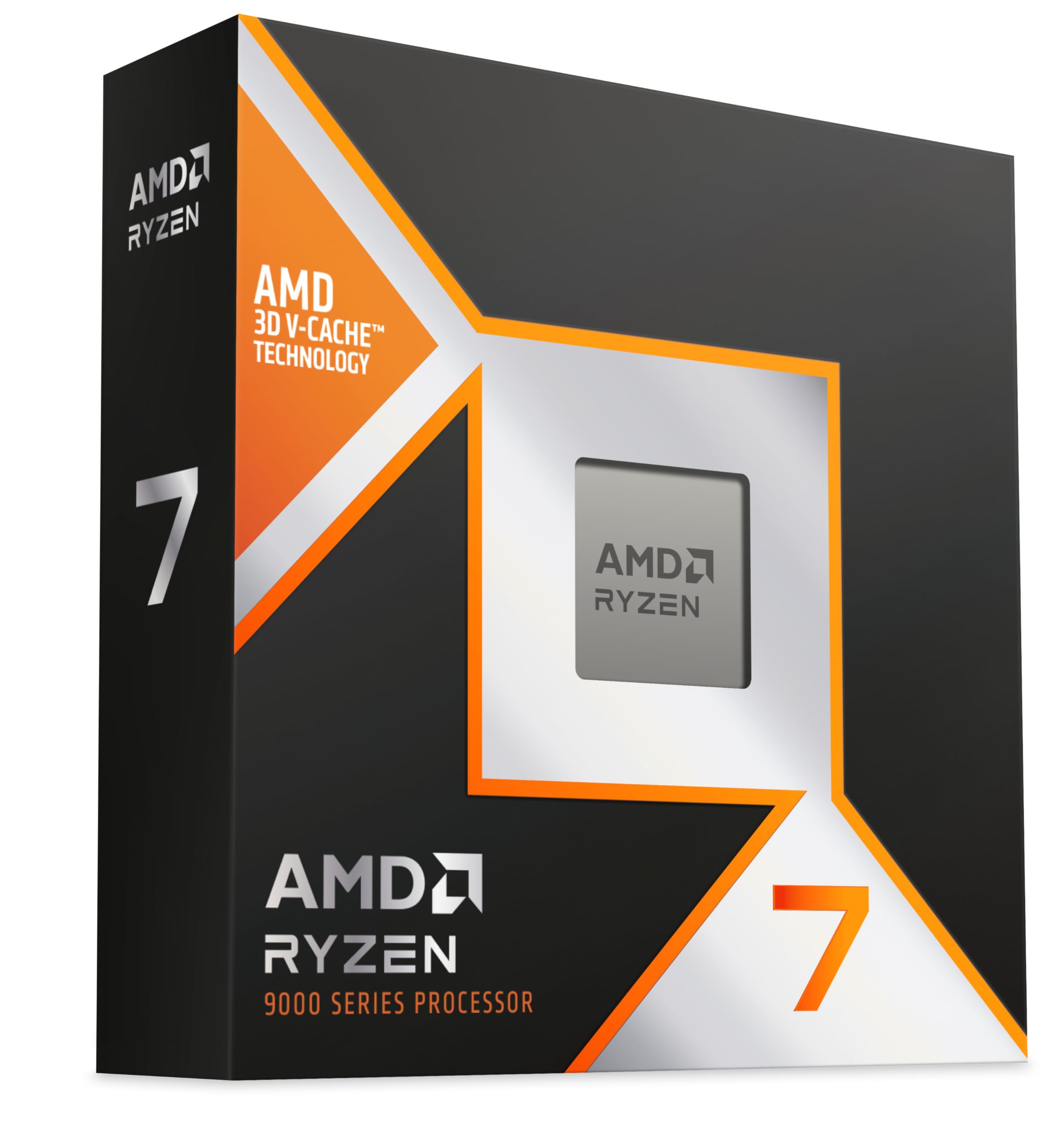
The Ryzen 7 9800X3D represents the current pinnacle of VR gaming CPU design. Its 104 MB total cache — built with AMD’s 3D V-Cache technology stacking an extra 64 MB of L3 directly on the compute die — directly attacks the root cause of VR stutter: memory bandwidth starvation. Reviewers consistently report frame rates between 140 and 160 FPS when paired with a Radeon 7800 XT, and undervolting with a 360mm AIO keeps temperatures below 60°C under sustained load.
At a 4.7 GHz base and 5.6 GHz boost clock, the Zen 4 architecture delivers single-threaded performance that even demanding VR titles like Half-Life: Alyx and Microsoft Flight Simulator in VR cannot saturate. The 8 MB L2 and 96 MB L3 configuration means texture streaming and asset loading rarely cause CPU-side hitches. Upgrade from a Ryzen 5 7600 or Intel 11900K has been reported to triple frame rates in CPU-bound VR scenarios.
The AM5 socket platform is forward-compatible with future Ryzen generations, making this CPU a sound long-term investment. The 140-watt TDP requires robust cooling — a 360mm AIO liquid cooler is strongly recommended — but the thermal headroom allows aggressive overclocking for those who want to push VR performance beyond stock limits.
Why it’s great
- Massive 104 MB total cache eliminates VR frame-time spikes
- Highest single-core boost clock (5.6 GHz) for sustained 90+ FPS
- AM5 socket supports future CPU upgrades
Good to know
- Requires a high-end 360mm AIO cooler for optimal thermals
- Premium price point makes it a significant investment
- Idle temperatures run slightly warmer than non-3D V-Cache chips
2. AMD Ryzen 7 7800X3D Desktop Processor

The Ryzen 7 7800X3D bridges the gap between flagship performance and real-world affordability by packaging 96 MB of 3D V-Cache into a chip that sips just 75 watts during gaming. Real-world user reports show it running cool enough to pair with a stock cooler, achieving 65-70°C under load in standard VR gaming sessions. One user upgrading from an i7-4770K reported more than double the frame rate in CS2 at 1440p — a testament to how CPU-bound VR can be.
At a 4.2 GHz base with 5.0 GHz boost across eight Zen 4 cores, this chip delivers consistent frame pacing even during demanding VR scenes. The 8 MB L2 cache acts as a fast intermediary, while the 96 MB L3 handles the massive texture loads that VR headsets demand. Users report smooth gameplay with headsets like the Valve Index and Meta Quest 3 when paired with mid-range to high-end GPUs like the RTX 5070 Ti.
Its low power draw means it runs cool and quiet even with a budget air cooler, and the AM5 platform leaves room for future upgrades. The lack of integrated graphics is irrelevant for VR builders who always pair CPUs with discrete GPUs, and the 89°C Tjmax limit provides a generous thermal margin for sustained VR sessions lasting hours.
Why it’s great
- 96 MB 3D V-Cache provides near-flagship VR performance at lower cost
- 75W gaming power draw runs cool with budget coolers
- AM5 platform allows future CPU upgrades
Good to know
- Cannot match the 9800X3D in extreme CPU-bound VR titles
- No integrated graphics requires a discrete GPU
- Random temperature spikes to 70°C are normal and not harmful
3. Intel Core i7-12700KF Desktop Processor

The Intel Core i7-12700KF offers a compelling hybrid architecture for VR gamers who also edit video or stream their play sessions. Its eight Performance-cores hit 5.0 GHz for the critical VR render thread, while four Efficient-cores handle Discord, OBS Studio, and browser tabs without stealing resources from the game. The 12 MB L2 and 25 MB L3 cache provide enough memory bandwidth to prevent stutter in most current VR titles.
Users report this chip handles 4K video editing in Premiere and DaVinci Resolve alongside VR gaming sessions, with one reviewer noting 18 months of 12-16 hour daily use without degradation. The unlocked multiplier allows aggressive overclocking, though the 125W base TDP requires at least a 240mm AIO for sustained VR loads. Compatibility with both DDR4 and DDR5 memory gives builders flexibility.
The LGA1700 socket supports 12th, 13th, and 14th Gen Intel processors, offering a clear upgrade path. The lack of integrated graphics (the “F” suffix) keeps cost down, and five years after launch, the platform has mature BIOS support and proven stability. For VR gamers on a tight budget who also need workstation-level multi-threading, this chip punches well above its class.
Why it’s great
- Hybrid architecture excels at multitasking during VR streaming
- Unlocked multiplier for overclocking headroom
- Affordable way to get 12 cores for VR + productivity
Good to know
- Runs hot — requires high-end cooling for sustained VR loads
- LGA1700 socket has limited future upgrade path
- No integrated graphics means troubleshooting requires a GPU
4. MSI Codex Z2 Gaming Desktop (R7-8700F + RTX 5070)

The MSI Codex Z2 delivers a turnkey VR experience by pairing the AMD Ryzen 7 8700F — an 8-core Zen 4 chip boosting to 5.0 GHz — with NVIDIA’s Blackwell-architecture RTX 5070 featuring 12GB of GDDR7 memory. The 32GB of DDR5 RAM ensures no memory bottleneck for the most demanding VR titles, while the 2TB NVMe SSD provides ample storage and lightning-fast asset loading. Users report buttery-smooth performance across three 4K monitors simultaneously.
The four-system fan configuration with ARGB air cooler keeps thermals in check during extended VR sessions, though reviewers note the fans become audible under load. MSI’s LED button and MSI Center software allow RGB customization. The pre-built nature means no assembly required — just plug in the VR headset and install drivers. The included keyboard and mouse are functional for initial setup.
Windows 11 Home comes pre-installed, and MSI recommends Windows 11 Pro for business use. Some users reported Bluetooth module issues that required a third-party upgrade, and one review documented SSD failure requiring an RMA. MSI’s online support resolved the issue, and registering the product online extends the warranty by three months. For users who want a premium VR machine without building it themselves, this is a strong contender.
Why it’s great
- RTX 5070 + Ryzen 7 8700F handle high-end VR titles effortlessly
- 32GB DDR5 RAM and 2TB NVMe SSD provide zero-compromise specs
- Tool-free design makes future upgrades straightforward
Good to know
- Some units require Bluetooth module replacement
- Fans can be loud under sustained VR load
- Reports of BSOD issues in a minority of units
5. Skytech Gaming Archangel 5 (Ryzen 7 7700 + RTX 5060)
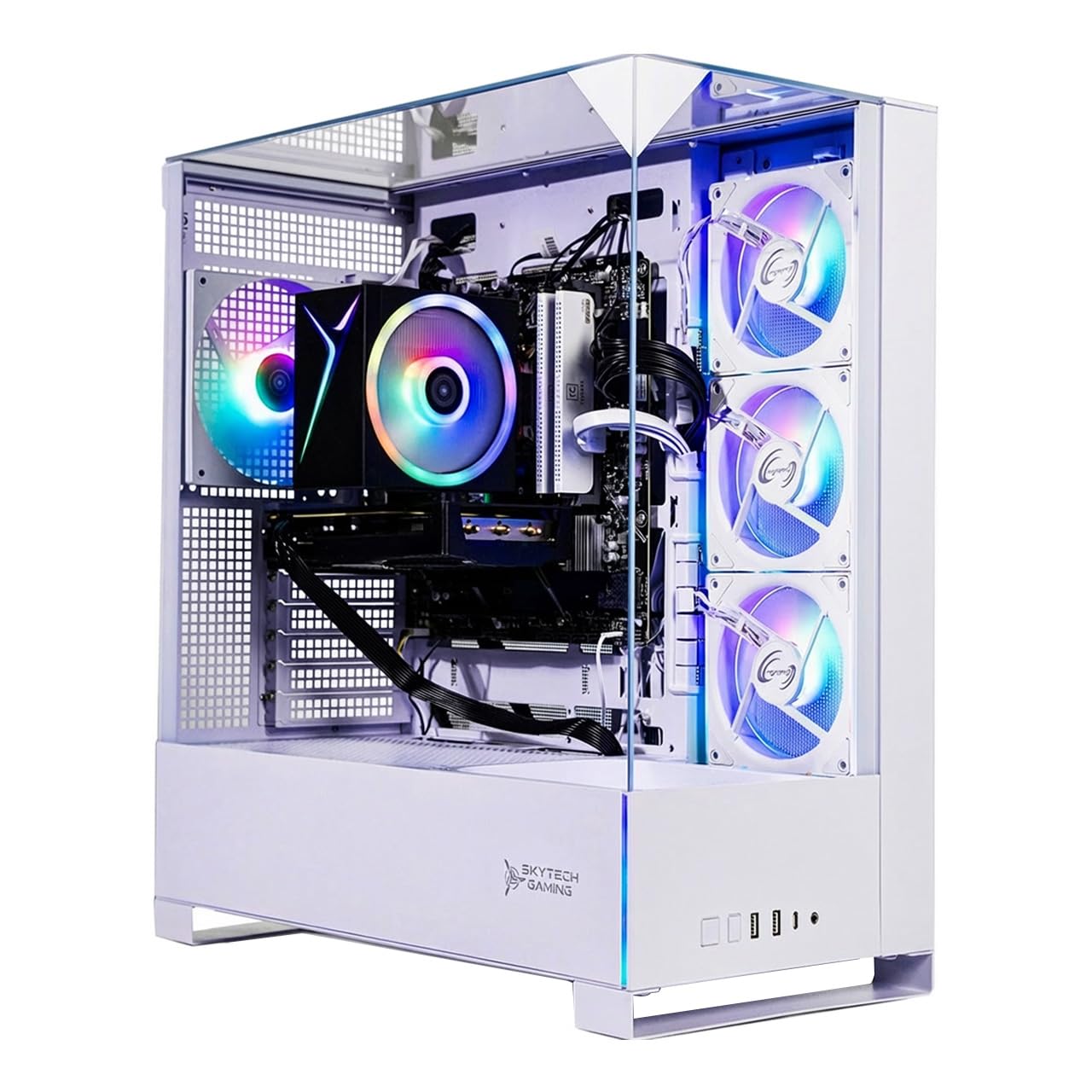
The Skytech Archangel 5 brings the AMD Ryzen 7 7700 — a Zen 4 processor with 8 cores boosting to 5.3 GHz — together with the NVIDIA RTX 5060 8GB GDDR7 graphics card. The 32GB of DDR5 RAM at 6000MHz and 1TB NVMe SSD provide the memory bandwidth and storage speed VR titles need. Skytech advertises this build running games like Call of Duty and Black Myth Wukong at Ultra settings with 60+ FPS at 1080p Full HD resolution.
The high-performance air cooler with ARGB fans keeps the system quiet and cool, according to user reports of whisper-quiet operation even during VR sessions. The tempered glass case provides a clean aesthetic with customizable RGB lighting. Five fans — three front intake, one rear exhaust — maintain positive air pressure that reduces dust buildup. The 750-watt Gold-rated PSU provides headroom for future GPU upgrades.
Windows 11 Home comes pre-installed with no bloatware, and the system includes a free gaming keyboard and mouse. Some users reported initial performance issues that resolved after background downloads and driver updates. The 1-year warranty on parts and labor with free technical support provides peace of mind. For VR gamers who want a turnkey 1080p VR machine with upgrade potential, this build delivers excellent value.
Why it’s great
- Ryzen 7 7700’s 5.3 GHz turbo provides excellent single-thread VR performance
- 32GB DDR5 6000MHz prevents memory bottlenecks in VR
- 750W Gold PSU leaves room for future GPU upgrades
Good to know
- RTX 5060 is best suited for 1080p VR, not 4K
- Some units may have loose RAM sticks or rear fans
- Cable management could be cleaner in some builds
6. CyberPowerPC Gamer Master (R7 8700F + RTX 5060 Ti)
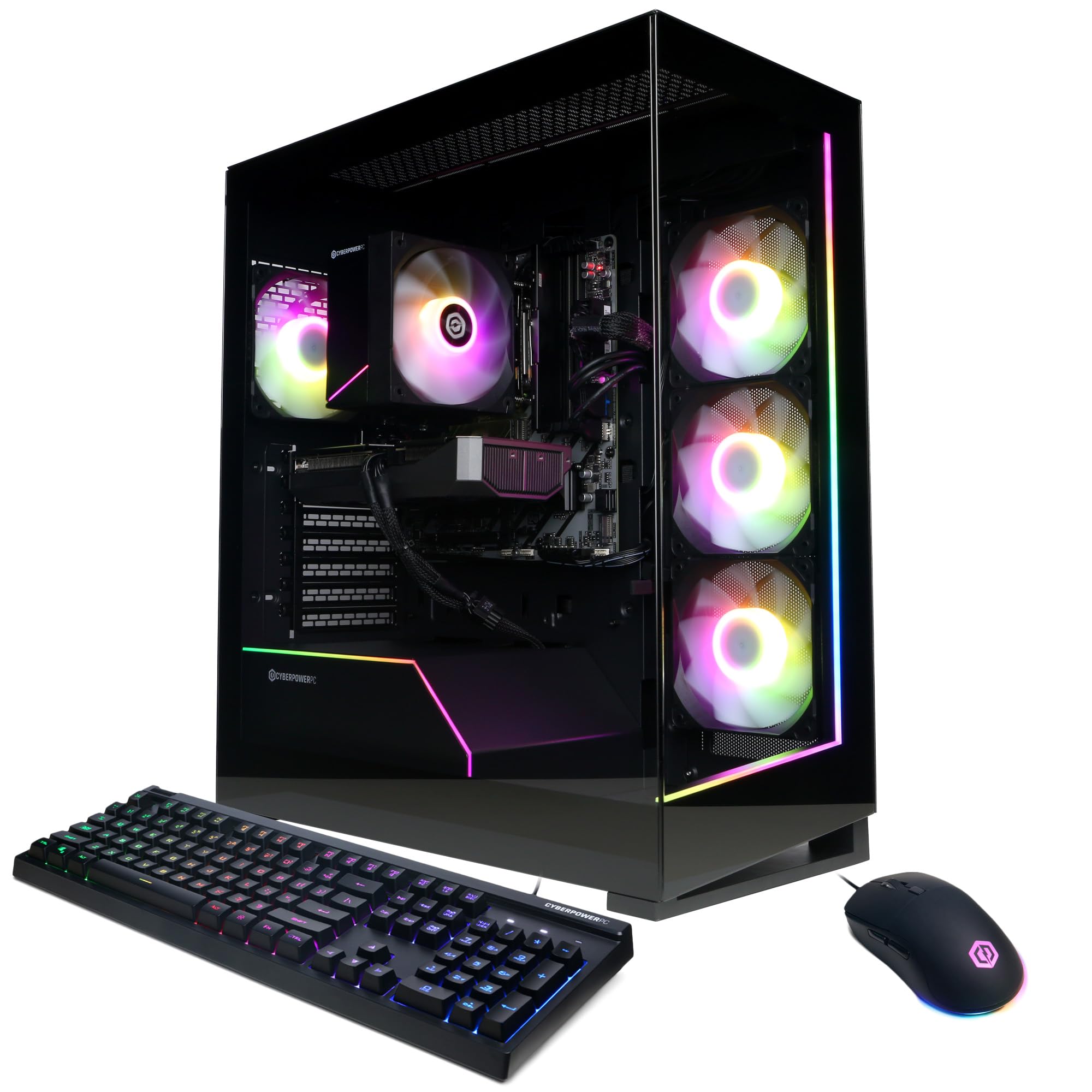
The CyberPowerPC Gamer Master pairs the AMD Ryzen 7 8700F — a Zen 4 chip with 8 cores and 16 threads running at 4.1 GHz base — with the NVIDIA GeForce RTX 5060 Ti 8GB GDDR7 graphics card. The 16GB of DDR5 RAM and 1TB PCIe 4.0 NVMe SSD provide solid foundations for VR gaming, while the AMD B850 chipset motherboard offers WiFi 6 and Bluetooth 5.3 connectivity. Users report smooth 60+ FPS performance in Call of Duty on Ultra settings.
The tempered glass side panel and custom RGB lighting provide visual appeal, and the non-proprietary motherboard, PSU, and case mean upgrading individual components is straightforward. The 650-watt gold-rated PSU handles the power draw of VR gaming without strain. CyberPowerPC backs the build with a 1-year parts and labor warranty and free lifetime tech support.
Some users reported random restarts and USB power issues that required adjusting the BIOS “Deep Sleep” setting to resolve. One review noted a broken fan wire that CyberPowerPC replaced quickly. Overall, the build quality is solid for the price point, and the parts selection allows easy swapping of RAM, storage, and graphics cards. For VR gamers on a mid-range budget who want DDR5 support and a clear upgrade path, this prebuilt hits the sweet spot.
Why it’s great
- DDR5 memory and PCIe 4.0 storage for fast VR asset loading
- Non-proprietary parts make future upgrades easy
- WiFi 6 and Bluetooth 5.3 for wireless VR headset connectivity
Good to know
- Some units require BIOS tweaks to solve USB/power issues
- Tech support response can be slow
- 16GB RAM may need upgrading for heavy VR multitasking
7. CyberPowerPC Gamer Xtreme (i5-11600KF + RTX 3060)

The CyberPowerPC Gamer Xtreme uses the Intel Core i5-11600KF — a 6-core, 12-thread Rocket Lake processor boosting to 4.9 GHz — paired with the RTX 3060 12GB graphics card. This combination handles 1080p VR gaming at competitive frame rates. The 16GB DDR4 RAM and dual storage setup (500GB NVMe SSD + 1TB HDD) provide fast boot times and ample space for VR titles. Users report smooth Diablo 4 performance and good 144Hz gaming at 1080p.
The B560 chipset motherboard supports PCIe 4.0 for the GPU and NVMe drive. The tempered glass side panel and RGB case lighting add visual flair, and the included keyboard and mouse are functional for setup. The 500GB NVMe SSD ensures VR games load quickly, while the 1TB HDD handles bulk storage. The RTX 3060’s 12GB VRAM is actually overkill for 1080p but helps with VR’s dual-render demands.
Some users noted that the 8-case-fan configuration can be slightly noisy, and the RGB control is limited to the case button rather than motherboard software. The motherboard’s RGB lighting remains active when the system is off. The front USB ports can feel loose. Overall, this is a competent entry-level VR machine that, with a future CPU upgrade to a 12th Gen chip, can extend its useful life.
Why it’s great
- RTX 3060 12GB handles VR’s dual-render requirements well
- Dual storage drive (SSD + HDD) provides speed and capacity
- Excellent price-to-performance for entry-level VR
Good to know
- i5-11600KF is starting to show its age in demanding VR titles
- 8 fans can create noticeable noise
- RGB control is limited to the case push button
8. AVGPC Q-Box Series (Ryzen 5 5500 + RTX 3050)

The AVGPC Q-Box Series Gaming PC represents the most affordable entry point into VR gaming, pairing the AMD Ryzen 5 5500 — a 6-core Zen 3 processor boosting to 4.2 GHz — with the RTX 3050 6GB graphics card. This combination can handle less demanding VR titles and older headsets at comfortable frame rates. The liquid CPU cooler keeps the Ryzen 5 5500 running at idle temperatures around 30°C, and the 16GB DDR4 3200 RAM provides enough memory for basic VR multitasking.
The 500GB SSD provides storage for a few VR titles, and the included keyboard and mouse get you started. Windows 11 comes pre-installed, and AVGPC offers a 1-year warranty with free lifetime tech support, with assembly and support based in the USA. Users report smooth performance for Minecraft and CPU-based games, noting that heavier VR titles will require a GPU upgrade.
The RTX 3050 6GB is the minimum viable GPU for VR — expect to run titles at lower settings or with reduced resolution. The case offers room for upgrades, and the 500W power supply can handle a GPU swap to something like an RTX 3060 or RX 6600. The included 802.11ac Wi-Fi is sufficient for wireless VR streaming. For VR-curious gamers on a tight budget, this prebuilt serves as a solid foundation.
Why it’s great
- Lowest-cost way to get into VR gaming with a prebuilt
- Liquid CPU cooler keeps temperatures low and consistent
- Upgrade-friendly case and power supply
Good to know
- RTX 3050 struggles with high-end VR titles
- 16GB RAM may need upgrading for smooth VR multitasking
- RGB lighting is not customizable via software
9. PNY NVIDIA GeForce RTX 5070 Epic-X ARGB OC
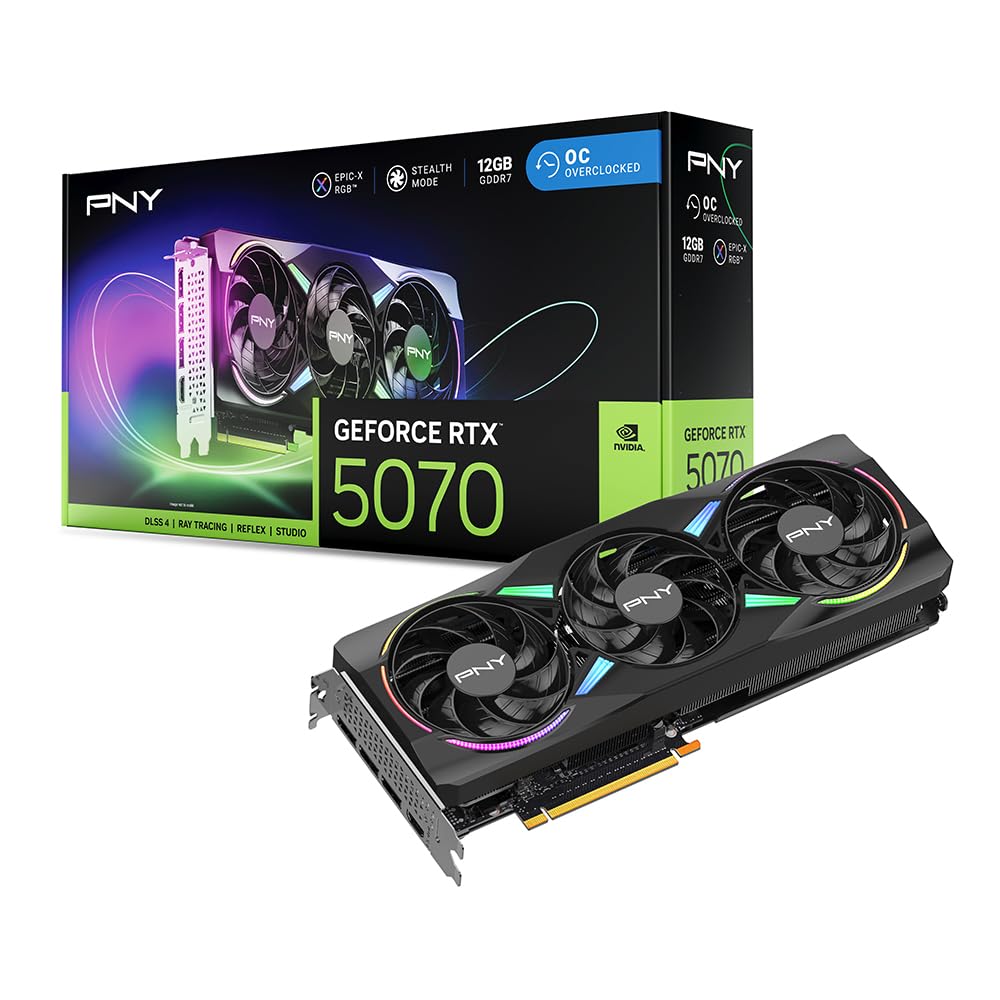
The PNY NVIDIA GeForce RTX 5070 Epic-X ARGB OC is a graphics card designed to pair with your chosen VR CPU. Its Blackwell architecture with 6,144 CUDA cores and 12GB of GDDR7 memory provides the render power that VR headsets demand. The 2.16 GHz base clock and 2.685 GHz boost clock deliver the sustained performance needed to maintain 90 FPS in demanding VR titles at high settings.
The triple-fan cooling solution with ARGB lighting keeps the 250-watt TDP in check, and users report very quiet operation even under load. The factory overclock of 8% provides performance out of the box that exceeds the RTX 4070 Super in raw frame rates without relying on frame generation or DLSS. The card is SFF-ready with a 2.4-slot design, fitting into compact cases that many VR builders prefer.
DLSS 4 and Reflex technologies are built in, providing AI-powered frame boosting and latency reduction that are particularly beneficial in VR. The 192-bit memory interface delivers 672 GB/s of bandwidth, essential for VR’s high-resolution textures. The card comes with a 12-pin to dual 8-pin adapter, compatible with 750W power supplies. For builders upgrading an existing system for VR, this GPU provides a massive performance leap.
Why it’s great
- GDDR7 memory provides essential bandwidth for VR rendering
- Quiet triple-fan cooling for immersive VR sessions
- Compact SFF-ready design fits most VR gaming cases
Good to know
- Requires a 750W or higher power supply
- Premium price point is a significant investment
- Includes a 12-pin adapter, not a native 12V-2×6 connector
FAQ
What is the minimum CPU core count for comfortable VR gaming?
Does 3D V-Cache really help in VR gaming?
Can I use an Intel KF-series CPU for VR gaming?
Should I build my own VR PC or buy a prebuilt like the MSI Codex Z2?
Final Thoughts: The Verdict
For most users, the best cpu for vr gaming winner is the AMD Ryzen 7 9800X3D because its 104 MB of total cache and 5.6 GHz boost clock deliver the most consistent frame pacing in demanding VR titles. If you want the best price-to-performance balance, grab the AMD Ryzen 7 7800X3D — it offers 90% of the VR gaming experience at significantly lower cost. And for a turnkey solution that works straight out of the box, nothing beats the MSI Codex Z2 with its Ryzen 7 8700F and RTX 5070 combo.

Mo Maruf
I created WellFizz to bridge the gap between vague wellness advice and actionable solutions. My mission is simple: to decode the research and give you practical tools you can actually use.
Beyond the data, I am a passionate traveler. I believe that stepping away from the screen to explore new environments is essential for mental clarity and physical vitality.