Our readers keep the lights on and my smoothie glass nicely filled. As an Amazon Associate, I earn from qualifying purchases.
A corded circular saw that stalls on a pressure-treated 2×4 or wanders off your chalk line isn’t just frustrating — it wastes material and undermines every project it touches. The difference between a frustrating cut and a clean, square edge often comes down to the motor’s torque curve, the rigidity of the base plate, and how easily the depth and bevel adjustments lock into place without drifting. Choosing the right saw means matching its mechanical character to the demands of your framing, sheathing, or finish work.
I’m Mohammad Maruf — the founder and writer behind WellFizz. This guide draws from hundreds of hours analyzing motor specs, base plate materials, adjustment mechanisms, and real-world user feedback to identify which corded circular saws deliver the most reliable performance for their intended use.
The market offers everything from lightweight sidewinders to high-torque worm drives, but the best option for you depends on your specific cutting volume and material mix. This review breaks down the best corded circular saw options across value, power, and specialty categories to help you match the right tool to your workflow.
How To Choose The Best Corded Circular Saw
Selecting a corded circular saw involves more than picking the highest RPM or the lowest price. Three primary factors separate a tool that serves you for a decade from one that frustrates you within a year: motor delivery, base plate construction, and the quality of adjustment hardware. Understanding these elements ensures you pay for lasting performance rather than marketing claims.
Motor Type and Torque Delivery
Sidewinder (direct-drive) saws place the blade directly on the motor armature, making them lighter and more compact — ideal for overhead work and less fatigue during extended use. Worm-drive saws use a gear system to rotate the blade, producing higher torque at lower RPM, which excels in deep rip cuts and dense hardwoods. The trade-off is weight; worm drives typically run 12 to 15 pounds versus 8 to 10 pounds for sidewinders.
Base Plate Rigidity
A stamped steel base plate can warp over time, compromising your cut’s squareness. Cast aluminum bases resist deformation, maintain flatness, and hold adjustment settings longer. For professional framing or precision finish work, the cast aluminum base is the single most important durability feature to verify before purchase.
Bevel and Depth Adjustment Mechanisms
Positive stops at common angles (22.5°, 45°, and sometimes 56°) speed up repetitive cuts. The quality of the clamping lever — steel versus plastic, large versus small — determines whether your bevel angle drifts mid-cut. Look for levers that lock firmly without requiring a tool, and test that the depth adjustment lever does not loosen from vibration alone.
Quick Comparison
On smaller screens, swipe sideways to see the full table.
| Model | Category | Best For | Key Spec | Amazon |
|---|---|---|---|---|
| Makita 5007MGA | Premium | Pro framers & finish carpenters | Electric brake, 10.6 lbs magnesium | Amazon |
| Bosch CSW41 | Premium | High-torque ripping & thick lumber | Worm drive, 13.2 lbs magnesium | Amazon |
| Evolution S185CCSL | Specialty | Metal cutting (steel plate, tube) | 40-tooth TCT blade, 3900 RPM | Amazon |
| Metabo HPT C7UR | Mid-Range | Daily framing & general construction | 6800 RPM, anti-vibration system | Amazon |
| Bosch CS5 | Mid-Range | Left-blade visibility for DIY projects | 9.3 lbs, blade-left design | Amazon |
| SKILSAW SPT67WL-01 | Value | Lightweight pro-grade sidewinder | 8.6 lbs, 56° bevel capacity | Amazon |
| Metabo HPT C7SB3 | Budget-Friendly | Entry-level framing & DIY ripping | 9.5 lbs, cast aluminum base | Amazon |
In‑Depth Reviews
1. Makita 5007MGA 7-1/4 in. Magnesium Circular Saw
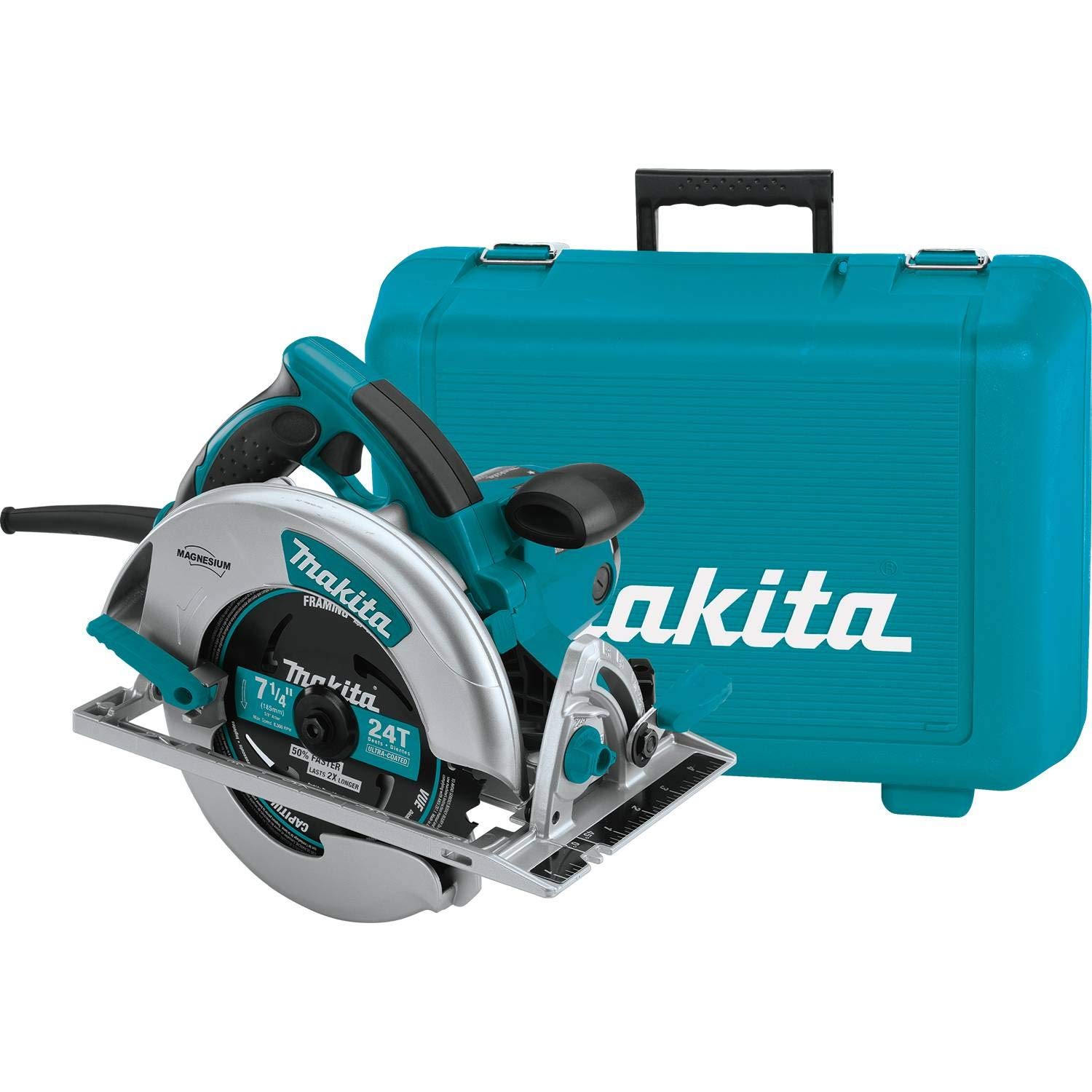
The Makita 5007MGA sits at the top of the premium category because of its rare combination of lightweight magnesium construction, an integrated electric brake, and a 15-amp motor that drives 5800 RPM without bogging. At 10.6 pounds, this saw undercuts many sidewinders while delivering worm-drive-like torque consistency through dense lumber. The electric brake stops the blade in roughly three seconds, a safety and productivity feature missing from most saws in this weight class.
The 56-degree bevel capacity with positive stops at 22.5, 45, and 56 degrees allows fast switching between common angles without measuring. The cast magnesium base stays flat and true, and the large rubberized levers make depth and bevel adjustments easy even with gloved hands. An integrated LED illuminates the cut line, and the dust blower keeps the path clear — both small touches that matter on long workdays.
The included hard case is a bit snug, requiring careful cord tucking, and the rip fence is shorter than ideal for wide sheet goods. The stock blade is serviceable for framing but benefits from an upgrade for fine crosscuts. For a pro who values blade brake safety and magnesium durability, this saw earns its place as the top pick.
Why it’s great
- Electric brake stops blade in roughly three seconds for safety and productivity.
- Magnesium frame keeps weight at 10.6 lbs without sacrificing durability.
- Cast base and large adjustment levers hold settings firmly during heavy use.
Good to know
- Hard case forces cord to bend tightly, which may stress the cable over time.
- Rip fence is too short for reliable guidance on full 4×8 sheet plywood.
2. Bosch CSW41 7-1/4 in. Worm Drive Circular Saw

The Bosch CSW41 brings worm-drive gearing to a package that weighs 13.2 pounds — significantly lighter than traditional worm-drive saws thanks to its magnesium construction. The 15-amp motor produces 5300 no-load RPM with noticeably higher torque at the blade than sidewinders, making it the right choice for ripping thick hardwoods, LVL beams, or stacked dimensional lumber without slowing down.
The left-side blade design gives right-handed users an unobstructed view of the cut line, which improves accuracy on long rip cuts and angled work. The on-board multifunction wrench stores conveniently for blade changes and brush maintenance, and the anti-snag lower guard prevents binding on small cutoff pieces. The soft-grip handle reduces vibration fatigue during extended cutting sessions.
The CSW41 lacks an electric brake, which means the blade continues spinning for several seconds after releasing the trigger — a safety consideration for job site work. Some users report the saw is heavy enough that fatigue becomes a factor in overhead use. The included blade is adequate for rough work but not the best for clean finish cuts. For high-torque rip work where weight is less of a concern, this saw performs like a true workhorse.
Why it’s great
- Worm-drive gearing provides superior torque for ripping thick and dense lumber.
- Magnesium construction makes it lighter than traditional worm-drive saws.
- Left-blade design gives excellent cut-line visibility for right-handed users.
Good to know
- No electric brake — blade coasts for several seconds after trigger release.
- At 13.2 pounds, it can cause arm fatigue during extended overhead or repetitive cuts.
3. Evolution S185CCSL 7.25 in. Metal Cutting Circular Saw
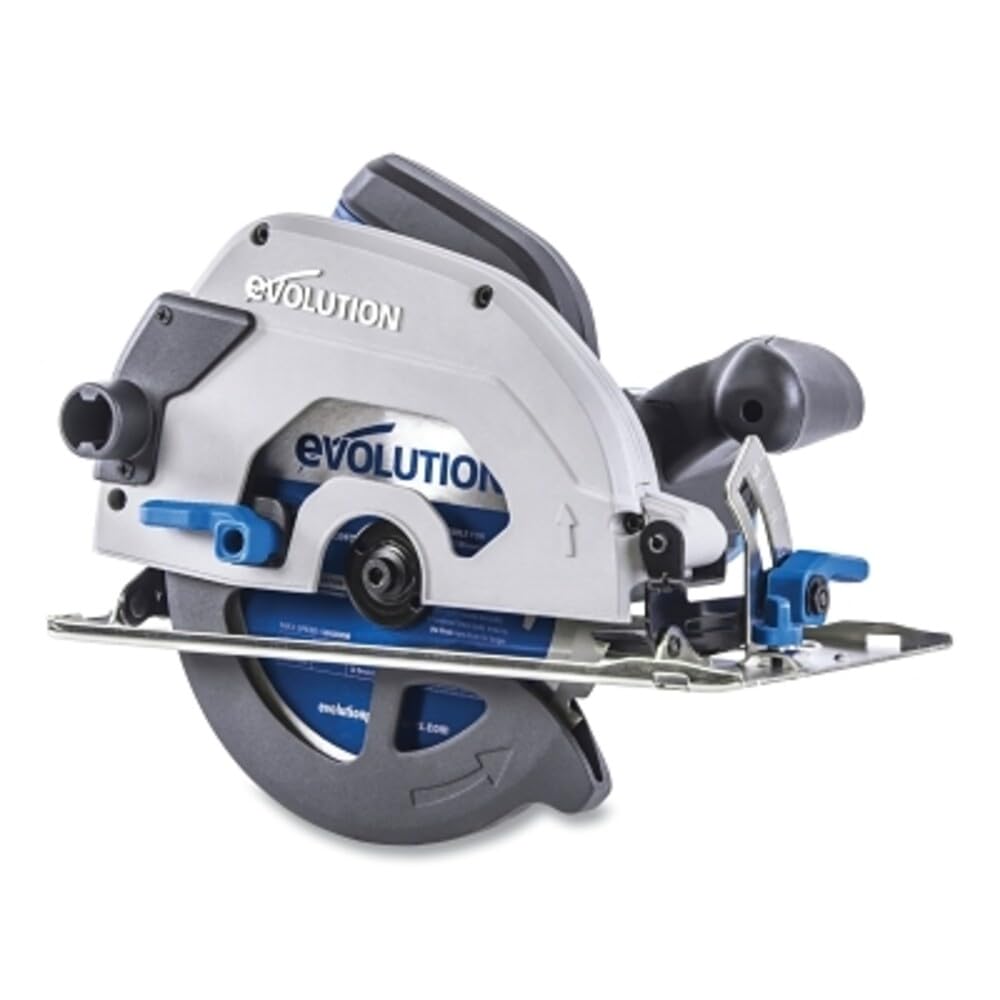
The Evolution S185CCSL is a specialized saw designed specifically for cutting mild steel — plate, angle iron, square tubing, and even steel drums — using a 40-tooth tungsten carbide tipped blade that produces clean, burr-free edges without sparks or heat discoloration. The 15-amp motor runs at 3900 RPM, which is lower than typical wood-cutting saws, because the TCT blade requires slower speeds to maintain tooth integrity through ferrous materials.
Users consistently report cutting 3/8-inch steel plate with no bogging and producing edges that require no grinding before welding. The built-in blade viewing window and channeled airflow system keep the cut line visible, which is critical when working on layout marks on metal. The 0 to 45-degree bevel adjustment uses paddle levers that can be operated quickly without tools, and the cutting depth reaches up to 2-1/2 inches.
The saw is loud during operation and produces metal chips that require personal protective equipment — welding sleeves, a hood, and hearing protection are necessary. The blade mounting bolt has been reported to strip on some units, and the glass viewing port can shatter if struck. Replacement TCT blades require a 20mm bore and are not as widely available as standard wood-cutting blades. For metal fabricators and welders, however, this saw replaces both an abrasive chop saw and a band saw for many common cuts.
Why it’s great
- Cuts steel plate, angle iron, and tubing cleanly without sparks or grinding.
- TCT blade produces burr-free edges that are weld-ready immediately.
- Viewing window and airflow system maintain cut-line clarity on metal.
Good to know
- Very loud operation — requires hearing protection and PPE for metal chips.
- TCT replacement blades are less common and require a 20mm bore.
4. Metabo HPT C7UR 7-1/4 in. Circular Saw

The Metabo HPT C7UR RipMax pushes the highest no-load RPM in this roundup at 6800, powered by the same 15-amp motor architecture that earned the predecessor the Best Corded Circular Saw Overall award from Pro Tool Reviews in 2020. The anti-vibration system reduces fatigue noticeably during long cutting sessions, and the ergonomic handle is positioned closer to the blade for better balance and control during plunge cuts.
The stamped aluminum base is ribbed for durability, though it does not offer the same rigidity as a full cast aluminum base. The bevel range extends from 0 to 55 degrees with positive stops at 0, 45, and 55 degrees, making miter cuts predictable without checking a protractor. The dust blower clears the cut path effectively, and the cord hook repositions the power cable to prevent snagging on sheet edges.
Some users note that under heavy continuous load — ripping pressure-treated 2x12s — the saw can struggle slightly and produces more noise than premium competitors. The included carrying bag is functional but not protective against drops. The positive stops are plastic and may wear faster than metal equivalents. For a mid-range saw delivering professional cutting speeds, the C7UR offers strong value for volume framing work.
Why it’s great
- Top speed of 6800 RPM delivers up to 40% faster cutting through dimensional lumber.
- Anti-vibration system reduces hand fatigue during extended use.
- Ergonomic handle design improves balance and control for plunge cuts.
Good to know
- Stamped aluminum base lacks the rigidity of cast aluminum alternatives.
- Plastic positive stops may wear faster than metal stops on professional job sites.
5. Bosch CS5 120-Volt 7-1/4 in. Circular Saw

The Bosch CS5 enters the mid-range category with a blade-left design that gives right-handed users a direct line of sight to the cut mark — a configuration that many DIY carpenters and furniture builders prefer for accuracy. At 9.3 pounds, it is light enough for comfortable one-handed operation on sheet goods, yet the 15-amp motor powers through hardwood plywood, pressure-treated lumber, and even wet material without bogging.
The built-in spindle lock and onboard wrench make blade changes quick and tool-free. The depth and bevel adjustments are smooth and lock securely. Reviewers consistently note that this saw produces exceptionally straight cuts with aftermarket Bosch Daredevil blades, often replacing the need for a table saw on simple rip or crosscut projects. The included 24-tooth blade is functional but produces scorch marks on dense hardwoods.
The CS5 lacks a dust chute — dust and debris blow directly into the operator’s face when cutting right-handed, which is a notable ergonomic oversight. The wrench stored between the base plate and motor housing can cause the plate to twist if overtightened. There is no electric brake, so the blade coasts briefly after each cut. For a left-blade saw at this price point, the cut visibility is excellent, but the dust management is poor.
Why it’s great
- Blade-left position provides clear cut-line visibility for right-handed users.
- Lightweight 9.3 lbs design reduces arm fatigue on long cutting days.
- Smooth adjustments and accurate cuts with quality aftermarket blades.
Good to know
- No dust chute — sawdust blows into operator’s face when cutting right-handed.
- Included 24-tooth blade leaves scorch marks on dense hardwood cuts.
6. SKILSAW SPT67WL-01 7-1/4 in. Sidewinder Circular Saw

The SKILSAW SPT67WL-01 claims the title of lightest professional circular saw in its class at 8.6 pounds, making it a natural choice for carpenters who spend hours cutting overhead or working off ladders. The 15-amp dual-field motor runs cooler than traditional single-field designs, extending the saw’s lifespan under heavy use. The 56-degree bevel capacity with a positive stop at 45 degrees handles both standard and steep angled cuts.
The 10-foot power cord is longer than most, reducing the need for extension cables on smaller job sites. The rubber overmold grip provides solid traction even with sweaty or gloved hands. After eight years of service, multiple reviewers still report this saw as their go-to for 3/4-inch plywood, dimensional lumber, and hard maple up to 1.5 inches thick — a testament to its durability.
The saw does not include a blade brake, which is a notable omission at this price tier. Some users report that the plastic housing, while lightweight, does not inspire the same confidence as full magnesium builds. The bevel adjustment returns to square require some muscle to reset from extreme angles. For a sub-premium saw that punches above its weight class in reliability, this is a strong entry-level pro tool.
Why it’s great
- Weighs only 8.6 lbs — the lightest pro-grade sidewinder for overhead work.
- Dual-field motor stays cooler and lasts longer during extended cuts.
- 10-foot power cord eliminates the need for an extension on many tasks.
Good to know
- No blade brake — blade coasts freely after trigger release.
- Plastic housing feels less durable than magnesium-bodied competitors.
7. Metabo HPT C7SB3 7-1/4 in. Circular Saw Kit

The Metabo HPT C7SB3 proves that a corded circular saw does not need a high price tag to deliver a cast aluminum base — a feature usually reserved for saws costing twice as much. The full cast aluminum shoe stays flat and square, providing a stable reference surface for accurate cuts that stamped steel bases cannot match over time. The 15-amp motor spins at 6000 RPM and handles framing lumber, OSB, and plywood without hesitation for a budget-tier tool.
At 9.5 pounds, the saw is heavier than many premium sidewinders, but that weight aids stability on straight cuts. The included 24-tooth framing blade cuts cleanly out of the box, and the integrated dust blower keeps the cut line visible. The cord holder clips the power cord away from the cutting path, reducing the risk of accidentally severing the cable. The kit includes a carrying bag and hex bar wrench, adding convenience for job site transport.
The depth adjustment lever loosens more easily than ideal, which can make fine-tuning depth slightly frustrating. There is no dust port or edge guide for vacuum attachment or guided rip cuts. The saw is also slightly louder than mid-range competitors. For DIY homeowners and entry-level framers who prioritize a flat, rigid base plate at a low entry cost, this saw is an outstanding value.
Why it’s great
- Cast aluminum base provides long-term flatness and accurate cuts at a budget price.
- 15-amp motor delivers adequate power for framing, sheathing, and plywood.
- Includes carrying bag and usable blade — ready to work out of the box.
Good to know
- Depth adjustment lever tends to loosen from vibration during use.
- No dust port or edge guide for shop-vac connectivity or guided ripping.
FAQ
What is the difference between a sidewinder and a worm-drive circular saw?
Is a cast aluminum base plate worth paying more for?
Does an electric brake matter for a circular saw?
Final Thoughts: The Verdict
For most users, the best corded circular saw winner is the Makita 5007MGA because it combines the light weight of magnesium construction with an electric brake, a powerful 15-amp motor, and a 56-degree bevel range that professionals need for daily framing and finish work. If you need maximum rip torque for dense hardwoods or LVL beams, grab the Bosch CSW41 worm drive. And for metal fabrication work — cutting steel plate, tubing, and angle iron without sparks — nothing beats the Evolution S185CCSL.

Mo Maruf
I created WellFizz to bridge the gap between vague wellness advice and actionable solutions. My mission is simple: to decode the research and give you practical tools you can actually use.
Beyond the data, I am a passionate traveler. I believe that stepping away from the screen to explore new environments is essential for mental clarity and physical vitality.