Our readers keep the lights on and my smoothie glass nicely filled. As an Amazon Associate, I earn from qualifying purchases.
Coenzyme Q10 isn’t just another antioxidant. It’s the shuttle that moves electrons inside your mitochondria — the microscopic engines powering every heartbeat, every muscle contraction, and every thought you have. Yet by age 40, natural CoQ10 production has already dropped by half, and statin medications can hammer it even lower. That gap between what your cells demand and what your body supplies is why so many people feel drained no matter how much they sleep.
I’m Mohammad Maruf — the founder and writer behind WellFizz. I’ve spent countless hours analyzing bioavailability studies, fermentation methods, and absorption-enhancing delivery systems to separate the supplements that actually elevate mitochondrial performance from those that just pass through your system unnoticed.
This guide stacks the top contenders against measurable benchmarks — absorption rates, co-factor pairing, and serving potency — so you can confidently choose the best coq10 supplement for your cellular energy and cardiovascular needs without wasting money on formulas that underdeliver.
How To Choose The Best CoQ10 Supplement
Most buyers grab whichever CoQ10 bottle has the biggest number on the front. But milligram strength means little if the form isn’t absorbable or if the softgel lacks an absorption enhancer. Three factors define whether your mitochondria actually get the coenzyme they need.
Ubiquinone Versus Ubiquinol — The Form Factor
Ubiquinone is the oxidized form — the cheap, shelf-stable, and most common version in budget bottles. Your body must convert it into ubiquinol (the reduced, active form) before it can transport electrons. Young bodies do this conversion efficiently. Over age 40, conversion rates drop significantly. That’s when paying more for an ubiquinol formula or adding an absorption aide like BioPerine makes measurable sense.
Absorption Enhancers Change Everything
CoQ10 is a large, fat-soluble molecule that standard softgels struggle to deliver. Black pepper extract (BioPerine) has been shown in clinical trials to increase CoQ10 blood levels by roughly 30 percent by inhibiting metabolic breakdown in the gut. Sunflower lecithin — found in formulas like the ZEBORA — serves a similar purpose by emulsifying the coenzyme into smaller droplets your intestinal walls can actually shuttle through. A high-milligram bottle without any absorption component is often wasted money.
Co-Factor Pairing — PQQ and Omega-3
Pyrroloquinoline quinone (PQQ) stimulates the growth of new mitochondria — a process called mitochondrial biogenesis. When combined with CoQ10, PQQ doesn’t just feed existing engines; it builds more of them. Omega-3 fatty acids also support CoQ10 transport across cell membranes. If your goal extends beyond baseline heart maintenance into active energy production and cognitive endurance, a formula that includes either PQQ or omega-3s offers clear biological advantage over standalone CoQ10.
Quick Comparison
On smaller screens, swipe sideways to see the full table.
| Model | Category | Best For | Key Spec | Amazon |
|---|---|---|---|---|
| ZEBORA CoQ10 | Multi-Component | Mitochondrial energy boost | 300mg CoQ10 + PQQ + Omega-3 | Amazon |
| Nature Made CoQ10 | USP Verified | Trusted brand consistency | 200mg with BioPerine | Amazon |
| Doctor’s Best CoQ10 | Naturally Fermented | Budget-friendly absorption | 100mg + BioPerine | Amazon |
| NatureBell CoQ10 | Veggie Capsule | Sensitive stomachs | 200mg + PQQ, 240 caps | Amazon |
| Healthy Way CoQ10 | Single-Ingredient | Minimalist routine | 200mg ubiquinone capsules | Amazon |
In-Depth Reviews
1. ZEBORA CoQ10 300mg with PQQ, BioPerine, and Omega-3

The ZEBORA stack delivers the highest standalone CoQ10 dose in this lineup at 300mg, but the real advantage is its supporting cast. Each softgel also contains 200mcg of PQQ — the compound that triggers mitochondrial biogenesis — plus 60mg of omega-3 fatty acids that aid cellular membrane transport and reduce inflammation. The inclusion of sunflower lecithin and black pepper extract creates a triple-absorption system that pushes bioavailability far beyond what a plain 300mg softgel would achieve.
Users on statin therapy report noticeable improvements in energy within three to four weeks, which aligns with the replenishment rate for CoQ10 after enzyme depletion. The 120-serving count also undercuts the per-day cost of many 100mg competitors. Some buyers note that the softgels can stick together in warmer conditions, though refrigerating them resolves the issue without compromising the oil suspension formulation.
For anyone looking to maximize mitochondrial output — whether for cardiovascular recovery, age-related energy loss, or statin-induced depletion — this multi-component formula packs more functional density per capsule than anything else at this price tier.
Why it’s great
- Triple absorption system with lecithin, BioPerine, and omega-3
- PQQ stimulates new mitochondria growth
- 120-day supply lowers daily cost significantly
Good to know
- Softgels may clump without refrigeration
- Higher dose may cause initial digestive adjustment
2. Nature Made CoQ10 200mg with Black Pepper Extract
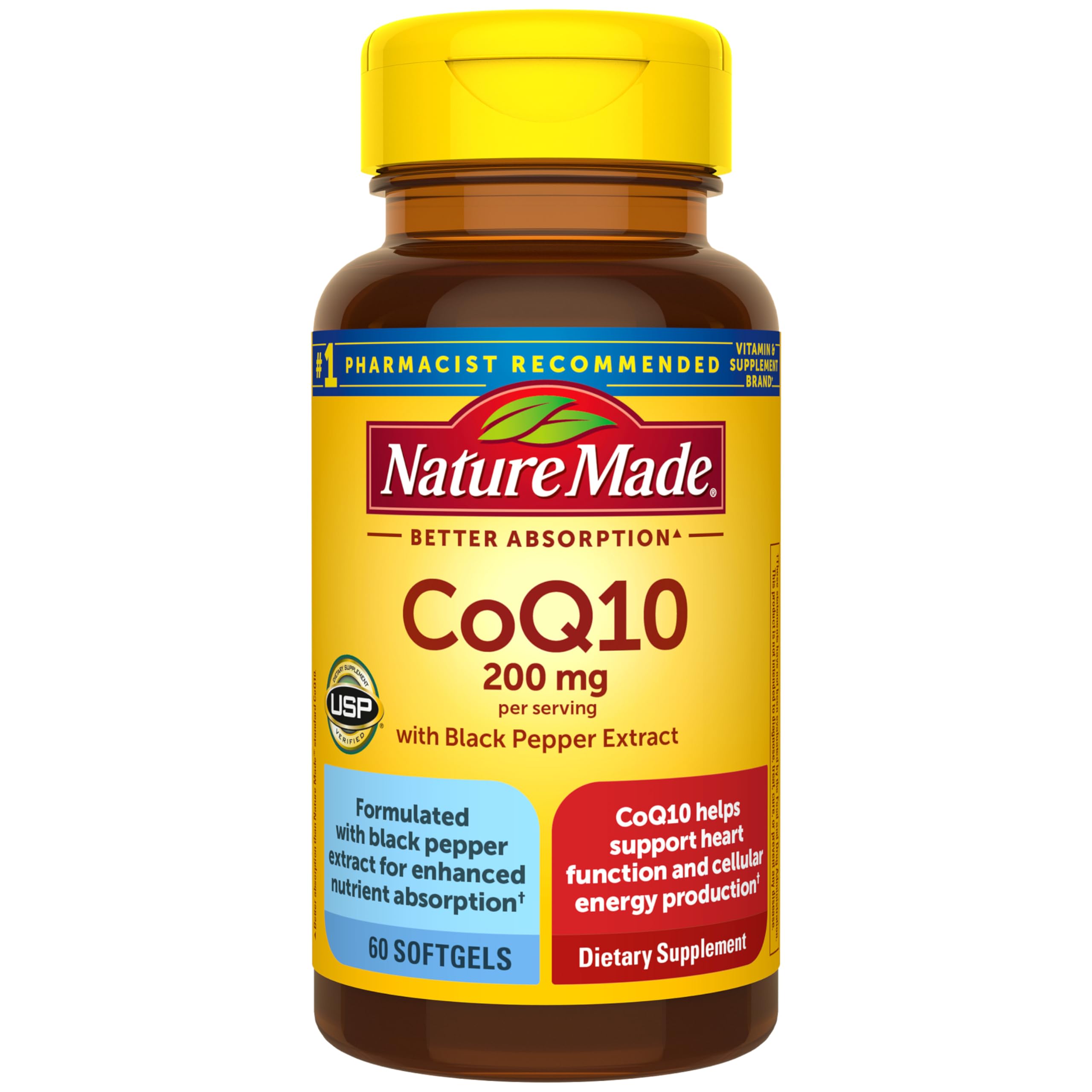
Nature Made is the supplement equivalent of a laboratory reference standard. The United States Pharmacopeia (USP) verification on this bottle means independent auditors have confirmed that each softgel contains exactly 200mg of CoQ10, that the disintegration time meets pharmacopeial limits, and that no undeclared contaminants are present. The formulation adds black pepper extract to boost absorption — a detail many other pharmacist-recommended brands skip entirely.
This is a two-softgel-per-day routine, which delivers 200mg total. Some competitors achieve the same number with a single large capsule, but Nature Made’s split-dose approach can be easier on sensitive stomachs because the smaller softgels break down more gradually. The 30-day supply is modest compared to the 120-count competition, so the per-serving cost edges higher than the bulk options in this guide.
If your priority is third-party rigor and a brand name your doctor will recognize without hesitation, this is the safest bet in the lineup. It doesn’t chase trends — no PQQ, no omega-3 — but it delivers precisely what the label promises, every time.
Why it’s great
- USP-verified potency and purity
- Black pepper extract for enhanced absorption
- Gluten-free with no artificial additives
Good to know
- Only a 30-day supply per bottle
- Two softgels per serving may be less convenient
3. Doctor’s Best High Absorption CoQ10 100mg with BioPerine

The 100mg dose on Doctor’s Best looks small next to the 300mg competitors, but the naturally fermented ubiquinone in these softgels has a molecular profile closer to the CoQ10 your own body produces than synthetically derived variants. Fermentation-based manufacturing preserves the same trans-isomer structure found in human mitochondria, which some research suggests leads to better tissue retention than petrochemical synthesis routes.
BioPerine (piperine from black pepper) is integrated into the formula rather than added as an afterthought, and the 120-softgel count means this bottle lasts four full months at the recommended 100mg daily serving. Users on a budget who want evidence-based absorption enhancement without paying for high milligram bloat will find this the most cost-effective option in the roundup. Some customers with severe CoQ10 deficiency or advanced statin therapy may need to double the serving to 200mg, which halves the supply but still stays affordable.
Doctor’s Best has a decades-long track record of supplying CoQ10 to the biohacker community, and the customer reports of improved lab markers — including better CoQ10 blood serum levels — suggest the natural fermentation method translates into real-world absorption.
Why it’s great
- Naturally fermented for higher tissue retention
- 120 softgels for a long-lasting supply
- Non-GMO and gluten-free with BioPerine
Good to know
- 100mg may require double serving for some users
- Smaller dose relative to competitors
4. NatureBell CoQ10 200mg with PQQ, Veggie Capsules

Most CoQ10 supplements come in gelatin-based softgels that can cause burping or digestive discomfort for sensitive users. NatureBell uses vegetable cellulose capsules — a meaningful differentiator for anyone who avoids gelatin or experiences reflux with oil-filled softgels. Each capsule packs 200mg of ubiquinone alongside 200mcg of PQQ, offering the same mitochondrial biogenesis benefit as the ZEBORA formula but in a solid, non-oily delivery format.
The 240-capsule count is the highest volume in this guide, providing an eight-month supply at the standard 200mg serving. Users report zero aftertaste and no digestive side effects — a common complaint with cheaper CoQ10 brands that use lower-grade excipients. The lack of BioPerine means absorption relies entirely on the veggie capsule disintegration profile, which is adequate but not enhanced. Pairing it with a fatty meal is recommended to maximize uptake.
If your stomach rejects oil-based softgels or you want the longest possible supply between purchases, this is the standout choice. The PQQ co-factor adds genuine mitochondrial-building capacity that standalone CoQ10 cannot match.
Why it’s great
- Gelatin-free veggie capsules for sensitive digestion
- 240 capsules for an exceptionally long supply
- PQQ added for mitochondrial biogenesis
Good to know
- No BioPerine or absorption enhancer
- Best absorbed with a fatty meal
5. Healthy Way CoQ10 200mg Powder Capsules
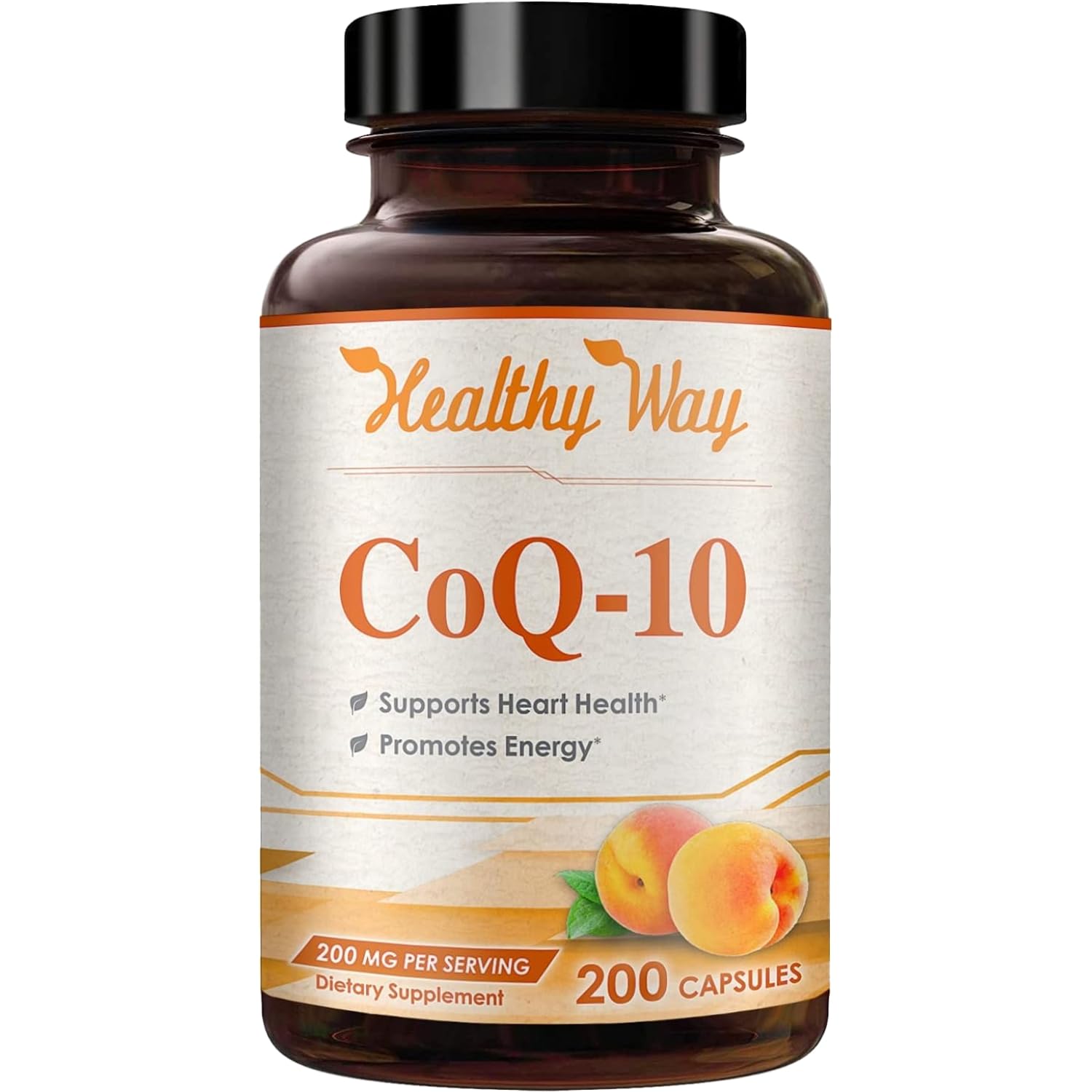
Healthy Way strips the formula down to one active ingredient: 200mg of ubiquinone in a powder-filled capsule. No PQQ, no omega-3s, no BioPerine, no lecithin. This is CoQ10 in its simplest, most cost-effective form — the kind of supplement a doctor might recommend when the goal is straightforward replenishment without additional cofactors or absorption aids.
The powder capsule format dissolves more slowly than oil-based softgels, which can be an advantage for users who want a gradual release throughout the day rather than a single absorption spike. However, the lack of any emulsifier or piperine means bioavailability depends heavily on the fat content of your meal. Users who take this on an empty stomach report minimal effect compared to taking it with eggs or avocado. The 60-capsule count is the smallest in this guide, lasting one month at the 200mg serving.
For the price, this is the most accessible entry point into CoQ10 supplementation. It is made in a cGMP facility in the US, free of common allergens, and delivers the standard 200mg dose that most heart health studies use. Just know that you are buying a base model — no performance enhancements included.
Why it’s great
- Lowest upfront cost for 200mg dose
- Powder capsule for gradual release
- No artificial fillers or preservatives
Good to know
- No absorption enhancers — bioavailability is meal-dependent
- Only a 30-day supply per bottle
FAQ
Should I take CoQ10 with food or on an empty stomach?
How long does CoQ10 take to start working for energy and heart support?
Final Thoughts: The Verdict
For most users, the best coq10 supplement winner is the ZEBORA CoQ10 300mg with PQQ because it combines the highest serving dose with PQQ for mitochondrial biogenesis, omega-3s for transport, and a dual-absorption system of lecithin and BioPerine. If you want USP-verified purity and a pharmacist-backed brand, grab the Nature Made CoQ10. And for stomach-sensitive users who need veggie capsules, nothing beats the NatureBell CoQ10 with PQQ.

Mo Maruf
I created WellFizz to bridge the gap between vague wellness advice and actionable solutions. My mission is simple: to decode the research and give you practical tools you can actually use.
Beyond the data, I am a passionate traveler. I believe that stepping away from the screen to explore new environments is essential for mental clarity and physical vitality.