Our readers keep the lights on and my smoothie glass nicely filled. As an Amazon Associate, I earn from qualifying purchases.
A underpowered circular saw that bogs down on a pressure-treated 2×4 will cost you time, material, and patience. For anyone framing a shed, ripping plywood sheets, or cutting down fence boards, a corded saw with a 15‑amp motor can handle those jobs without flinching. The challenge is finding one that delivers real torque and clean cuts without blowing past your spending limit.
I’m Mohammad Maruf — the founder and writer behind WellFizz. My buying guides focus on cross-referencing real-user durability reports with hard motor specs, blade quality, and warranty coverage so you can separate the weekend warriors from the true workhorses.
After analyzing dozens of models, motor ratings, bevel capacities, and long-term owner feedback, I’ve narrowed down the list of tools that actually perform. This is the best corded circular saw under $100 you can buy right now, ranked by build quality and cutting power.
How To Choose The Best Corded Circular Saw Under $100
Within this budget range, you cannot prioritize every feature equally. Knowing which specs directly affect cutting performance and which are nice-to-haves will help you avoid a saw that stalls on the first rip cut.
Motor amperage and no‑load RPM
The motor is the heart of any corded saw. A 13‑amp motor at 5,500 RPM can handle occasional plywood and softwood, but a 15‑amp motor running 5,800–6,000 RPM delivers the torque needed for hardwoods, pressure-treated lumber, and repeated cuts without overheating. Within this price tier, 15‑amp models typically offer a better power-to-weight ratio for sustained work sessions.
Base plate material and bevel capacity
A stamped steel base is common at entry-level prices, but a cast-aluminum or magnesium shoe stays flatter, resists warping, and keeps cuts square over the saw’s lifespan. Look for a 51‑degree bevel capacity with a positive stop at 45 degrees — that stop saves time when you need repeatable angled cuts for decking or roof sheathing.
Blade quality and included accessories
Most under‑$100 saws ship with a basic 20‑ or 24‑tooth carbide blade. That blade is a starting point, not a long-term solution. A good test is whether the included blade cuts cleanly through a 2×4 on the first pass — if it burns the wood, budget for a replacement blade immediately. Also check whether the saw includes a blade wrench, a spindle lock for fast swaps, and a dust blower that clears chips from the cut line.
Quick Comparison
On smaller screens, swipe sideways to see the full table.
| Model | Category | Best For | Key Spec | Amazon |
|---|---|---|---|---|
| Metabo HPT C7SB3 | Premium | Framing & ripping | 15A / 6,000 RPM / cast aluminum base | Amazon |
| Evolution Power Tools R185CCS | Premium | Multi-material cutting | 15A / TCT blade / electronic brake | Amazon |
| SKILSAW SPT67WL-01 | Mid-Range | Pro-level lightweight use | 15A / 8.6 lbs / 56° bevel | Amazon |
| SKIL 5280-01 | Mid-Range | Accurate cuts with laser guide | 15A / 5,300 RPM / single beam laser | Amazon |
| SKIL 5180-01 | Mid-Range | Lightweight DIY work | 14A / 7.2 lbs / 51° bevel | Amazon |
| RYOBI CSB125 | Budget | Occasional home projects | 13A / alloy steel blade / 45° bevel | Amazon |
| Genesis GCS130 | Budget | Infrequent light cuts | 13A / 5,500 RPM / replaceable brushes | Amazon |
In‑Depth Reviews
1. Metabo HPT C7SB3

The Metabo HPT C7SB3 delivers the highest no‑load speed in this price bracket at 6,000 RPM, powered by a 15‑amp motor that handles OSB, LVL, and pressure‑treated 2×4s without bogging. The cast‑aluminum base — not stamped steel — stays flat and square, which directly translates to cleaner rips and crosscuts. Owners consistently report that the included 24‑tooth framing blade actually performs well out of the box, saving you an immediate upgrade cost.
At 9.5 pounds, the saw is heavier than some competitors, but that mass works in its favor by reducing vibration during long cuts. The dust blower keeps the cut line visible, and the cord holder routes the 15‑amp cord away from the blade path. Bevel adjustments up to 51 degrees with a positive stop at 45 degrees make roof‑cutting angles repeatable without squinting at a gauge.
The spindle lock and included hex bar wrench speed up blade changes. The carrying bag is a welcome inclusion, though some users note the depth‑adjustment lever can loosen slightly during heavy use — a minor trade‑off for this level of build quality and power in the sub‑$100 segment.
Why it’s great
- 6,000 RPM motor cuts faster than most competitors
- Cast‑aluminum base resists warping for accurate cuts
- Included framing blade is actually usable for real work
Good to know
- Heavier than some alternative models at 9.5 lbs
- Depth adjustment lever can slip during heavy use
2. Evolution Power Tools R185CCS

The Evolution R185CCS is the only saw in this roundup designed specifically to cut steel, wood with embedded nails, and plastic without swapping blades. Its 15‑amp motor drives a 20‑tooth TCT (Tungsten Carbide Tipped) blade through a hi‑torque gearbox that keeps the RPM optimized for metal: users confirm cutting 1‑1/4‑inch mild steel round bar in under 30 seconds. The electronic brake stops the blade within four seconds, a genuine safety advantage over budget saws with free‑spinning coast‑down.
The soft‑grip, textured handles improve control during demanding cuts, and the blade guard closes within 0.3 seconds when the trigger is released. At 9.4 pounds, it feels solid without being fatiguing for extended use. The multi‑material capability means one saw can handle framing lumber in the morning and rebar or conduit in the afternoon — but the included blade does wear faster on high‑volume steel cutting, so keeping a backup TCT blade is smart.
The 3‑year limited warranty backs the 100‑hour motor life rating, which is unusually generous at this price point. The main limitation is that the base is not cast metal, so precision woodworking enthusiasts may notice slightly less stability compared to the Metabo HPT. For anyone who regularly works with metal or demolition debris, this saw is a genuine specialty tool that outperforms abrasive saws by a wide margin.
Why it’s great
- Cuts steel, wood, and plastic without changing blades
- Electronic brake stops blade in under 4 seconds
- 3‑year limited warranty on the motor
Good to know
- TCT blade wears faster on heavy steel use
- Base is not cast metal, slightly less stable for joinery
3. SKILSAW SPT67WL-01

The SKILSAW SPT67WL is the lightest professional‑grade circular saw in this tier at 8.6 pounds, yet it still packs a 15‑amp motor with a dual‑field design that dissipates heat more efficiently than single‑field motors. That heat management extends the saw’s lifespan on long rip cuts through hardwood plywood or dimensional lumber. Owners have reported using this saw reliably for eight years with no motor issues, which is exceptional for any corded tool under $100.
The 56‑degree bevel capacity (with a positive stop at 45 degrees) gives you more range than typical 51‑degree saws, which matters for cutting compound angles on rafters or fascia boards. The 10‑foot cord is longer than the industry standard, reducing the need for an extension cord on smaller jobs. The cast‑aluminum base keeps cuts square, and the rubber handle grip provides solid comfort during extended use.
One trade‑off is the lack of a blade brake — the blade will coast after you release the trigger, so you must wait for it to stop before setting the saw down. The plastic housing feels durable but not as robust as full magnesium chassis seen on higher‑priced models. For a shop‑based saw that sees frequent use, this SKILSAW delivers surprising longevity without the premium price tag.
Why it’s great
- Lightest professional saw in class at 8.6 lbs
- Dual‑field motor runs cooler, lasts longer
- 56° bevel capacity for complex angled cuts
Good to know
- No blade brake — blade coasts after trigger release
- Plastic housing instead of magnesium chassis
4. SKIL 5280-01
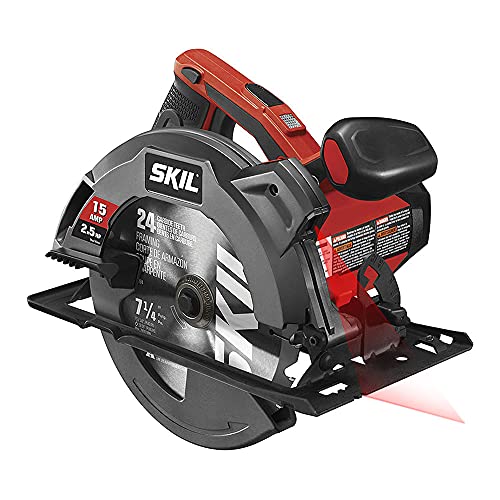
The SKIL 5280-01 stands out with its integrated single‑beam laser guide that projects a cut line directly onto the workpiece. For DIY users who struggle to follow a chalk line, this feature reduces waste and improves accuracy — especially when cross‑cutting plywood or trimming deck boards. The 15‑amp motor delivers 5,300 RPM, which is slightly lower than the Metabo HPT but still sufficient for most residential framing and sheathing tasks.
The saw includes a 24‑tooth carbide blade, a carrying bag, and a blade wrench. The dust blower clears sawdust from the line of cut, which pairs nicely with the laser to keep your reference visible. The bevel adjusts up to 51 degrees with a positive stop at 45 degrees. Several users note the saw is heavier than expected (8.7 pounds), though the weight aids stability during plunge cuts.
The laser guide is less visible in direct sunlight, so outdoor use in bright conditions may require you to rely on the edge of the shoe for alignment. The blade guard and trigger safety lock prevent accidental starts, and the spindle lock makes blade swaps convenient. For garage‑based projects and shaded job sites, the laser is a genuine time‑saver that justifies the mid‑range cost.
Why it’s great
- Single‑beam laser improves cut‑line accuracy
- 15‑amp motor with dust blower for clear visibility
- Carrying bag and blade wrench included
Good to know
- Laser is hard to see in bright sunlight
- Heavier than some competing 15‑amp models
5. SKIL 5180-01

The SKIL 5180-01 is built for users who want maximum portability and reduced fatigue during short projects. At 7.2 pounds, it is the lightest saw in this comparison thanks to a redesigned chassis that cuts 15 percent of the weight from the older SKIL 5480. The 14‑amp motor runs fast enough for cutting 2×4s, plywood, and softwood, though it will bog on dense hardwood or thick pressure‑treated lumber if you push the feed rate.
The saw includes a 20‑tooth carbide blade — which is a step down from the 24‑tooth blades found on higher‑end models. Replacing it with a quality blade improves cut quality noticeably. The dust blower works effectively, and the 51‑degree bevel with a positive stop at 45 degrees covers standard framing angles. Owners who bought this saw for demolition work report it handles cutting through nails, roofing, and fiberglass without major issues.
The all‑plastic construction keeps weight down, but the blade guard feels less robust than the cast‑metal guards on the Metabo HPT or SKILSAW. The power‑on indicator light is a simple but useful feature that reminds you the saw is live. For a homeowner who needs a saw for weekend projects and wants to avoid shoulder fatigue, this is the most comfortable option in the lineup.
Why it’s great
- Very lightweight at 7.2 lbs for minimal fatigue
- Power‑on indicator light improves safety
- Affordable entry point for DIY users
Good to know
- 14‑amp motor struggles with dense hardwood
- Included 20‑tooth blade needs immediate upgrade
6. RYOBI CSB125
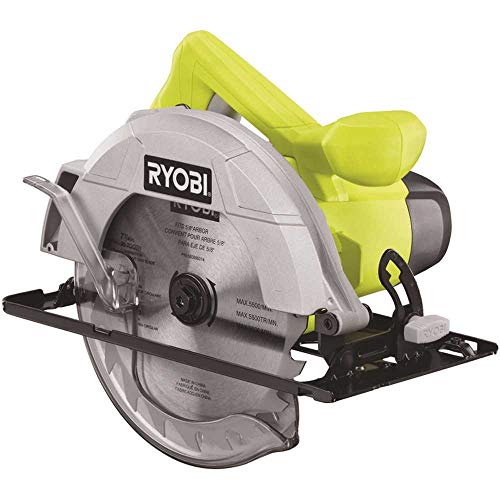
The RYOBI CSB125 is a 13‑amp corded saw that offers a no‑battery, always‑ready experience for homeowners who already own RYOBI batteries but want a corded tool for extended use. At this entry‑level price point, it delivers enough power for cutting 2×4s, plywood, and softwood — but the included alloy steel blade is notably poor and should be replaced before the first serious cut. Multiple buyers confirm the saw works well with a quality aftermarket blade.
The saw cuts to a 45‑degree bevel, which covers standard angled cuts but stops short of the 51‑ or 56‑degree capacity found on premium models. The handle uses a thermoplastic elastomer grip that provides decent comfort, and the spindle lock allows blade changes without a separate tool. The plastic chassis keeps weight low, though the saw feels less substantial than the SKIL 5180.
Durability reports are mixed: some users have had the saw for years without issues, while a few received units that appeared to be repackaged returns. The dust blower is basic but functional. The 13‑amp motor lacks the torque for oak or repeated pressure‑treated cuts, so this saw is best reserved for light‑duty projects where budget is the primary concern.
Why it’s great
- Low entry cost for occasional home use
- Always ready — no battery charging needed
- Spindle lock for easy blade swaps
Good to know
- Included blade is poor quality, must be replaced
- 13‑amp motor lacks torque for hardwoods
7. Genesis GCS130

The Genesis GCS130 is the most affordable option in this list, built for users who need a circular saw only a few times a year for projects like cutting plywood shelving or trimming fence boards. The 13‑amp motor spins at 5,500 RPM, which is adequate for softwoods and thin sheet goods. The spindle lock and externally replaceable brushes extend the saw’s service life — a nice feature at this price point, since worn brushes are often what kills cheap tools.
The included 24‑tooth carbide blade starts sharp but dulls quickly on pressure‑treated or nail‑embedded lumber, so budget for a replacement blade early. The plastic housing and stamped steel base keep weight manageable, but the build quality feels more fragile than the SKIL or RYOBI models. The rip guide and blade wrench are welcome inclusions for the price.
Several owners note that the saw cuts well with a quality guide, but the stock setup can wander without one. The bearing shield design is a known weak point — adding a metal strip to the guard can prevent melting during extended cuts. For the very occasional user who needs a saw to handle basic tasks and wants to spend the absolute minimum, the Genesis GCS130 gets the job done with some caveats.
Why it’s great
- Lowest cost entry point for basic cutting tasks
- Replaceable brushes extend motor life
- Includes rip guide and blade wrench
Good to know
- Included blade dulls quickly on tough lumber
- Plastic housing and stamped base limit precision
FAQ
How many amps do I need in a corded circular saw under $100?
Can a budget corded saw cut metal?
Why does my saw burn the wood during cuts?
Final Thoughts: The Verdict
For most users, the corded circular saw under $100 winner is the Metabo HPT C7SB3 because it combines a 6,000 RPM 15‑amp motor with a flat cast‑aluminum base and a usable included blade — specs that would cost more from other brands. If you regularly cut steel and wood with embedded nails, grab the Evolution Power Tools R185CCS. And for a lightweight, professional‑grade saw with a longer bevel range, nothing beats the SKILSAW SPT67WL-01.

Mo Maruf
I created WellFizz to bridge the gap between vague wellness advice and actionable solutions. My mission is simple: to decode the research and give you practical tools you can actually use.
Beyond the data, I am a passionate traveler. I believe that stepping away from the screen to explore new environments is essential for mental clarity and physical vitality.