Our readers keep the lights on and my smoothie glass nicely filled. As an Amazon Associate, I earn from qualifying purchases.
Freshly seeded soil is vulnerable. Wind, rain, birds, and scorching sun can undo hours of work in a single afternoon. The right cover locks moisture into the ground, blocks hungry foragers, and prevents runoff so your seed gets the stable start it needs to germinate into thick, healthy grass.
I’m Mohammad Maruf — the founder and writer behind WellFizz. I’ve spent countless hours analyzing the specific material science, mesh tolerances, and biodegradable bonding agents that separate an effective seed cover from a frustrating failure.
This guide breaks down everything you need to know to pick the right protection for your lawn, from weed-free processed straw to ultra-fine insect barriers, so you can confidently invest in the best cover for grass seed and watch your turf thrive.
How To Choose The Best Cover For Grass Seed
Picking a cover isn’t just about throwing something over the dirt. You need a material that balances moisture retention, breathability, erosion prevention, and ease of application. Here are the critical factors to weigh before you buy.
Material type: Straw vs synthetic netting
Processed straw with a tackifier creates a biodegradable blanket that holds seed in place, keeps it cool, and breaks down naturally after germination. Synthetic mesh netting works better when you need long-term protection against birds and large animals, but it must be removed once grass reaches a certain height to avoid choking new growth.
Tackifier bonding agents
A tackifier is a natural, water-activated glue that binds straw fibers together. This is critical on slopes or in windy regions where loose straw will simply blow away. Look for straw labeled “with tackifier” if you need superior wind and rain resistance without extra labor.
Mesh density and airflow
If you opt for netting, the mesh size matters. A 0.8mm opening blocks most insects and small birds while still allowing sunlight, rain, and air to reach the soil. Wider meshes may let pests through, while too-dense textiles can trap heat or block water from penetrating.
Quick Comparison
On smaller screens, swipe sideways to see the full table.
| Model | Category | Best For | Key Spec | Amazon |
|---|---|---|---|---|
| EZ-Straw Seeding Mulch | Straw with tackifier | Large lawns & slopes | 2.5 cu ft — covers 500 sq ft | Amazon |
| Gardener Select Seeding Straw | Premium processed straw | Weed‑free certified projects | 2.5 cu ft — covers 500 sq ft | Amazon |
| Hyxanons Ultra-Fine Garden Netting | Synthetic mesh | Pest & bird exclusion | 0.8mm x 1mm mesh — 10×50 ft | Amazon |
| Natural Wheat Straw | Organic loose straw | Small patches & animal bedding | 1 lb — compact vacuum‑packed | Amazon |
| Fippy Garden Netting Pest Barrier | Lightweight PE netting | Raised beds & flowers | 0.8mm mesh — 10×50 ft | Amazon |
In‑Depth Reviews
1. EZ-Straw Seeding Mulch with Tackifier

The EZ-Straw is the gold standard for covering new grass seed on any scale. Its processed straw is twice-cut for easy, even spreading, and the natural tackifier activates when watered, bonding fibers together into a cohesive mat that resists wind and heavy rain. Each 2.5 cu ft bale covers up to 500 square feet, making it ideal for both small lawn repairs and full-yard overseeding projects.
Reviewers consistently praise how well it stays in place on slopes and in gusty conditions. The straw retains moisture effectively, accelerating germination — several users reported visible growth within five days of application. Since it biodegrades completely, there is no cleanup required once the grass establishes itself.
Application can be a bit messy because the tackifier makes the straw clump, but that is precisely what gives it superior holding power. It is also 99% weed-free, so you won’t introduce unwanted plants into your new turf.
Why it’s great
- Built-in tackifier prevents washout and wind loss
- High coverage (500 sq ft per bale) reduces per-project cost
- Biodegradable — no removal needed after germination
Good to know
- Can be messy to spread due to tacky fibers
- Only covers 500 sq ft — large properties may need multiple bales
2. Gardener Select Seeding Straw with Tackifier

Gardener Select offers a premium straw experience with the same 2.5 cu ft format and tackifier technology as the EZ-Straw, but with an emphasis on being exceptionally free of weed seeds. Multiple long-term users report never seeing a single weed emerge from this product, which is a major advantage for those establishing a pristine new lawn or patching bare spots in established turf.
The straw is uniform in texture and easy to work with — it spreads evenly without large clumps. The tackifier provides strong wind resistance, and reviewers note that even in exposed areas the straw stays put once moistened. It also helps retain soil moisture, reducing the frequency of watering during the critical germination window.
One caveat: this bale is heavier than some alternatives, weighing over 11 kilograms, so moving it around the yard requires a bit more effort. Still, for weed-conscious homeowners who want the cleanest possible coverage, the Gardener Select is a reliable investment.
Why it’s great
- Exceptional weed-free performance — verified by many users
- Uniform texture makes spreading predictable and fast
- Tackifier locks fibers together for slope stability
Good to know
- Heavy bale may be difficult to carry for some users
- Premium price reflects the high-quality processing
3. Hyxanons Ultra-Fine Garden Mesh Netting

The Hyxanons netting is a synthetic alternative that excels when your primary concern is pest exclusion while still protecting seed from birds and heavy rain. Its ultra-fine 0.8mm x 1mm mesh blocks insects, deer, rabbits, and squirrels while allowing sunlight and water to pass through. The 10×50 ft roll provides generous coverage for raised beds, seed rows, or small lawn patches.
Made from UV-resistant PE material over an alloy steel frame, this netting holds up well under prolonged sun exposure and doesn’t unravel when cut to custom sizes. Users appreciate its lightweight drape — you can lay it directly over seeds or seedlings without causing damage, then secure the edges with soil, stones, or stakes.
A few reviewers mention that the netting can tear if handled too aggressively, so you need to be careful during installation. It also does not provide the same moisture-retention benefit as straw, so you may need to water seeds more frequently underneath the mesh.
Why it’s great
- Ultra-fine mesh stops small insects and large animals alike
- UV-resistant material withstands full sun for multiple seasons
- Can be cut to any size without fraying
Good to know
- Rips fairly easily if snagged or pulled roughly
- Does not retain soil moisture — requires more frequent watering
4. Natural Wheat Straw — 1 lb Vacuum Pack

For those tackling small patch repairs rather than whole-lawn seeding, this 1 lb vacuum-packed wheat straw is a neat solution. It is 100% natural, sun-dried, and contains no chemical additives or weed seeds. One user covered a 36-inch circle of new seed with just a fraction of the bag, making it economical for targeted touch-ups.
The straw is clean and dry, and the vacuum packaging ensures it arrives free of moisture or mold. It works well for protecting seed from birds and retaining soil moisture on small garden beds or bare patches. It is also safe for use around pets and can double as animal bedding or decorative craft material.
The main trade-off is quantity: at only 1 lb, it is expensive per square foot compared to larger bales. Some buyers noted that the loose straw can blow away in strong winds if not tucked down, especially in Florida-level gusts. For very small projects or those who also need bedding material, it is a handy option.
Why it’s great
- Compact vacuum pack stores easily and stays dry
- 100% chemical-free — safe for organic gardening and animals
- Perfect for small patches under 50 sq ft
Good to know
- Small size means high cost per square foot for larger areas
- No tackifier — can blow away in heavy wind
5. Fippy Garden Netting Pest Barrier
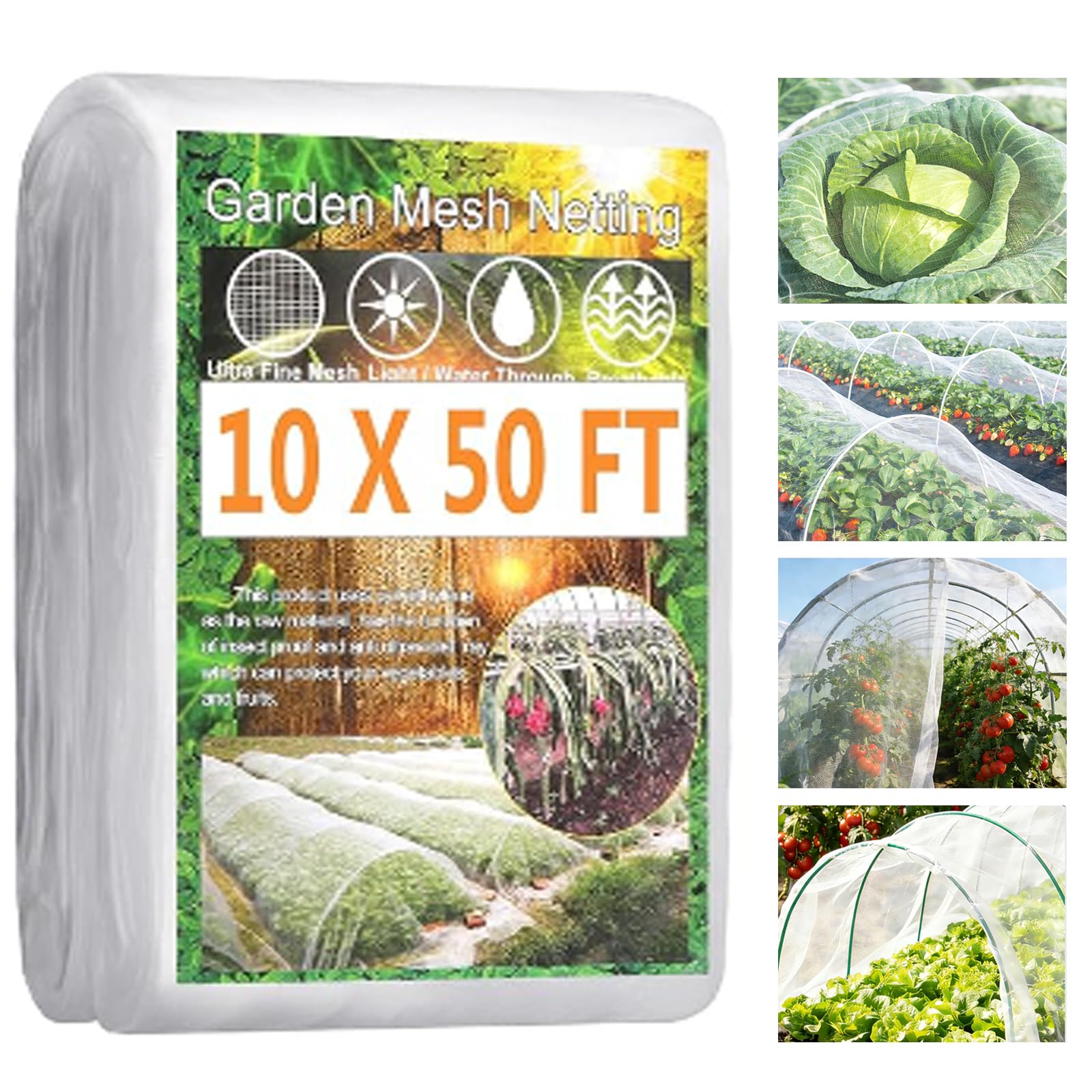
Fippy’s garden netting offers an entry-level synthetic alternative for covering grass seed at a lower cost. The 10×50 ft roll of lightweight PE mesh uses a 0.8mm weave to block birds, squirrels, and flying insects while maintaining breathability and water penetration. It can be draped directly over seeded areas and secured with soil, stakes, or stones.
Reviewers appreciate that it keeps bugs off vegetable gardens and fruit bushes, and it works well as a temporary seed cover to prevent birds from picking at freshly sown grass. The material is tear-resistant enough for a season of use, and it can be cut to any shape without fraying.
However, some users report that the netting is thinner than expected and can rip if stretched too tightly or snagged on sharp objects. It is best suited for protected areas or for gardeners who handle it gently during setup. For cost-conscious shoppers covering small beds or seed rows, it gets the job done.
Why it’s great
- Low entry price for a 500 sq ft roll of protective netting
- Lightweight and easy to drape over seedlings or seed beds
- Mesh allows rain and sunlight to reach the soil
Good to know
- Thin material may rip with rough handling
- Not as durable as heavier-gauge netting options
FAQ
Can I use regular hay instead of processed straw for covering grass seed?
How long should I leave the cover on after seeding?
Will a tackifier straw harm my pets or children?
Final Thoughts: The Verdict
For most users, the best cover for grass seed winner is the EZ-Straw Seeding Mulch with Tackifier because it combines proven erosion control, high coverage per bale, and complete biodegradability at a fair price. If you need a weed-free certified option, grab the Gardener Select Seeding Straw. And for pest-heavy areas where birds and squirrels devour seed before it sprouts, nothing beats the Hyxanons Ultra-Fine Garden Netting as a reusable synthetic barrier.

Mo Maruf
I created WellFizz to bridge the gap between vague wellness advice and actionable solutions. My mission is simple: to decode the research and give you practical tools you can actually use.
Beyond the data, I am a passionate traveler. I believe that stepping away from the screen to explore new environments is essential for mental clarity and physical vitality.