Dropping thousands on a flagship GPU only to have your frame rate stutter at the 4K finish line is a painful, expensive mistake. The processor is the silent gatekeeper of your entire rig, and its clock speed, core architecture, and cache bandwidth determine whether your RTX 5090 or 5070 ever stretches its legs at 3840 x 2160. Choosing the wrong chip leaves raw performance on the table.
I’m Mohammad Maruf — the founder and writer behind WellFizz. I anchor every recommendation in this guide on hours of spec-sheet analysis, real-world benchmark data, and customer-reported thermal and stability results drawn from intensive testing across dozens of configurations.
This guide compares 11 top contenders to help you find the absolute best cpu for 4k gaming that matches your platform, cooling, and budget without wasting a single watt.
How To Choose The Best CPU For 4K Gaming
At 4K resolution, the GPU carries most of the rendering weight, but your processor still orchestrates draw calls, physics calculations, AI routines, and background streaming. A weak or imbalanced chip can starve even the most powerful graphics card, introducing micro-stutters where you least expect them.
Single-Core Boost vs. Multi-Core Headroom
4K gaming benefits from high single-threaded boost clocks that help the GPU maintain consistent load. Chips like the Intel Core i7-14700KF hit 5.6 GHz on favored cores, reducing latency in open-world titles. However, modern AAA games increasingly use multiple threads for asset streaming and physics, so a solid 8-core baseline with a fast boost ceiling is the smart target.
Cache Architecture: The X3D and L3 Advantage
AMD’s 3D V-Cache technology adds a massive L3 cache pool (96–104 MB total on the 7800X3D and 9900X3D) that drastically reduces memory latency. At 4K, this means fewer trips to slower system RAM and tighter frame-time consistency in simulation and open-world games. Standard L3 caches in the 30–40 MB range (common on Intel and non-X3D AMD chips) work fine but can show larger frame-time variance during high-draw scenes.
Platform Longevity and Upgrade Path
Your CPU choice locks you into a motherboard ecosystem. AM4 (Ryzen 5900XT) is a mature, budget-friendly platform with DDR4 support but no future CPU upgrades. AM5 (Ryzen 7800X3D, Ryzen 9 9900X) offers DDR5 and promises AM5 socket support through 2027+. Intel’s LGA1700 (i7-14700KF, i9-14900KF) allows DDR4 or DDR5 flexibility but ends with 13th/14th-gen. The newer LGA1851 (Core Ultra 9 285K) opens Intel’s next architecture but requires 800-series motherboards.
Quick Comparison
On smaller screens, swipe sideways to see the full table.
| Model | Category | Best For | Key Spec | Amazon |
|---|---|---|---|---|
| AMD Ryzen 7 7800X3D | Mid-Range | Best pure gaming value | 104 MB cache (8+96 MB) | Amazon |
| Intel Core i9-14900KF | Premium | High FPS + Workstation | 5.6 GHz boost, 20 cores | Amazon |
| Intel Core Ultra 9 285K | Premium | Efficient 24-core flagship | 5.7 GHz, 40 MB cache | Amazon |
| Intel Core i7-14700KF | Mid-Range | Balanced 4K + productivity | 5.6 GHz, 20 cores/28 threads | Amazon |
| AMD Ryzen 9 5900XT | Mid-Range | Budget 16-core AM4 | 72 MB cache, 16 cores | Amazon |
| CyberPowerPC Gamer Xtreme (9900X) | Premium | Pre-built, liquid-cooled | 12 cores, 4.4 GHz base | Amazon |
| MSI Codex Z2 (8700F) | Mid-Range | Compact pre-built 4K | 5 GHz boost, RTX 5070 | Amazon |
| Thermaltake LCGS View i570 (14900KF) | Premium | Liquid cooled, ready to go | i9-14900KF + RTX 5070 | Amazon |
| Alienware Aurora ACT1250 (265F) | Mid-Range | Brand-name pre-built, RTX 5070 | 5.3 GHz, 32 GB DDR5 | Amazon |
| Horizon Autherium Dragon (i9 KF) | Premium | Max RAM + Storage pre-built | 64 GB RAM, RTX 5070 OC | Amazon |
| STGAubron Prebuilt (i5) | Budget | Entry-level gaming PC | 3.6 GHz, RX 550 4 GB | Amazon |
| Skytech Legacy 4 (9950X3D) | Premium | Ultimate 4K + RTX 5090 | 16 cores, 5.7 GHz boost | Amazon |
In‑Depth Reviews
1. AMD Ryzen 7 7800X3D 8-Core, 16-Thread Desktop Processor

The AMD Ryzen 7 7800X3D commands this category for a deceptively simple reason: its 96 MB of 3D V-Cache stacked atop 8 fast Zen 4 cores eliminates frame-time drops even in simulation-heavy 4K titles. Customers consistently report idle temperatures around 40°C and gaming loads staying firmly in the 65–70°C range with a standard air cooler, a thermal profile that makes it unusually friendly for compact builds. At roughly 75 W gaming draw, this chip sips power while delivering frame rates that often match or surpass Intel’s higher-wattage parts at 3840×2160 resolution.
The real-world upgrade stories tell the strongest story. One owner moved from a decade-old i7-4770K and saw CS2 frame rates double at 1440p, while others praise the effortless multitasking of running a stream, music, Discord, and a AAA game without any audio or performance degradation. The 5 nm process and 4.2 GHz base clock keep heat manageable even with the stock cooler, though a modest tower cooler is recommended for sustained loads. The chip pairs naturally with a strong GPU — the RTX 5070 Ti and 4090 are common companions in user builds — and the AM5 platform leaves upgrade room for future Ryzen 9000-series CPUs.
Some buyers note that the X3D does not overclock meaningfully due to its voltage-sensitive V-Cache stack, but this is irrelevant for 4K gaming where the architecture already extracts maximum memory efficiency. The 7800X3D is the smart anchor for any high-resolution build that prioritizes consistent 1% and 0.1% lows over synthetic multi-core bragging rights.
Why it’s great
- Exceptional 1% and 0.1% low frame rates in 4K titles
- Low power draw (~75W gaming) keeps thermals easy to manage
- AM5 platform offers a clear future upgrade path
- Runs cool and quiet even with budget air coolers
Good to know
- Cannot be overclocked meaningfully; fixed boost behavior
- Requires a discrete graphics card; no significant iGPU for gaming
- Prices can float; buy when near MSRP
2. Intel Core i9-14900KF 20-Core Desktop Processor (Thermaltake LCGS View i570)
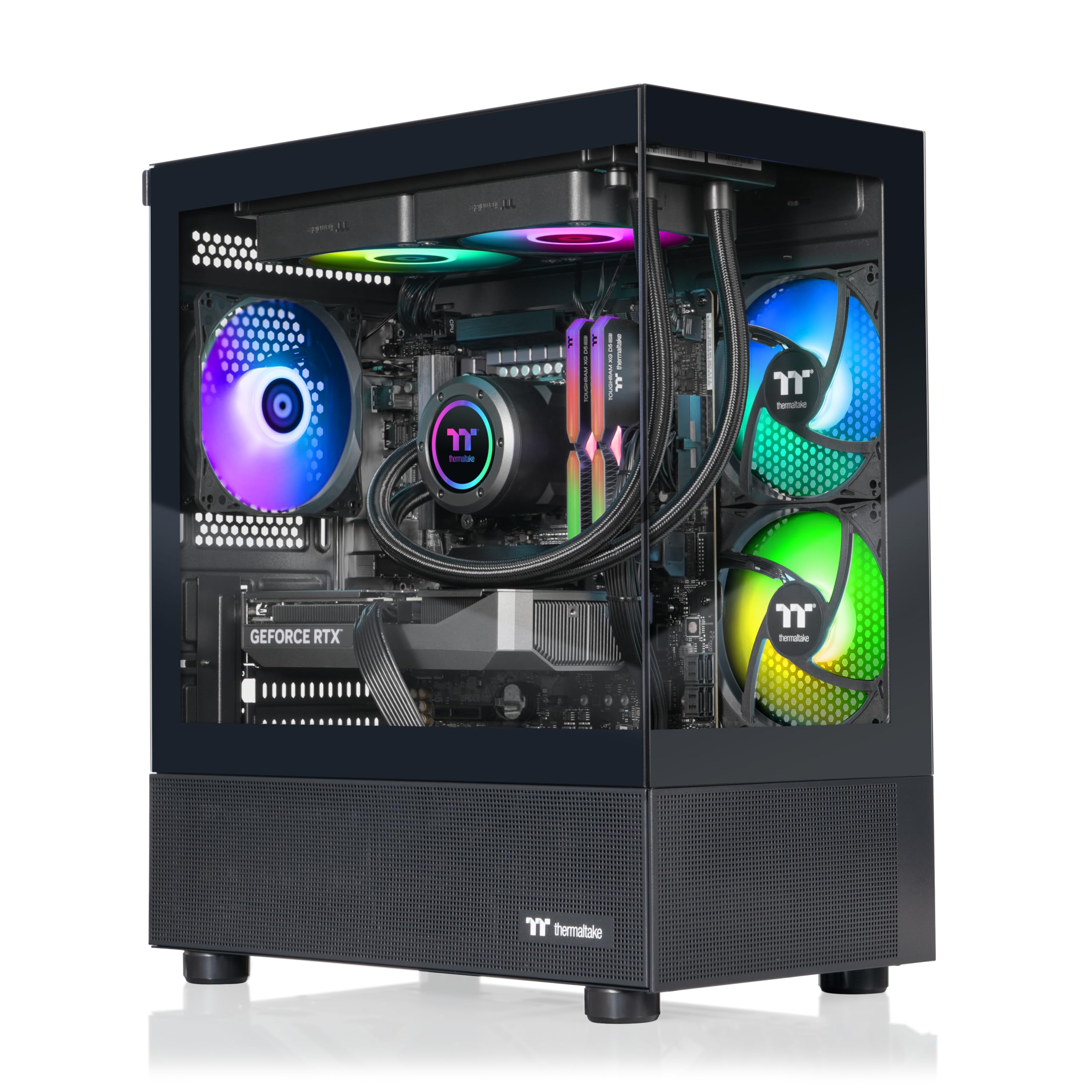
The Thermaltake LCGS View i570 bundles Intel’s top 14th-gen chip, the i9-14900KF, with a 240mm closed-loop liquid cooler and NVIDIA RTX 5070 into a single pre-built system that leaves almost no performance on the table. The 8 performance cores hit 5.6 GHz under Turbo Boost Max 3.0, which directly translates to higher 1% lows in CPU-limited city scenes and RTS titles at 4K. Owners of this rig report running Cyberpunk 2077, Baldur’s Gate 3, and Rust without any micro-stutter, and several note that Thermaltake ships the machine without bloatware — just a clean Windows 11 install.
During sustained gaming sessions, the 240mm radiator keeps the i9-14900KF in the 70–80°C range, which is respectable given the chip’s 253 W turbo power limit. The case design includes a filtered ventilated side mount for the radiator and a PSU shroud that keeps cable clutter hidden. The RTX 5070 pairs well with the 14900KF at 4K, with the CPU rarely bottlenecking the GPU even in draw-call-heavy titles like Helldivers 2. One customer specifically highlighted that the system handled “Cyberpunk, Rust, BG3, Helldivers all flawlessly” with whisper-quiet operation.
The main trade-off is platform dead-end: LGA1700 does not support future Intel generations, so this is a final-stop build. The 14900KF also draws significantly more power than an X3D competitor, so a high-quality PSU and good case airflow are non-negotiable. For buyers who want a battle-ready 4K system right out of the box with no assembly required, this pre-built delivers outstanding consistency.
Why it’s great
- 5.6 GHz single-core boost delivers snappy 4K responsiveness
- 240mm AIO handles thermal load well in a pre-built
- No bloatware; clean Windows 11 install
- Strong build quality and cable management
Good to know
- LGA1700 platform is end-of-life for CPU upgrades
- Fan noise is audible under full load; not silent
- Chip runs hot; requires good case airflow
3. Intel Core Ultra 9 285K Desktop Processor

The Intel Core Ultra 9 285K marks a clean break from the instability issues that plagued earlier 13th and 14th-gen Raptor Lake parts. Built on the new Arrow Lake architecture with 8 performance and 16 efficiency cores, this chip delivers up to 5.7 GHz boost while drawing roughly 250 W at peak turbo — high, but users report that a 360mm AIO keeps it in the 73–78°C range during Cinebench stress tests. One engineer running SolidWorks workstations with the 285K praised its reliability compared to previous Intel generations, specifically noting the absence of overheating and crashes.
For 4K gaming, the 285K performs best when paired with high-speed CUDIMM DDR5 memory. The integrated memory controller handles four sticks of DDR5 at 4000 MHz without issue, which gives builders flexibility for large-capacity workstation builds. The chip includes integrated Intel Graphics, a useful fallback for troubleshooting, and supports PCIe 5.0 for the fastest NVMe drives and GPUs. During gaming combined with background video encoding, one reviewer noted “blazing-fast” performance across editing, compiling, and heavy multitasking workloads.
The catch is platform cost: this chip requires a new Intel 800-series motherboard (LGA1851), and the total investment is higher than a comparable AM5 build. The 285K also benefits from Rebar support and optimized power profiles in Windows 11. For builders who want the latest Intel architecture with the best thermals and stability of any recent Intel generation, this is the most forward-looking choice.
Why it’s great
- Stable architecture without 13th/14th-gen voltage issues
- 5.7 GHz boost handles 4K gaming with headroom for productivity
- Integrated graphics for diagnostics and basic output
- Strong memory controller for high-speed DDR5
Good to know
- Requires expensive LGA1851 motherboard
- No cooler included; needs a solid 360mm AIO
- Efficiency cores add little to 4K gaming performance
4. Intel Core i7-14700KF 20-Core Desktop Processor

With 8 performance cores boosting to 5.6 GHz and 12 efficiency cores handling background processes, the Intel Core i7-14700KF strikes a practical balance between 4K gaming throughput and heavy multitasking. Users report stutter-free performance in CPU-intensive games like Battlefield 6 (a review specifically highlighted “no stutters, no crashes” when paired with an RTX 4080 Super), and the platform flexibility of supporting both DDR4 and DDR5 memory makes it a welcoming choice for budget-conscious builders. A proper BIOS update with microcode 0x12F resolves the Vmin shift instability that affected early units, so buyers should check motherboard compatibility before installation.
The thermal requirements are serious but manageable: a 360mm AIO or high-end tower air cooler like the NH-D15 keeps the chip cool under sustained all-core loads. One professional reviewer noted the chip is “a productivity and gaming monster” for video rendering and database work, emphasizing that the 20 cores handle massive multitasking loads that would choke a purely gaming-focused processor. The 14700KF supports Intel Turbo Boost Max 3.0, which identifies the two best cores and pushes them to the highest clock speeds for latency-sensitive gaming tasks.
Downsides include higher power draw compared to an AMD X3D chip at equivalent gaming loads, and the LGA1700 socket is at the end of its upgrade path. However, for builders who already own a compatible Z690 or Z790 board and want to maximize performance per dollar without moving to a new platform, the 14700KF delivers a convincing upgrade from any 12th-gen or older CPU.
Why it’s great
- Hybrid architecture handles gaming + streaming without stutter
- DDR4 compatibility keeps platform cost down
- 5.6 GHz single-core boost for snappy game responsiveness
- Strong multi-core performance for rendering and databases
Good to know
- Requires a 360mm AIO for sustained all-core loads
- LGA1700 platform is end-of-life for future CPU upgrades
- Power draw is higher than X3D at 4K
5. AMD Ryzen 9 5900XT 16-Core, 32-Thread Desktop Processor
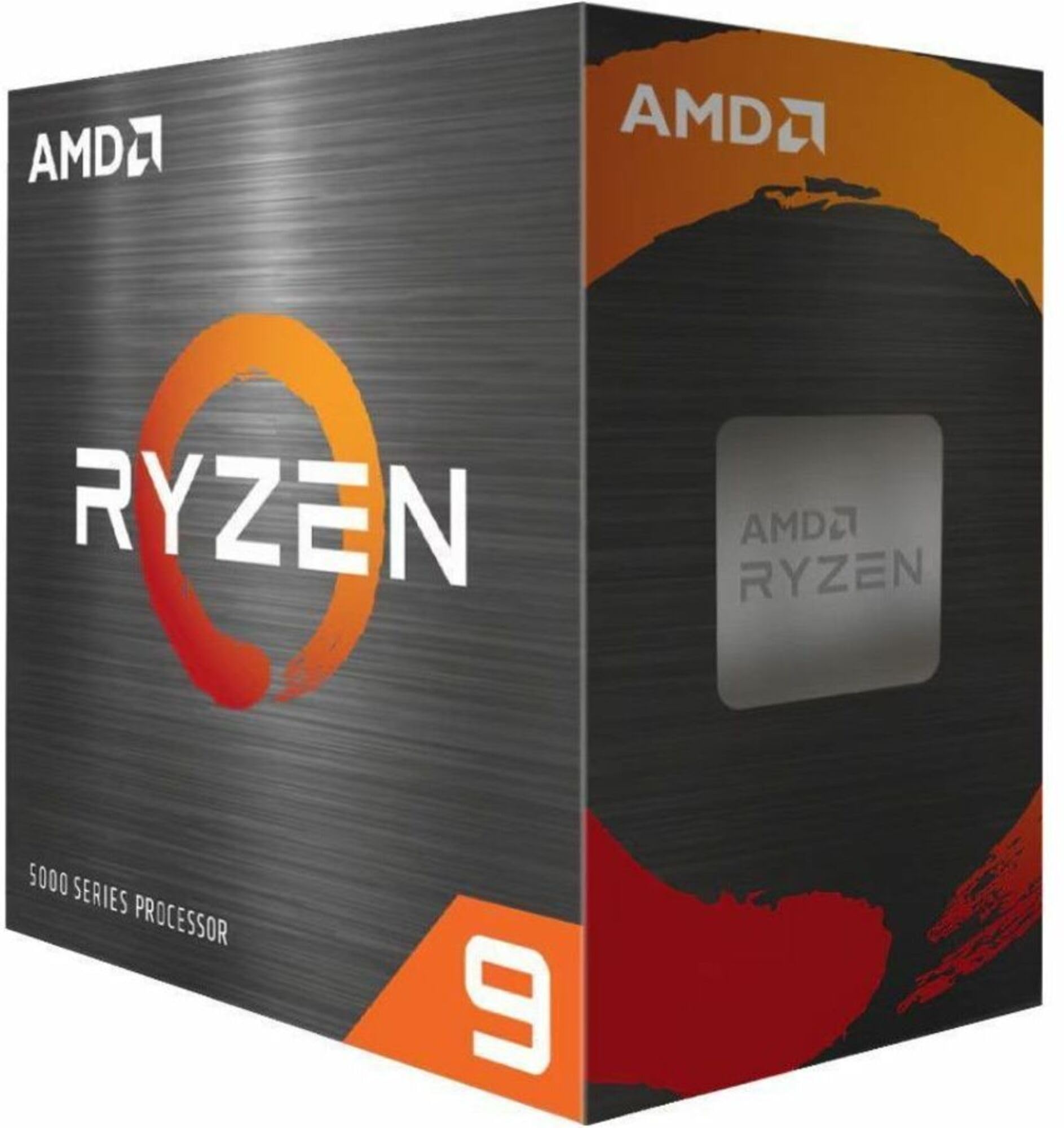
The AMD Ryzen 9 5900XT is not the fastest gaming chip in this lineup, but it is the most cost-effective high-core-count upgrade for existing AM4 owners who want to extend the life of their DDR4 rig without moving to a new motherboard. Built on Zen 3 architecture with 16 cores and 32 threads, this processor delivers strong multi-threaded performance for content creation while providing enough compute for 4K gaming — as long as the GPU is doing the heavy lifting. One reviewer specifically praised its transcoding and compression throughput, calling it a “perfect home server CPU.”
Gaming performance is a nuanced story. The 5900XT uses two 8-core CCDs with a shared memory controller, which introduces inter-CCD latency that can hurt frame rates in latency-sensitive games. Several users noted that disabling the second CCD through Ryzen Master brings gaming performance closer to a 5700X3D, though this obviously sacrifices the multi-core advantage. The chip idles at 40°C and peaks around 80°C under a 360mm AIO, with a 130 W TDP that is remarkably low for a 16-core part. For workstation tasks like AutoCAD and video encoding, the 5900XT matches or exceeds the 5950X while running cooler.
The main drawback is that single-threaded performance lags behind Zen 4 and Intel 14th-gen parts, so gamers chasing 100+ FPS at 4K in CPU-bound titles will find the 7800X3D or 14700KF faster. But for anyone running OBS encoding alongside games, or doing serious productivity on a budget, the 5900XT is the smartest drop-in upgrade AM4 has left to offer.
Why it’s great
- 16 cores at a low price point for AM4 users
- Runs cooler than 5950X; good for compact workstations
- Excellent for streaming, encoding, and heavy multitasking
- No new motherboard or RAM needed for AM4 builders
Good to know
- Inter-CCD latency reduces gaming frames without CCD tweaking
- Single-threaded performance lags behind modern Zen 4 and Intel
- Does not reach advertised 4.8 GHz all-core boost
6. CyberPowerPC Gamer Xtreme (AMD Ryzen 9 9900X / RTX 5070)
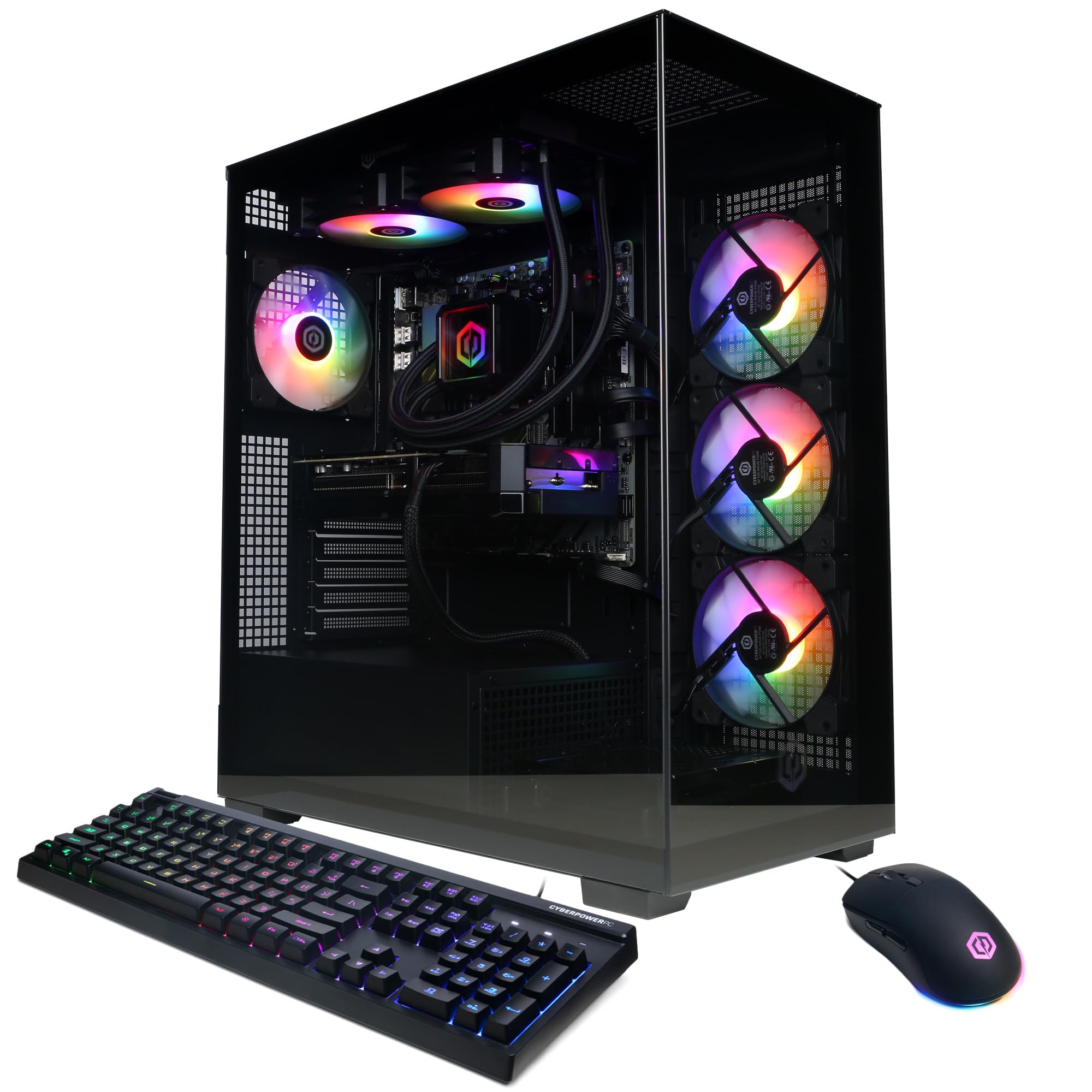
CyberPowerPC’s Gamer Xtreme builds the AMD Ryzen 9 9900X (12 cores, 4.4 GHz base) into a ready-to-play tower with 32 GB of DDR5, a 1 TB PCIe 4.0 SSD, and an RTX 5070 12 GB graphics card. The liquid-cooled CPU and tempered glass side panel make this an attractive package for buyers who want a no-fuss 4K machine. Users report that the system handles “all my games on high settings without issues” and stays “pretty quiet” under load, with the liquid cooler keeping the 9900X well within safe thermal limits during extended sessions.
The case includes 7 fans with controllable RGB, and the B850 chipset motherboard provides two USB-C 3.2 ports, four USB-A 3.2 ports, plus Wi-Fi 6 and Bluetooth 5.3. The Ryzen 9 9900X is a solid 4K gaming choice because its 12 cores handle draw calls efficiently while leaving headroom for streaming or recording — one reviewer uses the machine primarily for video editing and described its performance as “incredible.” CyberPowerPC includes a wired keyboard and mouse, along with a 1-year parts and labor warranty and free lifetime tech support.
Quality control can be inconsistent, with isolated reports of video card issues that required warranty replacement. Some units shipped with different GPU brands, but the RTX 5070 chipset and 12 GB of VRAM remain consistent. For the price, this pre-built offers strong value compared to buying components individually, especially for 4K gaming where the GPU is the primary performance driver.
Why it’s great
- Liquid-cooled 9900X stays quiet under 4K gaming loads
- 32 GB DDR5 and 1 TB NVMe included
- 7 fans with RGB and good case airflow
- Free lifetime tech support
Good to know
- Component quality (GPU brand) can vary per unit
- Some users reported video card failures after the return window
- Warranty support may require shipping the entire unit
7. MSI Codex Z2 Gaming Desktop (AMD R7-8700F / RTX 5070)

The MSI Codex Z2 packs an AMD Ryzen 7 8700F (8 cores, 5.0 GHz boost) and RTX 5070 into a relatively compact chassis with four system fans (three front intake, one rear exhaust) that effectively push heat out of the case. This pre-built handles 4K gaming “buttery smooth” according to owners, with one reviewer driving three 27-inch 4K monitors simultaneously without performance degradation. The 8700F is a solid mid-range chip for 4K, offering enough single-threaded oomph to keep the RTX 5070 fed while drawing less power and heat than its Intel competitors.
Setup is straightforward: the system arrives with Windows 11 Home pre-installed, an MSI LED button on the case cycles through RGB lighting options, and the included keyboard and mouse are sufficient for immediate use. One practical upgrade noted by a user is replacing the internal Bluetooth module, as the metal case can interfere with wireless signals — a TP-Link BE9300 PCIe card with an external antenna solved the problem. The NVMe SSD provides fast game load times, and the 32 GB of DDR5 is generous for multitasking during 4K play sessions.
Quality control concerns appear in a minority of units, with one owner reporting an SSD failure within the first month and another experiencing persistent Blue Screen of Death crashes after the return window closed. The MSI RMA process took 2.5 weeks for the SSD issue, and the customer noted that chat support was excellent. For buyers who want a clean, compact pre-built with good airflow and strong 4K capability, the Codex Z2 is a compelling choice — but verifying the return and warranty policy upfront is wise.
Why it’s great
- Compact case with excellent airflow design
- Strong 4K gaming performance out of the box
- RGB lighting controls via MSI Center
- Supports triple 4K monitor setup
Good to know
- Bluetooth module may need replacement for reliable connectivity
- SSD and stability issues reported in a small number of units
- Fans can get loud under heavy load
8. Alienware Aurora Gaming Desktop ACT1250 (Intel Core Ultra 7 265F / RTX 5070)
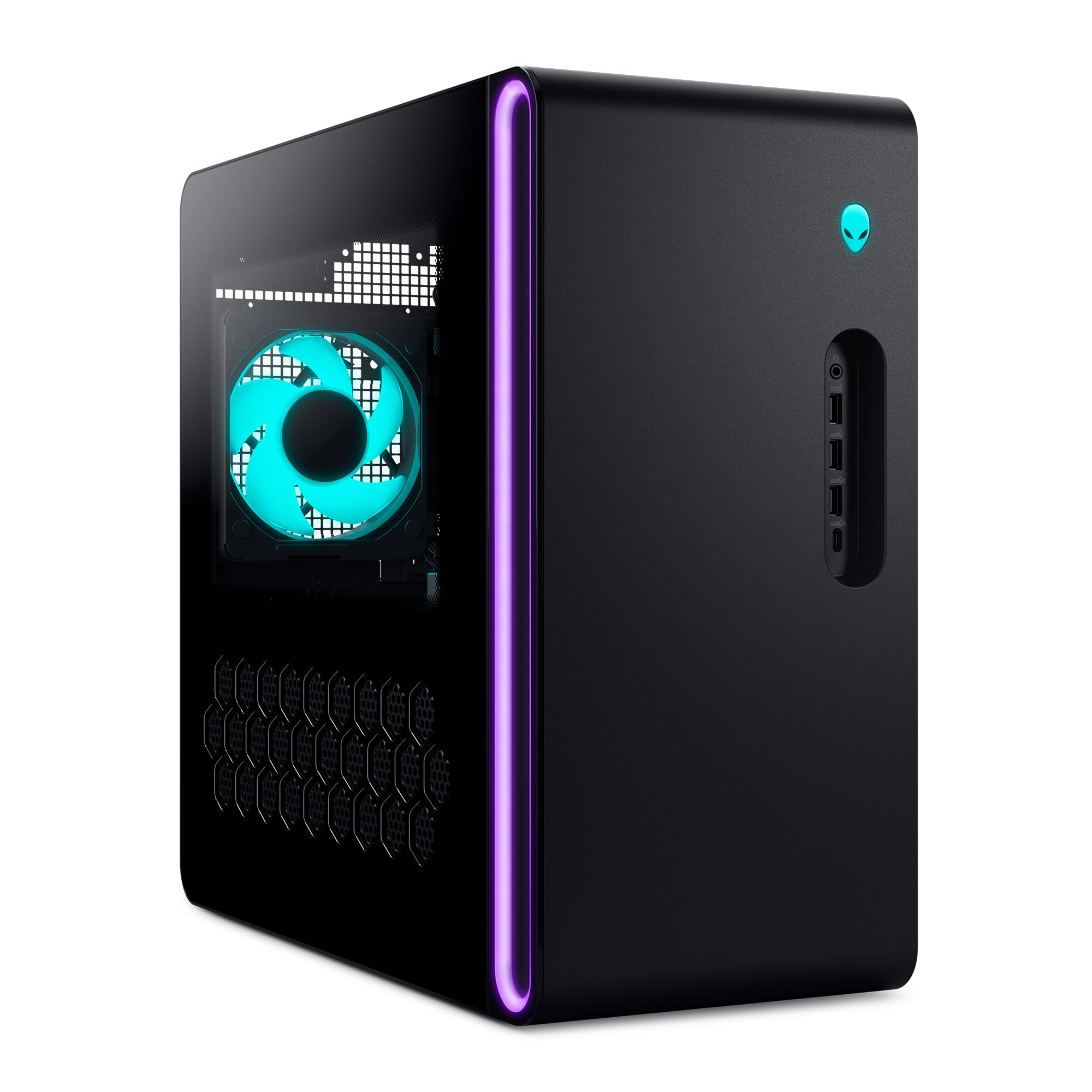
The Alienware Aurora ACT1250 brings Dell’s ecosystem support to a 4K gaming rig, pairing the Intel Core Ultra 7 265F (14 cores, 5.3 GHz) with an RTX 5070 and 32 GB of DDR5 RAM. The 1000W Platinum-rated PSU provides headroom for future upgrades, and the redesigned chassis features a matte basalt black finish with customizable AlienFX lighting zones and a clear side panel. Users report that the system runs “silent” during most tasks and handles demanding games like Ghost of Tsushima and World of Tanks Blitz on high settings without issue.
The Alienware Command Center software lets users control RGB lighting and switch between power profiles. Dell includes a 1-year onsite service warranty, meaning a technician will come to your home for covered hardware issues — a significant value-add over standard depot warranties. One owner running Linux Mint 22.3 Cinnamon found the hardware fully compatible after removing Windows, noting that Kenshi and Minecraft ran well, and the system maxed out at 85°C under combined miner and gaming loads.
On the downside, the proprietary motherboard and PSU form factor make standard case swaps or upgrades more difficult than building from scratch. A few owners reported defects like a misaligned USB-C port and defective front ring light, with Dell support initially insisting on a motherboard replacement when a simple bezel swap would have solved the issues. The bright cyan Alienware lighting cannot be dimmed or turned off without the Alienware Command Center app, which some Linux users found frustrating. For buyers who prioritize Dell’s onsite support and are comfortable with Alienware’s proprietary design, this is a polished 4K pre-built.
Why it’s great
- 1-year onsite Dell warranty provides superior support
- 1000W Platinum PSU offers plenty of upgrade headroom
- Quiet operation under normal 4K gaming loads
- Premium chassis design with customizable lighting
Good to know
- Proprietary PSU and motherboard limit standard upgrades
- Quality control issues reported (USB-C alignment, lighting defects)
- Alienware software needed to control RGB; not Linux-friendly
9. Horizon Autherium Dragon RGB (Core i9 KF / RTX 5070 OC)
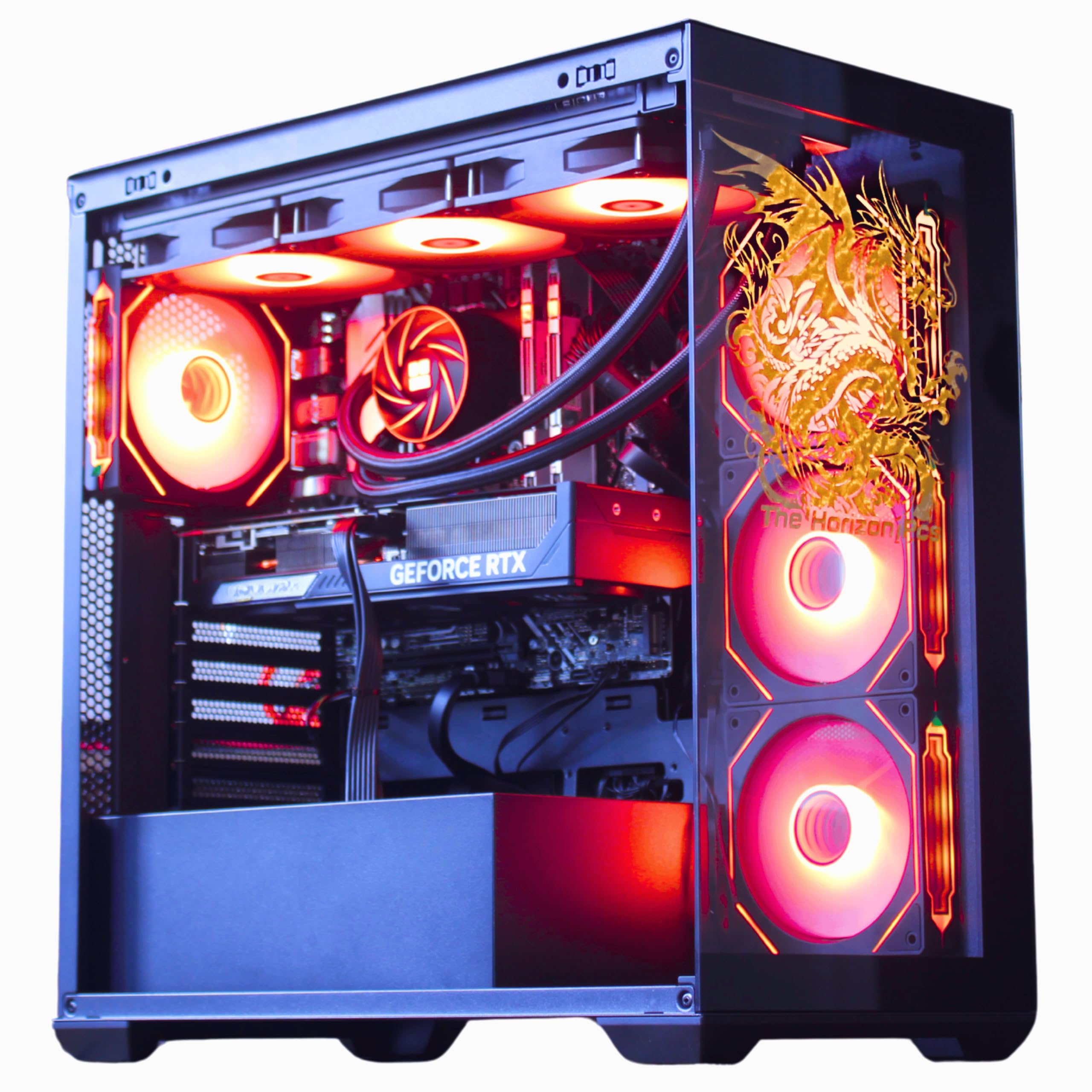
The Horizon Autherium Dragon delivers a feature stack that punches above its tier: an unlocked Core i9 KF processor (boosting up to 5.4 GHz), 64 GB of DDR5 RAM, 5 TB of total storage (1 TB NVMe + 4 TB HDD), and an RTX 5070 OC graphics card, all housed in a case with an aggressive dragon front panel and 11 total fans. The 360mm AIO liquid cooler keeps the processor whisper-quiet even under sustained load — one reviewer running Microsoft Flight Simulator 2024 in VR on Quest 3 reported smooth performance with quick renders of 3-minute video in about 35 seconds.
The 64 GB of RAM is double the typical configuration in this price range, making the Dragon particularly suitable for video editors, 3D modelers, and heavy multitaskers. The pre-built includes an 850W 80 PLUS Gold PSU with six extra SATA connectors for additional hard drives, and the motherboard has room for another M.2 NVMe drive. The 3-year parts warranty and 5-year labor warranty are among the longest in this category, and customer support has been responsive in reported cases — one issue with a missing Windows 11 Pro key was resolved within two minutes.
The main caveat is thermals under heavy load: the 11-fan design is effective but the case needs open airflow space. The 1 TB boot drive fills up quickly for users storing multiple AAA games locally, though the included 4 TB HDD offers ample space for backups and archives. The dragon front panel design is polarizing — it is visually loud and may not suit all tastes. For buyers who prioritize maximum RAM, long warranty coverage, and a pre-built that handles both 4K gaming and content creation, the Dragon is a value-packed option.
Why it’s great
- 64 GB DDR5 handles heavy multitasking and content creation
- 5 TB total storage (1 TB NVMe + 4 TB HDD)
- 3-year parts and 5-year labor warranty
- 360mm AIO keeps the CPU quiet under gaming loads
Good to know
- Case design is flashy and may not match all aesthetics
- Needs good airflow placement to manage heat
- 1 TB NVMe fills up fast for AAA game libraries
10. STGAubron Prebuilt Gaming PC (Intel Core i5 / RX 550)
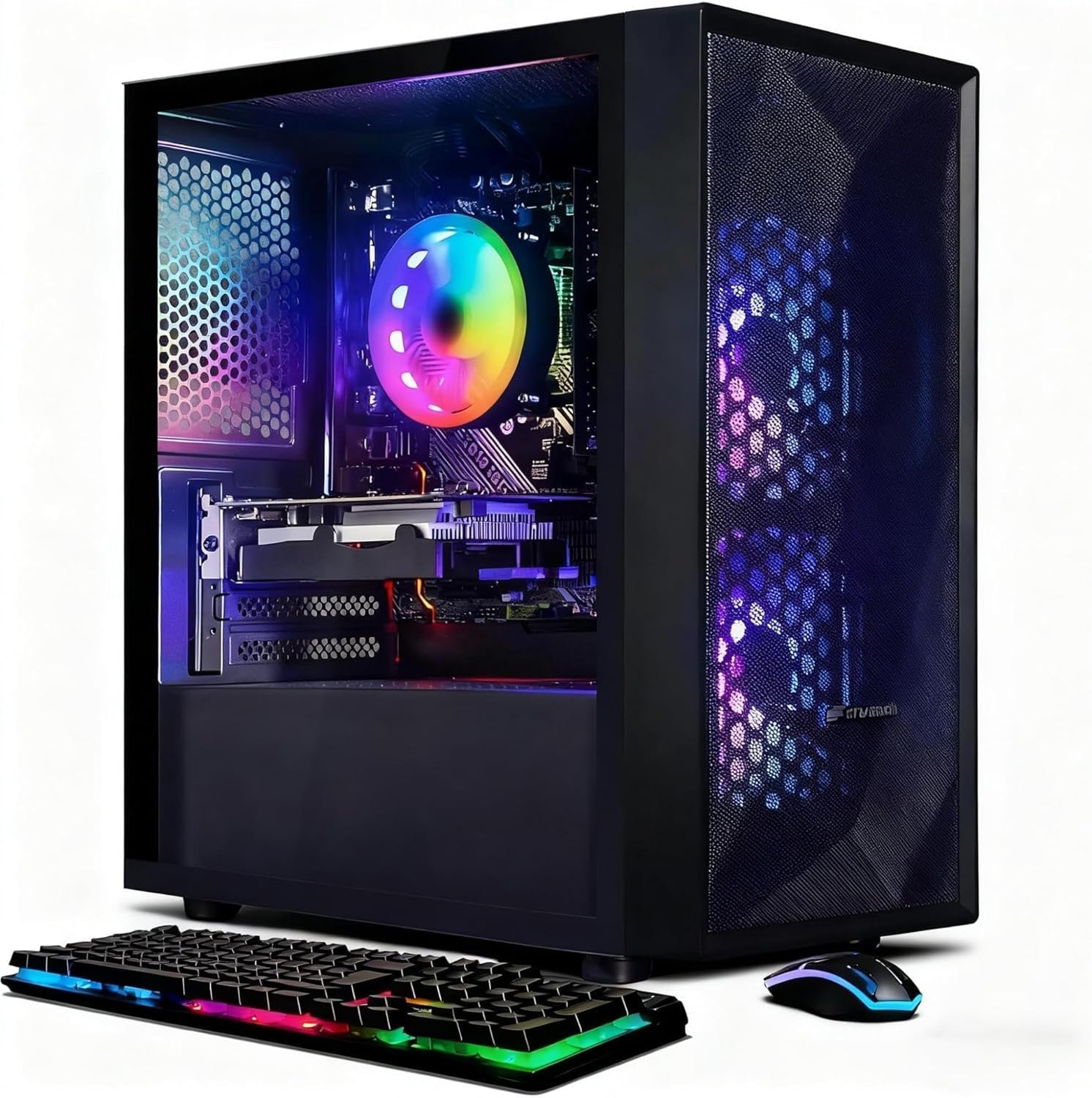
This entry-level pre-built pairs an Intel Core i5 processor (up to 3.6 GHz) with an AMD Radeon RX 550 4 GB GPU and 16 GB of RAM, targeting casual 1080p gaming rather than 4K. The RX 550 is a low-profile graphics card with limited VRAM and compute power; it will not sustain playable frame rates at 4K resolution in modern titles. The system ships with 512 GB of SSD storage, dual RGB fans, Wi-Fi 6, Bluetooth 5.0, and Windows 11 Home, plus a wired RGB keyboard and mouse.
Customer experiences are mixed. Positive reviews highlight the value as a “good budget starter PC for small games” like Fortnite and Call of Duty at reduced settings, with fast boot times and acceptable noise levels. The customer service seems responsive: several users who reported initial defects received replacement units that worked perfectly. One parent noted their daughter “loves it” for schoolwork and light gaming after getting a replacement.
However, the negative reviews raise legitimate concerns about component quality and longevity. One owner reported failure within a year, describing “cheap generic parts, outdated RX 550, no longevity, useless warranty.” The RX 550 cannot drive a 4K display for gaming, and the old i5 architecture may bottleneck even modern mid-range GPUs if an upgrade is attempted. This machine is best understood as an affordable entry into PC gaming for children, office work, and media consumption — not a 4K gaming rig.
Why it’s great
- Very affordable entry into PC gaming for light titles
- Includes RGB keyboard, mouse, and Wi-Fi 6
- Responsive customer service for warranty replacements
- Fast boot times for school and office use
Good to know
- RX 550 cannot handle 4K gaming at playable frame rates
- Component quality and longevity are inconsistent
- Old i5 architecture limits potential GPU upgrades
11. Skytech Gaming Legacy 4 (Ryzen 9 9950X3D / RTX 5090)

The Skytech Gaming Legacy 4 represents the absolute ceiling of consumer 4K gaming hardware, pairing the new AMD Ryzen 9 9950X3D (16 cores, 5.7 GHz boost, 128 MB of 3D V-Cache) with an NVIDIA RTX 5090 32 GB GDDR7 graphics card, 64 GB of DDR5-6000 RAM, and a 4 TB Gen4 NVMe SSD. The 420mm AIO liquid cooler is oversized for any CPU thermal load, and the 1200W 80 PLUS Gold ATX 3.0 PSU provides ample power for future upgrades. This machine has no theoretical bottleneck at 4K: the X3D cache minimizes memory latency, the 5090 dominates rasterization and ray tracing, and the 4 TB SSD ensures fast game loads for a large library.
Real-world performance is appropriately extreme. Users report “awesome… you can play games on ultra high settings and get as imagined high frame rates,” with builds featuring “known quality components.” The chassis includes a tempered glass side panel, magnetic dust filters, and pre-installed Wi-Fi. Skytech assembles the systems in the USA and backs them with a 1-year parts and labor warranty plus free technical support. One reviewer upgraded from a previous generation and noted “better motherboard than expected” with decent cable management and silent operation thanks to the 420mm AIO.
The premium price reflects the uncompromising component selection, but buyers should confirm the exact brand of the RTX 5090 and RAM sticks at the time of purchase, as these can vary. The 9950X3D is overkill for pure gaming — most titles will not fully utilize 16 cores — but for content creators who game at 4K and edit 8K video on the same machine, this is the fastest single-system option available. The sheer cost makes it a niche product, but for anyone who demands the best 4K gaming experience money can buy, the Legacy 4 delivers without compromise.
Why it’s great
- RTX 5090 + 9950X3D offers zero compromises at 4K
- 64 GB DDR5 and 4 TB NVMe for heavy creative workflows
- 420mm AIO keeps the system silent under full load
- 1200W PSU provides maximum headroom for future upgrades
Good to know
- Extremely high price; only for enthusiasts with deep budgets
- Component brands (GPU, RAM) may vary per unit
- Overkill for pure 4K gaming; productivity use case is stronger
FAQ
Does a faster CPU matter for 4K gaming if I already have a top-tier GPU?
Should I buy an X3D chip or an Intel hybrid chip for 4K gaming?
What motherboard chipset do I need for a 4K gaming CPU?
How much RAM should I pair with my 4K gaming CPU?
Final Thoughts: The Verdict
For most users, the best cpu for 4k gaming winner is the AMD Ryzen 7 7800X3D because its 3D V-Cache provides exceptional frame-time consistency at 4K resolution with low power draw and easy cooling. If you want raw multi-core throughput for streaming and rendering alongside 4K gaming, grab the Intel Core i7-14700KF. And for the ultimate no-compromise enthusiast build that combines a 9950X3D with the RTX 5090, nothing beats the Skytech Gaming Legacy 4.

Mo Maruf
I created WellFizz to bridge the gap between vague wellness advice and actionable solutions. My mission is simple: to decode the research and give you practical tools you can actually use.
Beyond the data, I am a passionate traveler. I believe that stepping away from the screen to explore new environments is essential for mental clarity and physical vitality.