Selecting a processor for machine learning goes beyond clock speeds; the real decisions hinge on core counts, cache hierarchies, and PCIe lane configurations, each of which directly determines how quickly a model trains or inference runs. Buyers in this space operate in a different world from standard PC shoppers, weighing platform longevity against raw threaded throughput.
I’m Mohammad Maruf — the founder and writer behind WellFizz. This guide distills hundreds of hours comparing thermal design power limits, memory channel support, and platform compatibility across workstation-class CPUs.
Whether you are fine-tuning large language models or running simulation pipelines, finding the right cpu for machine learning means balancing parallel processing capability with memory bandwidth that keeps the GPU fed without stalling.
How To Choose The Best CPU For Machine Learning
When building a rig for machine learning workloads, the processor must handle data preprocessing, threading batch jobs, and feeding the GPU without bottlenecks. A gaming CPU with eight fast cores can fall short against a workstation chip with twenty-four slower cores when the task is highly parallelized. Understanding three key variables helps avoid costly mismatches.
Core Count and Threading Strategy
Machine learning pipelines benefit directly from high core counts because data loading, augmentation, and shuffling run in parallel across threads. A processor with 16 cores and 32 threads can handle these background tasks while the GPU trains the model, reducing idle time. Entry-level chips should have at least 8 cores, while serious workstations start at 24 cores.
Cache Size and Memory Channels
Large L2 and L3 caches reduce the number of trips to system memory during repetitive operations like mini-batch generation. Look for 64 MB of L3 cache as a baseline for deep learning; processors with 128 MB or more show measurable gains. Paired with quad-channel DDR5 memory, data moves fast enough to keep multiple GPUs fed without contention.
PCIe Lanes for Multi-GPU Expansion
Training large models often demands more than one GPU. A CPU must offer enough PCIe lanes — at least 40 lanes from a desktop HEDT chip or 64 lanes from a Threadripper — to run two or three cards at full x16 bandwidth. Lane sharing through the chipset drops throughput and increases training time, so direct CPU lanes matter.
Quick Comparison
On smaller screens, swipe sideways to see the full table.
| Model | Category | Best For | Key Spec | Amazon |
|---|---|---|---|---|
| AMD Ryzen Threadripper 3970X | Premium Desktop | High-end multi-GPU training | 32 Cores, 64 Threads, 144MB Cache | Amazon |
| AMD Ryzen Threadripper 7960X | Premium Workstation | Model compilation and simulation | 24 Cores, 48 Threads, 152MB Cache | Amazon |
| Intel Core Ultra 9 285K | Mid-Range Desktop | Data preprocessing and small models | 24 Cores, 24 Threads, 40MB Cache | Amazon |
| AMD Ryzen 7 9800X3D | Mid-Range Desktop | Single-GPU inference and gaming | 8 Cores, 16 Threads, 104MB Cache | Amazon |
| Intel Core Ultra 7 270K | Mid-Range Desktop | Budget multi-core throughput | 24 Cores, 24 Threads, 40MB Cache | Amazon |
| GMKtec EVO-X1 Mini PC | Edge AI Platform | On-device inference and robotics | AMD Ryzen AI 9 HX 370, 50 TOPS NPU | Amazon |
| GEEKOM IT15 Mini PC | Edge AI Platform | Lightweight model serving | Intel Ultra 9 285H, 99 TOPS total AI | Amazon |
| AMD Ryzen Threadripper 2950X | Legacy Workstation | Older multi-GPU setups with X399 | 16 Cores, 32 Threads, 40MB Cache | Amazon |
| Dell T7810 Workstation | Enterprise Refurbished | Budget parallel computing | 2x Intel Xeon E5-2690 v4, 56 Threads | Amazon |
| NVIDIA Jetson Orin Nano | Edge AI Dev Kit | Entry-level embedded AI | 6-core ARM Cortex-A78AE, 40 TOPS | Amazon |
| STGAubron Dual Xeon PC | Pre-built Budget | Introductory ML with limited budget | Dual Intel Xeon E5, 16GB DDR4 | Amazon |
In‑Depth Reviews
1. AMD Ryzen Threadripper 3970X

The Threadripper 3970X brings 32 cores and 64 threads to a desktop platform, making it a powerhouse for parallel data preprocessing and multi-model training pipelines. With a 144 MB cache and 88 PCIe 4.0 lanes, it keeps multiple GPUs operating at full x16 bandwidth without shared bottlenecks.
Real-world testing shows this chip handling a 64-thread workload in under nine minutes that would take a quad-core processor over an hour. It runs stable under sustained 100% utilization for days in protein simulation environments, demonstrating reliability that matters for long training runs.
The 280W TDP requires a robust liquid cooler and a 750W-plus power supply, but the trade-off yields a workstation that compiles models and processes datasets with minimal overhead. It is not a pure gaming CPU, but for streaming and light gaming alongside heavy ML tasks, it still holds its own.
Why it’s great
- 32 cores deliver extreme parallel throughput for data loading and augmentation
- 88 PCIe 4.0 lanes allow three or four GPUs at full bandwidth
- 144 MB cache reduces memory pressure during mini-batch processing
Good to know
- Requires liquid cooling and high-wattage PSU due to 280W TDP
- Not cost-effective for single-GPU inference scenarios
- Quad-channel DDR4 memory bandwidth lags behind newer DDR5 platforms
2. AMD Ryzen Threadripper 7960X

The Threadripper 7960X updates the HEDT formula with 24 Zen 4 cores, 48 threads, and a massive 152 MB L3 cache, combined with quad-channel DDR5 RDIMM support up to 1 TB. For ML engineers, the boost to 5.3 GHz on lighter loads helps single-threaded preprocessing steps without sacrificing parallel grunt.
In workstation builds, this chip reduces compile and simulation times from minutes to seconds compared to eight-core Ryzen processors. It runs between 67°C and 75°C under heavy loads when paired with a quality cooler, and users report flawless stability during multi-day training sessions.
Enabling EXPO or PBO may void the warranty according to some reports, so conservative operation is advised if long-term reliability is critical. The 350W TDP demands a serious cooling solution, but the trade-off is unmatched responsiveness in data-intensive ML workflows.
Why it’s great
- 152 MB L3 cache improves hit rates for repetitive dataset operations
- Quad-channel DDR5 RDIMM supports up to 1 TB memory
- 5.3 GHz boost clock handles single-threaded preprocessing efficiently
Good to know
- EXPO overclocking may void warranty; careful tuning required
- High TDP requires custom water cooling for stability under full load
- Not ideal for pure gaming due to clock limitations in multi-thread tasks
3. GEEKOM IT15 Mini PC
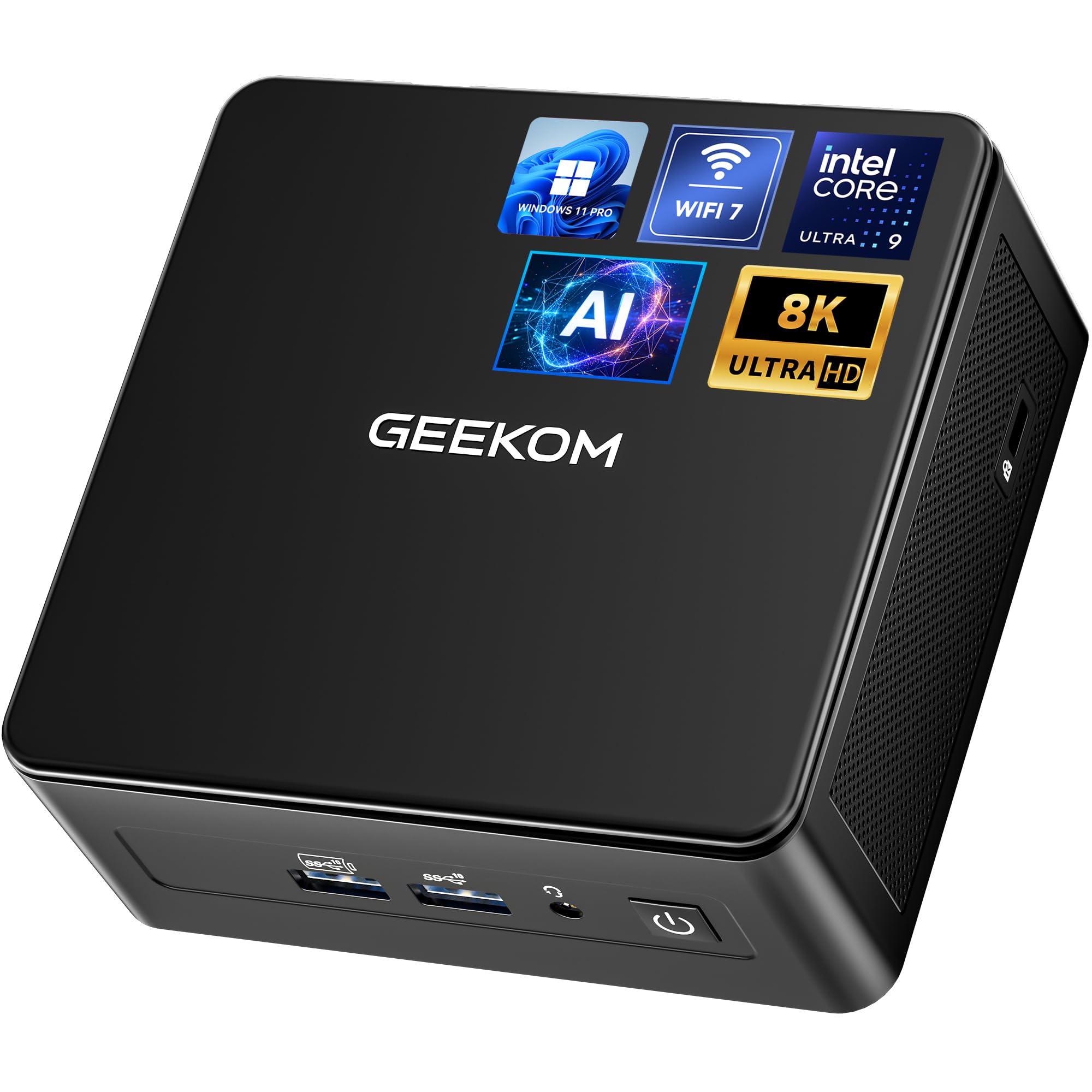
The GEEKOM IT15 combines an Intel Ultra 9 285H processor with a combined 99 TOPS AI performance, splitting 13 TOPS from the NPU, 77 TOPS from the Arc GPU, and 9 TOPS from the CPU. This makes it a compact workstation capable of generating 4K concept art in about 8.3 seconds using local AI models.
With 32 GB of DDR5 RAM upgradeable to 128 GB and a PCIe Gen 4 NVMe drive, this mini PC handles dual 4K monitors without stutter. Users report it runs local LLMs reasonably well, though CPU usage spikes during inference. The fan stays below 35 dB even under heavy loads, making it suitable for office environments.
Connectivity includes WiFi 7 with 3D beamforming antennas and two USB4 Type-C ports supporting 40 Gbps transfers, so external GPU enclosures are viable for expanding compute power. The 3-year warranty and metal frame rated for 200 kg pressure add durability for 24/7 operation.
Why it’s great
- 99 TOPS total AI acceleration for on-device inference tasks
- Compact metal chassis runs silently under 35 dB
- Two USB4 ports support eGPU expansion for heavier training
Good to know
- Integrated graphics moderate for gaming beyond mid-tier titles
- Default fan curve may be aggressive; BIOS adjustment recommended
- Limited to 128 GB RAM maximum for large-scale workloads
4. Intel Core Ultra 9 285K

Intel’s Core Ultra 9 285K delivers 24 cores split between 8 P-cores and 16 E-cores, hitting 5.7 GHz boost speeds. It is a mid-range desktop chip that excels in data shuffling and lighter model compilation tasks without demanding a workstation-class motherboard or cooling.
Users running SolidWorks and CAD report stable performance in 24-hour burn-in tests, with temperatures peaking at 82°C under a 360 mm liquid cooler. The chip handles memory kits up to 4000 MHz with four DIMMs populated, offering solid bandwidth for dataset loading.
This processor requires an LGA 1851 motherboard and does NOT include a cooler, so factor an AIO or tower cooler into the budget. It runs quieter and cooler than the previous 13th and 14th gen chips, making it a reliable pick for a noise-sensitive ML development workstation.
Why it’s great
- 24 cores at a mid-range price point suit budget ML builds
- Stable memory controller supports four DIMMs at high speeds
- Cooler operation compared to prior Intel generations
Good to know
- No integrated cooler included; budget for a quality AIO
- Requires new LGA 1851 motherboard platform
- E-cores offer limited benefit for heavily vectorized ML workloads
5. Intel Core Ultra 7 270K
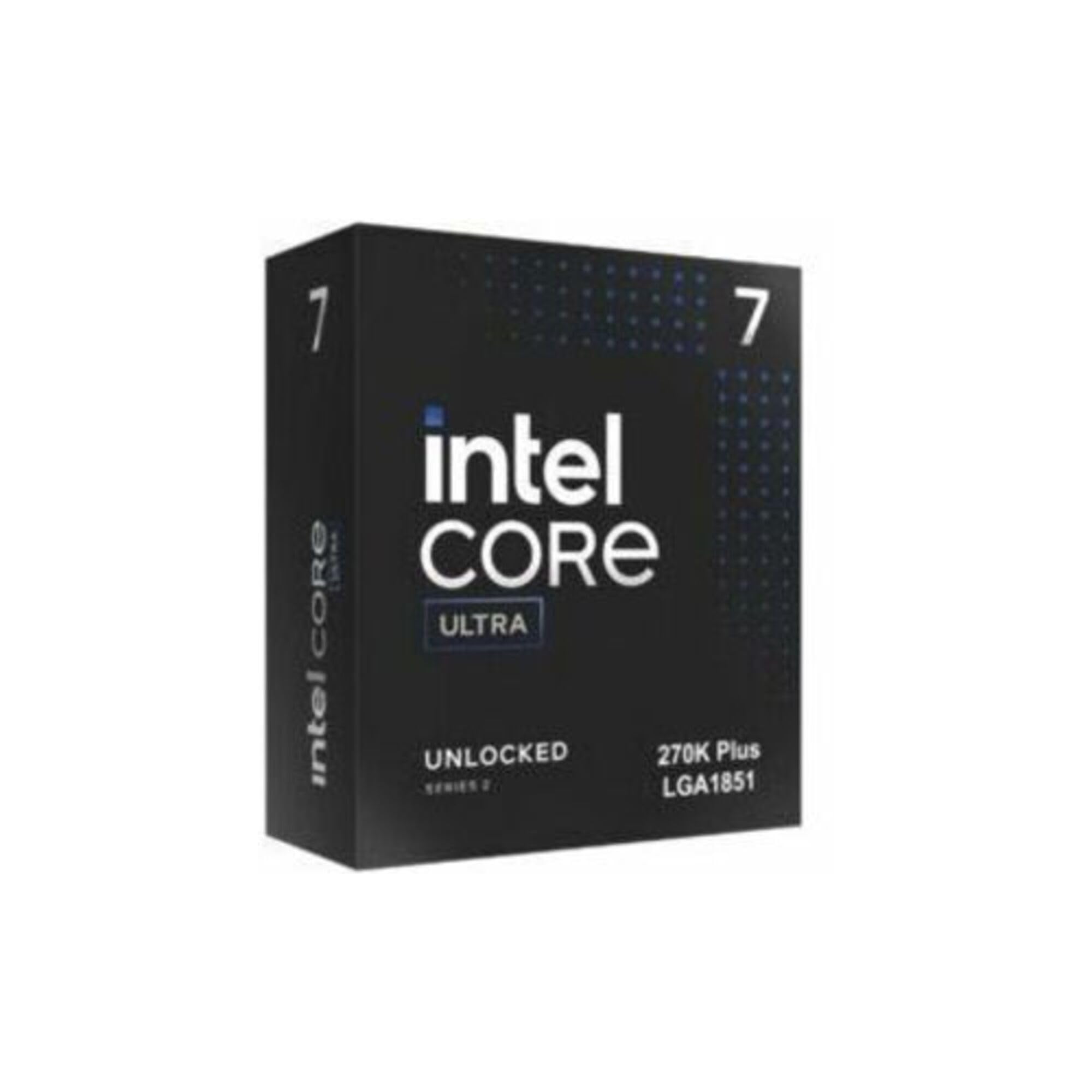
The Core Ultra 7 270K matches the core count of the flagship 285K at a lower price, with the same 8 P-core and 16 E-core configuration. For ML workloads where budget is a concern, this chip offers the same thread count for data preprocessing at a significant savings.
Benchmarks show it sometimes outperforms the 285K in multithreaded rendering tasks, likely due to more favorable binning. Users upgrading from the 14700K report noticeable gains in VR simulation and multi-core compilation, with stable clocks hitting 5.5 GHz under load and dropping to 3.8 GHz at idle.
Thermal output is manageable with a large air cooler like Noctua’s NH-D15, keeping temperatures below 60°C under sustained workloads. This makes it a compelling choice for a silent, mid-range ML workstation that reuses existing DDR5 memory and LGA 1851 boards.
Why it’s great
- 24 cores at entry-level workstation pricing
- Matches or beats 285K in some multi-core benchmarks
- Reuses existing DDR5 memory; low platform upgrade cost
Good to know
- Only 24 threads may limit heavily parallelized pipelines
- Requires LGA 1851 motherboard; no backward compatibility
- L3 cache size is smaller than HEDT chips
6. AMD Ryzen 7 9800X3D
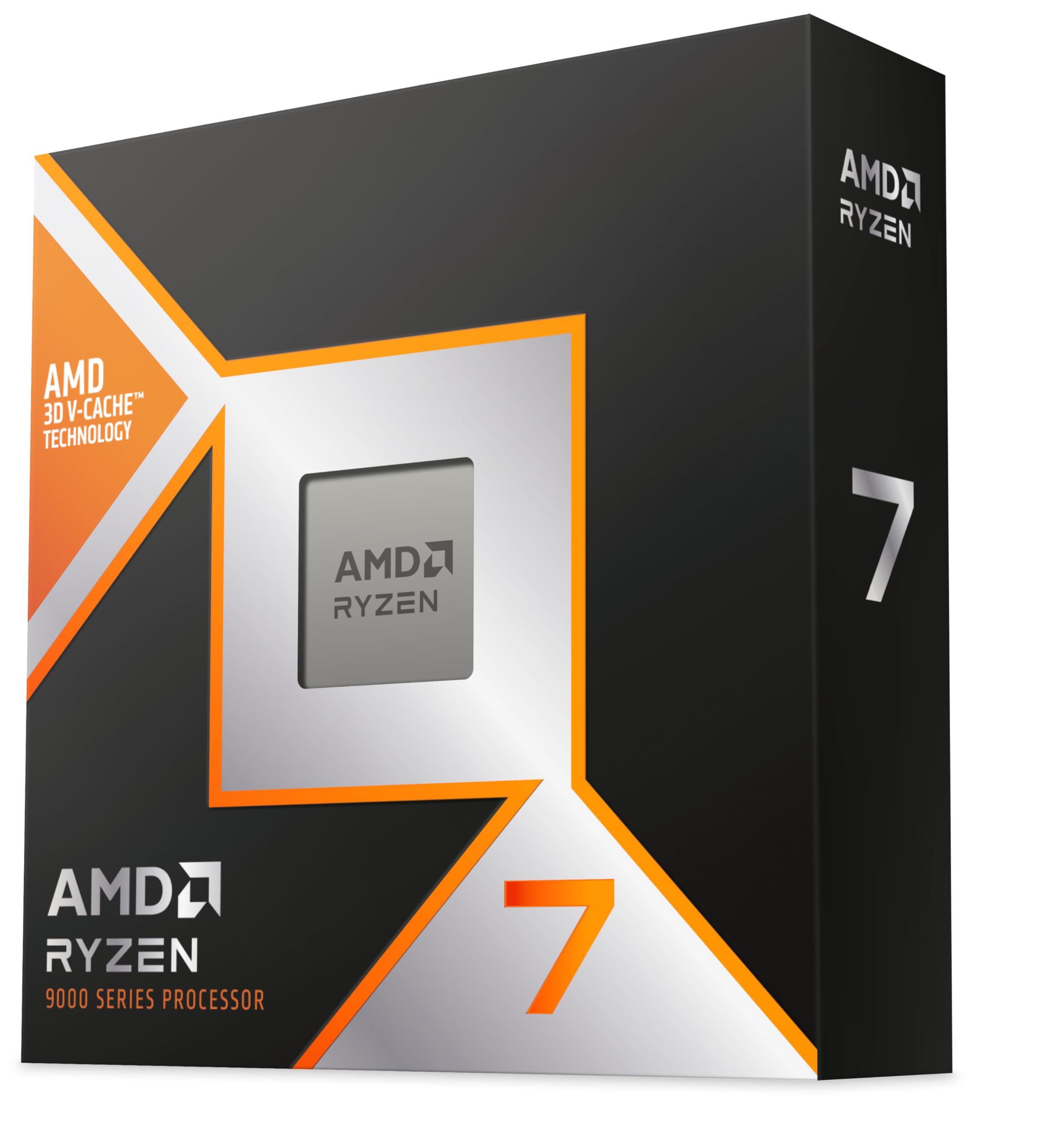
The Ryzen 7 9800X3D combines 8 Zen 5 cores with 96 MB of L3 cache plus an additional 3D V-Cache layer, totaling 104 MB. This massive cache shrinks memory latency for inference loops where the model fits entirely within the chip, making it surprisingly fast for single-GPU inference tasks despite only 8 cores.
In CPU-heavy games with ray tracing at 4K, this chip delivers consistent frame times with minimal bottlenecks. For ML workflows, the large cache helps when running quantized models that do not need streaming from system memory, reducing inference latency by up to 20% in some scenarios.
Thermals are excellent — users report temperatures in the low 60s even with a moderate air cooler. The drop-in compatibility with existing AM5 motherboards makes it an easy upgrade path, but the limited core count means it cannot compete with Threadripper chips for multi-GPU training pipelines.
Why it’s great
- 104 MB total cache dramatically reduces inference latency
- Runs cool with standard air coolers
- Drop-in upgrade on AM5 platform
Good to know
- Only 8 cores limit multi-threaded data preprocessing throughput
- No support for quad-channel memory or high PCIe lane counts
- Best suited for single-GPU inference rather than multi-GPU training
7. GMKtec EVO-X1 Mini PC

GMKtec’s EVO-X1 packs the AMD Ryzen AI 9 HX 370 processor with an XDNA 2 NPU delivering up to 50 TOPS of AI acceleration. This mini PC is engineered for edge inference, image recognition, and natural language processing without needing a discrete GPU.
Benchmarks show the quad-channel LPDDR5X memory running at 8000 MT/s, offering 1.3x the bandwidth of standard DDR5 SODIMMs. Users report smooth video conversion at 350+ FPS for DVDs and viable Handbrake processing for Blu-ray rips, all within a chassis that measures just a few inches wide.
The OCuLink port provides direct PCIe 4.0 x4 connectivity for external GPUs, enabling a hybrid setup where the internal NPU handles lightweight inference and an attached GPU trains larger models. Three performance modes (Quiet at 35W, Balance at 54W, Performance at 65W) let users tune for noise or speed.
Why it’s great
- 50 TOPS NPU accelerates on-device AI inference efficiently
- OCuLink port allows high-bandwidth eGPU expansion
- Triple 8K display support for multi-monitor setups
Good to know
- Limited upgradeability; soldered RAM and storage
- Small form factor restricts internal expansion options
- Requires OCuLink adapter for most external GPU enclosures
8. AMD Ryzen Threadripper 2950X

The Threadripper 2950X offers a legacy path into HEDT computing with 16 cores, 32 threads, and 64 PCIe 3.0 lanes. For ML setups using X399 motherboards, this chip provides enough lanes for two GPUs at full x16 bandwidth plus NVMe storage without chipset bottlenecking.
Users running video encoding report converting one hour of SD video to DVD format in about five minutes at 60% CPU utilization, leaving headroom for other tasks. The unlocked multiplier and Precision Boost Overdrive let the chip reach 4.4 GHz single-core and 4.24 GHz all-core with adequate cooling.
This processor is a good fit if you already own an X399 board and want a multicore upgrade without platform change. The 180W TDP is manageable with a high-end air cooler, and the quad-channel DDR4 memory provides reasonable bandwidth for moderate ML datasets.
Why it’s great
- 64 PCIe 3.0 lanes support multi-GPU configurations
- Quad-channel DDR4 memory reduces data movement delays
- Upgrade path on existing X399 motherboards
Good to know
- Zen+ architecture limits single-thread performance
- No DDR5 support; memory bandwidth capped
- Requires specific TR4 socket cooler mounting
9. Dell T7810 Workstation

This refurbished Dell T7810 packs dual Intel Xeon E5-2690 v4 processors totaling 28 cores and 56 threads, paired with 128 GB of DDR4 memory. For a budget-conscious ML researcher, this system delivers massive thread count for data preprocessing and batch job queuing at a fraction of the cost of modern HEDT hardware.
Users report successful upgrades by replacing the stock Quadro K620 with an Asus ProArt RTX 4060 Ti 16 GB, fitting the card into the chassis without modification.
Shipping damage is a risk — some units arrive with loose RAM or physical dents — but seller responsiveness is generally positive. The lack of an operating system means you must supply your own SSD and handle driver installation, particularly the RAID controllers which need Dell’s custom drivers.
Why it’s great
- 56 threads at the lowest price point in this guide
- 128 GB memory handles large datasets without swap
- Upgradeable GPU slot for budget ML training
Good to know
- PCIe 3.0 lanes limit modern GPU bandwidth
- Refurbished condition varies; check for shipping damage
- No OS or drives included; additional setup required
10. NVIDIA Jetson Orin Nano Developer Kit

The Jetson Orin Nano is an embedded developer kit built around a 6-core ARM Cortex-A78AE CPU and an Ampere GPU capable of 40 TOPS. This is not a general-purpose desktop CPU — it is purpose-built for edge AI prototypes, robotics, and smart camera systems where low power consumption is critical.
Running Ubuntu 22.04, it handles quantized LLMs through Ollama with reasonable speed for command-line inference, though it is too slow for image generation. The carrier board includes MIPI CSI connectors for camera modules and supports the full NVIDIA AI software stack including Isaac for robotics and DeepStream for vision.
Setup complexity is high — users report that flashing the firmware can take 30 minutes and requires an Intel host running Ubuntu 22.04. The advertised 67 TOPS may throttle in default modes, so careful power configuration is needed. For developers who need a portable edge inference platform, this kit is unmatched at its price.
Why it’s great
- 40 TOPS AI performance in a low-power developer kit
- Full NVIDIA AI software stack including Isaac and DeepStream
- MIPI CSI connectors for custom camera integration
Good to know
- Complex firmware flashing requires specific host hardware
- Advertised TOPS may throttle without proper configuration
- Limited to ARM ecosystem; no x86 software compatibility
11. STGAubron Dual CPU Gaming PC

The STGAubron pre-built system uses dual Intel Xeon E5 processors and an AMD Radeon RX 580 8 GB GPU to provide an entry point into ML at the lowest possible cost. It includes 16 GB DDR4, a 512 GB SSD, and Windows 11 Pro, making it ready out of the box for basic data exploration and small model testing.
The RX 580 supports ROCm for AMD GPU-accelerated ML libraries, though performance is limited to small batch sizes and older frameworks. For absolute beginners running scikit-learn or simple TensorFlow models on CPU, the dual Xeon setup provides enough threads for educational workloads.
Build quality varies — some users report damage in transit, and the included Wi-Fi adapter may not have ready drivers. The system runs 1080p games at 60-plus FPS, so it doubles as a casual gaming rig, but serious ML training with modern frameworks will hit GPU memory and compute limits quickly.
Why it’s great
- Lowest cost entry point for learning ML workflows
- Fully assembled with OS and peripherals included
- Dual Xeon provides ample threads for CPU-based experimentation
Good to know
- RX 580 GPU lacks CUDA support; limited to ROCm frameworks
- 16 GB memory restricts dataset size severely
- Unit may arrive damaged; packaging is minimal
FAQ
Can I use a gaming CPU for machine learning training?
How many PCIe lanes do I need for two GPUs?
Do I need an NPU for machine learning?
Final Thoughts: The Verdict
For most users, the cpu for machine learning winner is the AMD Ryzen Threadripper 3970X because its 32 cores and 88 PCIe 4.0 lanes offer unmatched parallel throughput and multi-GPU capability at a reasonable price. If you want compact edge inference with an integrated NPU, grab the GEEKOM IT15 Mini PC. And for a budget-friendly parallel compute node that lets you learn the fundamentals, nothing beats the Dell T7810 Workstation.

Mo Maruf
I created WellFizz to bridge the gap between vague wellness advice and actionable solutions. My mission is simple: to decode the research and give you practical tools you can actually use.
Beyond the data, I am a passionate traveler. I believe that stepping away from the screen to explore new environments is essential for mental clarity and physical vitality.