Choosing the right processor for a streaming PC means balancing two heavy workloads: encoding a high-bitrate video feed in real time while keeping your game from stuttering. A CPU with too few cores will drop frames under OBS, while a chip that prioritizes raw clock speed over multi-threading will leave your stream lagging behind your gameplay. The market has split into two clear camps—Intel’s hybrid architecture with efficiency cores for background tasks and AMD’s 3D V-Cache models that excel at keeping 1% lows stable—making the decision harder than ever if you are upgrading an existing platform or building from scratch.
I’m Mohammad Maruf — the founder and writer behind WellFizz. I’ve spent hundreds of hours analyzing retail listings, comparing benchmark data for encoding workloads, and studying real-world streaming builds across various support forums to isolate the processors that actually deliver smooth broadcasts without breaking your budget.
This guide focuses exclusively on processors that can handle simultaneous gaming and encoding without choking, so you can pick a chip that fits your motherboard socket and performance needs. Whether you are on a tight budget or building a no-compromise rig, I’ve done the digging to find the right cpu for streaming for your specific setup.
How To Choose The Best CPU For Streaming
Streaming pushes a desktop processor harder than almost any other common workload because it demands real-time video encoding alongside a latency-sensitive game. A chip that benchmarks well in single-threaded tasks may still choke when OBS starts compressing frames on the fly. You need to evaluate four core specs before you buy: core/thread count, integrated graphics support, memory compatibility, and platform longevity.
Core Count and Thread Count
For a dedicated streaming PC, eight cores and sixteen threads is the practical baseline. Fewer cores forces the CPU to juggle the game and the encoder on the same physical resources, which produces visible micro-stutter in both the broadcast and the local display. Sixteen-core processors like the Ryzen 9 5900XT give you dedicated headroom for OBS, Discord, browser overlays, and chat bots without touching the game’s allocated threads. Intel’s hybrid approach uses smaller efficiency cores to handle background services, which works well if your streaming software is configured to prefer those E-cores, but pure physical core count remains the safest bet for consistent encoding.
Integrated Graphics and QuickSync
Intel’s integrated UHD Graphics 730 and 770 include hardware-based QuickSync encoding, which can act as a dedicated video encoder that offloads the stream encoding from the main processing cores. This feature is particularly useful for single-PC streamers running a single GPU, because it frees the discrete graphics card to focus entirely on rendering the game. AMD’s Ryzen 7000 and 9000 series processors also include integrated Radeon Graphics, but those iGPUs are designed for basic display output and do not offer a separate hardware encoder as mature as QuickSync. If you plan to stream without a second PC, an Intel chip with an F-suffix or an AMD X3D chip without integrated graphics will rely entirely on your GPU’s NVENC encoder, which is also excellent but adds heat to the graphics card.
Memory Platform: DDR4 vs DDR5
Older AM4 motherboards and Intel’s 12th/13th/14th generation platforms offer both DDR4 and DDR5 support, while AM5 and Intel’s 800-series chipsets require DDR5 exclusively. DDR4 memory is significantly cheaper and still provides enough bandwidth for streaming workloads that are not memory-bandwidth-bound. If you already own a B550 or Z690 DDR4 board, a chip like the Ryzen 7 5700X or the Intel Core i5-14400 lets you reuse that RAM and save money. New builders should lean into DDR5 because AM5 and Intel’s latest platforms offer a clearer upgrade path to future processors, though the premium for DDR5 kits has shrunk to roughly ten to fifteen percent over equivalent DDR4 kits.
Socket and Chipset Compatibility
Your chosen CPU dictates which motherboard you can buy. AM4 processors (Ryzen 5000 series) fit B550 and X570 boards, while AM5 chips (Ryzen 7000/9000) require A620, B650, or X870 boards. Intel’s 12th, 13th, and 14th generation processors share the LGA 1700 socket with 600 and 700 series chipsets, but the new Core Ultra 200-series chips require the LGA 1851 socket and an 800-series motherboard. Buying a CPU that uses an older socket saves money upfront but locks you out of future processor upgrades. Streaming-focused builders who plan to keep a rig for three to four years should factor in the cost of a motherboard replacement when they eventually upgrade, not just the CPU sticker price.
Quick Comparison
On smaller screens, swipe sideways to see the full table.
| Model | Category | Best For | Key Spec | Amazon |
|---|---|---|---|---|
| AMD Ryzen 7 7800X3D | Mid-Range | Gaming + Stream Stability | 8 Cores / 16 Threads / 96 MB L3 Cache | Amazon |
| AMD Ryzen 9 5900XT | Mid-Range | Multi-Tasking & Encoding | 16 Cores / 32 Threads / 72 MB Cache | Amazon |
| Intel Core i9-14900K | Premium | High-FPS Stream + QuickSync | 24 Cores / 32 Threads / 6.0 GHz Boost | Amazon |
| Intel Core Ultra 9 285K | Premium | Cool, Quiet Workstation | 24 Cores / 24 Threads / 5.7 GHz Boost | Amazon |
| AMD Ryzen 7 9850X3D | Premium | Top-Tier Gaming + Encoding | 8 Cores / 16 Threads / 104 MB Cache | Amazon |
| Intel Core i9-13900KF | Premium | Productivity + Heavy Multitasking | 24 Cores / 32 Threads / 5.8 GHz Boost | Amazon |
| Intel Core i7-9700K | Budget | Entry-Level Streaming | 8 Cores / 8 Threads / 4.9 GHz Boost | Amazon |
| Intel Core i5-14400 | Budget | Budget Build with QuickSync | 10 Cores / 16 Threads / 4.7 GHz Boost | Amazon |
| AMD Ryzen 7 5700X | Budget | AM4 Value Upgrade | 8 Cores / 16 Threads / 65W TDP | Amazon |
In‑Depth Reviews
1. AMD Ryzen 7 7800X3D

The Ryzen 7 7800X3D is the streaming sweet spot because its 3D V-Cache dramatically reduces frame-time variance in CPU-intensive games, which directly translates to smoother broadcasts. Even when OBS is encoding a 1080p60 stream in the background, the 104 MB of combined L2 and L3 cache keeps data hits local and prevents the stutter that plagues lower-cache chips. The 5nm Zen 4 architecture also keeps power draw reasonable during mixed workloads, so you don’t need a massive liquid cooler to maintain consistent clock speeds.
Real-world reports show this chip handling a game, a stream, Discord, and music playback simultaneously without any perceptible lag. The integrated Radeon Graphics is basic and not meant for encoding offload, so you will rely on your GPU’s NVENC encoder for the stream. That is a non-issue for single-PC streamers because NVENC is excellent, but it means you cannot use QuickSync as a fallback. The 7800X3D runs around 70°C under load with a standard air tower, and the AM5 platform gives you a clear upgrade path to future Zen 5 chips without swapping the motherboard.
If you are building a new rig specifically for gaming and streaming and your budget allows for a premium mid-range chip, this is the processor that minimizes the friction between the two workloads. It does not win every synthetic benchmark, but in the real-world scenario that matters—keeping your stream stable while you play—it outperforms chips that cost significantly more.
Why it’s great
- 3D V-Cache virtually eliminates 1% low stutter during simultaneous gaming and encoding
- Runs cool and quiet on affordable air cooling
- AM5 platform supports future CPU upgrades without a new motherboard
Good to know
- No integrated graphics for QuickSync offloading
- Requires DDR5 memory, raising total platform cost
2. AMD Ryzen 9 5900XT
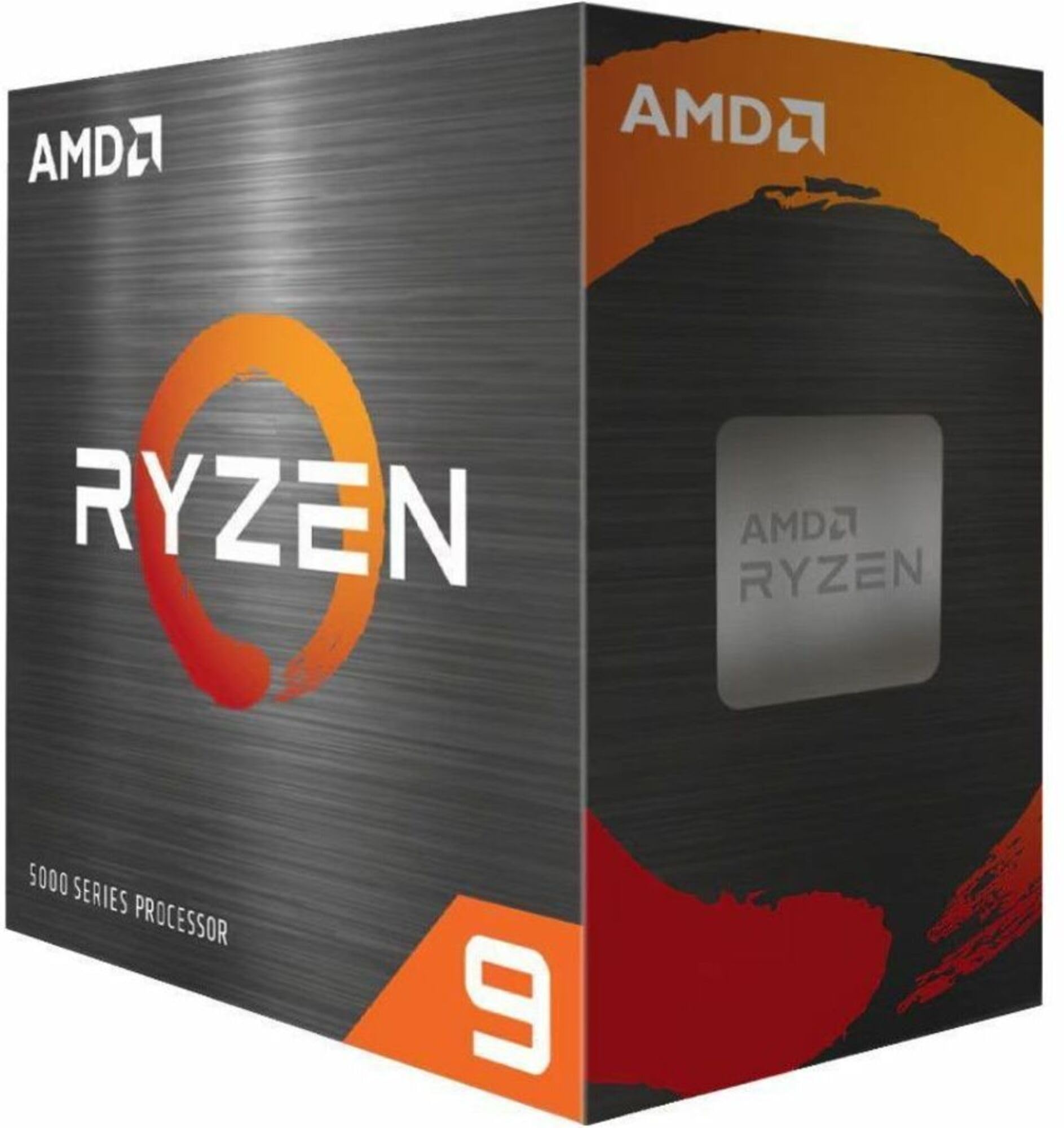
The 5900XT packs sixteen Zen 3 cores and thirty-two threads into the AM4 platform, making it the highest-core-count option for anyone who already owns a B550 or X570 motherboard. For streaming, those extra threads are gold: they let you assign OBS to a dedicated set of cores while keeping the game running on the primary CCD. The 72 MB of cache is generous by AM4 standards, and the 4.8 GHz boost clock is sufficient for 1440p gaming without bottlenecking a mid-range GPU.
Users upgrading from a Ryzen 5 2600 or Ryzen 7 3700X report night-and-day improvements in multitasking ability, particularly when running OBS alongside CPU-heavy games like Escape from Tarkov or Cities: Skylines. The chip runs cooler than the older 5950X because of improved binning, and the 130W TDP is manageable with a dual-tower air cooler. One subtle trade-off is that the split CCD design can introduce inter-core latency that hurts gaming performance slightly compared to the monolithic die of a 5800X3D, but the extra cores benefit encoding more than they hurt gaming.
If you are on a budget and already have an AM4 board with DDR4 RAM, the 5900XT delivers workstation-grade encoding performance at a fraction of the cost of a full platform swap. It is not the best gaming CPU on this list, but it is the most sensible upgrade for anyone whose primary bottleneck is core count during streams.
Why it’s great
- Sixteen cores handle OBS, chat, and browser without taxing game threads
- Drops into existing AM4 boards with DDR4 memory
- Runs cooler than previous 16-core AM4 chips
Good to know
- Split CCD design adds latency that can affect 1080p competitive gaming
- Requires an aftermarket cooler; no boxed cooler included
3. Intel Core i9-14900K
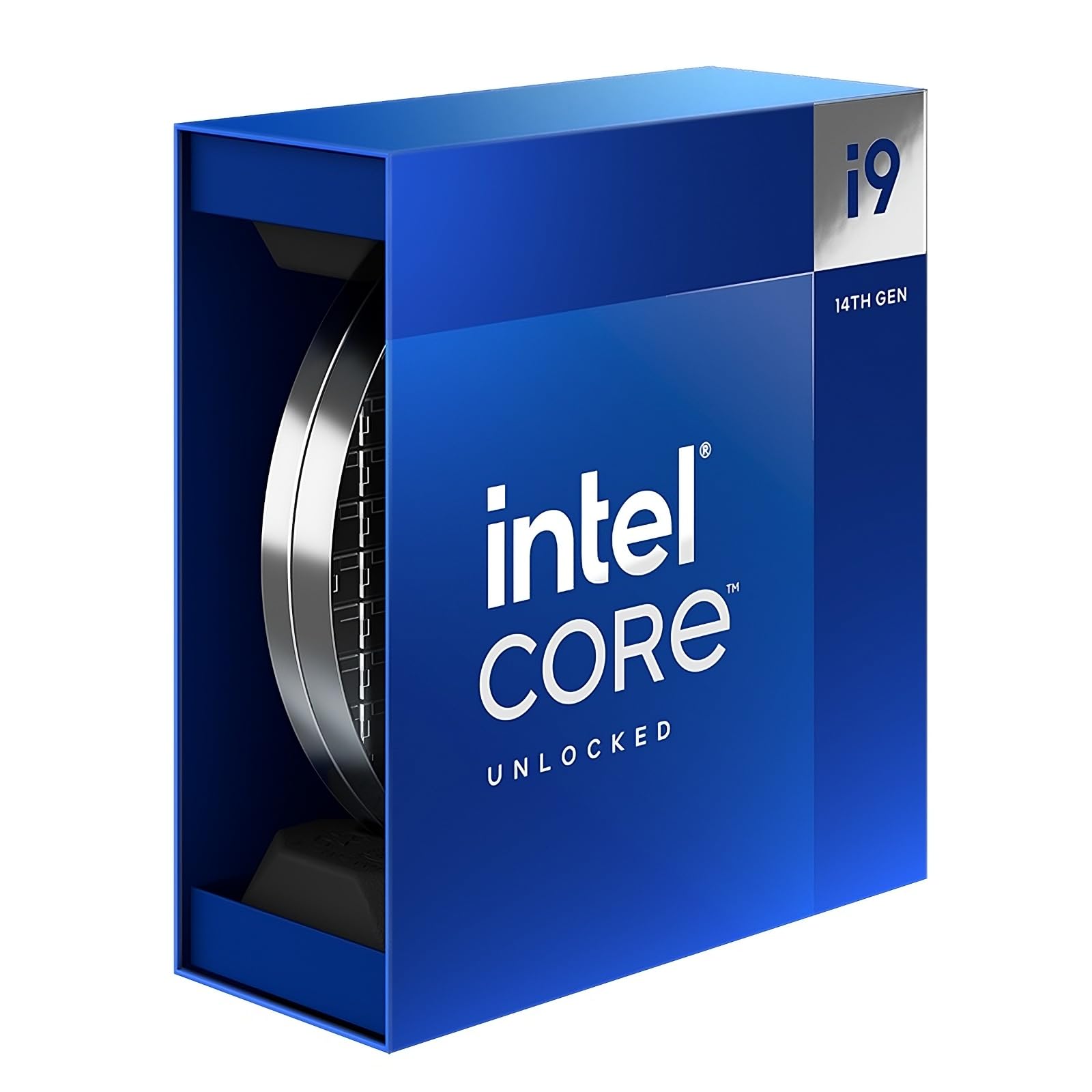
The 14900K remains Intel’s most powerful LGA 1700 processor for streaming because its eight high-performance P-cores handle the game while sixteen efficiency E-cores run OBS, Discord, chat bots, and browser tabs simultaneously. The integrated UHD Graphics 770 supports QuickSync, which can act as a dedicated hardware encoder for the stream, freeing the discrete GPU to render at maximum fidelity. That hardware encoding pipeline is particularly valuable for single-PC streamers who play at 1440p or 4K and cannot spare GPU encoder cycles.
In practice, the 14900K delivers frame rates that rival or exceed the 7800X3D in titles that favor raw clock speed, but it runs significantly hotter. Sustained all-core loads push into the 90°C range even with a 360mm AIO, which means your cooling solution needs to be robust. The chip also draws up to 253W under full turbo, so your power supply should be rated for at least 850W to leave headroom for a high-end GPU. Users have reported stability issues with early batches, though Intel’s microcode patches have resolved most of the voltage-related crashes on modern BIOS versions.
If you want the absolute highest FPS in games while running a stream and you are willing to invest in serious cooling and a quality Z790 board, the 14900K is the fastest Intel option available. Just be prepared to manage its thermal output and ensure your motherboard has the latest BIOS update installed before you install the chip.
Why it’s great
- QuickSync encoder offloads streaming from both CPU and GPU
- Eight P-cores deliver top-tier single-threaded gaming performance
- Compatible with affordable DDR4 and DDR5 boards
Good to know
- High power draw and heat require premium cooling and PSU
- LGA 1700 socket is a dead-end platform with no future CPU upgrades
4. Intel Core Ultra 9 285K

The Core Ultra 9 285K introduces Intel’s Arrow Lake architecture with a redesigned power delivery that runs significantly cooler than the 13th and 14th generation chips. For streaming, this translates to quieter operation and more consistent boost clocks under sustained load. The 24-core hybrid layout (8 P-cores plus 16 E-cores) mirrors the 14900K’s raw thread count, but the new architecture improves memory controller stability and reduces the voltage spikes that plagued earlier Raptor Lake chips.
Professionals using the 285K in SolidWorks workstations and video editing rigs report stable 24-hour burn-in tests with temperatures staying under 80°C on a 360mm AIO. The integrated graphics are basic but support display output for troubleshooting, and the chip does not include a dedicated QuickSync encoder as mature as the one in the 14900K—Intel appears to be shifting encoding duties toward the GPU. The LGA 1851 socket and 800-series motherboards represent a new platform generation, so you are committing to a fresh build rather than an upgrade path.
If you prioritize a quiet, cool-running system that still crushes multi-threaded encoding tasks, the 285K is a stronger long-term investment than the 14900K because of its stability improvements. It is not the fastest gaming chip on the market, but for a workstation that doubles as a streaming rig, it strikes the best balance between performance and thermal sanity.
Why it’s great
- Runs up to 10°C cooler than 14900K under same load
- Stable memory controller with support for high-speed CUDIMM RAM
- 24 cores handle heavy multitasking without voltage instability
Good to know
- Requires new LGA 1851 motherboard and DDR5 RAM
- No boxed cooler included
5. AMD Ryzen 7 9850X3D
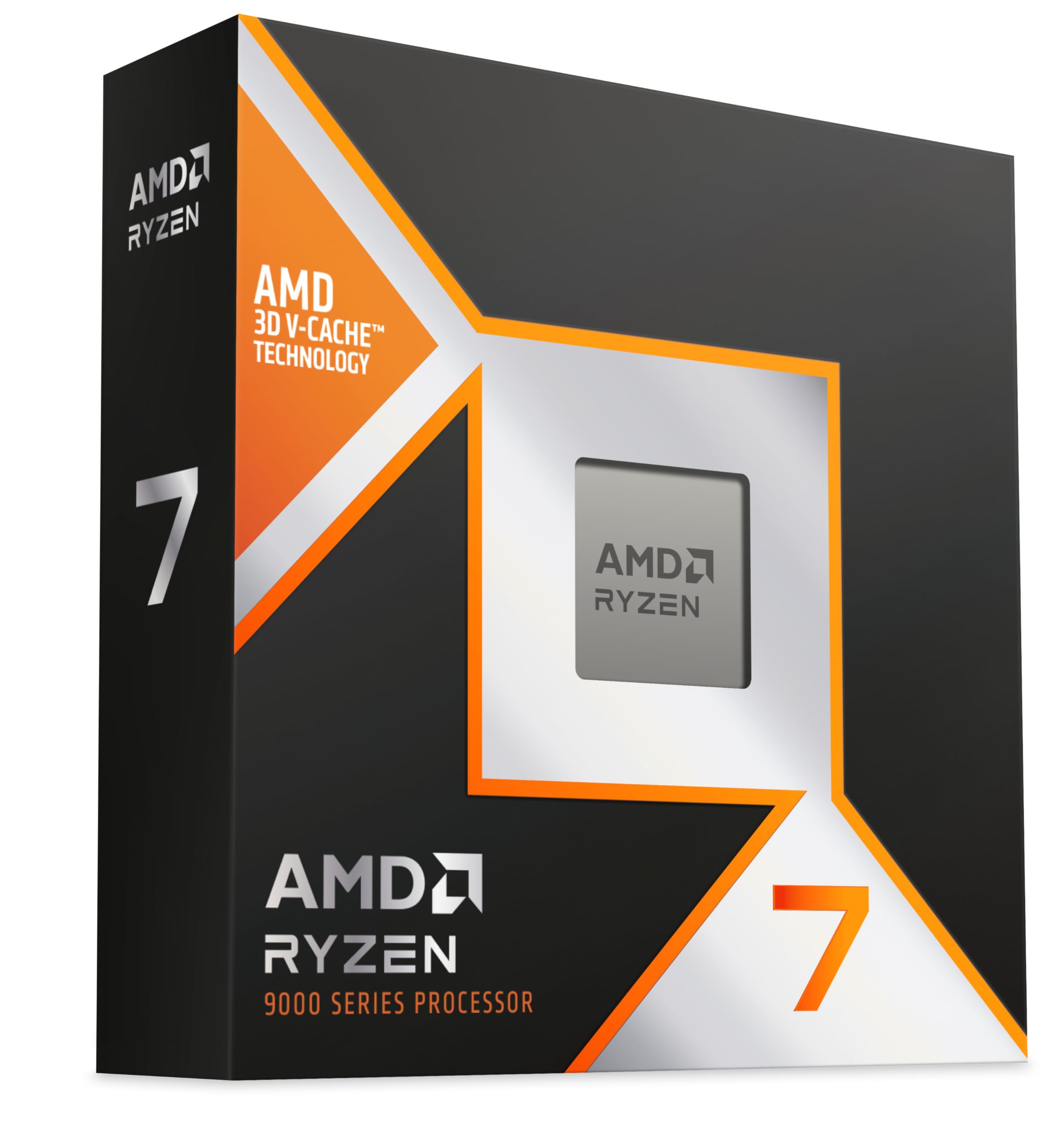
The 9850X3D is AMD’s latest 8-core processor built on the Zen 5 architecture with 3D V-Cache stacking that pushes the total L3 cache to 96 MB. For streaming, the combination of higher IPC from Zen 5 and the massive cache means the chip can maintain extremely stable frame pacing even when OBS is actively encoding. Benchmarks show this chip delivering around 140–160 FPS in demanding titles when paired with a high-end GPU like the Radeon 7800 XT, with 1% lows that rarely dip below 100 FPS even during busy scenes.
User reports from those who upgraded from the 7800X3D highlight improved thermal behavior—the 9850X3D idles around 38°C and peaks under 70°C with a 360mm AIO, and it boosts higher on average because of better binning. The chip supports faster DDR5 memory kits, and the AM5 platform allows you to drop this chip into a B650 or X870 board without any BIOS headache. Like the 7800X3D, it lacks a mature integrated encoder, so you will depend on your GPU’s NVENC for the stream output.
This is the processor to buy if you want the absolute best gaming performance while streaming and you are already on an AM5 board. The price premium over the 7800X3D is significant, but the higher boost clock and improved thermal headroom justify the jump for streamers who cannot tolerate any frame-time variance.
Why it’s great
- Zen 5 IPC gains improve encoding efficiency over previous X3D chips
- Runs cool enough for air cooling despite high boost clocks
- AM5 socket support with straightforward drop-in upgrade
Good to know
- Requires DDR5 memory; no DDR4 support
- No iGPU encoder for QuickSync-style offloading
6. Intel Core i9-13900KF

The 13900KF is essentially last generation’s flagship streaming chip, and it remains a monster for anyone who needs serious multi-threaded performance without paying for the 14900K. With 24 cores and 32 threads, it handles OBS encoding, background VMs, and heavy productivity tasks like video rendering or software compilation without breaking a sweat. The 5.8 GHz boost clock is among the highest you can get, which helps in games that are sensitive to single-thread performance.
The “KF” suffix means there is no integrated graphics, so you lose QuickSync encoding entirely. That is a meaningful drawback for single-PC streamers who want to offload the stream encoder, but if you are running a dedicated GPU with NVENC, the difference is negligible. The chip is compatible with both DDR4 and DDR5 motherboards, and users who pair it with high-speed DDR4 kits report excellent stability at 4000 MHz. Cooling is essential—users report sustained all-core loads hitting high 80°C even with a Noctua NH-D15, so budget for a quality 360mm AIO.
If you can find this chip at a discount compared to the 14900K, it delivers nearly identical streaming performance for less money. Just factor in the cost of a good cooler and be aware that the LGA 1700 platform has reached its end of life with this generation.
Why it’s great
- Nearly identical gaming performance to 14900K at lower street price
- Compatible with DDR4 memory for budget builds
- 24 cores handle simultaneous streaming, compiling, and editing
Good to know
- No integrated graphics; cannot use QuickSync
- Runs very hot under sustained load; requires premium cooling
7. Intel Core i7-9700K
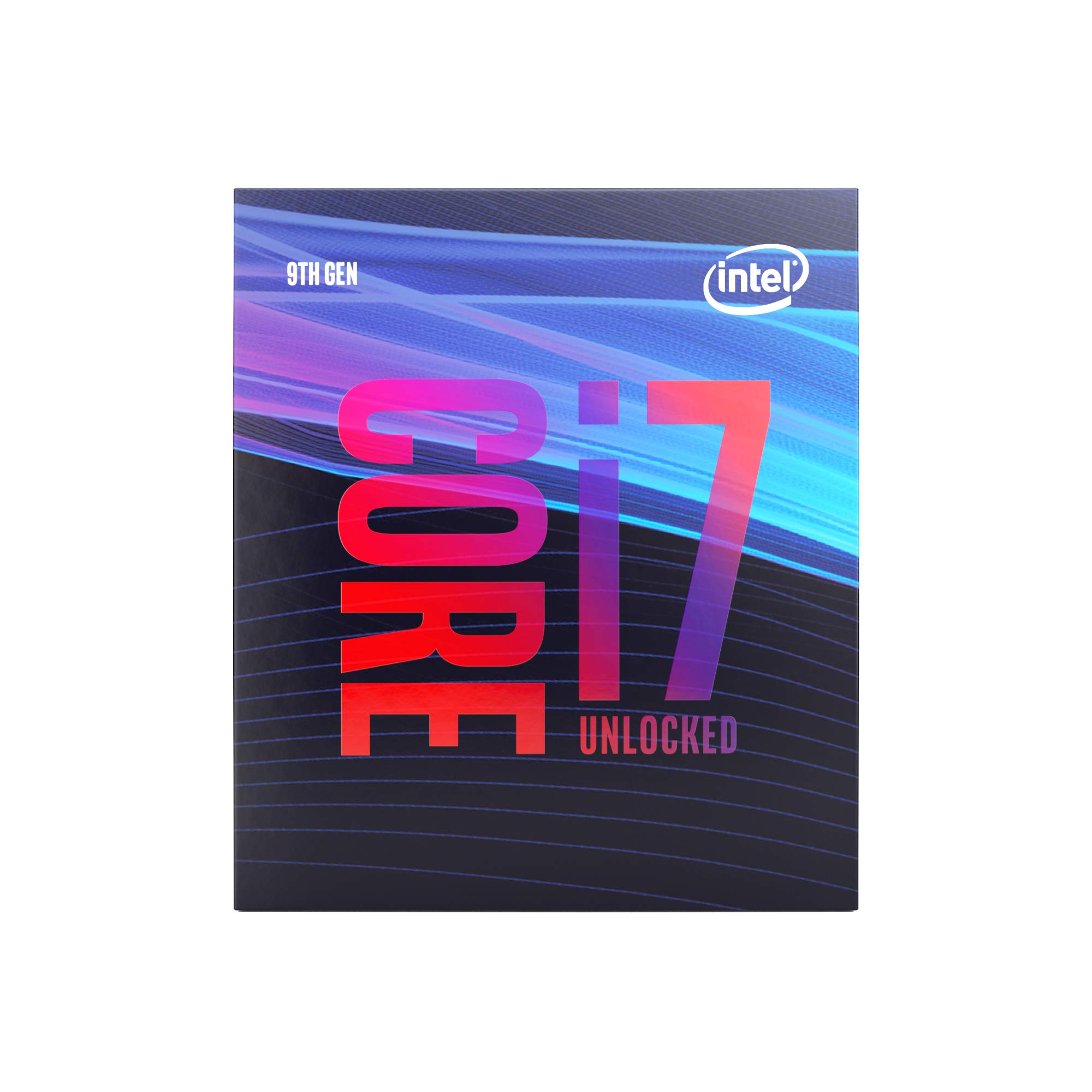
The 9700K is an older 8-core chip that lacks hyper-threading, which limits its ability to handle simultaneous encoding and gaming compared to modern processors. For entry-level streaming at 720p60 or lightweight 1080p30 broadcasts, it can still get the job done when paired with a mid-range GPU that handles the NVENC encoding. The integrated UHD Graphics 630 supports QuickSync, giving you a fallback encoder option if your GPU is fully loaded by the game.
Users who bought this chip new years ago report that it lasted five to six years before they felt the need to upgrade, which speaks to its durability. However, the lack of threads means OBS will consume a noticeable portion of the CPU’s resources, and you will see frame drops in CPU-intensive games like Warzone or Cyberpunk 2077 while streaming. The 9700K also requires an Intel 300-series chipset motherboard, which limits your upgrade path to at most a 9900K.
This is a viable option only if you already own a Z390 board and want to build a very low-cost streaming PC. For anyone buying a new motherboard today, the i5-14400 offers more threads and better platform support for roughly the same money.
Why it’s great
- QuickSync support provides hardware encoding without GPU load
- Proven long-term reliability over several years of use
- Large user community with established overclocking guides
Good to know
- No hyper-threading limits simultaneous encoding performance
- Compatible only with older LGA 1151 300-series boards
8. Intel Core i5-14400

The i5-14400 is the budget champion for streaming because it pairs six performance cores and four efficiency cores with integrated UHD Graphics 730 for QuickSync encoding. This configuration allows you to run OBS on the E-cores and the game on the P-cores, creating a natural separation that keeps both workloads fluid. The included RM1 stock cooler is adequate for light streaming workloads, though upgrading to a tower cooler will let the chip sustain its boost clock longer.
Users pairing the 14400 with an RTX 5070 report no bottleneck at 1440p gaming, and the chip’s compatibility with both DDR4 and DDR5 motherboards makes it extremely flexible for budget builds. The 10 cores and 16 threads are enough for 1080p60 streaming in most games, though you will want to use NVENC or QuickSync rather than x264 software encoding to keep CPU overhead low. The LGA 1700 socket is a dead-end platform, but the low entry price makes that a minor concern.
If you need the cheapest new processor that can still deliver a stable 1080p stream without stuttering, the i5-14400 is the smart pick. It outperforms the older 9700K in every metric and gives you access to modern motherboard features like PCIe 5.0 and DDR5 compatibility.
Why it’s great
- Hardware QuickSync encoder frees GPU for gaming
- Supports both DDR4 and DDR5 memory for budget flexibility
- Includes stock cooler, lowering initial build cost
Good to know
- Limited to 1080p60 streaming; struggles with x264 at higher presets
- LGA 1700 platform has no future upgrade path
9. AMD Ryzen 7 5700X

The Ryzen 7 5700X is the most sensible upgrade for anyone still on an AM4 platform with a B450 or B550 motherboard. Its eight Zen 3 cores and sixteen threads provide a massive leap over older quad-core and hexa-core chips, and the 65W TDP means it runs cool enough that you can reuse your existing air cooler. For streaming, the 5700X can handle 1080p60 encoding using GPU NVENC while the CPU focuses purely on the game.
Users who upgraded from a Ryzen 5 2600 report immediate improvements in frame stability during streams, with temperatures dropping from mid-80°C to the mid-60°C range under load thanks to the efficient 7nm architecture. The chip does not include integrated graphics, so you need a discrete GPU for any display output, but virtually every streaming build already has one. The lack of QuickSync is a non-issue if you have an Nvidia GPU with NVENC, though AMD GPU users may want to consider an Intel alternative for the hardware encoder.
If you are on a tight budget and already own an AM4 motherboard, the 5700X is the single best value upgrade you can make for streaming. It will not match the 7800X3D in raw gaming performance, but it costs significantly less and keeps your existing DDR4 RAM and motherboard in service for another two to three years.
Why it’s great
- Drops into existing AM4 boards with a simple BIOS update
- 65W TDP runs cool on most air coolers
- Eight cores provide enough thread count for 1080p streaming
Good to know
- No integrated graphics; requires a discrete GPU
- Lacks QuickSync or dedicated hardware encoder
FAQ
Do I need an integrated GPU for streaming?
Should I use x264 or NVENC for my stream encoder?
Can I stream on a 6-core processor?
Does a faster boost clock matter more than more cores for streaming?
Final Thoughts: The Verdict
For most users, the cpu for streaming winner is the AMD Ryzen 7 7800X3D because its 3D V-Cache keeps frame pacing rock-solid during simultaneous gaming and encoding, and the AM5 platform provides a clear upgrade path to future Zen 5 chips. If you need QuickSync hardware encoding to offload the stream from your GPU, grab the Intel Core i9-14900K and pair it with a high-end cooler. And for a budget-friendly upgrade without replacing your entire motherboard, nothing beats the AMD Ryzen 7 5700X for squeezing more streaming life out of an existing AM4 build.

Mo Maruf
I created WellFizz to bridge the gap between vague wellness advice and actionable solutions. My mission is simple: to decode the research and give you practical tools you can actually use.
Beyond the data, I am a passionate traveler. I believe that stepping away from the screen to explore new environments is essential for mental clarity and physical vitality.