The AM3+ socket is a relic of a bygone era, but for the millions of PCs still running on DDR3 memory and AMD’s Bulldozer-derived architecture, finding a drop-in upgrade that breathes new life into an old rig without forcing a platform overhaul is a specific, budget-conscious mission. You’re not looking for bleeding-edge performance; you’re looking for the best possible chip that reliably fits your existing AM3+ motherboard, maximizes your multi-threaded workloads, and stretches your investment for a few more years.
I’m Mohammad Maruf — the founder and writer behind WellFizz. After analyzing hundreds of user benchmarks, compatibility reports, and real-world thermal data across every available AM3+ processor, I’ve isolated the seven models that actually deliver measurable gains for your specific motherboard and cooling setup.
This guide focuses exclusively on processors that physically fit the AM3+ socket, comparing raw core counts, clock speeds, thermal profiles, and the actual lift you can expect in gaming, streaming, and general productivity. Whether you’re resuscitating a media server or squeezing more frames out of a legacy gaming build, these are the only cpu for am3+ socket options worth your time and money.
How To Choose The Best CPU For AM3+ Socket
Selecting the right processor for your AM3+ motherboard isn’t about chasing the highest number on the box. It’s a careful balance of your motherboard’s power delivery, your cooling solution, and the specific applications you run. The AM3+ ecosystem has its own quirks, and ignoring them can lead to instability or wasted money.
Match the CPU TDP to Your Motherboard’s VRM Phase Design
The single most overlooked factor is your motherboard’s voltage regulator module (VRM) quality. A 95W chip like the FX-8300 will run on almost any AM3+ board, including budget 760G chipsets. However, a 220W behemoth like the FX-9590 requires a high-end 990FX board with robust heatsinks and at least 8+2 power phases. Installing a high-TDP CPU on a low-end board will cause thermal throttling or permanent damage. Check your motherboard’s CPU support list before buying.
Core Count vs. Clock Speed for Your Workload
AM3+ chips top out at eight physical cores. For heavily multi-threaded tasks like video encoding, 3D rendering, or running a home server with multiple virtual machines, an 8-core FX-8350 or FX-8300 offers a tangible advantage. For gaming—especially older titles that rely on single-core performance—a higher-clocked 6-core model like the Phenom II X6 1055T can sometimes outperform a slower-clocked 8-core chip. Be honest about what you’re actually doing.
The Importance of Aftermarket Cooling
Even the stock “Wraith” cooler included with some FX-8350 models is merely adequate for a low-noise build. The FX-9590’s box does not include a cooler at all, and its 220W TDP demands a 240mm or larger liquid cooler. For any chip with a TDP over 95W, budget at least for an aftermarket air tower like the Cooler Master Hyper 212 EVO. The stock coolers on the older Phenom II and entry-level FX models are notoriously insufficient for sustained loads.
Quick Comparison
On smaller screens, swipe sideways to see the full table.
| Model | Category | Best For | Key Spec | Amazon |
|---|---|---|---|---|
| AMD FX-8350 (Wraith) | 8-Core | Best Overall AM3+ Upgrade | 4.0GHz Base, 8MB L3 Cache | Amazon |
| AMD FX-8350 (Retail Box) | 8-Core | High-Frequency Multi-Tasking | 4.0GHz Base, 125W TDP | Amazon |
| AMD FX-9590 | 8-Core | Maximum Single-Core Speed | 4.7GHz Base, 220W TDP | Amazon |
| AMD Phenom II X6 1055T | 6-Core | Legacy Gaming & Heavy Multitasking | 2.8GHz Base, 9MB Total Cache | Amazon |
| AMD FX-8300 | 8-Core | Energy-Efficient 8-Core Build | 3.3GHz Base, 95W TDP | Amazon |
| AMD FX-6100 | 6-Core | Budget-Friendly Upgrade | 3.3GHz Base, 6MB L3 Cache | Amazon |
| AMD FX-4100 | 4-Core | Entry-Level Quad Core | 3.6GHz Base, 95W TDP | Amazon |
In‑Depth Reviews
1. AMD FX-8350 Black Edition with Wraith Cooler

The FX-8350 hits the sweet spot of the AM3+ platform. Its 4.0GHz base clock and 4.2GHz Turbo frequency on all eight cores deliver the highest out-of-box performance you can drop into a standard 125W-compatible motherboard. The included Wraith cooler is a significant upgrade over the old FX coolers—it’s quieter and keeps the chip around 63°C under gaming load, which is adequate for stock operation. User benchmarks consistently show this chip handling 1080p Ultra settings in games like DOOM (2016) and Warhammer II without bottlenecking a GTX 980-class GPU.
Where the FX-8350 really shines is multi-threaded productivity. Video transcoding, compiling code, and running a home surveillance server see a direct benefit from the eight integer cores. The unlocked multiplier also gives overclockers headroom; many reviewers report stable all-core overclocks at 4.5GHz with a good aftermarket air cooler. At idling power draw of 30-40W, it’s also surprisingly efficient for light desktop use.
The main limitation is platform-bound. You’re limited to DDR3-1600 RAM, and single-threaded performance still lags behind even entry-level Ryzen chips. But if you’re nursing an AM3+ board with 16GB of DDR3 already installed, this is the single most impactful upgrade you can make without replacing your motherboard, RAM, and potentially your power supply.
Why it’s great
- Highest clocked 8-core that runs on standard 125W-supporting boards.
- Wraith cooler is quiet and effective for stock operation.
- Strong overclocking headroom with decent cooling.
Good to know
- Some older motherboards may require a BIOS update.
- Not a meaningful upgrade from an FX-8320.
2. AMD FX-8350 Black Edition (Retail Box)

This retail box version of the FX-8350 is identical in silicon to the Wraith edition, but ships with the older-style cooler and fan. The core specs remain the same: 8 cores at 4.0GHz base, 4.2GHz Turbo, 8MB of L2 and L3 cache, and a 125W TDP. The selling point here is often the lowest price point for the FX-8350 silicon itself, making it a favorite for builders who already own an aftermarket cooler and don’t want to pay extra for a boxed fan they won’t use.
In real-world use, the performance delta between this chip and the Wraith version is zero—the cooling solution is the only variable. Users who paired this CPU with a Cooler Master Hyper 212 EVO or a 240mm liquid cooler routinely achieved stable overclocks of 4.3 to 4.35GHz on all eight cores, outperforming even the stock FX-8370. The chip is a known quantity for home server builds; one user reported running 4x 1080p surveillance cameras at ~1% CPU utilization under Xubuntu.
The packaging and warranty are the differentiator here. This box includes the full retail warranty and installation instructions. However, make sure to inspect the pins upon arrival—one verified buyer received a unit with bent pins, which can damage the motherboard socket. This is a packaging vulnerability, not a design flaw, but it’s worth noting for buyer caution.
Why it’s great
- Same powerful 8-core silicon as the Wraith version at a lower cost.
- Excellent overclocker with a decent aftermarket cooler.
- Full retail warranty and support.
Good to know
- Stock cooler is barely adequate; budget for an aftermarket solution.
- Inspect pins carefully on arrival; poorly packaged units may arrive damaged.
3. AMD FX-9590 Octa-Core

The FX-9590 is the absolute king of the AM3+ hill in terms of raw clock speed, with a base frequency of 4.7GHz and a turbo boost up to 5.0GHz. It is a factory-overclocked part that pushes the Vishera architecture to its absolute limit. For single-threaded tasks and older games that are clock-speed sensitive, this chip can still hold its own against budget modern processors. Users report smooth 1080p 60fps streaming and gaming without bottlenecking a GTX 980 Ti.
However, the physics of 220W of heat dissipation cannot be ignored. This chip absolutely requires a 240mm or larger liquid cooler—air cooling is not an option. Even then, the stock voltage of 1.5375V can cause system stuttering and crashes; many users found lowering the voltage to 1.4250V and disabling the Turbo Boost feature resulted in a stable 4.7GHz all-core operation. The chip draws enough power to make your room noticeably warmer, and idle temperatures with adequate cooling hover around 40-50°C.
The FX-9590 is a niche purchase for a specific type of user: someone who already owns a high-end 990FX motherboard with robust VRMs, has a liquid cooling loop installed, and wants the absolute fastest CPU the AM3+ socket can accept. For anyone else, the FX-8350 offers 85% of the performance for a fraction of the thermal and electrical cost. Motherboard compatibility is extremely limited; check your board’s CPU support list before even considering this chip.
Why it’s great
- Highest clock speeds available on the AM3+ platform (4.7/5.0 GHz).
- Excellent for single-thread sensitive games and applications.
- Strong price-to-performance ratio vs comparable modern chips.
Good to know
- Massive 220W TDP requires high-end liquid cooling; no cooler included.
- Motherboard compatibility is very narrow; check your VRM phase design first.
4. AMD Phenom II X6 1055T
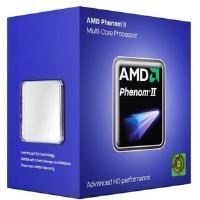
The Phenom II X6 1055T is a classic six-core processor that predates the FX architecture but remains a solid performer for specific use cases. Its 2.8GHz base clock is modest, but the Turbo Core feature automatically boosts up to 3.2GHz on lightly threaded workloads. The real story is the 9MB total cache (3MB L2 + 6MB L3) and the 125W TDP, which is well within the comfort zone of most AM3 and AM3+ motherboards. Reviewers consistently report stable overclocks of 3.8GHz to 4.0GHz with an aftermarket cooler like the Zalman Performa, keeping temperatures under 60°C under Prime95 load.
In practical terms, this chip is a massive upgrade for anyone coming from an Athlon II X2 or a first-gen Phenom. Users report dramatically smoother performance in games like Skyrim and Battlefield 3 when paired with a mid-range GPU like the HD 6770. The six cores also give it strong multi-tasking chops—users running Python development environments, video editing software, and multiple browser tabs find it snappy even by modern standards. The Cool’n’Quiet feature helps keep idle power draw low.
The downside is the age of the architecture. The Phenom II cores are weaker per-clock than the FX Vishera cores, so a heavily multi-threaded modern game or application will favor an 8-core FX chip. Also, some buyer reviews noted that the processor pins appeared to have been reworked or soldered, which is a reliability concern. The stock heatsink is also notoriously insufficient; budget for an aftermarket cooler immediately.
Why it’s great
- Excellent overclocker; stable 3.8-4.0GHz common with good cooling.
- Strong multi-tasking performer for its era and price point.
- Runs cool under load with decent aftermarket air cooling.
Good to know
- Per-clock performance is lower than FX-series chips.
- Stock heatsink is inadequate; pins may show signs of rework in some units.
5. AMD FX-8300 Vishera

The FX-8300 is the hidden gem of the AM3+ lineup. It offers eight Vishera cores in a 95W thermal envelope, making it compatible with budget motherboards that can’t handle the 125W TDP of the FX-8350. The base clock of 3.3GHz is lower, but the chip supports Turbo Core up to 4.2GHz on lightly threaded tasks. For users upgrading from a dual-core Athlon or an older Phenom II, this is a true quantum leap. One virtual pinball enthusiast reported a night-and-day improvement in game smoothness after dropping this chip into his AM3+ board.
Where this chip truly excels is in multi-threaded number-crunching and virtualization. The shared L3 cache and dual 128-bit floating point engines make it a strong performer for video editing and casual gaming at a lower electrical cost than the FX-8350. Users running VMware ESXi or Docker containers on a budget appreciate the 8-core count at a 95W TDP. The chip is also a perfect “mid-life crisis” upgrade for a DDR3 system you want to keep running for 2-3 more years without a full platform rebuild.
The standard caveat applies: the stock cooler is garbage. Multiple verified reviews state that the fan is loud and barely adequate for stock operation. Budget for an aftermarket air tower like the Hyper 212 EVO. Also, while the 95W TDP is forgiving, some older AM3+ boards may still need a BIOS update to support Vishera cores. This is not a chip for high-FPS gaming—its single-core performance is modest—but for a balanced, efficient multi-purpose machine, it’s arguably the most undervalued AM3+ processor available.
Why it’s great
- Eight cores at an easy-to-cool 95W TDP; compatible with more motherboards.
- Excellent value for multi-threaded tasks like rendering and server workloads.
- Turbo Core up to 4.2GHz keeps single-threaded response snappy.
Good to know
- Stock cooler is loud and insufficient; aftermarket cooling is mandatory.
- Not a gaming powerhouse; single-core performance trails higher-clocked FX models.
6. AMD FX-6100 6-Core

The FX-6100 is the entry-level gateway to the Bulldozer architecture on the AM3+ socket. With six cores clocked at 3.3GHz base and a Turbo frequency of 3.9GHz, this chip is primarily a value play. Its 95W TDP means it will run on virtually any AM3+ board, including low-end 760G chipsets, without thermal issues. Users have successfully overclocked this chip to 4.1GHz on the stock cooler and 4.5GHz with voltage adjustments, though the latter requires adequate cooling.
In real-world usage, the FX-6100 is a capable performer for general productivity, web browsing, and light gaming. It trades blows with the Intel i5-2500 in general tasks but falls behind in gaming due to its weaker per-core performance. One user running a VMware ESXi lab server reported the chip running 10 virtual machines without pegging all cores, at an idle power draw of only 80W. The unlocked multiplier makes it a fun chip for budget overclockers.
The major drawback is the architecture itself. Bulldozer cores are weaker per-clock than the later Vishera cores found in the FX-8300 and FX-8350. In games, fps can be 6-8 frames behind an i5-2500k at 1080p. It also lacks a dedicated GPU, so you must pair it with a discrete graphics card. For the budget-conscious user resurrecting a dead AM3+ board, it’s a solid stopgap, but for anyone who can stretch their budget, the FX-8300 offers significantly more performance.
Why it’s great
- Extremely affordable entrance to the AM3+ platform.
- Low 95W TDP is compatible with nearly all AM3+ motherboards.
- Unlocked multiplier and good overclocking headroom for a budget chip.
Good to know
- Bulldozer cores are noticeably slower per-clock than Vishera chips.
- Requires a dedicated GPU; no integrated graphics.
7. AMD FX-4100 4-Core

The FX-4100 is a budget-focused quad-core processor that serves one primary purpose: providing a cheap, functional CPU for an AM3+ board when every dollar counts. With a 3.6GHz base clock and a Turbo boost up to 3.8GHz, its raw clock speeds are respectable, but the Bulldozer architecture means its per-core performance is weaker than a modern entry-level chip. The 95W TDP makes it a safe drop-in for any AM3+ motherboard, including budget 760G and 780G chipsets.
In actual use, this chip handles everyday tasks like web browsing, office applications, and media playback with ease. Users report the CPU sitting at only 20% load during typical desktop use and around 60% load during gaming. Paired with a Radeon HD 6000-series GPU, it provides excellent DX11 gaming performance for its era. Overclocking is possible; one user reported a stable 4.2GHz on the stock cooler. Games like Diablo 3, Guild Wars 2, and StarCraft 2 run smoothly on high settings.
The limitations of this chip are clear. It only has four physical threads, so heavily multi-threaded workloads will bottleneck quickly. The stock cooler is adequate for stock operation but will be audible under load. Multiple reviews note that the pins are fragile and the packaging can lead to bent pins during shipping. For a home office PC or a cheap dedicated server, it’s a functional choice, but it is not a gaming upgrade path. If you already own a Phenom II X4, the FX-4100 is a sideways move, not an upgrade.
Why it’s great
- Very budget-friendly entry point for the AM3+ platform.
- Low 95W TDP ensures compatibility with almost any motherboard.
- Adequate for casual gaming and daily productivity tasks.
Good to know
- Only 4 threads; not suitable for modern multi-threaded applications.
- Fragile pins are vulnerable to shipping damage.
FAQ
Can I use an AM3+ CPU in a standard AM3 motherboard?
Will the FX-9590 work on my budget AM3+ motherboard?
What is the best CPU for AM3+ socket gaming in 2024?
Final Thoughts: The Verdict
For most users, the cpu for am3+ socket winner is the AMD FX-8350 with Wraith Cooler because it offers the highest out-of-box performance with a usable stock cooler and broad motherboard compatibility. If you need a low-power eight-core for a server or home theater PC, grab the AMD FX-8300. And for the enthusiast with a premium 990FX board and a liquid cooling loop who wants the absolute fastest AM3+ chip possible, nothing beats the AMD FX-9590.

Mo Maruf
I created WellFizz to bridge the gap between vague wellness advice and actionable solutions. My mission is simple: to decode the research and give you practical tools you can actually use.
Beyond the data, I am a passionate traveler. I believe that stepping away from the screen to explore new environments is essential for mental clarity and physical vitality.