Our readers keep the lights on and my smoothie glass nicely filled. As an Amazon Associate, I earn from qualifying purchases.
Compacted soil starves your lawn of the air, water, and nutrients roots need to thrive. A manual core aerator pulls actual plugs of soil from the ground, creating channels that revitalize your turf without the noise or expense of a gas-powered machine. Choosing the right one comes down to tine quality, frame durability, and the specific density of your ground.
I’m Mohammad Maruf — the founder and writer behind WellFizz. I’ve spent hundreds of hours analyzing the steel composition, tine geometries, and weight distributions that separate a tool that lasts a season from one that lasts a decade.
The right tool transforms a weekend chore into effective lawn care. This guide evaluates seven top contenders to help you find the best core aerator for your yard’s specific compaction challenges and your own physical stamina.
How To Choose The Best Core Aerator
Selecting a manual core aerator is about matching the tool to your soil type, lawn size, and willingness to exert physical effort. The wrong choice leads to bent tines, clogged heads, or a tool that sits in the shed. Focus on these three factors before you buy.
Tine Design and Material
The tine is the part that does the work. Hollow tines are non-negotiable if you want true core aeration — spike aerators only poke holes and can further compact the soil around the hole. Look for beveled or chamfered openings that eject plugs cleanly. Stainless steel or heat-treated alloy steel resists bending when you hit a hidden rock or patch of dry clay. Replaceable tines extend the tool’s life significantly.
Frame Weight and Footplate Geometry
Heavier frames drive tines deeper with less downward force from your body. A five- to six-pound step aerator requires you to shift your full weight onto a footplate, which can be tiring over a 5,000-square-foot lawn. Rolling drum aerators, typically weighing 35 to 50 pounds, use their own mass and radial motion to penetrate the soil. Look for a wide footplate or a low-profile drum that lets you rock your weight smoothly rather than stomp.
Soil Compatibility and Moisture Requirements
Every manual aerator works best on moist soil. Dry, baked ground will resist the tines and may cause bending or shallow plugs. Sandy loam is the easiest to aerate; heavy clay requires more tool weight and sharper tines. If you have rocky soil, prioritize a tool with thick, heat-treated steel tines and a frame that can tolerate impact without cracking the welds.
Quick Comparison
On smaller screens, swipe sideways to see the full table.
| Model | Category | Best For | Key Spec | Amazon |
|---|---|---|---|---|
| Landzie AeroCore Rolling | Rolling Drum | Large lawns, manual rolling | 50.8 lbs, 7 hollow tines | Amazon |
| Brinly PA-403BH-A3 | Tow-Behind | Large acreage, tough soil | 24 heat-treated spoons, 150 lb tray | Amazon |
| Craftsman CMXGZBF7124213 | Tow-Behind | Heavy clay, large yards | 24 galvanized points, 140 lb tray | Amazon |
| VEVOR Tow Behind | Tow-Behind | Budget tow option, sandy soil | 40 in wide, 120 lb weight tray | Amazon |
| Landzie Original Step | Manual Step | Small yards, precision spots | 5.6 lbs, 3 stainless steel tines | Amazon |
| Xuperace Core Aerator | Manual Step | Budget pick, easy storage | 5.74 lbs, 3 hollow alloy tines | Amazon |
| Senjoys Rolling Spike | Rolling Spike | Soft lawns, quick assembly | 17.2 lbs, 45 carburized spikes | Amazon |
In‑Depth Reviews
1. Landzie AeroCore Rolling Lawn Aerator
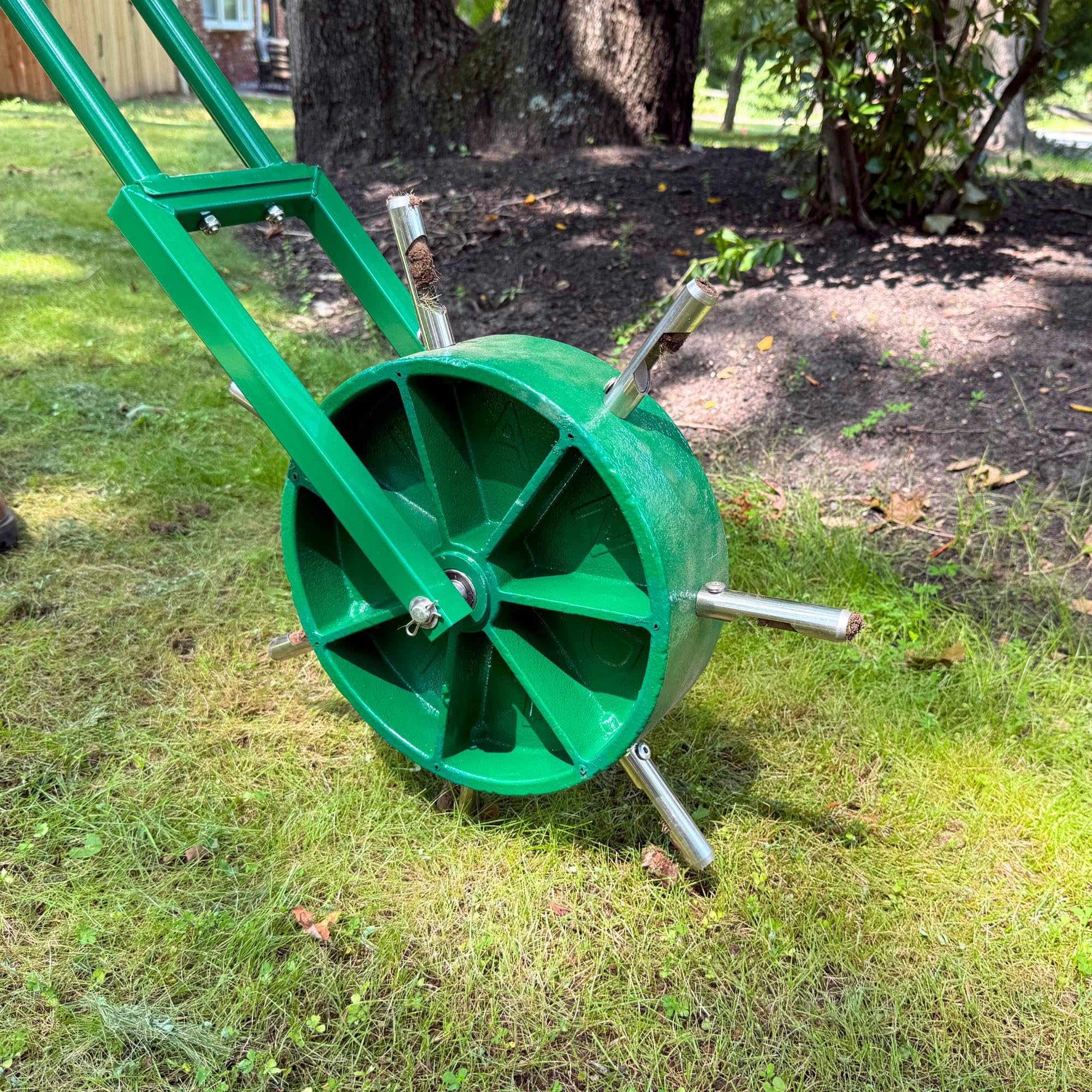
The Landzie AeroCore replaces the exhausting step-and-stomp method with a rolling drum that uses its own 50-pound mass to drive seven stainless steel hollow tines into the ground. Each tine features a chamfered opening that ejects soil plugs automatically, eliminating the clogging that frustrates owners of cheaper rolling aerators. The powder-coated steel frame resists rust and the drum geometry lets you work forward and backward without lifting.
Assembly takes about 30 minutes, and the included wrenches and thread locker help you secure the tines properly. Users consistently report excellent plug extraction on moist loamy and sandy soils, with the drum penetrating to the full 3-inch depth without needing additional weight. The tines are fully replaceable, extending the tool’s life well beyond a single season.
The primary trade-off is physical effort — this is not a tool for anyone with low stamina. Expect a solid workout on a 5,000-square-foot lawn, though most users prefer it to renting a gas-powered unit for small to medium yards. The price sits at the high end for a manual tool, but the build quality justifies the investment for homeowners who aerate annually.
Why it’s great
- Non-clogging chamfered tines eject plugs continuously
- Heavy drum penetrates without extra weight or stomping
- Replaceable stainless steel tines extend tool lifespan
Good to know
- Very physically demanding on lawns over 4,000 sq ft
- Screws on tines may loosen; apply included thread locker
2. Brinly Tow Behind Plug Aerator PA-403BH-A3

The Brinly PA-403BH-A3 is built for serious acreage, using 24 heat-treated steel spoons to pull plugs up to 3 inches deep across a 40-inch working width. The spoons are narrower than many competitors and feature sharpened ends that penetrate clay without requiring the maximum weight load. The fully enclosed weight tray holds up to 150 pounds of sand, concrete blocks, or water tanks to drive the tines deeper in hard ground.
A single-pin universal hitch connects to most lawn tractors and zero-turn mowers in seconds. The three independently rotating tine sections reduce turf damage during turns and maintain consistent plug depth on uneven terrain. Users report good results on half-acre to multi-acre properties, with the tool producing clean 2.5- to 3-inch plugs when the soil is moist.
Assembly takes a couple of hours, and the instructions cover multiple models, so some users found the process confusing. The all-steel construction is heavy at nearly 64 pounds, but the semi-pneumatic tires roll smoothly over grass and the transport lever makes it easy to move across driveways without scraping.
Why it’s great
- Sharpened spoons cut through clay better than blunt tines
- Three independent tine sections protect turf on turns
- 150-pound weight capacity for deep penetration
Good to know
- Assembly instructions serve two models; double-check hardware
- Requires a lawn tractor or ZTR — not a push tool
3. Craftsman 40 Inch Tow Behind Plug Aerator

The Craftsman 40-inch tow-behind aerator, built by Agri-Fab in the USA, uses 24 galvanized steel coring points to pull plugs up to 3 inches deep. The galvanized finish resists rust far better than painted steel, which matters when the tool lives in a damp shed or gets hosed off after use. The wide weight tray supports up to 140 pounds of ballast, and the lift handle release system lets you tilt the unit for transport without straining your back.
Flat-free tires eliminate the hassle of punctures, and the universal hitch attaches to most lawn and garden tractors. Assembly takes an hour or two — the coring knives ship uninstalled for safety, so you need to bolt them in yourself. Users consistently praise the solid build and effective plug extraction, even on hard clay after adding concrete blocks or sandbags.
The main complaint is the tedious assembly process, especially aligning the spoons correctly. Once assembled, however, the unit performs reliably across large lawns. The vertical storage design saves space, and the 3-year limited warranty provides peace of mind that budget options lack.
Why it’s great
- Galvanized coring points resist rust and corrosion
- Flat-free tires eliminate puncture worries
- Vertical storage saves garage floor space
Good to know
- Assembly is time-consuming; set aside 1–2 hours
- Spoons ship loose and require careful bolt alignment
4. VEVOR Tow Behind Plug Aerator
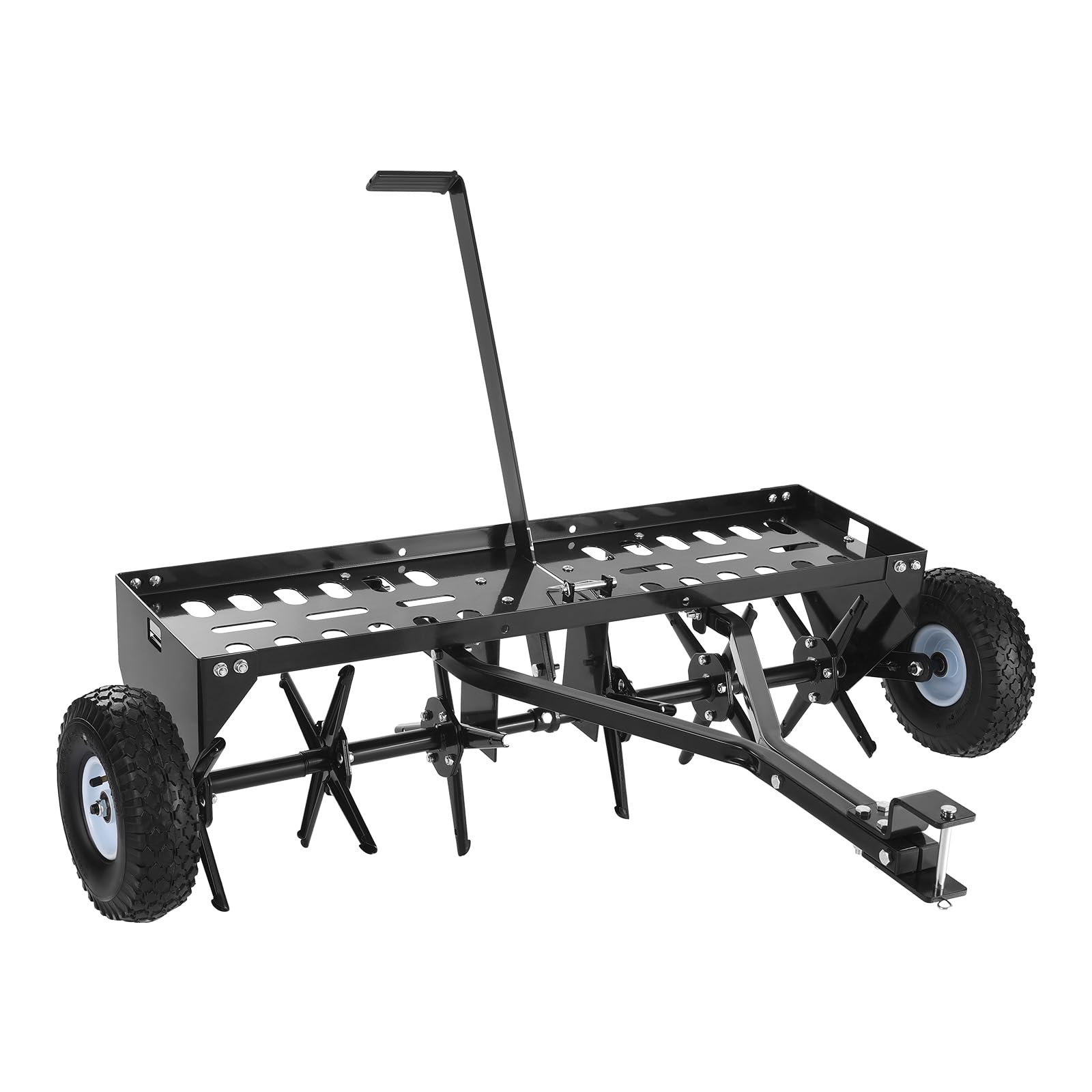
The VEVOR tow-behind aerator brings a 40-inch working width and a 120-pound weight capacity to the budget tier of the market. The high-strength steel frame is fully welded, and the coring tines penetrate up to 3 inches deep in sandy and loamy soils. The 10.6-inch pneumatic tires roll smoothly over turf and slopes, providing better traction than solid wheels on uneven ground.
Assembly is straightforward — the tines come pre-assembled, and the included socket tool and wrench let you mount the handle and hitch in under an hour. Users with riding mowers found it easy to hook up and effective on standard residential lawns. The strap slots on the weight tray make it simple to secure sandbags or bricks without bungee cords slipping off.
Build quality is solid for the price point, but the steel is thinner than premium competitors. Extended use on rocky or heavily compacted clay may cause the tines to bend over time. This is an excellent entry-level tow unit for homeowners with soft to moderately firm soil who want the speed of a tractor-pulled tool without the premium price.
Why it’s great
- Easy assembly with pre-mounted tines and included tools
- Pneumatic tires roll smoothly over slopes and soft turf
- Weight tray strap slots keep ballast secure
Good to know
- Thinner steel may not endure heavy clay or rocky soil
- Penetration depth drops sharply in dry ground
5. Landzie Original Hollow Tine Lawn Aerator
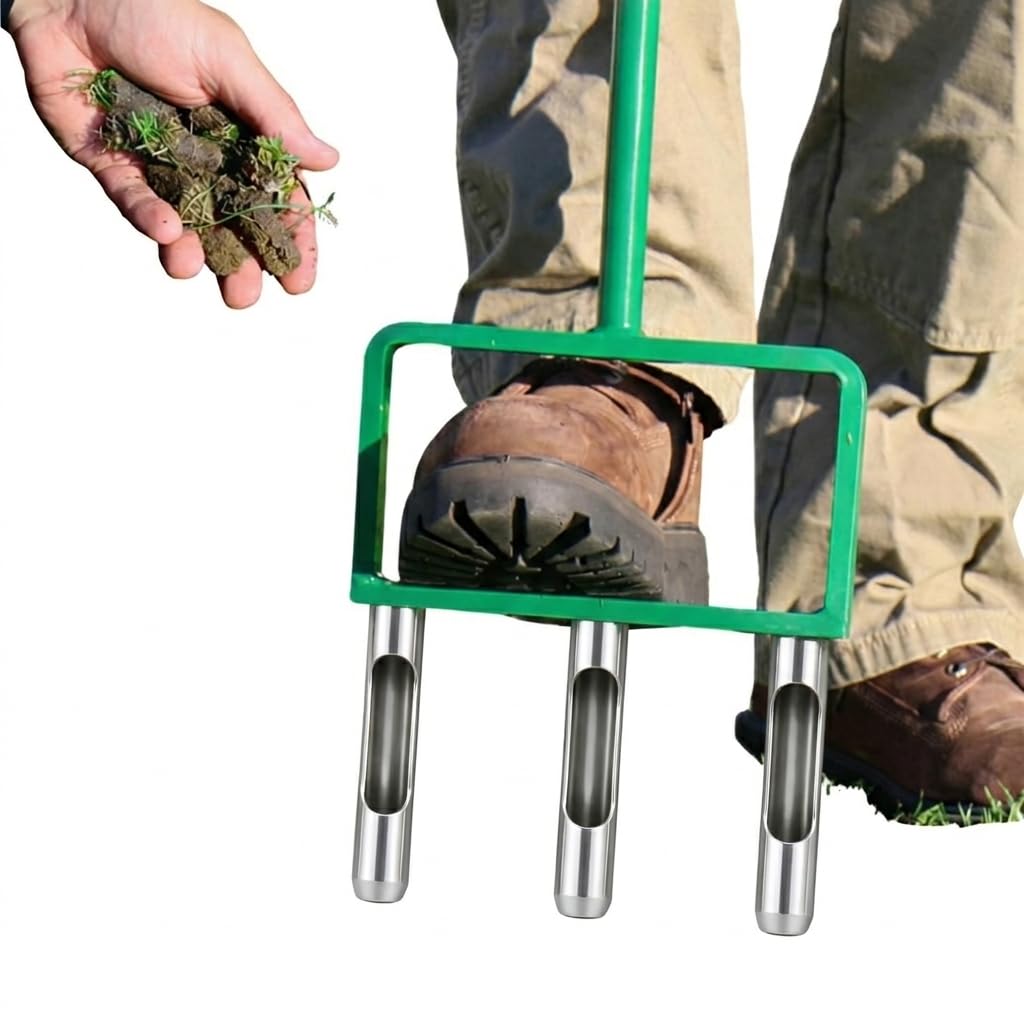
The Landzie Original is the most recognized manual step aerator on the market, and for good reason. Three stainless steel hollow tines are beveled at the opening to eject soil plugs with each press, eliminating the clogging that plagues cheaper step tools. The powder-coated steel frame is welded into a single piece, and the tool ships fully assembled — no screwing tines into brackets or guessing which bolt goes where.
User reports confirm the tool is extremely sturdy, with the tines staying sharp after 50 to 60 hours of use. The key to performance is soil moisture: use it after a good rain and the tines sink to full depth with a single step. Users with heavy clay reported that the tines sometimes only reached 4 inches, but the self-cleaning mechanism kept the tool working without manual unclogging.
This is a physically demanding tool. Users describe a 2,200-square-foot lawn taking four hours, with the motion feeling like a cross-fit workout. The top foot bar could be grippier, and the tines need tightening every hour or two during extended use. For small lawns and targeted spot aeration around trees and garden beds, it remains the gold standard of manual step tools.
Why it’s great
- Beveled hollow tines never clog during normal use
- Fully assembled out of the box — zero setup required
- Replaceable tines allow years of service
Good to know
- Extremely labor-intensive on lawns over 2,500 sq ft
- Tine screws loosen during extended use; carry the Allen wrench
6. Xuperace Core Aerator Lawn Tool
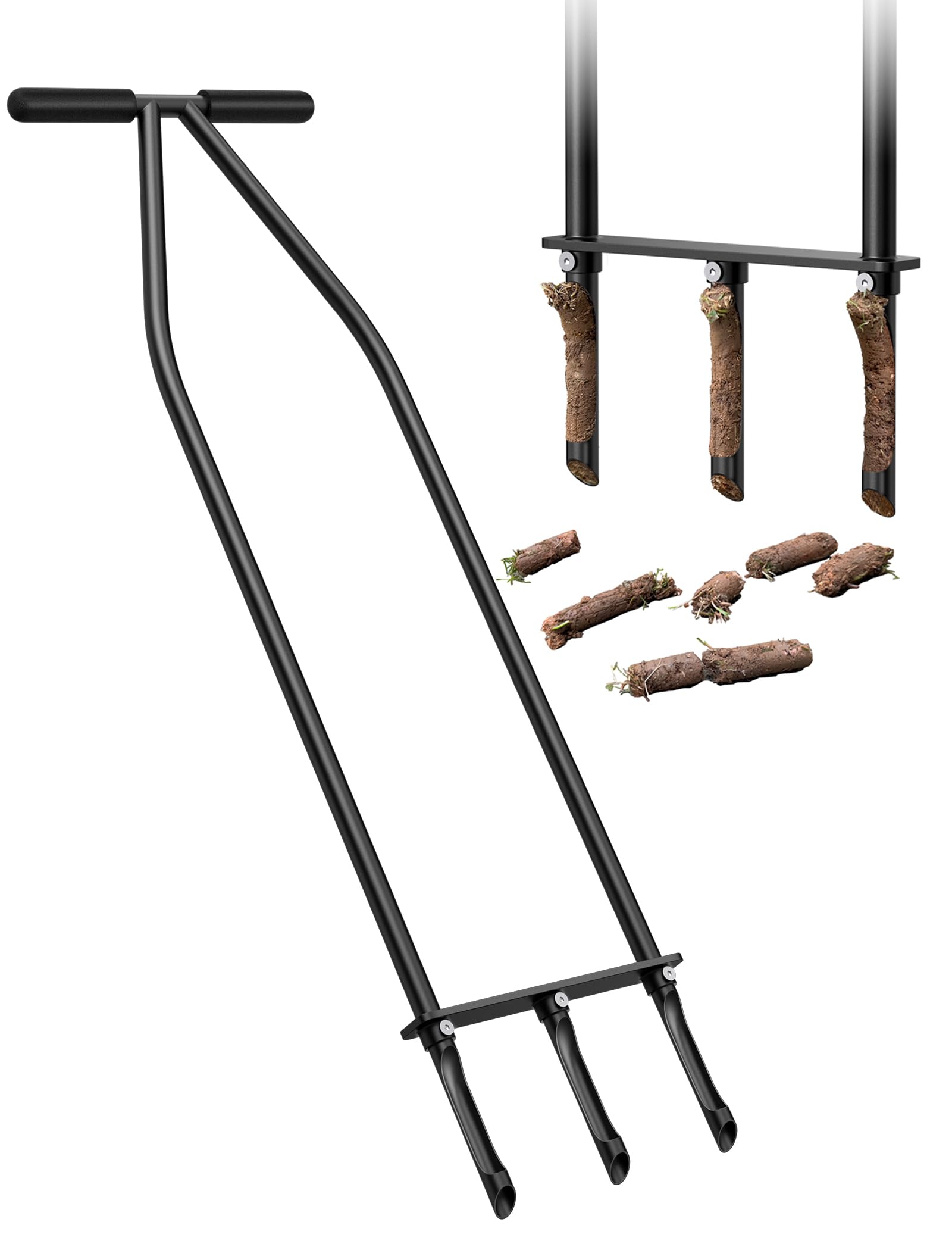
The Xuperace core aerator solves the classic problem of step aerators — clogged tines — with a patented side-ejection design. Instead of pushing plugs out the top where they can jam, the curved tine shape directs soil out a large ported cutout on the side. Users report that this design genuinely prevents jamming even in sticky clay, making it a strong alternative to traditional hollow tine tools at a lower price point.
The frame is made from integrally formed high-strength alloy steel, and the two-bar handle provides more rigidity than single-bar designs that tend to flex or crack. The footplate is positioned so your knee stays free during operation, reducing strain compared to tools that force you to bend awkwardly. The tines are replaceable and attach with screws, and an extra bottle of thread locker is included.
Moist soil is still essential — the tool struggles in dry ground and you may need to remove the middle tine to reduce resistance on very hard areas. The screws do loosen during use, so keep the included Allen wrench handy. At its price point, this tool offers genuine coring performance without the premium cost of the Landzie Original, making it the best entry-level step aerator available.
Why it’s great
- Side-ejection design prevents tine clogging reliably
- Two-bar steel handle is stronger than single-bar alternatives
- Replaceable tines extend usability across seasons
Good to know
- Screws loosen during use; check and retighten frequently
- Requires moist soil; almost unusable when the ground is dry
7. Senjoys 21″ Rolling Lawn Aerator
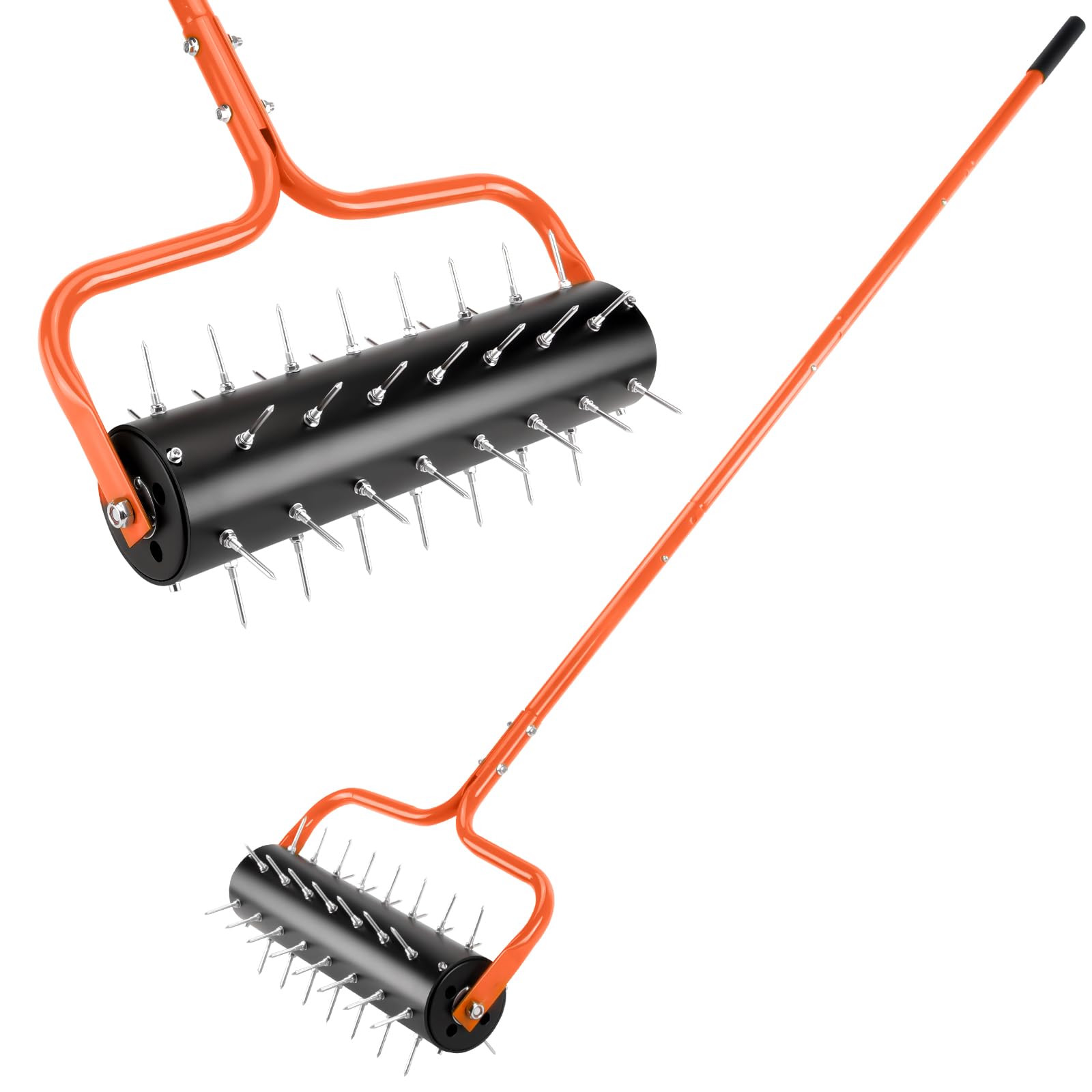
The Senjoys rolling aerator uses 45 carburized spikes — not hollow tines — to puncture the soil, and it is important to understand that distinction. This is a spike aerator, not a core aerator. The carburized spikes offer 30 percent greater strength than standard spikes, resisting bending when they strike rocks, but the tool does not remove soil plugs. It compacts the soil around each hole, which can worsen compaction in heavy clay over time.
Assembly takes only a few minutes thanks to quick-clip handle connections and pre-secured screws with gasket locking rings. The 75-inch handle reduces back strain, and the U-shape construction provides stability. The tool comes well-packaged, and the box doubles as a storage guard to protect the exposed spikes when not in use. Users report it works well on soft, already-loosened lawns.
This is a budget-friendly option for homeowners with sandy or loamy soil who want a rolling tool without the expense of a drum core aerator. It fails on hard clay — the spikes cannot penetrate effectively and the barrel design requires adding weight, which makes the tool cumbersome. If you need true core aeration, skip this model and choose a hollow tine option.
Why it’s great
- Very quick assembly with clip-on handle connections
- Long handle reduces bending and back strain
- Carburized spikes resist bending better than standard
Good to know
- Spike design does not remove soil cores — no true aeration
- Exposed spikes are a safety hazard; store in the box
FAQ
How often should I aerate my lawn with a core aerator?
Can I use a core aerator on wet soil?
Should I leave the soil plugs on the lawn after aerating?
Final Thoughts: The Verdict
For most users, the best core aerator winner is the Landzie AeroCore Rolling Lawn Aerator because its heavy drum and non-clogging chamfered tines deliver consistent plug extraction across medium to large lawns without the back-breaking effort of a step tool. If you need a tow-behind for acreage, the Brinly PA-403BH-A3 is the clear choice with its sharpened spoons and 150-pound weight capacity. And for budget-conscious homeowners with small, moist lawns who prefer a step tool, the Xuperace Core Aerator offers genuine hollow tine performance at an entry-level price.

Mo Maruf
I created WellFizz to bridge the gap between vague wellness advice and actionable solutions. My mission is simple: to decode the research and give you practical tools you can actually use.
Beyond the data, I am a passionate traveler. I believe that stepping away from the screen to explore new environments is essential for mental clarity and physical vitality.