Our readers keep the lights on and my smoothie glass nicely filled. As an Amazon Associate, I earn from qualifying purchases.
Pairing a processor with an RTX 2060 requires careful balance — a chip too weak leaves performance on the table, while one too powerful wastes budget that could upgrade the GPU itself. The sweet spot lives in mid-range silicon that feeds the 2060 enough data to hit its frame-rate ceiling without breaking thermal or financial limits.
I’m Mohammad Maruf — the founder and writer behind WellFizz. For this guide, I analyzed benchmark data, core architectures, and thermal profiles across nine processors to find the best CPU for 2060 configurations.
Whether you are building fresh or breathing new life into an older AM4 or LGA1700 board, these recommendations target zero-percent GPU bottleneck at 1080p and 1440p gaming. choosing the right cpu for 2060 means matching core count, clock speed, and platform cost to your specific use case.
How To Choose The Best CPU For 2060
Not every processor plays nice with the RTX 2060. A CPU that is too slow starves the GPU; one that is overkill inflates your build cost without raising FPS. Focus on three specific traits to land the ideal match.
Core count and gaming workload
Six cores and twelve threads is the baseline for pairing with a 2060. Games like Cyberpunk 2077 and Call of Duty rely heavily on single-core speed, but background tasks (Discord, OBS, browser tabs) demand the extra threads. Eight-core chips offer headroom for streaming, while 10-core and above models become overkill unless you also run rendering or virtualization.
Single-core boost frequency
The 2060 responds best to CPUs with a turbo clock above 4.5 GHz. Lower frequencies cause stutter in physics-heavy titles and reduce frame-time consistency. AMD’s Zen 3 chips (5600X, 5600XT) and Intel’s 14th-gen i5 parts all cross this threshold at reasonable power draw.
Platform cost and upgrade path
AM4 boards with B550 chipsets allow PCIe 4.0 support and DDR4 memory — ideal for budget-conscious 2060 builders. Intel’s LGA1700 platform offers DDR5 compatibility and hybrid-core architectures but requires a more expensive motherboard. For a 2060, the extra cost of DDR5 rarely translates to meaningful gaming gains, making AM4 a smarter value pick in most cases.
Quick Comparison
On smaller screens, swipe sideways to see the full table.
| Model | Category | Best For | Key Spec | Amazon |
|---|---|---|---|---|
| i5-14600KF | Mid-Range | 1440p gaming & content creation | 14 cores, 5.3 GHz boost, 20 threads | Amazon |
| Ryzen 5 5600X | Mid-Range | 1080p competitive gaming | 6 cores, 4.6 GHz boost, 35 MB cache | Amazon |
| i5-14400F | Budget-Friendly | 1080p gaming on a strict budget | 10 cores, 4.7 GHz boost, 20 MB cache | Amazon |
| i7-12700KF | Premium | Multitasking heavy workloads + gaming | 12 cores, 5.0 GHz boost, 25 MB L3 cache | Amazon |
| Ryzen 7 8700G | Premium | Compact builds with backup iGPU | 8 cores, 5.1 GHz boost, RDNA 3 graphics | Amazon |
| Ryzen 5 5600XT | Budget-Friendly | Low-cost AM4 upgrade with cooler included | 6 cores, 4.7 GHz boost, 32 MB cache | Amazon |
| i5-14600KF (Alt) | Mid-Range | Gaming + light workstation tasks | 14 cores, 5.3 GHz boost, 24 MB cache | Amazon |
| Ryzen 9 5900XT | Premium | Heavy multitasking and content creation | 16 cores, 4.8 GHz boost, 72 MB cache | Amazon |
| i7-14700KF | Premium | High-FPS gaming + video rendering | 20 cores, 5.6 GHz boost, 33 MB cache | Amazon |
In‑Depth Reviews
1. Intel Core i5-14600KF (version 1)

The i5-14600KF hits the performance sweet spot for RTX 2060 builds. Its six P-cores clock up to 5.3 GHz, which keeps frame rates high in CPU-bound titles like Valorant and CS2, while the eight E-cores handle background tasks without stutter. In Cinebench R23 multi-core tests, this chip scores north of 20,000 points — more than enough headroom for streaming or compiling code alongside gaming.
Compatibility with B760 and Z790 motherboards gives you both DDR4 and DDR5 memory options. With a 2060, DDR5-5600 versus DDR4-3200 yields only marginal FPS gains (roughly 3-5 percent), so you can save money by reusing DDR4 sticks. The unlocked multiplier allows easy overclocking; with a decent 240mm AIO, an all-core 5.4 GHz is stable.
Thermal load runs around 75°C during extended gaming sessions with a mid-range cooler. The KF suffix means no integrated graphics — not an issue since you already own a 2060, but something to remember for troubleshooting. This processor delivers the best balance of price, speed, and future-proofing for the 2060 ecosystem.
Why it’s great
- Exceptional single-core boost eliminates GPU stutter
- Hybrid architecture handles multitasking without FPS drops
- DDR4 and DDR5 support reduces platform cost
Good to know
- Requires BIOS update on 600-series boards
- Discrete graphics card mandatory for display output
2. AMD Ryzen 5 5600X

The Ryzen 5 5600X remains the reference benchmark for 1080p gaming with an RTX 2060. Its six Zen 3 cores deliver a Cinebench R23 single-core score around 1600, which translates to consistent 144 fps in esports titles and smooth 60 fps in AAA single-player campaigns. The 65W TDP means the bundled Wraith Stealth cooler keeps noise levels low during normal gaming loads.
AM4 motherboards with B550 chipsets unlock PCIe 4.0 for the 2060’s x16 slot, giving full bandwidth to the GPU without bottlenecks. The 32 MB L3 cache helps reduce memory latency, which matters in games like Shadow of the Tomb Raider where cache-sensitive engine code benefits from faster data access. Single-CCX design keeps inter-core latency minimal.
Overclocking headroom is moderate — most samples stabilize at 4.65 GHz all-core with a budget air cooler. The 5600X excels as a drop-in upgrade for existing AM4 systems, allowing 2060 owners to skip motherboard replacement. If you already have a B450 or B550 board, this is the most cost-effective performance uplift available.
Why it’s great
- Excellent single-core performance for competitive gaming
- Low 65W TDP runs cool with stock cooler
- Drop-in upgrade for existing AM4 boards
Good to know
- No integrated graphics for troubleshooting
- PCIe 4.0 requires B550 or X570 chipset
3. Intel Core i5-14400F

The i5-14400F brings Intel’s hybrid architecture to the entry-level tier at a price that complements the 2060 perfectly. With six P-cores hitting 4.7 GHz and four efficiency cores, this chip handles the latest DirectX 12 Ultimate titles without bottlenecking the GPU. In Cyberpunk 2077 at 1080p ultra settings, the 14400F keeps GPU utilization above 95 percent.
Its 20 MB L3 cache and support for both DDR4 and DDR5 give builders flexibility. Budget-conscious users can pair this with DDR4-3200 and a B660 board, keeping total platform cost low. The included RM1 stock cooler is adequate for non-overclocked gaming loads, though upgrading to a tower cooler lowers temps by 8-10°C.
Multithreaded performance reaches about 17,500 in Cinebench R23 multi, which is competitive with last-gen i7 chips. The F suffix means no integrated GPU, so the 2060 is mandatory for display output. For pure gaming on a budget, this processor wastes no money on cores you won’t use.
Why it’s great
- Hybrid cores provide strong gaming efficiency
- DDR4 compatibility saves on total build cost
- Excellent 1080p gaming performance for the price
Good to know
- Locked multiplier prevents overclocking
- Stock RM1 cooler runs warm under sustained load
4. Intel Core i7-12700KF

The i7-12700KF offers eight P-cores and four E-cores with a 5.0 GHz turbo boost, making it one of the strongest last-gen options still relevant for 2060 builds. In workstation tasks like HandBrake video encoding, it outperforms the i5-14600KF by roughly 12 percent due to the additional P-core count. For gamers who also edit video or run virtual machines, this hybrid layout is ideal.
LGA1700 compatibility with Z690 and Z790 boards allows DDR5-5600 and PCIe 5.0 support, though the 2060 doesn’t benefit from PCIe 5.0 bandwidth — it uses PCIe 3.0 anyhow. What matters more is the 25 MB L3 cache, which reduces repeated memory fetches in physics-heavy games like Control. The unlocked multiplier lets you push to 5.1 GHz all-core with a 240mm AIO.
Thermal output hits 125W base and spikes to 190W under full load, so a high-end air cooler or liquid cooling is mandatory. The KF suffix omits integrated graphics, which keeps cost lower. This is the CPU to pick if your 2060 rig doubles as a productivity workstation.
Why it’s great
- Eight P-cores accelerate video encoding and rendering
- DDR5 and PCIe 5.0 support for future upgrades
- Strong overclocking headroom with adequate cooling
Good to know
- High 190W peak draw demands premium cooling
- Platform cost is higher than AM4 alternatives
5. AMD Ryzen 7 8700G

The Ryzen 7 8700G stands apart with its built-in RDNA 3 graphics, offering a unique safety net for 2060 builds. If your GPU needs troubleshooting or you are waiting for a replacement, the 8700G can handle 1080p esports titles at low settings (32-65 FPS). Its eight Zen 4 cores with 5.1 GHz boost provide strong gaming performance when paired with the 2060.
Socket AM5 support means DDR5 memory is mandatory — the 8700G’s integrated graphics benefit from higher-speed RAM, but the CPU cores themselves show only modest gains over AM4 in 2060-bound scenarios. Cinebench R23 multi scores around 18,500, placing it slightly above the 5600X in threaded workloads. The premium Wraith Spire cooler (95W rated) is included, though reviews indicate some units ship with the lower-rated Wraith Stealth instead.
This CPU makes sense for mini-ITX builders who want GPU flexibility or for users who occasionally offload light graphics work to the iGPU to save power. For pure gaming throughput with a 2060, the 5600X offers similar frame rates at a lower platform cost.
Why it’s great
- Integrated RDNA 3 graphics serve as GPU backup
- Zen 4 cores provide strong single-thread performance
- AM5 platform offers long-term upgrade path
Good to know
- DDR5-only requirement increases build cost
- iGPU performance lags behind dedicated 2060 significantly
6. AMD Ryzen 5 5600XT

The Ryzen 5 5600XT is essentially a factory-binned 5600X with a slight boost offset and an included Wraith Stealth cooler — saving you the cost of buying a separate cooler and thermal paste. Its six Zen 3 cores reach 4.7 GHz, just 100 MHz higher than the standard 5600X, but the thermal characteristics are identical at 65W TDP. In gaming tests with a 2060, the XT variant delivers frame rates within 1-2 percent of the 5600X.
The inclusion of the stock cooler makes this a complete drop-in replacement for older AM4 systems. Users upgrading from a Ryzen 5 2600 or 3600 will see a 30-40 percent improvement in 1% lows, eliminating the micro-stutter that plagues older Zen+ architectures. DDR4-3200 support means you can reuse existing memory kits without purchasing new modules.
Performance margins are thin — the minimal boost advantage rarely translates to perceptible gains. However, the convenience of a bundled cooler and slightly higher clock speed at the same price point as a 5600X makes this the smarter buy for first-time AM4 builders who want maximum simplicity.
Why it’s great
- Includes Wraith Stealth cooler saving -30
- Drop-in upgrade for AM4 boards (B450/B550)
- Low 65W TDP keeps thermals manageable
Good to know
- Minimal performance gain over standard 5600X
- Stock cooler limits overclocking headroom
7. Intel Core i5-14600KF (version 2)

This second listing of the i5-14600KF is functionally identical to version 1 — same 14 cores (6P+8E), same 5.3 GHz turbo, same 125W base power. Performance margins are equal, and both chips pair identically with an RTX 2060. The difference here is minor packaging variation and seller distribution, so choose whichever listing offers better shipping speed or seller reputation.
In practice, the 14600KF maintains GPU utilization at 97-99 percent in demanding titles like Dying Light 2 and Hogwarts Legacy at 1440p high settings. The 20 threads allow seamless multitasking — streaming to Twitch via OBS while gaming adds less than 3 percent CPU overhead. PCIe 5.0 support on Z790 boards is future-proofing for eventual GPU upgrades beyond the 2060.
Thermal performance mirrors the earlier review: sub-80°C with a dual-tower air cooler, and around 70°C with a 240mm AIO. The unlocked multiplier lets enthusiasts push to 5.5 GHz single-core with adequate voltage tweaks. If the first listing is out of stock, this identical variant is a safe drop-in replacement.
Why it’s great
- Identical performance to version 1 at same specs
- Excellent 1440p gaming with zero GPU bottleneck
- Unlocked for easy overclocking
Good to know
- Same thermal and BIOS requirements as version 1
- Check seller ratings before purchase
8. AMD Ryzen 9 5900XT
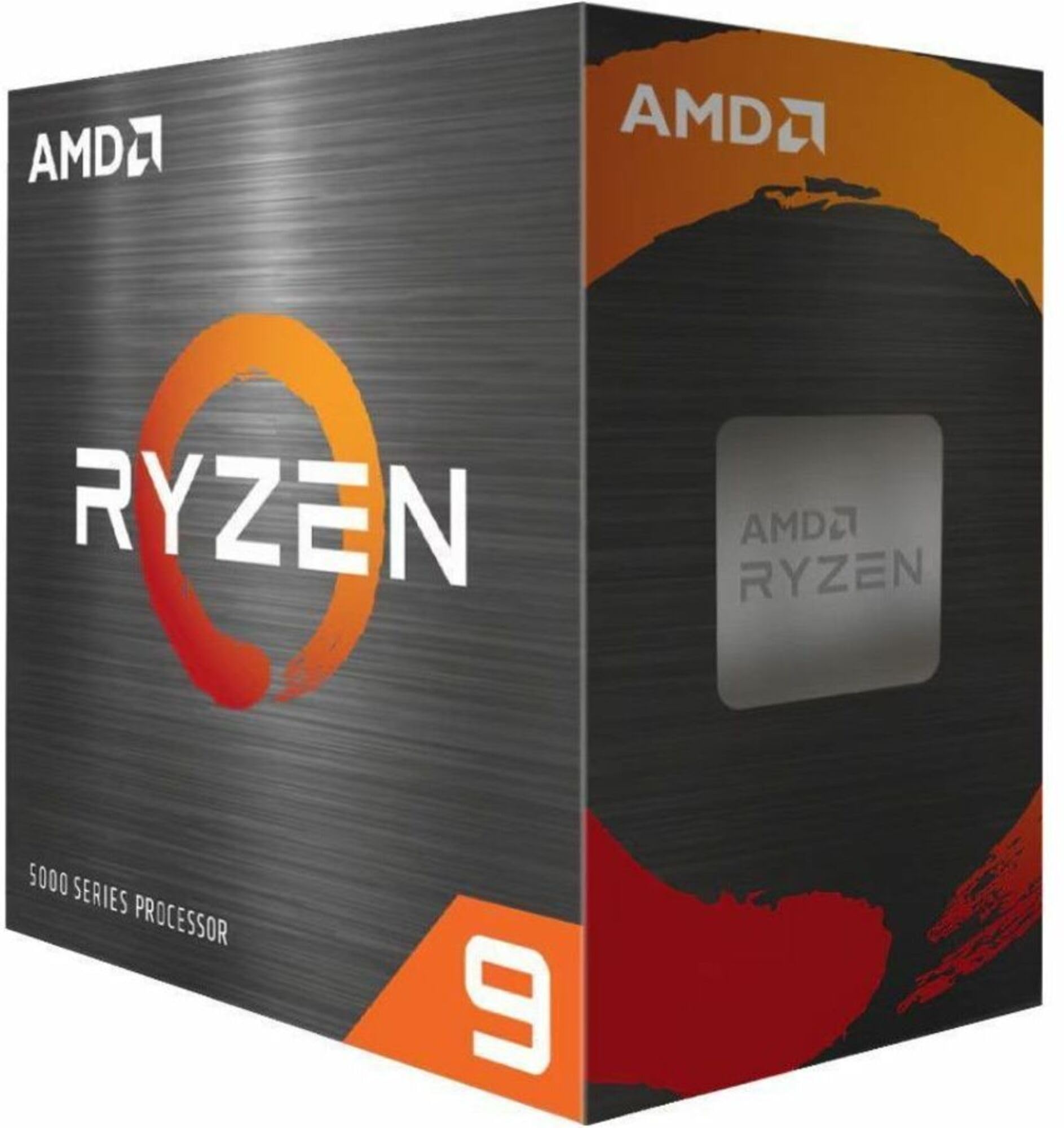
The Ryzen 9 5900XT packs 16 Zen 3 cores and 32 threads into the AM4 socket, making it the highest-core-count processor on this list. For 2060 gaming, this is wildly overspecced — most games use only 6-8 cores, and the additional cores contribute nothing to frame rates. However, users who run CPU-heavy production workloads (Blender rendering, 4K video encoding, server virtualization) alongside gaming will benefit from the raw multi-core muscle.
Its 72 MB L3 cache (two 32 MB CCDs plus shared L3) helps in cache-sensitive games like Factorio and Stellaris, where simulation tick rates improve. The 5900XT’s 4.8 GHz boost is lower than the 5600X’s 4.6 GHz in single-core tasks, so competitive gaming performance is actually slightly weaker in latency-dependent titles. The split CCD design introduces inter-core latency that hurts some game engines.
Thermal management is challenging — a 360mm AIO is strongly recommended, as peak load can exceed 200W. The cooler-less package means you must factor in cooling costs. For pure 2060 gaming, the 5600X outperforms this chip in most scenarios. Only buy the 5900XT if your workload demands 16 cores and you game as a secondary use.
Why it’s great
- 16 cores handle heavy production workloads easily
- 72 MB cache benefits simulation and strategy games
- Extends AM4 platform lifespan for DDR4 users
Good to know
- Overkill for 2060 gaming with lower single-core speed
- Requires high-end liquid cooling and good case airflow
9. Intel Core i7-14700KF

The i7-14700KF is the ceiling for RTX 2060 pairings — anything more powerful simply leaves GPU performance behind. Its 20 cores (8P+12E) deliver a Cinebench R23 multi-core score exceeding 35,000, rivaling last-generation HEDT processors. For pure gaming with a 2060, this chip will never bottleneck at any resolution or settings level, but you are paying for capability you cannot fully use until you upgrade the GPU.
Where the 14700KF shines is mixed workloads: running DaVinci Resolve color grading while gaming, or compiling large codebases with game clients open. The 33 MB L3 cache and 5.6 GHz Turbo Boost Max 3.0 frequency ensure that single-threaded tasks remain snappy. Compatibility with Z790 boards allows DDR5-6000 memory, though the 2060 sees minimal benefit from faster RAM.
Thermal and power requirements are substantial — expect 250W peak draw under full multi-thread load, demanding a 360mm AIO or custom loop. Intel’s recent microcode update (0x12F) is mandatory for stability with Vmin shift issues, so update your BIOS immediately. This CPU is for builders who plan to upgrade to a 4070 or 5070 in the future and want the platform ready today.
Why it’s great
- Absolute zero bottleneck in any 2060 gaming scenario
- Exceptional multi-core for professional workloads
- Future-proof platform for higher-tier GPU upgrades
Good to know
- Overkill for 2060-limited gaming budgets
- Requires premium cooling and recent BIOS update
FAQ
Will a Ryzen 7 5800X3D bottleneck an RTX 2060?
Does PCIe 4.0 matter for RTX 2060 performance?
Should I upgrade my CPU or GPU first with a 2060 build?
Final Thoughts: The Verdict
For most users, the cpu for 2060 winner is the Intel Core i5-14600KF because its 14 hybrid cores and 5.3 GHz boost eliminate any GPU bottleneck while keeping platform costs reasonable. If you want a drop-in AM4 upgrade with excellent single-core speed, grab the AMD Ryzen 5 5600X. And for heavy multitasking and content creation alongside 2060 gaming, nothing beats the Intel Core i7-12700KF.

Mo Maruf
I created WellFizz to bridge the gap between vague wellness advice and actionable solutions. My mission is simple: to decode the research and give you practical tools you can actually use.
Beyond the data, I am a passionate traveler. I believe that stepping away from the screen to explore new environments is essential for mental clarity and physical vitality.