Our readers keep the lights on and my smoothie glass nicely filled. As an Amazon Associate, I earn from qualifying purchases.
Finding the right compute for machine learning and local AI inference often hinges on a central question: does your workload favor raw multi-core throughput, dedicated AI tensor engines, or massive unified memory pools? The answer changes depending on whether you are fine-tuning, running large language models (LLMs), or developing at the edge.
I’m Mohammad Maruf — the founder and writer behind WellFizz. I’ve spent countless hours dissecting benchmark results, memory bandwidth tests, and NPU specifications to map which processors genuinely accelerate real-world AI tasks.
This guide walks you through the most capable options available today, helping you match hardware to your specific use case with the cpu for ai that fits your workflow and budget.
How To Choose The Best CPU For AI
Selecting a processor for AI work goes beyond core count and boost frequency. Three factors dominate: the peak AI performance in TOPS, the total size and bandwidth of accessible memory, and the software ecosystem that lets you actually run popular frameworks like llama.cpp, PyTorch, or NVIDIA’s AI stack.
TOPS and NPU Architecture
The NPU (Neural Processing Unit) inside modern AMD Ryzen AI and Intel Core Ultra chips delivers dedicated tensor acceleration. A rating of 40 TOPS or higher allows real-time inference for most vision and language models without burdening the main cores. If you plan to run local LLMs or Stable Diffusion, target a platform with at least 45 TOPS from its NPU or integrated GPU.
Unified Memory Capacity
Inference with very large models (70 billion parameters and above) demands memory pools that exceed the 24 GB typical on consumer GPUs. Processors that offer 96 GB or 128 GB of shared, coherent CPU/GPU memory let you host massive models locally. This is the defining advantage of the GMKtec EVO-X2, ASUS Ascent GX10, and NVIDIA DGX Spark: they trade raw token generation speed for the ability to run models that would otherwise require a workstation with multiple enterprise GPUs.
Software Compatibility
Not all AI hardware runs the same tools. The NVIDIA GB10 superchip and the Jetson platform benefit from the full CUDA and TensorRT software stack, while AMD’s XDNA 2 NPU relies on ROCm and the emerging ONNX Runtime support. Intel’s OpenVINO serves its own ecosystem. Before choosing, confirm that your preferred framework—ollama, LM Studio, PyTorch, or TensorFlow—has a stable path on that processor.
Quick Comparison
On smaller screens, swipe sideways to see the full table.
| Model | Category | Best For | Key Spec | Amazon |
|---|---|---|---|---|
| GMKtec EVO-X2 | Premium Mini PC | Running 70B+ LLMs locally | 128GB LPDDR5X unified memory | Amazon |
| ASUS Ascent GX10 | AI Supercomputer | 200B model fine-tuning | 1 petaFLOP FP4 AI performance | Amazon |
| NVIDIA DGX Spark | AI Desktop | Enterprise-scale local inference | GB10 Grace Blackwell superchip | Amazon |
| GEEKOM A9 Max | Mini PC | Local AI workflows & image generation | 80 TOPS total (50 NPU + Radeon) | Amazon |
| MINISFORUM AI X1 Pro | Mini PC | AI productivity & multitasking | AMD Ryzen AI 9 HX 370 | Amazon |
| Intel Core Ultra 9 285K | Desktop CPU | AI rendering & CAD workstations | 24 cores / 5.7 GHz boost | Amazon |
| AMD Ryzen 7 9800X3D | Desktop CPU | AI-assisted gaming & inference | 96 MB L3 + 5.2 GHz boost | Amazon |
| Intel Core Ultra 7 270K | Desktop CPU | Multi-core AI & value rendering | 24 cores / 5.5 GHz boost | Amazon |
| AMD Ryzen 7 7800X3D | Desktop CPU | Low-power AI-capable gaming rig | 104 MB total cache | Amazon |
| KAMRUI Hyper H2 | Mini PC | Entry-level AI and office tasks | Intel Core i9-11900H 8-core | Amazon |
| NVIDIA Jetson Orin Nano | Edge Kit | Robotics and edge AI prototyping | 40 TOPS Ampere GPU | Amazon |
In‑Depth Reviews
1. GMKtec EVO-X2 AI Mini PC

The GMKtec EVO-X2 breaks the VRAM barrier with its 128 GB of unified LPDDR5X memory clocked at 8000 MT/s. This single spec lets it run quantized 70B+ parameter LLMs like Deepseek and Qwen that cannot fit on a standard 24 GB GPU. The Ryzen AI Max+ 395 processor, with its 16 Zen 5 cores and integrated Radeon 8060S-class iGPU (40 RDNA 3.5 CUs), delivers token generation rates that rival discrete laptop GPUs in the RTX 4060–4070 range.
The unit supports quad 8K displays via HDMI 2.1 and dual USB4 ports, making it suitable for multi-monitor data dashboards. The cooling system uses triple fans and three heat pipes, keeping noise at 35 dB in Quiet Mode (54 W TDP) and climbing to 140 W in Performance Mode for sustained workloads. The SD 4.0 card reader and WiFi 7 round out the connectivity.
Real-world performance from reviewers shows the EVO-X2 handling Qwen3-235B-A22B at 8 tokens per second and GPT-OSS-120B at 10 t/s in LM Studio. Under Linux with AMD ROCm, token rates jumped to 47 t/s for the same 120B model. The trade-off is that AI tools optimized for CUDA (like many local Stable Diffusion forks) require workarounds, and firmware updates can affect inference speed until manual version management is applied.
Why it’s great
- 128 GB unified memory enables local inference on very large models
- Radeon 8060S iGPU performs between RTX 4060 and 4070 mobile
- Three performance modes (54W / 85W / 140W) for flexible power
Good to know
- Heavy chassis and large footprint for a mini PC
- CUDA-dependent apps need manual configuration or ROCm migration
- Premium price reflects the unified memory capacity
2. ASUS Ascent GX10 AI Supercomputer
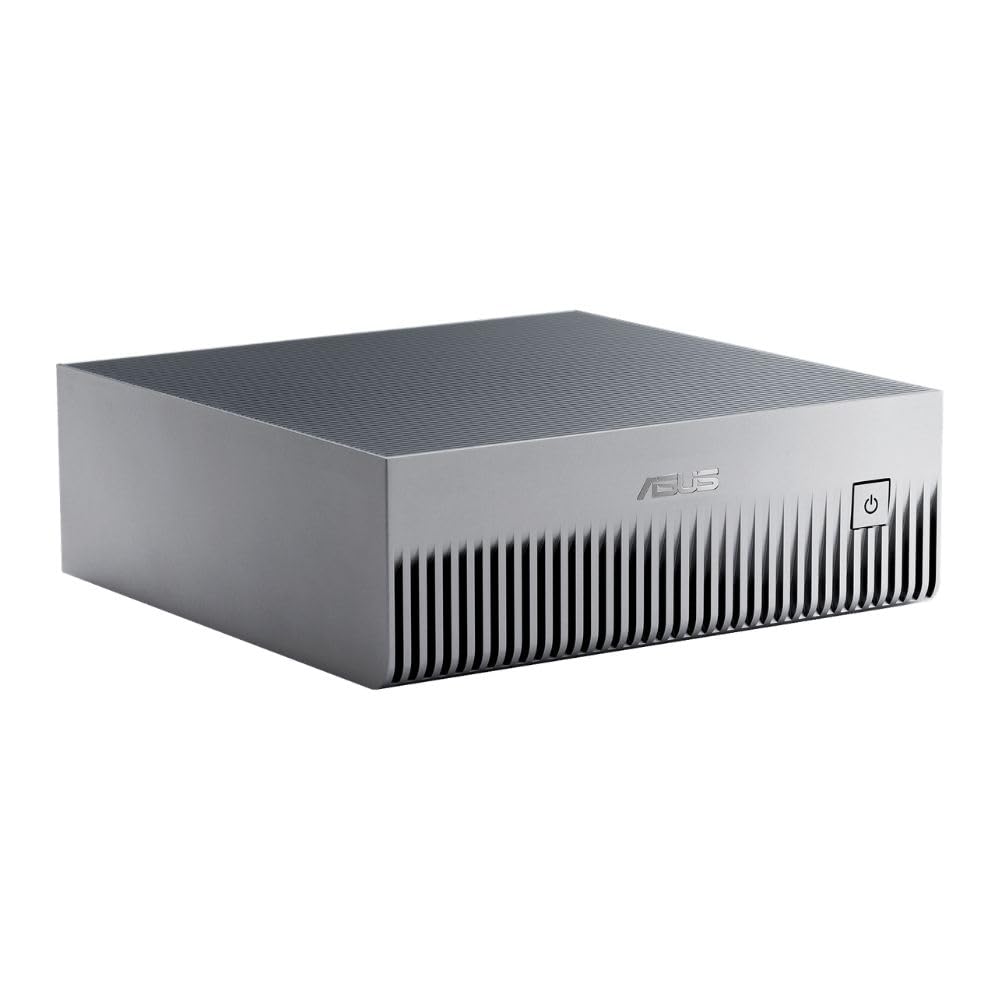
The ASUS Ascent GX10 is powered by the NVIDIA GB10 Grace Blackwell superchip, delivering up to 1 petaFLOP of FP4 AI performance. With 128 GB of coherent unified memory, it is designed for fine-tuning models up to 200 billion parameters without needing a cluster of discrete GPUs. The NVLink-C2C interconnect ensures ultra-fast CPU-GPU communication, critical for agentic AI workflows that require tight memory coherence.
The chassis is MIL-STD 810H certified and built on a custom board with advanced thermal engineering. It supports dual system stacking via NVIDIA ConnectX-7 networking for scale-out prototyping. Connectivity includes 10G LAN, WiFi 7, Bluetooth 5.4, and multiple USB4 and HDMI ports, enabling flexible lab or desk integration.
Reviewers note that the GX10 shines for inference tasks like running VLLM with Qwen 3.6 31B at under 65% memory utilization. However, it is not a gaming machine and runs hot enough to act as a space heater in a small room. Several users reported that NVIDIA’s support for the GB10 can be inconsistent, with drivers sometimes bricking the GPU and tickets being redirected to forums. The device is best suited for researchers who need Blackwell architecture access for prototyping, not for end-user inference or small-scale fine-tuning where an RTX 3090 often delivers better value.
Why it’s great
- 1 petaFLOP FP4 performance for massive model fine-tuning
- 128 GB coherent memory for 200B parameter models
- Dual-stack NVLink-C2C for scalable prototyping
Good to know
- NVIDIA driver updates can cause instability
- Runs hot and loud under sustained load
- Not a good fit for standard gaming or consumer workflows
3. NVIDIA DGX Spark
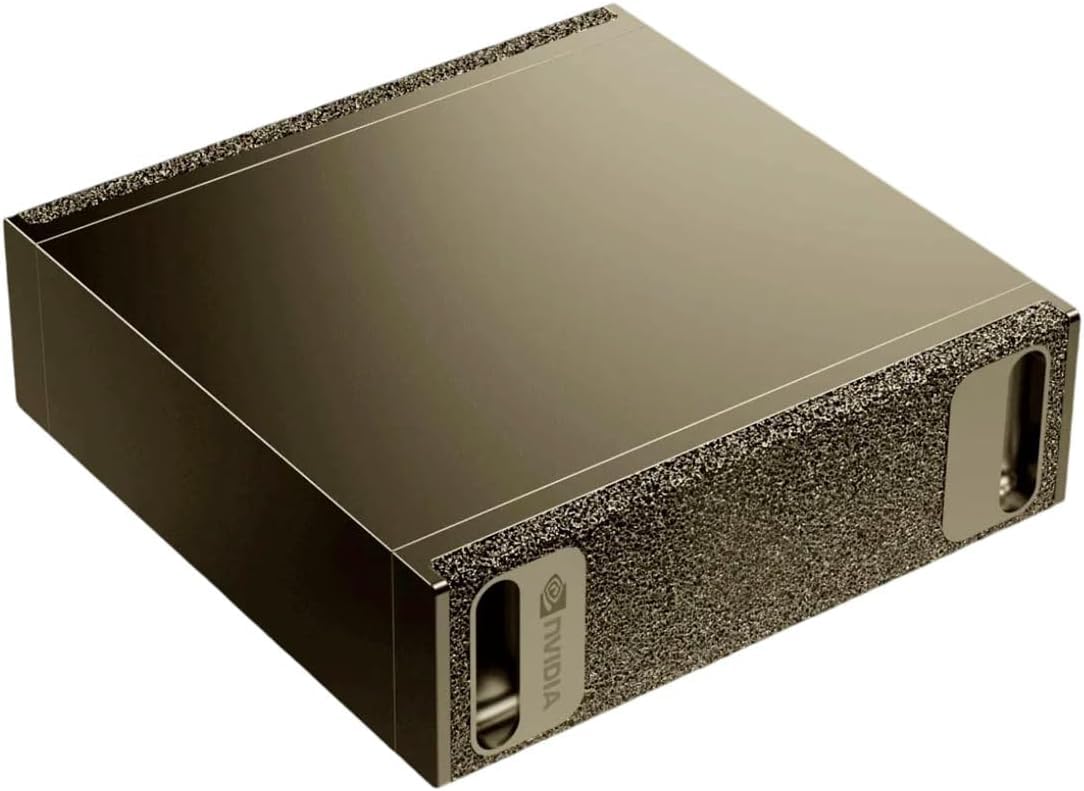
The NVIDIA DGX Spark brings the Grace Blackwell architecture to a personal desktop form factor, delivering up to 1 petaFLOP of FP4 AI performance for local fine-tuning, inference, and analytics. Its 128 GB of coherent unified memory can host models up to 200 billion parameters at FP4 quantization, making it one of the few consumer-priced machines capable of running enterprise-scale workloads out of the box.
The unit runs the full NVIDIA AI software stack, including CUDA, TensorRT, and the NeMo framework, and is designed to be fully compatible with cloud workflows for seamless deployment. Connectivity includes 10G LAN, WiFi 7, Bluetooth 5.4, HDMI, and USB4 ports. The 4 TB NVMe SSD with self-encryption provides ample local storage for model weights and datasets.
User feedback highlights its ability to run Qwen 3.6 27B via Ollama for secure, ITAR-codebase reviews at acceptable speed. However, the proprietary DGX OS has been criticized for intermittent issues and uncertain long-term support. Several reviewers note that an RTX 5090 often outperforms it in throughput except in VRAM-limited scenarios. The DGX Spark is a powerful appliance for researchers who need large, private inference today, but it carries ecosystem lock-in risk.
Why it’s great
- 1 petaFLOP FP4 performance with full NVIDIA software stack
- 128 GB unified memory for extremely large local models
- Desk-friendly compact design with 10G LAN
Good to know
- Proprietary OS may complicate long-term support
- Lower throughput than a discrete GPU for most model sizes
- No power indicator light on the chassis
4. GEEKOM A9 Max
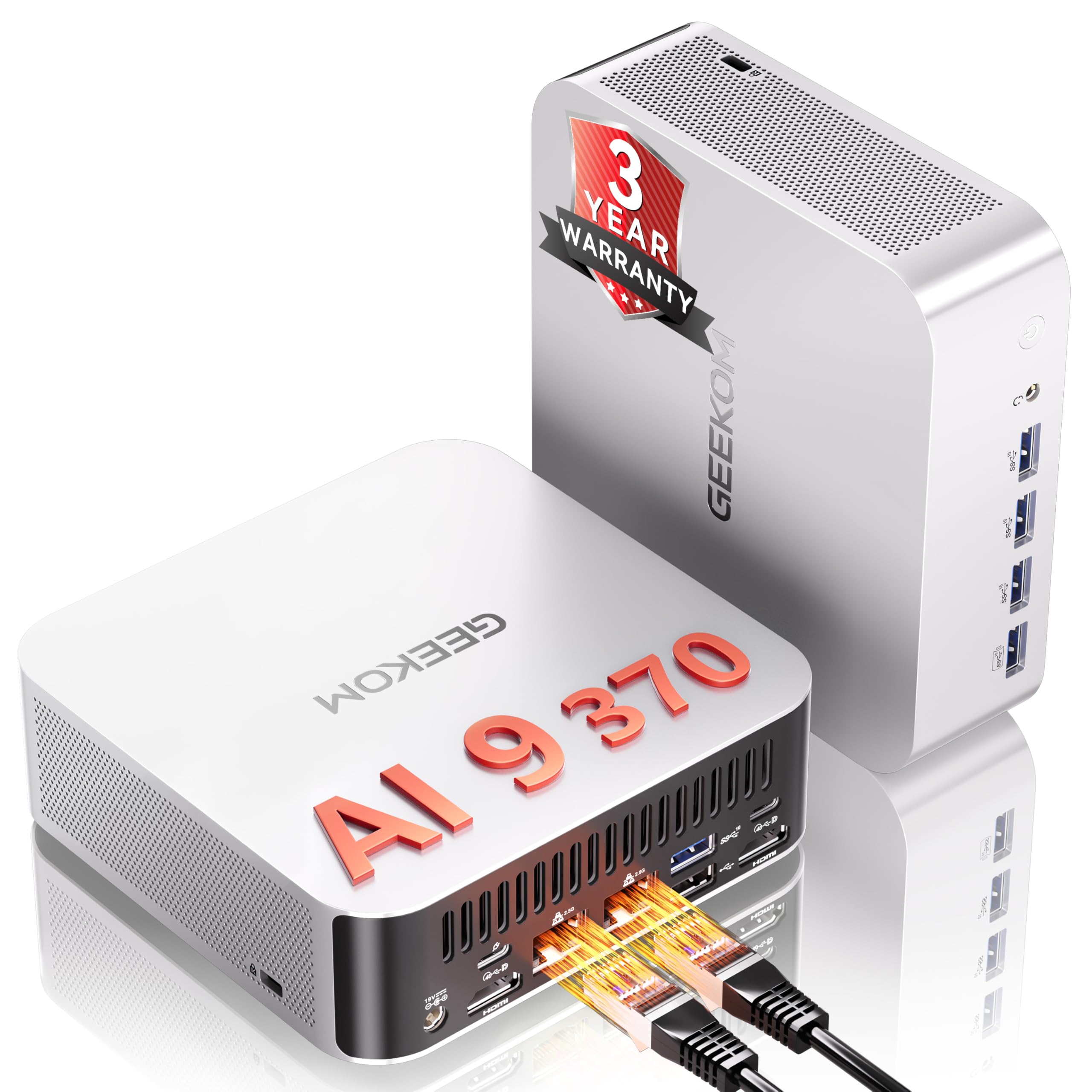
The GEEKOM A9 Max leverages the AMD Ryzen AI 9 HX 370 processor, which delivers 80 TOPS of total AI performance — 50 TOPS from its dedicated XDNA 2 NPU and the remainder from the Radeon 890M iGPU. This combination accelerates local AI workflows like ChatGPT, Ollama, Stable Diffusion, and ComfyUI without requiring a discrete GPU, making it one of the most accessible AI-capable mini PCs on the market.
The unit ships with 32 GB of DDR5 RAM (expandable to 128 GB) and a 1 TB PCIe Gen4 SSD. Its IceBlast 2.0 cooling system uses dual heat pipes and copper heat sinks to maintain stable performance under AI and 3D rendering loads. Connectivity includes dual USB4, dual HDMI 2.1, WiFi 7, Bluetooth 5.4, and dual 2.5GbE LAN ports, allowing quad 8K display output.
Reviewers praise the A9 Max for its quiet operation and build quality, though some note that initial boot issues can require reseating the M.2 SSD and RAM. When configured correctly, it handles 4K video editing in DaVinci Resolve, Blender rendering, and AI-assisted coding workflows smoothly. The 3-year warranty adds peace of mind, though enterprise support should be arranged directly with GEEKOM.
Why it’s great
- High 80 TOPS total AI performance for local model inference
- Expandable RAM up to 128 GB suits growing workloads
- Compact metal chassis with excellent thermal management
Good to know
- May arrive with loose internal components
- Not designed for extreme overclocking or gaming
- Some users report thermal throttling near 99°C under full load
5. MINISFORUM AI X1 Pro

The MINISFORUM AI X1 Pro is built around the AMD Ryzen AI 9 HX 370 processor, a 12-core, 24-thread chip with a Radeon 890M iGPU and a dedicated XDNA 2 NPU. It offers a balanced combination of CPU, GPU, and AI acceleration for productivity and light gaming. The unit ships with 32 GB of DDR5 memory (expandable to 128 GB) and a 1 TB PCIe 4.0 SSD.
The device features a built-in Copilot AI button, real-time subtitle translation, and a fingerprint sensor for secure login. Its connectivity is equally robust, with dual USB4 ports, HDMI 2.1, DP 2.0, OCuLink for eGPU expansion, dual 2.5GbE LAN, WiFi 7, and Bluetooth 5.4. The independent fan design for CPU and SSD ensures full-load noise stays around 45 dB despite a maximum power draw of 65 W.
Reviewers confirm that the AI X1 Pro handles multiple applications on several screens smoothly, with reliable Bluetooth and WiFi. Some users expected slightly more power from the NPU but note that upgrading the RAM allows for running moderately sized local models. The built-in 135 W power supply eliminates the bulk of an external adapter, and the vertical stand keeps the desktop tidy. It is a strong mid-range choice for AI productivity and efficient multitasking.
Why it’s great
- Dual USB4 and OCuLink for eGPU expansion
- Low noise (~45 dB) under full load
- Built-in 135 W power supply removes external brick
Good to know
- NPU not as powerful as dedicated discrete solutions
- Limited VRAM for very large model inference
- Some users desire more aggressive cooling for sustained tasks
6. Intel Core Ultra 9 285K

The Intel Core Ultra 9 285K is a 24-core (8 P-cores + 16 E-cores) desktop processor with a maximum boost of 5.7 GHz, designed for high-end workstations and enthusiast PCs. Its 40 MB of L3 cache and support for PCIe 5.0 and DDR5 memory (up to 7200 MT/s) make it a strong candidate for AI-assisted content creation, 3D rendering, and CAD workloads.
This chip requires an Intel 800-series chipset motherboard with the LGA1851 socket. It supports Intel’s OpenVINO framework for AI acceleration and has an integrated GPU for basic display output. Power delivery is rated at 125 W base and 250 W turbo, so a robust cooling solution—preferably a 360 mm AIO or a high-end air cooler—is mandatory for maintaining boost clocks under heavy AI processing.
Professional users in SolidWorks environments confirm that the 285K runs more reliably than the previous 13th and 14th gen parts, with no overheating or voltage instability. It pairs well with 128 GB of RAM for VM-heavy workflows. Reviewers note that the Core Ultra 7 270K offers nearly identical performance for significantly less cost unless the absolute maximum core count is needed. The integrated memory controller is stable even with four sticks of DDR5 at 4000 MHz.
Why it’s great
- High 5.7 GHz boost and 24 cores for rendering and AI batch jobs
- Stable platform without voltage issues of earlier Intel gens
- Excellent single-threaded and multi-threaded balance
Good to know
- Requires LGA1851 motherboard and DDR5/CUDIMM RAM
- Runs hot under full load; high-end cooling mandatory
- No dedicated NPU; AI acceleration relies on OpenVINO and GPU
7. AMD Ryzen 7 9800X3D
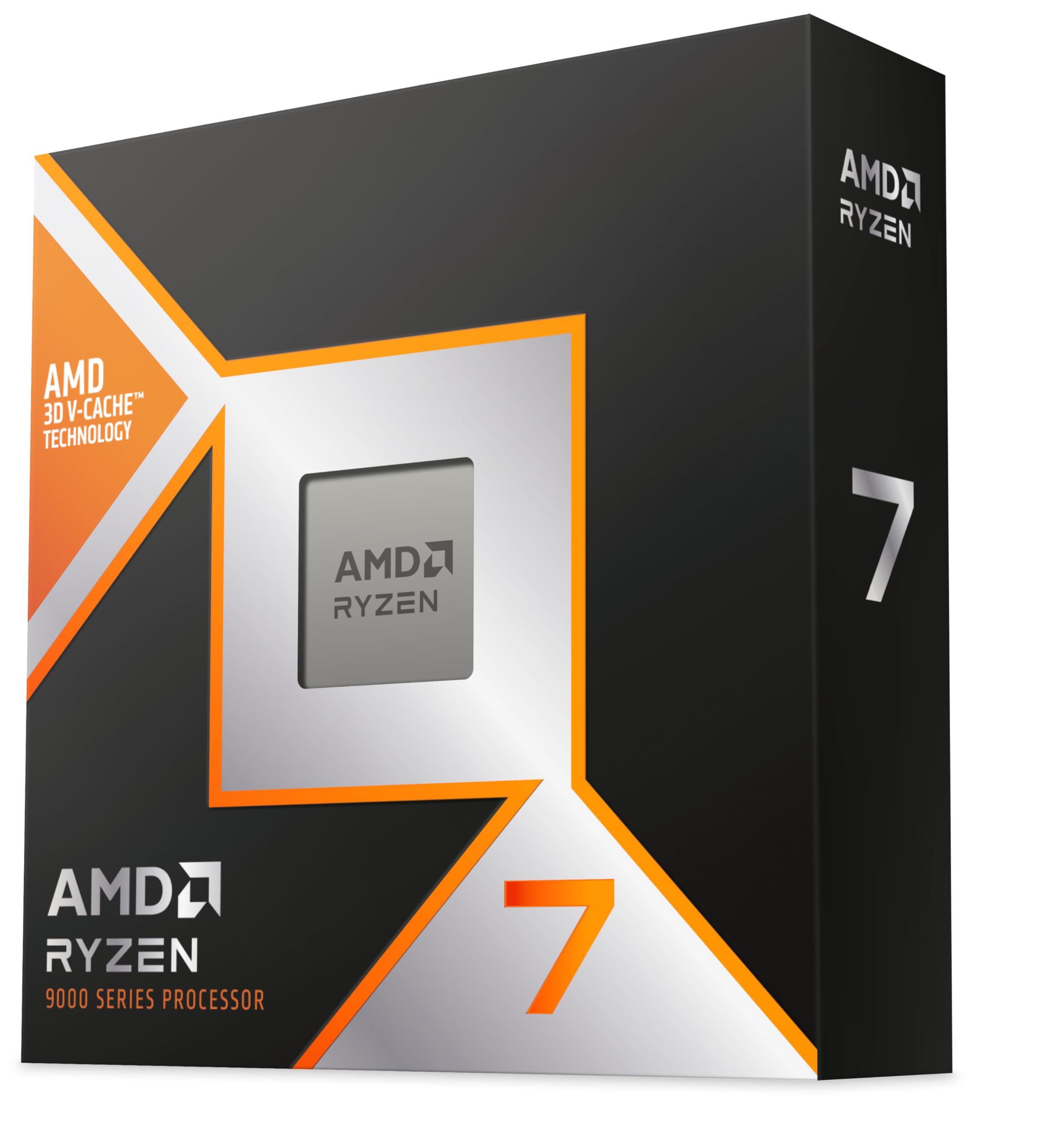
The AMD Ryzen 7 9800X3D pairs Zen 5 architecture with 96 MB of L3 cache, making it the fastest gaming processor available for titles that benefit from large cache pools. For AI workloads, the cache reduces memory latency during inference on smaller models, and the 5.2 GHz boost speed accelerates data preprocessing tasks. This is a drop-in upgrade for the Socket AM5 platform.
With 8 cores and 16 threads, the 9800X3D excels in CPU-bound AI pipelines where low latency and high single-thread performance matter—such as real-time video analysis or agentic workflows on a local model. It is not designed for massive model fine-tuning; that requires a companion GPU. Thermal performance is excellent, often requiring only a mid-range air cooler to stay below 70°C during standard gaming use.
Users upgrading from earlier Ryzen generations report massive FPS gains at 1080p and 1440p, with the processor running cool even under prolonged gaming sessions. While the 9800X3D is primarily marketed for gaming, its large cache and fast clocks make it a competent companion for inference tasks when paired with a discrete GPU. The 5 nm process keeps power draw manageable, and the lack of a cooler in the box means you can select a cooling solution that matches your noise tolerance.
Why it’s great
- Best-in-class gaming performance with cache-driven AI inference
- Excellent power efficiency and thermal behavior
- Drop-in upgrade for existing AM5 motherboards
Good to know
- Cooler not included; budget for aftermarket cooling
- Only 8 cores; less suited for highly parallel AI batch jobs
- No integrated NPU for dedicated AI acceleration
8. Intel Core Ultra 7 270K
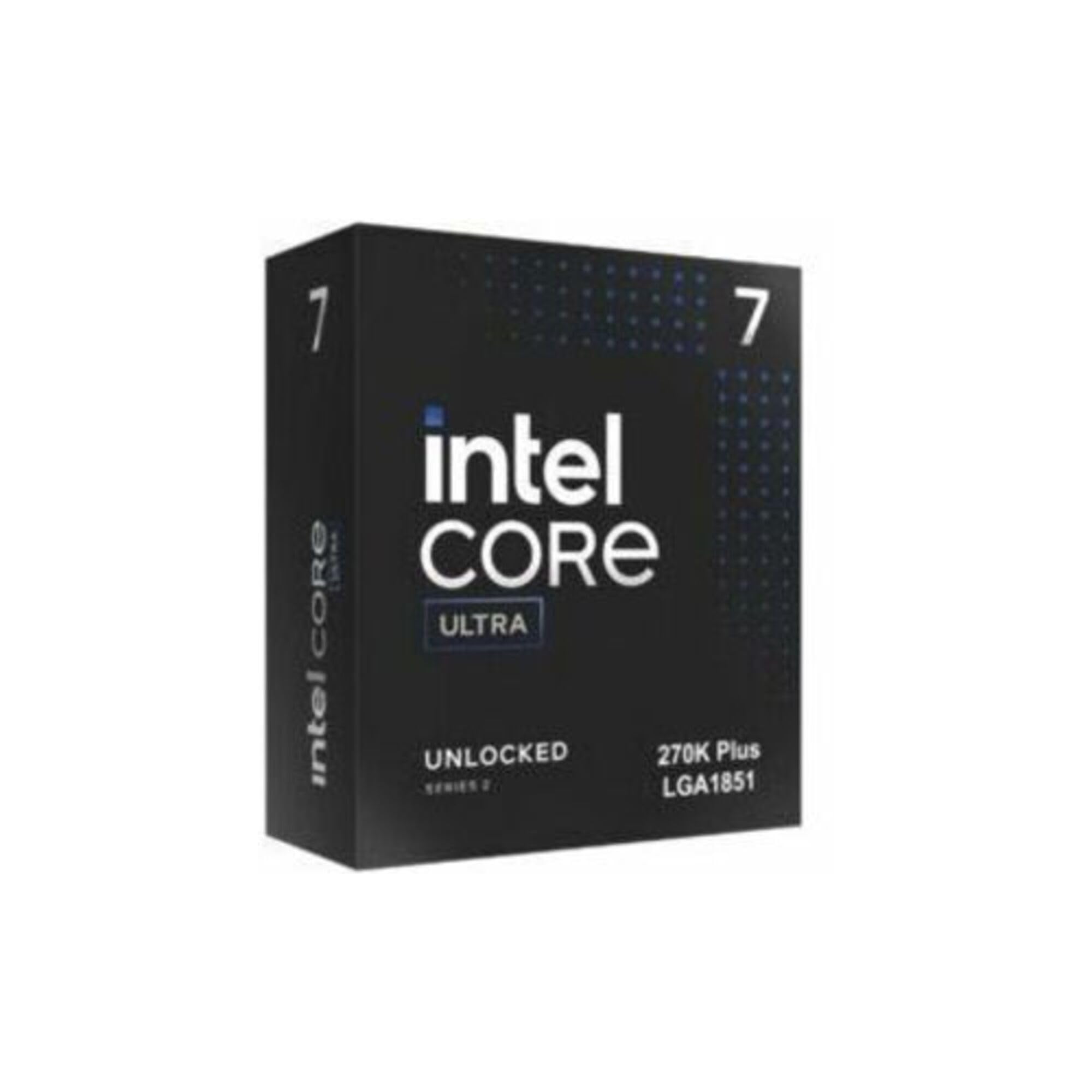
The Intel Core Ultra 7 270K offers the same core count (8 P-cores + 16 E-cores) as the more expensive 285K for a significantly lower investment. Its 5.5 GHz boost clock and 40 MB cache deliver nearly identical performance in multi-threaded rendering and AI data preprocessing tasks. In some benchmarks, it actually outpaces the 285K due to better binning and lower power overhead.
This chip is unlocked for overclocking on Intel Z-series chipset motherboards (LGA1851) and supports DDR5 memory up to 7200 MT/s. Power delivery peaks at 250 W turbo, requiring a capable cooler. It lacks a dedicated NPU, but its raw CPU throughput is ample for running AI inference pipelines via OpenVINO or through the integrated GPU for light acceleration.
Buyers with VR applications and high-refresh gaming confirm that the 270K matches the 9800X3D in most VR use cases, delivering 87-90 FPS in high-resolution headsets like the Pimax Crystal Super. It allows reuse of DDR5 memory from previous Intel platforms, saving on platform upgrade costs. For any workload that benefits from many cores without needing the absolute top frequency, the 270K represents the best price-to-performance ratio in Intel’s Arrow Lake lineup.
Why it’s great
- Same core count as the 285K at a lower cost
- Often outperforms the 285K in real-world benchmarks
- Unlocked for enthusiast tuning and overclocking
Good to know
- Requires LGA1851 platform and robust cooling
- No dedicated NPU for AI tensor acceleration
- Single-thread performance slightly behind 9800X3D
9. AMD Ryzen 7 7800X3D

The AMD Ryzen 7 7800X3D remains a formidable choice for AI-assisted gaming and light inference work, thanks to its 104 MB of total cache (8 MB L2 + 96 MB L3). The large cache reduces memory latency dramatically, which speeds up data access for models that fit within its footprint. Its 8-core 16-thread configuration is efficient enough to run cool with a standard air cooler, drawing only 75 W under gaming loads.
The processor is built on the 5 nm node and compatible with the Socket AM5 platform. It delivers excellent single-thread performance with a boost of up to 5.0 GHz, making it responsive for interactive AI tools like chat interfaces running locally via ollama. It lacks an integrated NPU, but pairing it with a mid-range GPU provides a balanced AI-capable system for under .
Users consistently highlight its low power draw, quiet operation, and ability to handle multitasking (streaming, gaming, Discord) without breaking a sweat. It is the most cost-effective way to get into AI-adjacent workloads like real-time transcription or local voice assistants while maintaining excellent gaming performance. The 7800X3D has been described as a “set and forget” CPU for a high-performance system that needs to last years.
Why it’s great
- Massive cache reduces latency for inference tasks
- Very low power draw and heat output
- Exceptional gaming performance for the price
Good to know
- Only 8 cores; not ideal for batch AI processing
- No NPU; needs a discrete GPU for meaningful AI acceleration
- Limited to DDR5 and AM5 motherboards
10. KAMRUI Hyper H2
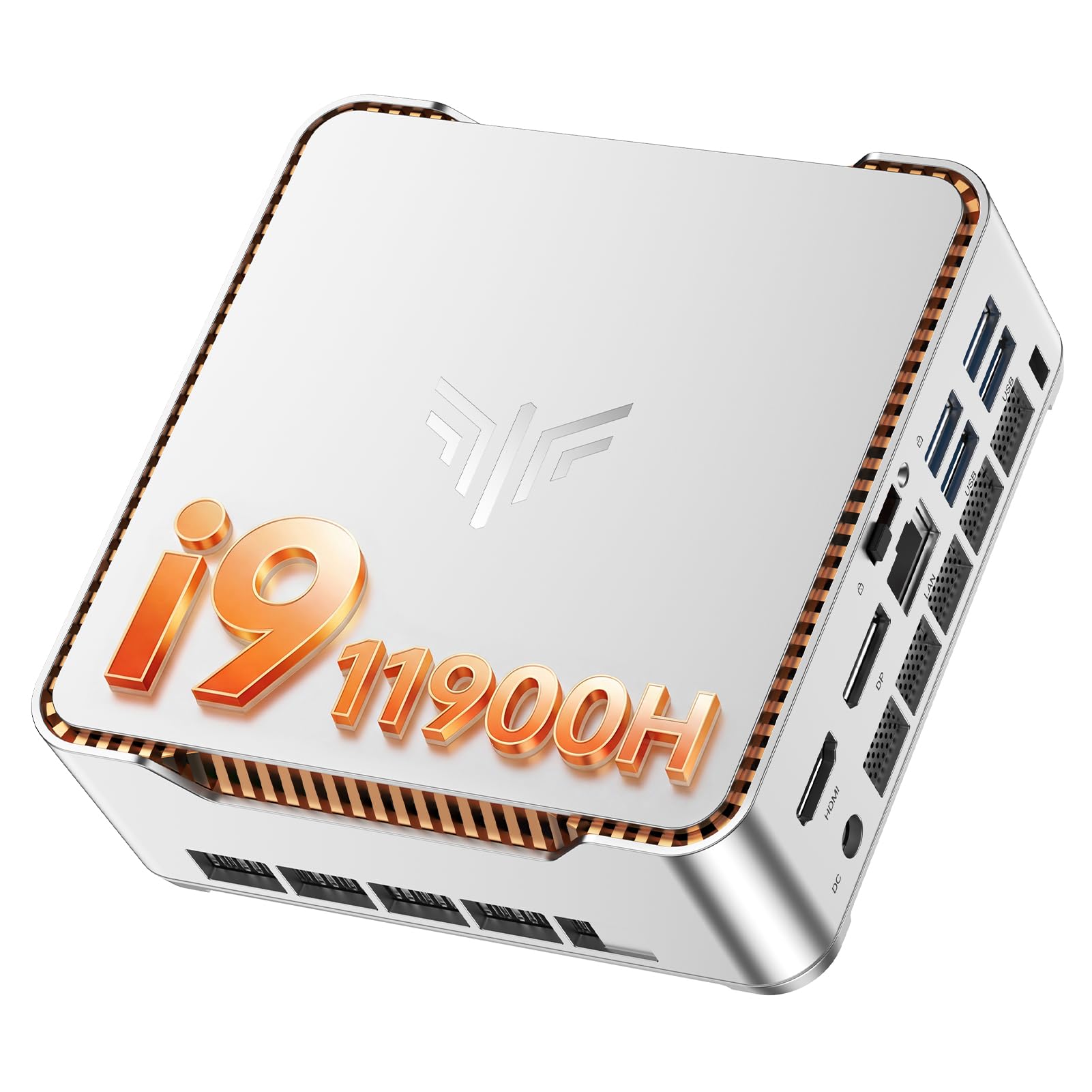
The KAMRUI Hyper H2 is a compact mini PC powered by an Intel Core i9-11900H mobile processor, offering 8 cores and 16 threads with a turbo frequency of up to 4.9 GHz. It comes pre-configured with 32 GB of DDR4 RAM and a 1 TB M.2 SSD, making it a budget-friendly entry point for AI on the edge, basic automation, and office productivity.
The small chassis includes six USB 3.2 ports, one USB-C, HDMI, DisplayPort, Gigabit Ethernet, WiFi 6, and Bluetooth 5.2, supporting triple 4K displays at 60 Hz. The system supports Auto Power On, Wake-on-LAN, and TPM 2.0, making it suitable for server or kiosk deployment. The metal case is sturdy, and the fan is exceptionally quiet during idle operation.
Reviewers find the Hyper H2 a capable machine for online classes, media streaming, and document processing. However, the included M.2 SSD is an older SATA model, reducing boot speeds to 210 MB/s; swapping it for an NVMe drive massively improves responsiveness. It is not designed for heavy AI inference or large model training but works well for learning AI concepts, running lightweight Python scripts, or hosting a simple chatbot on ollama with small 7B models.
Why it’s great
- Very compact and quiet with ample USB connectivity
- 32 GB RAM and 1 TB SSD out of the box
- VESA mountable behind monitor for clean setup
Good to know
- SATA SSD bottleneck; NVMe upgrade strongly recommended
- Mobile i9-11900H is slower than desktop i5 of same era
- Not powerful enough for serious local model inference
11. NVIDIA Jetson Orin Nano Developer Kit

The NVIDIA Jetson Orin Nano Developer Kit is the entry point for edge AI development, combining a 6-core ARM Cortex-A78AE CPU with an Ampere GPU capable of 40 TOPS of AI performance. It ships with 8 GB of shared memory and runs the NVIDIA AI software stack, including Isaac for robotics, DeepStream for vision AI, and Riva for conversational AI. The kit is designed for prototyping robots, smart drones, and intelligent cameras.
The carrier board includes two MIPI CSI camera connectors, DisplayPort, USB, HDMI, GPIO, and Gigabit Ethernet. It runs Ubuntu 22.04 with Docker container support, and users report successful deployment of quantized LLMs via ollama for edge inferencing. However, the advertised 67 TOPS figure is only achievable under specific conditions; standard developer mode throttles to prevent thermal overload unless the fan mode is manually adjusted.
Developer feedback is mixed. Beginners find it a good starting point for learning AI on the edge, using tutorials to run small models. Advanced users warn that NVIDIA’s software ecosystem on the Jetson can be frustrating: flashing requires an Intel machine running Ubuntu 22.04, and many SDK examples fail out of the box. The hardware is solid and upgradeable, but the software learning curve is steep. This kit is best for robotics and vision projects where low-power edge inference is required, not for general AI development or large-scale LLM hosting.
Why it’s great
- Compact edge kit with full NVIDIA AI software stack
- 40 TOPS for computer vision and robotics inference
- Upgradeable compute module and rich I/O
Good to know
- Complex software setup; many SDK examples broken
- Throttled performance in standard mode; needs fan tuning
- Not suitable for local LLM workloads above 7B
FAQ
Can I run a 70B parameter LLM on a standard desktop CPU without a GPU?
What does the NPU actually accelerate in an AI workflow?
Is the Intel Core Ultra 9 285K good for AI development?
How much difference does the 3D V-Cache on the 9800X3D make for AI?
What is the cheapest way to start running AI models locally today?
Final Thoughts: The Verdict
For most users, the cpu for ai winner is the GMKtec EVO-X2 because its 128 GB unified memory and Ryzen AI Max+ 395 processor let you run massive LLMs locally without a large GPU cluster. If you want dedicated NVIDIA support and full CUDA compatibility, grab the NVIDIA DGX Spark. And for edge AI prototyping and robotics, nothing beats the NVIDIA Jetson Orin Nano Developer Kit.

Mo Maruf
I created WellFizz to bridge the gap between vague wellness advice and actionable solutions. My mission is simple: to decode the research and give you practical tools you can actually use.
Beyond the data, I am a passionate traveler. I believe that stepping away from the screen to explore new environments is essential for mental clarity and physical vitality.