Our readers keep the lights on and my smoothie glass nicely filled. As an Amazon Associate, I earn from qualifying purchases.
Crabgrass is relentless. It waits for that first warm spell, then germinates by the thousands in the thin spots of your lawn. By July, those wiry clumps have choked out your turf and gone to seed, setting you up for an even worse year ahead. The only reliable defense is a pre-emergent applied at the right moment, with the right active ingredient, at the correct rate.
I’m Mohammad Maruf — the founder and writer behind WellFizz. I’ve spent dozens of hours cross-referencing active ingredient concentrations, particle-size technology, and coverage math to find which products actually deliver a clean lawn come summer.
Whether you manage a quarter-acre lawn or a few perimeter beds, this guide ranks the top-performing formulas so you can choose with confidence. Read on to find the best crabgrass pre emergent for your specific turf situation and budget.
How To Choose The Best Crabgrass Pre Emergent
Picking the right pre-emergent starts with understanding your lawn’s size, the weed pressure you face, and whether you want to feed the turf at the same time. The most important decision is the active ingredient. Prodiamine is the industry standard for season-long control at low use rates. Dithiopyr offers a small window of post-emergent activity if you miss the ideal timing. Isoxaben plus trifluralin (found in DOW Snapshot) targets broadleaf weeds in ornamental beds better than it handles grassy weeds.
Active Ingredient Strength and Longevity
Prodiamine is the active ingredient in Syngenta Barricade and in the Andersons DG Pro formulations. It delivers 8 to 12 weeks of suppression from a single application, which covers the entire germination window for crabgrass in most climates. Dithiopyr (used in Preen Lawn Crabgrass Control) has a slightly shorter residual, usually 6 to 8 weeks, but it can kill very young crabgrass that has already sprouted — a useful safety net.
Granule Size and Spreader Compatibility
Not all granules spread evenly. The Andersons uses patented DG (dispersible granule) technology that breaks down quickly when watered, releasing the active ingredient into the soil profile rather than sitting on the surface. This technology also produces smaller, more numerous particles per square inch, which reduces the chance of missed strips. Straight prodiamine concentrates like Quali-Pro Prodiamine 65 WDG are wettable powders that you mix with water and spray, giving you absolute control over distribution.
Fertiliser vs Straight Herbicide
Combination products like Jonathan Green Green-Up (20-0-3) and The Andersons 18-0-4 save you a trip across the lawn because they feed grass while preventing weeds. The trade-off is flexibility: you cannot adjust the nitrogen rate independently of the herbicide rate. Straight concentrates let you dial in exactly the right amount of active ingredient for your soil type and weed pressure, but they require a separate fertiliser pass.
Quick Comparison
On smaller screens, swipe sideways to see the full table.
| Model | Category | Best For | Key Spec | Amazon |
|---|---|---|---|---|
| Jonathan Green Green-Up 20-0-3 | Fertiliser + Preventer | All-in-one spring feed and barrier | 20-0-3 NPK, covers 15,000 sq ft | Amazon |
| The Andersons Barricade 50 lb | Prodiamine Granule | Large lawns needing season-long control | 0.48% prodiamine, 14,200 sq ft | Amazon |
| Syngenta Barricade 4FL | Liquid Concentrate | Precise spraying over large areas | 4 fl oz bottle, prodiamine | Amazon |
| Quali-Pro Prodiamine 65 WDG | Wettable Powder | Lowest cost per application at scale | 65% prodiamine, 5 lb bag | Amazon |
| The Andersons 18-0-4 Barricade | Fert + DG Pre | Mid-size lawns wanting quick green-up | 18-0-4 NPK, 5,000 sq ft | Amazon |
| Preen Lawn Crabgrass Control | Dithiopyr Granule | Homeowners wanting post-emergent safety net | 15 lb bag, dithiopyr | Amazon |
| DOW Snapshot 2.5 TG | Isoxaben + Trifluralin | Flower beds and ornamental beds | 50 lb bag, 6-8 month control | Amazon |
In‑Depth Reviews
1. Jonathan Green Green-Up 20-0-3 Crabgrass Preventer

The Jonathan Green Green-Up at 20-0-3 is the true two‑in‑one champion for homeowners who want to feed their lawn and prevent crabgrass in a single spring pass. The 20‑0‑3 analysis delivers a strong shot of nitrogen that greens up cool‑season grasses within days, while the active ingredient provides both pre‑emergent and post‑emergent activity — a rare combo that can kill very young crabgrass if you apply a week or two late.
The 50‑lb bag covers 15,000 square feet, which is roughly a third of an acre, making it ideal for quarter‑acre to half‑acre lots. Users consistently report dramatic green‑up and near‑zero crabgrass for the full season, though you need to reapply roughly three months later for season‑long protection on high‑pressure lawns. The granules do not stain concrete or shoes, and they flow well through rotary and drop spreaders.
The main limitation is price per bag — it sits at the higher end of the fertiliser‑plus‑preventer category. But given that you effectively replace one fertiliser application and one herbicide application, the cost is competitive. If you want the simplicity of a single product that feeds and protects, this is the most versatile option on the list.
Why it’s great
- Pre‑ and post‑emergent activity in one product
- 20‑0‑3 NPK gives fast visible greening
- Massive coverage (15,000 sq ft) reduces bag changes
Good to know
- Cannot be used at the same time as seeding
- Requires reapplication at 3 months for full season control
2. The Andersons Barricade 50 lb Bag
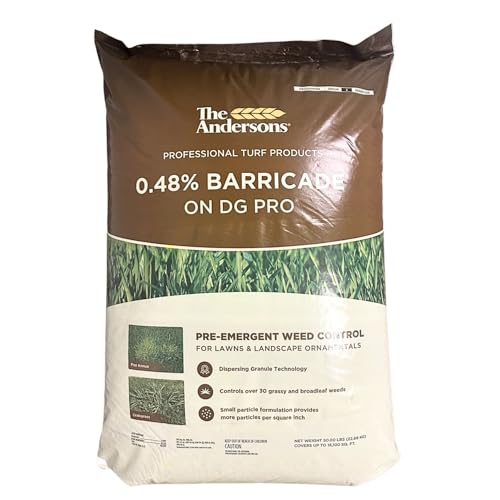
The Andersons Barricade in the 50‑lb bag is the workhorse of the professional‑grade granular pre‑emergents. It contains 0.48% prodiamine in the patented DG Pro formulation, meaning every granule dissolves quickly when watered and moves into the root zone rather than sitting on top of the thatch. The result is a more uniform chemical barrier that intercepts crabgrass as it germinates.
Coverage is rated at 14,200 square feet per bag, which hits the sweet spot for lawns between a quarter and a third of an acre. Users consistently report 8 to 12 weeks of control from a single spring application, with many noting that they see zero crabgrass all summer when they pair it with a fall application. The DG Pro technology also means you can use less product per square foot compared to standard granules — more particles per inch means fewer missed spots.
The only caveat is that this is a straight pre‑emergent with no added fertiliser. You will need to feed separately if you want a green‑up boost. For the purest barrier against crabgrass, though, this is the most effective granular product available in a consumer‑friendly bag size.
Why it’s great
- DG Pro technology for rapid soil incorporation
- Season‑long crabgrass prevention at correct rates
- Excellent value per square foot of coverage
Good to know
- No added fertiliser; must feed separately
- Best applied in early spring only
3. Syngenta Barricade 4FL Herbicide Concentrate
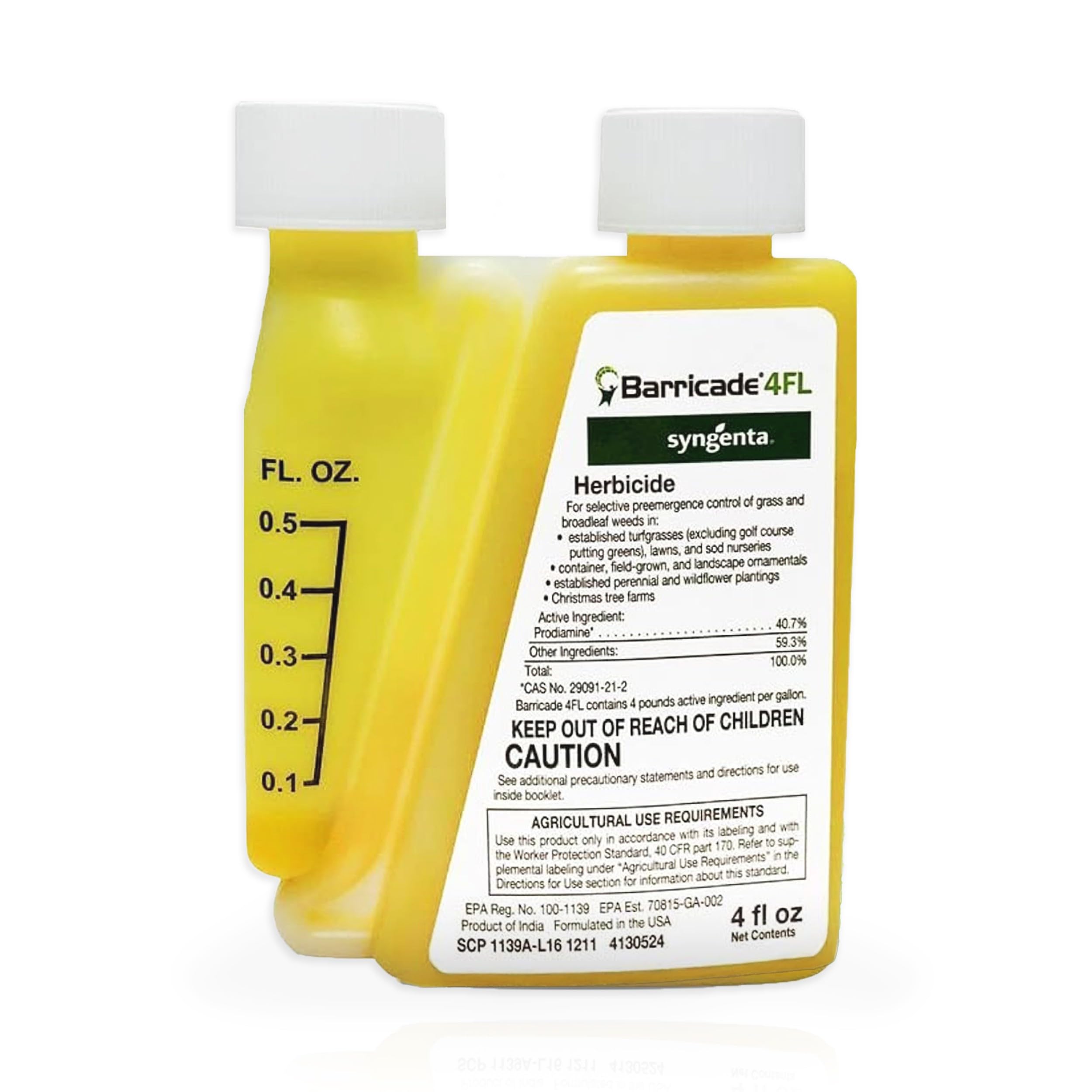
The Syngenta Barricade 4FL is the liquid concentrate version of the same prodiamine that professionals rely on. Because it is a liquid, you mix it with water and apply with a backpack or hose‑end sprayer, giving you total control over where the chemical lands. This is the preferred format for people who want to treat irregularly shaped lawns, strips between driveways, or gravel areas without the mess of granules bouncing onto hard surfaces.
The 4‑ounce bottle is small but potent — it treats up to 43,560 square feet at the low rate for crabgrass, which is an entire acre. Users praise its effectiveness on gravel driveways and bark beds, where granular products often fail because they cannot reach the soil. Reviews note that one application in early spring completely suppressed weeds through the hottest months.
The downside is the learning curve. You must calibrate your sprayer correctly, and you need to water the product in within a few days if rain does not fall. For homeowners comfortable with a tank sprayer, this is the most efficient use of prodiamine per dollar, but it requires more setup than a granular walk‑behind spreader.
Why it’s great
- Covers up to 1 acre per bottle at crabgrass rate
- Ideal for gravel, bark, and irregular beds
- Lowest cost per square foot of any prodiamine product
Good to know
- Requires a sprayer and careful calibration
- Must be watered in quickly after application
4. Quali-Pro Prodiamine 65 WDG 5 lbs
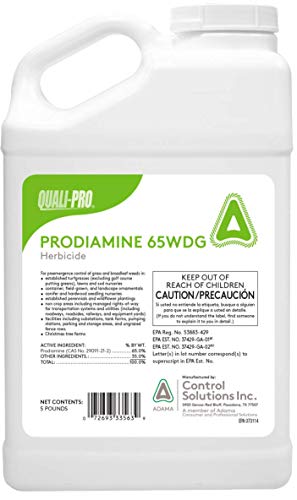
The Quali‑Pro Prodiamine 65 WDG is a generic version of Barricade that offers the same active ingredient at a much lower per‑application cost. Because the concentrate is 65% prodiamine by weight, a little goes a long way — you mix between 0.185 and 0.55 ounces per gallon of water, depending on your target weed and turf type. A 5‑lb bag will last the average homeowner several seasons.
Users who have made the switch from brand‑name products consistently report identical results: total suppression of crabgrass and a wide range of winter annuals like poa annua and henbit. Several reviews note that they rotate active ingredients between spring and fall, using prodiamine in the spring and a different chemistry in the autumn to prevent resistance. The product mixes easily in a pump sprayer and stays suspended well with agitation.
The trade‑off is that you need to mix your own spray and calibrate your equipment. If you are already comfortable with a sprayer, this is the most economical way to apply prodiamine at scale. If you prefer a ready‑to‑go granular, the Andersons or Preen options are easier but cost more per ounce of active ingredient.
Why it’s great
- 65% active ingredient means tiny per‑application cost
- 5‑lb bag lasts multiple seasons for most lawns
- Same chemistry as Barricade at lower price
Good to know
- Requires sprayer and water mixing
- Higher upfront cost for the bag, but lower cost per use
5. The Andersons 18-0-4 Barricade Fertilizer
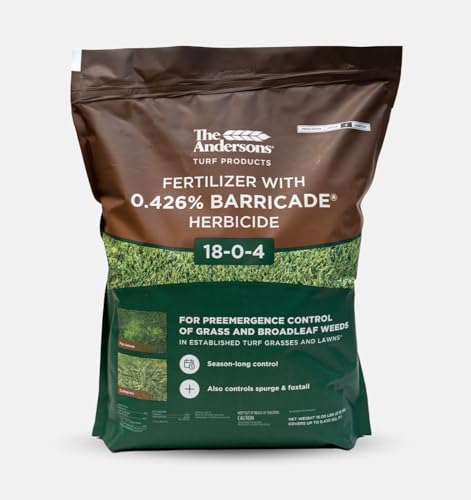
The Andersons 18-0-4 Barricade Fertilizer combines a moderate 18‑0‑4 NPK analysis with 0.426% prodiamine, delivering both nutrition and prevention in a single 18‑lb bag that covers 5,000 square feet. This is a great option for homeowners with smaller to mid‑size lots who want the proven effectiveness of the DG Pro technology without buying the larger 50‑lb bag.
The 18‑0‑4 ratio provides a good amount of nitrogen for early‑spring green‑up without pushing excessive blade growth that leads to more mowing. Users report seeing noticeably greener grass within a week of application, along with no crabgrass breakthrough throughout the summer. The DG Pro granules dissolve rapidly, so you avoid the pellet‑on‑surface problem that plagues some competing products.
The downside is that the coverage is relatively small compared to the bigger Andersons bag, and the price per square foot is higher. If your lawn is larger than 5,000 square feet, you will need multiple bags, which makes the straight pre‑emergent plus separate fertiliser approach more economical.
Why it’s great
- DG Pro technology for fast soil integration
- Good nitrogen boost without excessive growth
- Ideal for small to mid‑size lawns
Good to know
- Only covers 5,000 sq ft per bag
- Higher per‑square‑foot cost than larger bags
6. Preen Lawn Crabgrass Control 15 lb

Preen Lawn Crabgrass Control uses dithiopyr as its active ingredient instead of prodiamine. The key difference is that dithiopyr retains some post‑emergent activity — it can kill very young crabgrass plants that have already emerged, giving you a few extra weeks of flexibility if you miss the ideal pre‑emergence window. This makes it a good choice for homeowners who are unsure about their soil temperature timing.
The 15‑lb bag covers 5,000 square feet, and the spread consistency is good through standard rotary spreaders. Users report a significant reduction in crabgrass and clover, with several noting that it outperforms the Scotts equivalent in their experience. The product works on a wide range of cool‑ and warm‑season grasses, including St. Augustine and Bermuda, which is a notable advantage over some prodiamine products.
The main weakness is residual length. Dithiopyr typically provides 6 to 8 weeks of control, compared to 8 to 12 weeks for prodiamine. If you have heavy crabgrass pressure, you may need a second application later in the season. A small number of users reported failure, usually tied to applying after crabgrass was already well established beyond the tiny seedling stage.
Why it’s great
- Can kill very young emerged crabgrass
- Safe on St. Augustine and Bermuda lawns
- Easy granular spreader application
Good to know
- Shorter residual than prodiamine (6‑8 weeks)
- May require a second application for heavy pressure
7. DOW Snapshot 2.5 TG Granular Pre-emergent
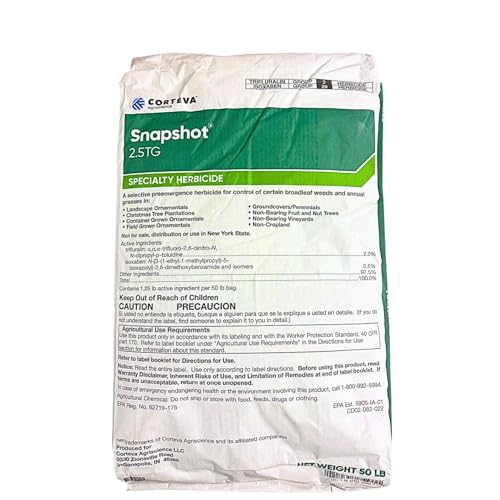
DOW Snapshot 2.5 TG is a different animal. It uses a combination of isoxaben and trifluralin to target 111 broadleaf and grassy weeds, with a residual window of 6 to 8 months — far longer than any prodiamine or dithiopyr product. However, it is formulated primarily for ornamental beds, flower borders, and non‑turf areas rather than for a lawn. If you want to keep crabgrass out of your shrub beds, this is the top choice.
The 50‑lb bag covers roughly 10,000 to 20,000 square feet depending on the application rate (2.3 to 4.6 lbs per 1,000 square feet). Users with St. Augustine lawns have reported excellent results when using Snapshot in mulched beds around the house, noting that it kept everything clean for months. The product must be watered in within 24 hours, and it works best when applied prior to weed germination.
The catch is that Snapshot is not intended for use on established turfgrass lawns. If you spread it over a bluegrass or fescue lawn, you risk damaging the desirable grass. Stick to using it in landscape beds, under shrubs, and around trees where you want a weed‑free zone without harming ornamentals. For pure crabgrass prevention in a lawn, one of the prodiamine products above is a better fit.
Why it’s great
- 6‑8 months of control from a single application
- Targets 111 different weed species
- Excellent for flower beds and ornamental areas
Good to know
- Not for use on established turfgrass lawns
- Higher upfront cost than many alternatives
FAQ
Can I apply a crabgrass pre-emergent if I plan to overseed my lawn?
What happens if I miss the ideal spring application window?
How much water does a granular pre-emergent need after application?
Is prodiamine safe for all turfgrass types?
Final Thoughts: The Verdict
For most users, the best crabgrass pre emergent winner is the Jonathan Green Green-Up 20-0-3 because it combines a strong fertiliser with both pre‑ and post‑emergent activity in a single bag that covers 15,000 square feet, making it the simplest, most effective one‑and‑done solution for homeowners. If you want pure prodiamine power without added nitrogen, grab the The Andersons Barricade 50 lb — it is the gold standard for season‑long prevention at a competitive per‑square‑foot cost. And for precision application over gravel, beds, or large open areas, nothing beats the Syngenta Barricade 4FL liquid concentrate for control and value per ounce of active ingredient.

Mo Maruf
I created WellFizz to bridge the gap between vague wellness advice and actionable solutions. My mission is simple: to decode the research and give you practical tools you can actually use.
Beyond the data, I am a passionate traveler. I believe that stepping away from the screen to explore new environments is essential for mental clarity and physical vitality.