Our readers keep the lights on and my smoothie glass nicely filled. As an Amazon Associate, I earn from qualifying purchases.
A cord is not a compromise — it is a conduit for pure, uninterrupted signal. For anyone serious about audio fidelity, the physical connection between source and driver remains the most reliable path to hearing exactly what the artist intended. Whether you are tracking vocals, mixing a track, or simply rediscovering your favorite album, the right wired headphones eliminate latency, codec compression, and battery anxiety entirely.
I’m Mohammad Maruf — the founder and writer behind WellFizz. My approach to this guide involved cross-referencing dozens of laboratory frequency response measurements and hundreds of real-world user reports to separate genuine acoustic performance from marketing hype.
This guide breaks down the top contenders across every budget tier so you can confidently choose your next pair of best corded headphones for studio, gaming, or pure listening pleasure.
How To Choose The Best Corded Headphones
Selecting wired headphones requires a clear understanding of your primary use case and the environment where you will use them. A closed-back design isolates sound — essential for recording and noisy rooms — while an open-back design delivers a wider soundstage better suited for critical listening and mixing. Beyond the shell, impedance rating and driver type dictate the level of detail and the amount of amplification you will need.
Closed-Back vs. Open-Back
Closed-back headphones contain the sound within the earcup, preventing audio from leaking out and blocking ambient noise. This makes them ideal for studio tracking, commuting, and gaming where noise isolation matters. Open-back headphones feature a grille on the outer shell, allowing air to pass through. This results in a more spacious, natural soundstage with better imaging, but they leak sound and provide no isolation — better for quiet rooms only.
Impedance and Sensitivity
Measured in ohms, impedance affects how easily headphones can be driven to sufficient volume. Models below 50 ohms pair well with smartphones and laptops, while higher-impedance designs (100 ohms or more) require a dedicated headphone amplifier to reach their full potential. Sensitivity, expressed in dB/mW, indicates how loud the headphones get per milliwatt of power. Always match your source gear to the impedance range to avoid underpowered, lifeless sound.
Driver Technology
Dynamic drivers use a voice coil and magnet to move a diaphragm — they are the most common and offer punchy bass and energetic sound. Planar magnetic drivers suspend a thin diaphragm between two magnetic arrays, producing extremely fast transient response, lower distortion, and superior detail retrieval, often at a higher price point. Electrostatic drivers are rare, requiring specialized amplifiers, and are typically reserved for high-end audiophile setups.
Quick Comparison
On smaller screens, swipe sideways to see the full table.
| Model | Category | Best For | Key Spec | Amazon |
|---|---|---|---|---|
| Audio-Technica ATH-M50x | Closed-Back Dynamic | Studio Monitoring & Critical Listening | 45mm drivers, detachable cable | Amazon |
| HIFIMAN SUNDARA | Open-Back Planar Magnetic | Audiophile Detail & Soundstage | Planar magnetic driver, 3.5mm jack | Amazon |
| Shure SRH440A | Closed-Back Dynamic | Recording & Monitoring | Detachable locking cable, collapsible | Amazon |
| beyerdynamic DT 990 Pro X | Open-Back Dynamic | Mixing & Critical Listening | STELLAR.45 driver, 48 ohm, mini-XLR | Amazon |
| Sennheiser HD 490 PRO | Open-Back Dynamic | Professional Mixing & Gaming | Two pad sets, 5–36,000 Hz range | Amazon |
| Sennheiser HD 660S2 | Open-Back Dynamic | Audiophile & Immersive Listening | 42mm transducer, deep sub-bass extension | Amazon |
| Audio-Technica ATH-M20x | Closed-Back Dynamic | Entry-Level Monitoring & Gaming | 40mm drivers, single-side cable exit | Amazon |
In‑Depth Reviews
1. Audio-Technica ATH-M50x

The ATH-M50x has become the default benchmark for closed-back studio monitors under premium price points, and for good reason. Its proprietary 45mm large-aperture drivers with rare earth magnets deliver a frequency response that balances deep, controlled bass with articulate mids and crisp highs. The circumaural design contours around the ears to provide excellent passive isolation, while the 90-degree swiveling earcups allow effortless one-ear monitoring during tracking sessions.
Build quality uses a mix of metal and high-grade plastic that survives daily studio use and travel. The detachable cable system includes three different cord lengths — coiled, straight, and short — which is a thoughtful touch for different workflows. Drivers with impedances of 38 ohms ensure these will run cleanly off laptops, audio interfaces, and even smartphones without an external amplifier, though pairing with a quality DAC reveals more transparency.
Users consistently praise the M50x for being “the truth” in audio reproduction — it exposes poorly recorded material but rewards well-mastered tracks with clarity. The only recurring criticism involves the stock earpads, which some find shallow for large ears, and a treble peak that can sound slightly aggressive to sensitive listeners. Aftermarket pad swaps can refine the sound signature, but the original tuning remains a proven reference for mixing and critical listening across genres.
Why it’s great
- Exceptionally detailed and balanced closed-back sound signature
- Three detachable cable options adapt to studio and portable use
- 38 ohm impedance drives well from most sources without amp
Good to know
- Stock earpads may be shallow for larger ears
- Treble peak can be fatiguing for long mixing sessions
2. HIFIMAN SUNDARA

The SUNDARA brought planar magnetic technology to a wider audience without sacrificing the speed and transparency that define the driver class. Its ultra-thin diaphragm is 80% thinner than previous HIFIMAN generations, resulting in faster transient attack, extended frequency response, and remarkable detail retrieval. The open-back design and large ear cups produce a wide, airy soundstage that places instruments with precise spatial separation — a clear step above similarly priced dynamic driver competitors.
The new headband design uses a separate suspension strap that distributes the headphone’s weight evenly across the crown, reducing fatigue during extended listening sessions. Metal yokes and a sturdy frame bring confidence to the build, though the overall aesthetic remains functional rather than flashy. Standard 3.5mm connectors at both earcups accept any aftermarket cable, which makes upgrades or replacements simple.
Real-world listening reveals a neutral-bright tonality with excellent sub-bass extension that responds well to EQ if you prefer more slam. The treble is airy without crossing into harshness, while mids remain clear and natural for vocals and acoustic instruments. The catch is that the SUNDARA benefits significantly from a dedicated amplifier — it will play from a phone, but to hear its full resolution and bass authority, a headphone amp is strongly recommended.
Why it’s great
- Planar magnetic speed and detail retrieval at a competitive price point
- Excellent soundstage and imaging outperform dynamic rivals
- Comfortable suspension headband design reduces listening fatigue
Good to know
- Requires a headphone amplifier to reach full potential
- Open-back design provides no noise isolation
3. Shure SRH440A

The Shure SRH440A updates a trusted studio classic with modern ergonomics and a refined tuning that prioritizes accuracy over excitement. Its balanced, transparent frequency response with extended range from 5 Hz to 25 kHz makes it suitable for monitoring, mixing, and spoken-word recording where uncolored sound is critical. The closed-back, circumaural design provides decent passive isolation for tracking sessions, though it is not intended to compete with active noise cancellation.
Build quality features a rugged construction with an adjustable headband and cushioned earpads that stay comfortable for hours of use. The detachable locking cable adds reliability in busy studio environments where accidental disconnects waste time. A collapsible folding mechanism allows the SRH440A to tuck into a bag without adding bulk, making it a practical companion for mobile producers and podcasters working in different spaces.
Users appreciate the balanced tuning — one reviewer noted these are “the best over-ear headphones at this price point” for their Harmon-curve-like EQ. The snug fit provides a secure seal, though the clamping force can be firm for wider heads. Soundstage is naturally more intimate than open-back designs, which is expected for a sealed monitor. The SRH440A excels as a reliable, neutral tool for critical work.
Why it’s great
- Accurate, transparent sound signature ideal for recording and monitoring
- Detachable locking cable prevents accidental disconnection in studio use
- Collapsible design enhances portability for mobile work
Good to know
- Firm clamping force may feel tight for larger head sizes
- Soundstage is narrower than open-back alternatives
4. beyerdynamic DT 990 Pro X

The DT 990 Pro X represents a thoughtful evolution of beyerdynamic’s legendary open-back monitor, now powered by the new STELLAR.45 driver. This driver delivers a wide frequency range from 5 Hz to 40 kHz with low distortion, providing exceptional clarity for critical listening. The open-back design creates a spacious, natural soundstage with highly detailed spatial imaging, allowing engineers and audiophiles to hear subtle mix imperfections and digital artifacts that closed-back phones might mask.
The 48-ohm impedance strikes a versatile middle ground — it will run comfortably from a laptop or audio interface while still benefiting from a dedicated amplifier. The circumaural velour ear pads are soft, breathable, and replaceable, designed for prolonged sessions without pressure points. A detachable mini-XLR locking cable adds security, while the entire headphone is handcrafted in Germany with serviceable parts for long-term maintenance.
Users report a refined sound that is less aggressive than the original DT 990 Pro, with controlled highs, clean bass, and a wide, immersive soundstage. Some find the stock tuning slightly neutral or “boring” out of the box and prefer a touch of EQ for casual listening. The velour pads can feel warm after extended use. Overall, the DT 990 Pro X earns high marks for detail retrieval and comfort across music, gaming, and mixing workflows.
Why it’s great
- STELLAR.45 driver offers studio-grade clarity and low distortion
- Wide soundstage with precise imaging for mixing and gaming
- Serviceable design with replaceable parts built in Germany
Good to know
- Stock tuning may feel neutral; benefits from EQ for casual listening
- Velour ear pads can become warm during longer sessions
5. Sennheiser HD 490 PRO

The HD 490 PRO is Sennheiser’s dedicated tool for professional mixing and production, built around an open-back architecture that minimizes resonance and total harmonic distortion. The frequency response from 5 Hz to 36 kHz is intentionally uncolored, giving engineers an honest representation of their mix. A unique low-frequency cylinder system provides full, accurate bass definition without bloat, making it easier to judge low-end balance during mixing.
Sustainability is integrated into the design — the ear pads are washable and replaceable, and the packaging is FSC-certified. Two distinct sets of ear pads are included: one for producing (which emphasizes bass presence) and one for mixing (which flattens the response further for critical analysis). The lightweight frame uses fiberglass-reinforced polymer and spring steel, keeping weight down for long sessions. The cable attaches via a standard mini-XLR connector on either earcup, and a patented coil structure blocks cable-borne noise.
Listeners consistently praise the HD 490 PRO for exceptional all-day comfort — one reviewer with a large head size reported wearing them for over eight hours without issue. The sound is described as flat, detailed, and revealing, with deep, punchy bass that is rare for open-back dynamics. For competitive gaming, the imaging and clarity are among the best under premium tiers. The proprietary pads lack aftermarket options, but the included sets cover most use cases effectively.
Why it’s great
- Uncolored frequency response provides honest mixing reference
- Two included ear pad sets adapt sound for production or mixing
- Extremely lightweight and comfortable for extended studio sessions
Good to know
- Proprietary ear pads limit aftermarket replacement options
- Open-back design is unsuitable for noisy environments
6. Sennheiser HD 660S2
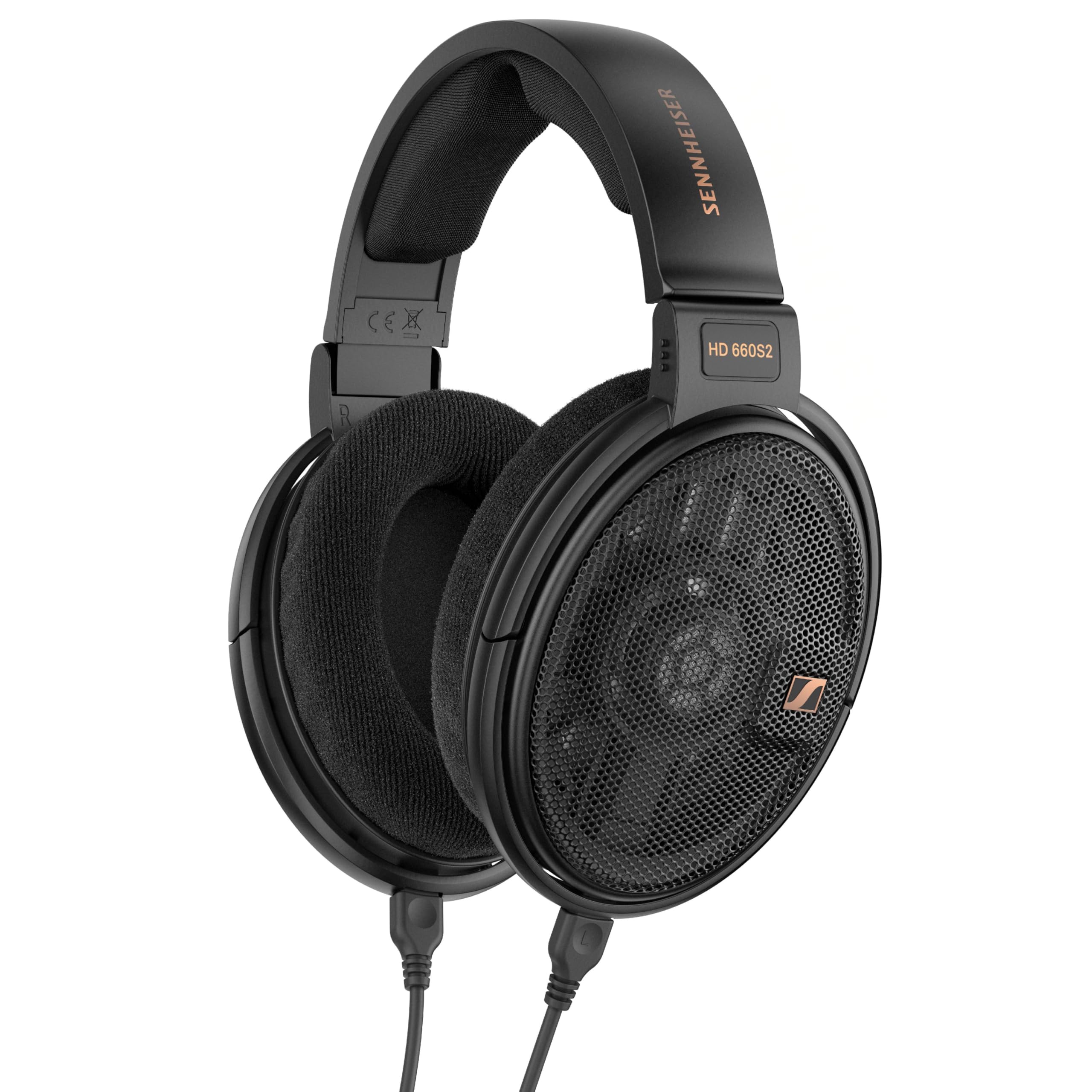
The HD 660S2 refines Sennheiser’s acclaimed 600-series formula with deeper bass extension and a more immersive presentation while retaining the natural, lifelike midrange the line is famous for. Its 42mm dynamic drivers use an ultra-light aluminum voice coil to deliver detailed highs and rich mids, while the sub-bass reaches down to 27.5 Hz with impressive control. The open-back design provides a spacious soundstage that presents vocals with intimacy and instruments with clear separation.
Build quality reflects Sennheiser’s German and Irish craftsmanship, using premium materials that feel both durable and elegant. The plush, breathable ear cushions and lightweight frame ensure fatigue-free listening across long sessions. The package includes two detachable cables — a 6.3 mm (1.8 m) and a balanced 4.4 mm (1.8 m) — plus a 6.3 mm to 3.5 mm adapter for portable use. A soft carry pouch protects the headphones during storage.
Users describe the HD 660S2 as “magical” for critical listening, with a warm, smooth tonality that avoids fatigue while revealing fine details in recordings. The treble is detailed but never harsh, and the bass provides a tactile thump that many previous 600-series owners found lacking. The soundstage is more intimate than the HD 490 PRO, which some prefer for musical immersion. Stock cables are slightly microphonic, but balanced aftermarket options are easily available.
Why it’s great
- Lifelike, intimate midrange with deep, controlled bass extension
- Incredible all-day comfort with breathable ear cushions
- Balanced cable included for premium DAC/amp setups
Good to know
- Soundstage is more intimate than some open-back competitors
- Stock cables can pick up microphonic noise during use
7. Audio-Technica ATH-M20x

The ATH-M20x is the entry point into Audio-Technica’s M-Series monitor line, designed for budget-conscious creators who need reliable sound and solid build quality. Its 40mm dynamic drivers with rare earth magnets and copper-clad aluminum wire voice coils are tuned for enhanced low-frequency performance, giving kick drums and bass lines extra presence. The circumaural earcups provide effective passive isolation for tracking in moderately noisy rooms.
The construction is simple but durable, with a single-side cable exit that reduces tangles and keeps the cable out of the way during use. The headband and ear pads deliver adequate comfort for sessions up to an hour or two, though the clamping force is moderate and may feel snug for glasses wearers over longer periods. There is no detachable cable or carrying case included, which is expected at this tier, but the tangle-free cable and straightforward design keep operation hassle-free.
Reviews consistently highlight the “excellent audio quality for a low price,” with clear, crisp sound across the frequency range and a long cord suitable for desktop setups. Gamers appreciate the clarity for in-game audio, while music producers find the low-end boost helpful for beat-making. The main drawbacks are the non-detachable cable, lack of spare parts, and the tight fit that can become uncomfortable after 30 minutes for those who wear glasses.
Why it’s great
- Exceptional price-to-performance ratio for entry-level monitoring
- Enhanced low-frequency tuning suits beat-making and gaming
- Durable construction with tangle-free single-side cable design
Good to know
- Non-detachable cable limits replacement if damaged
- Firm clamping force can be uncomfortable for glasses wearers
FAQ
Do corded headphones sound better than wireless?
What ohm rating should I choose for use with my phone?
Can I use open-back headphones for gaming?
Final Thoughts: The Verdict
For most users, the best corded headphones winner is the Audio-Technica ATH-M50x because it delivers a proven, balanced frequency response, robust build quality, and versatile detachable cable system at a sweet spot of performance and value. If you want the speed and resolution of planar magnetic technology, grab the HIFIMAN SUNDARA. And for a professional mixing tool with uncompromising comfort and dual pad options, nothing beats the Sennheiser HD 490 PRO.

Mo Maruf
I created WellFizz to bridge the gap between vague wellness advice and actionable solutions. My mission is simple: to decode the research and give you practical tools you can actually use.
Beyond the data, I am a passionate traveler. I believe that stepping away from the screen to explore new environments is essential for mental clarity and physical vitality.