Our readers keep the lights on and my smoothie glass nicely filled. As an Amazon Associate, I earn from qualifying purchases.
A corded rotary tool brings a steady, dependable spin to every project, from carving fine grooves into hardwood to polishing a small stone. Unlike battery-powered models that fade mid-task, a corded unit delivers consistent torque at every speed setting. The trick is matching the machine’s wattage, chuck size, and speed range to the materials you actually work with — not just the biggest number on the box.
I’m Mohammad Maruf — the founder and writer behind WellFizz. I’ve spent hundreds of hours analyzing motor specs, speed control systems, and flex shaft designs to find the corded rotary tools that actually deliver on their promises without overheating or wearing out too soon.
This guide breaks down seven models spanning hobbyist kits, mid-range flex shaft grinders, and premium Dremel setups so you can confidently pick the right best corded rotary tool for your shop, studio, or workbench.
How To Choose The Best Corded Rotary Tool
Buying a corded rotary tool means weighing motor stamina, speed precision, and the versatility of included accessories against the kind of work you do most. A wood carver’s needs differ from a jeweler’s or a metalworker’s. Focus on these specs to avoid buying more tool than you need — or less.
Motor Wattage and Torque
Wattage directly correlates to how hard the motor can push through dense materials without stalling. A 200W motor is sufficient for light sanding and engraving on softwood and plastic, while a 780W or 1000W unit can maintain speed through steel burrs and stone carving. Higher wattage also means the motor runs cooler under sustained load, which extends brush and bearing life.
Speed Range and Control Type
Look for a minimum speed around 5,000 RPM for gentle polishing and a maximum of at least 30,000 RPM for efficient cutting and grinding. Electronic feedback control (often called constant-speed circuitry) automatically boosts power when the bit meets resistance, preventing the RPM from dropping mid-cut. Stepless foot pedals give you hands-free speed variation, which is ideal for flex shaft setups where both hands guide the workpiece.
Chuck Type and Bit Compatibility
A three-jaw keyed chuck (common on flex shaft grinders) accepts shank diameters up to 1/4 inch, giving you access to larger burrs and mandrels. Quick-action or keyless chucks, standard on Dremel-type handpieces, make bit swaps fast but typically max out at 1/8 inch. If you use a mix of standard and oversized bits, the wider chuck compatibility should be a priority.
Quick Comparison
On smaller screens, swipe sideways to see the full table.
| Model | Category | Best For | Key Spec | Amazon |
|---|---|---|---|---|
| Dremel 4300 + Flex Shaft | Premium Combo | Detail carving & extended reach | 5,000–35,000 RPM, 3-jaw chuck | Amazon |
| Dremel 4000-2/32 | Premium Handheld | General DIY & moderate-duty use | 1.6A motor, 5,000–35,000 RPM | Amazon |
| HARDELL 1200W Flex Shaft | High-Power Grinder | Heavy material removal & stone work | 1,200W motor, up to 30,000 RPM | Amazon |
| GESD 1000W Flex Shaft | Mid-Range Shaft | Professional metal & jewelry work | 1,000W motor, fwd/reverse rotation | Amazon |
| YaeKoo 780W Flex Shaft | Budget Grinder | Budget-conscious carving & deburring | 780W motor, 500–25,000 RPM | Amazon |
| Proxxon 28512 Micromot 60 EF | Precision Handpiece | Fine engraving & CNC micro drilling | 12V, 5,000–20,000 RPM, quick chuck | Amazon |
| HARDELL 200W Rotary Tool | Entry-Level | Light crafting & hobby sanding | 200W motor, 8,000–40,000 RPM | Amazon |
In‑Depth Reviews
1. Dremel Rotary Tool Kit (4300) and Flex Shaft Attachment (225-02)

The Dremel 4300 bundles the brand’s most refined handheld body with the 225-02 flex shaft, creating a combo that covers both direct-grip and remote-handpiece work. The motor uses electronic feedback to hold speed steady when you push into hardwood or stainless steel, and the 3-jaw chuck accepts all Dremel accessories without needing a collet swap. The 36-inch flex shaft lets you suspend the motor overhead for zero-handweight detail carving — a major advantage for long engraving sessions.
With five attachments (including the angle, cut‑off, and detailer guides) and 40 accessories out of the box, this kit reduces the need for immediate add‑on purchases. The pivot light built into the tool body illuminates the work area directly, and the quick-change bit system keeps you moving from sanding to cutting without reaching for a wrench. Owners consistently note the quieter, smoother operation compared to third‑party corded models, and the flex shaft’s 5‑inch bend radius makes tight curves around complex pieces feel natural.
Serious hobbyists and pros who need one tool that does detail work, bulk material removal, and everything in between will find the 4300 combo hard to beat. The included flex shaft alone would cost roughly a third of the bundle if purchased separately, making this a value‑conscious premium choice for anyone building a permanent rotary tool station.
Why it’s great
- Electronic feedback maintains RPM under load
- Flex shaft eliminates hand fatigue during fine work
- Universal 3-jaw chuck fits all standard bits
Good to know
- Premium price point requires a real commitment
- Some users prefer a keyed chuck for larger burrs
2. Dremel 4000-2/32 Rotary Tool Kit
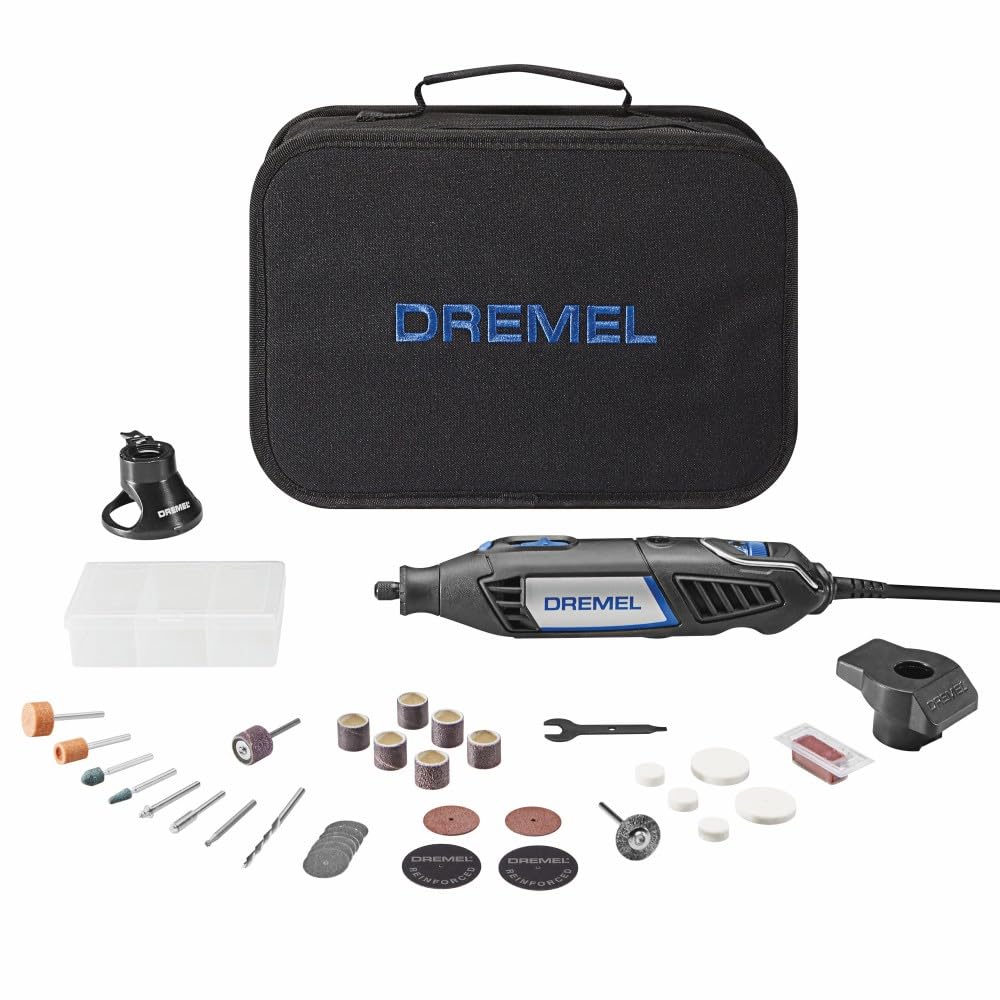
The electronic speed control prevents the RPM from sagging when you apply pressure, and the 360‑degree grip zone lets you choke up close to the bit for precision. The tool body weighs roughly one pound, so it stays controllable during extended carving and polishing sessions.
This kit includes 32 accessories covering sanding drums, cutting wheels, grinding stones, and polishing felt tips, plus two attachments: a cut‑off guide and a detailer’s grip. The housing uses over 55 percent recycled plastic, and the packaging is fully recyclable polybag‑free — a thoughtful sustainability angle. Owners report the tool runs noticeably quieter and cooler than budget counterparts, with the air‑flow system preventing internal heat buildup even during 20‑minute continuous runs.
If you want a reliable handheld unit without the extra cost of a flex shaft, the 4000 delivers all the power you need for wood carving, metal grinding, and detail sanding right out of the box. The build quality justifies spending a bit more than entry‑level models, and Dremel’s extensive accessory ecosystem means you can expand your bit collection gradually.
Why it’s great
- Powerful 1.6A motor with constant‑speed feedback
- Quieter and cooler than most corded rotaries
- Broad accessory support from Dremel ecosystem
Good to know
- Body size feels large for one‑handed detail work
- Flex shaft must be purchased separately
3. HARDELL 1200W Flex Shaft Grinder

The HARDELL 1200W flex shaft grinder brings serious torque to the bench with a pure copper motor that spins up to 30,000 RPM. That wattage level puts it in die‑grinder territory, allowing the tool to chew through stone, thick metal, and dense hardwoods without bogging. The stepless foot pedal gives you fully variable speed from zero to max with no preset stops, so you can creep into a delicate detail then floor it for aggressive material removal.
The flexible shaft uses a stainless steel core and a durable three‑jaw chuck that accepts bits from 0.4 mm up to 6.5 mm (roughly 1/4 inch). This wide chuck range means you can use standard rotary accessories alongside larger carbide burrs and mounted points. The hanging motor design keeps the weight off your hands entirely — the handpiece alone weighs almost nothing, which reduces fatigue during multi‑hour jewelry or stone carving sessions.
Owners praise the low vibration at the handpiece and the cooling system that prevents motor overheating, though some note the foot pedal feels light and the chuck requires a key for bit changes. The included accessory kit (46 pieces) covers basic grinding, sanding, and polishing, though serious users will likely want to supplement with their own premium burrs and discs.
Why it’s great
- 1,200W motor handles heavy material removal
- Wide 6.5mm chuck accepts non‑standard bits
- Hanging design eliminates hand fatigue
Good to know
- Keyed chuck slows down bit changes
- Flex shaft must be kept straight to avoid damage
4. GESD 1000W Electric Flex Shaft Rotary Tool
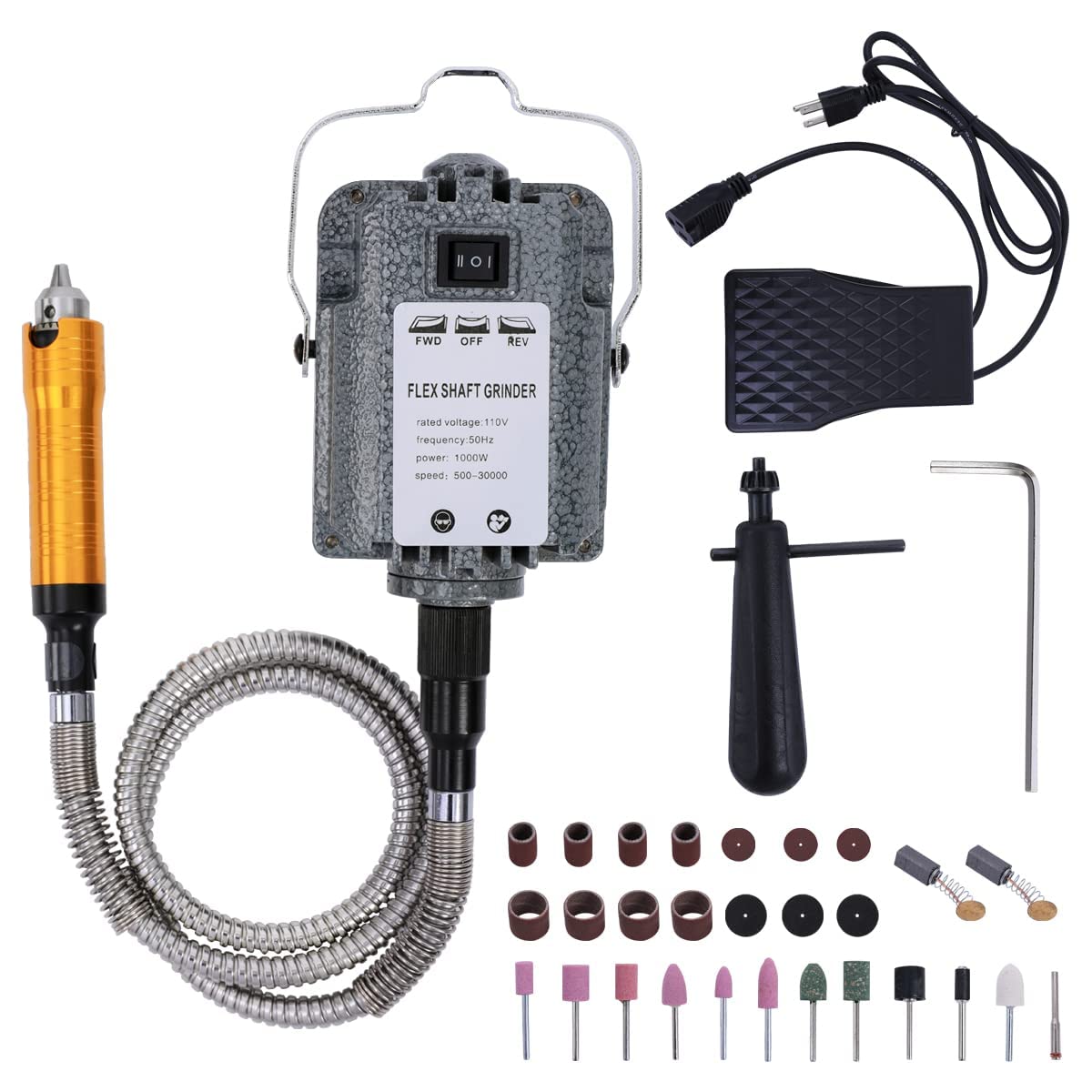
GESD’s 1000W flex shaft tool stands out with a forward/reverse rotation switch, giving you the ability to back out of a tight cut or switch direction for left‑handed polishing motions. The variable speed range (500 to 30,000 RPM) is controlled by a stepless foot pedal that frees both hands to guide the workpiece and the handpiece simultaneously. The motor hangs from a ceiling hook or bracket, keeping the bench clear and the weight off your wrist.
Built with a full copper motor and heat‑vent design, the unit runs cooler than many similarly priced flex shafts. The chuck accepts shanks from 0.5 mm to 6.5 mm, and the flexible shaft has good extensibility for reaching into corners and recesses. A metalworker and blacksmith reviewer reported using this tool on steel, brass, and copper daily without issues, praising its power reserve for detail carving on hard metals.
Some owners caution that the included accessories are low quality — the cutting discs and sanding drums wear out fast — so plan to replace them with aftermarket bits early. The foot pedal cord is short, which may limit placement in larger shops, and the reverse switch is small enough to be fiddly with heavy gloves. Despite these quirks, the core motor and flex shaft assembly deliver professional‑grade power at a mid-range price point.
Why it’s great
- Forward/reverse rotation increases versatility
- 1000W motor maintains power through dense materials
- Stepless foot pedal allows precise speed control
Good to know
- Included accessories are low quality
- Foot pedal cord is shorter than ideal
5. YaeKoo 780W Flex Shaft Hanging Grinder
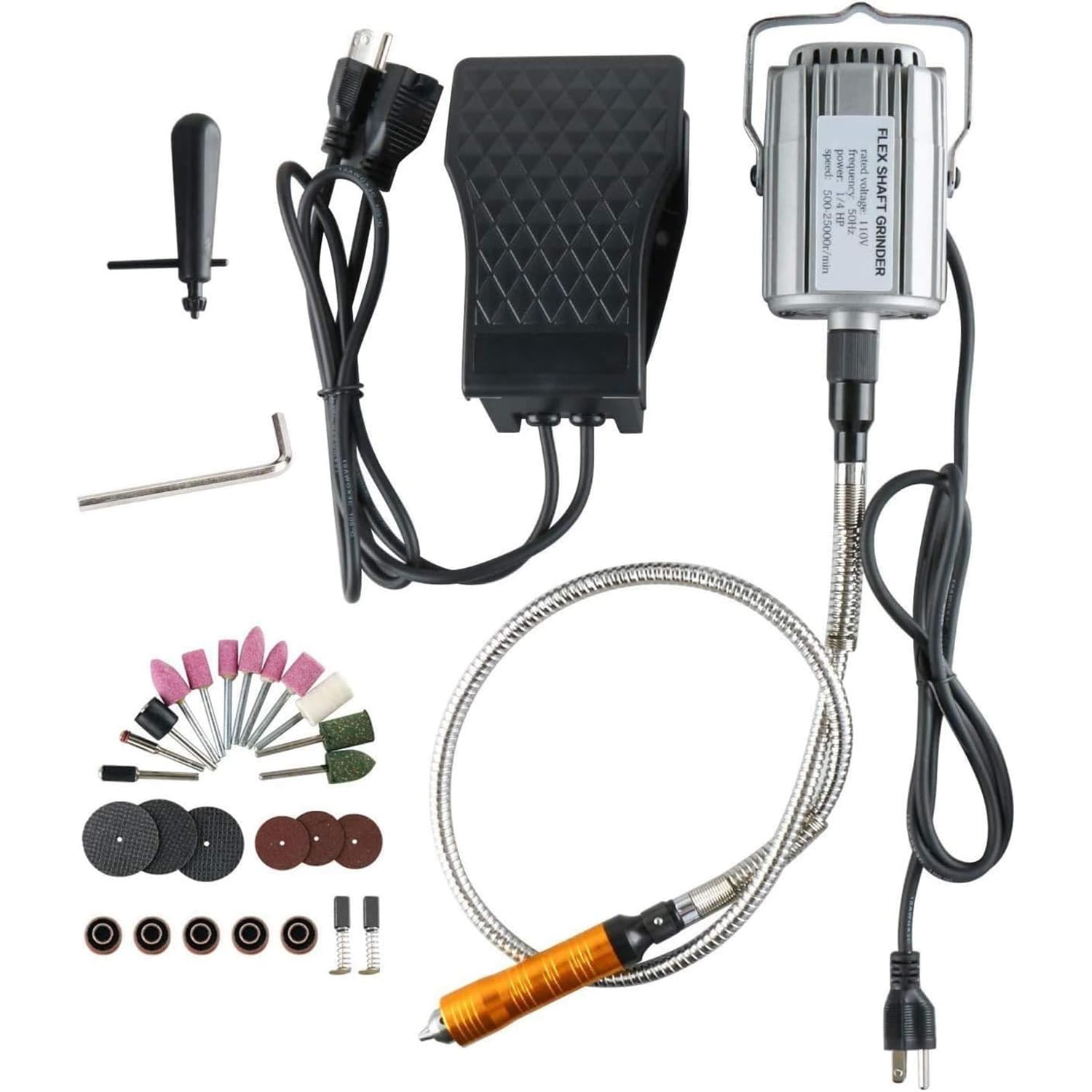
The YaeKoo 780W flex shaft grinder brings entry-level flex shaft capability to a price that competes with handheld rotary kits. The 780W pure copper motor covers a wide speed range from 500 to 25,000 RPM, and the foot pedal gives you hands‑free speed variation once you get used to the light‑duty pedal feel. The 1/4‑inch chuck (0.4‑6.5 mm) accepts standard rotary bits as well as larger mounted points that most handheld tools can’t drive.
Woodcarvers and stone sculptors on a budget will appreciate that the tool can handle sustained carving sessions without overheating, and the included 30‑piece accessory kit gets you started immediately with sanding bands, grinding heads, and wool felt pads. The motor hangs overhead, so the handpiece is extremely light — ideal for precise work on detailed carvings or small jewelry pieces. Several users note the foot pedal feels flimsy compared to professional units, but many have swapped in a spare pedal from an old sewing machine or welder.
The main trade‑offs come in long‑term reliability: some owners report flex shaft failure if the cable is bent too sharply, and the carbon brushes may need early replacement under heavy use. For hobbyists who want flex shaft performance without the premium price, the YaeKoo delivers solid value as long as you treat the shaft carefully and avoid full‑speed binding.
Why it’s great
- Affordable entry to flex shaft power carving
- 1/4‑inch chuck accepts large bits
- Variable speed with foot pedal control
Good to know
- Foot pedal feels cheap and may fail early
- Flex shaft can snap if over‑bent
6. Proxxon 28512 Micromot 60 EF Rotary Tool

The Proxxon Micromot 60 EF is a different category of corded rotary tool — a slim, lightweight handpiece designed for true micro‑precision rather than brute removal. The 12‑volt balanced DC motor spins from 5,000 to 20,000 RPM, and the electronic feedback keeps speed stable even when you’re bearing down on a fine engraving line. The quick‑action chuck accepts shanks from 1/32 inch to 1/8 inch and swaps bits without tools, which is critical when you’re switching between a micro drill and a burr mid‑project.
The glass‑fiber reinforced polyamide housing has a soft grip surface that reduces hand fatigue, and the motor’s low‑noise design makes it comfortable for indoor workshop use. CNC hobbyists and jewelers consistently praise the Proxxon for its near‑zero arbor play — the collet holds bits dead center, unlike many Dremel clones that introduce wobble at high RPM. The included DC power supply must be ordered separately (the tool ships as a bare unit), so factor that into your total setup cost.
Proxxon’s 2‑year warranty and reputation for longevity make this a smart investment if your work stays in the fine‑detail realm — engraving, circuit board drilling, or delicate model making. It’s not the tool for aggressive material removal, but for precision it outclasses every handheld rotary in this list.
Why it’s great
- Extremely low vibration and wobble free spindle
- Quick‑action chuck for fast bit changes
- Lightweight and ergonomic for fine detail work
Good to know
- Power supply sold separately
- Limited to smaller 1/8‑inch shank bits
7. HARDELL 200W Corded Rotary Tool Kit
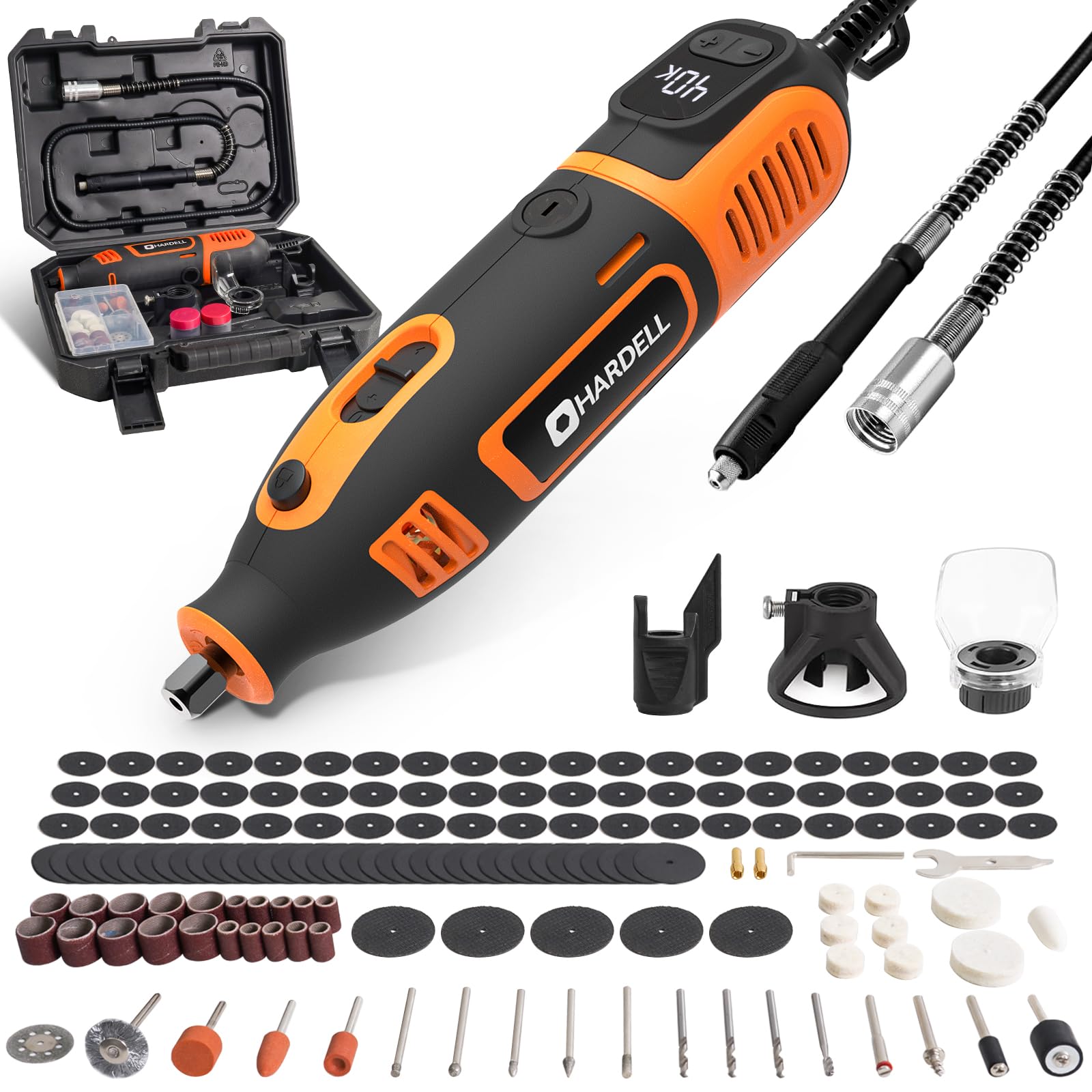
The HARDELL 200W rotary tool is a straightforward entry‑level machine built for light crafting, sanding, and engraving on soft materials. It uses a six‑speed dial to adjust torque and RPM from 5,000 to 15,000 RPM (listed minimum 5,000 / maximum 15,000 RPM in the specs), and the included flex shaft lets you separate the heavy motor body from the handpiece for lighter control on small projects. The 155‑piece accessory kit covers all the basics — cutting discs, grinding wheels, drill bits, and sandpaper drums — so you don’t need to buy extras for starter projects.
The 200‑watt motor is adequate for plastics, balsa wood, soft metals like aluminum, and general hobby sanding. It will stall if you push too hard into dense hardwood or steel, so keep the feed pressure light. The variable speed dial lets you creep in at low RPM for polishing and ramp up for cutting, and the digital display on the body gives you a clear readout of your current speed — a nice touch at this tier.
Accessory quality is the main compromise: several owners report that the included bits are flimsy, especially the cutting discs and sanding bands, so plan to replace them with Dremel‑compatible accessories early. The chuck accepts standard 1/8‑inch shanks, making it easy to upgrade. If you’re a beginner who wants one kit to test the waters of rotary tool work, the HARDELL offers a low‑commitment path with enough accessories to figure out what you actually need.
Why it’s great
- Very low cost for a complete starter kit
- Includes 155 accessories and a flex shaft
- Digital speed display on the tool body
Good to know
- Motor lacks torque for heavy tasks
- Included accessories are low quality and wear fast
FAQ
Can I use Dremel accessories with a generic flex shaft grinder?
Why does my corded rotary tool lose speed when I press harder?
How do I keep the flex shaft from breaking?
Is a 12V rotary tool powerful enough for wood carving?
Final Thoughts: The Verdict
For most users, the best corded rotary tool winner is the Dremel 4300 with Flex Shaft because it combines a premium handheld tool with a dedicated flex shaft in one kit, covering both precision and power needs. If you want a reliable standalone unit without the extra shaft, grab the Dremel 4000-2/32. And for heavy material removal on stone and metal, nothing beats the HARDELL 1200W Flex Shaft Grinder.

Mo Maruf
I created WellFizz to bridge the gap between vague wellness advice and actionable solutions. My mission is simple: to decode the research and give you practical tools you can actually use.
Beyond the data, I am a passionate traveler. I believe that stepping away from the screen to explore new environments is essential for mental clarity and physical vitality.