Our readers keep the lights on and my smoothie glass nicely filled. As an Amazon Associate, I earn from qualifying purchases.
A corded orbital sander is the workhorse of any woodworking shop, but the wrong one can leave you fighting vibration, dust, and swirl marks instead of getting a flawless finish. The market is flooded with options that look similar on the shelf, but the real differences lie in the motor build quality, dust management design, and control ergonomics that determine whether your project comes out smooth or marked.
I’m Mohammad Maruf — the founder and writer behind WellFizz. I’ve spent countless hours analyzing motor specs, dust collection geometries, and pad oscillation patterns to separate tools that deliver professional-grade results from those that simply spin a disc.
Whether you’re stripping a vintage dresser or finishing a custom cabinet, your choice of a corded orbital sander directly impacts project speed, surface quality, and how much airborne dust you breathe.
How To Choose The Best Corded Orbital Sander
Selecting the right orbital sander means looking past the sticker and focusing on the motor power, speed adjustability, dust handling, and pad design that match your specific projects. Here are the three most important factors to evaluate before you buy.
Motor Amperage and Build Quality
Motor amperage directly translates to torque and sustained performance under load. A 2.0-amp motor works fine for light finishing and occasional DIY use, but a 3.0-amp motor with high-quality copper windings maintains speed when pressing into hardwood grain or stripping paint. Premium models also use dust-sealed switches and balanced counterweights to reduce overheating and prolong the tool’s life.
Dust Collection System Design
How well a sander captures dust matters for both your lungs and your motor. Look for units that pull debris through the pad into a canister or bag, ideally with a vacuum adapter port. Twist-off canisters are easier to empty than snap-on bags, and models with microfilter systems trap particles as small as half a micron. A sander that breathes clean will run cooler and last longer.
Variable Speed Control and Pad Orbit
Variable speed lets you dial in the right oscillation rate for each material — lower speeds for plastic and delicate veneers, higher speeds for aggressive material removal on hardwood. Combined with the pad’s orbit diameter, speed control directly affects swirl-mark prevention and finish quality. A wider orbit removes material faster, while a finer orbit with slower speed produces the smoothest surface.
Quick Comparison
On smaller screens, swipe sideways to see the full table.
| Model | Category | Best For | Key Spec | Amazon |
|---|---|---|---|---|
| DEWALT DWE6420 | Premium | Pro woodworking and heavy use | 3.0-amp motor; 12,000 OPM | Amazon |
| Bosch ROS20VSC | Premium | Swirl-free finishing on furniture | 2.5-amp; 7,500-12,000 OPM | Amazon |
| Metabo HPT SV13YST | Mid-Range | Value-driven removal and finishing | 2.8-amp; 9,000-13,000 RPM | Amazon |
| Toolok TL-OS001 | Mid-Range | DIY furniture flipping with speed | 3.0-amp; 6,000-13,000 OPM | Amazon |
| Narbell NT50001 | Mid-Range | Budget-friendly all-around sanding | 3.0-amp; 6,000-14,000 RPM | Amazon |
| Bosch GSS20-40 | Premium | Corner and flush sanding precision | 2.0-amp; 12,000 OPM — 1/4-sheet | Amazon |
| BLACK+DECKER BDERO100 | Entry-Level | Beginner DIY and small repairs | 2.0-amp; 12,000 OPM | Amazon |
In‑Depth Reviews
1. DEWALT Random Orbit Sander DWE6420

The DEWALT DWE6420 is built around a proven 3.0-amp motor that delivers consistent 12,000 OPM without bogging down, even under steady pressure on dense hardwood. Its separate counterweight design noticeably reduces vibration compared to single-mass sanders, letting you work longer without hand fatigue. The shorter body height also allows you to get closer to the workpiece, which is a genuine advantage for detailed cabinet and furniture work.
This model uses pressure-sensitive adhesive (PSA) discs instead of hook-and-loop, which some users prefer for a flatter, more rigid sanding surface. The dust-sealed switch and one-handed locking dust bag are thoughtful touches, though you’ll want a vacuum adapter for truly low-dust operation. The rubber over-mold in critical grip areas adds comfort during extended sessions.
Overall, the DWE6420 is a straightforward, powerful workhorse that favors material removal speed and reliability over frills. It lacks variable speed, so you’re locked into one operating speed, but that simplicity combined with DEWALT’s 3-year warranty makes it a favorite among professionals who need a tool that just works.
Why it’s great
- Strong 3.0-amp motor maintains speed under load
- Separate counterweight minimizes vibration for longer use
- Compact body reaches tight spots easily
- Dust-sealed switch improves longevity in heavy conditions
Good to know
- PSA discs are not hook-and-loop; requires adhesive-backed paper
- No variable speed control available
- Dust bag clogs faster without shop vac attachment
2. Bosch ROS20VSC Palm Sander
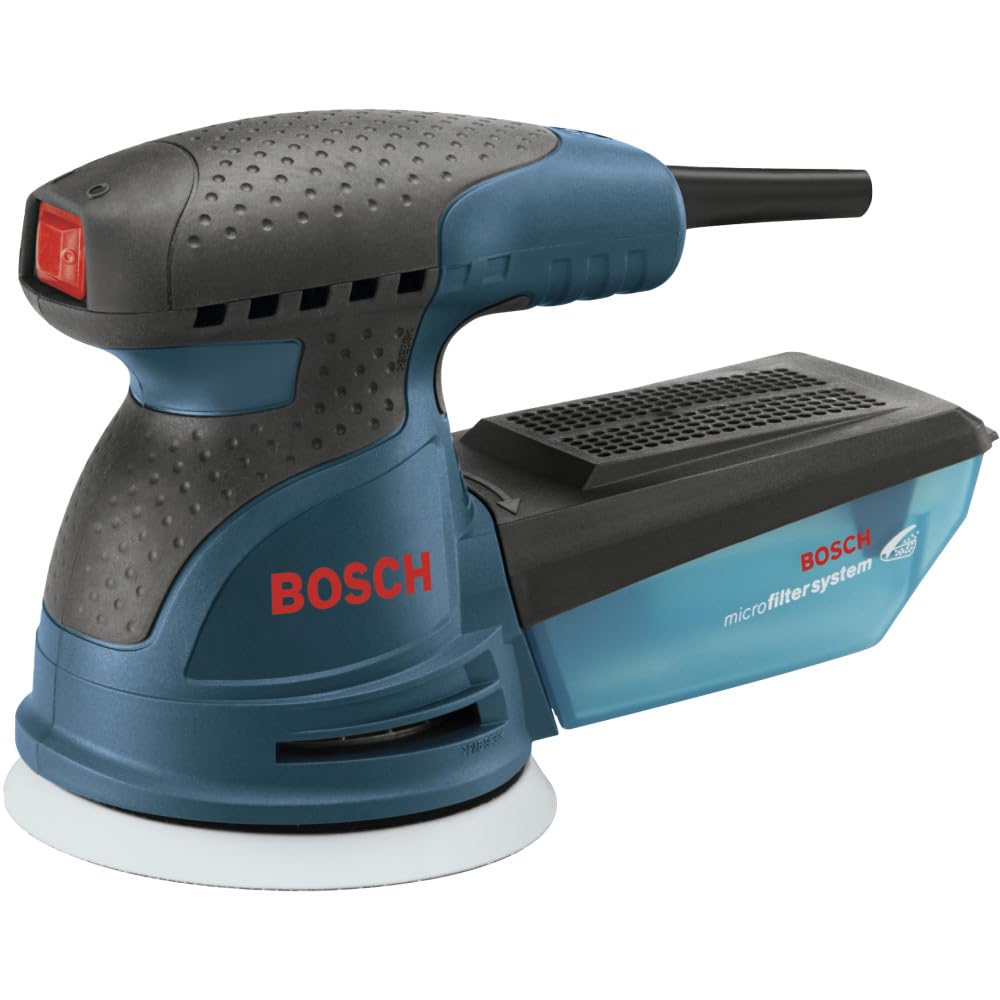
The Bosch ROS20VSC is engineered specifically to minimize swirl marks, thanks to its pad dampening system that absorbs orbital vibration before it transfers to the surface. The variable speed dial lets you adjust from 7,500 to 12,000 OPM, giving you fine control over how aggressive the cut feels — ideal for moving from paint stripping to final finishing without swapping tools. Its 2.5-amp motor is well-matched for medium-duty work and runs noticeably quieter than many competitors.
The twist-off dust canister includes a microfilter that traps particles as small as half a micron, making it one of the best dust-management systems in this class. The container shows dust level through translucent walls, and emptying is a simple screw-off motion. The hook-and-loop disc features over 35,000 long-life hooks that hold sandpaper firmly even with extended use.
This sander comes as a kit with a soft carrying bag, vacuum adapter, and dampening ring. It’s slightly heavier than some palm sanders at 3.5 pounds, but that weight helps keep the pad flat for self-sanding tasks. For anyone prioritizing a flawless finish without swirl marks, especially on cabinet doors and guitar bodies, this Bosch is a top contender.
Why it’s great
- Pad dampening system effectively prevents swirl marks
- Variable speed dial offers real control for different materials
- Microfilter canister traps ultra-fine dust
- Includes carrying bag and vacuum adapter
Good to know
- Heavier than some palm sanders; may tire small hands
- Canister lid uses an O-ring that can loosen over time
- Not ideal for heavy stock removal on large surfaces
3. Metabo HPT SV13YST Finishing Sander

The Metabo HPT SV13YST punches well above its mid-range price with a solid 230W (2.8-amp) motor and a variable speed dial ranging from 9,000 to 13,000 RPM. That speed range is narrower than some competitors, but it’s exactly where most sanding tasks live, and the motor holds its speed under load better than similarly priced units. The palm-style comfort grip with soft rubber reduces vibration transfer, making it comfortable for extended finishing sessions.
Dust collection is handled through a bag and a hose connector adapter, and while the bag itself is mediocre, hooking it to a shop vac transforms the experience into near-zero airborne dust. The hook-and-loop pad allows fast paper changes, and the included 5-piece sandpaper assortment gets you started immediately. Several users report this sander outperforms more expensive models for furniture finishing and even metal polishing.
Some long-term users note the dust collector connector can pop off occasionally during aggressive work, and the overall noise level is slightly higher than premium brands. But with a 5-year professional tool warranty and performance that rivals tools costing twice as much, the SV13YST is a smart choice for anyone who wants quality without a premium price tag.
Why it’s great
- Strong motor outperforms many pricier sanders
- Comfortable palm grip with vibration dampening
- Vacuum adapter for near-zero dust with shop vac
- 5-year professional tool warranty
Good to know
- Dust bag is poorly designed; tape may be needed for snap connector
- Slightly louder and more vibration than top-tier brands
- Hook-and-loop pad grip weakens over heavy use
4. Toolok TL-OS001 Random Orbital Sander
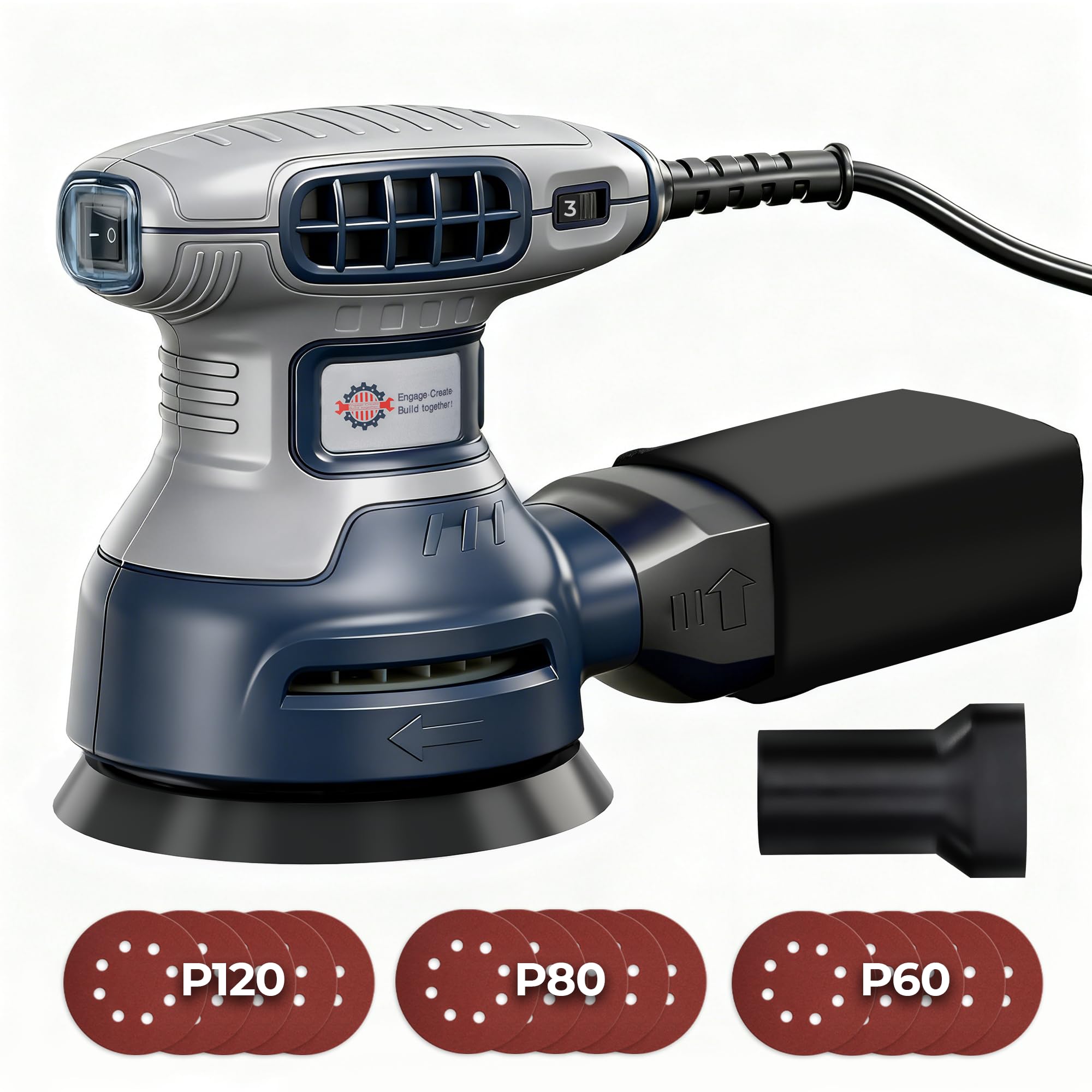
The Toolok TL-OS001 packs a 3.0-amp motor with a wide speed range from 6,000 to 13,000 OPM across six settings, giving you genuine precision for everything from delicate veneer sanding to aggressive paint removal. The standout feature here is the BrakeSnap Tech, a 1-second brake that stops the pad instantly when you release the trigger — a real safety and control advantage. The rubber grip and balanced counterweight noticeably reduce hand fatigue, and the compact design accesses tight cabinet corners easily.
Dust collection uses both a bag and a vacuum adapter, though the bag alone only captures about 80% of particles, so pairing with a shop vac is recommended for indoor work. The kit includes 15 sandpaper discs in 60, 80, and 120 grit, plus the vacuum adapter, providing immediate value out of the box. Users consistently praise its performance on thrift furniture flips and paint stripping projects.
The 1-year warranty is shorter than some competitors, but the overall build quality — including the dust-sealed switch and efficient cooling vents — suggests this unit will hold up through moderate use. For DIYers and weekend woodworkers who want variable speed without a premium price, the Toolok delivers excellent versatility.
Why it’s great
- 1-second brake stops pad instantly for safety
- Six speed settings cover 6,000 to 13,000 OPM
- Includes 15 sanding discs and vacuum adapter
- Comfortable rubber grip reduces hand fatigue
Good to know
- Dust bag alone is not fully effective; best with shop vac
- 1-year warranty is shorter than premium brands
- Speed dial can be accidental bumped during work
5. Narbell NT50001 Orbital Sander
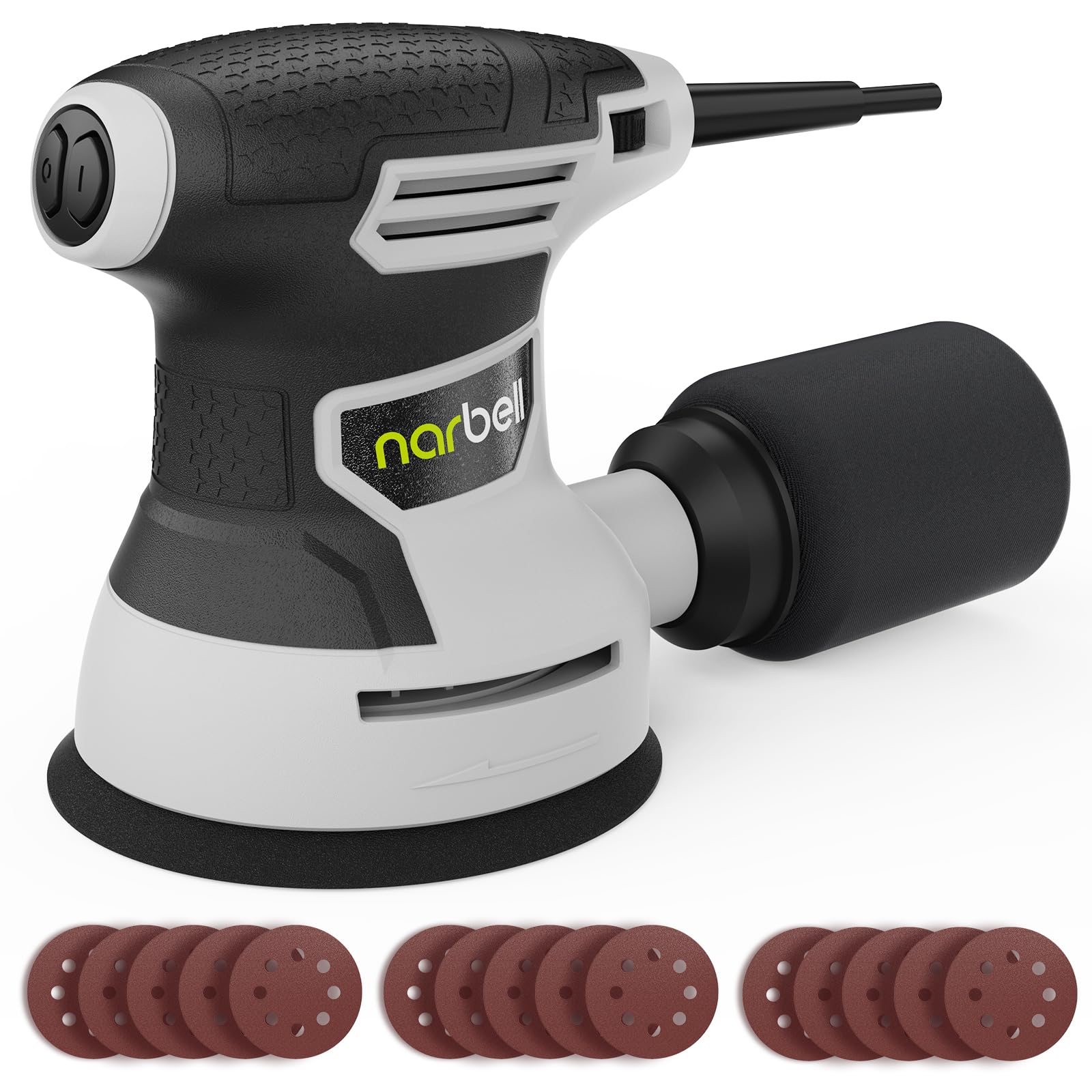
The Narbell NT50001 stands out with its 360W (3.0-amp) motor that surpasses the typical 2.5-amp units by a meaningful margin. Upgraded solid copper windings reduce friction loss, which translates to higher torque and up to 30% longer motor lifespan. The six adjustable speeds range from 6,000 to 14,000 RPM, giving you the widest top-end of any sander in this roundup and allowing very aggressive stock removal when needed.
The dust collection system routes debris through the pad into a bag or a vacuum adapter, and users report the bag works reasonably well for drywall and light wood sanding. The 15-piece sandpaper assortment (60, 80, and 120 grit) covers the most common grits for starting a project. The ergonomic handle design with shock absorption does help reduce vibration compared to older budget models.
One user noted it outperformed their DEWALT for less cost, which speaks to the value proposition here. The lack of a carrying case is a minor inconvenience, and the bag needs prompt emptying to maintain suction. For anyone seeking maximum power per dollar with unlimited speed range, the Narbell is a compelling choice that punches well above its price tier.
Why it’s great
- 360W motor delivers more power than typical 2.5-amp units
- Up to 14,000 RPM for aggressive material removal
- 6 speed settings offer broad application flexibility
- Ergonomic grip with shock absorption reduces fatigue
Good to know
- No carrying case included for transport
- Dust bag needs frequent emptying for best performance
- Speed not as consistent under max load as premium motors
6. Bosch GSS20-40 Orbital Finishing Sander

The Bosch GSS20-40 is a different breed of orbital sander — instead of a round random-orbit pad, it uses a 1/4-sheet rectangular format with precision-machined aluminum plate. This design excels at flush sanding right into corners and along edges, where round sanders leave material untouched. The 2.0-amp motor drives 12,000 OPM with tight orbital motions that deliver a fine finish without aggressive cutting.
The dust collection system uses a microfilter canister with a screw-off cap that captures particles from coarse to fine, though the canister is small and fills quickly — best paired with a shop vac for extended work. The clamping mechanism accepts traditional sheet paper and includes a punchplate for making dust holes. Users consistently note the low vibration and comfortable ergonomics for long finishing sessions on cabinets and furniture.
This sander is not for heavy stock removal or large flat surfaces; it’s designed for controlled finishing and precision work. The paper clamping system works well, though the punchplate doesn’t punch as cleanly as some would like. If your sanding involves edges, corners, and flush surfaces, this Bosch is purpose-built for that job.
Why it’s great
- Aluminum pad sands flush into corners and edges
- Low vibration with comfortable ergonomic grip
- Microfilter dust canister traps fine particles
- Accepts standard 1/4-sheet paper with clamp system
Good to know
- Small dust canister fills quickly; shop vac recommended
- Not designed for aggressive material removal
- Punchplate for dust holes works inconsistently
7. BLACK+DECKER BDERO100 Orbital Sander
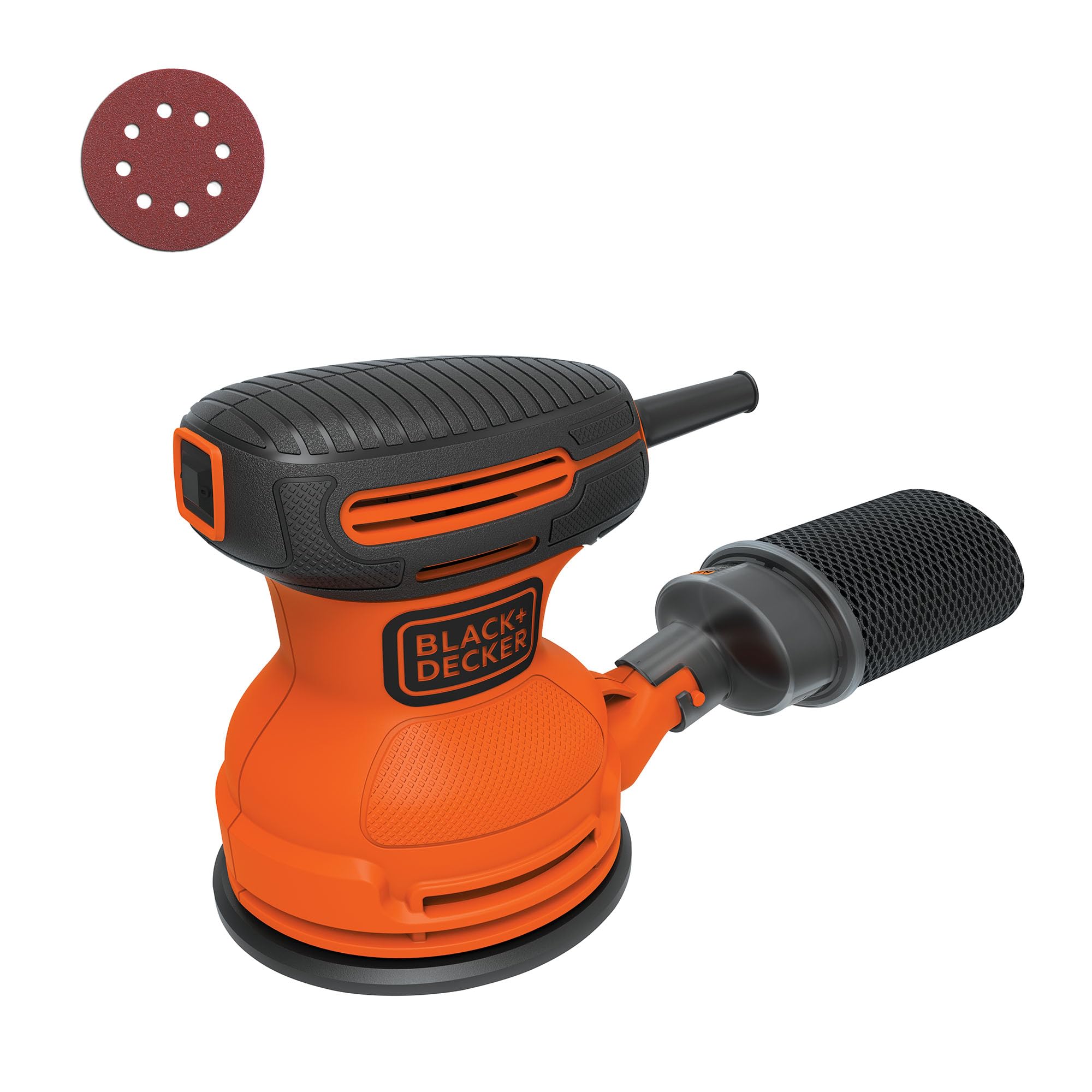
The BLACK+DECKER BDERO100 is the quintessential entry-level orbital sander — a straightforward, single-speed 2.0-amp tool that delivers 12,000 OPM with no frills. It’s lightweight at just over 3 pounds and compact enough to fit into tight spaces. The random orbital action is effective for swirl-free finishes on flat surfaces, and the dust-sealed switch protects the internals from debris during use.
Dust collection is handled by a built-in bag, though it’s the weakest point of this design — several users report it’s largely ineffective and recommend sanding outdoors or connecting to a shop vac. The comfort grip handle helps reduce fatigue, but the lack of variable speed means you’re locked into one operating speed for all tasks. The short power cord also requires a nearby outlet or extension.
For a beginner tackling their first furniture refinishing project or small home repairs, the BDERO100 is a capable and affordable starting point. It won’t keep up with professional-level demands, but for light to moderate DIY use, it gets the job done. The 2-year limited warranty provides reasonable peace of mind for a tool at this level.
Why it’s great
- Lightweight and compact for easy handling
- Effective random orbital action for swirl-free finish
- Dust-sealed switch protects against debris
- Very budget-friendly entry point for beginners
Good to know
- Dust bag is largely ineffective; best with shop vac
- Single-speed operation limits application flexibility
- Short power cord requires extension for larger projects
FAQ
What is the difference between a random orbital sander and a finishing sander?
Is a hook-and-loop or PSA disc system better for orbital sanders?
Why do some orbital sanders cause more swirl marks than others?
How important is variable speed for an orbital sander?
Final Thoughts: The Verdict
For most users, the corded orbital sander winner is the Bosch ROS20VSC because its pad dampening system delivers the best swirl-free finish with solid variable speed control and excellent dust management. If you want raw power and pro-grade durability, grab the DEWALT DWE6420. And for budget-conscious DIYers seeking a versatile sander with wide speed range, nothing beats the Narbell NT50001 for value per watt.

Mo Maruf
I created WellFizz to bridge the gap between vague wellness advice and actionable solutions. My mission is simple: to decode the research and give you practical tools you can actually use.
Beyond the data, I am a passionate traveler. I believe that stepping away from the screen to explore new environments is essential for mental clarity and physical vitality.