Our readers keep the lights on and my smoothie glass nicely filled. As an Amazon Associate, I earn from qualifying purchases.
St. Augustine grass is notoriously sensitive to herbicides, and the wrong crabgrass killer can scorch an entire lawn in days. Finding a formula that eradicates the weed without damaging the turf is the core challenge Southern homeowners face each spring.
I’m Mohammad Maruf — the founder and writer behind WellFizz. I’ve spent many hours comparing active ingredients, reading through university extension bulletins, and analyzing user reports from warm-season grass regions to find the products that actually work on St. Augustine without causing harm.
This guide breaks down the safest and most effective selective herbicides for your turf, helping you choose the right crabgrass killer for st. augustine grass.
How To Choose The Best Crabgrass Killer For St. Augustine Grass
St. Augustine grass is the most herbicide-sensitive warm-season turf. Unlike Bermuda or Zoysia, it lacks strong rhizomes and can be permanently thinned by the wrong chemical. The key is to match the active ingredient with the growth stage of the weed.
Pre-Emergent vs. Post-Emergent Timing
Pre-emergents like prodiamine or dithiopyr prevent crabgrass seeds from germinating. These are applied in late winter or early spring when soil temperatures hit 55°F. Post-emergents like quinclorac or mesotrione kill actively growing crabgrass. On St. Augustine, post-emergent applications require careful spot treatment to avoid turf damage.
Active Ingredient Safety for St. Augustine
Atrazine is one of the few herbicides labeled for broadcast use over St. Augustine, but it only suppresses crabgrass — it won’t fully kill established plants. Mesotrione can bleach St. Augustine if overdosed. Quinclorac is the gold standard for post-emergent crabgrass control, but it should be applied as a spot spray or with a surfactant to minimize drift onto healthy grass.
Formulation: Granules vs. Liquid Concentrate
Granular pre-emergents are easy to apply with a spreader and work well for blanket lawn coverage. Liquid concentrates give you precision for spot treatments and post-emergent needs, but require a sprayer and careful calibration. For St. Augustine, a liquid post-emergent spot spray is usually the safest approach if you have small patches of crabgrass.
Quick Comparison
On smaller screens, swipe sideways to see the full table.
| Model | Category | Best For | Key Spec | Amazon |
|---|---|---|---|---|
| Quinclorac 1.5L (Quali-Pro) | Liquid Post-Emergent | Established crabgrass elimination | Quinclorac 17.79% | Amazon |
| Primesource Quinclorac 1.5L | Liquid Post-Emergent | Large-area crabgrass treatment | Quinclorac 18.92% | Amazon |
| Preen Lawn Crabgrass Control | Granular Pre-Emergent | Early-season prevention | Dithiopyr 0.15% | Amazon |
| Southern Ag Atrazine | Liquid Broadleaf Killer | Broadleaf weed control with crabgrass suppression | Atrazine 4% | Amazon |
| Liquid Harvest Mesotrione | Liquid Pre/Post Emergent | Versatile spot treatment on sod-grown St. Augustine | Mesotrione 8 oz | Amazon |
| Barricade 4FL Herbicide | Liquid Pre-Emergent | Season-long pre-emergent barrier | Prodiamine 4% | Amazon |
| Hi-Yield Turf & Ornamental | Granular Pre-Emergent | Affordable pre-emergent coverage | Dimension 0.15% | Amazon |
In‑Depth Reviews
1. Quinclorac 1.5L (Quali-Pro)

Quinclorac is the most reliable post-emergent active ingredient for killing crabgrass without harming healthy St. Augustine when applied correctly. This 64-ounce concentrate from Quali-Pro contains 17.79% quinclorac, which stops photosynthesis and causes cellular collapse in grassy weeds within 4 days of application. Users report visible wilting and a dried brown appearance within under a week, even on large, multi-tiller crabgrass clumps. The chemistry is selective enough to spare your St. Augustine runners when used as a spot spray with a surfactant.
This product works on over 15 weed species beyond crabgrass, including foxtail, torpedograss, and field bindweed. The coverage estimate of 1,500 square feet per bottle makes it an excellent choice for medium-sized yards with persistent crabgrass patches. For best results, mix one ounce per gallon of water and add a non-ionic surfactant or methylated seed oil to reduce surface tension and prevent the solution from beading off waxy crabgrass leaves.
Some users note that quinclorac is less effective on clover and may require a second application for heavily infested areas. While the upfront cost is higher than granular options, a single bottle often lasts multiple seasons for spot treatment, making it a mid-range investment that pays off through reliable results.
Why it’s great
- Fast visual results in 3-5 days on mature crabgrass
- Safe on St. Augustine when applied as directed with surfactant
- One bottle treats up to 1,500 square feet
Good to know
- Requires a surfactant for effective adhesion
- Not effective on clover or broadleaf weeds
2. Primesource Quinclorac 1.5L Select
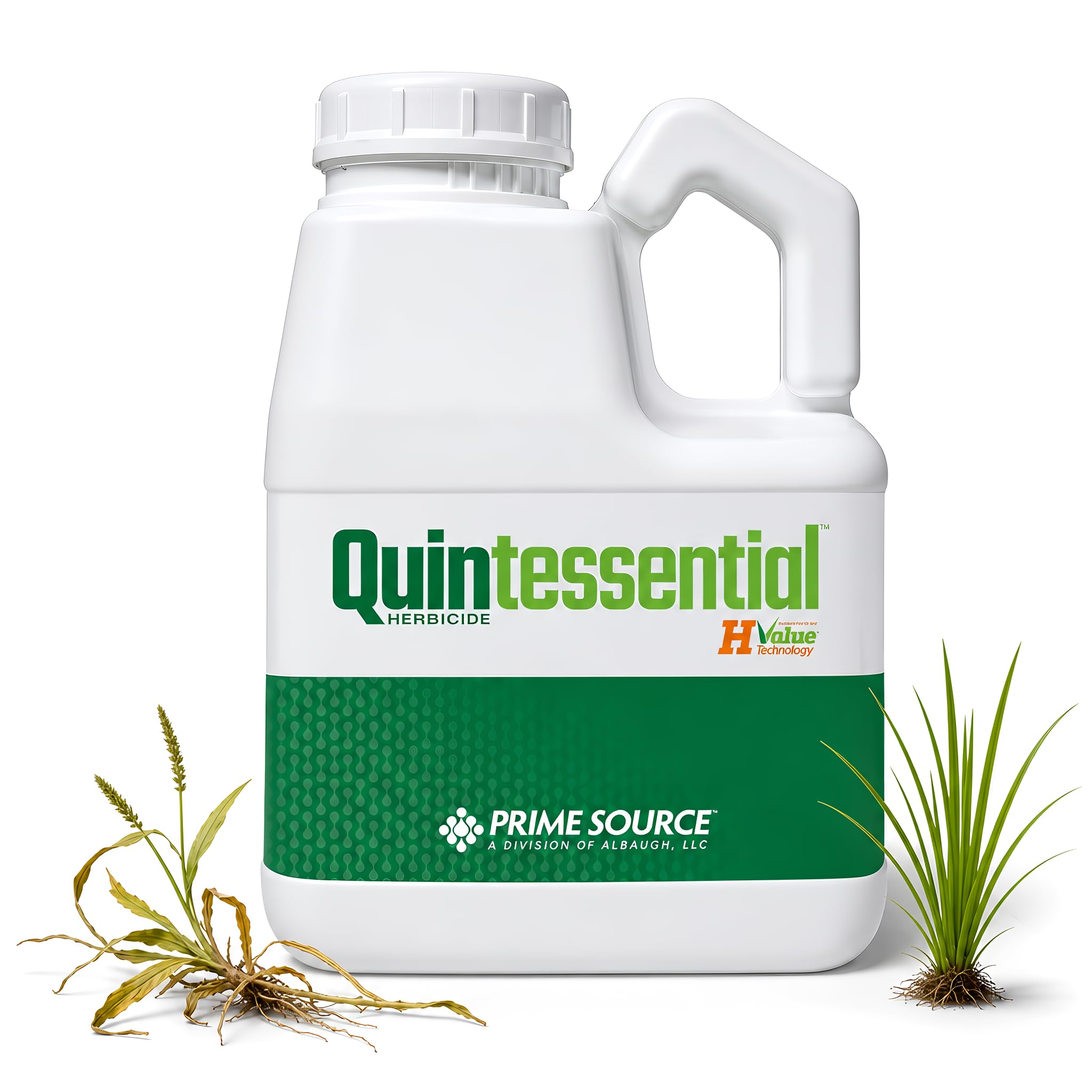
Primesource’s Quinclorac 1.5L Select offers a slightly higher concentration of 18.92% quinclorac compared to the Quali-Pro version, meaning the same volume of concentrate covers more ground. Users consistently report near-total crabgrass death — estimates of 60 to 98 percent — after a single application when paired with MSO surfactant. The one-gallon jug provides enough material for homeowners with larger properties or multiple applications throughout the growing season.
This post-emergent formula excels on smooth and large crabgrass, foxtail, and torpedograss. The addition of a blue dye indicator helps you track where you’ve already sprayed, preventing overlap that could stress the St. Augustine. Many reviewers note that lawn grass surrounding the treated crabgrass remained completely untouched even at 4 ounces per 2 gallons of water, confirming the selectivity of quinclorac on warm-season turf.
Some users point out that efficacy drops below the 70 percent mark on very dense, multi-year infestations, and heat can make application uncomfortable during peak summer. The bottle’s narrow opening also makes pouring the concentrate a bit fiddly, so a measuring cup is recommended.
Why it’s great
- High concentration treats more square footage per bottle
- Works fast — visible results in 24 to 48 hours
- Selective action leaves St. Augustine runners unharmed
Good to know
- Requires MSO surfactant for best performance
- May not achieve full kill rate on heavy infestations in one pass
3. Preen Lawn Crabgrass Control

Preen Lawn Crabgrass Control uses dithiopyr, an active ingredient that provides both pre-emergent and early post-emergent activity. This means it can stop crabgrass seeds from germinating and still kill young crabgrass that has already sprouted within the first few weeks after application. The 15-pound bag covers 5,000 square feet, making it a strong mid-range option for homeowners who want a single, easy-to-spread treatment each spring.
Listed as safe for St. Augustinegrass when applied at the directed rates, Preen can be used on both cool-season and warm-season lawns. Users who apply it before soil temperatures reach 55°F consistently report a nearly crabgrass-free season. The granular formulation reduces the risk of drift and accidental overspray that liquid concentrates carry, which is a major advantage for St. Augustine owners who worry about burning their turf.
A small number of users report that the product failed to stop crabgrass on their lawns, possibly due to late application timing or improper watering-in. Preen requires rainfall or irrigation within a few days of application to activate the dithiopyr barrier, and missing this window drastically reduces efficacy.
Why it’s great
- Dithiopyr offers both pre and early post-emergent control
- Spreader application is simple and low-risk for drift
- Large bag covers 5,000 square feet per season
Good to know
- Must be watered in within 2-3 days after spreading
- Late application timing will drastically reduce effectiveness
4. Southern Ag Atrazine St. Augustine Grass Weed Killer

Southern Ag Atrazine is one of the few herbicides specifically labeled for broadcast application on St. Augustine grass, making it a trusted fallback for homeowners who want a blanket spray without spot-treating each weed. The 4% atrazine formula targets broadleaf weeds like dollarweed, henbit, and clover while providing moderate suppression of crabgrass. It is also safe for centipede grass, another warm-season turf type with similar sensitivity.
This product works slowly over 2 to 4 weeks, which is normal for atrazine’s root-uptake mechanism. Users who pair it with a surfactant and a secondary herbicide like Weed Free Zone report excellent weed elimination, though they caution that the lawn may temporarily brown before bouncing back. The one-gallon size provides a generous supply for multiple applications through the spring and fall.
The most significant limitation is that atrazine only suppresses crabgrass rather than fully killing it. For an established crabgrass infestation, a quinclorac-based product is a better choice. Additionally, some customers received jugs without labels or safety instructions, which raises a serious safety concern and requires careful inspection upon delivery.
Why it’s great
- Specifically labeled for broadcast use on St. Augustine
- Kills dollarweed and other tough broadleaf weeds
- Slow but thorough root-uptake action
Good to know
- Only suppresses crabgrass, does not fully kill it
- Initial browning of lawn possible before recovery
5. Liquid Harvest Mesotrione

Mesotrione is a unique active ingredient that works both as a pre-emergent (preventing crabgrass seed germination) and as a post-emergent (bleaching susceptible weeds white before killing them). Liquid Harvest’s 8-ounce concentrate is a direct comparison to the branded Tenacity formula, offering similar chemistry at a more budget-friendly price point. It is explicitly labeled for use on St. Augustine grass that was grown from sod, which is the standard for most Southern lawns.
Users report exceptional results on crabgrass, clover, and wild violet after a single application of 1 teaspoon per 2 gallons of water. The bleaching effect is dramatic — treated foliage turns white within 7 to 10 days before collapsing. For pre-emergent use, the product requires 0.2 inches of rainfall or irrigation within 24 hours of application to activate the soil barrier. It also works on 46 different broadleaf and grassy weed species, making it one of the most versatile spot-treatment options available.
The biggest caveat is that mesotrione can discolor or stunt healthy St. Augustine grass if applied too heavily or to stressed turf. The product is not recommended for use on Bermuda, Zoysia, or bentgrass, and users must be meticulous about measuring and avoiding overlap. A spray dye indicator is highly recommended to track coverage.
Why it’s great
- Dual pre and post-emergent action in one bottle
- Works on 46 weed species including clover and violet
- Concentrated — a little goes a long way
Good to know
- Can bleach and stunt St. Augustine if overdosed
- Only safe on sod-grown St. Augustine, not seeded lawns
6. Barricade 4FL Herbicide Concentrate
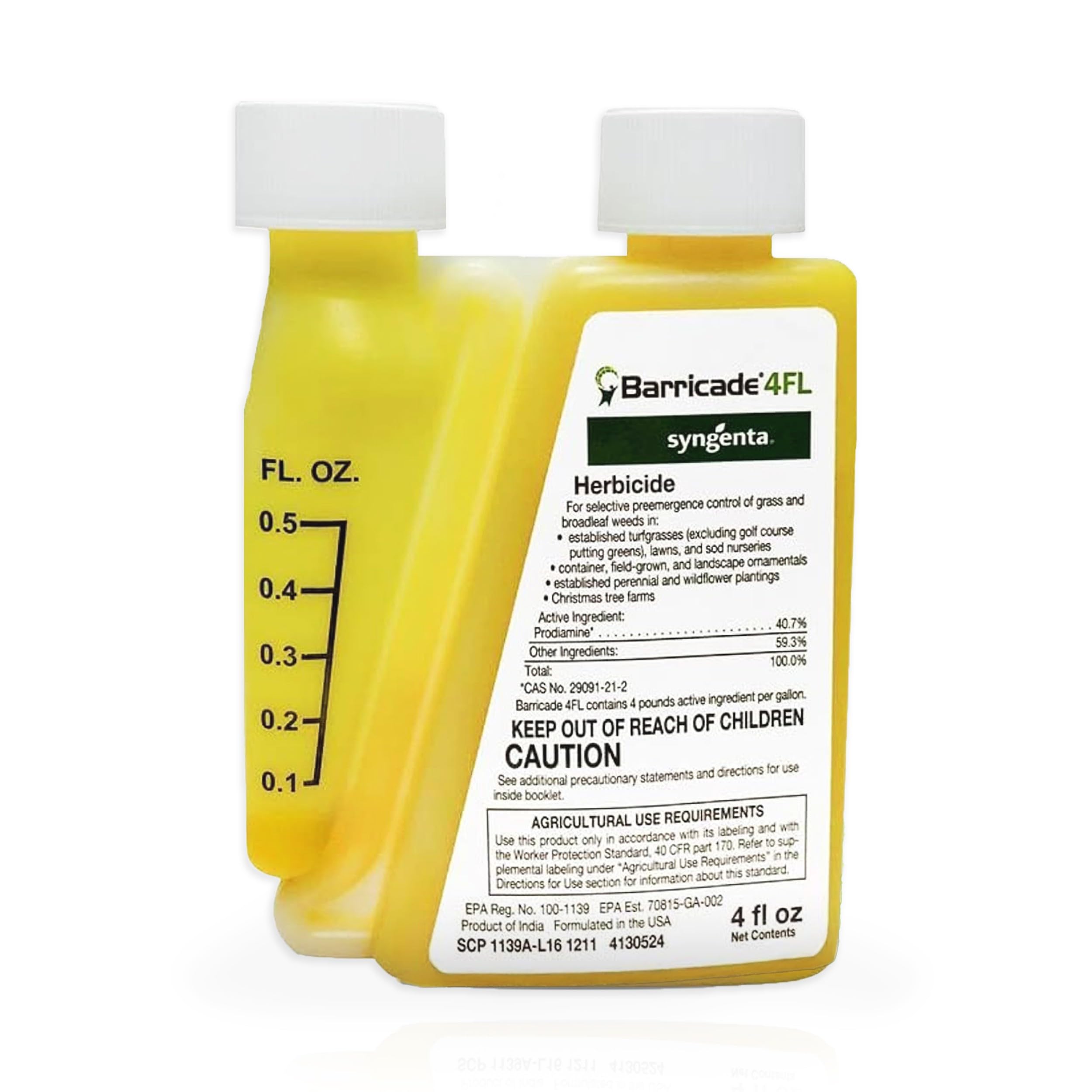
Barricade 4FL from Syngenta is a professional-grade pre-emergent concentrate built around prodiamine, one of the longest-lasting soil barrier chemistries available. A single application can prevent crabgrass germination for an entire growing season when applied before soil temperatures reach 55°F. The 4-ounce bottle treats a substantial area, making it a mid-range option that outperforms many granular products in longevity and precision.
Prodiamine is safe on established St. Augustine grass when applied at label rates, and it targets up to 30 species of both summer and winter annual weeds. Users who apply this product early in the spring consistently report zero crabgrass breakthrough, even in high-pressure yards. The liquid formulation allows you to mix only what you need and adjust coverage for oddly shaped lawns or beds.
This is a strict pre-emergent — it will not kill crabgrass that has already germinated. Users who miss the early spring window will need to switch to a post-emergent product. The concentrate also requires careful mixing measurement to avoid over-application, and some homeowners prefer granular spreaders for simplicity.
Why it’s great
- Season-long barrier from a single spring application
- Professional-grade prodiamine chemistry
- Liquid concentrate allows custom coverage per yard
Good to know
- Will not kill existing crabgrass
- Requires precise mixing and sprayer calibration
7. Hi-Yield Turf & Ornamental Weed & Grass Stopper

Hi-Yield’s granular formula uses Dimension (dithiopyr), the same active ingredient found in many premium crabgrass preventers, at a more budget-friendly price point. The 12-pound bag covers 5,000 square feet and can be applied up to 4 weeks later than many other pre-emergent products, giving you a wider application window if you miss the early spring timing. It also provides both pre and early post-emergent activity, catching young crabgrass that has already germinated.
St. Augustine owners who use this product consistently report significant reductions in crabgrass, goosegrass, and henbit after two applications — one in early spring and another in fall. The granular form eliminates the need for a sprayer and reduces the risk of drift damage. Users also praise the dimension chemistry for not damaging ornamentals and landscape beds when applied nearby.
A common complaint is that the bag weight can be inconsistent; some customers received a 9.6-pound bag instead of the advertised 12 pounds. The product also requires consistent use over multiple seasons for full results — a single season of application will not eliminate a long-established crabgrass seed bank. Timing remains critical: applying after the spring window opens reduces the first-year benefit considerably.
Why it’s great
- Budget-friendly price with Dimension chemistry
- Wider application window than many pre-emergents
- Granular form is spreader-friendly and drift-safe
Good to know
- Bag weight can vary from the labeled amount
- Requires consistent multi-year use for best results
FAQ
Can I use any crabgrass killer on St. Augustine grass?
When should I apply pre-emergent to St. Augustine for crabgrass?
Will quinclorac kill St. Augustine grass?
Can mesotrione be used on all St. Augustine lawns?
Final Thoughts: The Verdict
For most users, the crabgrass killer for st. augustine grass winner is the Quali-Pro Quinclorac 1.5L because it eradicates established crabgrass fast without harming your turf when used with a surfactant. If you want a solid pre-emergent prevention routine, grab the Preen Lawn Crabgrass Control for its easy granular application and wide timing window. And for a versatile spot-treatment option that works on over 40 weed species, nothing beats the Liquid Harvest Mesotrione.

Mo Maruf
I created WellFizz to bridge the gap between vague wellness advice and actionable solutions. My mission is simple: to decode the research and give you practical tools you can actually use.
Beyond the data, I am a passionate traveler. I believe that stepping away from the screen to explore new environments is essential for mental clarity and physical vitality.