Our readers keep the lights on and my smoothie glass nicely filled. As an Amazon Associate, I earn from qualifying purchases.
Eight hours in a chair that ignores your lumbar curve does more than cause discomfort—it reinforces the very posture that triggers chronic lower back pain. A desk chair built for spinal relief must arrest that cycle, not accommodate it. The difference between a chair that helps and one that harms comes down to specific, non-negotiable engineering details: dynamic lumbar contact, seat depth adjustment, and a backrest that moves with you rather than forcing you into a fixed position.
I’m Mohammad Maruf — the founder and writer behind WellFizz. This guide is built on hundreds of hours spent cross-referencing lumbar support mechanisms, foam density data, weight capacity claims, and real-world durability reports across the mid-range to premium desk chair market.
Lower back pain demands a chair that provides targeted, adjustable support to maintain the spine’s natural S-curve throughout the workday. Whether you’re seeking relief from a herniated disc or just daily stiffness, finding the right desk chair for lower back pain requires understanding how lumbar depth, seat pan tilt, and backrest tension work together.
How To Choose The Best Desk Chair For Lower Back Pain
The wrong chair traps your pelvis in a posterior tilt, flattening the lumbar curve and loading the spinal discs unevenly. The right chair does the opposite: it encourages an anterior pelvic tilt that maintains the lordotic curve. That mechanical difference is the entire battle. Here is what to look for.
Lumbar Support Depth and Height
Fixed lumbar bumps molded into a backrest rarely hit the right spot for different torso lengths. You need a lumbar mechanism that adjusts forward (into your back) and vertically. A depth range of at least 1.5 inches and height range of 3 to 5 inches covers most body types from 5’0″ to 6’2″.
Seat Depth and Waterfall Edge
A seat pan that is too long forces your knees into a locked 90-degree angle and cuts off circulation behind the knee, while a pan that is too short fails to support the thighs. Look for a depth-adjustable seat (at least 2 inches of travel) with a waterfall front edge that slopes downward to reduce pressure on the back of the legs.
Backrest Tension and Synchro-Tilt
Static backrests force your spine to bend around the chair. A synchro-tilt mechanism links the seat and backrest movement so that when you recline, the seat tilts upward slightly, keeping you in a balanced, supported posture. Adjustable tension lets you dial in the resistance that matches your weight—essential for preventing the chair from either springing you forward or flopping backward.
Quick Comparison
On smaller screens, swipe sideways to see the full table.
| Model | Category | Best For | Key Spec | Amazon |
|---|---|---|---|---|
| Steelcase Leap | Premium | Ultimate adjustability & back support | Natural Glide System + LiveBack | Amazon |
| Ergohuman Eurotech ME7ERG | Premium | Long-term durability & disc relief | Dynamic mesh lumbar + 8 adjustments | Amazon |
| Hbada X7 Smart | Premium | AI-powered lumbar & massage | 8-way adaptive lumbar + Alcantara | Amazon |
| AutoFull M6 Gaming | Premium | Climate control & vibration massage | 3rd-gen active lumbar + heated seat | Amazon |
| WorkPro Quantum 9000 | Mid-Range | Fully adjustable mesh at fair price | Ratchet back height + seat depth | Amazon |
| FLEXISPOT ErgoX Max | Mid-Range | Heavy-duty build with 4D lumbar | 661 lb capacity + aluminum frame | Amazon |
| Branch Ergonomic Chair | Mid-Range | Petite users & 8-point adjustment | Adjustable seat depth + mesh back | Amazon |
| ELABEST Ergonomic Mesh | Mid-Range | Bionic-curve back & 3D armrests | Synchro-tilt + adjustable lumbar | Amazon |
| TRALT Ergonomic Office Chair | Mid-Range | Wide seat with flip-up armrests | 3.5″ high-density sponge cushion | Amazon |
In‑Depth Reviews
1. Steelcase Leap

The Steelcase Leap is the benchmark for lower back pain management in a desk chair because of its LiveBack technology, which uses a flexible exoskeleton that mimics the spine’s natural curvature. As you shift positions, the backrest contour changes with you—no static pad, no pressure point. The lower back firmness dial lets you increase or decrease lumbar pressure incrementally, a level of precision that budget chairs simply cannot replicate.
The Natural Glide System pairs seat and backrest movement so the seat slides forward as you recline, maintaining a consistent distance between your eyes and the monitor. This matters for lower back relief because reclining without seat glide often causes the pelvis to slide forward, collapsing the lumbar curve. The 4D adjustable arms, seat depth adjustment (essential for tall users), and waterfall-edge cushion round out a package designed for 8-10 hour seated days.
Customer reports confirm the Leap holds up for 10+ years of daily use, with the seat foam and mechanism maintaining their integrity well beyond most competitors. Some users note the lumbar firmness dial takes a few days to dial in, and the upholstered back runs warmer than mesh alternatives. It ships fully assembled, which removes the guesswork of improper bolt tightening.
Why it’s great
- LiveBack contouring follows spine movement dynamically
- Lower back firmness dial provides precise lumbar pressure
- Natural Glide System keeps pelvis stable while reclining
Good to know
- Upholstered back retains more heat than mesh
- Premium price point requires budget consideration
2. Ergohuman Eurotech ME7ERG

The Ergohuman ME7ERG has amassed a decade-long following among users with herniated discs and chronic lower back conditions. Its key feature is the dynamic mesh lumbar—a tensioned mesh panel that flexes and extends as you lean forward or recline, maintaining contact without a rigid pad digging into your spine. The back height adjustment (ratchet system) and independent seat depth slider allow customized fit from 5’0″ to 6’5″.
Unlike chairs that rely on foam blocks for lumbar, the ME7ERG uses a suspended mesh system that breathes and provides consistent support across the entire back. The synchro-tilt mechanism with adjustable tension lets heavier users lock in a recline without feeling unstable. The headrest adjusts in height and angle, which reduces upper neck strain that often radiates down into the lower back.
Long-term owners report the chair surviving 10+ years and 5,400+ hours of daily use with the only wear being the plastic casters—replaceable for under . The limited lifetime warranty is legitimately honored, with free replacement parts including seat pans and tilt mechanisms. The mesh texture can feel stiff for the first week, but it breaks into a supportive cradle.
Why it’s great
- Dynamic mesh lumbar adapts to movement without hard pressure points
- Limited lifetime warranty with real replacement service
- Proven 10+ year durability from customer reports
Good to know
- Plastic casters are weak and should be swapped early
- Armrest foam can deteriorate at front edge after years
3. Hbada X7 Smart
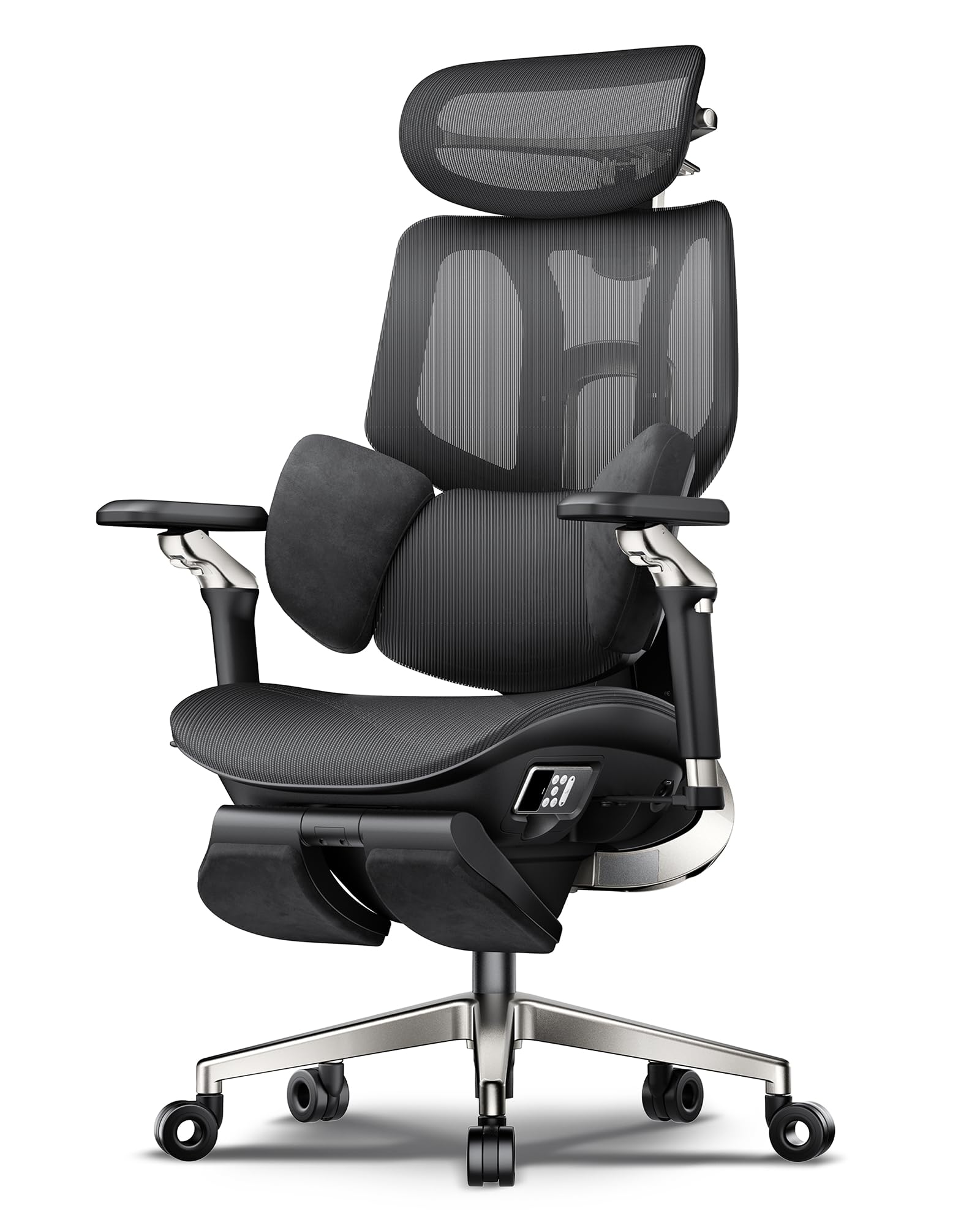
The Hbada X7 Smart enters the premium tier with a genuinely novel approach to lower back support: an AI-powered 8-way adaptive lumbar system that learns your preferred support intensity and automatically restores it each time you sit. The lumbar side wings rotate independently to contour around the lower back, providing lateral support that prevents the spine from rotating during side-reaching tasks—a major cause of lumbar strain.
Beyond the lumbar system, the dual-core massage and active cooling ventilation separate this chair from every other option in this guide. The back massage uses a hand-like mechanical motion rather than simple vibration, targeting the erector spinae muscles along the spine. The ventilated seat circulates air through micro-perforated Alcantara suede, preventing the heat buildup that exacerbates muscle tension in long sessions. A 5,200mAh battery powers these systems for up to 7 days of use.
The 4D dual-axis headrest and 720-degree adjustable armrests provide neck and shoulder positioning that indirectly support the lower back by keeping the upper body aligned. Build quality is high, with a precision-machined aluminum base and anodized back spine. Tall users above 6 feet may need to swap the included gas cylinder for a longer one to achieve optimal seat height.
Why it’s great
- AI-powered lumbar remembers your preferred support setting
- Dual-core massage relieves erector spinae tension
- Ventilated Alcantara seat prevents heat-related muscle fatigue
Good to know
- Standard gas cylinder may not suit users over 6 feet
- Premium price reflects advanced electronic features
4. AutoFull M6 Gaming
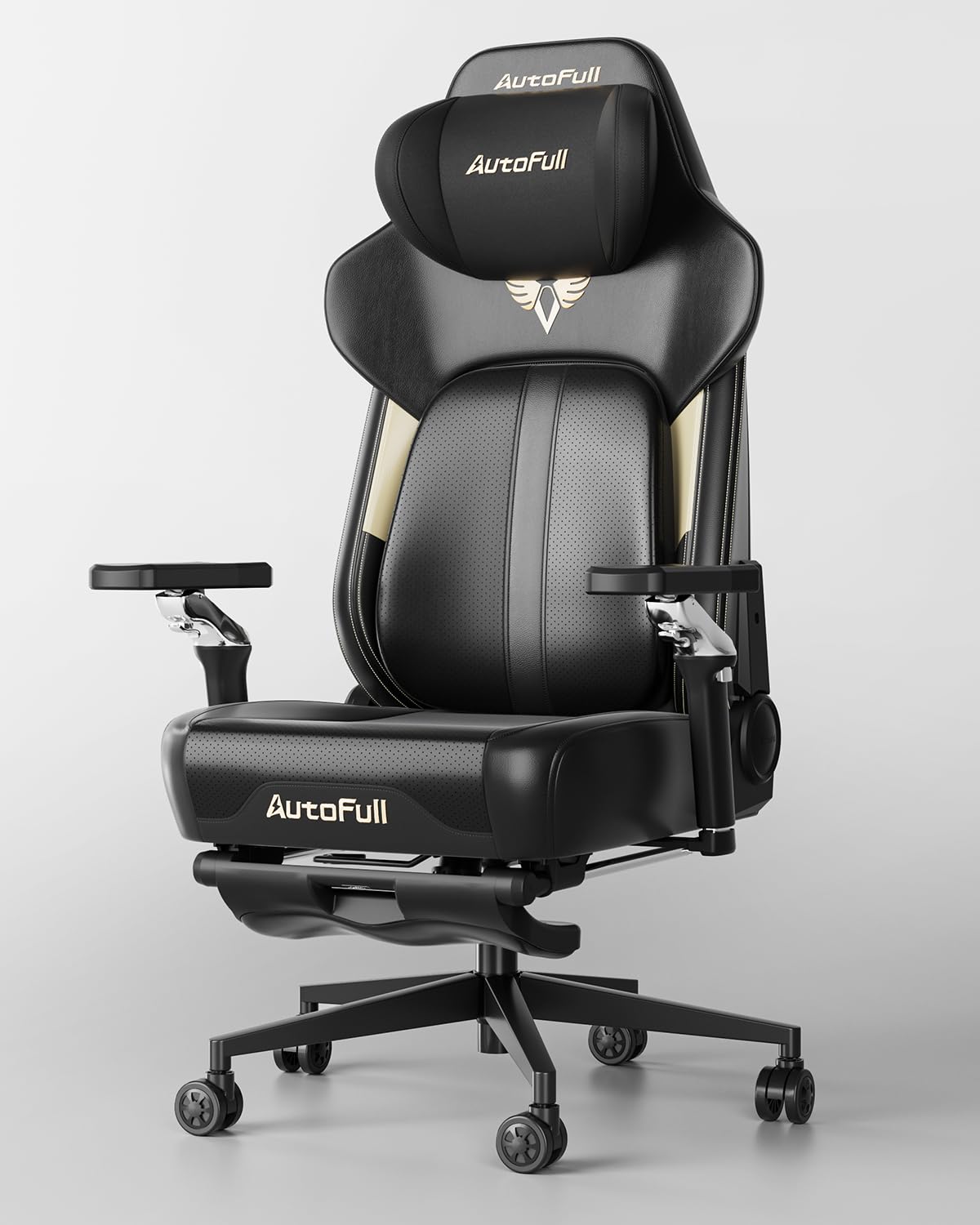
The AutoFull M6 attacks lower back pain from two angles: its 3rd-generation active lumbar support, which provides 6cm of fore-aft travel and 5cm of height adjustment with a 5-degree auto-swivel to follow your movement, and its climate control system with dual fans and graphite heating. The active lumbar mechanism is spring-loaded and responds to your weight shifts, providing continuous contact pressure rather than static support.
The heated seat is not a gimmick—applied heat increases blood flow to the lumbar muscles and reduces stiffness during cold months, while the ventilated mode keeps the seat surface dry during summer, preventing the skin irritation that leads to micro-adjustments and poor posture. The thigh vibration massage module adds another layer of relief, targeting the quadriceps and hip flexors that tighten during prolonged sitting and pull on the lower back.
The 360-degree mechanical armrests with 5 adjustment dimensions allow precise positioning for keyboard, mouse, and controller use, reducing the shoulder hunch that compresses the lumbar spine. The racing-style foam is firmer than typical office chair padding, which provides more stable support but may feel too firm for users under 150 pounds. Some customers report squeaking developing after a few months; periodic bolt tightening addresses this.
Why it’s great
- Active lumbar adjusts depth dynamically as you move
- Heated seat increases blood flow to lumbar muscles
- Thigh massage reduces hip flexor tension
Good to know
- High-density foam may feel too firm for lighter users
- Assembly instructions are poorly printed
5. WorkPro Quantum 9000

The WorkPro Quantum 9000 is a mid-back mesh chair that punches well above its price tier because it includes ratchet back height adjustment and seat depth adjustment—two features typically reserved for chairs double its price. The ratchet system lets you raise or lower the backrest independent of the lumbar position, which is critical for matching support to your specific lumbar spine location relative to your pelvis.
The full mesh construction (both back and seat) eliminates the pressure points and heat trapping that foam cushions introduce, and the waterfall front edge reduces pressure behind the knees. The integrated seat-and-back tilt with adjustable tension locks at any angle via a paddle mechanism, unlike chairs that only lock at pre-set positions. The armrests adjust in height, width, angle, and depth, though users note the pivot mechanism loosens over time and lacks a lock.
Customer reports show this chair surviving 4-6 years of daily work-from-home use with only armrest cushion wear as the primary failure point. The included lumbar support is a passive foam pad integrated into the mesh—it works well for mild lower back strain but lacks the forward-depth adjustment needed for severe lumbar issues. The 275-pound weight capacity suits average to larger builds.
Why it’s great
- Ratchet back height and seat depth at a mid-range price
- Full mesh construction prevents heat and pressure points
- Integrated tilt mechanism locks at any angle
Good to know
- Armrest pivot loosens and lacks a locking mechanism
- Passive lumbar pad lacks forward-depth adjustment
6. FLEXISPOT ErgoX Max
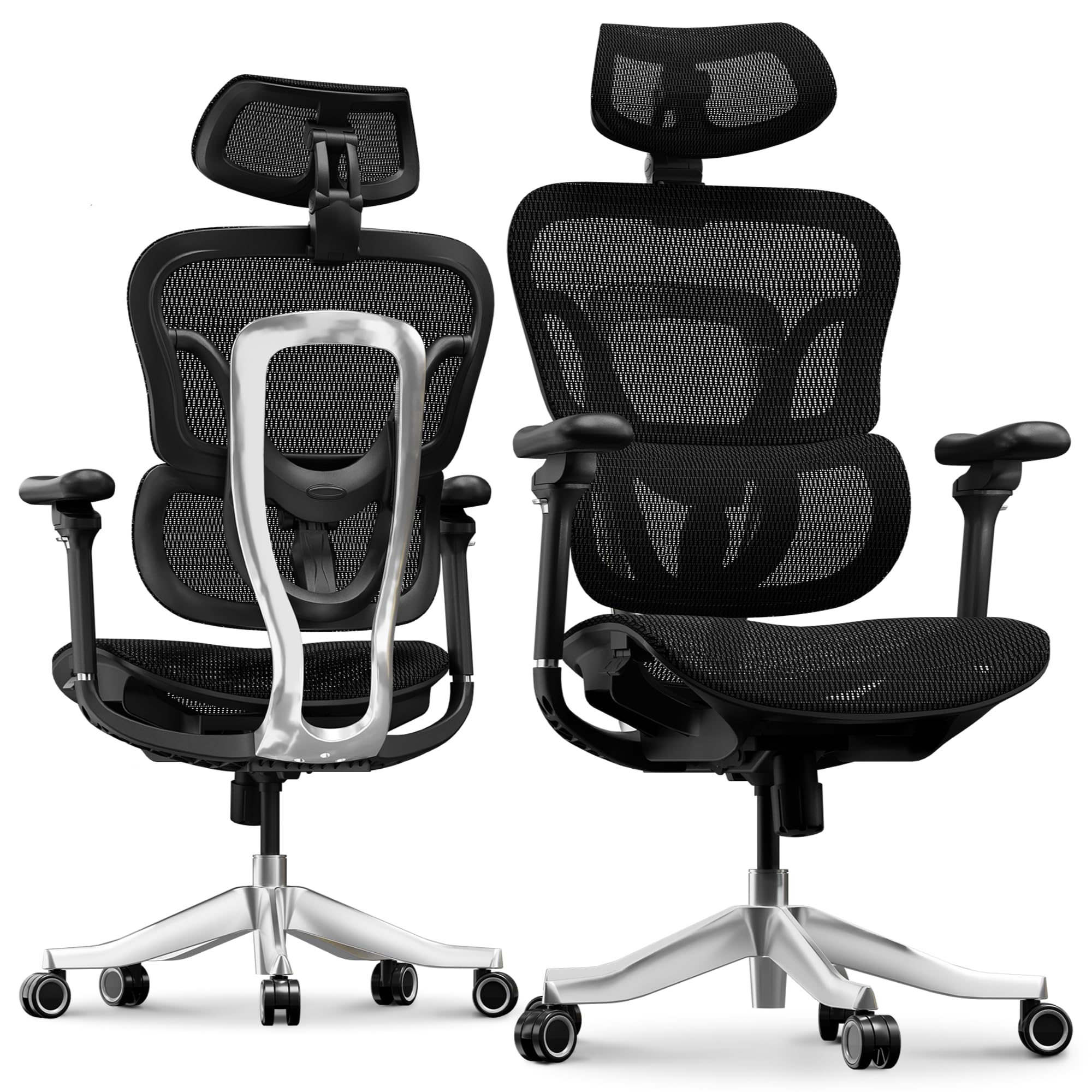
The FLEXISPOT ErgoX Max is engineered for users who need a reinforced frame that handles substantial weight without flexing, because frame flex introduces micro-instability that the lower back compensates for. The full aluminum alloy back frame and base support up to 661 pounds, making this one of the most robust chairs in its price range. The heavy-duty construction matters for lower back pain because a rigid, stable platform allows the lumbar support to work as intended.
The 4D adaptive lumbar support automatically adjusts to postural changes, reducing the need for manual re-adjustment throughout the day. The 5D adjustable armrests, 4D headrest, and 5-level back height provide comprehensive fit adjustments. The chrome-plated casters glide silently on hard floors without scratching, and the optional retractable footrest enables full reclining for pressure relief breaks.
Customer feedback highlights the balanced cushion density—firm enough to prevent bottoming out but not so hard that it creates pressure points. The lumbar support is particularly effective for users with severe spinal conditions, though shorter users below 5’5″ may find the seat depth too generous. Assembly is straightforward with labeled hardware, taking about 30 minutes.
Why it’s great
- Aluminum alloy frame eliminates flex-induced lumbar compensation
- 4D adaptive lumbar reduces need for manual adjustment
- 661 lb weight capacity suits heavier users
Good to know
- Seat depth may be too long for users under 5’5″
- Plastic build quality on non-frame components
7. Branch Ergonomic Chair
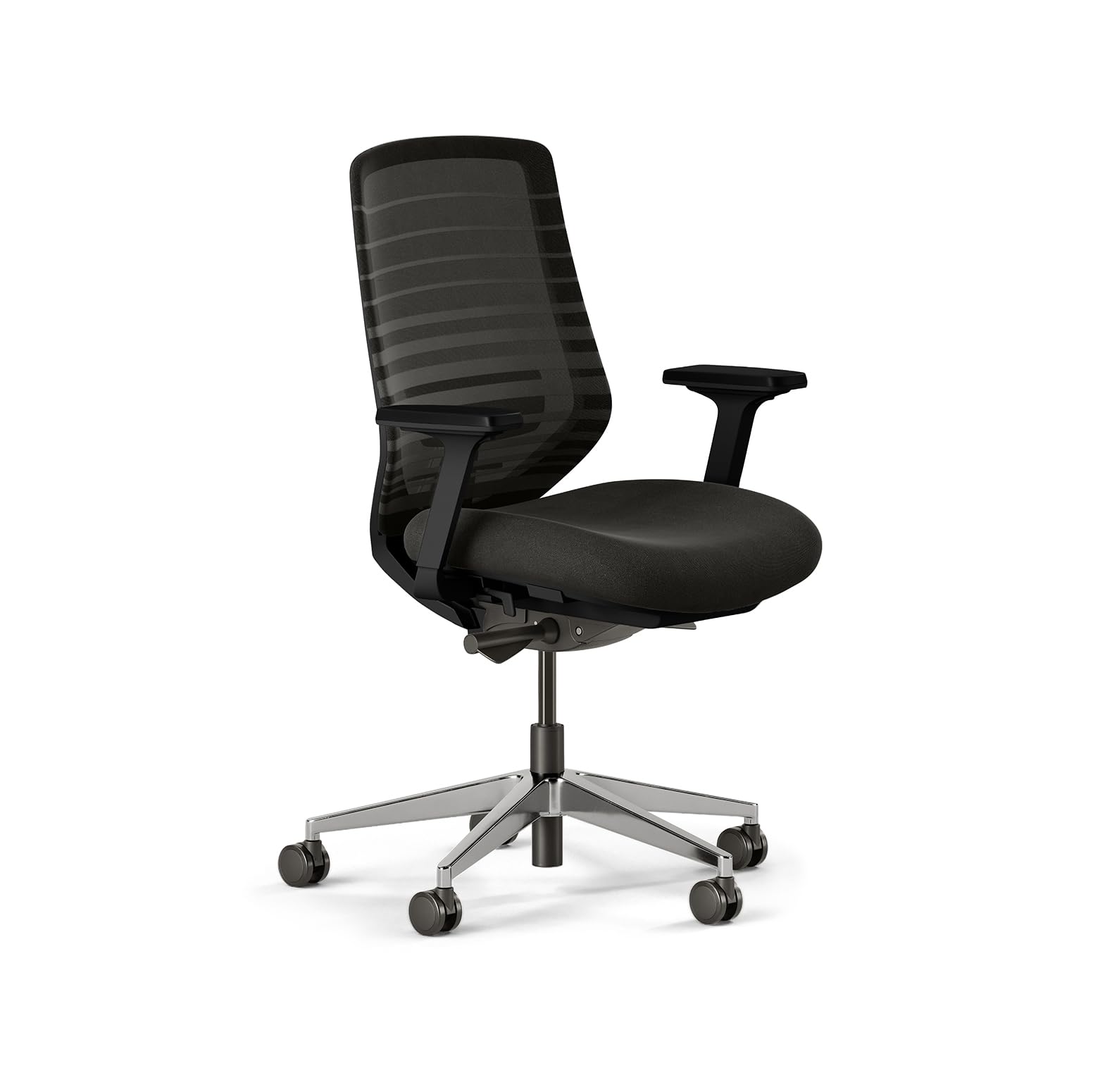
The Branch Ergonomic Chair succeeds where many ergonomic chairs fail: it accommodates users under 5’2″ without sacrificing adjustability for taller users. The adjustable seat depth is the critical feature here, because a seat pan that is too long forces small users to perch at the front edge, sacrificing lumbar contact. The mesh back provides consistent support, and the lumbar adjustment moves vertically to align with a shorter torso.
The eight adjustment points include seat height, seat depth, armrest height and width, lumbar height, back recline, and tilt tension. The aluminum frame keeps the chair lightweight (27 pounds) while remaining stable. The breathable mesh back prevents upper back sweat, which is a common complaint in lower-cost chairs that use foam padding over plastic shells. The smooth-rolling casters work well on both carpet and hardwood.
Users report the chair is comfortable for 8-hour workdays, with the lumbar support providing noticeable relief for mild to moderate lower back strain. The armrests, while adjustable, tend to slide forward too easily without a locking mechanism. The tilt lock is present but lacks a tension adjustment, meaning the recline resistance is fixed. For the mid-range price, the build quality and adjustability make it a strong contender for petite users with back pain.
Why it’s great
- Adjustable seat depth fits petite users properly
- Aluminum frame is lightweight yet stable
- Breathable mesh back prevents upper back sweat
Good to know
- Armrests lack a locking mechanism, slide forward easily
- Tilt tension is fixed, not adjustable
8. ELABEST Ergonomic Mesh Office Chair

The ELABEST Ergonomic Mesh Chair offers a bionic-curve backrest that mimics the spine’s natural S-shape, paired with an adjustable lumbar support that provides up to 2 inches of forward depth. This is the defining feature for lower back pain relief at this price tier—most chairs in this range use a fixed lumbar bump that misses the mark for half of users. The synchro-tilt mechanism with 3 lockable positions and adjustable tension allows you to dial in the recline resistance for your weight.
The “Golden Triangle” back structure widens at the shoulder blades to provide upper back stability, which indirectly supports the lower back by preventing the thoracic spine from collapsing forward. The 3D adjustable armrests (height, width, angle) help maintain shoulder alignment, reducing the upper trap tension that often refers pain downward. The full-mesh seat avoids the heat and sagging issues of foam seats, and the waterfall front edge promotes leg circulation.
Customer reviews highlight the easy assembly (20-30 minutes with labeled bolts) and the responsive customer service team that provides replacement parts when needed. The chair fits users from 5’5″ to 5’10” best, with the seat height range from 19.6″ to 23.6″. The BIFMA 5.1 certification confirms commercial-grade durability, though the nylon base may flex slightly under users near the 275-pound limit.
Why it’s great
- Bionic-curve back provides natural S-curve support
- Adjustable lumbar offers forward depth adjustment
- Synchro-tilt mechanism with adjustable tension
Good to know
- Best fit for users between 5’5″ and 5’10”
- Nylon base flexes slightly near weight limit
9. TRALT Ergonomic Office Chair
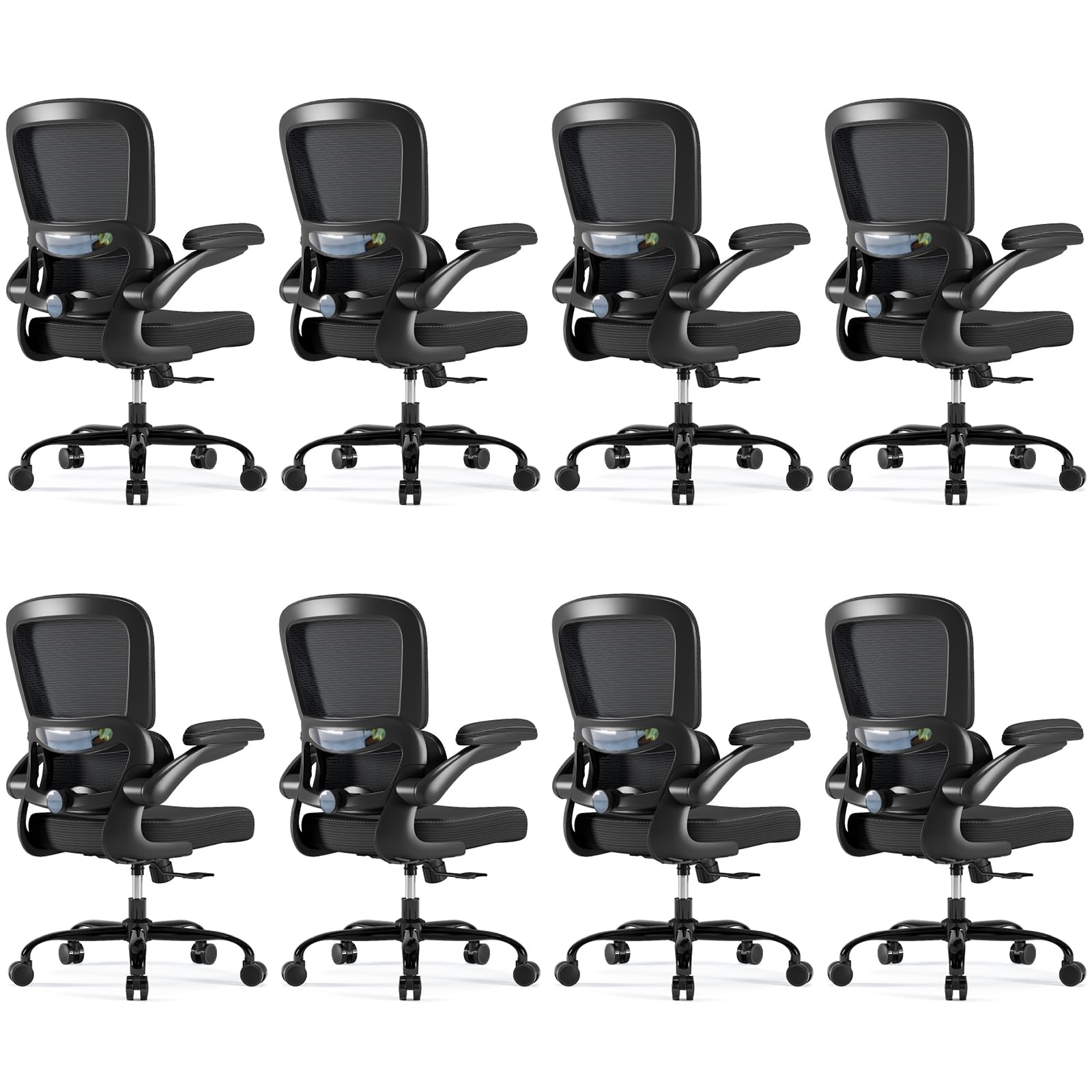
The TRALT Ergonomic Office Chair addresses a specific need that many ergonomic chairs overlook: a wider seat pan for users who need more hip room or prefer to sit cross-legged. The 20-inch wide seat with a 3.5-inch high-density sponge cushion provides even weight distribution across the glutes, reducing the focused pressure that can exacerbate sciatic nerve irritation. The lumbar support is adjustable in height only, not depth, but the firm sponge backrest provides consistent contact.
The flip-up armrests make this a practical choice for small spaces or users who need to slide the chair fully under a desk when not in use. The breathable mesh back promotes airflow, though the leather cushion surface (PU) does trap more heat than full mesh. The Class-3 gas lift provides smooth height adjustment, and the metal base supports up to 330 pounds. Assembly takes 25-30 minutes with clear instructions and an installation video.
Users report that the lumbar support provides noticeable relief for mild lower back stiffness, though the lack of forward-depth adjustment limits its effectiveness for users with pronounced lordosis. The high-density sponge cushion resists sagging well, maintaining its shape after months of daily use. The chair fits users from 5’5″ to 6’2″, making it a versatile option for shared workspaces. Customer support is responsive with a 5-year warranty upon proof of purchase.
Why it’s great
- 20-inch wide seat accommodates larger builds or cross-legged sitting
- 3.5-inch dense sponge cushion resists sagging
- Flip-up armrests save space when storing
Good to know
- Lumbar adjusts height only, not depth
- PU leather cushion traps more heat than full mesh
FAQ
Can a desk chair actually fix my herniated disc pain?
Is mesh or foam better for lower back pain?
How much lumbar forward depth do I actually need?
Does a gaming chair with lumbar support work for office back pain?
How often should I replace the lumbar support foam in my chair?
Final Thoughts: The Verdict
For most users, the desk chair for lower back pain winner is the Steelcase Leap because its LiveBack technology and lower back firmness dial provide the most precise lumbar control at any budget. If you want breathable mesh and proven 10-year durability, grab the Ergohuman Eurotech ME7ERG. And for AI-powered lumbar tracking and integrated massage therapy, nothing beats the Hbada X7 Smart.

Mo Maruf
I created WellFizz to bridge the gap between vague wellness advice and actionable solutions. My mission is simple: to decode the research and give you practical tools you can actually use.
Beyond the data, I am a passionate traveler. I believe that stepping away from the screen to explore new environments is essential for mental clarity and physical vitality.