Our readers keep the lights on and my smoothie glass nicely filled. As an Amazon Associate, I earn from qualifying purchases.
Danish oil is the woodworker’s secret for achieving a rich, hand-rubbed finish that penetrates deep into the grain rather than sitting on the surface. Unlike film-forming varnishes, it brings out the natural warmth and texture of the wood in a single step, combining stain, sealer, and protector.
I’m Mohammad Maruf — the founder and writer behind WellFizz. I’ve spent countless hours analyzing wood finish formulations, reading through customer experiences, and comparing the chemical and physical properties that separate a great penetrating oil from a mediocre one.
This guide breaks down the top options available today, helping you match the perfect formula to your next project. From furniture restoration to cutting boards, finding the best danish oil comes down to understanding how each blend handles absorption, color, and curing time.
How To Choose The Best Danish Oil
Not all Danish oils are created equal. The formula’s viscosity, pigment load, and curing chemistry all affect how the final surface looks and holds up over time. Here are the key factors to weigh before you buy.
Oil-to-Varnish Ratio
A higher varnish content means more surface film and better moisture resistance, but it also reduces the depth of penetration into the wood grain. Traditional Danish oils use a balanced blend that soaks in while leaving a thin protective layer. If you want a pure oil look with no plastic sheen, opt for a polymerized linseed oil base like Tried & True.
Color and Tint Options
Natural finishes keep the wood’s original tone and only darken it slightly. Tinted options like Dark Walnut or Black Walnut add pigment in one step, eliminating the need for a separate stain. The pigment load and the carrier oil’s clarity both affect how evenly the color absorbs across different wood species.
Food Safety and Toxicity
Standard Danish oils contain metallic driers and VOCs that require adequate ventilation. For cutting boards, butcher blocks, and kitchen utensils, look for a non-toxic, food-safe formula made from pure polymerized oils without chemical accelerators. Tried & True is the standout in this category with its zero-VOC, food-safe certification.
Quick Comparison
On smaller screens, swipe sideways to see the full table.
| Model | Category | Best For | Key Spec | Amazon |
|---|---|---|---|---|
| Tried & True Danish Oil | Premium | Food-safe kitchen items | Pure polymerized linseed oil | Amazon |
| Watco Dark Walnut (Quart) | Mid-Range | One-step staining + sealing | Low VOC, 32 fl oz | Amazon |
| Watco Natural (Pint) | Mid-Range | Small projects & beginners | Covers 85 sq ft | Amazon |
| Rust-Oleum Black Walnut (Quart) | Premium | Deep color on large surfaces | 32 fl oz, rich pigment | Amazon |
| Old Masters Natural (Quart) | Budget-Friendly | Fiberglass & primed metal | Oil-based stain, 32 fl oz | Amazon |
In‑Depth Reviews
1. Watco 242219 Danish Oil Wood Finish, Low VOC, Pint, Natural

Watco’s Natural Danish Oil has been a benchmark in wood finishing for decades, and this low-VOC pint keeps the same reliable formula while reducing solvent emissions. The 16-ounce size covers up to 85 square feet, making it perfect for small to medium projects like picture frames, turned bowls, and furniture touch-ups. It dries to the touch in roughly 6 hours, which is fast for a penetrating oil, and leaves a warm, satin sheen that makes maple and oak grain pop without looking plasticky.
Pyrography artists and cutting board makers frequently choose this as their go-to food-safe finish, though it still contains some VOCs and requires good ventilation during application. The oil-based blend includes a small amount of varnish, so it offers better protection against spills and abrasion than pure tung oil while maintaining deep penetration. Users report that a single coat on well-sanded bare wood produces a rich, even glow that darkens slightly as it cures.
One common note is the strong odor during application — several users recommend a respirator for enclosed spaces. A light paste wax after curing can add extra surface smoothness. For a first-time Danish oil user, this pint is the safest introduction to the category.
Why it’s great
- Fast 6-hour dry time for a penetrating oil
- Low-VOC formula reduces harsh fumes
- Works beautifully on bare, sanded wood
Good to know
- Strong odor requires good airflow
- Pint size is small for large furniture
2. Watco 242220 Danish Oil Wood Finish, Quart, Dark Walnut

The Dark Walnut variant from Watco delivers stain, sealer, and protection in a single quart-sized bottle. Its pigment load is heavy enough to dramatically darken red oak and pine in one coat, reducing the red undertones that can clash with furniture. The oil-varnish blend cures to a semi-gloss that feels smooth to the touch, and because it penetrates rather than sits on top, it won’t chip or peel like a surface film.
Users consistently praise how easy it is to apply with a lint-free cloth — just wipe on, let it soak for 15-20 minutes, and buff off the excess. For larger projects like cabinets, trim, or an entire bedroom set, the quart size offers enough volume to finish multiple coats. Many reviewers use it as a base and then apply a satin polyurethane topcoat for extra water resistance on high-use surfaces.
The main drawback is the can’s pour spout: it’s short and prone to dripping, especially when working quickly. Good nitrile gloves are essential since the pigment is permanent on skin. Despite these small annoyances, the color consistency and protection it provides make this a top choice for anyone needing a one-step dark finish.
Why it’s great
- One-step stain and seal saves time
- Rich dark walnut pigment covers well
- Quart size suits large projects
Good to know
- Can design makes pouring messy
- Pigment stains skin permanently
3. Rust-Oleum 65341 Black Walnut Watco Danish Oil Finish

This Black Walnut finish from Rust-Oleum (under the Watco brand) delivers the deepest, darkest tone in the Danish oil lineup. It’s ideal for walnut, cherry, and mahogany where you want to push the color toward a rich espresso without hiding the wood’s grain. The 32-ounce quart provides generous coverage for large pieces like desktops, bookshelves, and dining tables.
Users who refinish antique furniture report that a single coat revitalizes worn surfaces without the need for stripping. The penetrating formula soaks into scratches and dull spots, restoring an even, hand-rubbed appearance. Many experienced finishers combine it with wet-sanding using 400-grit paper during the second coat for an ultra-smooth feel. It does require a full week of curing in a well-ventilated area to eliminate the solvent odor completely.
The biggest caveat is that on very light woods like maple or birch, the pigment can appear muddy rather than clear. A pre-treatment with charcoal dye helps prevent the golden undertone from clashing with the black walnut color. For users committed to a dark, rich finish on medium-to-dark hardwoods, this is the strongest contender.
Why it’s great
- Intense black walnut pigment for deep color
- Revives old furniture without stripping
- Large quart size for big projects
Good to know
- Can look muddy on very light woods
- Solvent smell lasts up to a week
4. Tried & True Danish Oil, Pint – Pure Polymerized Linseed Oil Wood Finish

Tried & True is the outlier in the Danish oil world — it’s made from 100% pure polymerized linseed oil with no VOCs, no metallic driers, and no solvents. The result is a finish that is completely non-toxic and food-safe, with a pleasant, nutty smell instead of harsh chemical fumes. It penetrates deeply and cures to a soft, matte sheen that feels like raw wood but with added richness.
The application technique is different: you apply a very thin coat with a lint-free cloth, let it penetrate for only 5 minutes, then buff it completely dry. After an 8-hour cure, you burnish with 0000 steel wool before adding another coat. Two to three thin coats produce a durable, water-resistant surface that deepens in color over weeks of use. It’s especially popular for cutting boards, charcuterie boards, butcher blocks, and rustic furniture where food contact is a concern.
The trade-off is price — this pint costs more than twice as much as the standard Watco pint. Coverage is roughly 120 square feet per pint, so a little goes a long way. It’s also less durable than film-forming varnishes on high-traffic surfaces, so it’s not ideal for dining tables that get heavy daily use. For kitchen projects and heirloom pieces where safety and feel matter most, this is the clear winner.
Why it’s great
- Completely non-toxic and food-safe
- Pleasant natural smell during application
- Excellent grain depth and warm matte sheen
Good to know
- Higher per-ounce cost than competitors
- Requires multiple thin coats for durability
5. Old Masters 80104 Gel Stain, Natural Oil-Based, Quart
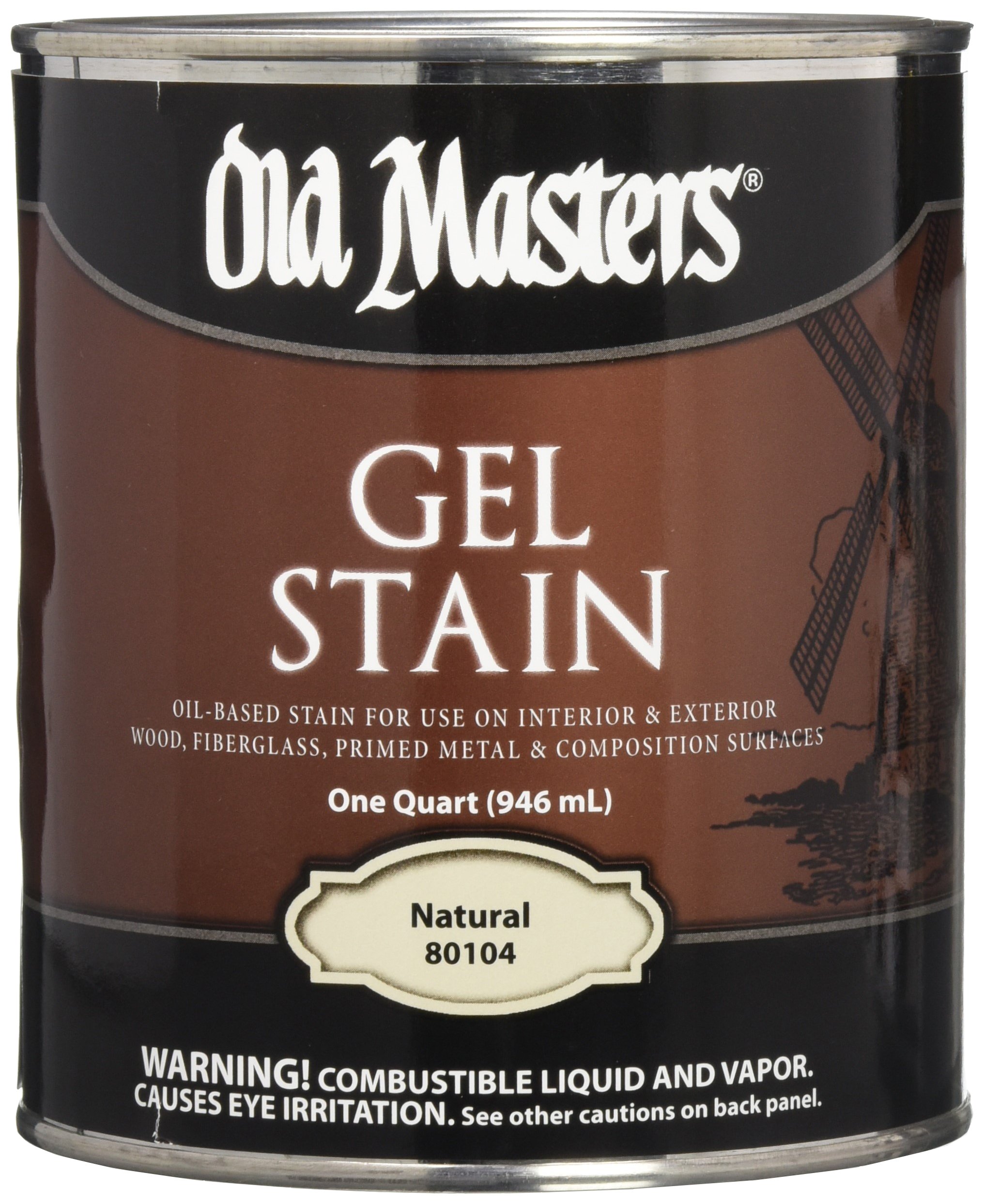
Old Masters takes a different approach with its Natural Gel Stain, which has a thicker consistency than traditional Danish oil. This gel format hangs on vertical surfaces without dripping, making it ideal for cabinets, doors, and staircases where runny liquids cause trouble. It works on wood, fiberglass, and primed metal, so it’s more versatile than conventional Danish oils if you’re mixing materials.
The natural color preserves the original wood tone while adding a subtle amber warmth. One coat transforms honey oak into a rustic, low-sheen look without the orange tint that many stains leave. Users report that a single quart finished two single and one double garage door, showing its excellent coverage density. It dries quickly in direct sunlight, so work fast if applying outdoors, and it must be sealed with a topcoat for long-term durability on horizontal surfaces.
The gel texture means it doesn’t penetrate as deeply as liquid Danish oils, so it’s more of a surface stain than a penetrating finish. For purists seeking the classic hand-rubbed look, this isn’t the same experience. But for a budget-friendly, easy-to-apply stain that works on multiple substrates, it’s a solid addition to any workshop.
Why it’s great
- Thick gel won’t drip on vertical surfaces
- Works on wood, fiberglass, and metal
- Exceptional coverage per quart
Good to know
- Gel formula doesn’t penetrate deeply
- Requires separate topcoat for protection
FAQ
Can Danish oil be used on cutting boards and butcher blocks?
How many coats of Danish oil should I apply?
Does Danish oil work on all types of wood?
Final Thoughts: The Verdict
For most users, the best danish oil winner is the Watco Natural Pint because it combines proven reliability, low-VOC formulation, and a fast 6-hour dry time that suits beginners and pros alike. If you want a food-safe, non-toxic finish for kitchen projects, grab the Tried & True Danish Oil. And for a deep, one-step dark stain on large furniture pieces, nothing beats the Watco Dark Walnut Quart.

Mo Maruf
I created WellFizz to bridge the gap between vague wellness advice and actionable solutions. My mission is simple: to decode the research and give you practical tools you can actually use.
Beyond the data, I am a passionate traveler. I believe that stepping away from the screen to explore new environments is essential for mental clarity and physical vitality.