Our readers keep the lights on and my smoothie glass nicely filled. As an Amazon Associate, I earn from qualifying purchases.
The sharp, shooting pain that travels from your lower back down your leg can turn simple acts like sitting, standing, or walking into a debate with your own body. For the millions dealing with sciatica, a decompression belt offers a non-invasive way to gently distract the vertebrae, relieve pressure on the sciatic nerve, and allow the discs to rehydrate. But not every belt delivers the precise, safe traction needed for true relief.
I’m Mohammad Maruf — the founder and writer behind WellFizz. I’ve spent hundreds of hours analyzing the mechanics, materials, and engineering behind therapeutic lumbar supports to build this guide on what actually works for sciatica decompression. My focus is on actionable specs and real-world relief.
These recommendations are based on evaluating adjustable pneumatic systems, spinal rehydration protocols, and integrated heat therapy to help you choose the most effective decompression belt for sciatica on the market today.
How To Choose The Best Decompression Belt For Sciatica
Selecting the wrong type of brace can actually increase nerve compression. A simple belt that squeezes the abdomen might offer postural reminders, but it won’t create the axial space needed to decompress a pinched sciatic nerve. You need to understand the difference between compression and decompression.
Pneumatic vs. Mechanical Traction
Pneumatic belts use an inflatable air bladder to push the torso upward against your rib cage while pulling down on the hips, creating a gentle vertical stretch. Mechanical devices, like the Fisher Traction system, use a door anchor and pull straps to create a controlled, patient-driven traction cycle. Pneumatic systems offer more consistent, static or intermittent pressure, while mechanical systems allow user-controlled, intermittent pulls. For disc hydration and rehydration, intermittent cycles are often cited as more effective.
Heat Therapy Integration
Sciatica pain is often a mix of nerve irritation and muscle spasms. A belt that combines pneumatic decompression with infrared or conductive heat therapy addresses both. Heat increases blood flow to the paravertebral muscles, reducing the tension that further traps the nerve. Look for belts with a minimum of 3 heating settings and a rechargeable battery so you can use it away from a wall outlet — crucial for 30-minute sessions during the workday or in bed.
Fit, Bracing, and Non-Slip Design
Decompression belts must maintain their position during movement to remain effective. Look for silicone anti-slip bands along the top and bottom edges. The belt should sit firmly under your rib cage and above your hips. A poor fit will cause the belt to ride up, deflating the air bladder and compromising the traction angle. Measurement at the navel is standard, but for air bladder devices, you need a snug — not tight — connection to the body to ensure the bladder doesn’t bulge outward.
Quick Comparison
On smaller screens, swipe sideways to see the full table.
| Model | Category | Best For | Key Spec | Amazon |
|---|---|---|---|---|
| Goldmille Cordless Heating Decompression Belt | Pneumatic + Heat | All-in-one decompression with heat | 4000mAh battery, 3 heat levels | Amazon |
| Fisher Traction Lower Back Decompression Device | Mechanical Traction | Portable intermittent traction | Patented Release Strap, under 230 lbs | Amazon |
| SOLOEVER Ultra Breathable Back Brace | Rigid Support | 360° spine stabilization | 1 bionic plate + 2 memory steel plates | Amazon |
| Tianfucen Electric Lumbar Traction Device | Multi-modal Therapy | Electrotherapy, heat & traction | 20-level EMS, dynamic airbags | Amazon |
| FREETOO Back Braces | Compression Support | Everyday wear for mild sciatica | 6 stays, silicone anti-skid | Amazon |
| DARLIS Back Brace Support Belt | Inflatable Pad | Adjustable lumbar compression | 6 steel stays + inflatable pad | Amazon |
| TitanGuard Ultra-Thin Back Brace | Lightweight Support | Under-clothes discreet use | Ultra-thin breathable mesh | Amazon |
In‑Depth Reviews
1. Goldmille Cordless Heating Decompression Belt
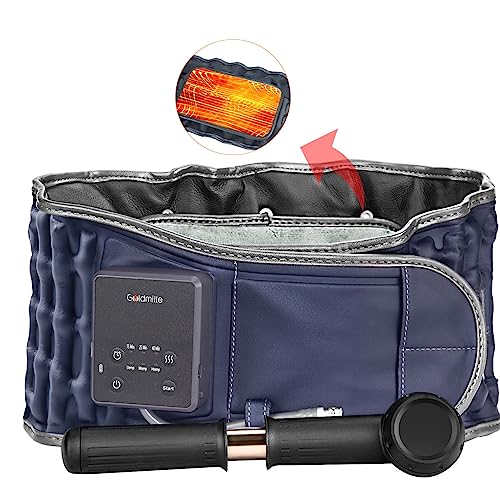
This is the most comprehensive single-device solution on the list because it combines two proven sciatica therapies: pneumatic decompression and infrared heat. The 4000mAh rechargeable battery provides up to 5 hours of cordless operation, so you can wear it during a commute or while working without being tethered. The air bladder anchors under the rib cage and pushes downward against the hips, creating a true axial traction force that targets disc space narrowing.
The carbon fiber heating element emits infrared waves that penetrate deeper than standard conductive heat, reaching the deep paravertebral muscles that often spasm around a compressed sciatic nerve. Users with L4-L5 and L5-S1 issues reported noticeable realignment and reduced nerve pain after consistent sessions. The three heat settings (low, mid, high) and three timer options (15, 30, 45 minutes) allow you to customize the session based on your pain level.
One trade-off found in user reports is the battery runtime under full heat and inflation — it drops to around 45 minutes, which is still enough for a targeted session. Some users experienced the air bladder failing after a year of heavy use. However, the manufacturer’s customer service is responsive, and the belt includes an extension pad to fit waists up to 49 inches. If you want a single belt that handles both decompression and muscle relaxation, this is the clear winner.
Why it’s great
- Combines infrared heat and pneumatic traction in one cordless unit
- Large 4000mAh battery for 3-5 hours of use
- Three heat and three timer settings for tailored sessions
Good to know
- Battery life drops significantly with full heat and inflation
- Air bladder durability may degrade after 12 months of daily use
2. Fisher Traction Lower Back Decompression Device

This is not a belt — it is a portable traction system developed by Dr. Jeff Fisher that mimics the intermittent decompression protocols used in professional chiropractic clinics. It uses a patented Negative G-Force Release Strap that allows you to perform pull-and-release cycles against a doorknob anchor. This intermittent action has been shown to improve disc hydration by creating a negative intradiscal pressure that pulls nutrients back into the disc.
The system is rated for users under 230 pounds and is extremely portable at just over 2 pounds. Many users with spinal stenosis and herniated discs reported a 70-80% reduction in pain, enough to reduce or eliminate regular chiropractic visits. The knee wedges and padded harness ensure the traction force is applied to the lumbar spine, not the sacrum or thoracic region. The user controls the force, so you can start with very light pulls and build up tolerance.
The primary limitation is that it only works for the lumbar region — it won’t provide traction to the sacrum or mid-back. Some users with L5-S1 disc issues found the angle difficult to achieve correct tension. Overuse is also a risk; several users reported muscle spasms or ligament pain after using it for too many cycles. This device is best used in short, controlled sessions with medical guidance. For a DIY alternative to professional decompression at a fraction of the cost, it is unmatched in its niche.
Why it’s great
- Peer-reviewed, chiropractor-developed intermittent traction protocol
- Extremely portable and easy to set up on any door
- User-controlled force reduces risk of over-traction
Good to know
- Only works for the lumbar spine — not for sacral or thoracic traction
- Overuse can lead to muscle spasms; requires discipline
3. SOLOEVER Ultra Breathable Back Brace
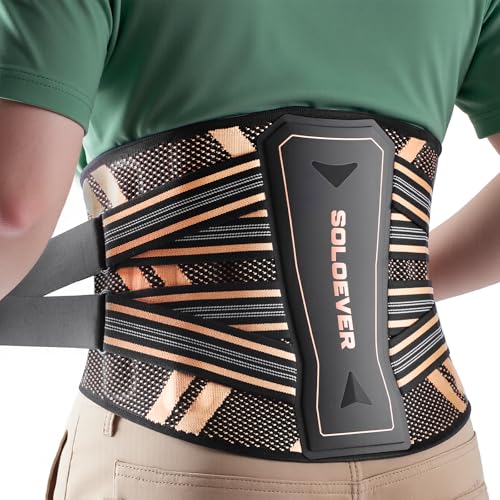
While this belt is not a pneumatic decompression device, it provides the next best thing for daily stabilization: a bionic spine support panel that mirrors the natural 26-degree lumbar curve, covering L1 through L5. This is crucial for sciatica because it prevents excessive flexion and rotation that aggravate the nerve root. The patented dual compression system uses 8 adjustable straps and 4 pulleys, allowing you to dial in the exact level of support without the belt losing tension throughout the day.
The medical-grade design layers 1 bionic spine plate, 2 memory steel plates, 2 resin support bars, and 2 flexible springs. This is a heavy-duty setup designed for users who need 360-degree coverage — whether lifting, driving, or sitting at a desk. The copper-infused fabric with over 4,000 ventilation holes prevents the overheating and odor that plague cheaper braces. Users with compression fractures and herniated discs consistently report that this belt reduces pain during lifting and daily activities.
One note: the sheer rigidity of this brace (multiple steel and resin plates) makes it noticeable under clothing. It’s not designed for discreet wear. Additionally, some users with very wide or very tall frames found the sizing ran small — the XXL only goes up to 59 inches. But if you need maximum structural stabilization to protect a compressed nerve during movement, this brace’s bionic design is medically sound and proven by user feedback.
Why it’s great
- Bionic spine panel matches the natural lumbar curve for targeted support
- 8-strap pulley system provides very precise compression
- Copper-infused, breathable fabric stays fresh during long wear
Good to know
- Very rigid — not suited for discreet wear under thin clothing
- Sizing up is recommended for wider waists
4. Tianfucen Electric Lumbar Traction Device

This is a home physical therapy station, not a wearable belt. The Tianfucen uses dual intelligent airbags to create dynamic traction — they alternately inflate and deflate to gently stretch and release the lumbar spine. This intermittent action mimics professional decompression tables and is far more effective for disc rehydration than static stretching alone. It also integrates a 20-level electrotherapy (EMS) function that directly stimulates the muscles around the sciatic nerve, which can reduce muscle guarding and spasm.
The device offers 3 levels of hyperthermia (113-131°F), vibration massage, and the option to combine any or all of these with traction. Users with multilevel disc disease and facet disease report that the combination of heat, TENS, and inflation significantly reduces nerve pain and improves sleep quality. The LED screen controller makes it easy to set time and intensity, and the base is stable enough for home use. It is a one-time purchase that replaces multiple visits to a physical therapist.
There are important contraindications: it should not be used by anyone with osteoporosis, spinal stenosis, lumbar spondylolisthesis, a history of spine surgery, pregnancy, or acute illness. The device also requires gradual ramping — start at the lowest setting for 2-3 minutes. Some users received the wrong power plug (US plug instead of UK), but the return process is standard. For home-based, multi-therapy lumbar decompression, this is the most complete package available.
Why it’s great
- Dynamic airbag traction + EMS + heat in one device
- 20-level electrotherapy for targeted muscle relaxation
- User-friendly LED controller with preset programs
Good to know
- Lumbar-specific — not suitable for thoracic or cervical traction
- Contraindicated for osteoporosis, pregnancy, and post-surgery patients
5. FREETOO Back Braces

The FREETOO is the benchmark for entry-level back braces. It uses 4 memory-aluminum stays (quadruple the hardness of typical PP plastic stays) and 2 steel springs along the sides to provide 360-degree vertical support. This prevents the spinal muscle rolling that can exacerbate nerve root irritation. The two elastic straps add extra compression, making it effective for work, weightlifting, and long periods of standing.
A standout feature is the silicone anti-skid bands on both sides of the waist. These prevent the belt from riding up when you sit, bend, or drive — a common failure point in cheaper braces. The inner layer is velvet fabric for a soft, skin-friendly touch, which makes it one of the most comfortable options to wear under clothes. The double-stitched seams and wide hook-and-loop fasteners (1.5 inches wide) are designed for long-term durability.
The main drawback is the Velcro quality. Some users report that the fasteners lose grip after several months of daily use, which reduces the corset’s ability to maintain consistent tension. Additionally, while it provides excellent compression and postural support, it does not offer the pneumatic or mechanical decompression needed for true nerve distraction. If your sciatica is mild and posture-related, this is a solid, budget-friendly pick. For moderate to severe nerve compression, consider a pneumatic option.
Why it’s great
- Memory-aluminum stays provide above-average rigid support
- Silicone anti-skid bands keep the belt from rolling up
- Velvet inner lining is very comfortable for all-day wear
Good to know
- Velcro durability is inconsistent over many months of use
- Provides compression but no pneumatic decompression
6. DARLIS Back Brace Support Belt

The DARLIS belt solves a problem that other braces ignore: adjustability of lumbar compression. It features an integrated, inflatable lumbar pad that you can pump up to your desired level of support. This allows you to add targeted pressure exactly where it is needed — the lordotic curve of the lower back — without over-tightening the entire belt. The 6 rigid steel stays lock the spine in a neutral position while 2 flexible spring strips allow some natural movement.
This belt is particularly effective for herniated discs and sciatica because the inflatable pad can apply direct, localized compression to the lower back, which some users report reduces the radicular pain enough to stop relying on painkillers. The air-mesh and soft nylon fabric combination is breathable, and the two silicone anti-slip bands keep the belt from sliding. It comes in sizes up to 4XL/5XL, making it a strong option for larger body types.
The inflatable valve is located low on the back, which can be difficult for users with limited range of motion or larger frames to operate without help. You may need to remove the belt to adjust it. Additionally, while the pad adds compression to the nerve area, it does not create a vertical traction force — it’s a lumbar positioning tool, not a true decompression belt. For users who need a customizable fit and moderate support, it is a very effective, mid-range tool.
Why it’s great
- Inflatable lumbar pad provides adjustable, targeted compression
- 6 steel stays offer strong structural support for heavy lifting
- Breathable mesh and soft nylon for all-day comfort
Good to know
- Inflatable valve at the back is hard to reach without assistance
- Adds compression, not vertical traction
7. TitanGuard Ultra-Thin Back Brace
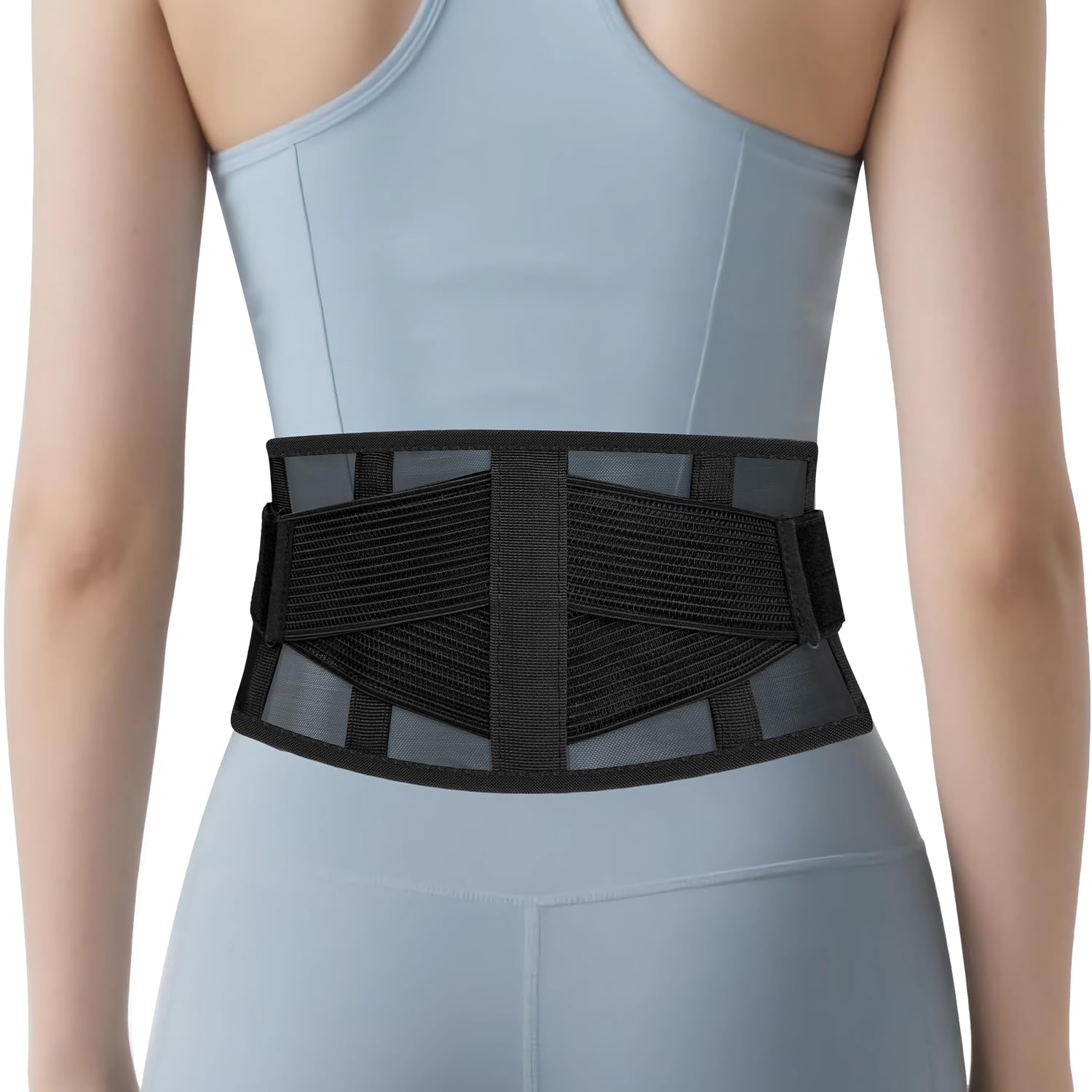
This belt is for users whose daily life requires them to move freely and without visible medical gear. The TitanGuard is made from an ultra-thin, breathable mesh that is less than half the thickness of a standard brace, yet it still features supportive stays to deliver targeted compression. The dual adjustable tension strap system with a smooth pulley mechanism allows you to tighten the brace exactly where you need it, without the bulk of traditional belts.
It is specifically designed to be worn under clothes — the low profile disappears under a shirt, making it suitable for office work, running, chores, or golf. Users consistently praise the fact that they forget they are wearing it. The dual-sided hook-and-loop closure provides a large adjustment zone, so you can fine-tune the compression even if your waist size fluctuates. It is best for mild to moderate sciatica where the primary goal is posture reinforcement and gentle stabilization, not aggressive force.
The limitation is that this is a compression belt, not a decompression device. It will remind your body to stay aligned and will support your lower back muscles, but it will not create the axial space required to decompress a significantly herniated disc or severely irritated nerve. If your sciatica is moderate and you need something to wear all day without anyone knowing, this is the right choice. For acute nerve pain, it will not replace a pneumatic or mechanical system.
Why it’s great
- Extremely thin and lightweight — disappears under any clothing
- Smooth pulley dual-strap system for precise adjustment
- Breathable mesh prevents overheating during active use
Good to know
- Provides compression and postural support, not true decompression
- Best for mild sciatica or daily stabilization, not acute flare-ups
FAQ
Can a decompression belt cure a herniated disc causing sciatica?
How long should I wear a decompression belt for sciatica each day?
Is it safe to use a decompression belt if I have had spinal fusion surgery?
Final Thoughts: The Verdict
For most users, the absolute best decompression belt for sciatica winner is the Goldmille Cordless Heating Decompression Belt because it combines pneumatic traction with infrared heat in a cordless, daily-use design. If you want a portable, chiropractor-developed system that mimics professional intermittent traction without the belt format, grab the Fisher Traction Lower Back Decompression Device. And for a comprehensive home therapy station that adds electrotherapy and vibration to dynamic decompression, nothing beats the Tianfucen Electric Lumbar Traction Device.

Mo Maruf
I created WellFizz to bridge the gap between vague wellness advice and actionable solutions. My mission is simple: to decode the research and give you practical tools you can actually use.
Beyond the data, I am a passionate traveler. I believe that stepping away from the screen to explore new environments is essential for mental clarity and physical vitality.