Our readers keep the lights on and my smoothie glass nicely filled. As an Amazon Associate, I earn from qualifying purchases.
When minutes separate a heartbeat from silence, having a defibrillator on your home wall changes the math entirely. Unlike CPR alone, an automated external defibrillator (AED) can restore a normal rhythm in a patient with sudden cardiac arrest by delivering a controlled shock, but the device must be reliable, simple to operate under panic, and self-sustaining during long stretches of non-use. The wrong choice here is not a wasted purchase—it is a missed window of survival.
I’m Mohammad Maruf — the founder and writer behind WellFizz. I research and analyze emergency medical hardware specifications so families and facility managers can separate real readiness from marketing noise.
This guide compares training-only units alongside the premium Philips HeartStart that truly belongs in a living room, helping you identify the best defibrillator for home use based on battery lifespan, voice prompt clarity, pad durability, and self-testing intelligence.
How To Choose The Best Defibrillator For Home Use
Home defibrillation equipment must sit unused for months or years, then perform perfectly under the worst five minutes of a caregiver’s life. That demands a set of non-negotiable features that differ sharply from a classroom trainer or a public‑access AED bolted to a hallway.
Self-Testing and Battery Longevity
A home AED must run an automatic self-test every 24 hours—checking its internal circuitry, battery charge, and pad cartridge connectivity. The best units log the result silently and flash a green indicator. If you have to remember to press a button to test the unit once a week, you will eventually forget. Battery chemistry matters equally: lithium manganese dioxide packs hold charge for 4 to 7 years on the shelf, while older alkaline cells risk leakage and power fade in humid closets.
Voice Prompt Quality and Step‑by‑Step Coaching
Under stress, reading a manual is not an option. The shock-delivering unit you want in a home setting must narrate each action — “Call 911,” “Apply pads to bare chest,” “Do not touch the patient” — in a calm, clear voice. Philips HeartStart and Zoll AED Plus lead here, with CPR coaching that sets the correct compression pace using a metronome or spoken count. A machine that merely says “shock advised” without guiding the next step is a liability, not a lifeline.
Pad Expiration and Storage Environment
Defibrillator pads contain conductive adhesive that dries out over time. Most pads expire 2 to 3 years after manufacture; a home AED should clearly print the expiration date on the sealed cartridge so you can schedule a replacement without guesswork. Units with a dedicated pad cartridge — such as the Philips Quick‑Shock system — simplify the swap and prevent accidental pad damage during storage.
Quick Comparison
On smaller screens, swipe sideways to see the full table.
| Model | Category | Best For | Key Spec | Amazon |
|---|---|---|---|---|
| Philips HeartStart OnSite AED | Med‑Grade Home | Family safety at home | 8‑year warranty, daily self‑test | Amazon |
| Prestan AED Ultratrainer 4‑Pack | Pro Trainer | Classroom CPR instruction | Pad‑sensing, 5 scenarios | Amazon |
| WNL Practi‑Trainer (4‑Pack + Bag) | Instructor Kit | Group training on the go | Fitted carry bag, 5 scenarios | Amazon |
| WNL Practi‑Trainer Essentials 4‑Pack | Value Trainer | Budget classroom kit | Reusable adult/child pads | Amazon |
| Prestan Professional AED Trainer | Solo Trainer | Individual CPR practice | Bilingual, 3‑year warranty | Amazon |
| Philips HeartStart Replacement Battery | Power Accessory | Backup battery for existing units | 5‑year shelf life | Amazon |
| Zoll AED Plus Wall Cabinet | Mounting Enclosure | Secure wall storage | Fits AED Plus carry case | Amazon |
In‑Depth Reviews
1. Philips HeartStart OnSite AED Defibrillator, Slim Carry Case M5066A-C02
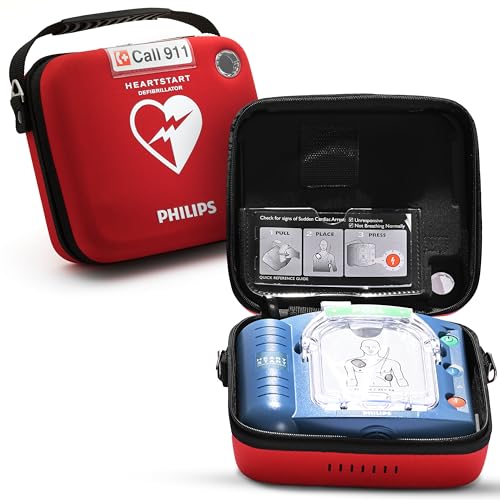
The Philips HeartStart OnSite is the only unit in this roundup designed from the ground up for lay‑person use at home. Its SMART Biphasic waveform adjusts both current and voltage in real‑time based on the patient’s chest impedance, delivering an effective shock while minimizing damage to heart tissue. The pre‑installed battery lasts four years once installed, and the device runs an automatic daily, weekly, and monthly self‑test so you never have to remember a maintenance routine.
Voice prompts guide you phrase‑by‑phrase through the rescue: call 911, place pads on bare skin, do not touch the patient during analysis. The Quick Shock feature can charge and deliver a shock within eight seconds of turning on the unit, which is critical when the heart is in ventricular fibrillation. Owners consistently report peace of mind, especially those with family history of cardiac events, and the eight‑year warranty on the AED itself makes this a long‑term investment.
The device ships with a slim carry case, one pre‑installed battery, and one set of SMART Pads Cartridge. Training pads for adult or infant/child practice are sold separately, and you can convert the OnSite into a trainer with the appropriate cartridge—useful for running drills at home without buying a separate trainer.
Why it’s great
- Daily self‑test eliminates manual upkeep
- Quick Shock delivers in under 8 seconds
- SMART Biphasic adapts shock to patient impedance
- 8‑year warranty on the device
Good to know
- Premium investment compared to budget‑tier competitors
- Training cartridge and practice pads sold separately
- Voice prompts available in English only per unit
2. Training AED Ultratrainer, 4‑Pack, Prestan

If you intend to train multiple family members or students, the Prestan Ultratrainer 4‑pack is the most realistic teaching tool available that still fits a classroom budget. Each unit includes a pad‑sensing system that detects correct placement on a manikin, and the built‑in metronome paces rescuers through chest compressions at the proper rate. Five pre‑programmed scenarios alternate between shock‑advised and no‑shock‑advised protocols, so trainees encounter realistic decision‑points rather than a single drill.
Dual‑language voice prompts toggle between English and Spanish with a quick switch, making the kit adaptable for multilingual groups. The unit requires three C‑cell batteries (not included), a minor inconvenience but a trade‑off for the high‑quality audio speaker that remains clear even in noisy training rooms. Advanced pad adhesive lasts through 50 to 60 applications per set, which means a single set of pads can support many sessions before replacement.
Users running a CPR training business report that the Ultratrainer survives heavy use—up to two classes per week for several months—without pad failure or hardware glitches. The only real design quirk: the pad sensor is centered on the back of the pad, which can cause poor contact on infant manikins that have a pronounced spinal dip. For adult and child training, this unit is nearly flawless.
Why it’s great
- Realistic pad‑sensing simulates live AED operation
- Durable pads rated for 50‑60 uses
- 5 varied scenarios for comprehensive drills
- English/Spanish toggle for diverse classrooms
Good to know
- Requires 3 C‑cell batteries per unit (not included)
- Pad sensor design struggles with infant manikins
- Noticeably smaller than real clinical AEDs
3. WNL Products WL120ES10, Practi‑Trainer Essentials 4‑Pack + Custom Carrying Bag

The WNL Practi‑Trainer 4‑pack with custom carrying bag is the logical upgrade for instructors who need to move four training units between locations without juggling separate boxes. Each trainer includes one set of reusable adult pads and one set of reusable child pads, plus the connecting cables and three AA batteries, all tucked inside its own pouch. The fitted carry bag holds everything in dedicated slots so connectors don’t tangle and pads don’t crease during transport.
Voice prompts follow AHA 2023 guidelines, and the metronome that sets compression pace can be toggled off for instructors who prefer to coach without audible metronome clicks. Scenario selection is straightforward: five built‑in routines that cycle between automatic and semi‑automatic operation, forcing the student to press the shock button or watch the unit deliver it automatically depending on the protocol you choose. This flexibility mirrors real‑world AED differences across facilities.
The bilingual English/Spanish switch on the side of each trainer is functional but small—you may need to apply a sticker to remind yourself which language is selected at a glance. Users praise the total weight: just over 6 pounds for four complete training sets, making this kit genuinely portable for off‑site drills at community centers or schools.
Why it’s great
- Custom carry bag prevents pad‑cable damage during transport
- AHA 2023 compliant voice prompts
- Adult and child reusable pads included per unit
- Automatic and semi‑automatic scenario modes
Good to know
- Spanish/English switch is small and not labeled externally
- Trainer units only — not for clinical defibrillation
- Long pause between “Analyzing” and “Begin CPR” voice commands
4. WNL Products WL120ES10‑4, Practi‑Trainer Essentials Base Model AED Training Kit (4‑Pack)
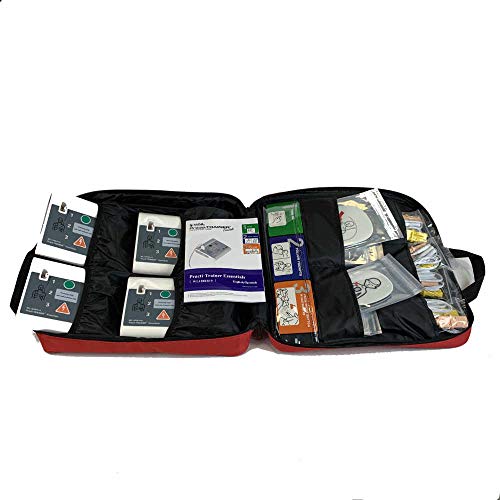
This base model 4‑pack from WNL strips the bundle down to essentials: four AED trainers, four sets of reusable adult and child pads, four sets of connectors, twelve AA batteries, one nylon carrying case, and an instructional manual. There is no custom‑fitted bag here—the case is a single large nylon duffle that holds all four units together, which works fine for storage but not quite as streamlined as the bag‑included version for frequent travel.
Despite the simplified packaging, the trainer itself is identical in operation to the bundled version above. It runs the same five pre‑programmed scenarios, the same voice prompts with AHA guideline compliance, and the same automatic/semi‑automatic toggles. The metronome paces compression rate at the correct frequency, and you can turn it off if it distracts from verbal coaching.
Owners who teach BLS certification classes regularly note that these units are lightweight—just over 4 pounds for all four trainers—and that the reusable pads hold up well over many classes. The main trade‑off for the lower price is the single bag rather than individual unit pouches, so you will need to separate the four trainers manually before class begins.
Why it’s great
- Significant savings for a full 4‑unit classroom set
- Reusable adult and child pads reduce long‑term cost
- AA batteries included — ready out of the box
- 5 pre‑programmed scenarios match AHA guidelines
Good to know
- Single large duffle bag — no per‑unit pouches
- Units not individually labeled; need manual separation before class
- Metronome volume cannot be adjusted independently from voice prompts
5. Prestan Professional AED Trainer PP-AEDT-101
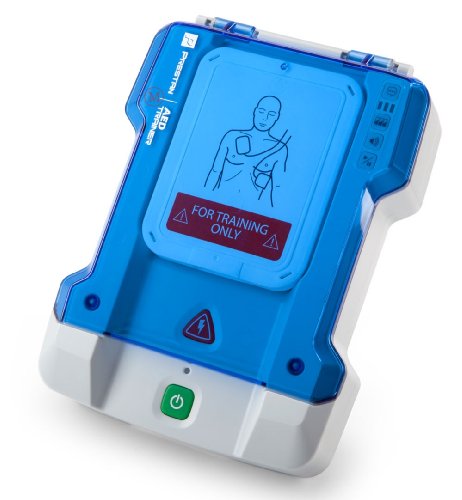
The Prestan Professional AED Trainer is a single‑unit training device that speaks both English and Spanish, making it a solid solo pick for a CPR instructor who runs bilingual classes. The Pad Sensing System automatically detects correct pad placement on a manikin, an important feedback loop that prevents students from practicing with pads wrongly positioned—a mistake that could cost a real victim’s life.
The device runs on four AA batteries and includes a built‑in metronome to pace chest compressions. Voice prompts are clear and confident, and the unit supports replaceable modules that contain updated CPR guidelines, so the trainer does not become obsolete when protocols shift. The three‑year warranty on this unit is among the best in its tier, suggesting the manufacturer stands behind the internal components.
Quality training pads last 50 to 60 applications before needing replacement, but several users report that the wire‑to‑pad connectors feel flimsy after a few months of frequent use, with pads detaching from the cable over time. The speaker also becomes muffled if the unit is placed on a soft surface like carpet during demonstrations. This is still a premium‑feeling trainer for the price, but durability depends on how roughly the connectors are handled between sessions.
Why it’s great
- Bilingual voice prompts for English and Spanish students
- Pad‑sensing technology confirms placement accuracy
- Replaceable module stays current with CPR guidelines
- 3‑year warranty included
Good to know
- Wire‑to‑pad connectors prone to detachment after heavy use
- Speaker muffles when setting unit on soft ground
- Battery compartment reported to drain power if unit stored cold
6. Philips HeartStart Home and Onsite Automated External Defibrillator Battery

This is not a standalone AED — it is the replacement lithium manganese dioxide battery pack for the Philips HeartStart OnSite and FRx models. If you already own a HeartStart unit, this is the certified power source you need when the original battery’s four‑year in‑service life expires. The package holds a five‑year shelf life before installation and a four‑year service life once you slide it into the device.
The battery is disposable, non‑rechargeable, and weighs only 0.178 ounces. The chemistry is lithium metal, which delivers consistent voltage across a wide temperature range—important for AEDs stored in garages, basements, or cars where indoor climate control may not be constant. The machine will beep once every ten seconds when the battery is low, a helpful but startling reminder that you had better swap it fast.
Users report mixed experiences with battery longevity. Some reviewers note that a replacement battery lasted only a week before the low‑battery alert triggered again, which suggests potential counterfeit stock or damaged units on Amazon. If you buy this, check the manufacturer date printed on the battery casing as soon as it arrives and verify the voltage with a multimeter if possible.
Why it’s great
- OEM Philips part — guaranteed fit for OnSite and FRx units
- 5‑year shelf life reduces replacement frequency
- Reliable lithium manganese dioxide chemistry
Good to know
- Some units arrive near expiration — check date immediately
- Expensive relative to generic alternatives
- Not compatible with Zoll, Prestan, or WNL trainers
7. Zoll AED Plus, Wall Cabinet, 9″W, White

This is a standard metal wall cabinet designed specifically to hold the Zoll AED Plus in its carry case along with spare electrodes. The cabinet itself is 9 inches deep and 13 inches tall, with a white door that includes the Zoll logo. Mounting hardware is not included, but the cabinet’s keyhole slots accept standard screws or anchors for drywall or stud mounting.
The cabinet is useful for home installations where the AED needs to stay accessible yet protected from dust, accidental knocks, or tampering. It is not lockable, so children or visitors could open the door, but that is generally considered acceptable for emergency equipment that must be instantly reachable. The package weight is listed at 15.45 pounds, which accounts for the metal door, hinges, and backplate.
This accessory makes sense only if you own a Zoll AED Plus; the interior compartments are sized for the Zoll carry case and may not fit other manufacturers’ AED form factors. If you already own the Philips HeartStart on this list, look for Philips‑specific wall brackets or a generic locking cabinet with adjustable shelf depth instead.
Why it’s great
- Purpose‑built for Zoll AED Plus form factor
- Metal construction resists warping in humid environments
- Clear Zoll branding for quick identification
Good to know
- Not lockable — door opens freely
- Not compatible with Philips HeartStart or most trainer units
- Mounting screws and anchors not included
FAQ
Can a defibrillator be used on someone with a pacemaker?
How do I know when AED pads expire?
Do home defibrillators require a prescription to buy?
Should I buy a training AED for home practice?
Final Thoughts: The Verdict
For most users, the best defibrillator for home use winner is the Philips HeartStart OnSite AED because it combines automatic daily self‑tests, four‑year battery life, SMART Biphasic shock delivery, and an 8‑year warranty into a device that a panicking caregiver can operate without any training. If you need a multi‑unit training kit for a CPR class or family drill, grab the Prestan Ultratrainer 4‑pack — it offers the most realistic pad‑sensing and scenario variety for the price. And for an instructor who moves between locations frequently, nothing beats the portability of the WNL Practi‑Trainer Bundle with fitted carry bag, which keeps four complete trainers and pads organized in one easy grab‑and‑go case.

Mo Maruf
I created WellFizz to bridge the gap between vague wellness advice and actionable solutions. My mission is simple: to decode the research and give you practical tools you can actually use.
Beyond the data, I am a passionate traveler. I believe that stepping away from the screen to explore new environments is essential for mental clarity and physical vitality.