Our readers keep the lights on and my smoothie glass nicely filled. As an Amazon Associate, I earn from qualifying purchases.
Every machinist, plumber, and 3D-printing hobbyist knows the sinking feeling of a sharp burr catching a finger or a freshly threaded nut that refuses to spin onto a rod. The fix used to be hours of filing, scraping, or grinding—until the modern hand deburring tool entered the shop. These compact, handheld tools use spring-loaded blades or fixed carbide cutters to shave off ragged edges in seconds, leaving a smooth chamfer on metal, plastic, wood, or PVC.
I’m Mohammad Maruf — the founder and writer behind WellFizz. I have spent hundreds of hours analyzing blade metallurgy, handle ergonomics, and real-world customer feedback across dozens of deburring tools to find the models that actually deliver on their promise.
Whether you are prepping copper pipes for SharkBite fittings, cleaning up a CNC-machined aluminum part, or threading a repair into a rusted bolt, the right tool transforms a tedious chore into a two-second swipe. This guide ranks the five models that define the best deburring tool category today.
How To Choose The Best Deburring Tool
Before you buy, you need to match the tool’s blade type, reach, and handle design to the materials you cut most often. A tool that excels on soft copper pipe will struggle with hardened steel bolts, and a chamfer bit designed for a drill press is useless for cleaning up a 3D-printed edge on your workbench.
Blade Material and Geometry
High-speed steel (HSS) blades, typically hardened to 62–64 Rc, offer a strong balance of sharpness and edge retention for aluminum, brass, plastic, and mild steel. Tungsten carbide blades (YG8 grade) stay sharp significantly longer and can handle stainless steel, hardened steel, and fiberglass without chipping. S-shaped or straight-edge geometry affects how the blade bites into the material — S-blades excel on straight edges and holes, while straight blades work better for heavy chamfering.
Handle Design and Reach
An ergonomic handle with a comfortable grip reduces hand fatigue when you are deburring dozens of holes or pipe ends in one session. Look for a knurled or rubber-coated grip that provides a secure hold even with oily hands. Some tools offer an extendable neck (up to 2 inches) for reaching recessed holes, while others feature a swivel head that conforms to uneven surfaces. If you work on engine blocks or inside tight frames, a long-reach model is essential.
Internal vs. External Deburring
Standard deburring handles with interchangeable blades are designed for both inner holes and outer edges. External chamfer tools, which use three fixed carbide blades around a hex shank, are purpose-built for chamfering the ends of bolts, threaded rods, and pipes before threading a nut. If you primarily repair damaged threads, an external chamfer tool will be faster and more consistent than a general-purpose handle.
Quick Comparison
On smaller screens, swipe sideways to see the full table.
| Model | Category | Best For | Key Spec | Amazon |
|---|---|---|---|---|
| AFA Tooling Extendable Neck | Premium | Long-reach and multi-material work | Extends 2 in, 16 blades included | Amazon |
| Noga NG8150 | Premium | Professional machinist use | HSS S10 blades, 62–64 Rc | Amazon |
| PLATINUMEDGE External Chamfer | Mid-Range | Threaded rod and bolt repair | YG8 carbide blades, 3–19 mm | Amazon |
| SANDOR Deburring Tool | Mid-Range | Hobbyists and 3D-printing cleanup | 10 spare S-blades + scribe pen | Amazon |
| MERWOF Pipe Reamer | Budget | Copper and PVC pipe prep | 1/4–1-5/8 in pipe range | Amazon |
In‑Depth Reviews
1. AFA Tooling Extendable Neck Deburring Tool
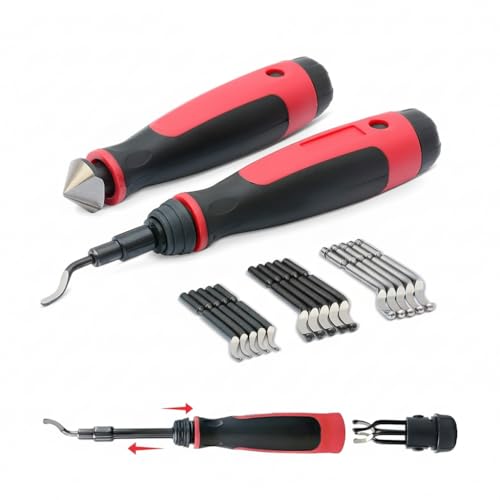
The AFA Tooling deburring tool is the most versatile option in this lineup because it solves two problems at once: reaching deep into recessed holes and matching the blade hardness to the material. Its patented extendable neck slides out up to 2 inches, making it the only tool here that can clean burrs inside a blind hole on an engine block or a tight frame member. The swivel head conforms to uneven surfaces, so you can maintain consistent contact pressure on curved edges.
AFA includes three blade sizes — six BS1010 blades for aluminum and plastic, five BS1018 blades hardened to 67 HRC for stainless steel, and five BK3010 micro blades for holes as small as 1.5 mm. That gives you a total of 16 blades in a single kit, which is more than any other product here. The aluminum handle feels substantial without being heavy, and the onboard blade storage in the handle keeps spares within reach during a long session.
Customer feedback from machine shop operators confirms that a single blade head survived deburring an entire iron V10 engine block without dulling. For the combination of reach, blade variety, and build quality, this tool earns the top spot for anyone who needs a single do-it-all deburring solution.
Why it’s great
- Extendable neck reaches 2 inches into deep holes
- 16 HSS blades across three hardness grades included
- Ergonomic aluminum handle with onboard blade storage
Good to know
- Higher upfront investment than simpler models
- Blade changing requires careful alignment
2. Noga NG8150 Heavy Duty Deburr Tool

Noga is the benchmark name in deburring tools, and the NG8150 is their flagship heavy-duty handle. The NG-1 grip is rubber-coated with a positive blade lock that prevents the blade from slipping or rotating during use — a critical detail when you are applying firm pressure on a steel edge. The handle stores 10 spare S10 high-speed steel blades inside, so you never have to hunt for a replacement mid-job.
The S10 blades are hardened to 62–64 Rc, which places them in the ideal range for aluminum, mild steel, and brass. They cut cleanly on both straight edges and holes down to 1/2-inch diameter. Machinists report that the tool leaves a smooth chamfer on steel without the chatter common on cheaper handles. The compact design fits comfortably in a palm, and the blade lock mechanism releases with a simple twist.
One important nuance: the S10 blade geometry is less effective on outside radii and corners compared to S-shaped blades. If you primarily deburr external curved edges, you may want a blade with a more aggressive curve. But for straight edges and internal holes on metal parts, the Noga NG8150 delivers the consistent, professional finish that machine shop veterans rely on.
Why it’s great
- Industry-standard Noga build quality with rubber grip
- 10 spare HSS S10 blades stored in the handle
- Positive blade lock prevents slipping during use
Good to know
- Less effective on outside radii and curved corners
- S10 blades dull faster on stainless steel
3. PLATINUMEDGE Deburring External Chamfer Tool
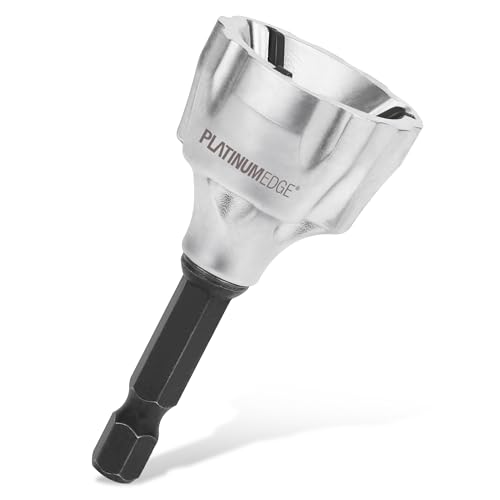
The PLATINUMEDGE external chamfer tool is a completely different approach from the handled deburring tools above. Instead of a hand-held blade, it uses three YG8 tungsten carbide blades arranged around a 1/4-inch hex shank that fits into any power drill or impact driver. You spin it at 0–400 RPM against the end of a bolt, threaded rod, or pipe, and the blades shear off the burr in seconds.
The carbide blades are the standout feature here. Standard HSS blades dull quickly on hardened steel and stainless steel, but YG8-grade tungsten carbide holds its edge through dozens of cuts on tough materials. The three-blade geometry produces a consistent 60-degree chamfer with minimal heat buildup, so you do not scorch the threads or create sparks. The range covers 1/8-inch to 3/4-inch round stock, which encompasses most common bolt diameters and threaded rods.
Users consistently praise it for repairing damaged threads on all-thread rods: after cutting the rod with a hacksaw, the chamfer tool cleans the end so a nut spins on smoothly without cross-threading. The main limitation is that this tool is exclusively for external edges — it cannot deburr the inside of a hole or a pipe. For anyone who regularly works with threaded fasteners, this dedicated tool beats a general-purpose deburring handle every time.
Why it’s great
- YG8 carbide blades handle stainless and hardened steel
- Quick hex shank fits most drills and impact drivers
- Creates a clean 60° chamfer with minimal heat
Good to know
- Works only on external edges (bolts, rods, pipe ends)
- Requires a drill or driver — not a standalone hand tool
4. SANDOR Deburring Tool with 10 Extra Blades and Scribe Pen
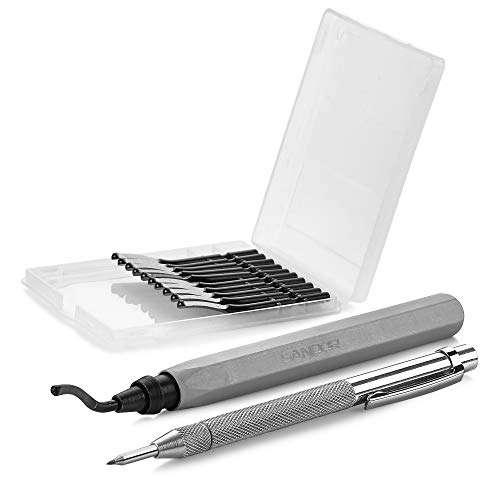
The SANDOR deburring tool is the best entry point for hobbyists because the kit includes not only the handle and 10 spare S-shaped blades but also a tungsten carbide scribe pen and a zippered storage case. The handle is made of tool steel with a deep knurled grip that provides excellent traction even with oily or gloved hands. The S-curved blade design is particularly effective on 3D-printed plastic edges, where the curved geometry prevents gouging while producing a smooth chamfer.
Each S-blade lasts roughly two months of daily use on plastic and aluminum, according to hobbyist feedback, and the 10 spare blades in the kit mean you will not need a refill for a long time. The scribe pen is a genuine carbide-tipped tool for etching and marking, not a cheap throw-in. The zipper case keeps everything organized in a toolbox or on a workbench shelf.
The main compromise is that the tool steel handle, while durable, is heavier than aluminum alternatives. Over an extended session of repetitive deburring, the extra weight may contribute to hand fatigue. But for the price-sensitive buyer who needs a complete kit that handles plastics, aluminum, and brass, this is the most complete package available.
Why it’s great
- Complete kit with handle, 10 blades, scribe, and case
- Deep knurl grip offers secure hold in oily conditions
- S-shaped blades work exceptionally well on 3D-printed plastic
Good to know
- Tool steel handle is heavier than aluminum options
- Blades dull faster on stainless steel
5. MERWOF Metal Pipe Reamer Deburring Tool

The MERWOF pipe reamer is a specialized tool designed specifically for cleaning the inside and outside edges of pipes and tubes. It uses four fixed stainless steel reamer blades arranged around a tapered cone that fits into pipe diameters from 1/4 inch to 1-5/8 inches. Instead of swiping a blade along the edge, you simply push the tool into the pipe end and twist — the conical shape engages all four blades simultaneously, deburring the entire circumference in one motion.
The aluminum alloy housing weighs only 5.6 ounces, making it noticeably lighter than the SANDOR and AFA handles. The non-slip surface provides a firm grip, and the compact 2-inch diameter fits easily into a toolbox drawer. For plumbers installing SharkBite or push-fit fittings, this tool is the fastest way to prep copper pipe ends because it deburrs both the inner and outer surfaces simultaneously, leaving a clean edge that seals properly.
Customer feedback notes that the tool feels indestructible due to the all-metal construction, but it is important to recognize its limitations: this tool only works on pipe and tube ends. It cannot deburr a flat edge, a hole, or a threaded rod. For the plumber or DIYer who primarily joins pipes, however, this dedicated reamer is faster and more consistent than a general-purpose deburring handle.
Why it’s great
- Deburrs inner and outer pipe edges in one twist
- Lightweight aluminum body reduces hand fatigue
- Covers pipe range from 1/4 to 1-5/8 inches
Good to know
- Only works on pipe and tube ends — not flat edges or holes
- Fixed blades cannot be replaced individually
FAQ
Can I use a deburring tool on stainless steel without dulling the blade quickly?
What is the difference between an external chamfer tool and a standard deburring handle?
Final Thoughts: The Verdict
For most users, the best deburring tool winner is the AFA Tooling Extendable Neck because its extendable neck, three blade hardness grades, and 16 included blades make it the only tool here that handles recessed holes, plastic edges, and stainless steel without needing a second purchase. If you want a dedicated thread repair tool that works on bolts and rods, grab the PLATINUMEDGE External Chamfer. And for pure pipe prep on copper and PVC, nothing beats the speed of the MERWOF Pipe Reamer.

Mo Maruf
I created WellFizz to bridge the gap between vague wellness advice and actionable solutions. My mission is simple: to decode the research and give you practical tools you can actually use.
Beyond the data, I am a passionate traveler. I believe that stepping away from the screen to explore new environments is essential for mental clarity and physical vitality.