Our readers keep the lights on and my smoothie glass nicely filled. As an Amazon Associate, I earn from qualifying purchases.
That empty bowl of miso you just made tastes flat, missing the savory backbone that defines real Japanese soup. The secret isn’t the miso paste—it’s the dashi, the umami-rich stock that transforms plain water into a complex, soul-warming broth. Find the right version, and every spoonful delivers layered notes of kelp, bonito, and smoke without hours of stovetop work.
I’m Mohammad Maruf — the founder and writer behind WellFizz. I’ve spent months researching traditional Japanese ingredients and analyzing the chemical profiles, additive lists, and production methods of commercial dashi products to separate authentic flavor from diluted shortcuts.
This guide compares five leading options across different formats and ingredient blends to help you find the best dashi for miso soup that matches your kitchen routine and your taste expectations.
How To Choose The Best Dashi For Miso Soup
Dashi is the invisible foundation of great miso soup. The wrong choice leaves your broth thin or artificially salty; the right one adds depth without overpowering the miso itself. Start by deciding which format fits your cooking frequency then check the ingredient list for filler additives.
Format: Liquid Concentrate vs. Granules vs. Teabag Packets
Liquid shirodashi, like the Yamaki Kappo bottle, is a concentrated stock that dissolves instantly and works for multiple dishes beyond miso — oyakodon, gyoza, nimono. Granular powders such as Ajinomoto Hondashi are the most economical per serving and store well but often include MSG and sugar. Teabag-style packets (Grelim, Orgnisulmte, Kayanoya) offer precise single-serving control with whole ground ingredients and zero chemical additives — ideal if you want a clean ingredient panel without measuring spoons.
Ingredient Blend: Single Fish vs. Multi-Ingredient vs. Salt-Heavy
Traditional awase dashi combines bonito flakes and kombu kelp. Premium blends add mackerel, sardines, flying fish, and shiitake for a broader umami spectrum. Cheap dashi relies heavily on salt as the primary seasoning. If you read the ingredient list and see salt listed before any fish or seaweed, the product is more seasoning salt than real stock. Look for blends where dried fish and kelp appear first.
Sodium Level and Salt Management
Because miso paste itself is salty, you need a dashi that contributes flavor without making the final soup undrinkable. Some concentrated powders require only half a teaspoon per bowl. Others need a full packet. The lower-sodium options — like Kayanoya and Orgnisulmte — allow you to control salt with the miso alone, giving you a cleaner finish that tastes like it came from a restaurant kitchen, not a seasoning packet.
Quick Comparison
On smaller screens, swipe sideways to see the full table.
| Model | Category | Best For | Key Spec | Amazon |
|---|---|---|---|---|
| Kayanoya Original | Premium Teabag | Restaurant-quality miso at home | 4-ingredient blend: skipjack, herring, flying fish, kombu | Amazon |
| Ajinomoto Hondashi | Granular Bulk | High-volume daily cooking | 1 tsp makes 3-6 cups; 2.2 lb resealable bag | Amazon |
| Yamaki Kappo Shirodashi | Liquid Concentrate | Multi-dish versatility | 500ml glass bottle; potent base for soup, donburi, gyoza | Amazon |
| Grelim Dashi Packets | Additive-Free Teabag | Clean-label, MSG-free broth | 6 Japanese domestic ingredients; 8g x 18 packets | Amazon |
| Orgnisulmte Dashi Stock | All-Natural Teabag | Low-sodium family meals | 5-ingredient blend: bonito, mackerel, sardines, kombu, shiitake | Amazon |
In‑Depth Reviews
1. Kayanoya Original Dashi Stock Powder
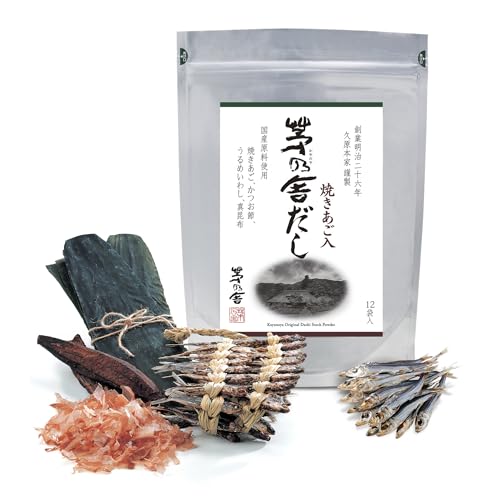
Kayanoya crafts what many consider the gold standard for packaged dashi. Each teabag holds skipjack tuna flakes, round herring, roasted flying fish, and kombu kelp — four ingredients that together produce a broth with layered sweetness, mild smoke, and a clean finish that lets white miso or red miso shine equally. Users consistently describe the resulting miso soup as restaurant-quality, with one reviewer noting the broth beats anything they can make from scratch.
The brewing process is dead simple: simmer one packet in 400 ml of water for about two minutes, remove the bag, and stir in miso paste. The granules dissolve fully without grit. Because the sodium level is naturally low, you retain total control over salt — add miso to taste rather than fighting a pre-salted base. This is the version to reach for when the soup is the centerpiece of the meal, not an afterthought.
Some cooks reserve these packets for special recipes due to the higher per-serving cost versus bulk granules. The 12-pack format works well for weekly miso drinkers who cook three to four times a week, but heavy daily users may prefer a larger count or a different format for routine bowls.
Why it’s great
- Multi-fish blend delivers complex, authentic umami
- Extremely low sodium — you control salt with the miso
- Teabag format is zero-mess and precise
Good to know
- 12 packets go fast if you cook daily
- Higher cost per serving compared to granular dashi
2. Ajinomoto Hondashi Bonito Soup Stock

Ajinomoto Hondashi is the most widely recognized dashi powder in Japanese kitchens worldwide. The finely ground granules dissolve almost instantly in hot water — no simmering, no straining, no waiting. One teaspoon makes between three and six cups of stock depending on desired intensity, which means a single 2.2-pound bag yields dozens of bowls. Home cooks who make miso soup daily or who also use dashi in tamagoyaki, udon, and sukiyaki will burn through this bag with gratitude.
The flavor profile is pure katsuobushi (dried bonito) with a savory punch that leans slightly smoky. Because it includes MSG and sugar as complementary seasonings, the umami hits fast and stays present through the whole bowl. Repeat buyers mention that once you start adding it to dishes, you will find excuses to use it everywhere — ramen, egg rolls, even Western-style broths.
If you prefer a completely additive-free ingredient panel, you may find the inclusion of MSG and sugar a dealbreaker. The resealable bag is practical for storage, but the foil does not fully block air — for long-term use, pour the powder into a sealed glass jar to preserve freshness and prevent clumping from humidity.
Why it’s great
- Incredible economy — 2.2 pounds at a mid-range price point
- Dissolves instantly without heat if needed
- Classic bonito flavor that tastes like restaurant miso
Good to know
- Contains MSG and sugar — not for additive-free purists
- Resealable bag is not airtight long-term
3. Yamaki Kappo Shirodashi Versatile Dashi Base
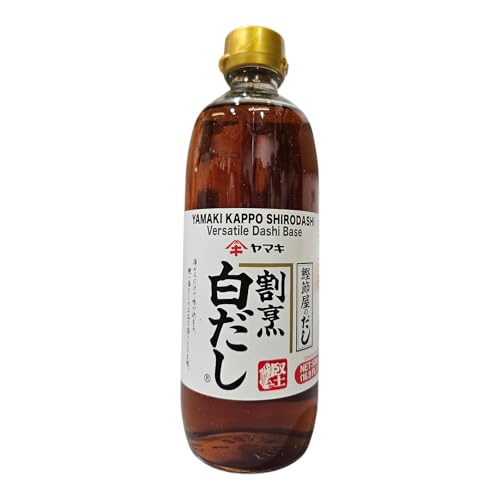
Yamaki Kappo Shirodashi is a liquid concentrate — think of it as instant dashi that comes ready to pour. The 500-milliliter glass bottle contains a deeply savory base made from bonito and kelp extracts, plus mirin and a touch of sugar for balance. Users report that a small splash transforms not only miso soup but also oyakodon, gyoza steaming liquid, and nimono dishes. One verified reviewer who runs a kitchen in Polynesia uses it as a fresh-tasting foundation and builds additional layers with miso paste, black garlic, and mirin.
The potency is notable: reviewers emphasize that a little goes a long way. Because it is already seasoned, you may need less salt or soy sauce in your finished dish. The glass bottle is a practical advantage for single cooks — it stores neatly in the fridge door and dispenses via a controlled pour top. For anyone who cooks Japanese-style dishes multiple times per week beyond just miso soup, this single bottle covers the entire repertoire.
The flavor profile of shirodashi is slightly sweeter and more rounded than traditional awase dashi due to the mirin inclusion. Some purists who want a completely neutral, unsweetened dashi for delicate soups may find the sweetness intrusive if they use too much. Start with a teaspoon per bowl of miso and adjust upward.
Why it’s great
- Works for miso soup plus donburi, gyoza, nimono, and more
- Concentrated formula — a little delivers big flavor
- Glass bottle with pour control stores well in the fridge
Good to know
- Contains mirin (sweetness) — not a neutral dashi
- Must be refrigerated after opening
4. Grelim Dashi Stock Japan 18 Packets
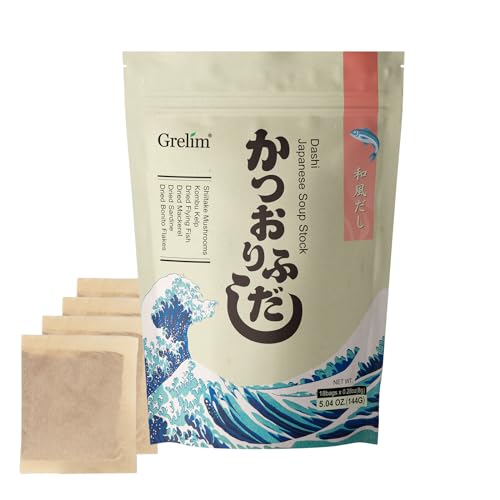
Grelim takes a no-compromise stance on additives: zero MSG, no preservatives, no sugar, no powdered soy sauce. The six ingredients are all Japanese-sourced: bonito flakes, dried sardines, dried mackerel, dried flying fish, kombu kelp, and shiitake mushrooms. That breadth of marine and botanical ingredients produces a broth that is simultaneously bold and clean — reviewers describe it as balanced, preservative-free, and perfect for miso soup as well as nabe hot pots and egg drop soup.
The teabag format is identical to Kayanoya in convenience — boil one packet in about two cups of water for four minutes, remove, and add miso. The bag holds its integrity during boiling without bursting or leaking fine particles. Some users note that achieving a deeper, more authentic flavor may require two packets per bowl if you like a pronounced dashi presence. The 18-count box is a solid middle ground between a trial pack and a bulk purchase.
A minority of reviewers found the single-packet strength slightly subtle compared to bonito-heavy alternatives. If you typically enjoy a powerful, fish-forward miso soup, consider using one and a half packets or pairing the dashi with a separate shot of pure bonito flakes. The natural profile, however, makes this an excellent choice for families who want to control every component of their meal.
Why it’s great
- Six-ingredient blend — broadest umami spectrum in the lineup
- Completely additive-free and MSG-free
- Teabag convenience with zero cleanup
Good to know
- Single packet may be too mild for strong-broth lovers
- 18-count box is not the most economical per serving
5. Orgnisulmte Dashi Stock 18 Packets

Orgnisulmte shares many structural features with Grelim — 18 teabag packets, a five-ingredient blend of dried bonito, dried mackerel, dried sardines, kombu kelp, and shiitake mushrooms, and a strict no-additive, no-salt-added policy. The difference shows up in the balance. Reviewers consistently note that the broth is more subtle and gentle than bonito-dominant alternatives, with a finish that is notably low in sodium. This makes it a strong candidate for households that want to reduce dietary salt without sacrificing the ritual of a warm bowl of miso soup.
The teabags hold up well during boiling with no reported breakage. One reviewer observed a strong fish aroma when opening the package, but the final cooked broth carries only a very subtle fishiness — the shiitake and kombu soften the marine edge into something rounded and comforting. Users have enthusiastically recommended it for miso soup, zosui (Japanese rice soup), and even as a standalone savory drink.
Because the product avoids adding any salt, sugar, or chemical seasonings, the depth is entirely dependent on the quality of the raw fish and seaweed. Some palates accustomed to commercial dashi granules with flavor enhancers may initially perceive this as thin. The solution is simple: steep two packets or let the bag sit in hot water for five to six minutes instead of the standard three. For clean-label cooks who value ingredient transparency above all else, this is a reliable everyday pick.
Why it’s great
- Zero added salt — total sodium control
- Shiitake and kombu create a gentle, rounded broth
- All-natural Japanese ingredients with no chemical seasonings
Good to know
- Mild flavor profile — may need double-steeping for intensity
- Initial fish aroma is strong but does not carry into the final bowl
FAQ
Can I use Hondashi granules directly in miso soup without boiling?
How many teabag packets should I use per bowl of miso soup?
Does liquid shirodashi need to be refrigerated after opening?
Which dashi format works best for vegan or vegetarian miso soup?
Final Thoughts: The Verdict
For most users, the best dashi for miso soup winner is the Kayanoya Original Dashi Stock Powder because it combines a premium multi-fish-kombu blend with ultralow sodium in a zero-mess teabag format that produces restaurant-quality broth in under three minutes. If you want bulk value for daily family cooking, grab the Ajinomoto Hondashi. And for multi-dish versatility where one bottle handles miso soup, oyakodon, and gyoza, nothing beats the Yamaki Kappo Shirodashi liquid concentrate.

Mo Maruf
I created WellFizz to bridge the gap between vague wellness advice and actionable solutions. My mission is simple: to decode the research and give you practical tools you can actually use.
Beyond the data, I am a passionate traveler. I believe that stepping away from the screen to explore new environments is essential for mental clarity and physical vitality.