Our readers keep the lights on and my smoothie glass nicely filled. As an Amazon Associate, I earn from qualifying purchases.
A baitcaster that birdsnests on the first cast is every angler’s nightmare. The digital control system inside a DC reel changes that equation entirely—using a microcomputer to measure spool speed and apply real-time braking so you can cast farther with less thumb work and far fewer backlashes.
I’m Mohammad Maruf — the founder and writer behind WellFizz. For this guide I spent dozens of hours cross-referencing gear ratios, braking architectures, drag materials, and verified angler feedback to separate the reels that truly deliver consistent digital braking from those that just carry the badge.
Whether you’re pitching jigs into heavy cover or chunking cranks across open water, this breakdown of the best dc reel options will help you match the right digital brake system to your specific fishing style and preferred lure weight range.
How To Choose The Best DC Reel
A DC reel’s value isn’t just the computer chip—it’s how the entire braking system, spool mass, and drag stack work together under load. Focus on these factors to match the reel to your actual fishing conditions.
Braking Architecture: I-DC vs. SVS Infinity vs. AutoMag
Shimano’s I-DC4 system uses four distinct brake curves (settings 1-4) that adjust spool deceleration based on lure weight and wind conditions. The SVS Infinity system found on the SLX DC XT combines a sliding magnetic rail with centrifugal blocks for finer adjustment. KastKing’s AutoMag uses a fixed magnet ring plus centrifugal arms—less computerized but more user-serviceable. The sophistication of the braking computer directly determines the range of lure weights you can cast without intervention.
Gear Ratio and Retrieve Speed
Gear ratios in DC reels typically span from 6.3:1 (standard retrieve) to 8.5:1 (ultra-high speed). A 7.2:1 or 8.0:1 ratio pairs best with DC braking because the faster spool rotation generates more data for the computer to process, making brake adjustments more precise. High-gear reels also recover line faster, which matters when you’re burning a spinnerbait or making rapid follow-up casts after a missed strike.
Frame Rigidity and Spool Material
A DC reel’s frame must resist flex under heavy drag load—otherwise the spool can shift and confuse the braking sensor. Look for Hagane (cold-forged aluminum) bodies from Shimano or carbon fiber frames like KastKing’s. Spool material matters too: lighter aluminum or super-duralumin spools (like the SLX DC’s) accelerate faster and give the computer a clearer signal about spool speed, which improves brake consistency at light lure weights.
Quick Comparison
On smaller screens, swipe sideways to see the full table.
| Model | Category | Best For | Key Spec | Amazon |
|---|---|---|---|---|
| Shimano Curado DC 200 | Premium | Heavy cover, big cranks | MGL Spool III, 20 lb drag | Amazon |
| Shimano Curado DC 150 | Premium | All-around bass fishing | Cross Carbon Drag, CI4+ side plate | Amazon |
| Shimano Scorpion DC 150 | Premium | JDM quality, finesse to 1 oz | 5.5 kg drag, super-duralumin spool | Amazon |
| Shimano SLX DC XT 71XG | Mid-Range | BFS-adjacent, light lure casting | 8.1:1 gear ratio, 84 cm retrieve | Amazon |
| Shimano SLX DC (23 JDM) | Mid-Range | Entry-level DC, light saltwater | 6/1 bearings, carbon cross drag | Amazon |
| Shimano SLX XT | Mid-Range | Wind-fighting, long casts | SVS Infinity brake, 11 lb drag | Amazon |
| KastKing Royale Legend Pro | Mid-Range | Lightweight all-day fishing | 5.5 oz, 16 lb carbon drag | Amazon |
| Shimano SLX (B07H4S6MD3) | Entry-Level | Budget-conscious beginners | Variable Braking, 12 lb drag | Amazon |
| Shimano SLX (B07H4WR2M2) | Entry-Level | First baitcaster, low cost | Super Free Spool, 11 lb drag | Amazon |
In‑Depth Reviews
1. Shimano Curado DC 200
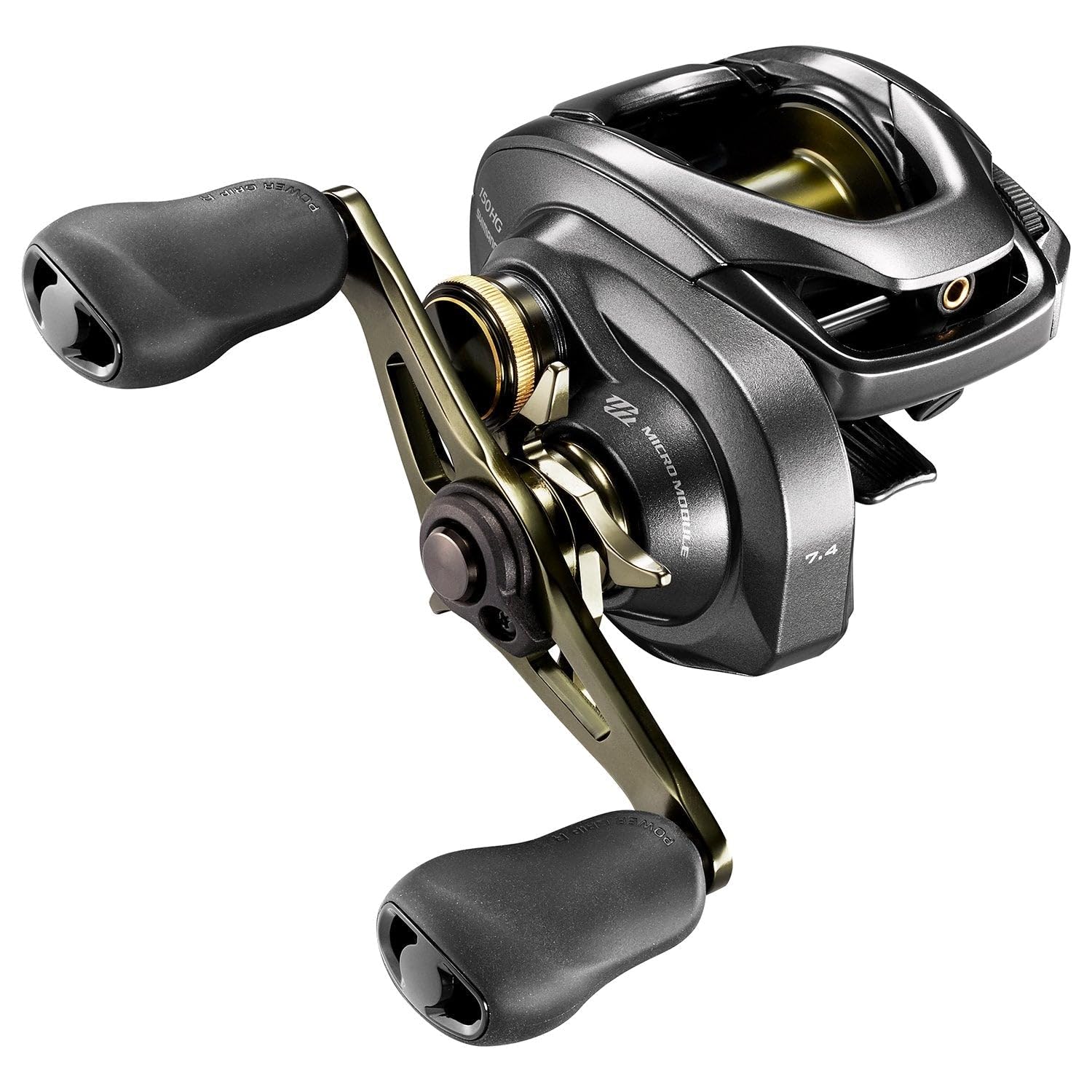
The Curado DC 200 pairs Shimano’s fourth-generation I-DC4 digital braking with the MagnumLite MGL Spool III, which reduces spool inertia by nearly 15 percent compared to the previous generation. That translates to smoother casts at the lighter end of the lure spectrum while maintaining the line capacity (10/200 with 10 lb test) needed for heavier cover baits like 1-ounce jigs and deep-diving cranks. The SilentTune technology reduces spool vibration, which keeps the braking computer’s sensor readings more stable during the cast.
Anglers fishing 150-plus days a year report that the Curado DC 200 requires minimal dialing in across wind conditions, with the four brake settings covering everything from calm water flips to gusty reservoir fishing. The Cross Carbon Drag delivers 20 pounds of stopping power without the stutter common in lesser stacked washers, and the Hagane body resists frame flex even when you’re wrenching a fish out of heavy timber.
The 7.4:1 gear ratio strikes a strong balance between power for deep retrieves and speed for covering water efficiently. Some users note that the reel can overcast into rod holders if you’re not careful, which is a sign of how freely the MGL spool spins—but that’s a user adjustment, not a flaw in the reel itself.
Why it’s great
- MGL Spool III provides excellent castability with lures from 1/4 oz to 1 oz
- 20 lb Cross Carbon Drag handles heavy cover without hesitation
- SilentTune reduces spool bounce for more consistent digital brake engagement
Good to know
- Heavier than some DC reels at 230 grams
- Can overcast into rod holders if spool tension is set too loose
2. Shimano Curado DC 150
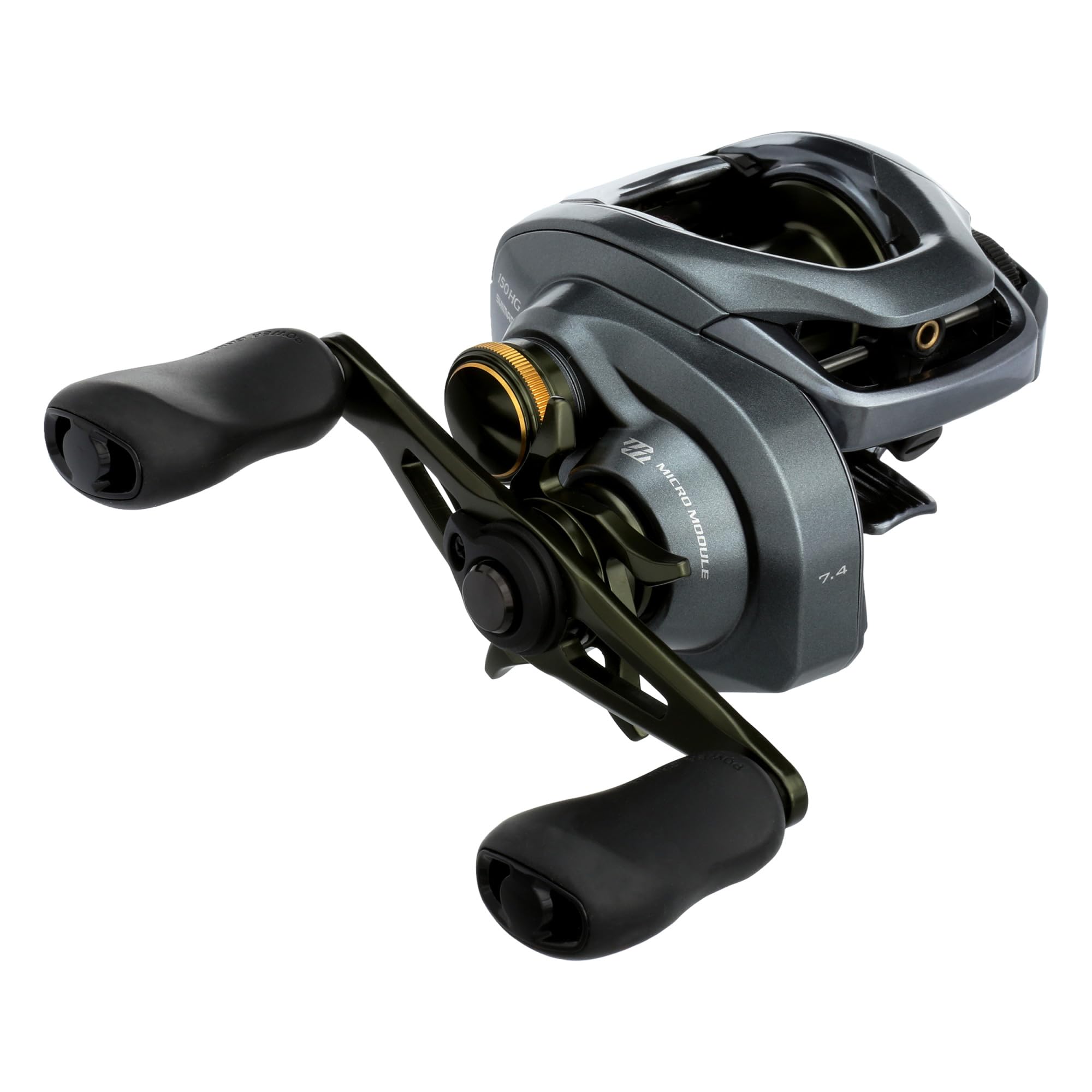
The Curado DC 150 brings the same I-DC4 digital braking brain as the 200 but in a slightly narrower spool that favors lighter finesse presentations. The 150-size spool (line capacity 10/120, 12/110, 14/90) allows the computer to read spool acceleration more precisely at lower RPMs, which means you can throw a 3/8-ounce jerkbait without the braking computer overcorrecting and killing distance. The CI4+ side plate reduces overall weight to 220 grams without sacrificing structural rigidity.
Cross Carbon Drag on this model delivers 11 pounds of smooth, progressive resistance, and the MicroModule Gear system produces a noticeably quieter retrieve than standard cut gears. Anglers using this reel for 150-plus days a year consistently rank it as the best-performing low-profile baitcaster they’ve owned, noting that the DC braking reduces backlashes to minor, easily removable loops rather than full birdnests.
The Hagane body keeps the spool shaft aligned under load, which prevents the digital sensor from reading false spool wobble. One consistent criticism is that the branding lettering wears off quickly with regular use, though this cosmetic issue doesn’t affect performance.
Why it’s great
- Narrower spool improves braking precision with lighter lures
- MicroModule Gear runs exceptionally quiet
- CI4+ side plate cuts weight without flex
Good to know
- Lettering on the reel body wears off over time
- No reel lubricant included in the box
3. Shimano Scorpion DC 150

The Scorpion DC 150 is Shimano’s JDM (Japanese Domestic Market) offering that uses a super-duralumin spool, which is both lighter and harder than standard aluminum. This spool material accelerates faster at the start of the cast, giving the digital braking computer a cleaner initial speed signal. The result is that the reel handles lure weights from 1/8 ounce to 1 full ounce with the same brake setting—no mid-session dial turning required.
Anglers who have owned both SLX DC and Scorpion DC models report that the Scorpion casts noticeably smoother at the lighter end of the spectrum, and the 5.5 kilograms of drag (roughly 12 pounds) is sufficient for most bass applications. The reel weighs only 200 grams and uses carbon cross washer drag material, which provides a wide, progressive drag curve without the initial break-free stiction some felt washers exhibit.
The Scorpion uses a nylon frame material that is lighter than aluminum but still maintains enough rigidity for the braking system to function accurately. It’s built to handle braided line (30/300 capacity) and has proven reliable in saltwater light-tackle situations. Users consistently describe it as one of the best DC reels available.
Why it’s great
- Super-duralumin spool provides fast, consistent spool acceleration for the DC sensor
- Handles 1/8 oz to 1 oz lures without changing brake setting
- Lightweight design (200 g) that doesn’t fatigue during all-day trips
Good to know
- JDM availability can make warranty support more complicated
- Nylon frame won’t feel as premium as aluminum-bodied reels
4. Shimano SLX DC XT 71XG

The SLX DC XT is the step-up version of the standard SLX DC, adding SVS Infinity braking to the digital system. The SVS Infinity uses a sliding magnetic rail that adjusts brake force across a wider range, combined with centrifugal blocks that kick in at high spool speeds. This hybrid system allows the reel to cast effectively with lures as light as 3 grams, making it one of the few DC reels that approaches BFS (bait finesse system) territory without needing specialized spools.
The 8.1:1 gear ratio recovers 84 centimeters of line per crank, which is ideal for burning topwaters or making rapid-fire casts when fish are actively feeding. The aluminum frame and graphite side plates keep the weight at just 195 grams, and the 5.5 kg of maximum drag is adequate for the lighter line classes this reel is designed for (12-20 lb test nylon).
One important detail: this reel is effective down to about 3 grams but really shines between 4 and 7 grams, where the digital braking system operates at peak efficiency without over-braking. It is not a dedicated BFS reel, but it’s the most versatile DC option for anglers who routinely throw lightweight baits and still want digital control.
Why it’s great
- SVS Infinity brake hybrid provides exceptional control with light lures
- 8.1:1 gear ratio allows ultra-fast retrieves for reaction strikes
- Lightweight build (195 g) reduces casting fatigue
Good to know
- Not a true BFS reel; struggles with lures under 3 grams
- Some units shipped from Malaysia, not Japan as advertised
5. Shimano SLX DC (23 JDM)

The 23 SLX DC JDM version is the most affordable way to get Shimano’s I-DC4 digital braking without sacrificing the core technology. The reel uses a super-duralumin spool (33 mm diameter, 21 mm width) paired with 6 stainless steel ball bearings and 1 roller bearing, and a carbon cross washer drag system that delivers 12.1 pounds of maximum drag. It casts nylon line from 12 lb to 20 lb test comfortably, and the Anti-Reverse feature ensures solid hooksets.
Anglers using this reel in light saltwater environments report that it casts 30 lb Power Pro braid without issues and handles small GT and needlefish without grinding or developing play in the handle. The JDM SLX DC is slightly narrower than the Curado DC 150, which gives it an edge in casting lighter lures—anglers can throw a mini rattletrap on setting 1 without backlash and still gain good distance.
The main limitation is line capacity: with 20 lb braid you’ll get about 65 yards, which is tight for deep-water applications. But for a budget-conscious entry into digital braking, the 23 SLX DC delivers the same I-DC4 performance as reels costing significantly more.
Why it’s great
- Genuine I-DC4 digital braking at a budget-friendly price point
- Super-duralumin spool accelerates fast for consistent DC sensor readings
- Handles light saltwater duty without corrosion issues
Good to know
- Line capacity limited to about 65 yards of 20 lb braid
- JDM import means user manual in Japanese only
6. Shimano SLX XT

The SLX XT sits between the standard SLX and the SLX DC XT in the Shimano lineup, offering SVS Infinity braking without the full digital computer. The SVS Infinity system combines an externally adjustable magnetic brake with internal centrifugal blocks, giving you fine-tuned control over the spool’s deceleration curve. This mechanical system is highly wind-resistant—anglers report casting into moderate headwinds without backlashes once the dial is properly set.
The reel uses a Hagane body, which is Shimano’s cold-forged aluminum construction, providing the same frame rigidity found on higher-end reels. The 7.2:1 gear ratio is versatile enough for most bass techniques, and the 11-pound drag is sufficient for freshwater applications. Line capacity is 10/120, 12/110, 14/90, which is typical for a 150-size spool.
Users consistently note that with proper tuning (spool tension and brake dial), the SLX XT can cast over 100 feet with a 1/8-ounce jig head—impressive for a non-DC baitcaster. It will not eliminate backlashes entirely like a DC reel can, but it offers a mechanical alternative for anglers who prefer to tune brakes manually.
Why it’s great
- SVS Infinity braking provides excellent wind resistance once dialed in
- Hagane aluminum body feels rigid and premium
- High casting distance potential with light jigs when properly tuned
Good to know
- Mechanical braking requires more initial setup than a DC reel
- Lower drag rating (11 lb) limits heavy-cover applications
7. KastKing Royale Legend Pro
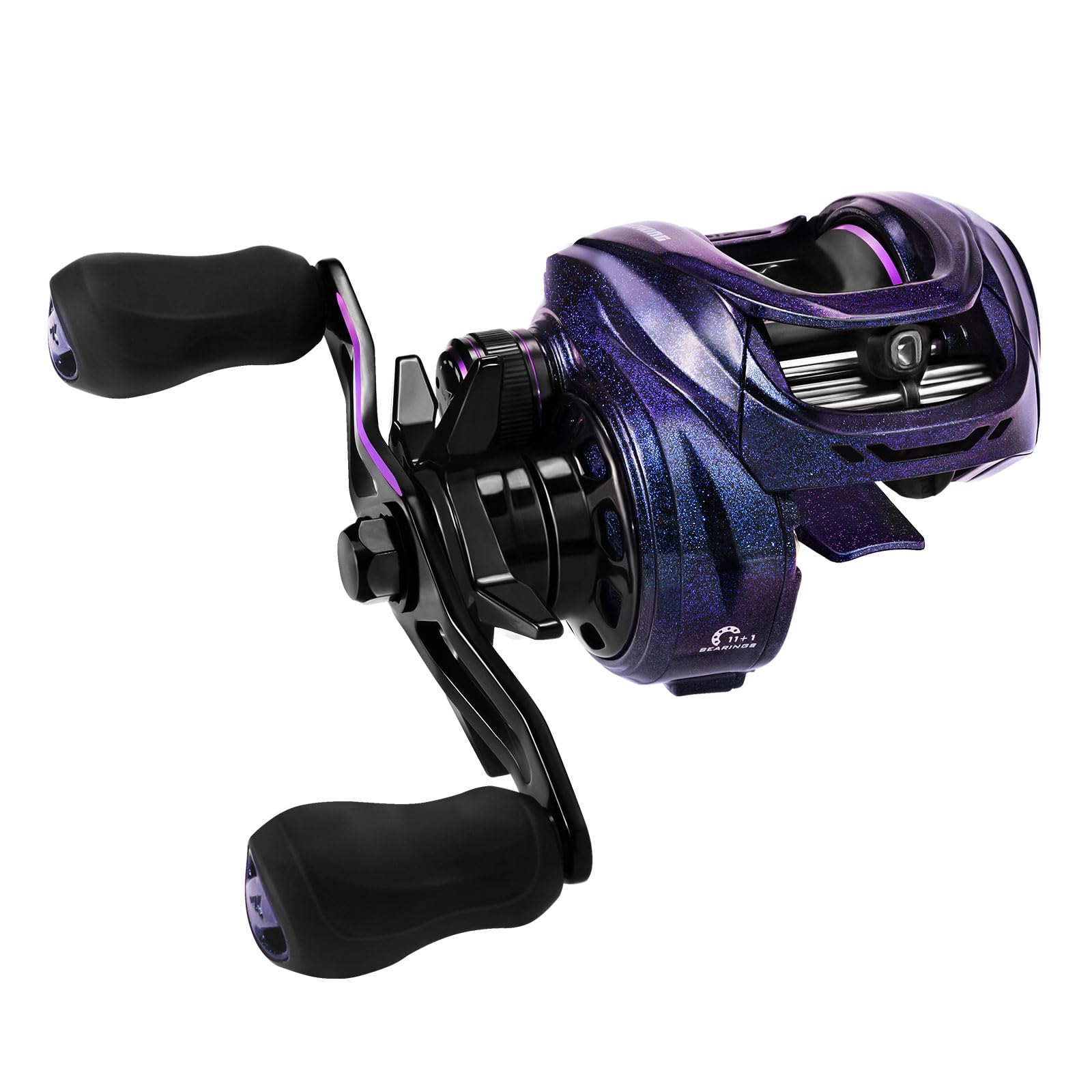
The KastKing Royale Legend Pro uses an AutoMag Dual Braking System that pairs a one-piece magnet ring with centrifugal adaptability. While it doesn’t have a digital microcomputer like Shimano’s I-DC4, the magnetic ring provides consistent braking force across a wide range of lure speeds, and the centrifugal arms kick in to prevent overruns at the top end of the cast. The 8.0:1 gear ratio picks up slack line quickly for fast follow-up casts.
Weighing just 5.5 ounces, this is the lightest reel in this guide. The carbon fiber frame and side cover keep weight down without sacrificing strength, and the 16-pound carbon drag (ARC—Arch Resistance Control) uses a singular carbon washer that provides smooth, progressive resistance. The high-speed split main shaft reduces noise and increases casting distance, and the 11+1 MaxiDur double-shielded stainless steel ball bearings keep the retrieve feeling glassy smooth.
Anglers transitioning from spinning gear to baitcasters find the AutoMag system forgiving, and the 39 mm palm-perfect design fits comfortably in smaller hands. The main drawback is aesthetic: the purple-blue pearlescent finish isn’t for everyone, though it does stand out on the water.
Why it’s great
- Extremely lightweight (5.5 oz) reduces fatigue during long sessions
- 16 lb carbon drag handles strong fish without stutter
- AutoMag braking is beginner-friendly with set-it-and-forget-it convenience
Good to know
- Purple-blue color scheme polarizes opinion
- Some units have reported tension knob failure over extended use
8. Shimano SLX (B07H4S6MD3)

This version of the standard Shimano SLX uses a Variable Braking System (VBS), which combines centrifugal blocks with an external magnetic dial. It’s a mechanical system, not digital, but the 7.2:1 gear ratio and Hagane body construction give it performance that punches above its price tier. The 12-pound maximum drag is adequate for most freshwater bass techniques.
The SLX has proven to be one of the most popular entry-level baitcasters on the market because it provides a smooth, durable platform that beginners can grow into. The Super Free Spool feature reduces spool shaft friction, and the stainless steel bearings provide reliable performance. Users transitioning from spinning gear find the braking system easy to understand—the external dial makes on-the-fly adjustments simple.
The 1″ x 1″ x 1″ package dimensions are almost certainly a listing error, but the reel itself is standard size and fits most low-profile reel seats. The reel comes with 5 bearings, which is sufficient for smooth operation, though serious anglers may want more bearing points for extended durability.
Why it’s great
- Hagane aluminum body at an entry-level price point
- Variable Braking System is intuitive for beginners to learn on
- Super Free Spool reduces casting friction
Good to know
- Only 5 bearings; less smooth under heavy load than higher-end models
- No digital braking system requires more thumb control
9. Shimano SLX (B07H4WR2M2)

This SLX variant offers the same Hagane body and Super Free Spool as its counterpart but with an 8.2:1 gear ratio and 11 pounds of drag. The faster gear ratio (8.2:1 XG) is ideal for anglers who prioritize quick line recovery for topwater lures or worm retrieves where you need to take up slack fast after a reaction strike.
The braking system on this model is the same mechanical VBS, which means you’ll still need to develop thumb control to avoid backlashes. But the Hagane frame provides a stable platform that makes learning easier, and the reel is responsive enough that experienced anglers can still enjoy using it as a backup or travel reel. The two available color options (the “Multi” designation) match most rod blank finishes.
User feedback emphasizes that this reel feels natural in the hand, especially in left-hand retrieve models, and that the quality is immediately apparent on the first cast. It’s not a DC reel, so it won’t eliminate backlashes automatically, but it’s one of the most cost-effective ways to get into a high-quality Shimano baitcaster that can serve as a foundation for developing advanced casting skills.
Why it’s great
- Hagane cold-forged aluminum body at a very accessible price
- 8.2:1 gear ratio for fast line recovery on reaction baits
- Consistent, reliable performance praised by first-time baitcaster users
Good to know
- Mechanical braking only; no digital backlash elimination
- 11 lb drag limits use in heavy cover or with large fish
FAQ
Do DC reels completely eliminate backlashes?
What is the difference between I-DC4 and SVS Infinity braking?
Can I use a DC reel with braided line?
Are DC reels worth the extra cost over magnetic baitcasters?
What is the best gear ratio for a DC reel?
Final Thoughts: The Verdict
For most users, the best dc reel winner is the Shimano Curado DC 200 because its MGL Spool III, I-DC4 braking, and 20-pound drag provide the widest capability range from finesse casting to heavy cover work. If you want a lighter, more finesse-oriented DC experience with JDM build quality, grab the Shimano Scorpion DC 150. And for entry-level digital braking that doesn’t compromise on core technology, nothing beats the Shimano SLX DC (23 JDM).

Mo Maruf
I created WellFizz to bridge the gap between vague wellness advice and actionable solutions. My mission is simple: to decode the research and give you practical tools you can actually use.
Beyond the data, I am a passionate traveler. I believe that stepping away from the screen to explore new environments is essential for mental clarity and physical vitality.