Our readers keep the lights on and my smoothie glass nicely filled. As an Amazon Associate, I earn from qualifying purchases.
When temperatures drop and natural browse withers, a deer’s metabolism shifts into survival mode. The right winter feed must deliver dense calories and digestible protein to help local herds maintain body condition through the toughest months.
I’m Mohammad Maruf — the founder and writer behind WellFizz. After analyzing dozens of feed formulas, seed blends, and blocks across multiple seasons, I’ve broken down exactly what moves the needle for winter deer nutrition.
Whether you manage a large lease or simply supplement backyard wildlife, finding the right product matters. That’s why I compiled this guide to the best deer food for winter, with seven options built to keep deer returning through snow and frozen ground.
How To Choose The Best Deer Food For Winter
Winter deer food is not a one-size-fits-all purchase. A block that works in October may not hold deer in January. The biggest factor is whether the feed provides enough digestible energy to offset the cold. Straight corn offers quick calories, but a blend with protein pellets and minerals supports antler health heading into next spring. For food plots, look for brassica blends or cold-tolerant annuals that green up before the last frost and remain palatable after snow cover. Pay attention to the crude protein percentage — anything above 15% is excellent for winter, while 10–12% is acceptable for maintenance. The form also matters: blocks resist waste and weather, loose corn fills spin feeders cheaply, and protein blends maximize nutrition per pound.
Protein Content and Digestibility
A deer’s rumen processes high-fiber forage differently in winter. Feed with 16% to 18% crude protein helps compensate for the lower-quality natural browse available. Products like the Antler King Grainiac Block deliver 16% protein plus fat, which provides sustained energy. Straight corn runs closer to 8% protein, so it works best when mixed with a protein pellet or used as a supplement to a higher-nutrient base.
Attractant vs. Nutrition
Some winter feeds prioritize smell and taste to pull deer across property lines. Apple-flavored blocks and sweet protein pellets can bring in deer within hours, but the real win is when they stay because the nutrition holds them there. A product like Herron Outdoors 4-4-2 Sweet Apple combines an intense aroma with 17% crude protein, giving you both pulling power and substance.
Weather Resistance and Waste
Winter rain, snow, and freeze-thaw cycles can turn loose corn into mush or bury it under ice. Blocks and larger kernel blends shed moisture better in open feeding areas. If you use a spin feeder, a whole-shelled corn like Manna Pro Top Score resists clogging and stays dry longer than cracked grain. For food plots, cold-tolerant brassicas like Whitetail Institute Winter-Greens survive frost and remain edible after repeated freezes.
Quick Comparison
On smaller screens, swipe sideways to see the full table.
| Model | Category | Best For | Key Spec | Amazon |
|---|---|---|---|---|
| Antler King Grainiac Block | Block Attractant | Year-round supplemental feeding | 16% Protein / 5% Fat | Amazon |
| Herron Outdoors 4-4-2 Sweet Apple | Protein Pellet Blend | Winter survival & antler development | 17% Crude Protein | Amazon |
| Herron Outdoors 4-4-2 Blaze Orange | Protein Pellet Blend | High-visibility long-range attraction | 17% Crude Protein | Amazon |
| Whitetail Institute Winter-Greens | Food Plot Seed | Late-season cold-tolerant forage | Brassica Blend | Amazon |
| CountryMax Whole Corn 50 lb | Whole Corn | High-volume ground feeding | 50 lb Bag | Amazon |
| Manna Pro Top Score Deer Corn | Whole-Shelled Corn | Budget-friendly spin feeder fill | 40 lb Bag | Amazon |
| Whitetail Institute No-Plow Seed | Food Plot Seed | Remote plots with minimal equipment | Annuals & Clovers Blend | Amazon |
In‑Depth Reviews
1. Antler King Apple Flavored Grainiac Block

The Grainiac Block packs whole corn, soybeans, black oil sunflower seeds, and peanuts into a dense 20-pound block infused with molasses and apple flavor. That combination drives a long-range aroma that pulls deer in fast — many users report deer hitting the block within 24 hours of placing it. The 16% protein and 5% fat content make it a legitimate supplement, not just an attractant.
Blocks naturally resist weather better than loose corn. Snow and rain run off the surface rather than soaking into a pile, so the block holds its nutritional value longer in wet winter conditions. Place it near staging areas, trail intersections, or water sources and expect regular revisits until the block is gone.
The apple scent is pronounced but not artificial-smelling. Multiple verified buyers noted that deer ignored nearby feeders to dig at the spot where the block had previously been, which shows how strong the residual attractant factor is. It works year-round, making it a versatile tool for both pre-rut scouting and deep-winter support.
Why it’s great
- High-density block minimizes waste in wet conditions
- 16% protein plus fat provides real winter nutrition
- Apple molasses aroma pulls deer from a distance
Good to know
- 20 lb block may be consumed faster than expected with heavy deer traffic
- Delivery time varies depending on warehouse location
2. Herron Outdoors 4-4-2 Sweet Apple Protein Deer Feed

Herron Outdoors formulated the 4-4-2 blend around a 40-40-20 ratio: 40% high-protein pellets, 40% whole-kernel corn, and 20% sweet apple pellets. That math adds up to a maximum 17% crude protein, which is among the highest you will find in a bagged feed. The sweet apple pellets give it an aggressive scent trail that cross-property deer can pick up quickly.
Users consistently report deer switching from other food sources to this blend within hours of first exposure. The protein component supports antler development and winter body condition, while the whole corn provides the quick-burn calories deer need to stay warm. The bag is resealable and odor-controlled, which keeps the feed fresh even when stored in a cold shed or garage.
This is a premium option built for hunters and property managers who want both attraction and substance. A single 10-pound bag covers a small feeding site for several days. If you manage a larger area, you may want multiple bags per refill. The price reflects the protein content and ingredient quality rather than raw poundage.
Why it’s great
- 17% crude protein supports winter survival and antler growth
- Sweet apple aroma creates long-range pulling power
- Resealable odor-controlled bag preserves freshness
Good to know
- 10 lb size is modest for large properties with high deer density
- Premium positioning means higher cost per pound
3. Herron Outdoors 4-4-2 Blaze Orange Protein Deer Feed
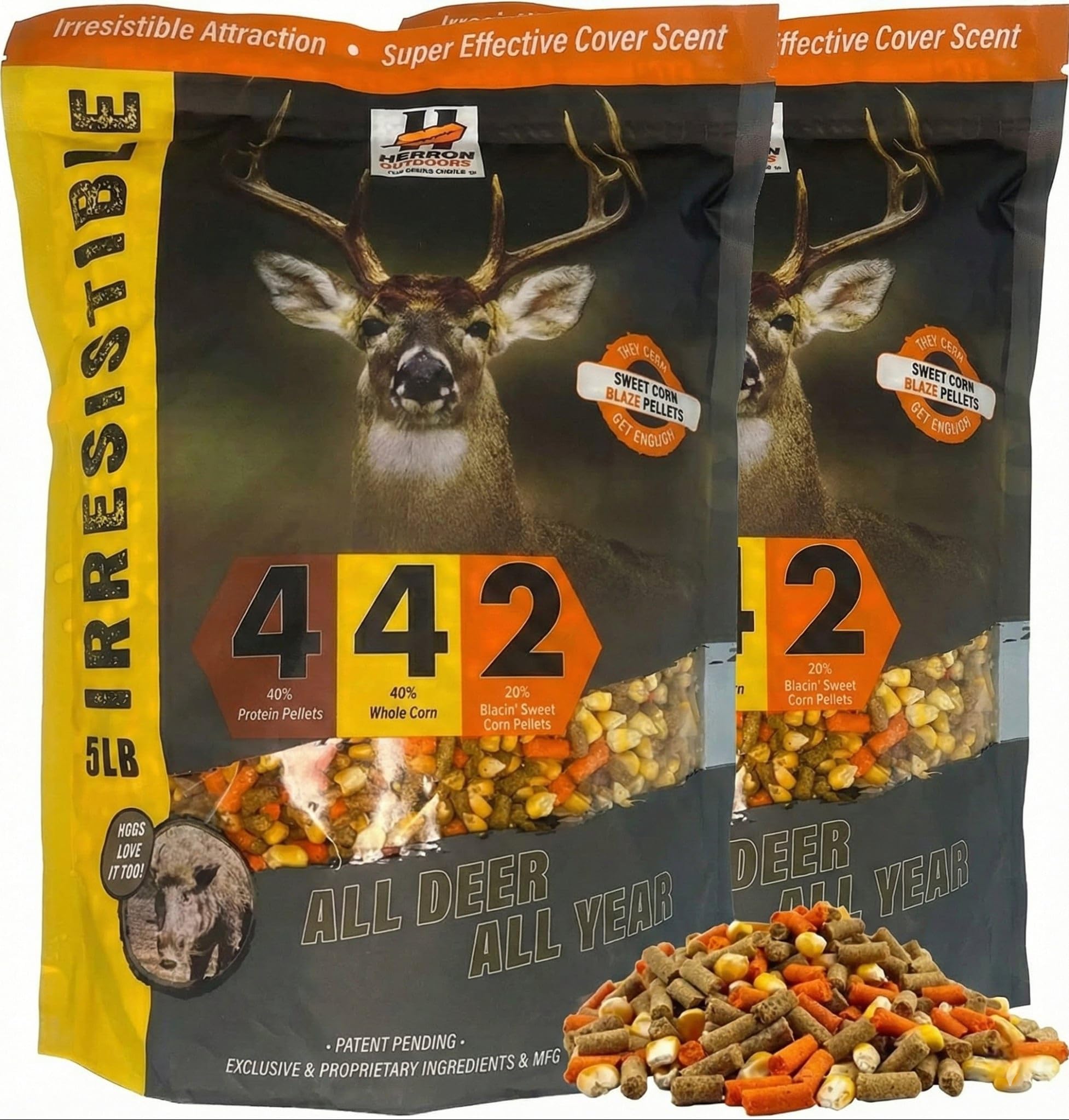
The Blaze Orange variant of Herron’s 4-4-2 uses the same 40-40-20 foundation as the Sweet Apple version but swaps the apple pellets for high-visibility orange pellets. The visual contrast helps you monitor bait-site consumption from a distance, and the proprietary scent profile still pulls deer effectively across property lines. The crude protein remains at 17%, matching the nutritional output of the Sweet Apple blend.
Deer and hogs both target this feed aggressively. Verified buyers noted that deer preferred it over fresh winter lettuce and birdseed mixes. The whole-kernel corn resists clumping in damp conditions, and the protein pellets hold up better than standard soy-based meals. It pours easily from the resealable bag into either a trough or a spin feeder.
For winter management, this feed bridges the gap between a maintenance ration and a high-performance supplement. The orange pellets add no nutritional difference, but they give you real-time feedback on how fast deer are hitting the site—a useful feature for pre-hunt scouting or camera surveys.
Why it’s great
- High-visibility orange pellets allow easy consumption tracking
- 17% crude protein supports antler development and winter mass
- Resealable bag locks in freshness and aroma
Good to know
- 10 lb bag size requires frequent refills for high-traffic areas
- Premium pricing per pound may not suit large-scale feeding
4. Whitetail Institute Winter-Greens Deer Food Plot Seed
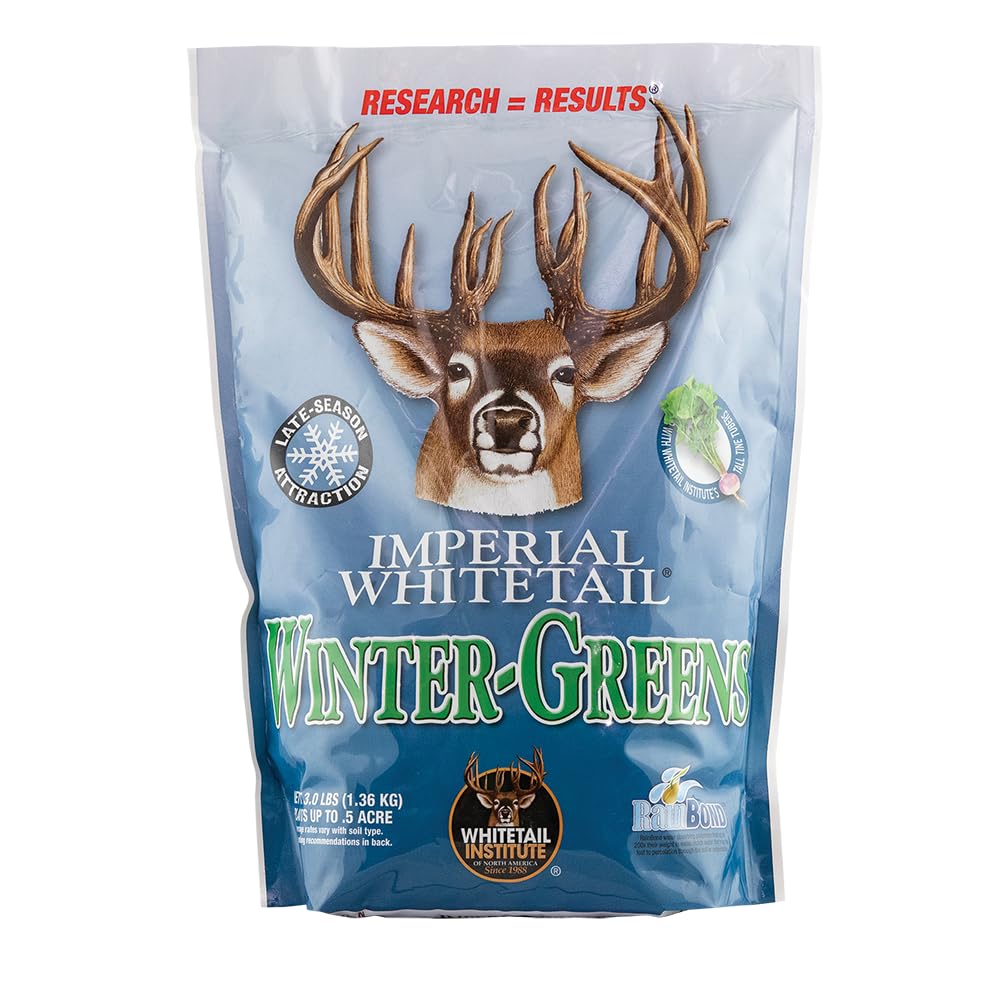
Winter-Greens is a brassica-heavy blend designed specifically for fall planting that produces forage into late winter. The mix includes rape, kale, turnip, and a small amount of Whitetail Institute’s Tall Tine Turnip. These plants survive frost and remain palatable after repeated freeze-thaw cycles, which is the primary challenge for winter food plots in northern zones.
Users report that deer switch from corn to Winter-Greens once the brassicas mature. The sugar content in the leaves increases after frost, making them more attractive than many alternative forages. The seed establishes quickly with minimal soil preparation and tolerates as little as 3–4 hours of broken sunlight daily, which makes it viable in timber openings and power-line cuts.
A single 3-pound bag covers roughly half an acre when broadcast. The seed is GMO-free and fortified with the same cold-tolerance genetics that keep it green when native browse has turned brown. For property managers looking to create a natural winter food source without bagged feed, this is the most effective option in the lineup.
Why it’s great
- Cold-tolerant brassicas remain edible after hard frosts
- Minimal ground prep required for planting
- Grows in partially shaded low-light environments
Good to know
- Requires fall planting to establish before winter
- Drought during germination can reduce stand density
5. CountryMax Backyard Seeds Whole Corn 50 lb
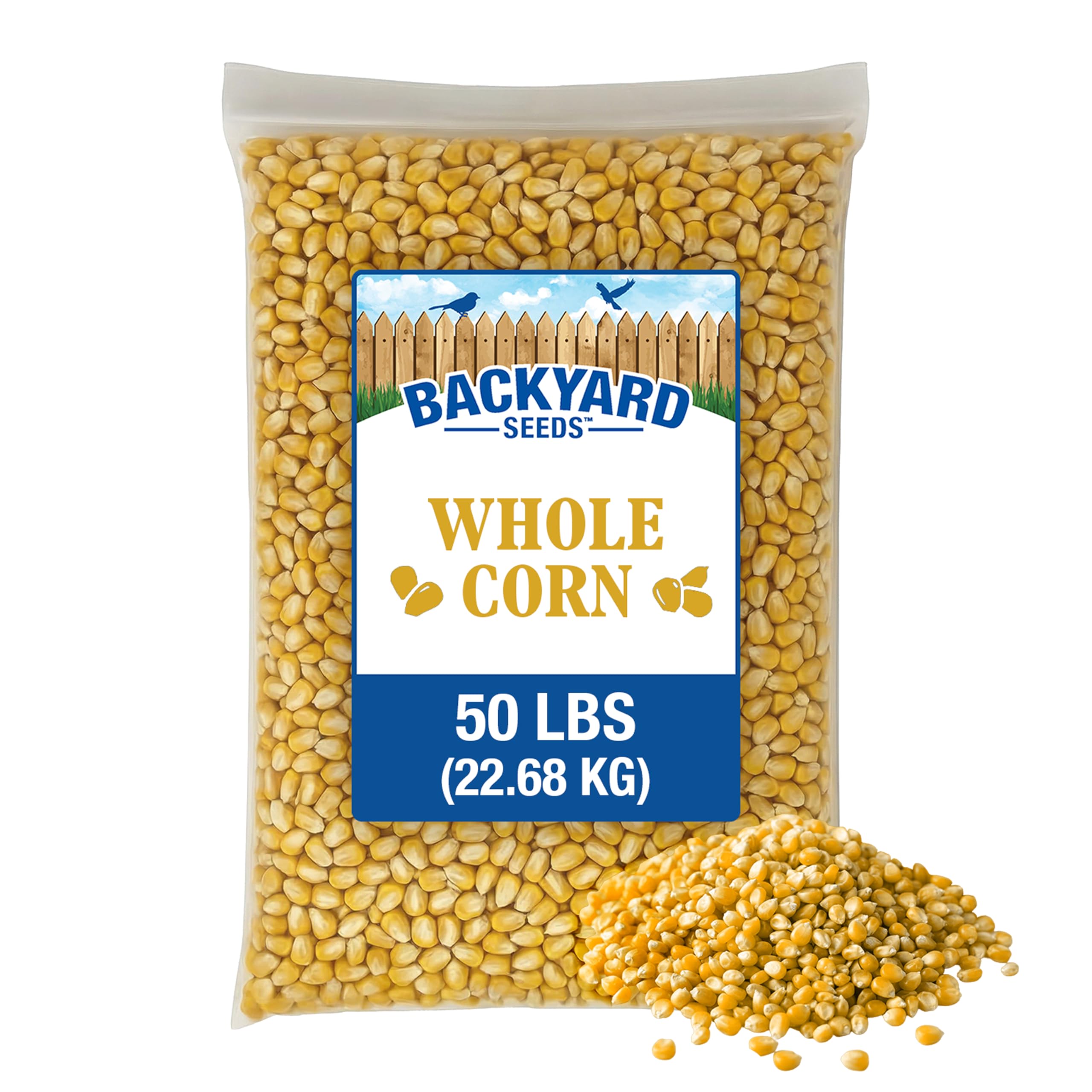
CountryMax sources its whole corn from a small family farm in New York State, and the quality control is visible. The kernels arrive clean with minimal dust, no mold, and very few broken pieces. A 50-pound bag delivers bulk volume at a competitive per-pound value, ideal for property owners who go through feed quickly during heavy winter use.
Whole corn is a high-energy, low-protein option. Deer get quick calories that help maintain body temperature, but the crude protein sits around 8%. That makes this bag a strong base for a feeding program — you can mix it with a protein pellet or use it as a standalone attractant when the primary goal is holding deer on the property rather than maximizing antler growth.
Buyers consistently mention that deer, squirrels, and turkeys all clean up the corn rapidly. The bag is simple and functional with no added scents or flavors. If you need raw volume to feed a large herd through a cold snap, this is the most straightforward choice on the list.
Why it’s great
- 50 lb bag offers high volume for heavy feeding demand
- Clean whole kernels with minimal dust or mold
- Sourced from a USA family farm
Good to know
- Protein content is low compared to blended feeds
- Loose corn can spoil faster than blocks in wet snow
6. Manna Pro Top Score Deer Corn 40 lb

Manna Pro Top Score is a straight whole-shelled corn bag designed for deer and turkey. The 40-pound sack gives you a solid entry-level option if you are just starting a winter feeding program or need to fill a spin feeder without breaking the bank. The kernels are clean and uniform, which keeps feeder mechanisms from jamming.
As a straight-corn product, it provides energy but not the protein density that blended feeds offer. Deer will eat it consistently, and it works well as a base attractant when natural food sources are buried under snow. Many buyers pair this corn with a protein supplement block to get both the energy hit and the nutritional depth.
The price per pound is where this bag wins. For the upfront cost, you can cover a large area with a light spread or fill a feeder multiple times. Shipping from Amazon means heavy 40-pound bags arrive at your door, which is a practical advantage for buyers who cannot easily haul feed from a farm store.
Why it’s great
- Low cost per pound for high-volume winter feeding
- Whole-shelled kernels prevent feeder clogging
- Reliable attractant for deer and turkeys
Good to know
- Protein content is around 8%, low for winter body condition
- Loose corn can spoil if left on wet ground too long
7. Whitetail Institute No-Plow Deer Food Plot Seed
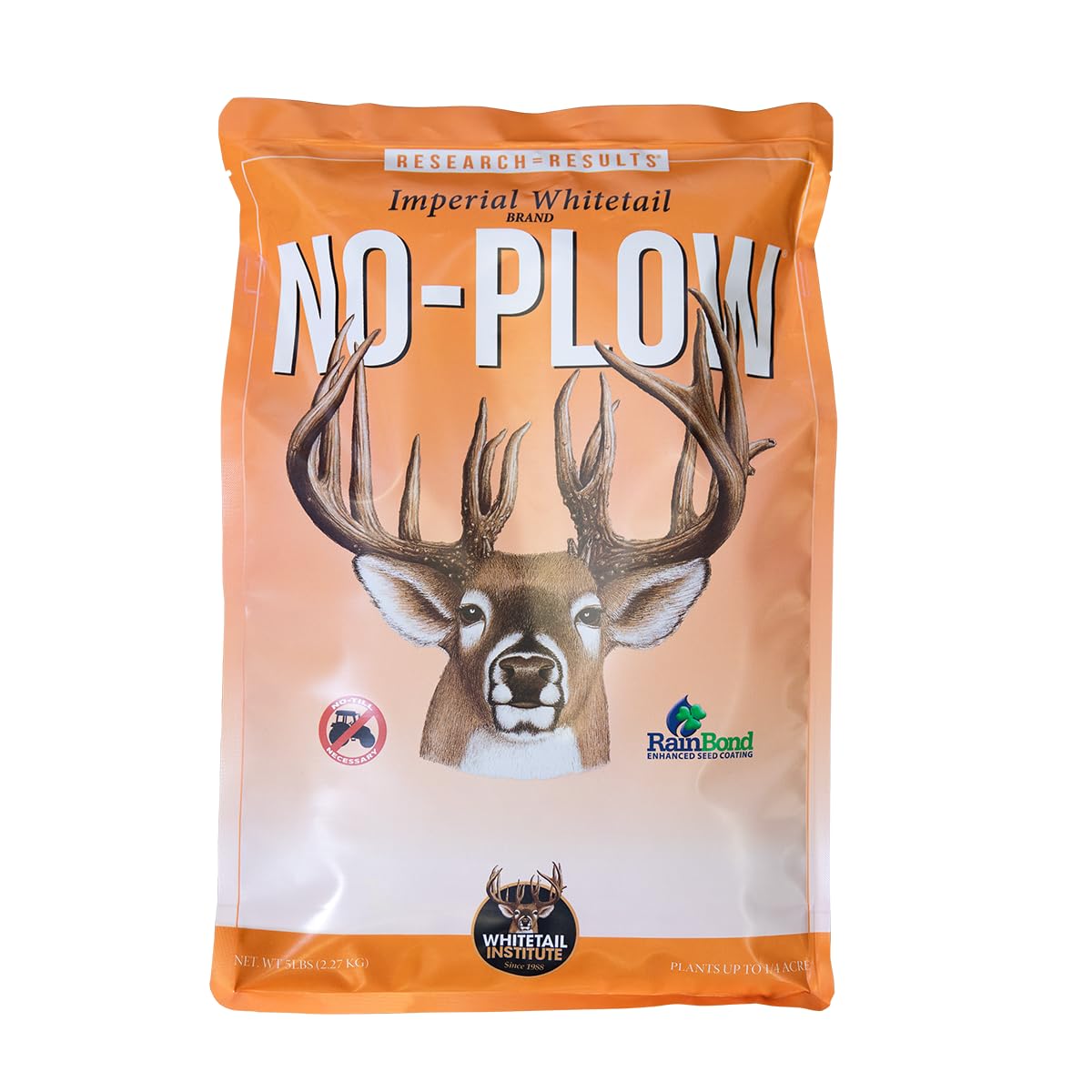
The No-Plow blend is tailored for remote areas where dragging a tractor or tiller is impractical. The seed mix includes cereal grains, annual clovers, brassica, radish, and lettuce — all species that germinate quickly with minimal seedbed prep. As long as you can establish good seed-to-soil contact, this blend can turn a logging road or clearing into a productive winter forage site.
Deer hit the brassica and radish components hard after the first frost, when the natural sugar content rises. The clover provides a protein-rich browse that holds deer through the early winter. Users consistently report visible growth within a week of planting, even with no-till methods and no irrigation. The drought and cold tolerance ratings are genuinely high, based on field reports from southern and midwestern states.
Planting in late summer or early fall gives the plot enough time to establish before winter. A 4-pound bag covers roughly 1,000 square feet at recommended rates. For hunters and land managers who want a self-sustaining winter food source without recurring bagged-feed costs, this is the most practical long-term investment in the list.
Why it’s great
- Grows in hard-to-reach areas without tilling equipment
- Diverse blend attracts deer through early and late winter
- Fast germination visible within one week
Good to know
- Requires fall planting to be productive in winter
- Drought stress during germination can reduce plot density
FAQ
Can deer survive on straight corn alone through winter?
How often should I refill a winter deer feeder?
Will brassica food plots survive heavy snow?
Final Thoughts: The Verdict
For most users, the best deer food for winter winner is the Antler King Apple Flavored Grainiac Block because it combines a 16% protein block with an irresistible apple molasses scent that pulls deer in fast and holds them through the cold months without spoiling. If you want the highest protein content for antler development, grab the Herron Outdoors 4-4-2 Sweet Apple at 17% crude protein with long-range pulling power. And for a self-sustaining natural plot that keeps producing after the snow flies, nothing beats the Whitetail Institute Winter-Greens brassica blend.

Mo Maruf
I created WellFizz to bridge the gap between vague wellness advice and actionable solutions. My mission is simple: to decode the research and give you practical tools you can actually use.
Beyond the data, I am a passionate traveler. I believe that stepping away from the screen to explore new environments is essential for mental clarity and physical vitality.