Our readers keep the lights on and my smoothie glass nicely filled. As an Amazon Associate, I earn from qualifying purchases.
Setting up a deer camera only to retrieve a memory card full of blurry night shots, false triggers from swaying grass, or a dead battery after two weeks is a frustrating reality for many hunters. The gap between marketing promises and real-world performance in low-light detection, trigger speed, and battery efficiency often determines whether you spend your season scouting or swapping batteries.
I’m Mohammad Maruf — the founder and writer behind WellFizz. This guide is grounded in hundreds of hours comparing trigger latency, IR illumination range, cellular plan costs, and image sensor quality across today’s leading trail camera models.
Whether you are monitoring a remote food plot or securing a rural property, finding the right balance of detection range, image clarity, and connectivity is critical. This thorough guide breaks down the top contenders to help you choose the best deer camera for your specific scouting needs.
How To Choose The Best Deer Camera
Picking a trail camera is more than just matching the highest megapixel number. You need to balance the clarity of night images with battery conservation, cellular connectivity costs, and the physical durability to withstand rain, snow, and direct sun. The right camera saves you fuel money and boots-on-the-ground time.
IR Flash Type: No-Glo vs. Low-Glo vs. Red Glow
No-Glo (940nm) LEDs are invisible to deer and humans, making them ideal for covert scouting near bedding areas or high-pressure properties. Low-Glo (850nm) produces a faint red glow that humans can see but provides brighter night images at longer ranges. Red-glow cameras are the least expensive but can spook wary mature bucks.
Trigger Speed & Recovery Time
A trigger speed under 0.5 seconds is essential for fast-moving game like whitetail bucks. Recovery time — how long the camera waits before re-arming — dictates whether you capture the second deer following the first. Models with a 1-second recovery beat models with longer gaps, especially at mineral sites or feeders.
Detection Range & Field of View
Detection range determines how far the sensor reliably picks up motion. Most quality cameras hit 80 to 100 feet. Field of view (usually around 50-60 degrees) defines the width of the area captured. Multi-sensor arrays (side PIR sensors) widen the detection zone and reduce the chance of deer walking past the camera without triggering it.
Quick Comparison
On smaller screens, swipe sideways to see the full table.
| Model | Category | Best For | Key Spec | Amazon |
|---|---|---|---|---|
| Tactacam Reveal X 3.0 | Cellular | Remote property monitoring | 4K Photo / 1080p Video | Amazon |
| TACTACAM Reveal X PRO | Cellular | Hybrid image delivery | 96ft IR range / GPS tracking | Amazon |
| Moultrie Edge 2 Pro | Cellular | AI false trigger elimination | 40MP Photo / 1440p Video | Amazon |
| Stealth Cam Deceptor No Glo | Cellular | Budget cellular scouting | 40MP Photo / 1440p Video | Amazon |
| GardePro E5S | Non-Cellular | SD card reliability | 64MP Photo / 1296p Video | Amazon |
| Meidase P70 2 Pack | Non-Cellular | Best value two-pack | 64MP Photo / 1296p Video | Amazon |
| SPYPOINT Flex-M Solar | Cellular | Solar + free photo plan | 28MP Photo / 720p Video | Amazon |
In‑Depth Reviews
1. Tactacam Reveal X 3.0 Cellular Trail Camera
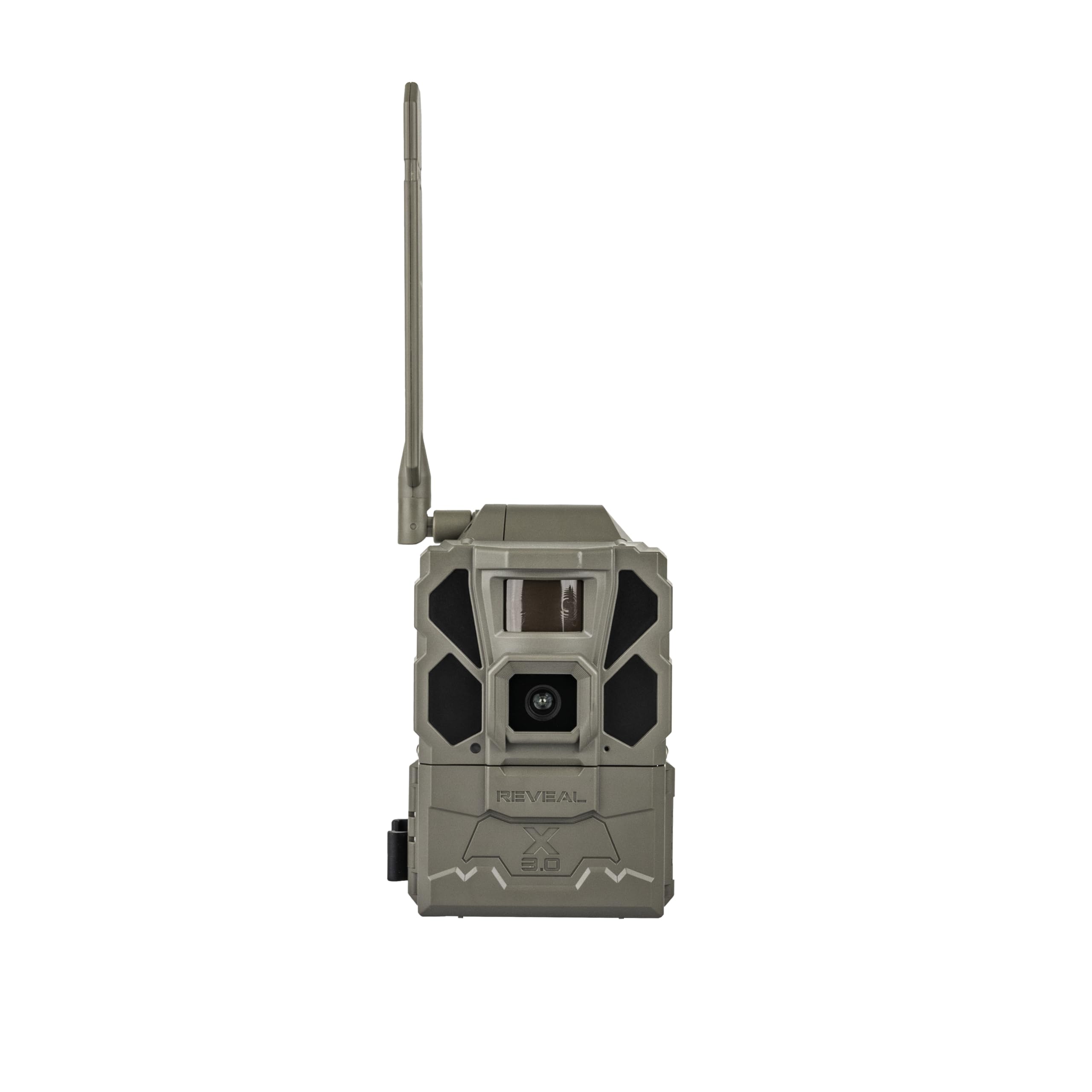
The Tactacam Reveal X 3.0 is the cellular trail camera benchmark for serious hunters and property owners. Its auto-connect multi-carrier LTE (AT&T and Verizon) eliminates the SIM-swapping hassle of earlier generations, intelligently locking onto the strongest signal wherever you mount it — no dead zones from a single-network lock-in. Independent testing shows it delivers up to six months of battery life when paired with the optional lithium cartridge, which drastically reduces mid-season maintenance trips.
Image quality is outstanding for a camera in its tier, capturing sharp 4K stills and clean 1080p HD video with accurate color during the day and detailed black-and-white night images. The sub-half-second trigger speed, combined with a 3-shot burst mode, ensures you catch fast-moving bucks mid-stride without the edge of the frame being empty. The built-in GPS adds theft recovery and location tracking directly in the app.
Setup takes under ten minutes with the pre-installed antenna and activated SIM — just scan the QR code in the REVEAL app. Rural landowners and farmers also use it as a wireless property monitoring system, receiving real-time LTE alerts for gates, equipment, and unexpected activity. Its consistent reliability across extreme weather conditions makes it a minimal-hassle choice.
Why it’s great
- Auto-connects to strongest carrier without manual SIM swapping
- 6+ month battery life with lithium cartridge reduces field visits
- Built-in GPS tracks camera location and acts as theft deterrent
Good to know
- Requires cellular subscription for image transmission
- No built-in solar panel; battery cartridge and solar panel are separate purchases
2. TACTACAM Reveal X PRO Cellular Trail Camera
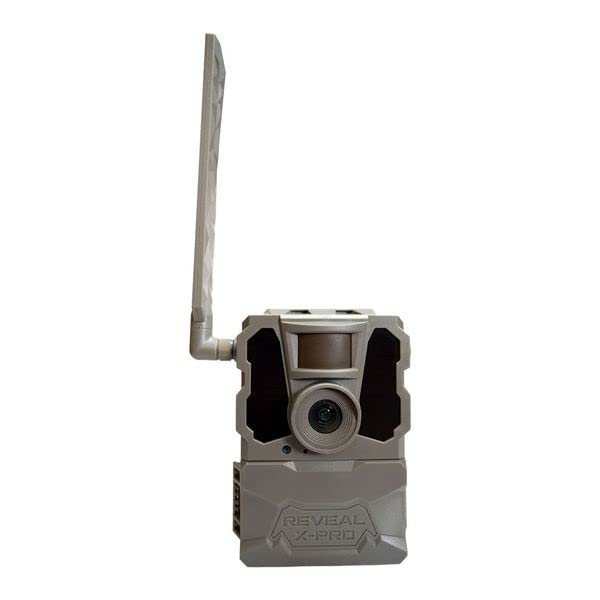
The Reveal X PRO stands apart with its integrated GPS tracking module, a feature rarely found at this price point. If theft is a concern on public land or shared lease property, the GPS location logged in every upload provides a direct recovery trail. The built-in LCD screen lets you review images and adjust settings on the spot without needing a phone, which is a genuine convenience when you are already at the mount site with SD card in hand.
Its No-Glo IR technology delivers a 96-foot detection and flash range with zero visible light, making it the ideal choice for skittish bucks or security applications where discretion matters. The hybrid mode balances battery life and image delivery speed, so you get near-real-time notifications without draining AAs every two weeks. Mounting is solid and the overall build feels more rugged than budget cellular alternatives.
One oversight is that it requires a 32GB Class 10 U3 SD card and 12 AA batteries (or the proprietary lithium battery cartridge). The app is intuitive and the dual SIM cards (Verizon and AT&T) with no-contract activation give you flexibility in coverage areas. Buyers repeatedly praise its crisp daytime photos and reliable motion detection that rarely false-triggers on wind or vegetation.
Why it’s great
- Built-in GPS module provides theft recovery if camera is stolen
- Integrated LCD screen allows on-site photo review without a phone
- No-Glo 96ft IR range remains invisible to deer and people
Good to know
- Requires 12 AA batteries — higher battery consumption than 8-battery models
- 32GB SD card not included and is required for operation
3. Moultrie Edge 2 Pro Cellular Trail Camera

The Moultrie Edge 2 Pro eliminates the need for SD cards entirely with 8GB of built-in storage and unlimited cloud backup, a huge convenience for hunters who have lost or corrupted a card mid-season. Its AI false trigger reduction uses Moultrie Mobile software to filter out non-target motion, which means fewer phantom pictures of swaying grass and more actionable images of deer, turkey, and humans. The free 3-month onX Hunt Elite subscription adds mapping value for scouting.
Image quality hits 40MP stills and 1440p video with audio that captures hoof steps and gobbles. The Live Aim preview in the app lets you see the camera’s exact field of view in real time — no more climbing the tree, guessing, and climbing down to adjust. The remote On Demand trigger is useful for pre-entry or post-season property inspection without making a trip to the woods.
An important practical note: this camera requires 16 AA batteries or the optional rechargeable pack, and the cellular plan starts at a monthly fee. Users consistently report crisp images even in low light, and the 100-foot detection range is accurate in real-world conditions. The 2-year warranty (after app activation) provides long-term peace of mind for a cellular camera investment.
Why it’s great
- 8GB internal memory and unlimited cloud backup remove SD card hassle
- AI false trigger elimination saves battery and storage space
- Live Aim feature provides real-time camera alignment via smartphone
Good to know
- Requires 16 AA batteries — higher upfront battery cost
- Cellular plan required for cloud transmission; no free tier available
4. Stealth Cam Deceptor No Glo Cellular Trail Camera
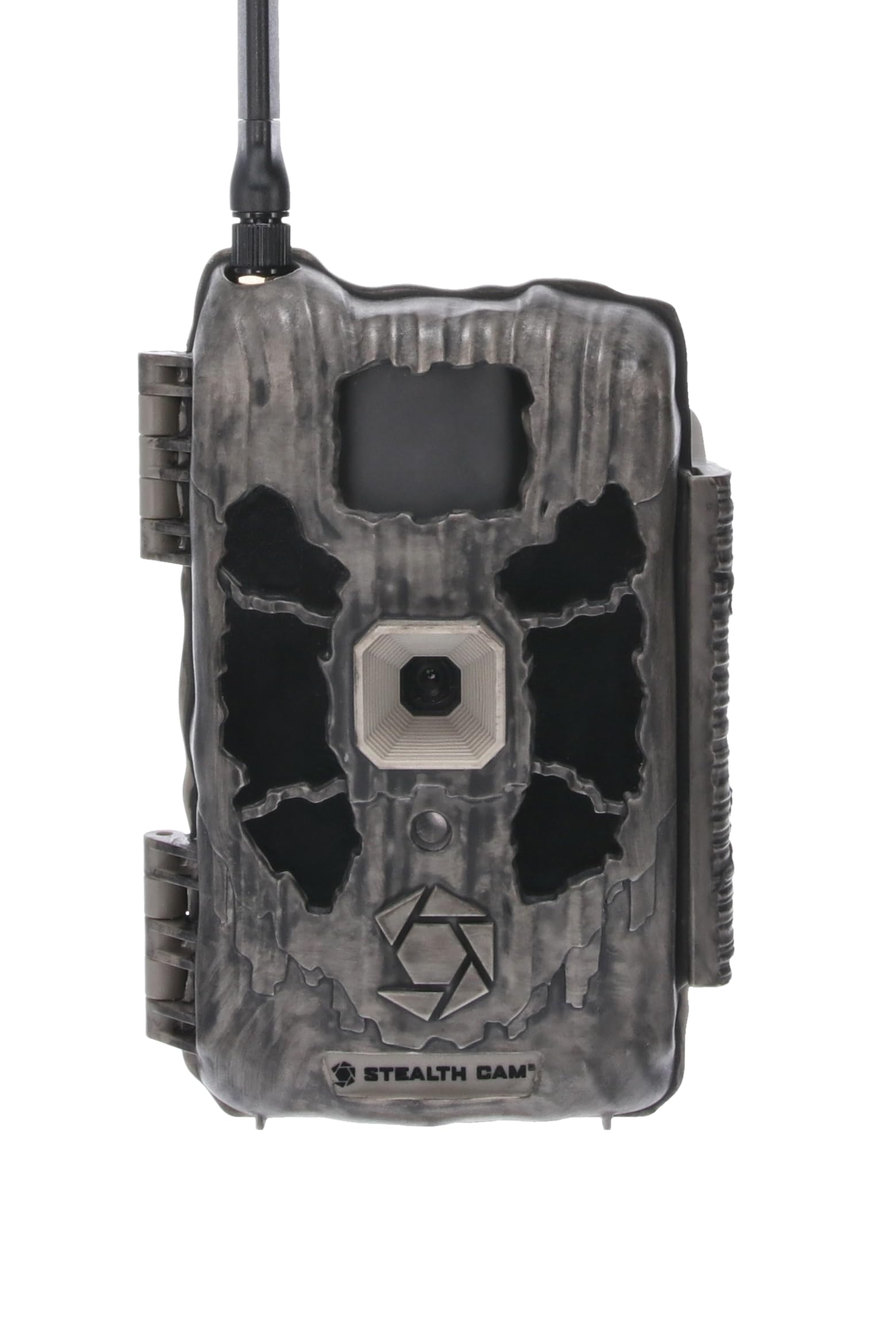
The Stealth Cam Deceptor No Glo brings cellular connectivity to a budget-friendly price point without sacrificing critical features. Its 36-piece 940nm No-Glo LED array provides an invisible 80-foot detection and flash range, which is competitive with cameras costing substantially more. The 0.3-second trigger speed is fast enough to catch bounding deer, and the burst mode of 1-3 images per trigger ensures you have multiple angles to review.
The Command Pro app offers On Demand functionality, letting you trigger the camera remotely to check an area before you enter or after you leave. Integrated Animal Recognition software sorts photos into categories automatically, reducing the time you spend scrolling through thousands of blank-sky shots. The camera selects between AT&T and Verizon networks automatically so you don’t have to choose a carrier before buying.
Battery life is a legitimate point of caution — users report that 8 AA batteries drain quickly when the On Demand feature is used frequently, and the app sometimes fails to alert when the camera goes offline. Daytime image quality is solid, but the 40MP claim may not hold under heavy pixel-peeping. For the price, it is a functional entry-level cell cam best suited for hunters who check their cameras weekly.
Why it’s great
- No-Glo 80ft IR range is invisible to wildlife at a budget price
- Automatic network selection picks AT&T or Verizon based on signal
- Animal recognition AI sorts photos into categories automatically
Good to know
- Battery life is poor with regular On Demand remote triggers
- App does not always push notification when camera goes offline
5. GardePro E5S Trail Camera (Non-Cellular)

The GardePro E5S is a non-cellular, non-WiFi trail camera that relies solely on SD card retrieval, which is exactly what many hunters prefer when they want simplicity and zero monthly fees. Its three PIR sensors (left, center, right) create a wide detection zone and enable a lightning-fast 0.1-second trigger speed — faster than many cellular cameras and critical for catching deer that appear from the side rather than head-on.
Image resolution hits 64MP photos and 1296p HD video with surprisingly sharp detail for a camera in this range. The IP66 waterproof rating means it survives torrential downpours, and the 1/4-inch-20 mounting thread gives you flexibility to attach it to tree mounts, posts, or tripods. Battery life is excellent when using lithium AAs; users report lasting an entire season on one set if the camera is not triggering thousands of times per day.
The main trade-off is the lack of cellular connectivity — you must physically visit the camera to retrieve the SD card and view images. The small in-camera playback screen is adequate for quick checks but not for detailed analysis. Customer support receives high marks for responsiveness, including cases where buyers received the wrong model in the box and replacements were shipped promptly.
Why it’s great
- Triple PIR sensors achieve 0.1-second trigger speed for side-moving deer
- 64MP stills rival image quality of cameras costing double the price
- IP66 waterproof rating handles heavy rain and humidity without failure
Good to know
- No cellular or WiFi — requires physical SD card retrieval
- Small onboard screen is impractical for detailed image review in the field
6. Meidase P70 2 Pack Trail Camera
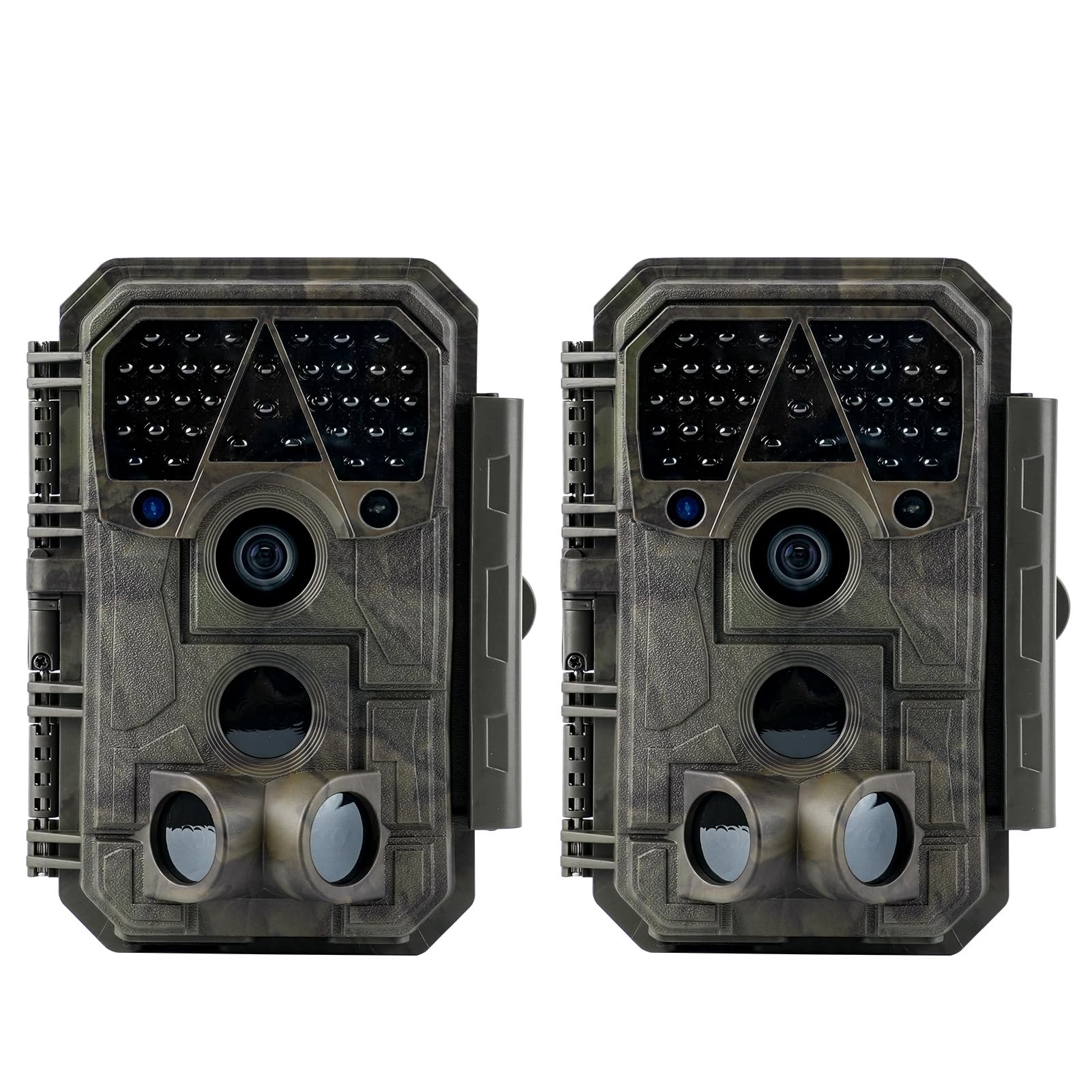
The Meidase P70 2 Pack provides exceptional value for hunters who need to cover multiple pinch points, field edges, or trail crossings without buying four separate units. Each camera delivers 64MP stills and 1296p HD video with H.264 compression, which shrinks file sizes significantly and speeds up download times when you transfer media to a laptop. The 100-foot No-Glo night vision uses a large f/1.6 aperture lens to capture more ambient light, producing brighter black-and-white images than typical budget IR cameras.
Rapid 0.1-second trigger speed is achieved by the two side PIR sensors working with the central sensor, covering a wide 120-degree field of view. The 2.4-inch color display and intuitive button menu make setup straightforward, even for first-time users. Battery life is reasonable for still images, though video recording drains AAs noticeably faster — users advise sticking to lithium batteries for extended deployments.
The main downsides are that SD cards are not included, and the internal clock must be reset after every battery change. Windy conditions can cause high trigger counts (over 1,000 in 24 hours), cutting battery life to about three weeks in breezy locations. The two-pack is ideal for budget-conscious hunters who already own rechargeable batteries and SD cards and who want reliable mid-range performance without subscription costs.
Why it’s great
- Two cameras in one purchase for covering multiple trail crossings
- H.264 compression reduces video file sizes for faster downloads
- f/1.6 aperture lens provides bright 100ft night vision in low moonlight
Good to know
- High trigger count in wind can drain batteries in 2-3 weeks
- Internal clock must be manually reset after every battery change
7. SPYPOINT Flex-M Solar Bundle

The SPYPOINT Flex-M Solar Bundle solves the two biggest pain points of cellular trail cameras: battery life and monthly costs. The included SPLB-10 compact solar panel keeps the internal batteries topped off, meaning you can deploy the camera for months without climbing the tree to swap AAs. SPYPOINT’s free photo transmission plan delivers up to 100 photos per month with zero subscription fee, which is enough for many weekend hunters to monitor a single scrape or food plot.
Image quality is 28MP stills with 720p video and audio. While the resolution is lower than the 40MP and 64MP competitors in this guide, the trade-off is faster transmission speeds and significantly lower cellular data usage. The camera offers Photo, Video, Time-Lapse, and Time-Lapse+ modes, giving flexibility for both motion-triggered capture and interval-based monitoring. Buck Tracker AI species filtering sorts images into categories directly in the SPYPOINT app.
A critical requirement is a 32GB microSD card (not included) for operation. The camera also works best with the optional LIT-22 rechargeable battery pack, as standard AA batteries drain quickly when paired with constant cellular transmission and solar charging cycles. Durability is solid with an IP65 water-resistant rating, and the mounting arm included in the bundle allows ideal solar panel angle. The free plan makes this the lowest-cost cellular option for year-round scouting.
Why it’s great
- Solar panel bundle eliminates frequent battery changes for extended deployment
- Free photo plan sends 100 images per month with no subscription cost
- Constant Capture technology sends and records images simultaneously
Good to know
- Maximum video resolution is 720p — lower than most competitors
- Requires 32GB microSD card and optional rechargeable battery pack for best performance
FAQ
What is the difference between a cellular and non-cellular deer camera?
How many AA batteries do trail cameras typically need?
Why does my trail camera take so many blank photos?
Final Thoughts: The Verdict
For most users, the best deer camera winner is the Tactacam Reveal X 3.0 because it combines auto-connect multi-carrier LTE, excellent battery life, sharp images, and an intuitive app into one reliable package. If you want a theft-deterrent GPS tracker and an LCD screen for on-site review, grab the TACTACAM Reveal X PRO. And for budget-conscious hunters covering two spots without monthly fees, nothing beats the Meidase P70 2 Pack.

Mo Maruf
I created WellFizz to bridge the gap between vague wellness advice and actionable solutions. My mission is simple: to decode the research and give you practical tools you can actually use.
Beyond the data, I am a passionate traveler. I believe that stepping away from the screen to explore new environments is essential for mental clarity and physical vitality.