Our readers keep the lights on and my smoothie glass nicely filled. As an Amazon Associate, I earn from qualifying purchases.
Your solar array sits on the roof, soaking up photons, ready to deliver silent power to your cabin, RV, or off-grid workshop. Nothing stops that flow faster than a deep cycle battery that can’t hold its voltage through the night or crumples after a few hundred charge cycles. The chemistry you choose, the capacity you spec, and the management system inside that box determine whether your setup powers a weekend fishing trip or years of independent living.
I’m Mohammad Maruf — the founder and writer behind WellFizz. I’ve spent hundreds of hours cross-referencing spec sheets, analyzing BMS logic, cycle-life claims, and real-world voltage sag across the most popular deep cycle chemistries to separate genuine long-haul performers from marketing hype.
Whether you’re building a solar-powered shed, upgrading an RV battery bank, or running a trolling motor all day, this guide breaks down the critical specs and picks that define the best deep cycle battery for solar in today’s market.
How To Choose The Best Deep Cycle Battery For Solar
Solar batteries are a multi-year investment, and picking the wrong chemistry or capacity can leave you with a dead inverter at dusk. Focus on four factors that separate a true solar companion from a short-lived disappointment.
Chemistry: LiFePO4 vs AGM vs Flooded Lead-Acid
Lithium iron phosphate (LiFePO4) dominates modern solar setups because it offers 4000 to 15000 deep cycles versus 300 to 1000 for lead-acid. LiFePO4 also maintains higher usable capacity (80-100% depth of discharge) without damaging the cells, whereas lead-acid performs best above 50% DoD. AGM batteries are maintenance-free and robust, but they are heavier and degrade faster under daily cycling. Flooded lead-acid costs the least upfront, but requires venting, water checks, and delivers the lowest cycle life. For any solar installation that cycles daily, LiFePO4 is the clear winner on total cost per cycle.
Capacity and Voltage Matching
Capacity is measured in amp-hours (Ah), but what matters for solar is the usable watt-hours: Volts x Ah x usable DoD. A 12V 100Ah LiFePO4 delivers roughly 1280Wh of usable energy. Smaller 50Ah packs suit kayaks or small backup loads, while 200Ah or 48V rack batteries handle full-home off-grid systems. Your charge controller and inverter must match the battery voltage. 12V is standard for small to medium setups, while 24V and 48V systems reduce current over long wire runs and allow larger solar arrays.
BMS and Protection Features
The battery management system (BMS) is the brain inside every lithium battery. Look for built-in protection against overcharge, over-discharge, over-current, short circuits, and high/low temperature cutoffs. A 100A BMS can handle sustained loads of about 1280W at 12.8V. For larger inverters or heavy loads, verify the BMS continuous and peak ratings. Smart BMS units with Bluetooth or app monitoring give you real-time voltage, state of charge, and cell balancing data — a major advantage for troubleshooting solar systems.
Expandability and Physical Fit
If you plan to grow your solar system, check whether batteries support parallel (increase capacity) and series (increase voltage) connections. Many LiFePO4 batteries allow up to 4 in series and 4 in parallel for a 48V system with massive storage. Also check the physical dimensions: Group 24, 27, and 31 are common standard sizes for drop-in replacement. Weight matters too — a 100Ah LiFePO4 weighs around 20-25 pounds versus 60+ pounds for AGM, making installation and future reconfiguration much easier.
Quick Comparison
On smaller screens, swipe sideways to see the full table.
| Model | Category | Best For | Key Spec | Amazon |
|---|---|---|---|---|
| Litime 12V 200Ah | LiFePO4 | High-capacity solar backup | 2560Wh, IP65, 200Ah | Amazon |
| Power Queen 12V 100Ah | LiFePO4 | Mid-range RV/solar bank | 15000 cycles, 24 lbs | Amazon |
| HumsiENK 12V 100Ah | LiFePO4 | Long-life solar kit | 15000+ cycles, IP67 | Amazon |
| WEIZE 12V 100Ah | AGM | Reliable, no-BMS backup | 63 lbs, 100Ah AGM | Amazon |
| DUMFUME 12V 150Ah | LiFePO4 | High-capacity off-grid | 1920Wh, 22 lbs | Amazon |
| HRBEENERGY 12.8V 100Ah | LiFePO4 | Budget-friendly lithium | 8000 cycles, 19.4 lbs | Amazon |
| GOLDENMATE 12V 50Ah | LiFePO4 | Compact marine/kayak solar | IP67, 14 lbs, 50Ah | Amazon |
| Newport Vessels 12V 50Ah | AGM | Budget trolling motor backup | 32 lbs, sealed AGM | Amazon |
| VATRER POWER 51.2V 100Ah | LiFePO4 | Whole-home solar storage | 5.12kWh, touch display | Amazon |
In‑Depth Reviews
1. Litime 12V 200Ah LiFePO4 Battery
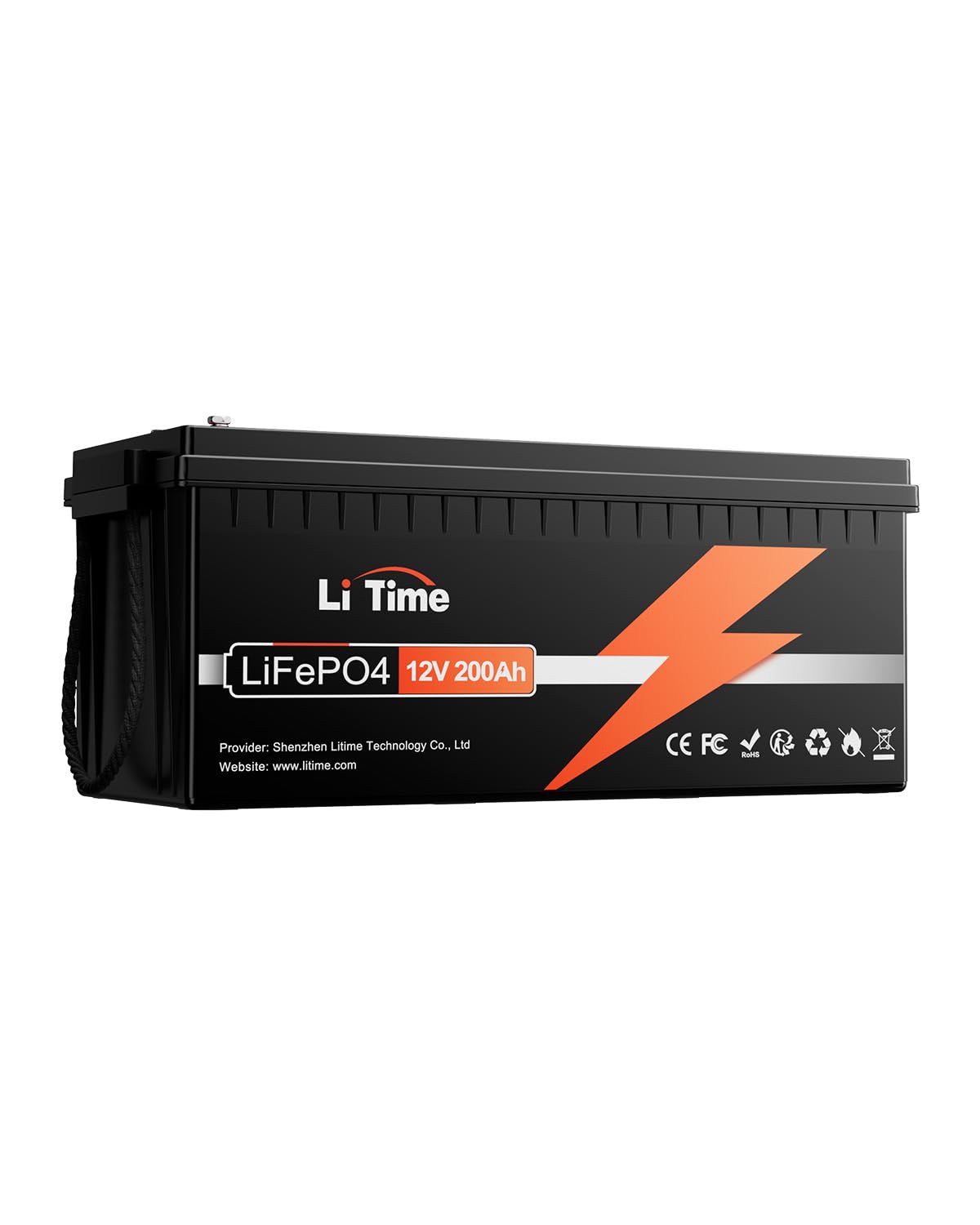
This 200Ah Litime gives you 2560Wh of usable energy in a single, compact package — enough to run a medium-sized RV fridge, lights, and electronics for a full day without touching solar input. The EV-grade A cells deliver 4000+ cycles at 100% depth of discharge, meaning this battery can outlast a decade of daily solar cycling. At 48.3 pounds, it’s less than half the weight of an equivalent lead-acid bank, making installation and expansion far simpler.
The built-in 100A BMS covers overcharge, over-discharge, short circuit, and high temperature, while the IP65 rating adds dust and water resistance for marine or outdoor cabinet use. The battery supports up to 4P4S expansion, so you can build a 48V 800Ah system with 40.96kWh of total storage. Users report steady voltage with 2000W inverters and reliable performance even after hundreds of cycles.
One buyer noted the BMS shipped in protection mode requiring a jump start from a 12V source — a minor setup step that’s common with LiFePO4 batteries. The included 5-year warranty and 24-hour support add peace of mind for long-term solar installations. For any single-battery solar system where maximum capacity per footprint matters, this is the strongest contender.
Why it’s great
- Massive 2560Wh capacity in a single 200Ah unit — great for all-day solar backup
- IP65 rating and salt spray resistance for harsh environments
- Supports 4P4S expansion up to 40.96kWh total storage
Good to know
- BMS may ship in protection mode, requiring a manual jump start to activate
- At 48 lbs, heavier than some smaller lithium packs but still much lighter than lead-acid
2. Power Queen 12V 100Ah LiFePO4 Battery
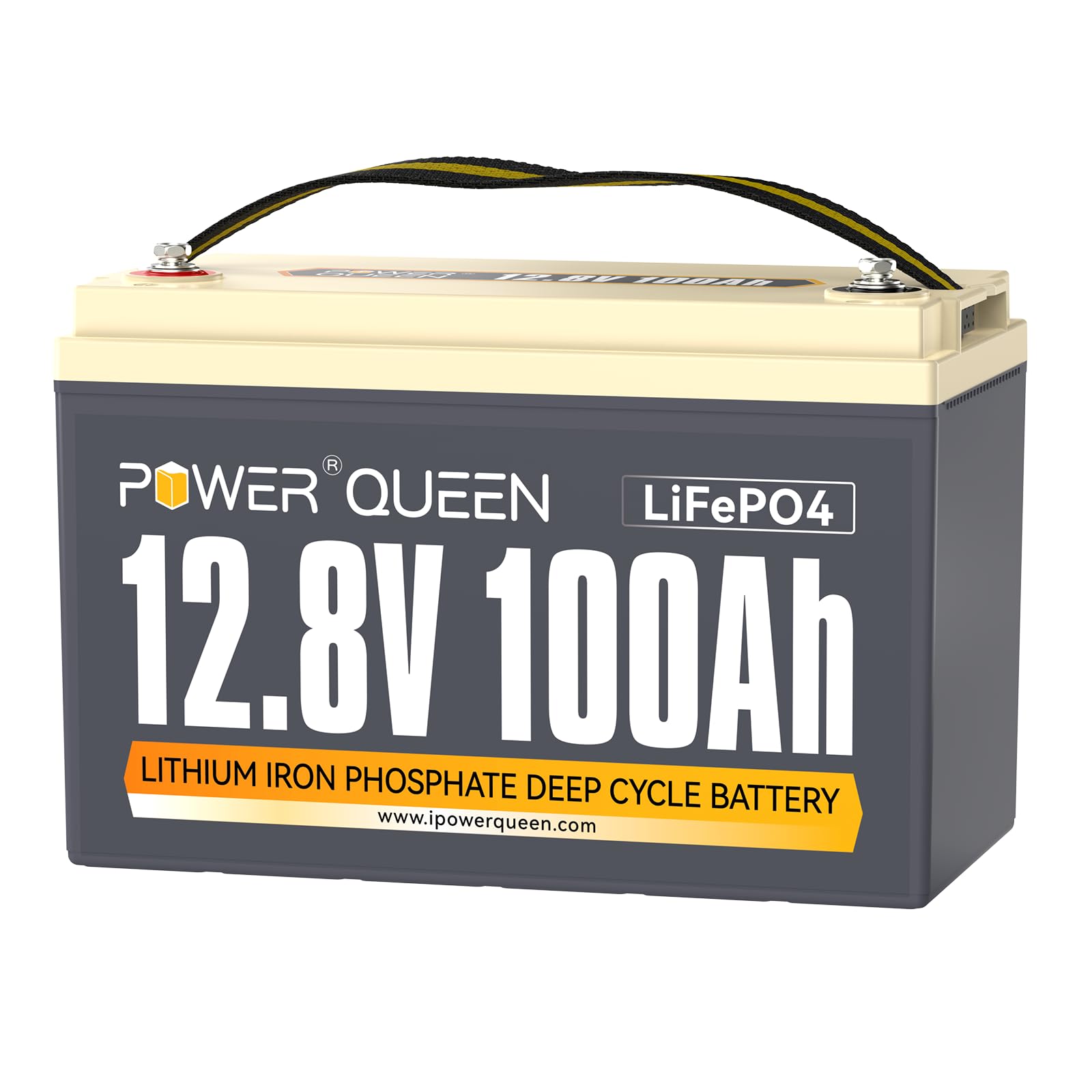
Power Queen delivers a proven 100Ah lithium battery that’s earned its reputation in the RV and solar community. With Grade-A cells and a 100A BMS, it provides 1280Wh of reliable energy at just 24 pounds — roughly one-third the weight of a comparable AGM. The battery supports up to 4S4P configuration, allowing a maximum 51.2V 400Ah (20.48kWh) bank for larger solar arrays.
Real-world users report running trolling motors for 6+ miles, powering sailboat electronics for days, and using three in series for 36V golf carts with remarkable runtime. The BMS protects against overcharge, over-discharge, short circuit, and overheating, while the 3% self-discharge rate lets the battery sit for months between uses without significant loss. The manufacturer backs this with a 5-year warranty.
The 6mm bolts on the terminals are easy to cross-thread, so careful installation is required. Some users noted the battery lacks Bluetooth monitoring — you’ll need to add an external meter or shunt to track state of charge. That said, for sheer reliability and cycle life from a trusted brand at this capacity, Power Queen remains a top pick.
Why it’s great
- Industry-leading 15000 deep cycles — outlasts most solar installations
- Lightweight 24 lbs with Group 31 form factor for easy drop-in
- Flexible 4S4P expandability for large-scale solar banks
Good to know
- No built-in Bluetooth or app monitoring — needs external meter
- Terminal bolts require careful threading to avoid stripping
3. HumsiENK 12V 100Ah LiFePO4 Battery

HumsiENK packs an impressive 15000+ deep cycle rating into a compact Group 24 footprint that fits where many 100Ah batteries won’t. At only 19.73 pounds and measuring 10.2 x 8.2 x 6.6 inches, this battery saves 30% more space than equivalent lead-acid units while delivering the same 1280Wh of usable power. The Grade A+ cells are SDS, UN38.3, FCC, CE, and ROHS certified, backed by 999 laboratory tests.
The 100A BMS provides comprehensive protection with low-temperature cutoff (shuts down below -4°F), preventing damage during cold-weather solar charging. Users have successfully run four in parallel to power a 2000W inverter running freezers for 12 hours daily, and others report excellent results in 36V golf cart conversions. The included nylon carry handle makes transport easy, and IP67 waterproofing means rain or deck spray won’t cause issues.
One potential hassle: the BMS may require a low-current wake-up procedure if the battery has been deeply discharged or stored for a long period. Some users found the low-voltage cutoff resets a few minutes after triggering, which can be confusing. Despite this, the 5-year warranty and generally strong capacity validation (users report ~4150 Wh from a 4-bank setup) make this a robust solar companion.
Why it’s great
- 15000+ cycles with Grade A+ cells for extreme longevity
- Compact Group 24 size saves significant space — only 19.73 lbs
- IP67 waterproof and includes low-temp cutoff protection
Good to know
- BMS may need a manual low-current wake-up after deep discharge
- Low-voltage cutoff can re-enable briefly before cutting off again
4. WEIZE 12V 100Ah Deep Cycle AGM Battery

For those who prefer a maintenance-free AGM battery without the complexity of BMS systems, the WEIZE 12V 100Ah is a reliable workhorse. This sealed lead-acid battery weighs 63 pounds and delivers consistent 100Ah capacity for solar backup, RV lighting, and trolling motors. The spill-proof design and maintenance-free operation eliminate the water checks required by flooded lead-acid, while the Group 31 dimensions make it a direct drop-in replacement for many existing battery boxes.
Users have run four in parallel to create a 4.8kWh bank powering 120V outlets, fans, and garage door openers through a 2000W inverter. On solar setups, two 100Ah AGM batteries paired with 300W of panels have powered off-grid RVs for two years without issue. The AGM chemistry accepts a cyclic charge voltage of 14.4V and float at 13.8V, making it compatible with most standard solar charge controllers.
The primary trade-off is weight and cycle life. At 63 pounds per unit, a 200Ah bank weighs over 126 pounds — more than double the weight of an equivalent LiFePO4 setup. With roughly 500-700 cycles at 50% DoD, you’ll replace AGM batteries far sooner than lithium. But for budget-conscious buyers who want a simple, proven energy storage solution, the WEIZE AGM delivers exactly what it promises.
Why it’s great
- Proven, reliable AGM chemistry — no BMS to configure or fail
- Spill-proof and maintenance-free for hassle-free solar backup
- Competitive price per Ah for budget solar installations
Good to know
- Very heavy at 63 lbs — difficult to move and install
- Only 500-700 cycles compared to 4000+ for LiFePO4 alternatives
5. DUMFUME 12V 150Ah LiFePO4 Battery
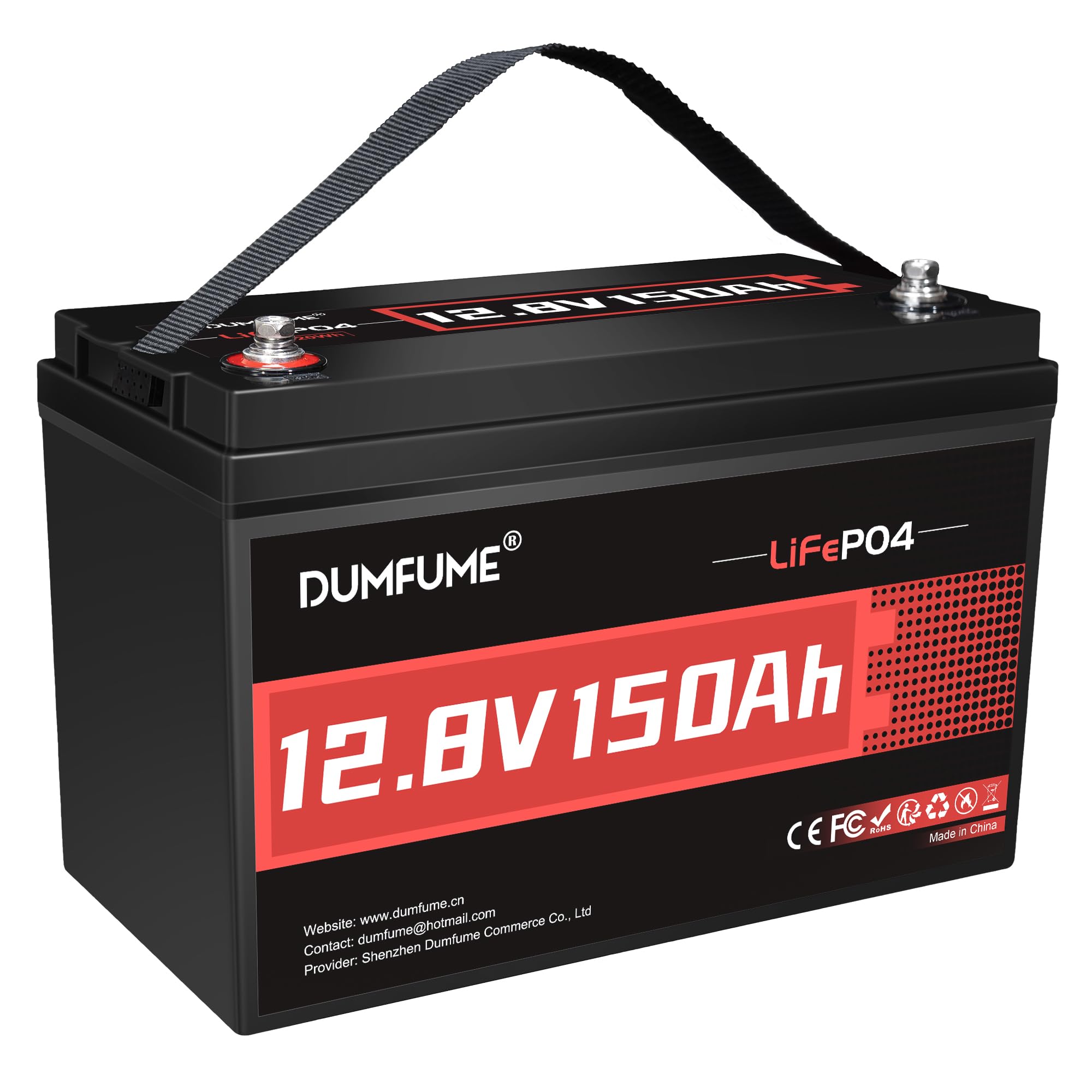
DUMFUME offers a 150Ah capacity that strikes a useful middle ground between standard 100Ah packs and oversized 200Ah units. With 1920Wh of usable energy, it can run a 500W heater for nearly 4 hours or keep a 12W lamp lit for over 106 hours. The compact Group 31 form factor (13.05 x 6.78 x 8.66 inches) and 22.05-pound weight make it relatively easy to install in tight RV cabinets or boat compartments.
The built-in 100A BMS provides the standard protections, and the battery supports up to 4S4P expansion for custom voltage or capacity configurations. Users report the batteries often exceed their rated capacity by about 7Ah when new, and multiple units have been run in parallel for home solar setups with excellent voltage stability. The 4000+ cycle rating (to 80% capacity) is solid for the price point.
A few users experienced BMS lockout issues requiring a “jump” from another battery to wake up, particularly if the battery arrived at a low voltage from storage. The 5-year warranty is reassuring, but note that it applies only to direct purchases — Amazon purchases may have different terms. For those seeking a high-capacity lithium battery without the bulky weight of a 200Ah unit, the DUMFUME 150Ah is a compelling option.
Why it’s great
- 1920Wh in a relatively compact Group 31 package at just 22 lbs
- Often exceeds rated capacity by 5-7Ah in real-world testing
- Supports 4S4P expansion for large solar or off-grid systems
Good to know
- BMS may require jump start from another 12V battery after storage
- 5-year warranty may not apply to Amazon purchases per some reports
6. HRBEENERGY 12.8V 100Ah LiFePO4 Battery

The HRBEENERGY 100Ah LiFePO4 battery makes lithium accessible at a price point that rivals premium AGM units. With 8000+ deep cycles and a 1280Wh capacity, it delivers three times the lifespan of lead-acid for a comparable upfront investment. The IP67 waterproof case makes it suitable for marine and outdoor solar installations where moisture is unavoidable.
The built-in 100A BMS covers overcharge, over-discharge, short circuit, and high/low temperature cutoffs. Users praise its lightweight build at just 19.4 pounds — roughly 40% lighter than lead-acid — making it easy for kayak fishermen and RVers to handle. Reports show the battery delivers slightly over 100Ah when new, and three in parallel can power a 12V RV for 3-4 days continuously. The battery supports expansion up to 16 units in parallel (20480Wh total).
One reviewer found the low-voltage cutoff activates around 9.5V rather than the expected 10V, and the BMS re-enables the battery after a few minutes before cutting off again. This behavior is worth noting if your inverter has a higher low-voltage disconnect threshold. The 3-year warranty covers defects, though some customers wish for a longer term at this price tier.
Why it’s great
- Believable 8000+ cycle rating at a very competitive price
- IP67 waterproof — safe for marine and outdoor solar cabinets
- Very light at 19.4 lbs — easy single-hand carry and installation
Good to know
- Low-voltage cutoff activates at ~9.5V, which may conflict with some inverters
- BMS may cycle on/off after hitting low-voltage cutoff
7. GOLDENMATE 12V 50Ah LiFePO4 Battery

When space and weight are critical, the GOLDENMATE 50Ah LiFePO4 battery delivers 640Wh in a 14-pound package that fits inside kayak hatches, small solar generator cases, or under RV seats. The IP67 waterproof rating means it can survive deck spray, rain, and even brief submersion — a major advantage for marine solar applications or outdoor power stations.
Built with Grade A cells and a 50A BMS, this battery supports 5000+ deep cycles, over 12 times the lifespan of equivalent lead-acid. Users report powering fish finders and live scopes all day without voltage sag, and running solar-powered webcam and LED setups through the night on a single charge. The battery supports up to 16 units in parallel for a total of 10240Wh, offering expansion headroom for larger systems.
The maximum charge current of 25A means recharging from solar can be slower than larger batteries — a 100W panel will take most of a sunny day to refill from empty. Some users found the standard charger too slow and upgraded to a higher-amp LiFePO4 charger. For small, portable solar setups where weight and waterproofing matter more than raw capacity, this battery is an excellent fit.
Why it’s great
- Ultra-light at 14 lbs with IP67 waterproofing — ideal for kayaks and small solar setups
- 5000+ cycles from Grade A LiFePO4 cells
- Expandable up to 16 units in parallel for future growth
Good to know
- 25A max charge current means slower solar recharging
- 50Ah capacity limits use to smaller loads and shorter runtimes
8. Newport Vessels 12V 50Ah Deep Cycle AGM Battery
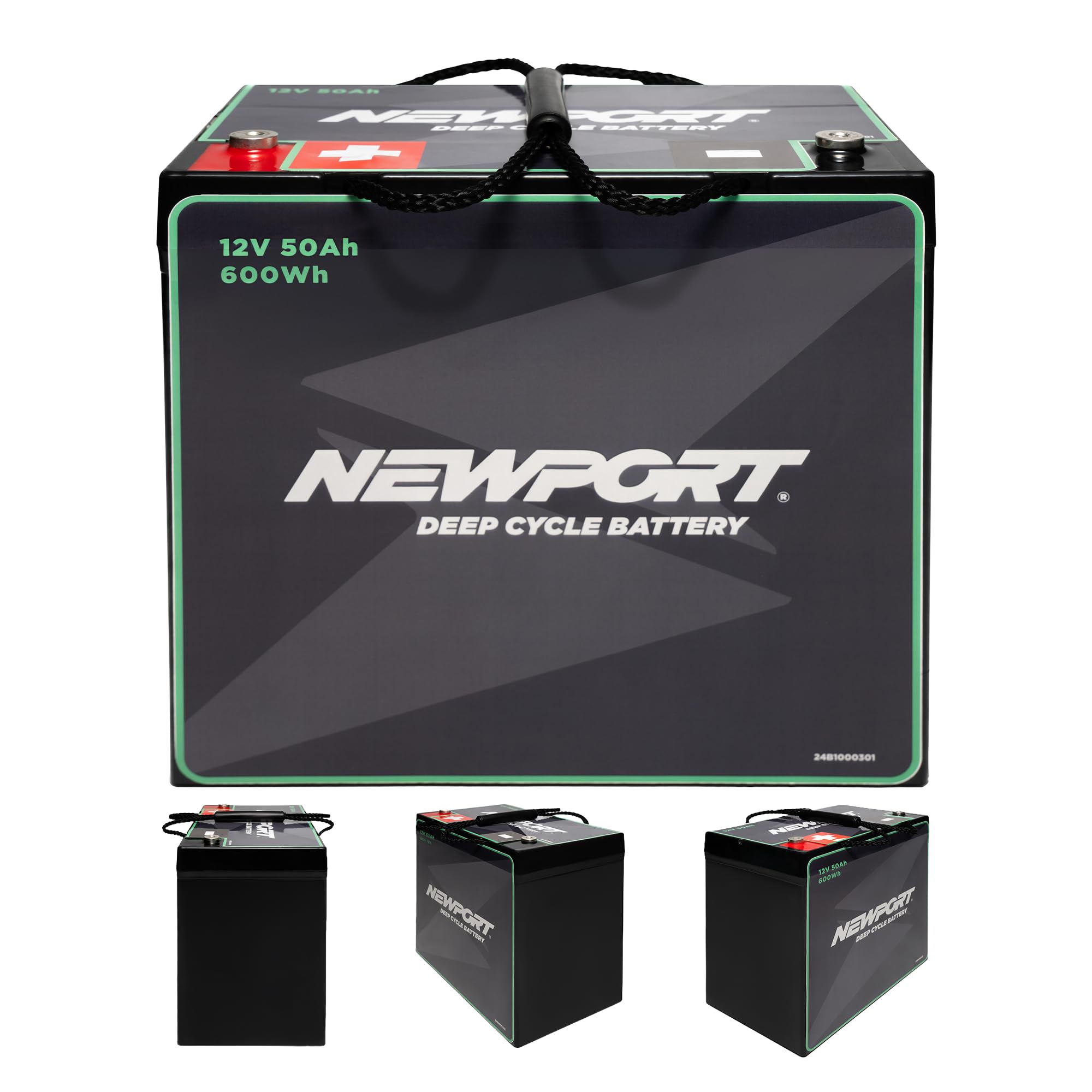
The Newport Vessels 50Ah AGM battery is built for light solar and marine duty where simplicity and budget take priority over cycle life. At 32 pounds, it’s light for an AGM battery and can be carried with one hand — a practical benefit for small boat owners or those moving batteries between camping trips. The sealed, leak-proof construction means you can mount it in any orientation without worrying about acid spills.
Users report running 55lb trolling motors for 4+ hours at moderate speeds, and a 25lb motor at full power for roughly 7 hours. Several customers have repurposed this battery for sump pump backup after their original setup failed, and the build quality survived a 20 MPH tumble from a truck bed with only cosmetic damage. The 12V 50Ah capacity suits small solar panels (50-100W) for lighting or phone charging on weekend trips.
The AGM chemistry delivers roughly 300-500 cycles before significant capacity loss, and some users found the runtime shorter than expected for sustained high-draw applications. The lack of a built-in charge indicator means you’ll need an external voltmeter or battery monitor. For occasional-use solar or marine setups where the upfront cost must stay low, this battery works exactly as designed.
Why it’s great
- Lightweight AGM (32 lbs) with sealed, leak-proof construction
- Survives rough handling — proven drop and tumble durability
- Very affordable entry point for small solar or trolling motor use
Good to know
- Only 300-500 cycle life — not built for daily solar cycling
- No built-in charge indicator — requires external meter
9. VATRER POWER 51.2V 100Ah LiFePO4 Battery (2-Pack)
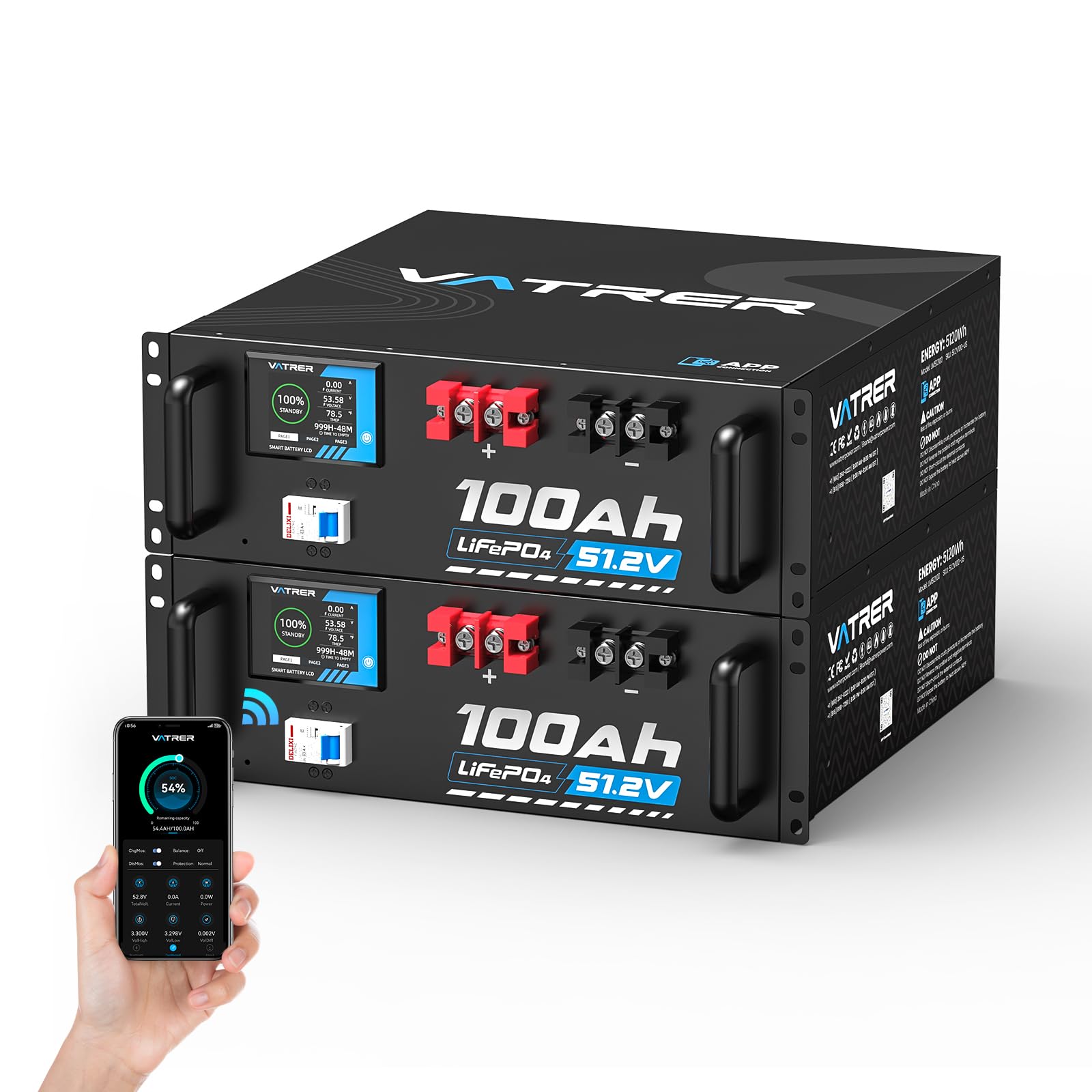
For serious solar installations that need high voltage and high capacity, the VATRER POWER 51.2V 100Ah battery delivers 5.12kWh per unit — equivalent to four 12V 100Ah batteries wired in series, but in a single rack-mountable enclosure. The 2-pack gives you a massive 10.24kWh of storage, enough to run a full home off-grid setup including refrigeration, lighting, and electronics through multiple cloudy days.
The built-in touch screen and smartphone app provide real-time monitoring of voltage, state of charge, and cell balance — a feature usually found on premium server-rack batteries. The 100A BMS handles up to 5.12kW continuous load, and dual positive/negative terminals help distribute current and reduce heat buildup. Users report cells balancing within a few millivolts and the battery exceeding its rated capacity in real-world testing. The 5-year warranty backs the investment.
The terminal design on this version requires bus bars or lug modification to fit 2/0 or 4/0 cable, though newer revisions have reportedly fixed this. At 102.5 pounds per unit, installation is a two-person job. For anyone building a serious off-grid solar system with 48V inverters, this battery minimizes wiring complexity and provides professional-grade monitoring that makes system management far easier.
Why it’s great
- 5.12kWh per unit — equivalent to four 12V 100Ah batteries in series
- Touch screen display and Bluetooth app for real-time monitoring
- Dual terminals and rack-mount design for clean, professional installation
Good to know
- Terminal lugs may need modification to fit large-gauge cables (2/0 or 4/0)
- Heavy at 102.5 lbs — requires two people for safe installation
FAQ
Can I use a lead-acid AGM battery with a LiFePO4 solar charge controller?
How many watts of solar do I need to charge a 100Ah deep cycle battery?
What is the difference between Group 24 and Group 31 battery sizes?
Final Thoughts: The Verdict
For most users, the best deep cycle battery for solar is the Litime 12V 200Ah because it delivers maximum capacity per footprint with IP65 protection and a robust 100A BMS — perfect for single-battery solar setups. If you want a proven, high-cycle-life companion for a modular system, grab the Power Queen 12V 100Ah. And for whole-home off-grid solar with professional monitoring, nothing beats the VATRER POWER 51.2V 100Ah 2-Pack.

Mo Maruf
I created WellFizz to bridge the gap between vague wellness advice and actionable solutions. My mission is simple: to decode the research and give you practical tools you can actually use.
Beyond the data, I am a passionate traveler. I believe that stepping away from the screen to explore new environments is essential for mental clarity and physical vitality.