Our readers keep the lights on and my smoothie glass nicely filled. As an Amazon Associate, I earn from qualifying purchases.
A deck clear sealer should vanish onto your wood, not peel off in ugly sheets a season later. The problem is that most clear formulas trade protection for invisibility, leaving your investment vulnerable to sun, rain, and mildew within months. The right pick locks out moisture without creating a plasticky film that traps moisture underneath.
I’m Mohammad Maruf — the founder and writer behind WellFizz. I’ve spent hundreds of hours analyzing wood chemistry, nano-particle carriers, and real-world application feedback to separate sealers that truly penetrate from those that just sit on the surface.
Whether you are refreshing a weathered cedar fence or sealing a pressure-treated deck for the first time, finding the best deck clear sealer means understanding what happens after the first rain.
How To Choose The Best Deck Clear Sealer
Choosing a clear sealer is different from choosing a pigmented stain because you are relying entirely on the chemistry, not a color mask, to do the work. There are three factors that separate a one-season wonder from a multi-year performer.
Penetration Depth vs. Surface Film
A pure surface film — common with cheaper acrylic sealers — beads water initially but cracks under UV and foot traffic, allowing moisture to migrate between the film and the wood. Look for sealers that use silicone carriers or nano-particles to penetrate into the wood fibers. Products like the Roxil Wood Sealer Liquid leverage advanced silicone technology to bond below the surface, which means the wood can expand and contract naturally without popping the finish loose.
Coverage Rate and Application Realism
Manufacturers often quote best-case numbers on smooth vertical surfaces. For horizontal deck boards with end-grain exposure and rough-sawn textures, expect 50-70% of the advertised coverage. A gallon that claims 400 square feet on a fence may cover only 150-200 square feet on a deck when applying two coats properly. Buying two gallons for a medium-sized deck is rarely a mistake.
Zinc Nano-Technology and UV Stabilizers
Clear sealers cannot hide UV damage the way a tan stain can, but advanced formulations use zinc nano-particles (found in the DEFY Extreme Composite Deck Sealer) to reflect UV radiation and slow lignin breakdown. Without UV stabilizers, clear-coated wood grays within months in direct sun. If your deck gets full southern exposure, prioritize a sealer with explicit UV-resistant claims rather than just waterproofing.
Quick Comparison
On smaller screens, swipe sideways to see the full table.
| Model | Category | Best For | Key Spec | Amazon |
|---|---|---|---|---|
| DEFY Extreme Composite Deck Sealer | Premium | Composite & natural wood decks | Zinc nano-particles for UV protection | Amazon |
| Seal-Once Nano Wood Sealer | Premium | Horizontal surfaces with foot traffic | 6-year horizontal surface warranty | Amazon |
| DeckWise Ipe Oil Hardwood Finish | Premium | Exotic hardwood decks (Ipe, Tigerwood) | Oil-based deep penetration on dense wood | Amazon |
| Cabot Clear Wood Protector | Mid-Range | Fences and reconditioned deck wood | One-coat coverage on clean wood | Amazon |
| KILZ Waterproofing Semi-Transparent Stain | Mid-Range | Moderately weathered wood (0-10 years) | 100% acrylic formula; 3-year deck warranty | Amazon |
| Roxil Wood Sealer Liquid | Budget-Friendly | Softwood timber and pressure-treated pine | Silicone carrier for deep penetration | Amazon |
| Thompson’s WaterSeal Transparent Stain | Budget-Friendly | Quick, easy application on fences & decks | Application to damp or dry wood | Amazon |
In‑Depth Reviews
1. DEFY Extreme Composite Deck Sealer

The DEFY Extreme Composite Deck Sealer separates itself from the field by targeting composite decking — a notoriously difficult substrate to seal — without leaving a greasy film. Its zinc nano-particles absorb UV radiation rather than letting it bleach the surface, which is why composite boards that have sat faded for fifteen years regain their original richness after one coat. The coverage is tighter than average at 100-150 square feet per gallon for two coats, but the depth of restoration compensates for the cost per square foot.
Application demands attention: the sealer must be pushed into the grooves of composite decking with a roller rather than sprayed and left. Reviews note that puddling can leave a temporary milky white residue that vanishes upon drying, and the surface can feel slightly tacky in direct sun for the first few weeks. Once cured, water beads dramatically on the surface, which indicates a strong bond to the polymer composite skin.
For homeowners with faded Trex, TimberTech, or other composite decking, this is the only clear sealer in the list that specifically addresses the oxidation problem. It is also effective on natural wood, but its strength is its ability to bond to slick composite without peeling. A single gallon covers a 100-square-foot deck with two coats, so plan your project quantity accordingly.
Why it’s great
- Zinc nano-particles prevent UV fading and graying
- Restores heavily oxidized composite to like-new appearance
- Dries to a streak-free, crystal-clear finish
Good to know
- Coverage is low (100-150 sq ft/gal for 2 coats)
- Overspray is very difficult to remove once cured
- May feel slightly tacky in hot sun initially
2. Seal-Once Nano Wood Sealer and Waterproofer

The Seal-Once Nano Wood Sealer is built around the idea that protection should happen below the wood’s surface, not on top of it. Its water-based polyurethane carrier penetrates into the wood fibers and polymerizes there, creating a flexible barrier that moves with the wood during thermal expansion. The manufacturer warrants it for up to 6 years on horizontal surfaces and 10 years on vertical surfaces, which is a strong vote of confidence for a clear water-based product.
On application day, the sealer goes on translucent and dries without altering the natural tone of the wood — cedar stays cedar-colored and pressure-treated pine retains its greenish hue. The lack of odor makes it tolerable for enclosed areas like under-deck porches or garden sheds. However, reviews from southern climates note that a second coat is often needed after six months of intense UV exposure, suggesting that the UV additive package could be stronger for full-sun decks.
If you want a clear sealer that does not interfere with the natural graying process — Seal-Once allows wood to patina naturally while still providing moisture protection — this is the formulation for you. It also performs admirably on high-traffic areas when applied to a clean, sanded surface. Keep a second gallon on hand if your deck exceeds 200 square feet.
Why it’s great
- Penetrates below the surface for a breathable, flexible barrier
- 6-year warranty on horizontal surfaces is industry-leading for clear sealers
- Low-VOC and nearly odorless, comfortable for enclosed spaces
Good to know
- UV resistance can fade after 6 months in intense southern sun
- Requires clean, sanded wood for proper bonding
- Mid-range coverage means a second coat consumes more material
3. DeckWise Ipe Oil Hardwood Deck Semi-Transparent Finish

The DeckWise Ipe Oil is not for standard framing pine — it is designed specifically for dense exotic hardwoods like Ipe, Tigerwood, and Cumaru that reject most water-based sealers outright. Oil-based carriers have the molecular size and wetting ability to penetrate into the tightly packed fibers of tropical hardwoods, whereas water-based products simply sit on the surface and peel. This is an oil finish, which means it does not create a hard film but rather saturates the wood and hardens inside the grain.
Application requires a bit more labor: the wood needs to be sanded with 80-grit paper to open the pores, and the oil should be applied with a stain sponge or lambswool applicator for even absorption. The result is a rich, warm brown glow that looks natural rather than plastic. One coat yields about 12 months of vibrant appearance on Ipe before the sun fades it, after which a light pressure wash and a fresh coat revive the look. It is not recommended for railings because it remains slightly slick.
If you own a hardwood deck that cost thousands to install, this is the only clear sealer in the lineup that truly protects those dense fibers from UV degradation and moisture absorption. The natural brown tint is more a penetrating oil than a pigment — it enriches without obscuring. Plan for an annual upkeep cycle to maintain the freshly oiled look.
Why it’s great
- Penetrates ultra-dense exotic hardwoods that reject water-based sealers
- Rich, natural brown finish enhances grain without hiding it
- Refreshes worn hardwood decks with a single annual coat
Good to know
- Requires sanding with 80-grit and careful application technique
- Not for painted or varnished surfaces; works best on bare wood
- Oil formula remains slightly slick and is not ideal for handrails
4. Cabot Clear Wood Protector
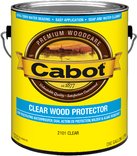
Cabot’s Clear Wood Protector has a long reputation among fence owners because it delivers reliable results with minimal effort. The water-based formula is designed to penetrate quickly into clean, weathered wood and seal in one coat — a genuine time-saver for large fence runs or porch floors. It dries fast enough that you can apply a second coat the same afternoon if you desire, and cleanup is simple with soap and water.
The clear finish leaves wood with a subtle warm glow rather than a high-gloss shine, so the texture and color of the original wood remain visible. Mildew resistance is built into the coating, which is a real advantage in humid climates where biological growth is the top fail mode for clear sealers. Users report that one gallon covers roughly 250 square feet per coat on moderately textured deck wood, though coverage drops on rough-sawn material.
Some reviews note that knotholes in cedar fencing may require a second coat or a dab of extra product to ensure full saturation. And as a water-based product, it will not penetrate dense exotics as deeply as the DeckWise oil, but for standard cedar, redwood, or pressure-treated pine, the Cabot offers a straightforward, effective solution at a mid-range price point.
Why it’s great
- One-coat application saves time on large fence or deck projects
- Dries quickly, allowing same-day second coat if needed
- Mildew-resistant formula protects in humid outdoor conditions
Good to know
- Knotholes in cedar may need a second coat for full absorption
- Water-based; not effective on dense tropical hardwood decks
- Long-term UV protection is moderate compared to oil-based alternatives
5. KILZ Waterproofing Semi-Transparent Wood Stain

KILZ enters this list with a semi-transparent wood stain rather than a fully clear sealer, but the Cedar Naturaltone finish is transparent enough to let the wood’s natural character show while adding a warm reddish tint. The 100% acrylic base creates a durable film that resists rain and snow better than many thinner clear sealers, and KILZ backs it with a warranty of up to 3 years on deck surfaces and up to 5 years on vertical fence applications.
Application is straightforward: the stain self-levels well with a brush or roller, and it dries to a subtle satin sheen that does not look painted on. Coverage is generous at 250-300 square feet per gallon for the first coat and up to 600 square feet for the second coat on smooth, uniform wood. It is also fade-resistant and includes mildewcide additives that prevent surface discoloration in shaded corners.
Because it is an acrylic film rather than a penetrating oil, it performs best on wood that is in good condition and not heavily weathered. On older, porous wood, a primer or an initial penetrating sealer may be required to prevent blotching. If you want a reliable mid-range product that bridges the gap between a true clear sealer and a pigmented stain, the KILZ is a strong candidate.
Why it’s great
- 100% acrylic formula offers excellent water and snow resistance
- Warranted for 3 years on decks, 5 years on fences and siding
- Self-leveling application minimizes streaks and lap marks
Good to know
- Semi-transparent, not fully clear — adds a warm cedar tint
- May blotch on heavily weathered or porous wood without pre-treatment
- Shipping damage reported occasionally due to can denting in transit
6. Roxil Wood Sealer Liquid
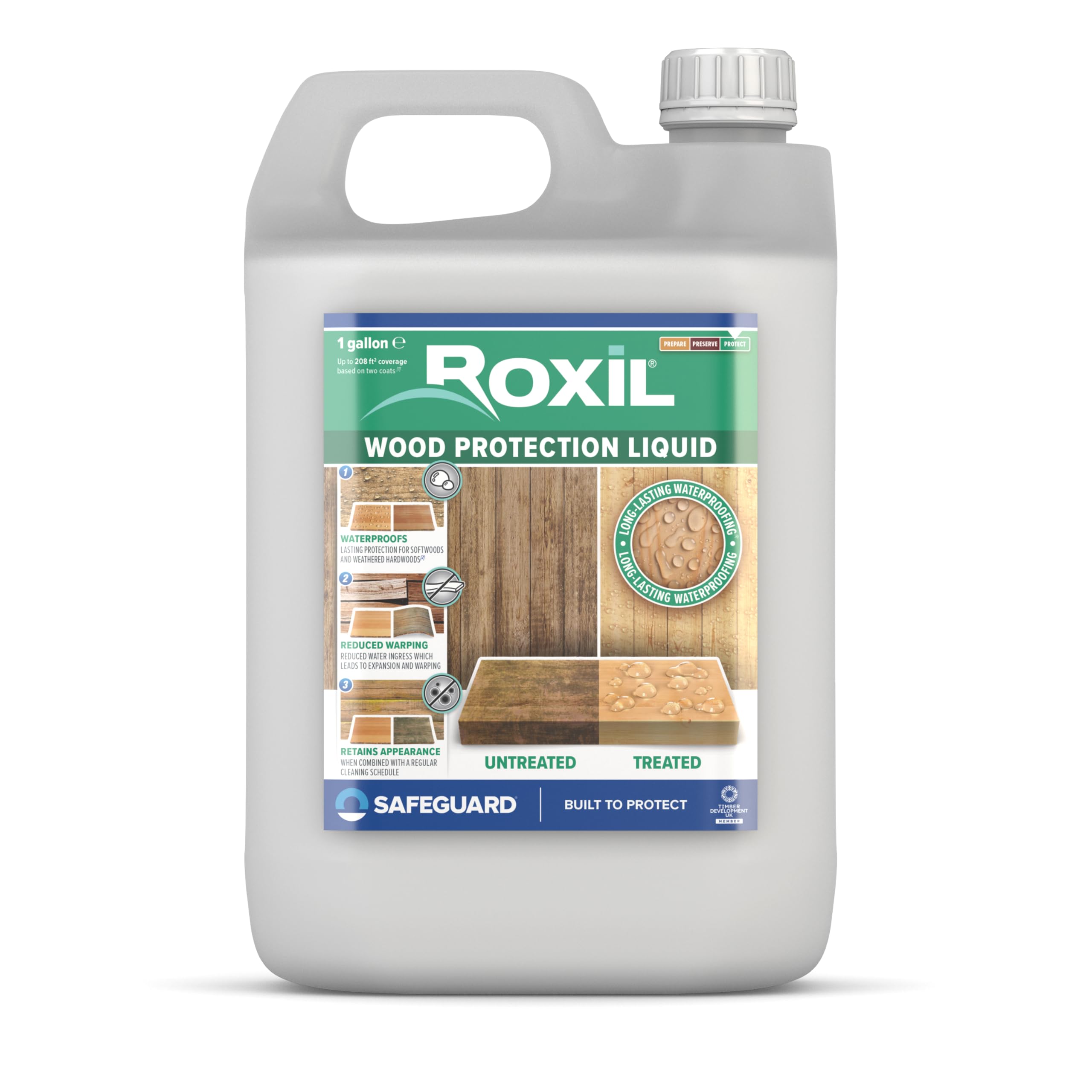
The Roxil Wood Sealer Liquid brings a different chemistry to the budget-friendly tier: it uses an advanced silicone carrier instead of acrylic or oil. Silicone penetrates deeply into softwood timber — especially pressure-treated pine and cedar — and creates a flexible, water-repellant barrier that does not crack or peel as the wood expands. The water-based formula keeps cleanup simple and the odor low.
Users report that it dries in about 30 minutes on a warm day, which allows for rapid recoating if you want a second layer on particularly thirsty end grain. On cedar fence boards, the natural color becomes noticeably richer, and water beads up on the surface even after multiple rainstorms. Coverage is listed at 204 square feet per gallon for two coats, which is realistic for softwood and slightly conservative — better to estimate high than run short mid-project.
Long-term durability is the unknown at this point, since silicone-based wood sealers are less common in the North American market. Some users express caution about whether the protection lasts a full 10 years as claimed. If you are sealing a fence that gets moderate wear, the Roxil offers impressive performance for the investment and deserves consideration as a trial product for a small area first.
Why it’s great
- Silicone carrier penetrates deeply into pine and cedar softwoods
- Dries in about 30 minutes on warm days for fast recoating
- Low odor and easy soap-and-water cleanup
Good to know
- Long-term durability beyond one season is still unproven
- Coverage estimate is a bit conservative — plan for two coats
- Not designed for dense exotics; best on softwood lumber
7. Thompson’s WaterSeal Transparent Wood Stain
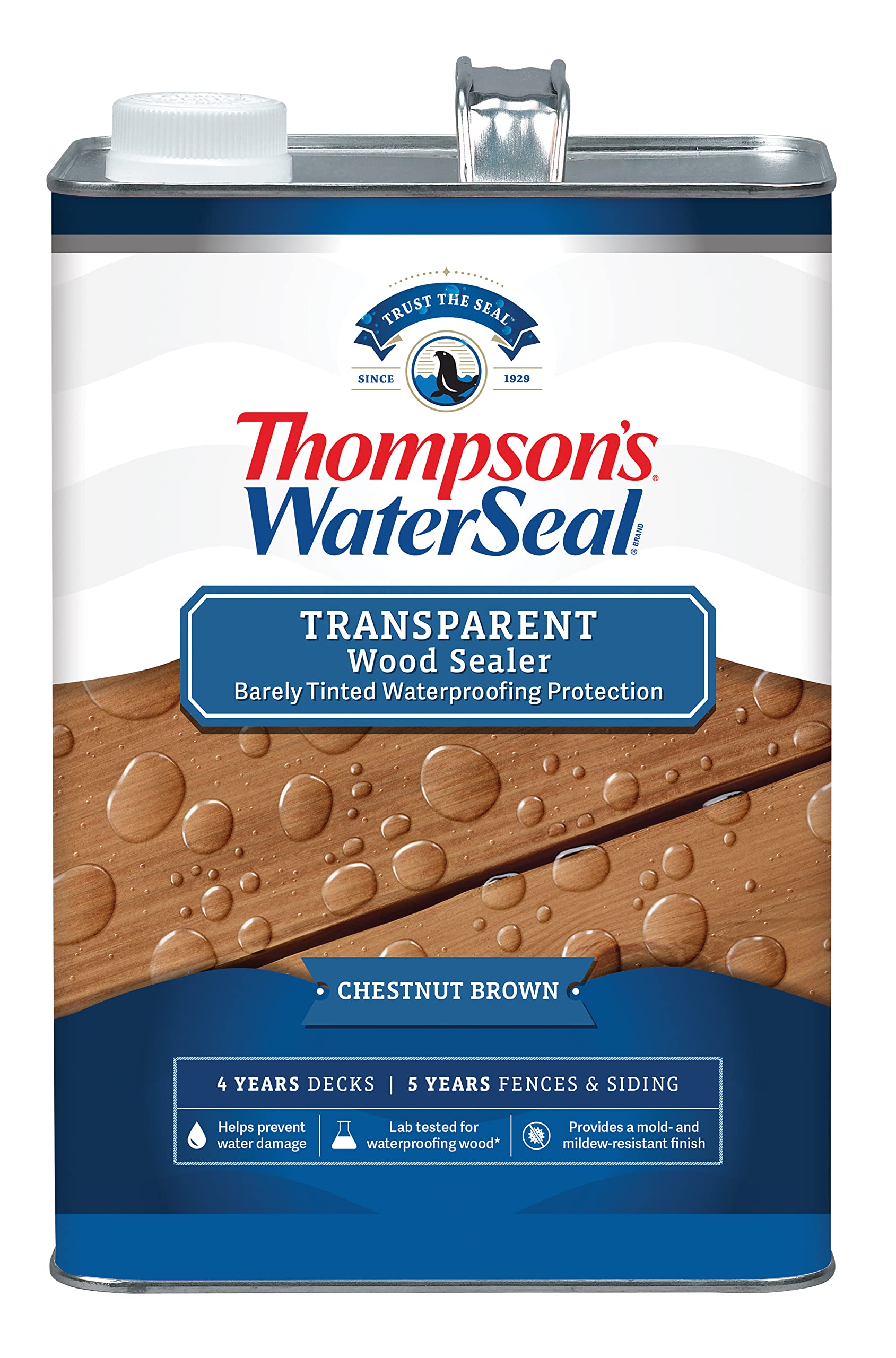
Thompson’s WaterSeal is one of the most recognized names in deck care, and their Transparent Wood Stain in Chestnut Brown aims for the mass market with a formula that allows application on damp or dry wood — a genuine convenience for weekend warriors who cannot wait three perfect days without rain. The transparent coating is designed to let the wood grain show through while adding a warm brown tint that hides the raw lumber look.
The consistency is thin enough to use in a garden sprayer for fast fence coverage, which is how many DIYers apply it. Users report that the color is more saturated than expected for a product labeled “transparent,” so test on a hidden board first if you want a barely-there look. Drying time is fast — one hour in moderate conditions — and the water beading effect on the surface is immediate after curing.
Long-term adhesion can be an issue on horizontal deck boards that get heavy foot traffic, as the film-type finish wears faster than penetrating oils. Thompson’s exceeds the ASTM D-4446 standard for wood waterproofing, but the transparent stain is better suited to vertical fences and siding where foot abrasion is not a factor. For these vertical applications at a budget-friendly entry point, it remains a popular and effective choice.
Why it’s great
- Can be applied to damp wood, expanding the application window
- Thin enough for sprayer application on large fence surfaces
- Dries quickly and creates immediate water beading
Good to know
- Film-type finish wears faster on horizontal deck boards with foot traffic
- Color is more saturated than expected for a transparent product
- Better suited for vertical surfaces like fences and siding
FAQ
Can I apply a clear sealer over an old stain without stripping?
How often should I reapply a deck clear sealer in a wet climate?
Will a clear sealer prevent my wood deck from turning gray?
Why does my clear sealer look white or milky right after applying?
Final Thoughts: The Verdict
For most users, the best deck clear sealer winner is the DEFY Extreme Composite Deck Sealer because its zinc nano-technology offers unmatched UV protection for both composite and wood surfaces in a true clear film. If you want a deep-penetrating, breathable barrier with a long warranty for horizontal surfaces, grab the Seal-Once Nano Wood Sealer and Waterproofer. And for exotic hardwood decks like Ipe or Tigerwood that require an oil-based sealer to penetrate their dense fibers, nothing beats the DeckWise Ipe Oil Hardwood Deck Semi-Transparent Finish.

Mo Maruf
I created WellFizz to bridge the gap between vague wellness advice and actionable solutions. My mission is simple: to decode the research and give you practical tools you can actually use.
Beyond the data, I am a passionate traveler. I believe that stepping away from the screen to explore new environments is essential for mental clarity and physical vitality.