Our readers keep the lights on and my smoothie glass nicely filled. As an Amazon Associate, I earn from qualifying purchases.
That damp garage air doesn’t just make your safe feel sticky — it actively attacks your firearms, feeding oxidation and pitting the metal where humidity hovers above 50 percent. An electric rod or a silica gel canister is the only real line of defense, but picking the wrong one means rust starts before you notice.
I’m Mohammad Maruf — the founder and writer behind WellFizz. I’ve spent dozens of hours cross-referencing wattage draw, cubic-foot coverage, and recharge cycles to pinpoint which dehumidifiers actually hold up inside a garage safe’s thermal swings.
Below is my curated line-up of the seven most practical units, from always-on rods to renewable canisters, so you can match the right moisture strategy to your safe’s size and your own maintenance tolerance. This is the definitive dehumidifier for gun safe in garage.
How To Choose The Best Dehumidifier For Gun Safe In Garage
A garage safe lives in a microclimate that swings from near-freezing winter nights to sweltering summer afternoons, and that thermal cycling pulls moisture into the safe every time the door opens. The right dehumidifier must handle volume, temperature, and your willingness to remember maintenance.
Electric Rod vs. Silica Gel Canister
Electric rods work by raising the internal air temperature a few degrees above ambient — warm air holds more moisture and pushes damp air out through safe cracks via gentle convection. They need a nearby outlet inside the safe, but they run 24/7 with zero human intervention. Silica gel canisters passively adsorb moisture until saturated, then require oven or blower-base recharging. For a garage safe, an electric rod is the most hands-off choice; a canister works if you stay disciplined about recharge intervals.
Cubic-Foot Coverage vs. Real-World Garage Humidity
Manufacturers list coverage in cubic feet, but a garage safe at 70 percent relative humidity saturates gel beads faster than a climate-controlled closet. Always buy a unit rated for at least 1.5 times your safe’s interior volume. A 300-cubic-foot rod in a 200-cubic-foot safe has thermal overhead; a 675-cubic-foot canister in a 300-cubic-foot safe means fewer recharges.
Recharge Speed and Convenience
Silica gel that takes 3-4 hours in an oven is a chore you’ll procrastinate. Blower-base systems that restore a cylinder in 2 hours feel effortless by comparison. If you choose a canister, pick one with a visible indicator that turns color when saturated — no guessing, no dry-fire protection gaps.
Quick Comparison
On smaller screens, swipe sideways to see the full table.
| Model | Category | Best For | Key Spec | Amazon |
|---|---|---|---|---|
| Liberty Safe 12-Inch Rod | Electric Rod | Zero-maintenance 24/7 protection | Continuous convection, 200 cu ft | Amazon |
| Eva-Dry EDV-365 System | Renewable System | Fast 2-hour blower-base recharge | 2 cylinders + blower, 400 cu ft ea. | Amazon |
| PEET SafeKeeping Rod 24″ | Electric Rod | Large safes up to 300 cu ft | 13W warm-air convection | Amazon |
| Wisesorb 900g 2-Pack | Silica Gel Canister | Budget-friendly dual-canister setup | 2 x 900g indicating silica gel | Amazon |
| Hornady XL Canister | Silica Gel Canister | High-capacity single canister | 1500g desiccant | Amazon |
| Liberty Safe 9913 12-Inch Rod | Electric Rod | Compact safe, simple install | 12-inch, surface temp 100-120°F | Amazon |
| Eva-Dry Liberty Safe Dehumidifier | Renewable Canister | Wireless, small to medium safes | 6 oz capacity renewable silica gel | Amazon |
In‑Depth Reviews
1. Liberty Safe Dehumidifier Rod 12-Inch

This 12-inch electric rod from Liberty Safe delivers 24/7 convection heating that raises the internal safe temperature just enough to push moisture out through door gaps. At 200 cubic feet of coverage, it fits most residential gun safes without taking up shelf space — the rod sits low on the floor and creates a gentle thermal current that reaches every corner. Owners in high-humidity garages report stable humidity readings after a few days of continuous operation, and the rod never needs a recharge or a filter change.
The surface temperature holds around 100-120°F, warm enough to suppress condensation but cool enough to place near carpet or fabric without charring. Installation is genuinely tool-free: feed the cord through a pre-drilled hole or the door gap, plug into a standard outlet, and walk away. Several long-term users noted the rod has run for years without degradation, which explains its premium positioning.
One practical limitation is that the rod does nothing to actively pull moisture out of the air — it relies purely on convection and temperature differential. In a tightly sealed safe with minimal air exchange, pairing it with a small desiccant canister can accelerate drying. Still, for a set-and-forget solution in a garage environment, this rod is about as reliable as it gets.
Why it’s great
- True zero-maintenance operation — no refills, no recharges, no filters
- Safe surface temperature won’t damage carpet, documents, or leather
- Tool-free install takes under a minute
Good to know
- Requires an accessible electrical outlet inside or near the safe
- 200 cu ft rating may be marginal for extra-large safes above 250 cu ft
2. Eva-Dry EDV-365 Rechargeable System

The EDV-365 is a two-cylinder system with a powered blower base that restores a saturated canister in roughly two hours — roughly half the time of typical oven recharges. While one cylinder sits inside the safe passively adsorbing moisture, the other rests on the base renewing, so protection never stops. Each cylinder covers up to 400 cubic feet, making this system attractive for larger safes or even secondary storage spaces like closets and RVs.
The color-changing indicator beads shift from orange (dry) to green (saturated), giving a clear visual cue without opening the canister or guessing. Because the blower uses warm, circulating air rather than stagnant oven heat, the silica gel beads are less prone to degradation over repeated cycles. Users in coastal areas report recharging every 3-5 days during peak summer humidity, and the total system lifespan is rated at up to 10 years with no consumable costs.
The trade-off is upfront investment — this is a mid-range-to-premium bundle — and the need to physically swap cylinders on a schedule. In a garage safe, the blower base must be placed near an outlet (it only runs during recharge, not inside the safe). If you dislike remembering rotation cycles, the hands-off simplicity of an electric rod may suit you better.
Why it’s great
- 2-hour renewal is genuinely faster than any oven-dried canister on this list
- Dual-cylinder design provides uninterrupted moisture protection
- Color indicator removes all guesswork from recharge timing
Good to know
- Requires periodic cylinder rotation — not completely hands-off
- Blower base adds to the total footprint outside the safe
3. PEET SafeKeeping Rod 24-Inch
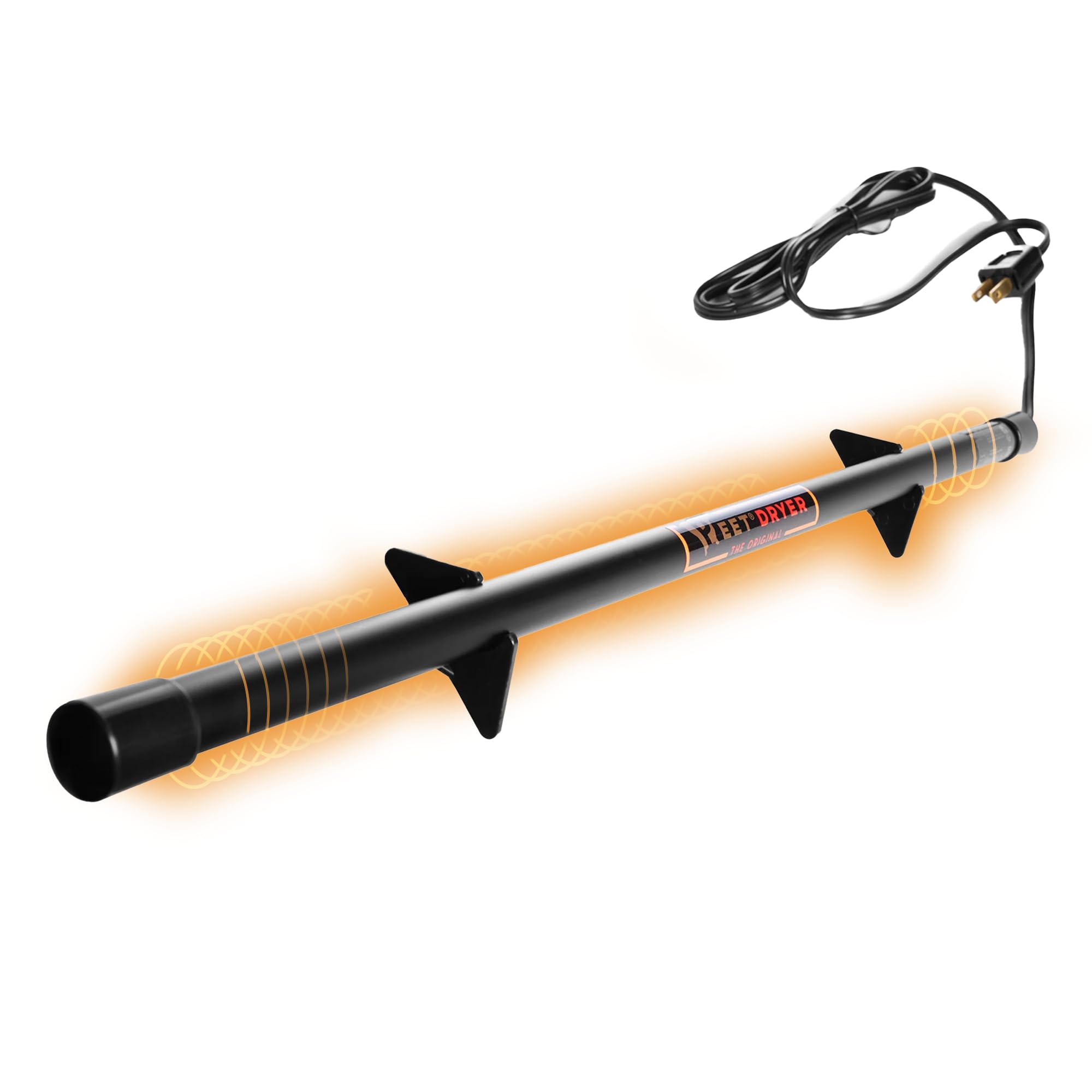
PEET’s 24-inch rod extends coverage to 300 cubic feet, making it a natural fit for taller or wider gun safes that a standard 12-inch rod can’t fully circulate. The 13-watt element produces gentle warm-air convection without fans or moving parts, so operation is silent and vibration-free. Owners appreciate that it draws less power than a traditional incandescent bulb and runs continuously without any maintenance cycle.
The rod’s 24-inch length means it spans a larger portion of the safe floor, distributing heat more evenly across multiple shelves. It ships with mounting brackets that allow horizontal or vertical installation, though most users simply lay it on the bottom carpet. The five-year warranty from a brand that’s been making drying products since 1968 adds peace of mind for a garage environment where temperature extremes could shorten a lesser unit’s life.
Keep in mind that an electric rod only works when the safe has a power pass-through or internal outlet. In a garage, you’ll need to route the cord through a pre-drilled grommet or under the door seal — possible, but it adds a step compared to a wireless silica canister. Also, the rod’s surface can get warm enough that prolonged direct contact with plastic items should be avoided.
Why it’s great
- 300 cu ft rating handles large and extra-large safes
- 13W convection uses less electricity than a standard light bulb
- 5-year warranty from a decades-old drying specialist
Good to know
- Requires safe to have power access — not suitable for fully sealed safes
- 24-inch length occupies floor space in smaller safes
4. Wisesorb 900g 2-Pack Silica Gel Canisters
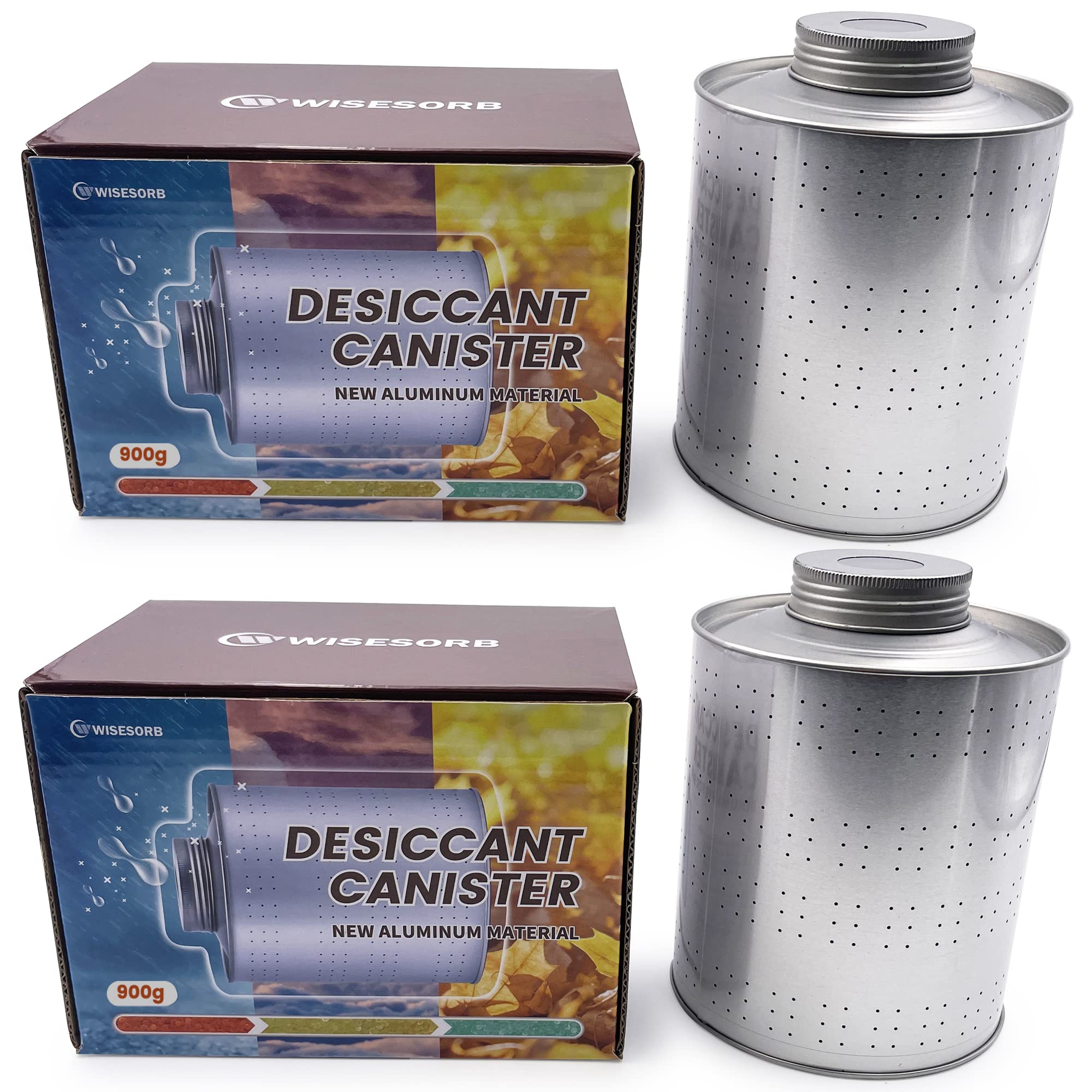
Wisesorb’s two-pack delivers 1,800 grams of total silica gel in sturdy metal canisters with perforated aluminum sides for maximum airflow. Each canister is rated at 675 cubic feet, so a single unit easily covers a large safe, while the second can sit in a gun cabinet or ammo locker. The orange-to-green color indicator uses cobalt chloride-free beads, which is a responsible choice for anyone concerned about chemical safety around firearms.
Recharging is straightforward: 200-250°F in a standard oven for 30 minutes to 3 hours depending on saturation level. The clear plastic window on each canister lets you check bead color without unscrewing the lid, so you don’t release captured moisture back into the safe during inspection. Many owners noted that the 900-gram fill exceeds the stated weight on the label, giving a slight capacity bonus out of the box.
The downside is the same as any passive canister: you must remember to oven-dry the beads when they turn green. In a garage safe that experiences rapid humidity swings, recharge intervals can be as short as two weeks. If you prefer a set-and-forget approach, an electric rod is a better match.
Why it’s great
- Two canisters provide redundant coverage or separate-space use
- Cobalt chloride-free indicating beads are safer for enclosed spaces
- Transparent window lets you check bead color without opening
Good to know
- Oven recharging requires active maintenance every 1-3 weeks
- Metal canister may dent if dropped on concrete garage floor
5. Hornady XL Canister Dehumidifier 95906

Hornady’s XL canister packs 1,500 grams of silica gel into a single container, making it one of the highest-capacity passive dehumidifiers available for gun safe use. The blue-to-pink indicator beads give a clear saturation signal, and the canister is compact enough at 6.5 x 5.3 x 4.8 inches to tuck onto a safe shelf without blocking sightlines. Customers reported dropping humidity from the high 60s to the mid-50s percent range within 24 hours of placement.
The build quality is notably good — a premium-feeling plastic housing with a secure lid that won’t pop open if the safe is bumped. Unlike metal canisters, this one won’t corrode or dent over time. Recharging requires a 300°F oven for up to 4 hours, which is hotter and longer than some competing units, but the total desiccant mass means you won’t need to recharge as frequently as smaller canisters.
The main drawback is the non-functional viewing window that some users found misleading — the beads on the outer edge turn pink quickly while the core remains blue, giving a false “saturated” read. You’ll need to rely on a separate hygrometer or shake the canister occasionally to assess true saturation. Also, the 4-hour recharge cycle at 300°F is a meaningful energy and time commitment.
Why it’s great
- 1,500g desiccant mass means less frequent recharging than smaller canisters
- Robust plastic housing won’t rust or dent in a garage environment
- Compact footprint fits on any safe shelf
Good to know
- Recharge requires 300°F oven for up to 4 hours
- Viewing window shows only outer bead color, not core saturation
6. Liberty Safe 9913 12-Inch Dehumidifier Rod

This entry-level 12-inch rod from Liberty Safe is nearly identical in operation to the premium version but comes at a more accessible price point. It heats to a surface temperature of roughly 100-120°F, creating the same convection effect that pushes damp air out through safe door gaps. At only 0.45 pounds, it’s light enough to mount on the safe wall or simply rest on the floor without shifting.
The rod is designed for 200 cubic foot spaces, making it a good fit for smaller to mid-sized safes that don’t need the length or wattage of a 24-inch unit. Owners in humid regions like the Southeastern U.S. noted that the rod dropped interior humidity by 10-15 percentage points compared to ambient garage levels within a week. The metal construction dissipates heat evenly along the entire length, avoiding hot spots that could damage nearby items.
The trade-off is that the 12-inch length may not circulate air as effectively in tall safes with multiple shelves — the convection column is shorter, so upper shelves receive less direct warm air. For a taller safe, the 24-inch PEET rod or a dual-canister approach would provide more uniform coverage.
Why it’s great
- Very lightweight — easy to reposition or mount on a wall
- Even surface heat without dangerous hot spots
- Proven long-term reliability across years of use
Good to know
- 12-inch length may not fully circulate air in tall safes
- Lower wattage than premium rod options
7. Eva-Dry Dehumidifier for Liberty Safes

This compact wireless unit from Eva-Dry (sold under the Liberty Safe brand) uses renewable silica gel beads to passively adsorb moisture without any electrical connection inside the safe. Its 6-ounce capacity and 500-square-foot floor-area rating make it suitable for small to medium gun safes where running a power cord is impractical. The desiccant beads change color as they saturate, giving a clear visual cue that it’s time to recharge.
Recharging is accomplished by plugging the unit into a standard wall outlet for a full day — the built-in heating element dries the beads back to an active state. Note that this recharge method is slower than the EDV-365’s blower base; several users mentioned the long cycle as a point of friction. However, for a safe that stays closed most of the time, a 24-hour recharge cadence is manageable if you rotate the unit with a spare or time it over a weekend.
The wireless operation is the standout feature here — no drilling holes, no routing cords through door seals. You simply place it on a shelf and forget it until the indicator tells you to recharge. The lower capacity means it will saturate faster than larger canisters, especially in a humid garage, so expect to recharge more frequently than with a 1,500g canister.
Why it’s great
- Fully wireless — no power outlet needed inside the safe
- Built-in recharge heater eliminates the need for an oven
- Compact size fits on any shelf without taking up floor space
Good to know
- Recharge takes approximately 24 hours — not a quick turnaround
- Low capacity means more frequent recharging in humid garages
FAQ
Will an electric rod overheat inside a garage safe during summer?
How often do I need to recharge a silica gel canister in a garage safe?
Can I use a passive canister without any power inside the safe?
Should I use a rod or a canister in a garage that freezes in winter?
Final Thoughts: The Verdict
For most users, the dehumidifier for gun safe in garage winner is the Liberty Safe 12-Inch Rod because it delivers continuous, zero-maintenance protection with a safe surface temperature and reliable convection. If you want the fastest recharge cycle and don’t mind rotating cylinders, grab the Eva-Dry EDV-365 system. And for maximum coverage in a large safe without drilling holes, nothing beats the Wisesorb 900g two-pack.

Mo Maruf
I created WellFizz to bridge the gap between vague wellness advice and actionable solutions. My mission is simple: to decode the research and give you practical tools you can actually use.
Beyond the data, I am a passionate traveler. I believe that stepping away from the screen to explore new environments is essential for mental clarity and physical vitality.