Our readers keep the lights on and my smoothie glass nicely filled. As an Amazon Associate, I earn from qualifying purchases.
A depth finder for a small boat isn’t just a fish-finding toy — it is the single most important safety instrument you can carry. Running a 14-foot skiff or a kayak means you sit low, draft shallow, and feel every scrape of a hidden sandbar. One submerged rock at idle speed can tear a hole in an aluminum hull. The right sonar unit gives you a real-time picture of the bottom so you can navigate tight channels, locate drop-offs, and avoid costly groundings.
I’m Mohammad Maruf — the founder and writer behind WellFizz. I’ve spent hundreds of hours analyzing transducers, cone angles, display readability, and mounting systems across portable and fixed-mount depth finders built specifically for small watercraft and shallow-water operation.
Whether you need a castable unit to scout from shore or a fixed-mount display for your center console, this guide breaks down the essential specs and real-world trade-offs so you can confidently buy the best depth finder for a small boat that matches your fishing style and hull size.
How To Choose The Best Depth Finder For Small Boat
Small boats force three constraints: limited space for mounting, a lower power budget if you don’t have a permanent battery bank, and a shallow draft that makes every shoal a direct threat. You need a sonar that reads accurately in water as shallow as two feet, a display you can see in direct midday glare, and a transducer you can deploy without drilling holes into a thin hull. Keep these three factors in focus.
Transducer Type: Castable vs. Fixed Mount
Castable sonar pods like the Garmin Striker Cast or Deeper PRO+ 2 let you scout from shore or toss over the side of a kayak without any permanent installation. They pair over Wi-Fi or Bluetooth to your phone and give you depth, water temperature, and basic fish arch data. Fixed-mount transducers — like the transom-mount included with the Humminbird PiranhaMAX — offer faster refresh rates, more stable readings at speed, and a dedicated screen that doesn’t drain your phone battery. For a small boat without a console, castable is often cleaner; if you have a flat surface and a 12V battery, a dedicated display is worth the install.
Cone Angle and Shallow-Water Performance
A wider cone angle — typically 60 to 90 degrees — covers more area directly under the boat, which is critical when you’re navigating a narrow creek or a channel less than ten feet deep. Narrow beams (20 degrees or less) give better target separation for seeing individual fish or structure but leave big blind spots directly under the hull. For small boats that run in very shallow water, a wide cone angle reduces the chance of missing a submerged stump or rock. The trade-off is reduced depth penetration; in shallow water that’s rarely an issue.
Display Readability and Mounting
A small boat cockpit gets direct sun from all angles. A color TFT display with at least 4.3 inches of diagonal and an anti-glare coating is far easier to read at a glance than a small monochrome LCD. If you’re using a phone as your screen via a castable pod, a bright OLED phone panel works, but you must secure your phone in a waterproof holder. For permanent mounts, look for a tilt-and-swivel bracket that allows you to angle the screen away from glare and keep it visible while standing or sitting at the tiller.
Quick Comparison
On smaller screens, swipe sideways to see the full table.
| Model | Category | Best For | Key Spec | Amazon |
|---|---|---|---|---|
| Humminbird PiranhaMAX 4 DI | Fixed Mount | Small boat with console | 4.3-inch color display, Down Imaging, 180-455 kHz | Amazon |
| Deeper PRO+ 2 | Castable | Kayak, shore scouting | WiFi range 330 ft, GPS bathymetry mapping | Amazon |
| Garmin Striker Cast | Castable | Bank fishing, ice fishing | WiFi range 200 ft, 10+ hour battery | Amazon |
| LUCKY Y2020-CWLA | Wireless Handheld | Ice fishing, dock use | Wireless range 656 ft, 147 ft depth max | Amazon |
| FishPod 5X | Castable | Budget portable use | Bluetooth, AI fish detection modes | Amazon |
| Hawkeye DT1H | Handheld | Small skiff, crab pot checking | 300 ft max depth, LCD display, submersible | Amazon |
| LUCKY FF-1108-1CWLA | Wireless Handheld | Entry-level, calm water | 2.4-inch TFT color screen, fish attractor lamp | Amazon |
In‑Depth Reviews
1. Humminbird PiranhaMAX 4 Fish Finder, Down Imaging

The Humminbird PiranhaMAX 4 DI is a fixed-mount powerhouse that brings Down Imaging technology to small boats without demanding console-level installation. The 4.3-inch color TFT display is unusually bright for its price tier, letting you read bottom contours and structure in direct sun without cupping your hands around the screen. The included XNT 9 DI T transom-mount transducer sends both 180 kHz Down Imaging and Dual Beam sonar (200/455 kHz), giving you a sharp view of timber, rocks, and drop-offs directly under the hull.
For a small boat owner, the tilt-and-swivel mount is a practical advantage — you can angle the display toward the helm seat or tilt it down when you stand at the tiller. The interface uses a simple four-button layout that requires almost no menu diving; Fish ID+, depth alarms, and zoom are all accessible without a manual. Users consistently report accurate readings in water as shallow as two feet, and the Down Imaging channel reveals fish-holding structure that standard 2D sonar misses completely.
The only real drawback is the transducer cable length. Several owners of pontoon boats and center consoles noted the included cable falls short of a forward dash on vessels over 20 feet, requiring an extension cable. For a typical small skiff or jon boat under 16 feet, the cable reaches the transom area just fine. If you plan to mount the display far forward, measure the cable run before drilling.
Why it’s great
- Down Imaging reveals submerged timber and rocks that standard sonar misses at low speeds.
- 4.3-inch color screen is legible in full sun without an aftermarket sun shield.
- Tilt-and-swivel mount fits small boat consoles with limited flat surface area.
Good to know
- Transducer cable is relatively short; measure your run before mounting on a larger small boat.
- Requires a 12V battery connection — not suitable for kayaks without a power system.
2. Deeper PRO+ 2 Sonar Fish Finder
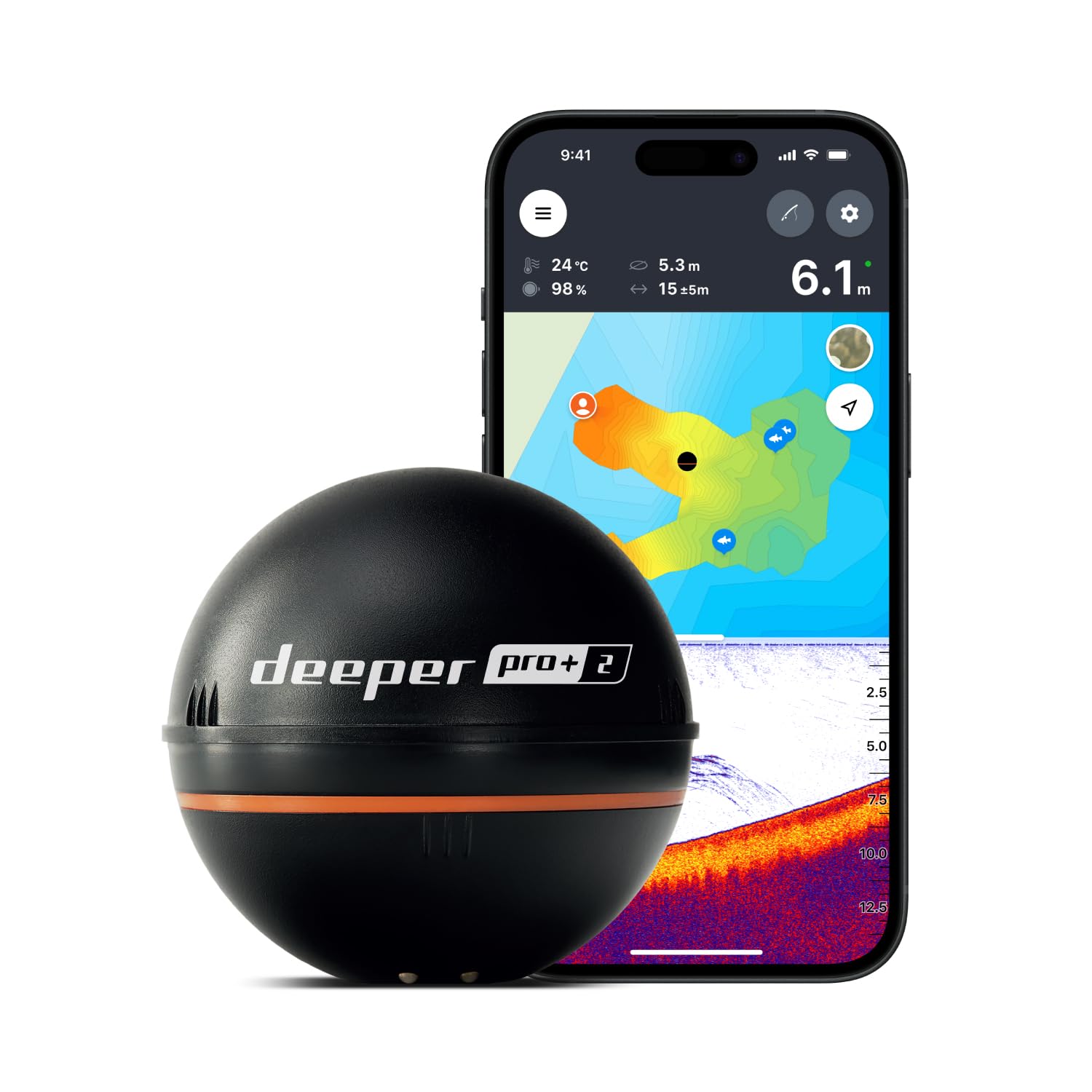
The Deeper PRO+ 2 is the most technically sophisticated castable sonar pod available for small boat owners who also fish from shore, kayak, or ice. The built-in GPS allows you to create bathymetric maps of any body of water you visit, storing contour lines and depth data directly in the Fish Deeper app. Triple beam frequencies (100/240/675 kHz) give you a wide coverage angle for shallow exploration and a narrow high-frequency beam for detailed target separation — down to 0.4 inches on the narrowest beam.
Real-world battery life sits between 5 and 7 hours of continuous use, and the WiFi connection remains rock-solid out to about 200 feet in open water. The unit is small enough — roughly 2.5 inches in diameter — to fit in a tackle box pocket, and the included neoprene pouch protects it during transport. Owners using it from kayaks reported that the GPS mapping feature helped them find productive drop-offs and humps they had never seen on paper charts. The sonar accurately reads depth in water as shallow as 1.5 feet, making it ideal for skiffs working skinny water.
The trade-off is weight: at over 3 ounces, the sensor requires a stout rod with at least 20-pound braided line for casting. It is also heavy enough that some kayak anglers prefer a dedicated casting rod rather than their primary fishing rod. The app offers a paid pro subscription, though most users found the free version sufficient for mapping and fish detection. Several long-term reviews noted battery degradation after 2–3 years, but the overall build quality justifies the mid-range price for a serious angler who wants portable bathymetry.
Why it’s great
- GPS bathymetry mapping lets you create custom contour charts of any lake or river.
- Triple-frequency transducer gives both wide area coverage and fine target separation.
- WiFi range holds steady at 200 feet in open conditions with minimal interference.
Good to know
- Heavy design requires a stout rod with 20 lb+ braid for effective casting.
- Battery service life appears limited; some units needed replacement after 2–3 years.
3. Garmin Striker Cast Castable Sonar
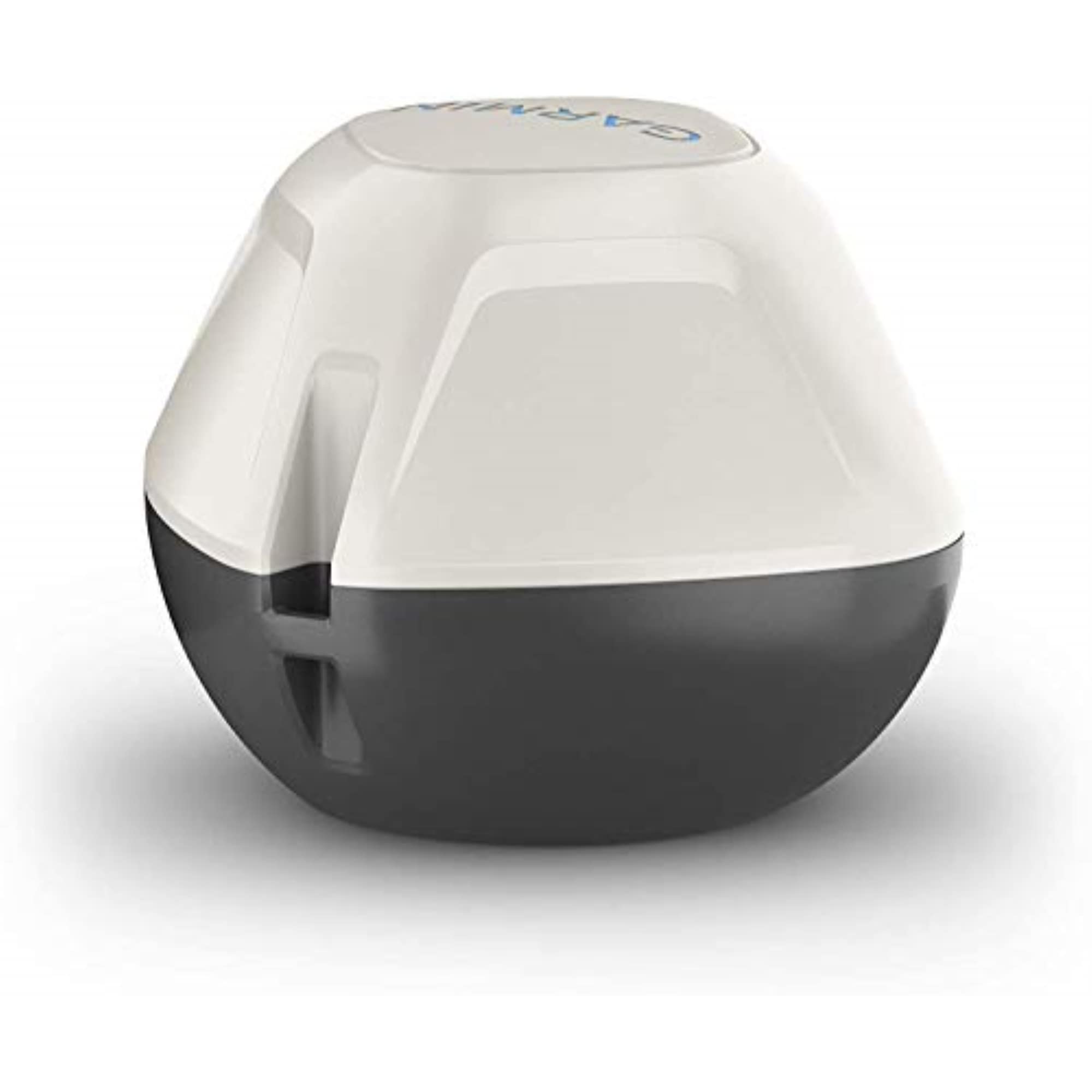
The Garmin Striker Cast is arguably the easiest castable sonar to set up, with a friction-free pairing process that has you throwing the pod within two minutes of opening the box. It uses the free STRIKER Cast app on your phone as the display, and it switches between traditional 2D sonar and an ice-fishing flasher mode automatically depending on the water temperature. The sonar reads depth accurately in less than two feet of water and provides a clear bottom contour line with fish arch indicators overlaid.
Battery performance is a standout feature — Garmin claims 10+ hours on a full charge, and multiple user reports confirm they used the unit for several full-day trips without recharging. The pod auto-powers on when it hits the water and shuts off when removed, which prevents accidental battery drain if you store it wet in a tackle box. The included 20-foot tether line is a smart safety net for kayak anglers who might drop the sensor in current; you can also tie it directly to your fishing line with a small snap swivel.
The main limitation is its reliance on your phone as the display. In bright sun, even a high-brightness phone screen can be hard to read without a shade hood, and running the app for several hours can drain a phone battery quickly. Carrying a backup power bank is wise. Some users also noted that the 200-foot advertised WiFi range was optimistic in real conditions, estimating a reliable range closer to 120–150 feet in open water. For the small boat owner who already brings a phone and a power bank, this is a lightweight, zero-install solution.
Why it’s great
- Instant pairing via the STRIKER Cast app with no complicated menu navigation.
- Auto power-on in water extends battery life by preventing accidental drain.
- Traditional 2D and ice flasher modes cover year-round use scenarios.
Good to know
- Operates through your phone — screen glare and phone battery life are limiting factors.
- WiFi range often falls short of the advertised 200 feet in open-water conditions.
4. LUCKY Portable Sonar Fish Finder Y2020-CWLA

The LUCKY Y2020-CWLA is a wireless handheld combo that packs a dedicated color display, a castable sonar ball, and a 656-foot wireless operating range into one package. You don’t need a phone or a tablet — the handheld unit itself shows water depth, bottom contour, water temperature, and fish size icons (small, medium, large) on a backlit LCD screen. The transducer uses a 125 kHz beam with a 90-degree cone angle, which is intentionally wide to cover a large area directly under the boat in shallow water.
Battery life is solid: the handheld lasts roughly 5 to 6 hours per charge, and the sonar ball runs even longer. Users reported using the unit for a full week of ice fishing without needing to recharge the ball, and multiple reviews confirmed depth readings within one foot of known bottom depths. The fish attractive lamp built into the sonar ball glows in low light, which makes it easier to locate the ball after dark or in murky water. The transparent replacement cap lets you see the sensor orientation at a glance.
Some users noticed that the unit can be prone to connectivity issues in very cold weather, and a few reported that the sonar ball stopped charging after a couple of months of heavy use. The 147-foot maximum depth rating is more than sufficient for inland lakes and rivers, but the wide cone angle means less target separation — you’ll see the general area where fish are holding, not individual structure details. For the angler who wants a self-contained wireless depth finder without cluttering their phone, this is a strong mid-range choice.
Why it’s great
- Self-contained handheld display — no smartphone or app required for operation.
- Wide 90-degree cone angle covers maximum area in shallow water under 10 feet.
- Glow-in-the-dark sonar ball cap improves visibility during low-light fishing sessions.
Good to know
- Some units experienced charging or connectivity failures after a few months of use.
- Wide beam lacks the fine target separation needed to identify individual submerged structure.
5. FishPod 5X Bluetooth Fish Finder with AI Technology

The FishPod 5X stands out in the budget-friendly castable category by offering four distinct sonar modes — FishEcho, BottomScan, Vertical Flasher, and a general purpose mode — that auto-adjust screen settings on your phone to reduce clutter from weeds, debris, and false echoes. The Bluetooth connection is straightforward to pair, and the app interface presents depth, temperature, and fish size data in a clean layout that does not overwhelm a new user. The included TraxNut mounting system lets you attach the sonar pod to any standard 1/4 x 20 bracket if you want to convert it from castable to a fixed mount on a kayak.
Portability is the key advantage here. The pod is lightweight — just under an ounce — and can be tossed from a dock, a kayak, or a small inflatable boat without needing a heavy rod. The 199-foot maximum depth rating is more than enough for typical small boat fishing in lakes and coastal bays. Several owners reported that the unit lasted about two hours when trolled behind a kayak, with occasional Bluetooth dropouts at the edge of its range. The battery is internal and rechargeable via USB, and the app logs depth data over time so you can track bottom changes.
The AI detection modes do help reduce false fish icons from thermoclines and suspended debris, but they are not perfect — some users still saw phantom readings. The BottomScan mode is the most reliable, providing a clear view of bottom hardness (mud versus sand versus rock) that can help you decide where to anchor. The FishPod 5X is a solid entry-level choice if you want a lightweight, app-based unit for casual scouting, but serious anglers may eventually outgrow its limited range and occasional connectivity hiccups.
Why it’s great
- AI-powered sonar modes filter out common false readings from debris and weeds.
- Ultra-lightweight pod casts easily from any rod without needing heavy braid.
- TraxNut mounting system offers flexibility to use as a fixed position sensor.
Good to know
- Bluetooth range is limited; expect dropouts beyond 60-80 feet from the pod.
- Battery life is shorter than most competitors at approximately 2 hours of active use.
6. Hawkeye DT1H Handheld Depth Finder with Temperature

The Hawkeye DT1H is the simplest no-nonsense depth finder on this list — a sealed, handheld unit that you hold vertically in the water to get an instant depth and temperature reading on a large LCD screen. It requires no pairing, no app, no mounting, and no battery compartment access; it runs on internal batteries and floats if dropped overboard.
This is a purpose-built tool for specific scenarios. Crab pot fishermen love it because they can lower it on a line to confirm bottom depth before setting pots. Ice anglers rely on it to find shallow lake basins through solid ice. Dinghy and skiff operators use it as a quick-check instrument — you simply dip the transducer into the water from the side, wait two seconds, and read the number. Water temperature accuracy requires about one to two minutes of immersion, but depth readings are instant and verified by multiple users against survey-grade GPS data.
The big constraint is that it is not hands-free. You must hold it or suspend it in the water to get a reading; you cannot mount it to a moving boat to get continuous depth data while underway. The slide switch between depth and temperature modes is mechanical and reliable, but switching requires two hands. A few units failed on the first outing, and warranty registration is time-limited. For the small boat owner who wants a backup depth source or a tool for checking anchor spots, the DT1H is a durable, portable solution that never needs a phone.
Why it’s great
- Fully self-contained — no phone, no app, no wires, no installation required.
- Narrow 8-degree beam penetrates black ice and dark water better than wide-angle sonar.
- Floats and comes with a wrist strap, so it is nearly impossible to lose overboard.
Good to know
- Requires manual submersion for every reading; not a hands-free underway device.
- Some units arrived with faulty sensors that failed to read depth out of the box.
7. LUCKY Portable Fish Finder FF-1108-1CWLA
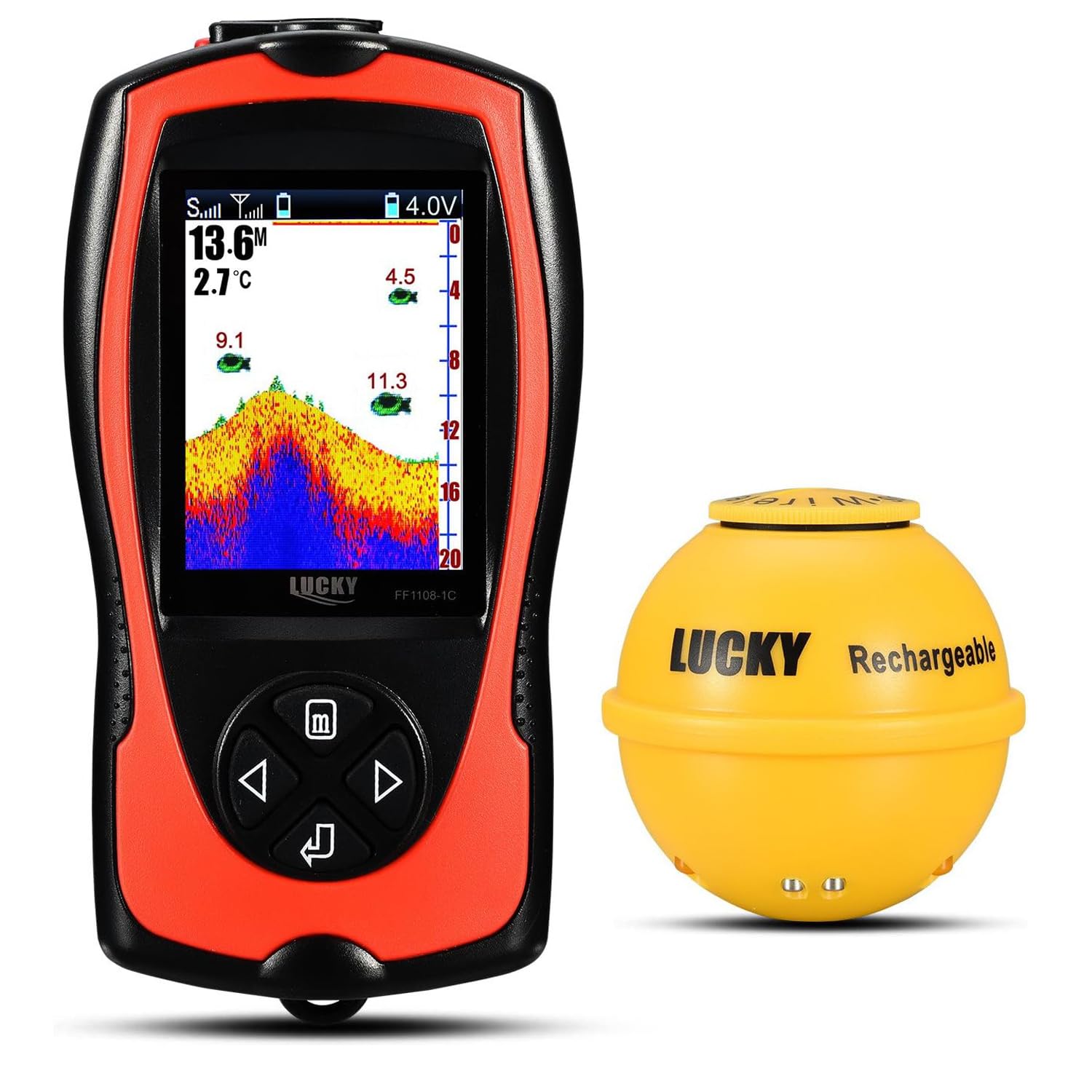
The LUCKY FF-1108-1CWLA is a budget-friendly wireless combo that includes a 2.4-inch TFT color handheld display and a floating sonar transducer with a built-in fish attractive lamp. The wireless range is rated at 492 feet, and the depth detection maxes out at 147 feet — numbers that are more than adequate for small lakes, rivers, and inshore saltwater. The handheld unit is rechargeable via USB and runs for about four hours, while the sonar ball lasts up to ten hours per charge. The display shows bottom contour, water depth, water temperature, and fish size icons (small, medium, large) with an adjustable sensitivity setting.
In practice, this unit works best in calm, shallow water with minimal current. Several users confirmed that it provides accurate depth and temperature readings in ponds and slow rivers, and the fish attractor lamp is a novel addition that can help you see where your transducer is after dark. The simulation mode is a useful training feature — you can test all functions on dry land before heading out, which reduces the learning curve for beginners. The included car charger and USB cable mean you can top off the battery between trips without a dedicated charger.
The main downside is reliability in anything but ideal conditions. Multiple reviews noted that the sonar struggles to distinguish fish from debris in heavy weeds or murky water, often showing false marks. A few units failed within the first few months, and the build quality does not inspire the same confidence as the Garmin or Deeper offerings. The display is small and can be hard to read in direct sunlight despite the TFT color screen. For a casual weekend angler who wants to experiment with sonar without investing in a premium unit, the FF-1108 is a low-risk entry point, but it is not a long-term solution for serious small boat anglers.
Why it’s great
- Simulation mode lets you learn all functions before you even hit the water.
- Sonar ball floats and has an integrated lamp for visibility in low-light conditions.
- USB rechargeable with both wall and car charging options included in the box.
Good to know
- False fish icons and debris readings are common in murky or weedy water.
- 2.4-inch screen is difficult to read in bright sunlight without a shade hood.
FAQ
Can a handheld depth finder work while my boat is moving at planing speed?
Is a 200-foot WiFi range from a castable sonar actually achievable on a small lake?
What cone angle is best for navigating shallow rivers and creeks in a small boat?
Will a castable sonar pod work on a kayak without a fish finder mount?
Final Thoughts: The Verdict
For most small boat owners, the best depth finder for a small boat winner is the Humminbird PiranhaMAX 4 DI because it combines a bright 4.3-inch color display, Down Imaging sonar for structure detail, and a fixed transom mount that gives continuous depth readings without the hassle of casting or phone pairing. If you want a fully portable, app-based system that maps bathymetry and works on a kayak, grab the Deeper PRO+ 2. And for a budget-friendly, no-install, drop-and-read tool for checking anchor spots or crab pots, nothing beats the rugged simplicity of the Hawkeye DT1H.

Mo Maruf
I created WellFizz to bridge the gap between vague wellness advice and actionable solutions. My mission is simple: to decode the research and give you practical tools you can actually use.
Beyond the data, I am a passionate traveler. I believe that stepping away from the screen to explore new environments is essential for mental clarity and physical vitality.