Our readers keep the lights on and my smoothie glass nicely filled. As an Amazon Associate, I earn from qualifying purchases.
The line between a dance floor and a tennis court is thinner than most realize—both demand rapid lateral cuts, explosive stops, and seamless pivots on the balls of your feet. But wearing a standard court shoe to a dance class often means sacrificing the specific torsional flexibility needed for turns, while a pure dance sneaker may lack the lateral lockdown required for aggressive side-to-side movement. This is the exact middle ground the best dance tennis shoes occupy.
I’m Mohammad Maruf — the founder and writer behind WellFizz. Over many hours of research, I’ve pored over foam density data, outsole rubber formulations, pivot-point reinforcements, and user feedback from dance instructors and pickleball players alike to find the shoes that genuinely serve both worlds.
Whether you’re teaching Zumba, cross-training at the gym, or drilling footwork on a hard court, modern hybrid footwear has evolved past gimmicks. This guide breaks down seven models that deliver real, measurable performance for dancers who refuse to compromise on grip or glide, helping you find the best dance tennis shoes for your specific movement style.
How To Choose The Best Dance Tennis Shoes
Hybrid dance-court footwear demands a balance that pure running shoes or standard cross-trainers can’t provide. You need enough lateral support for side lunges without the stiffness that prevents clean spins. Here are the three factors that separate capable hybrid shoes from compromises.
Outsole Grip Pattern & Pivot Point
The bottom of the shoe is where the dance-court conflict lives. Tennis outsole patterns are built for aggressive stopping and pushing, often with herringbone treads that dig into hard courts. Dance shoes, by contrast, need a smooth pivot zone under the ball of the foot to allow the shoe to rotate without catching. The best hybrids incorporate a distinct pivot circle or a modified tread pattern that reduces grab at the center while maintaining bite at the edges for lateral stability.
Ankle Collar Height & Heel Lockdown
This is the most divisive spec in the category. A high-top or mid-top collar gives you confidence for lateral cuts and landings, but it can restrict the ankle flexion needed for quick spins, relevés, or heel lifts. The best dance tennis shoes use padded, sculpted collars that wrap the ankle without choking range of motion. Look for internal heel counters that lock the calcaneus in place—slip inside the shoe is far more disruptive than a slightly lower collar.
Midsole Density for Two-Use Shock Absorption
Crossover shoes must handle two distinct impact profiles: the repetitive, linear heel strikes of court movement and the pliable, multi-directional landings of dance. Too much foam softness and you lose court feel and stability. Too firm and you feel every floor impact during a dance routine. The sweet spot is a dual-density EVA or polyurethane midsole with a firmer perimeter and a softer core, allowing the foot to both stabilize during lateral pushes and absorb shock during jumps.
Quick Comparison
On smaller screens, swipe sideways to see the full table.
| Model | Category | Best For | Key Spec | Amazon |
|---|---|---|---|---|
| Nfinity Mid-Top | Premium | Cheer & Dance Floor | Braided ankle support band | Amazon |
| K-Swiss Hypercourt Supreme 2 | Premium | Pickleball & Court | Herringbone outsole with pivot zone | Amazon |
| TIEM Latus Studio | Mid-Range | Studio & CrossFit | Velcro strap + dual-density midsole | Amazon |
| ZUMBA Air Funk | Mid-Range | Zumba & Dance Aerobics | Mid-top pivot chassis | Amazon |
| WILSON Intrigue Lite | Mid-Range | Clay & Hard Court | 8.5 oz lightweight mesh upper | Amazon |
| PUMA Tazon 6 FM | Budget | Daily Wear & Light Court | EVA midsole + heel shank | Amazon |
| New Balance 608 V5 | Budget | Work Shift & Gym | Leather upper + rollbar stability | Amazon |
In‑Depth Reviews
1. Nfinity Mid-Top Athletic Shoes
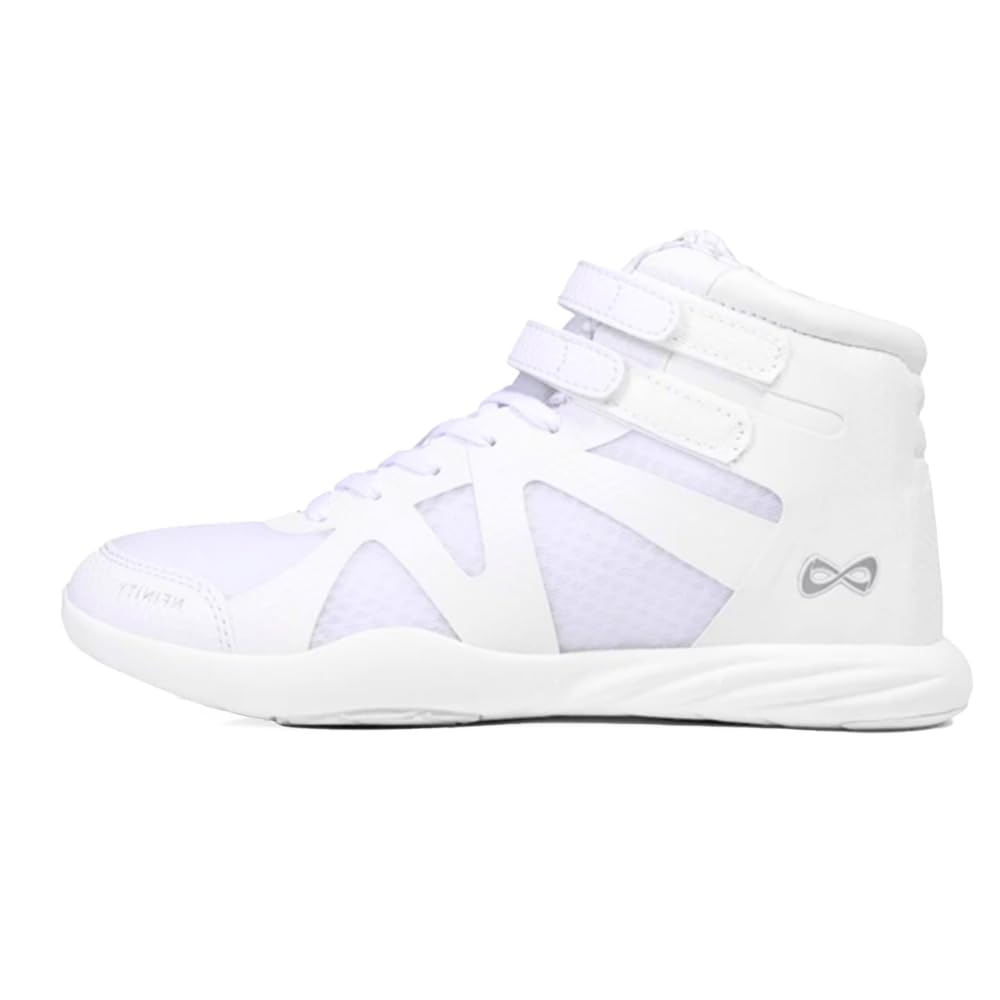
The Nfinity Mid-Top is practically the gold standard for cheer and dance crossover work. Its signature braided ankle band provides a level of lateral lockdown that mid-tops from generic athletic brands simply don’t match, locking the heel without compressing the Achilles. The outsole uses a tight multidirectional tread pattern that grips spring floors and gym mats without catching during pivot sequences—a delicate balance most shoes get wrong.
The upper is lightweight and breathable, built from a flexible mesh that conforms to the foot without creating pressure points across the midfoot. Sizing requires careful attention: several users note that the fit runs very snug, and going up half to a full size is common practice for dancers who wear thicker crew socks. The interior cushioning is firm rather than plush, which some purists prefer for ground feel during footwork drills.
Durability is the main point of contention. While the shoe delivers exceptional support and comfort for the first few months, reports of the outsole peeling away from the midsole and the Velcro strap losing grip over time suggest these are built for performance cycles rather than multi-year daily abuse. For competition-level dancers who replace shoes seasonally, the trade-off is worth the superior on-floor feel.
Why it’s great
- Best-in-class ankle support for lateral cuts
- Lightweight construction doesn’t weigh down footwork
- Pivot-friendly outsole for dance floor transitions
Good to know
- Runs small; size up at least one half step
- Durability concerns with sole separation after heavy use
2. K-Swiss Women’s Hypercourt Supreme 2
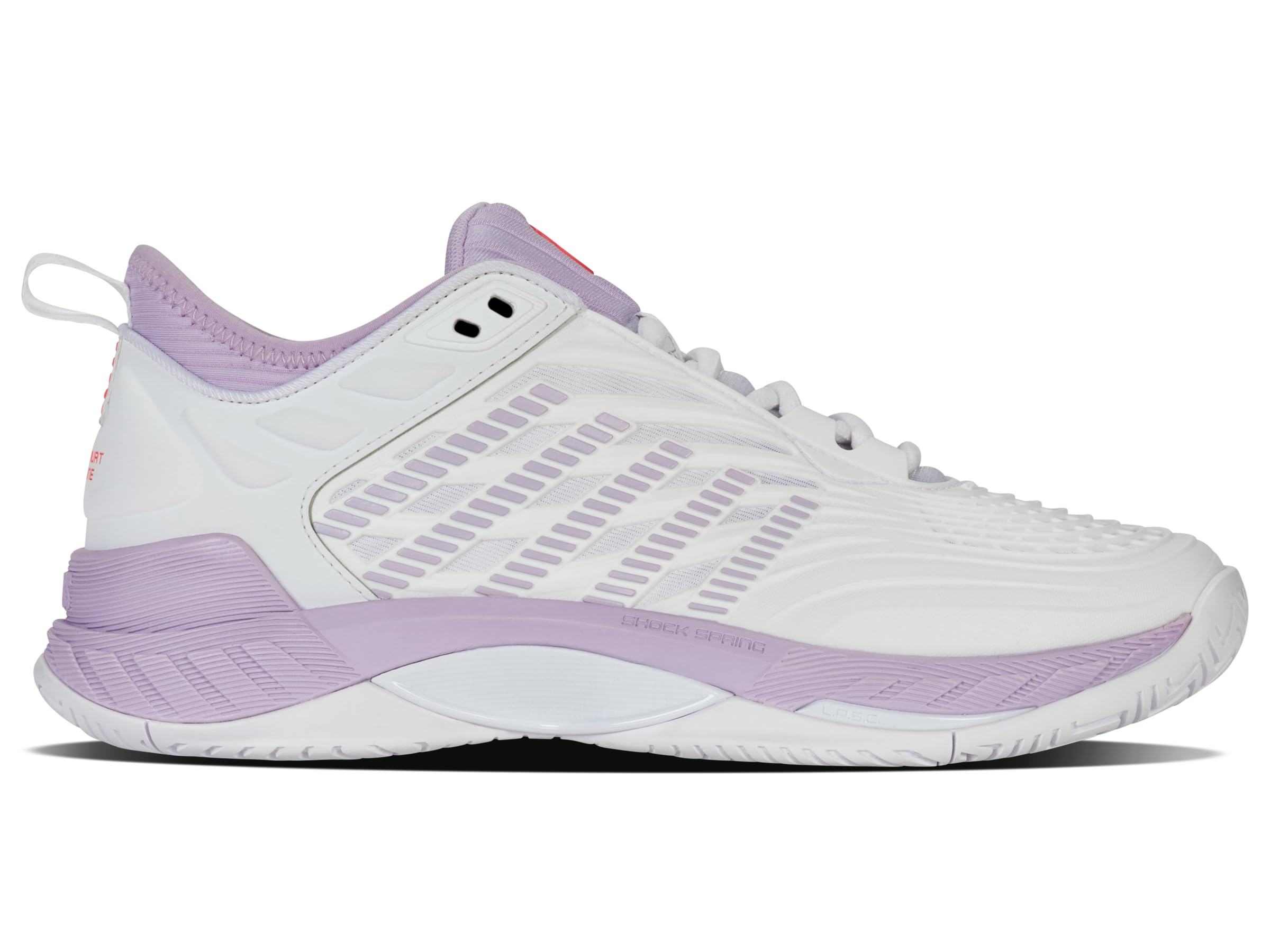
K-Swiss has been making court shoes for decades, and the Hypercourt Supreme 2 reflects that heritage with a specific focus on comfort during extended lateral play. The shoe features a modified herringbone pattern that allows a limited pivot zone under the forefoot while maintaining strong braking traction elsewhere, making it a strong alternative for dancers who spend equal time on hard courts and dance floors.
The midsole uses a dual-density foam system that balances heel cushioning for impact with a firmer forefoot for propulsion during shuffles and turns. The toe box is noticeably wider than most tennis shoes, allowing the metatarsals to splay naturally during pivots and relevés—a significant advantage for dancers with wider feet. The heel counter is firm without being rigid, providing confident lockdown that prevents slip inside the shoe.
Some users find the shoe too stiff straight out of the box, particularly around the heel collar and the tongue area. The break-in period can be a week of regular use, which is longer than most mesh-based dance shoes. Additionally, the weight is not the lightest in this comparison—a trade-off for the durability and structure that helps the shoe hold up to heavy court use without collapsing.
Why it’s great
- Roomy toe box allows natural foot splay during turns
- Excellent arch support reduces foot fatigue
- Durable construction for long-term court use
Good to know
- Stiff out of box; requires break-in period
- Not the lightest option for pure dance routines
3. TIEM Latus Studio Fitness Cross-Training Sneaker
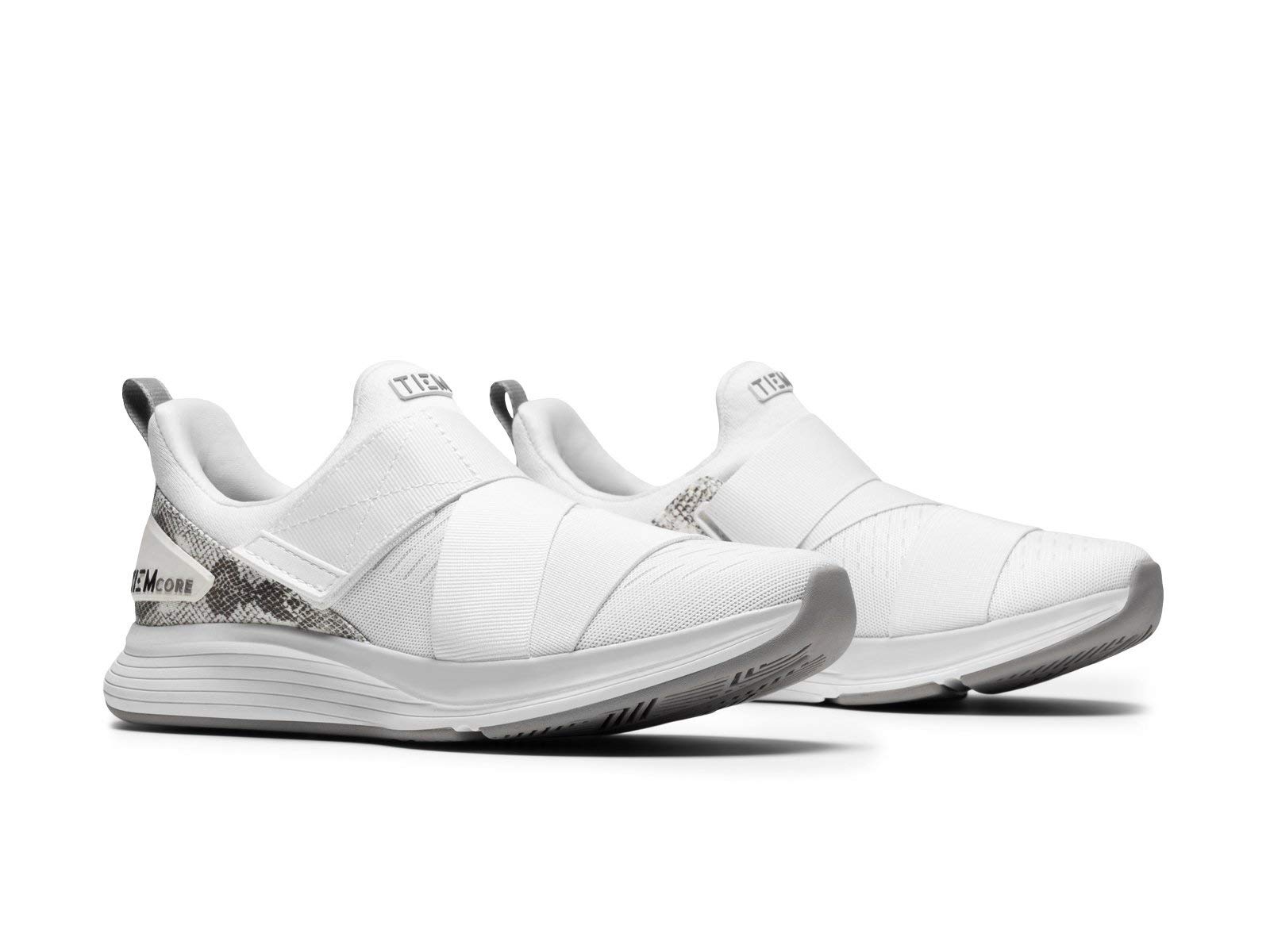
TIEM entered the studio fitness space with a clear mission: build a shoe that works as well for barre, dance cardio, and strength training as it does for lateral court work. The Latus achieves this through a unique combination of a dual-density midsole that softens landings while keeping a stable platform for lunges, and a padded Velcro strap across the midfoot that eliminates the pressure points of traditional lacing.
The outsole rubber is non-marking and uses a segmented tread pattern that allows the shoe to flex naturally during the ball-of-foot pivot that defines Zumba and dance aerobics. The heel-to-toe drop is low at approximately 4mm, encouraging a more natural foot strike that dancers tend to prefer. The upper is a stitched textile that feels soft against the foot while maintaining enough structure to resist stretching over time.
The durability feedback is mixed. While many users report that their pairs last through a year of heavy studio use, others have found the midsole compresses significantly after a few months, reducing the cushioning that made the shoe comfortable initially. This compression tends to change the overall fit, making the shoe feel looser than new. For dancers who cycle through shoes every season, the Latus offers strong performance per dollar spent.
Why it’s great
- Velcro strap provides secure midfoot fit without lacing pressure
- Low drop encourages natural foot mechanics during turns
- Non-marking outsole works on studio and court floors
Good to know
- Midsole may compress noticeably after several months
- Narrow fit; not ideal for wide feet without thin socks
4. ZUMBA Air Funk Women’s Mid-Top Dance Sneakers

The ZUMBA Air Funk is purpose-built for the brand’s proprietary dance fitness format, which means the pivot support specification is not an afterthought—it’s the primary engineering target. The mid-top chassis uses a sculpted ankle collar that provides enough stability for quick directional changes without feeling restrictive during fast hip rotations or floor spins. The outsole is divided into a textured lateral grip zone and a smoother medial pivot circle, allowing the shoe to rotate cleanly on a sprung floor.
The cushioning is softer than typical court shoes, leaning into the needs of dance aerobics where landings are varied and impact is absorbed across the foot rather than just the heel. The synthetic upper is lightly padded and breathable, though the overall build feels less structured than traditional tennis shoes. The fit runs large, often by a full size—a quirk that buyers should account for when ordering.
Durability is reasonable for dance-specific use, with users reporting a one-to-two-year lifespan at three to four classes per week. The outsole rubber is softer than tennis shoe compounds, which helps with grip on studio floors but means faster wear on abrasive surfaces like concrete. For dancers whose primary floor is a gymnasium or purpose-built studio, the Air Funk delivers the targeted performance it promises.
Why it’s great
- Dedicated pivot zone for clean rotational movement
- Soft cushion suits multi-directional dance landings
- Stylish design matches Zumba aesthetic
Good to know
- Runs large; size down from typical court shoe size
- Softer outsole wears faster on outdoor surfaces
5. WILSON Intrigue Lite

The WILSON Intrigue Lite weighs in at just around 8.5 ounces, making it one of the lightest court shoes available that still retains a structured outsole. The reduced weight comes from a minimalist mesh upper that wraps the foot closely, sacrificing some of the plush lining found in heavier models. This makes it an excellent choice for dancers who prioritize fast footwork and feel over long-cushion comfort.
The outsole uses a modified herringbone pattern that works well on both clay and hard courts, though it lacks a distinct pivot circle. The tread is evenly distributed, which means the shoe grips well in all directions but may resist rotation slightly more than shoes with dedicated pivot zones. The midsole cushioning is moderate, leaning firm, which provides good court feedback but may feel harsh for dancers accustomed to softer dance sneakers.
Lateral support is sufficient for recreational to intermediate movement, but the low collar and flexible upper mean it won’t provide the same ankle lockdown as a mid-top shoe. Some users report that the toe box is snug until break-in, after which the mesh stretches to accommodate splay. For dancers who transition between court sports and dance, the Intrigue Lite offers a nimble, fast feel that rewards precise foot placement.
Why it’s great
- Extremely light, enabling quick footwork
- Breathable upper keeps feet cool during intense sessions
- Versatile outsole works on multiple court surfaces
Good to know
- Less lateral support than mid-top alternatives
- Snug toe box may require thin socks during break-in
6. PUMA Men’s Tazon 6 FM
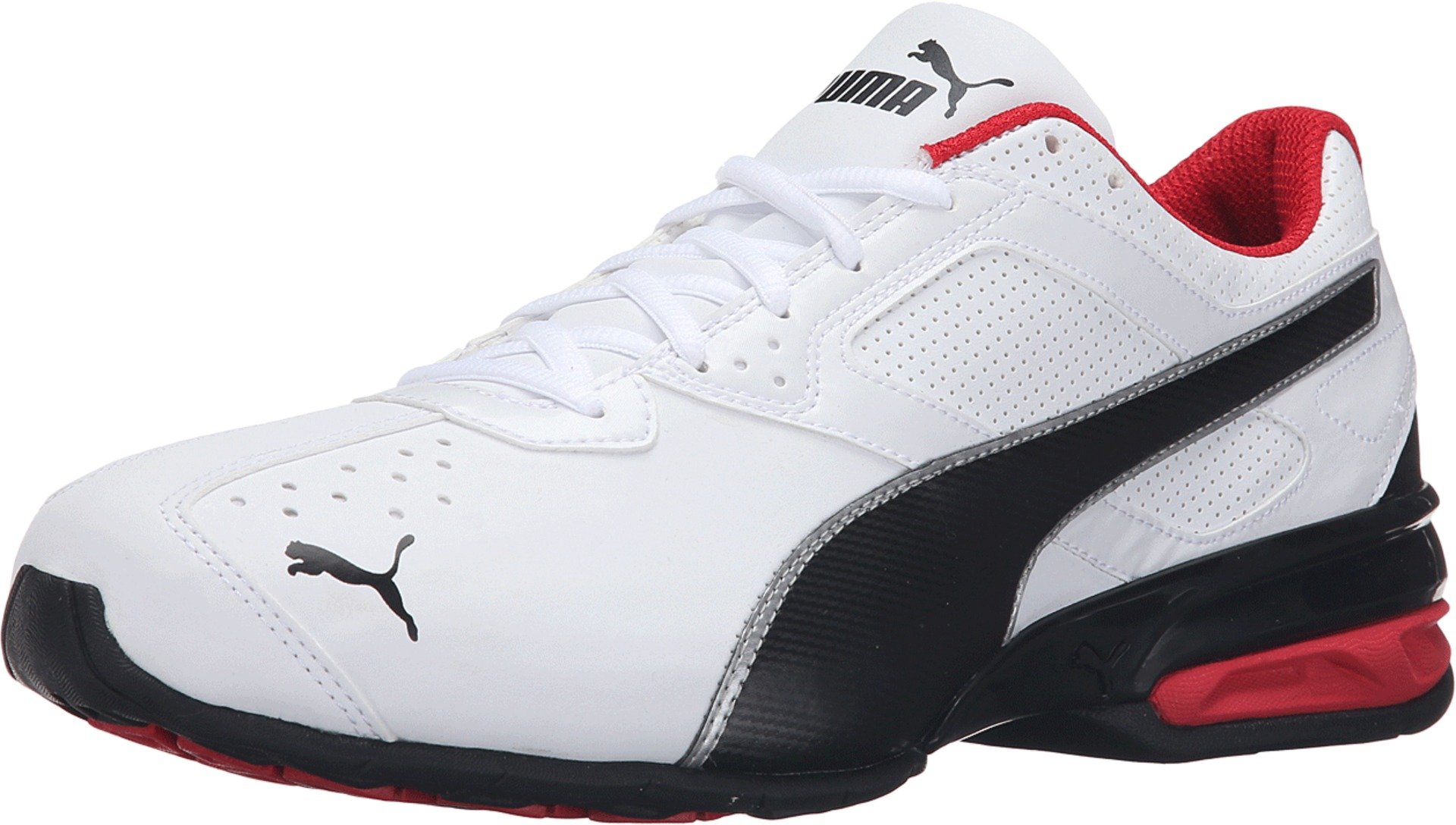
The PUMA Tazon 6 FM is a classic cross-trainer that doesn’t specialize in dance but offers solid foundational support for light court work and gym-based choreography. The EVA midsole is paired with a thermoplastic heel shank that provides arch stability, a feature not always present at this tier. The outsole uses a multidirectional tread pattern that grips well for lateral drills without being overly aggressive during stationary pivots.
The upper is a combination of synthetic leather and mesh, which gives it a durable, structured feel that holds up to daily wear. The fit is true to size and accommodates a slightly wider foot without feeling sloppy. The heel-to-toe drop is approximately 10mm, which is higher than dance-optimized shoes, meaning dancers may notice less ground feel during weight-shifting footwork sequences.
Weight is the main compromise—the Tazon 6 FM is not the lightest shoe in this roundup, and the extra mass can fatigue the feet during extended dance sessions. The cushioning is supportive but firm, which suits gym-goers and casual dancers but lacks the plushness that pure dance sneakers offer. For budget-conscious shoppers who need a shoe that works for both the weight room and the dance floor, the Tazon delivers reliable performance.
Why it’s great
- Solid arch support with heel shank for stability
- Durable build that withstands daily wear
- True-to-size fit works for wider feet
Good to know
- Heavier than dance-specific shoes
- Higher drop reduces ground feel for footwork
7. New Balance Men’s 608 V5 Casual Comfort Cross Trainer

The New Balance 608 V5 is built for people who spend long hours on their feet—healthcare workers, retail staff, and gym regulars—and its crossover appeal to dance comes from extraordinary all-day comfort and reliable traction. The ABZORB midsole, combined with a full-length polyurethane insert, provides a plush, shock-absorbing platform that significantly reduces foot fatigue during dance sequences involving repetitive landings.
The upper is genuine leather with reinforced stitching, making it the most durable construction in this list. The outsole uses a solid rubber tread with a wide footprint, offering excellent stability for lateral moves but less finesse for deliberate pivots. The Rollbar technology provides firm arch support that prevents overpronation, which can be beneficial for dancers who need stability during single-leg balance moves.
The main drawbacks are weight and flexibility. The 608 V5 is the heaviest shoe here, and the leather upper resists the natural bending of the foot during pointed toes and deep pliés. The tread pattern is more utilitarian than dance-optimized, so clean turns on a polished floor require deliberate effort. For entry-level dancers or those who need a durable all-purpose shoe that can handle both work shifts and weekend dance classes, the 608 V5 offers unmatched longevity and value.
Why it’s great
- Exceptional all-day comfort with premium cushioning
- Genuine leather upper holds shape for years
- Excellent stability for lateral movements
Good to know
- Thick profile offers limited ground feel for dance
- Stiff upper resists flexion for pointed footwork
FAQ
Can I use high-top basketball shoes for dance tennis?
How does outsole hardness affect dance performance?
Should I buy dance tennis shoes a half size larger?
Final Thoughts: The Verdict
For most dancers, the best dance tennis shoes winner is the Nfinity Mid-Top because it offers the most targeted ankle support and pivot-friendly outsole design for dance floor work. If you want a wider toe box for natural foot splay during pivots, grab the K-Swiss Hypercourt Supreme 2. And for pure Zumba and dance aerobics where rotational freedom is the priority, nothing beats the dedicated pivot-sole design of the ZUMBA Air Funk.

Mo Maruf
I created WellFizz to bridge the gap between vague wellness advice and actionable solutions. My mission is simple: to decode the research and give you practical tools you can actually use.
Beyond the data, I am a passionate traveler. I believe that stepping away from the screen to explore new environments is essential for mental clarity and physical vitality.