Our readers keep the lights on and my smoothie glass nicely filled. As an Amazon Associate, I earn from qualifying purchases.
Every saltwater boater knows the feeling — glancing at a depth gauge that flickers, fades, or simply fails mid-channel. Salt spray, vibration, and relentless UV exposure turn many consumer-grade electronics into useless plastic bricks within a season. The decision isn’t just about sonar performance; it’s about finding a unit with sealed connections, marine-grade backing, and a transducer that laughs at corrosion.
I’m Mohammad Maruf — the founder and writer behind WellFizz. I’ve spent countless hours cross-referencing transducer frequency tolerances, display nits, IPX ratings, and GPS lock speeds to separate the boatshow fluff from the real saltwater-ready hardware.
Whether you pilot a center console, a bay boat, or a pocket cruiser, this research-backed guide will help you confidently select the right depth finder for saltwater by matching your navigation needs to a unit built to survive the marine environment.
How To Choose The Best Depth Finder For Saltwater
Saltwater use demands a device that resists corrosion, delivers clear readings in dynamic conditions like tide changes and boat wakes, and offers enough sonar power to penetrate deeper, saltier water. A freshwater unit pressed into coastal service often fails from the inside out due to unsealed connectors and improperly rated transducers.
Sonar Technology: CHIRP vs Traditional
Traditional fixed-frequency sonar sends out a single ping and listens for an echo, but saltwater absorbs sound differently than fresh water. CHIRP units sweep through a range of frequencies, improving target separation and depth penetration significantly in salt conditions. For offshore fishing or navigating structure through murky inlets, CHIRP is the clear winner.
Transducer Quality and Mounting
The transducer is the most vulnerable component in a saltwater setup. Look for transducers with epoxy-filled or bronze housings, sealed cable entries, and marine-grade stainless steel mounting brackets. A transom-mount transducer is the most common and easiest to replace, but through-hull options offer the best performance at high speeds. Ensure the unit’s transducer cable length is sufficient for your console-to-transom run.
Display Brightness and Durability
A display that looks fine in a store can become impossible to read under direct sun on a bright铝 saltwater day. A minimum of 800-1000 nits of brightness with an IPS or TFT panel ensures you can see depth contours and waypoints without shading. A hard-coated, anti-glare screen protector or sun cover prolongs the display’s life against UV degradation.
Chartplotter and GPS Capabilities
For saltwater navigation, a built-in GPS chartplotter with preloaded coastal charts or compatibility with C-MAP, Navionics, or Humminbird Basemap is essential. Look for units that support real-time contour mapping (like Genesis Live or Quickdraw Contours) so you can create your own bathymetric charts of unfamiliar inlets and reefs.
Quick Comparison
On smaller screens, swipe sideways to see the full table.
| Model | Category | Best For | Key Spec | Amazon |
|---|---|---|---|---|
| Simrad GO9 | Premium MFD | Navigation and radar integration | 9″ touchscreen, C-MAP charts | Amazon |
| Lowrance Elite FS 10 | Flagship Sonar/Plotter | Advanced 3-in-1 sonar and live target | 10″ display, Active Imaging 3-in-1 | Amazon |
| Garmin Striker Vivid 7cv | High-End All-Rounder | Kayak and small boat mapping | 7″ QSVGA display, ClearVu | Amazon |
| Garmin Striker 7SV | Mid-Range Side Scan | Structure scanning and waypoint marking | 7″ display, CHIRP + SideVu | Amazon |
| Humminbird Helix 5 CHIRP G3 | Compact GPS/Plotter | Pontoon boats and smaller consoles | 5″ display, Dual Spectrum CHIRP | Amazon |
| Lowrance Eagle 5 | Value GPS Combo | Budget-friendly chartplotting | 5″ IPS screen, SplitShot HD | Amazon |
| Humminbird PiranhaMAX 4 DI | Entry-Level Down Imaging | Simple depth reading and structure ID | 4.3″ color display, Down Imaging | Amazon |
| Deeper PRO+ 2 | Portable Castable Sonar | Kayak, shore, and ice fishing | 100m max depth, 0.4″ target sep | Amazon |
| HawkEye DT2BX-TM | Budget In-Dash Sounder | Basic depth, air, and water temp | 2″ LCD display, 600ft max depth | Amazon |
In‑Depth Reviews
1. Simrad GO9 Chartplotter and Fish Finder
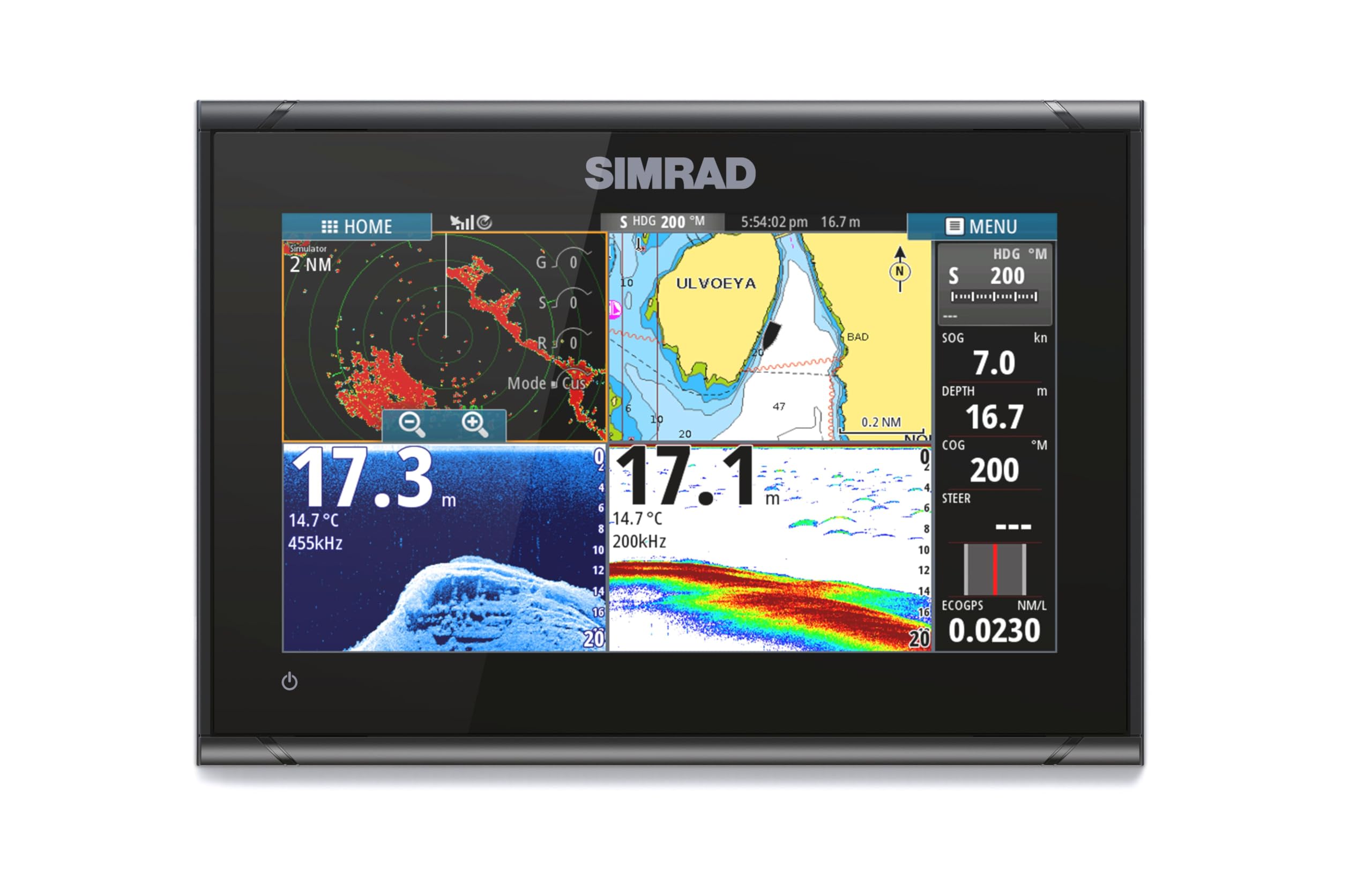
The Simrad GO9 is the most complete saltwater navigation package in this lineup. Its 9-inch touchscreen is bright enough to read under direct coastal sun, and the included C-MAP Discover card provides vector charts with custom depth shading, tides, and currents for US and Canadian waters. The 83/200 kHz HDI transducer delivers clear CHIRP sonar and DownScan Imaging that reveals bottom hardness and submerged structure crucial for navigating unfamiliar inlets.
Built-in Wi-Fi, Bluetooth, and NMEA 2000 support allow seamless integration with radar, autopilots, and smartphone mirroring — a major advantage for center-consoles and express cruisers running a full electronics suite. The touch interface responds quickly, and the user-friendly menu system makes switching between chart, sonar, and radar views intuitive even in rough seas.
Some users have reported that the included transducer does not support SideScan sonar, and the map card may not include every small coastal river. However, for pure navigation performance, multifunction expandability, and display quality in a premium saltwater context, the GO9 stands alone.
Why it’s great
- Large, sunlight-readable 9″ touchscreen
- C-MAP Discover charts with tides/currents
- Full NMEA 2000 and radar integration ready
Good to know
- No SideScan sonar with standard transducer
- Premium price reflects full MFD capability
- Some small waterways not charted
2. Lowrance Elite FS 10
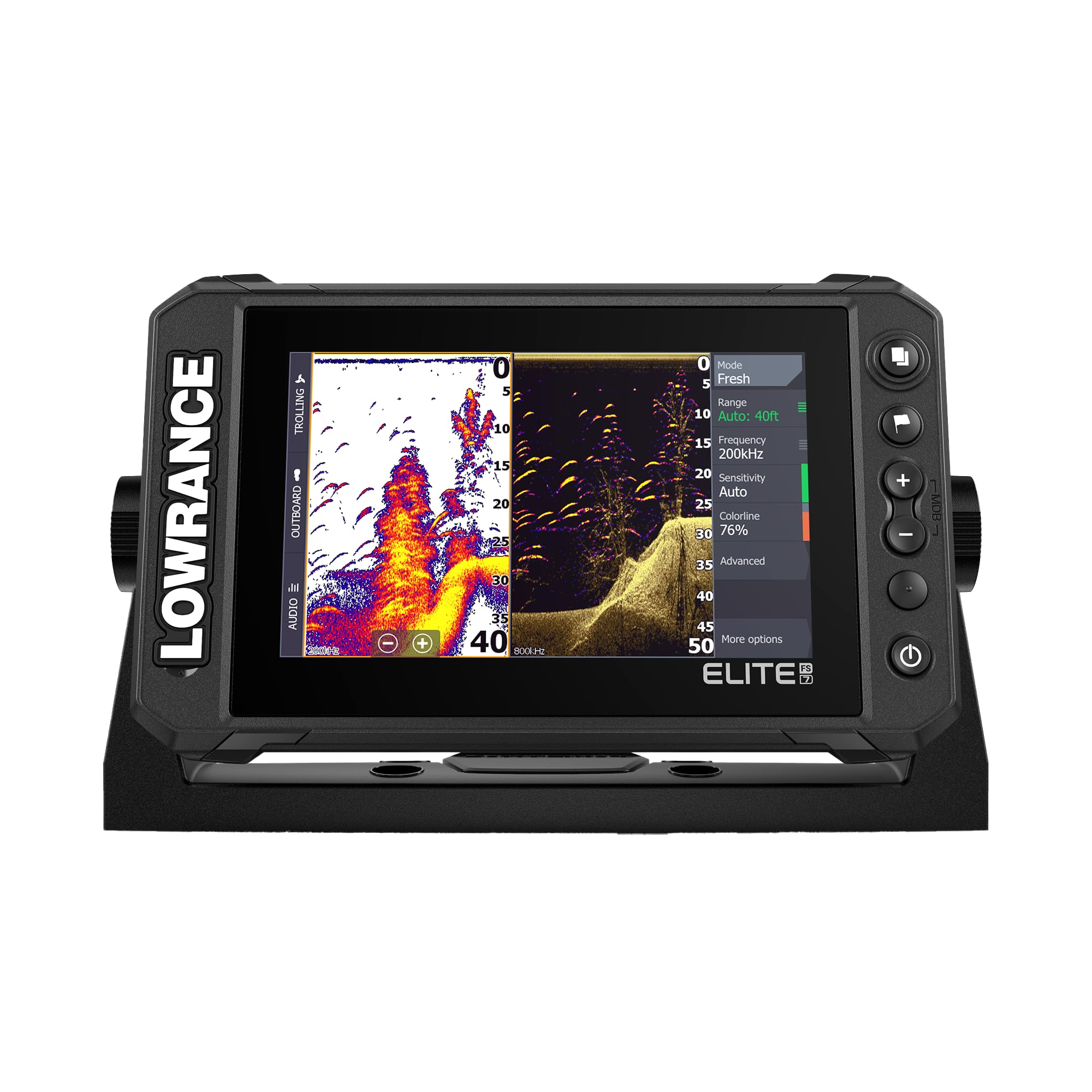
The Lowrance Elite FS 10 sets the high-water mark for sonar performance in this list. Its Active Imaging 3-in-1 transducer pumps out CHIRP, SideScan, and DownScan simultaneously, and FishReveal technology overlays fish arches onto the DownScan image for instant identification. The 10-inch touchscreen display is fast and responsive, making it easy to zoom into structure or mark waypoints on the high-detail C-MAP contour maps.
Live sonar compatibility with ActiveTarget 2 XL means you can add forward-facing live sonar when you’re ready to invest in that next level of fishing technology. The unit also integrates with trolling motors and other marine electronics, so you can control the boat and sonar from one central hub. For serious offshore anglers who demand maximum fish-finding detail, this is the most capable unit here.
The sheer number of options and menu layers can feel overwhelming at first, and the price reflects its position as a flagship unit. Installation is more involved than simpler models, requiring careful cable management and a stable mounting surface. But the sonar clarity and mapping detail are unmatched in this roundup.
Why it’s great
- 3-in-1 sonar with FishReveal technology
- Live sonar compatible with ActiveTarget 2 XL
- High-resolution C-MAP contour charts
Good to know
- Steep learning curve for menus and setup
- Large footprint requires dedicated console space
3. Garmin Striker Vivid 7cv

The Garmin Striker Vivid 7cv is built around a simple but powerful idea: excellent sonar and GPS mapping without the complexity or cost of a full chartplotter. The 7-inch QSVGA display is crisp and readable in direct sunlight, and the ClearVu scanning sonar provides photographic-quality images of the bottom, brush piles, docks, and underwater structure. For kayak fishermen and small-boat owners running coastal marshes and inshore flats, this unit hits a sweet spot.
Built-in Quickdraw Contours mapping software lets you create 1-foot contour maps of any waterbody you fish — including saltwater backcountry, bays, and nearshore reefs. The GPS marks waypoints with ease, so you can return to productive spots trip after trip. The included protective cover and straightforward flush-mount design make installation clean and low-profile.
The unit does not come with preloaded nautical charts, so for offshore navigation you’ll want to pair it with a separate chartplotter or app. The 4cv version exists, but the 7-inch screen size is the practical minimum for comfortably reading detail at speed. For depth-focused fishing with reliable side imaging, this is a top-tier value.
Why it’s great
- ClearVu scanning sonar shows incredible detail
- Quickdraw Contours builds 1′ maps on the fly
- Bright display readable in direct sun
Good to know
- No preloaded coastal charts included
- Requires separate 12V battery and wiring
4. Garmin Striker 7SV

The Garmin Striker 7SV brings SideVu scanning sonar to a mid-range price, making it a strong candidate for anglers who fish structure like rock jetties, sunken wrecks, and oyster bars in saltwater. The 7-inch sunlight-readable display is a big step up in size from the 4-inch models, and the CHIRP traditional sonar provides solid 2D target separation. SideVu imaging lets you see fish-holding structure to the port and starboard of your boat, expanding your search area dramatically.
The built-in Quickdraw Contours mapping software is included here too, and the 7SV supports waypoint marking and route creation. Wi-Fi connectivity through the ActiveCaptain app means you can receive smart notifications, share waypoints, and transfer recordings to your phone. The transducer mount and cabling are well-engineered, and installation is manageable for a DIY boater.
This model lacks a chartplotter — it’s a GPS for waypoints only, not full nautical charts. Also, some users found the side scan requires careful transducer height adjustment to avoid blank screens. But if your primary mission is scanning wide areas of structure and marking precise fishing spots, the Striker 7SV delivers excellent sonar for the money.
Why it’s great
- SideVu scanning covers wide zones
- Bright 7″ display with intuitive interface
- Quickdraw Contours for custom mapping
Good to know
- No chartplotter — GPS only for waypoints
- Side scan performance depends on transducer angle
5. Humminbird Helix 5 CHIRP GPS G3

The Humminbird Helix 5 CHIRP GPS G3 packs chartplotter-grade GPS and Dual Spectrum CHIRP sonar into a compact 5-inch package. The preloaded Basemap covers over 10,000 lakes plus the continental US coastlines, making it immediately useful for coastal navigation right out of the box. Dual Spectrum CHIRP lets you switch between Wide Mode for covering more water and Narrow Mode for precise target separation around structure.
The keypad control system is weather-resistant and reliable — no touchscreen to fail in salt spray or cold. The AutoChart Live feature records depth contours, bottom hardness, and vegetation in real time, with 8 hours of built-in memory. Despite the smaller screen, the color TFT panel is bright and easily readable under a Bimini top or with the optional sun visor.
The screen size can feel cramped when using split-view modes (sonar + chart), and the transducer cable length may be too short for larger consoles. However, for a budget-friendly unit that brings real CHIRP sonar and GPS charting together in a saltwater-resistant form factor, the Helix 5 G3 is an accomplished and reliable choice.
Why it’s great
- Preloaded Basemap with coastal coverage
- AutoChart Live real-time depth mapping
- Weather-resistant keypad controls
Good to know
- Small screen can be tight in split views
- Transducer cable may be short for large boats
6. Lowrance Eagle 5
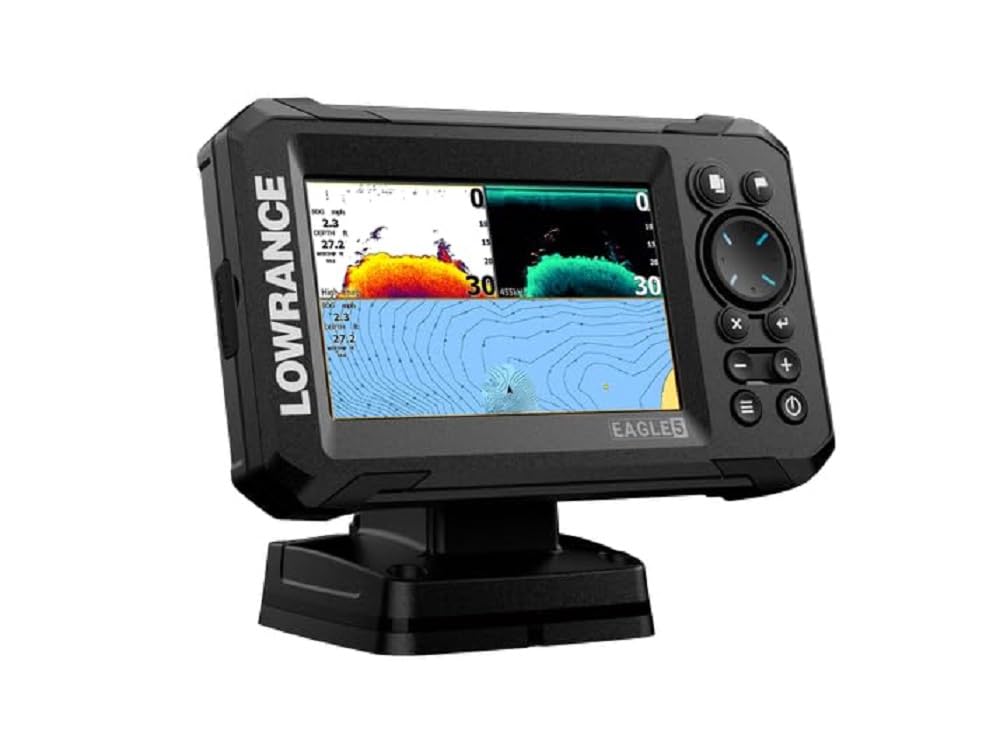
The Lowrance Eagle 5 is a straightforward, no-nonsense depth finder and chartplotter combo designed for the saltwater angler who values clarity and ease of use. The 5-inch IPS screen is a standout feature at this tier — it maintains excellent color and contrast even when viewed with polarized sunglasses and at extreme angles, which is critical when the sun is blazing on the water. The SplitShot HD transducer delivers CHIRP sonar with FishReveal on DownScan, so you see fish as clear targets rather than ambiguous blobs.
The twist-lock connector system makes installation quick and secure, and the preloaded C-MAP inland charts cover over 17,000 US lakes plus coastal charting options. Genesis Live real-time contour mapping creates custom 1/2-foot contour maps of your local waters, helping you discover new depth changes and productive spots without buying premium chart cards.
The autotuning sonar works well out of the box, but some users noted that accessing the full menu system takes a few minutes of familiarization. The sun cover is sold separately, which is a minor but notable omission for a unit that lives on a saltwater boat. For the price, the Eagle 5 offers a polished, user-friendly experience with surprisingly capable sonar.
Why it’s great
- IPS screen stays readable with polarized glasses
- Twist-lock connectors for easy installation
- Genesis Live creates custom 1/2′ contour maps
Good to know
- Sun cover sold separately
- Menu system has a short learning curve
7. Humminbird PiranhaMAX 4 DI

The Humminbird PiranhaMAX 4 DI is the budget-friendly entry point for saltwater boaters who want Down Imaging technology without the price tag of a full chartplotter. The 4.3-inch color TFT display is surprisingly easy to read in bright conditions thanks to its anti-glare coating, and the dual beam sonar lets you toggle between a narrow 20-degree beam for detail and a wide 60-degree beam for broader coverage. Down Imaging reveals timber, rocks, bridge pilings, and bottom changes with sharp clarity that traditional 2D sonar can’t match.
The included XNT 9 DI T transom-mount transducer is compact and straightforward to install, and the tilt/swivel mount allows you to adjust the viewing angle as needed. Fish ID+, fish alarms, and depth alarms are built in, making it suitable for beginners or as a secondary unit on a larger boat. The menu system is simple enough that you can set depth range and sensitivity without diving into a manual.
Screen real estate is limited — split views between sonar and Down Imaging feel cramped. The transducer cable may be too short for consoles on larger boats, and some buyers found the extension cable needed was not clearly documented. However, as a pure depth finder with a clear picture of what’s below the hull, the PiranhaMAX 4 DI is tough to beat for the money.
Why it’s great
- Down Imaging reveals bottom structure clearly
- User-friendly menu for quick adjustments
- Affordable entry to Down Imaging tech
Good to know
- Small 4.3″ screen in split view
- Transducer cable may be too short for some consoles
8. Deeper PRO+ 2
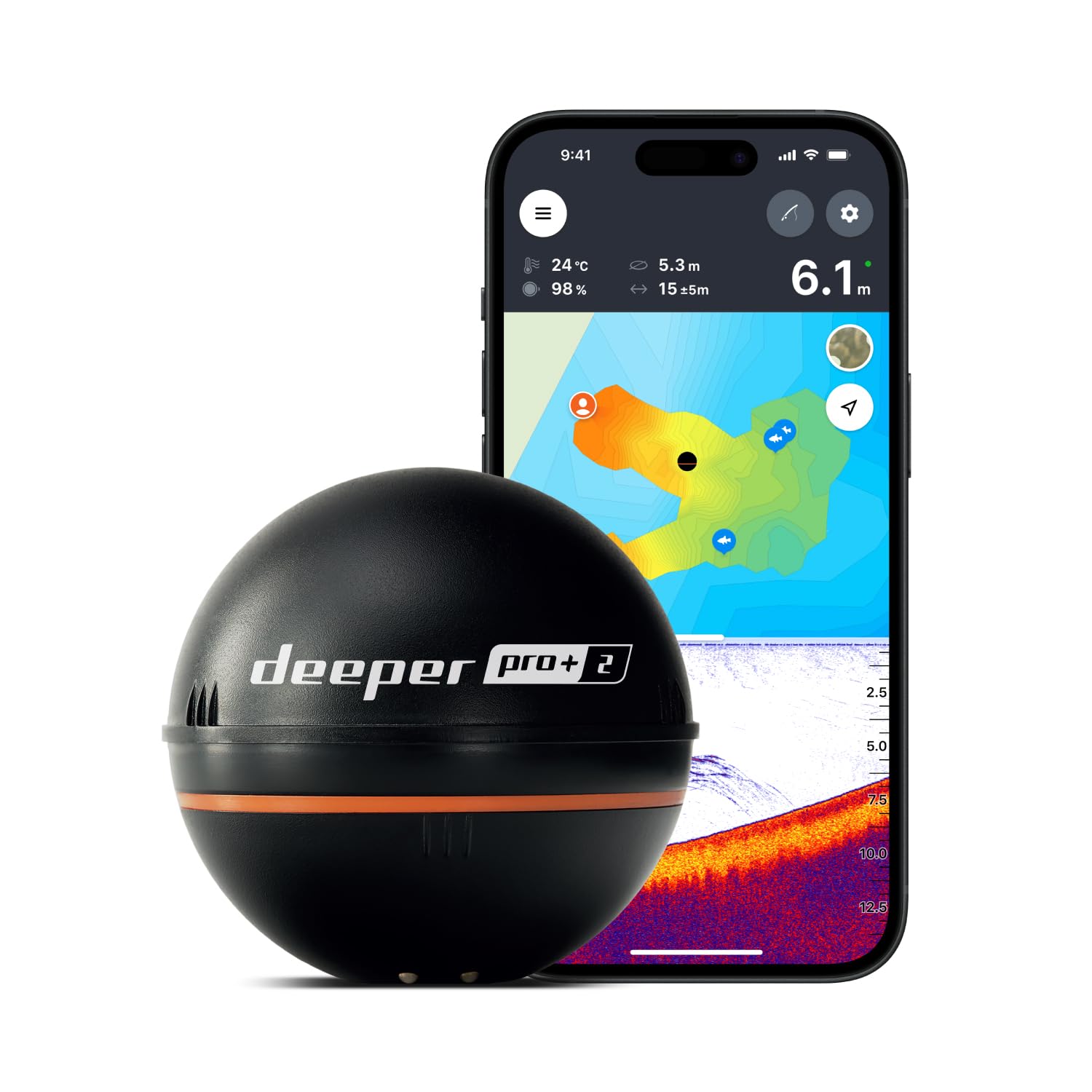
The Deeper PRO+ 2 is a completely different approach to saltwater depth finding — a sonar sensor you cast from the shore, dock, kayak, or boat that beams data to your smartphone via Wi-Fi. It uses three beam frequencies (wide, mid, narrow) to cover water from shallow flats to 330 feet, and the target separation of 0.4 inches on the narrow beam is genuinely impressive for a unit this size. The built-in GPS creates bathymetric maps from the shore or bank, which is uniquely useful for scouting new saltwater spots before launching your boat.
Weighing only 0.2 pounds and fitting in a tackle box, the Deeper PRO+ 2 eliminates the need for permanent transducer mounting and wiring. The rechargeable battery lasts for multiple trips, and charging is quick via USB. The app interface is polished, showing fish arches, depth contours, and GPS waypoints on a clear, zoomable screen. For kayak and shore-bound anglers in saltwater estuaries or flats, this is a game-changing tool.
It requires a stout rod rated for 20+ pound braid to cast the 3-ounce sensor, and heavy current can degrade accuracy. The Wi-Fi range is 200 feet in optimal conditions but can experience dropouts in windy weather or heavy chop. Battery life degrades over time and replacement involves a minimum cost after the warranty expires. Still, for versatility and portability in saltwater, nothing else on this list matches the Deeper PRO+ 2.
Why it’s great
- Portable, no boat or permanent install needed
- Three beam frequencies with 0.4″ target separation
- Built-in GPS bathymetric mapping from shore
Good to know
- Requires heavy action rod for casting
- Wi-Fi connection can drop in adverse conditions
9. HawkEye DT2BX-TM
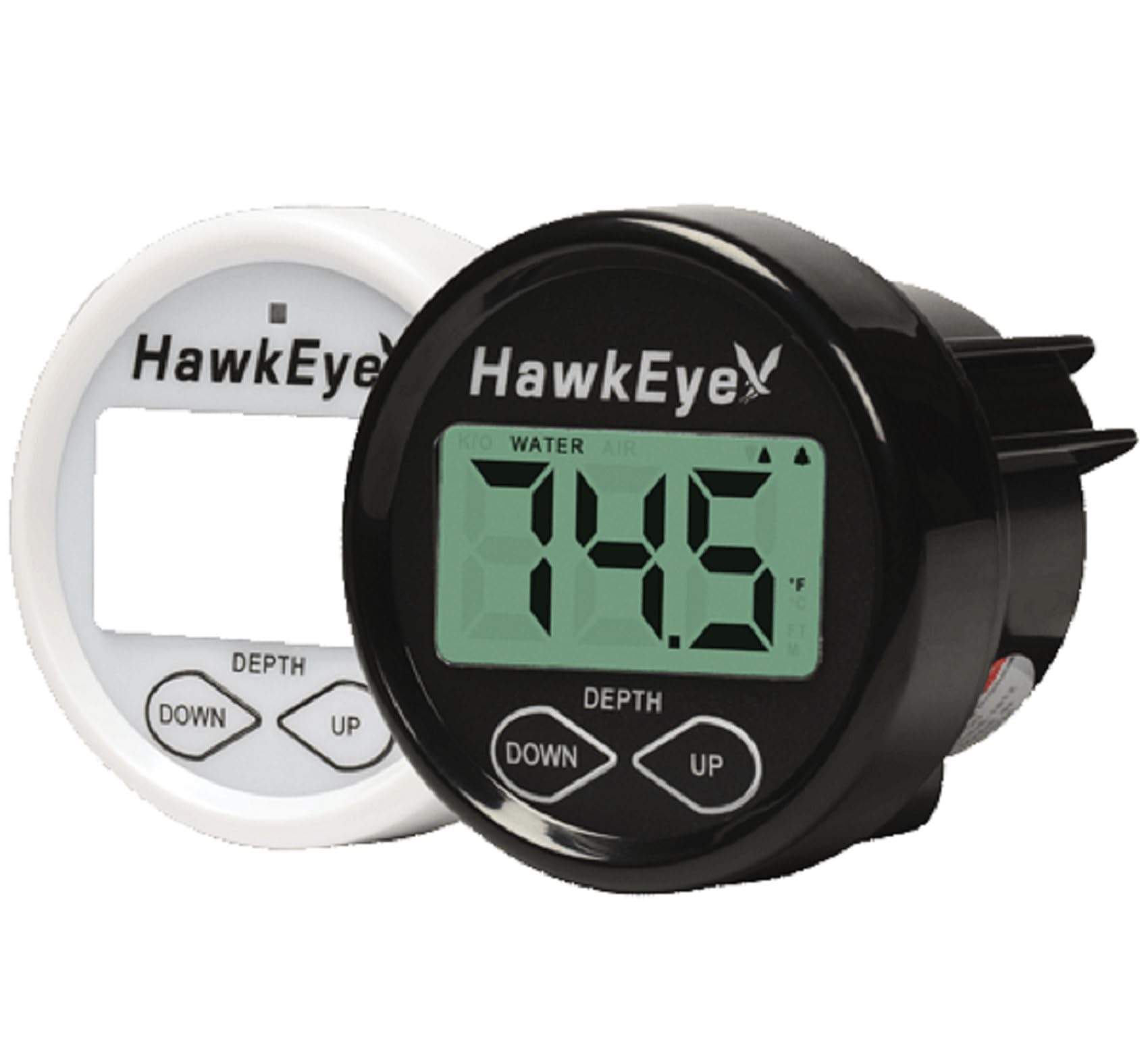
The HawkEye DT2BX-TM is a straightforward in-dash depth sounder that prioritizes reliable depth readings and water temperature over sonar imaging or GPS. Its 2-inch polarized LCD display is designed for no-glare reading even with polarized sunglasses, and the three-stage Advanced Warning System (audible alarm, LED warning light, and LCD indicator) alerts you of shallow water before you run aground. The measured depth range of 2.5 to 600 feet on the largest display available in this form factor gives it serious utility for coastal cruising and channel navigation.
The included transom-mount transducer with 30 feet of cable reports water temperature and air temperature, both displayed in Fahrenheit or Celsius. The depth algorithm reduces false readings from turbulence and debris, which is a real advantage when navigating tidal zones with suspended sediment. The flush-mount installation requires only a 2-inch hole, making it a clean option for dash replacement or retrofit.
Customer support experiences have been mixed, with some reports of failed units requiring warranty replacement and difficult communication. The small 1.875-inch screen readout is functional but not suited for detailed bottom interpretation or fish finding. For a primary depth source on a sailboat or smaller powerboat where space is at a premium and cost is a primary concern, the HawkEye fills a specific niche effectively.
Why it’s great
- No-glare polarized display for bright conditions
- Three-stage shallow water alarm system
- Measures both air and water temperature
Good to know
- Small screen limits detailed sonar interpretation
- Intermittent reliability and support issues reported
FAQ
Can I use a freshwater fish finder in saltwater?
What does CHIRP sonar do differently in saltwater?
Is a GPS chartplotter necessary for saltwater depth finders?
How important is screen size for saltwater use?
Final Thoughts: The Verdict
For most users, the depth finder for saltwater winner is the Simrad GO9 because it combines a large sunlight-readable touchscreen, full chartplotter capability with C-MAP Discover maps, and robust NMEA 2000 integration for radar and autopilot — all in a package designed to withstand saltwater abuse. If you want maximum sonar performance and live target compatibility, grab the Lowrance Elite FS 10. And for kayak fishermen and shore-based anglers who need a portable, castable solution, nothing beats the Deeper PRO+ 2.

Mo Maruf
I created WellFizz to bridge the gap between vague wellness advice and actionable solutions. My mission is simple: to decode the research and give you practical tools you can actually use.
Beyond the data, I am a passionate traveler. I believe that stepping away from the screen to explore new environments is essential for mental clarity and physical vitality.