Our readers keep the lights on and my smoothie glass nicely filled. As an Amazon Associate, I earn from qualifying purchases.
A pressure sore isn’t just a wound—it’s a constant source of pain, a risk of infection, and a major barrier to mobility and rest. The wrong dressing can stick to fragile tissue, trap moisture, or fail to absorb drainage, turning a slow-healing sore into a deeper problem. Choosing a specialized dressing designed for exudate management, atraumatic removal, and a moist healing environment is the single most impactful decision a caregiver or patient can make.
I’m Mohammad Maruf — the founder and writer behind WellFizz. I’ve spent hundreds of hours analyzing clinical data, foam densities, alginate absorption rates, and silicone adhesion technologies to find the dressings that actually protect periwound skin and reduce dressing change frequency.
This guide focuses on dressings formulated with materials like calcium alginate, Manuka honey, silicone foam, and hydrocolloid borders. Whether you need a budget-friendly pad for daily changes or a premium silicone foam for extended wear, these are the best dressings for pressure sores you can buy right now.
How To Choose The Best Dressings For Pressure Sores
Not all wound dressings are created equal. A standard gauze pad can stick to granulating tissue, disrupt healing, and fail to manage the moderate-to-heavy exudate typical of stage 2 and 3 pressure injuries. You need a dressing that addresses three core variables: absorption capacity, atraumatic removal, and moisture balance.
Understand the Wound’s Exudate Level
A lightly exuding sore may only need a hydrocolloid or thin foam, but moderate to heavy drainage requires a super-absorbent core—calcium alginate fibers can absorb up to 20 times their weight, forming a hydrophilic gel that locks fluid away from the wound bed. Foam dressings with SAP polymer cores accomplish the same goal while adding a cushioning layer that redistributes pressure over bony prominences like the sacrum or heel.
Prioritize Atraumatic Adhesion and Removal
Fragile periwound skin is easily torn by aggressive adhesives. Look for a soft silicone contact layer that sticks securely without pulling on the wound bed. Silicone foam dressings with borders can be repositioned and removed with minimal pain, reducing the risk of medical adhesive-related skin injuries (MARSI). For non-border dressings like alginate pads, secondary fixation with gentle tape is essential.
Look for Antimicrobial or Bioactive Properties
Manuka honey dressings provide natural antimicrobial activity while maintaining a moist environment that supports autolytic debridement. Calcium alginate releases calcium ions that help accelerate hemostasis and promote fibroblast activity. These bioactive ingredients add value, especially for chronic or stalled wounds, but they should always be used under the guidance of a wound care specialist for deep or infected sores.
Quick Comparison
On smaller screens, swipe sideways to see the full table.
| Model | Category | Best For | Key Spec | Amazon |
|---|---|---|---|---|
| Niceful Silicone Wound Dressing | Silicone Foam | Large incisions & heavy exudate | 20x absorbency with SAP polymer core | Amazon |
| NeuHeils Silicone Foam Dressing | Silicone Foam | Sensitive skin & extended wear | 6×6 in. pad with repositionable silicone | Amazon |
| AWD Medical Sacrum Foam Dressing | Silicone Foam w/ Border | Sacrum & coccyx pressure sores | 6×7 in. contoured for sacrum | Amazon |
| LotFancy Calcium Alginate Dressing | Calcium Alginate | Moderate to high drainage wounds | 4×8 in. pad, 20x absorbency | Amazon |
| Ceeport Manuka Honey Alginate Dressing | Manuka Honey/Alginate | Infection-prone or stalled wounds | 2×2 in. with medical-grade Manuka honey | Amazon |
In‑Depth Reviews
1. Niceful Silicone Super Absorbent Wound Dressing

This dressing combines a soft silicone contact layer with a super-absorbent SAP polymer core that locks fluid away from the wound, preventing maceration while keeping the periwound dry. At 4×8 inches, it offers generous coverage for large surgical incisions, abdominal wounds, and pressure ulcers on the trunk or lower extremities that produce heavy exudate.
The self-adhesive border eliminates the need for secondary tape, and users report excellent adhesion even on joints and curved body surfaces. Removal is gentle—just a bit of water and a slight pull—and the dressing does not tear fragile skin. Reviewers with quadriplegic family members found it reliable for daily care without causing irritation.
It’s a premium-level product, but the combination of absorbency, gentle adhesion, and large sizing makes it a strong contender for anyone managing high-output pressure sores or post-surgical wounds. The flexible foam conforms well to the body without lifting at the edges.
Why it’s great
- 20x absorption capacity with SAP core prevents leakage
- Silicone border sticks securely without adhesive trauma
- Large 4×8 size covers long incisions or large ulcers
Good to know
- Premium tier pricing; may be cost-prohibitive for high-frequency changes
- Best for moderate to heavy exudate, not for dry or necrotic wounds
2. NeuHeils Silicone Adhesive Foam Dressing 6×6

The NeuHeils dressing features a soft, hypocellular foam pad that absorbs and locks wound exudate while providing significant cushioning for pressure redistribution. Its gentle silicone contact layer is specifically designed for sensitive, fragile, and elderly skin—making it a go-to for patients with paper-thin dermis who are prone to medical adhesive-related skin injuries.
This dressing is waterproof and breathable, maintaining an optimal moist environment for chronic wound management. The 6×6-inch size (with a 4.1×4.1-inch absorbent pad) offers versatile coverage for the sacrum, heels, and elbows. Users from wound clinics report it stays on well and does not hurt to remove, even after several days of wear.
One user noted the shape is not pre-contoured for the heel—you may need to cut it for smaller anatomical sites. That said, its combination of cushioning, gentle adhesion, and long wear time makes it a reliable mid-range option for daily care without the sticker shock of the most expensive options.
Why it’s great
- Hypocellular foam reduces maceration risk
- Repositionable silicone minimizes trauma during changes
- Waterproof film protects against dirt and liquid
Good to know
- Not pre-shaped for heel use; may require cutting
- Absorbent core size is smaller than total dressing footprint
3. AWD Medical Sacrum Hydrocolloid Silicone Foam Dressing

This dressing is anatomically contoured for the sacrum and coccyx, areas that present unique challenges due to curvature, constant pressure in supine patients, and proximity to the gluteal cleft. The multi-layer design includes a super-absorbent core that locks in drainage, a hydrocolloid border that provides additional waterproofing and adhesion, and a soft silicone contact layer that reduces pain at removal.
Users caring for bed-bound hospice patients and those with pressure sores on the buttocks report the dressing provides excellent comfort and stays on for multiple days. The 6×7-inch size covers the entire sacral area without overlap gaps. Some reviewers noted the adhesive flaps can stick to themselves during application—careful handling is required.
While the dressing is not the most absorbent for very heavy exudate (one user recommended fresh application each change), its contoured design and border adhesion make it a exceptional choice for a specific anatomical need. It’s a specialty tool, not a generalist, and it excels at its target use.
Why it’s great
- Anatomically contoured for sacrum and coccyx
- Hydrocolloid border adds waterproof security
- Comfortable for bed-bound and hospice patients
Good to know
- Adhesive flaps can stick to themselves during placement
- Not ideal for very heavy exudate without frequent changes
4. LotFancy Calcium Alginate Wound Dressing
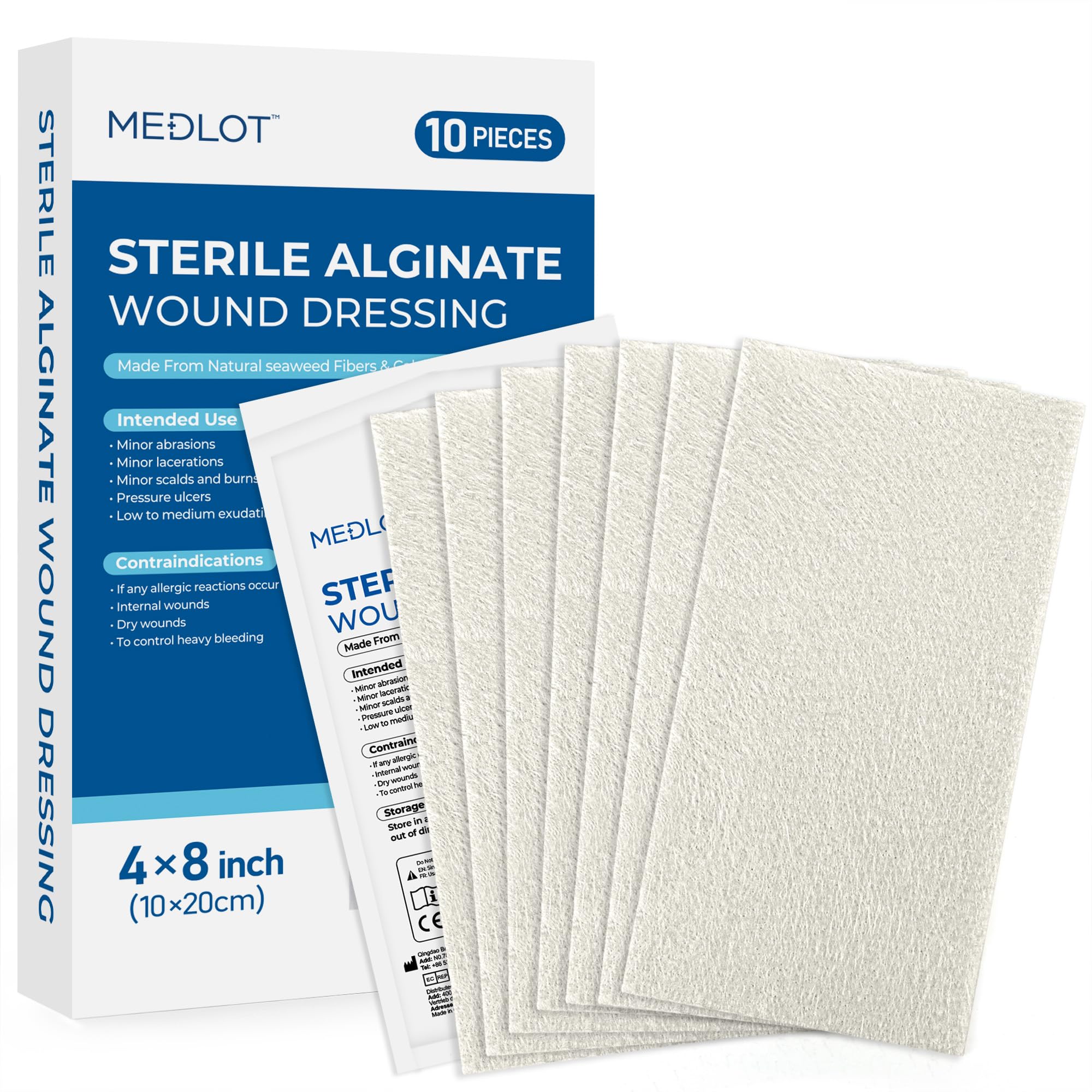
This is the strongest cost-to-performance option in the lineup. Made from natural seaweed fiber and calcium ions, the LotFancy dressing forms a hydrophilic gel upon contact with exudate, maintaining a moist environment that accelerates healing. It’s up to 20 times more absorbent than regular gauze and significantly softer and more flexible.
The non-adherent design means the pad will not stick to the wound bed—critical for pain-free dressing changes on sensitive pressure sores. Each 4×8-inch pad is individually wrapped and sterile, and can be easily cut to size. Reviewers consistently note it is thicker and more absorbent than medical-supply-store options, even comparing favorably to insurance-covered alternatives.
This dressing is ideal for moderate to high exudating wounds, including pressure ulcers, diabetic ulcers, and post-operative wounds. It requires a secondary cover (tape or foam border) to stay in place, but the overall cost per dressing is significantly lower than all-in-one silicone foams—making it a smart choice for high-frequency changes.
Why it’s great
- Superior absorbency from calcium alginate fiber
- Non-stick pad prevents wound bed trauma
- Affordable per-pad cost for frequent changes
Good to know
- Requires secondary fixation (tape or border dressing)
- Not suitable for dry or lightly exuding wounds
5. Ceeport Manuka Honey Calcium Alginate Wound Dressing

This dressing combines two bioactive agents: medical-grade Manuka honey from New Zealand and calcium alginate from seaweed. The honey provides natural antimicrobial activity and helps maintain a moist environment, while the alginate absorbs fluid and reduces odor. It is a great option for wounds that are stalled, infection-prone, or producing moderate exudate.
At 2×2 inches, the pad is on the smaller side—best suited for smaller pressure sores, diabetic foot ulcers, or post-MOHS surgery sites. Users report exceptional healing acceleration, with one review citing dramatic improvement in deep lacerations in under 24 hours. The two-layer construction separates easily for application, and the moist nature prevents sticking to the wound.
As a non-border dressing, it needs secondary tape or foam cover for secure placement. Some users noted difficulty peeling the clear backing off the gauze layer. It is a niche but highly effective product for those who want the benefits of honey therapy in a modern, sterile, individually wrapped format.
Why it’s great
- Manuka honey provides natural antimicrobial action
- Alginate gel locks in moisture and reduces odor
- Individually wrapped and sterile for hygiene
Good to know
- Smaller 2×2 size limits coverage area
- Backing layer can be tricky to separate
FAQ
What dressing is best for a stage 2 pressure sore with moderate drainage?
Can I use a Manuka honey dressing on an infected pressure sore?
How often should I change a silicone foam dressing on a pressure ulcer?
Final Thoughts: The Verdict
For most users, the best dressings for pressure sores winner is the Niceful Silicone Super Absorbent Wound Dressing because it balances high absorbency, gentle silicone adhesion, and a generous size that covers large ulcers and surgical wounds. If you need a contoured dressing specifically for the sacrum, grab the AWD Medical Sacrum Foam Dressing. And for a budget-friendly, high-absorption option that outperforms medical supply store equivalents, the LotFancy Calcium Alginate Dressing is unbeatable.

Mo Maruf
I created WellFizz to bridge the gap between vague wellness advice and actionable solutions. My mission is simple: to decode the research and give you practical tools you can actually use.
Beyond the data, I am a passionate traveler. I believe that stepping away from the screen to explore new environments is essential for mental clarity and physical vitality.