Our readers keep the lights on and my smoothie glass nicely filled. As an Amazon Associate, I earn from qualifying purchases.
A custom shipping case is not just a box; it is a precision cradle engineered to keep a specific piece of equipment from shifting, rattling, or absorbing shock during transit. The internal foam layout—whether layered pluck, die-cut, or poured-in-place—dictates whether your gear arrives intact or damaged. The difference between a case that fits and one that merely contains is measured in millimeters of foam tolerance.
I’m Mohammad Maruf — the founder and writer behind WellFizz. My research into custom shipping cases focuses on foam density, wall thickness, seal integrity, and dimensional accuracy across budget, mid-range, and premium tiers to help buyers match the right case to their equipment’s specific footprint.
This guide compares seven custom shipping cases under , analyzing material build, foam customization, and weather sealing to find the best fit for cameras, drones, firearms, or sensitive electronics. These are the best custom shipping cases available today for protecting mission-critical gear during travel and storage.
How To Choose The Best Custom Shipping Cases
Selecting a custom shipping case starts with knowing the exact dimensions of your gear, including protrusions like lens hoods, antennae, or carry handles. The interior foam structure must accommodate every contour without compression points that transfer shock to fragile components.
Foam Type and Layer Count
Most cases in this range use pick-and-pluck foam with three layers: a thick bottom layer for the main cavity, a middle layer that you remove sections from, and a top layer that holds the gear in place. A fourth lid layer adds compression protection. The density of the foam—typically 1.3 to 1.6 pounds per cubic foot for pluck foam—determines how well it holds cut shapes over time. Lower density foam crumbles faster after customization.
Seal and Valve Quality
A waterproof case relies on a continuous rubber o-ring or silicone gasket seated in a groove around the lid. The pressure equalization valve, often a one-way or automatic membrane, prevents vacuum lock when flying or driving through elevation changes. Manual valves require you to press a button before opening; automatic valves self-regulate. For checked luggage scenarios, an automatic valve is far more reliable.
Quick Comparison
On smaller screens, swipe sideways to see the full table.
| Model | Category | Best For | Key Spec | Amazon |
|---|---|---|---|---|
| Pelican 1560 | Premium | Checked airline gear | 1.55 cu ft, 9″ total depth | Amazon |
| Koah 28″ Case | Premium | Large equipment / Starlink | 25.4″ x 13.7″ x 6.4″ interior | Amazon |
| Jack Boss 18×13.8×8 | Mid-Range | Drones and mirrorless gear | 16.7″ x 11.2″ x 4.3″ interior | Amazon |
| AxiGear 19x14x8 | Mid-Range | SLRs and compact gear | 3-layer + lid foam, 7.7 lb | Amazon |
| MEIJIA Waterproof Case | Mid-Range | Laptops and gaming gear | 15.98″ x 12.99″ x 6.85″ exterior | Amazon |
| Durabox All Weather 18x14x6 | Value | Ham radio and small tools | 16.5″ x 11.5″ x 5″ interior | Amazon |
| AxiGear 18″ Yellow | Value | Test instruments and cameras | 16″ x 11″ x 7.8″ interior | Amazon |
In‑Depth Reviews
1. Pelican 1560 Case With Foam
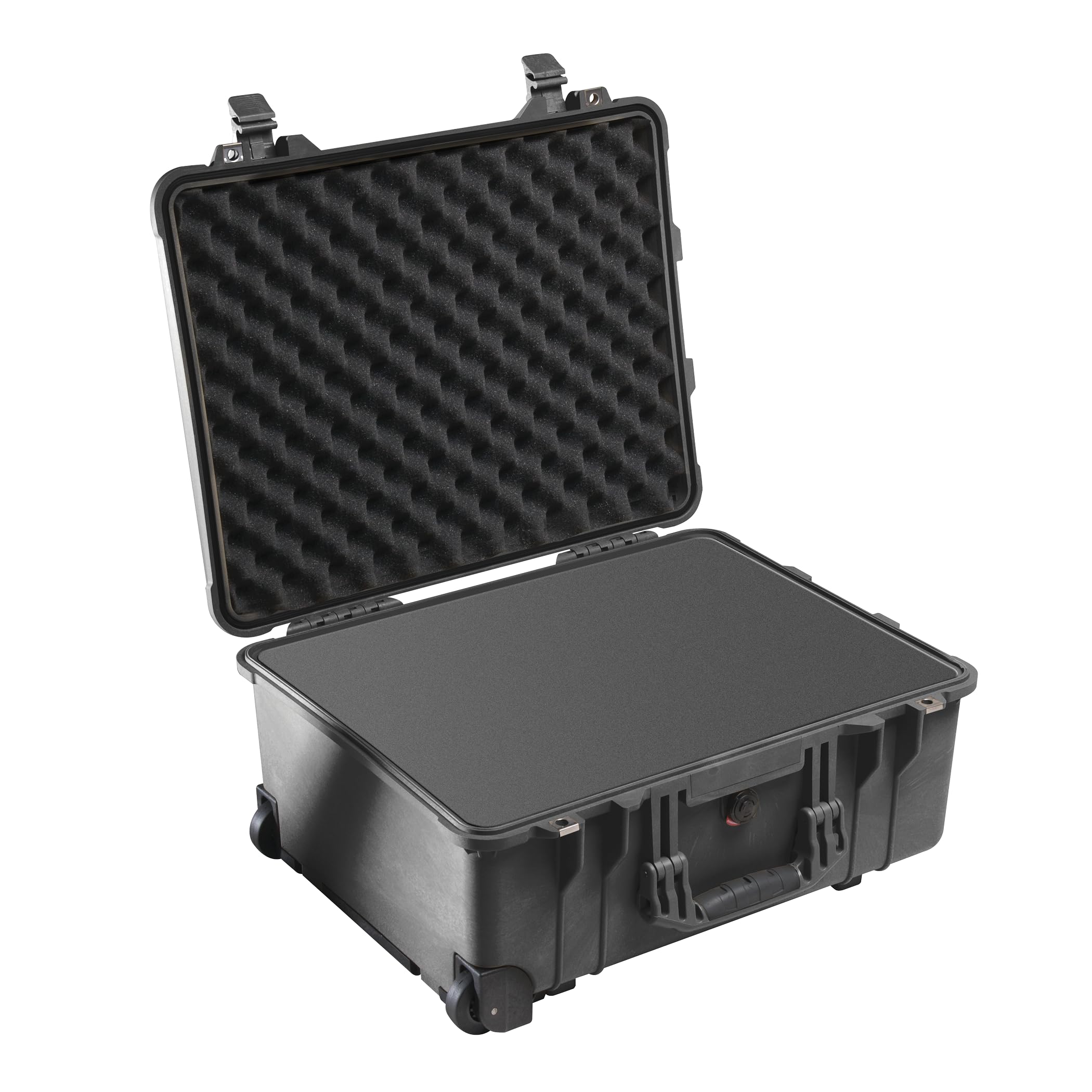
The Pelican 1560 sets the benchmark for airline-grade custom shipping cases. Its 1.55 cubic foot interior is split between a 2-inch lid depth and a 7-inch bottom depth, allowing two-level organization for camera bodies, lenses, and accessories. The tongue-and-groove seal with polymer o-ring guarantees a watertight closure, and the automatic pressure equalization valve prevents vacuum lock without any manual intervention.
The pick-and-pluck foam comes in four layers—two 3-inch sections plus lid foam—giving you enough material to create separate cutouts for a full camera kit. Stainless steel reinforced padlock protectors withstand TSA scrutiny. The telescopic handle and wheels make the 17-pound case manageable through airports, though buyers note the extension handle can feel wobbly under heavy loads.
This case holds its shape after multiple flights and foam reconfigurations. The staged hinges keep the lid open at a 90-degree angle, which helps during packing. For anyone shipping + worth of equipment, the Pelican 1560 returns its higher cost through reliability alone.
Why it’s great
- Automatic pressure valve works without buttons
- Four-layer foam system for two-tier packing
- Wheels and handle for airport mobility
- Lifetime warranty from manufacturer
Good to know
- Heaviest option at 17 pounds empty
- Extension handle wobbles with heavy loads
- TSA locks can get lost during baggage handling
2. Koah Weatherproof Hard Case 28″
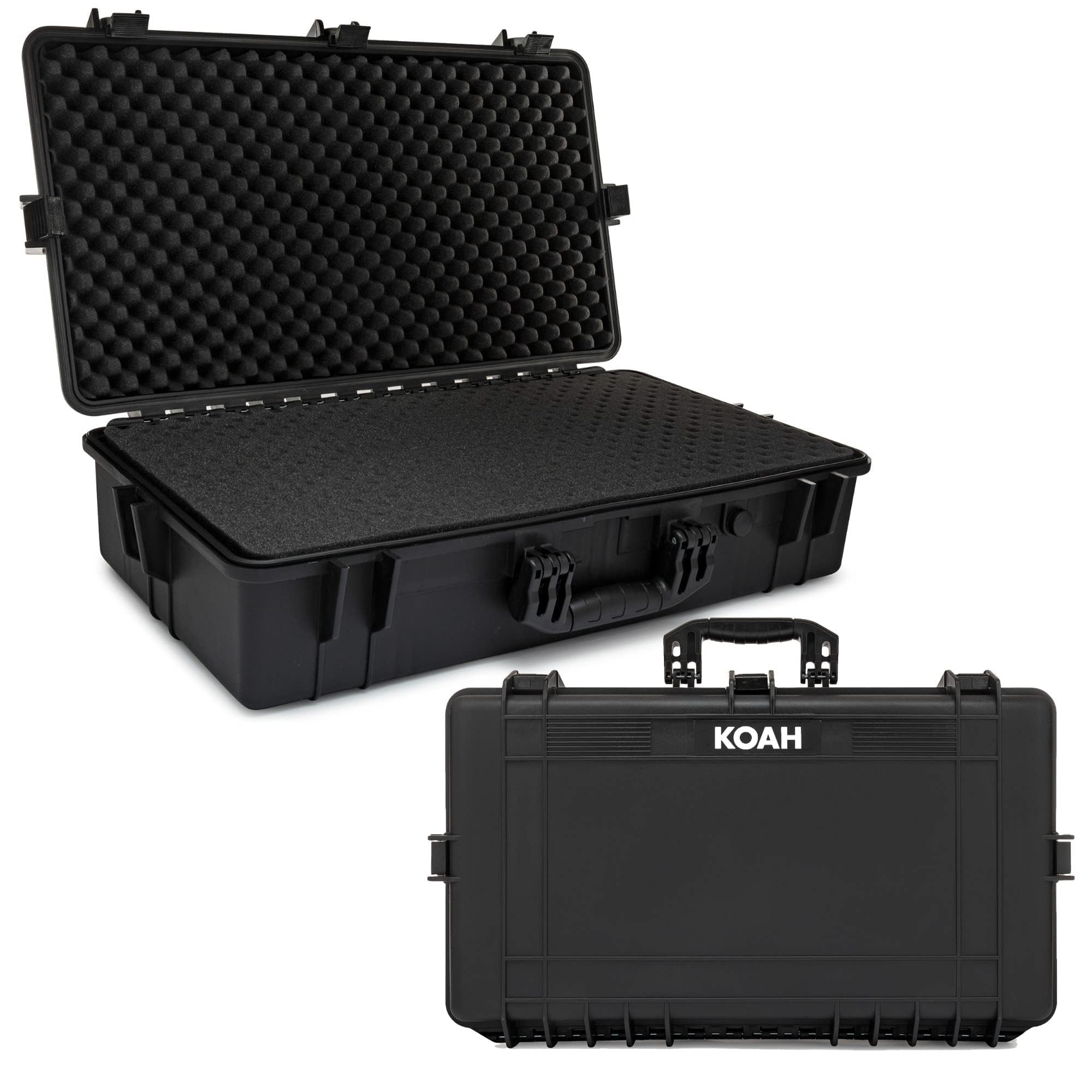
The Koah 28-inch case is built for oversized items that push past standard 18-inch interiors. With a 25.4-inch interior length, it accommodates AR pistols, pedalboards like the Temple Audio Duo 17, and even a Starlink rectangular dish (length and width fit, though the pole mount depth exceeds the 6.4-inch interior height). The high-quality polypropylene shell with stainless steel reinforcement meets demanding protection standards.
The customizable foam uses a standard pick-and-pluck design, and the push-lock latches open with a light pull. A pressure relief valve keeps the seal tight during altitude changes. The web handle is comfortable for short carries, though the case lacks built-in wheels given its 28-inch length. Owners of larger audio mixers and tactical gear appreciate the raw interior volume.
A notable limitation: the case does not include padlock loops, meaning you cannot secure it with a TSA-approved lock for checked luggage. If locking rings are non-negotiable for your travel, this case works best as a storage or carry-on solution where theft risk is lower.
Why it’s great
- Oversized interior fits 24-inch+ equipment
- Stainless steel reinforcement for durability
- Push-lock latches open quickly
Good to know
- No padlock rings for TSA security
- No wheels for long-distance transport
- Interior height limits deep items like pedal power supplies
3. Jack Boss 18×13.8×8 Hard Case
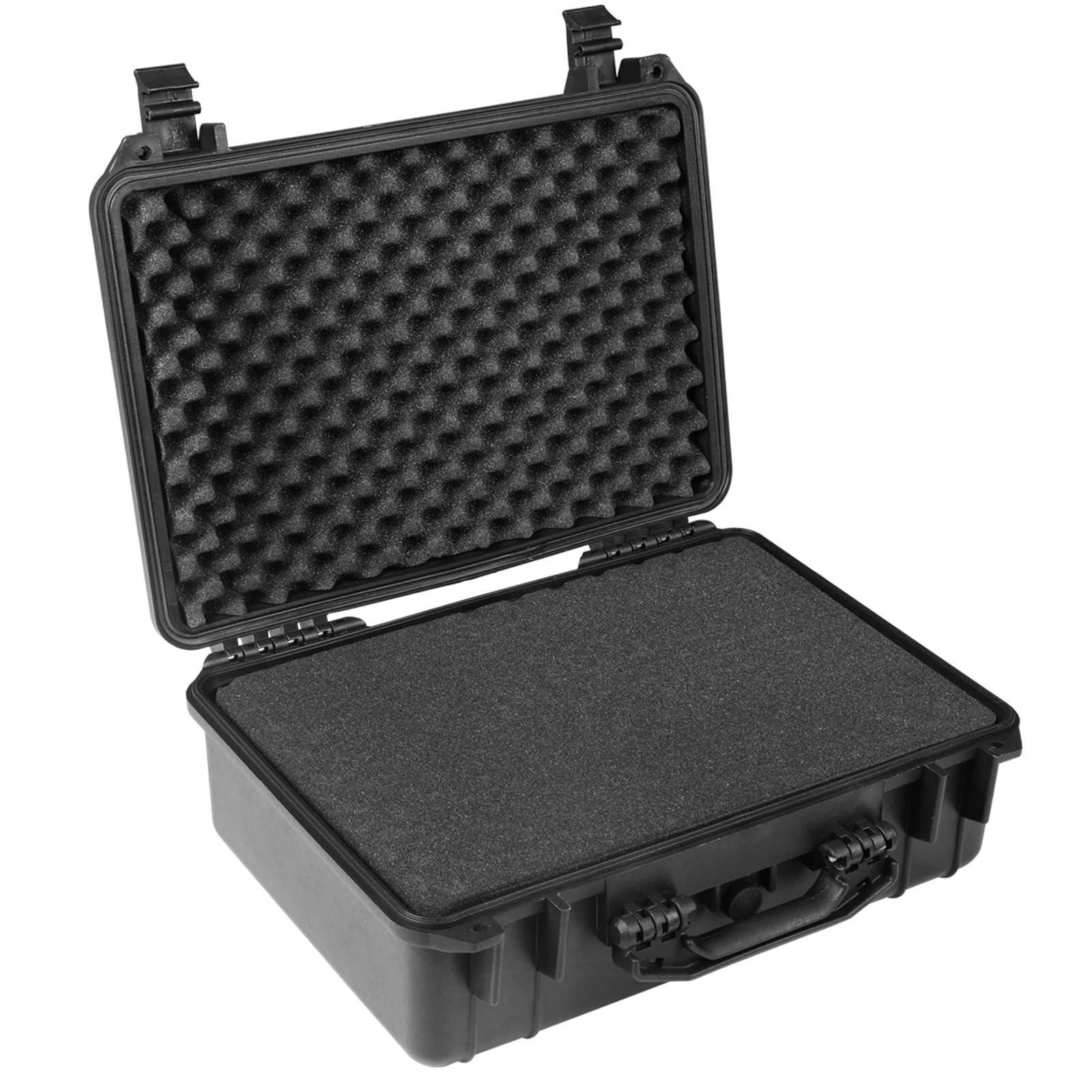
The Jack Boss case competes directly with the AxiGear and Durabox models by offering a slightly larger interior volume at a competitive price point. Its 16.7 x 11.2 x 4.3-inch interior is best suited for mirrorless camera kits, compact drones, and small electronics. The buckle-style closure feels secure, and the waterproof seal holds up under light submersion conditions based on user reports.
One area where buyers note a compromise is the handle: unlike the smaller Jack Boss cases that feature cushioned grips, this larger model uses a non-cushioned top handle. For a case that can hold nearly 10 pounds of gear, the uncushioned handle becomes uncomfortable during longer carries. The pick-and-pluck foam is dense enough to hold cut shapes without crumbling, and users report good results for retro gaming console transport.
The case lacks a dedicated pressure equalization valve, which means it may develop vacuum lock when flown or driven through mountain passes. For ground transport and short-haul air travel, the trade-off is acceptable given the price.
Why it’s great
- Spacious interior for drones and camera gear
- Sturdy buckle latches with good alignment
- Competitive pricing for the interior size
Good to know
- Handle lacks cushioning for heavy loads
- No pressure equalization valve
- Shallow 4.3-inch interior depth
4. AxiGear 19x14x8 Hard Case

The AxiGear 19-inch case stands out for its discreet exterior—no logos or brand markings, which matters when you want to avoid advertising expensive contents. The folding handle and dual locking holes accept standard padlocks (not TSA locks) for basic security. The three-layer bottom foam plus a lid layer gives you 7.3 inches of total depth, generous enough for mid-size SLRs with battery grips attached.
Buyers consistently praise the heavy-duty spring-loaded latches that keep the lid firmly shut without any rattling. The rubber seal with pressure equalization valve provides protection against moisture and dust, and the shockproof exterior has held up well in field use reported over several months. The foam density is sufficient for clean cutouts using a hot knife or soldering iron—users who had alignment issues with earlier foam batches found the material cuts well with manual tools.
The 7.7-pound weight sits in the middle of this list, making it manageable for shoulder carry. AxiGear also sells replacement foam (ASIN B0BXBPXWFV) separately, extending the case’s life when you reconfigure gear.
Why it’s great
- No external logos for discreet transport
- Spring-loaded latches prevent rattling
- Replacement foam available separately
Good to know
- Foam layers can misalign in some batches
- Not compatible with TSA padlocks
- Lid foam is only a single thin layer
5. MEIJIA Waterproof Camera Case 15.98″

The MEIJIA case is a compact option that fits inside larger bags or functions as a standalone protective box. Its dense pick-and-pluck foam requires more effort to customize than softer alternatives, but the trade-off is better long-term shape retention—the foam does not crumble or sag after repeated gear swaps. The 6.61-pound weight is reasonable for a case this size.
Users report successful use as a waterproof motorcycle top box, a gaming laptop case, and a rugged carrier for action camera setups with gimbals. The padlock-compatible holes allow basic security, and the rubber gasket keeps moisture out during rain exposure. One common observation is that the dense foam reduces usable interior space unless you trim it back aggressively, so measure your gear’s external dimensions against the interior carefully.
The MEIJIA lacks a pressure equalization valve, which is typical at this size and price. For short-distance flights or road trips, the seal holds well enough that condensation inside the case is minimal.
Why it’s great
- Dense foam holds custom shapes permanently
- Compact footprint for tight packing
- Good value compared to expensive brands
Good to know
- Dense foam reduces interior cargo space
- No pressure equalization valve
- Exterior dimensions may not fit all backpacks
6. Durabox All Weather Hard Case 18x14x6

The Durabox is a strong contender in the sub- range, delivering IP-rated dust and splash protection with submersion resistance up to 1 meter. The manual pressure relief valve lets you equalize after altitude changes, and the one-way steel rods in the mechanical hinges prevent the lid from separating under rough handling. The 14.6-liter capacity is well-suited for ham radio setups, precision tools, and compact camera rigs.
The 5-pound weight makes the Durabox the lightest full-size case in this comparison, which helps when packing multiple cases for a job site. The eggshell foam lining on the lid adds an extra moisture barrier beyond the o-ring seal. Some users note that the latching hooks can be stiff to close initially, requiring a bit of force until the mechanism breaks in. Foam customization is straightforward with the half-inch pluck layers.
For budget-conscious buyers who still need weather sealing and lockable security, the Durabox offers the best feature-to-dollar ratio in the value tier.
Why it’s great
- IP-rated splash and dust protection
- Lightweight at 5 pounds
- Manual pressure valve for altitude changes
Good to know
- Latches can be stiff when new
- Only 5-inch interior depth
- Foam is thinner than premium options
7. AxiGear 18″ Yellow Hard Case
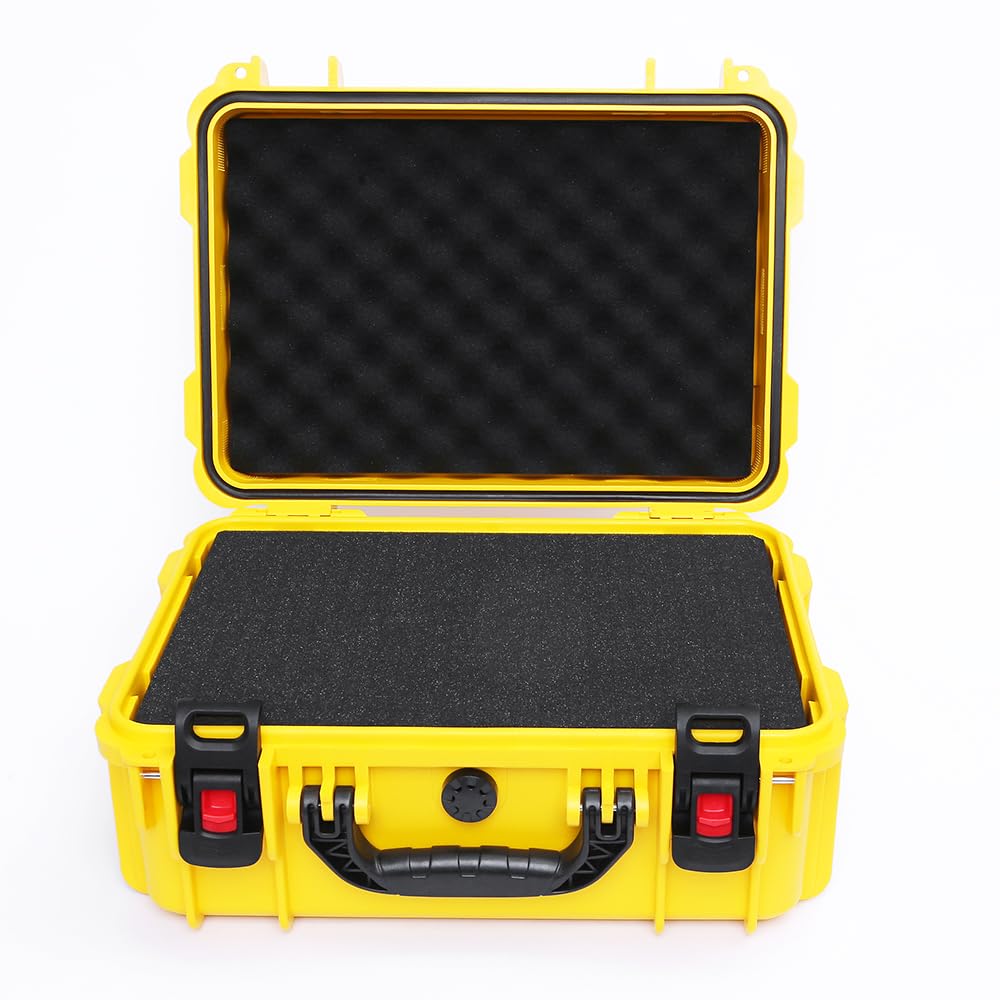
The AxiGear 18-inch yellow case is the most affordable option in the lineup, and it delivers a 7.8-inch deep interior that accommodates taller items like oscilloscopes and mechanical test instruments. The folding front handle and dual padlock holes provide basic convenience, and the shockproof exterior has earned five-star ratings from buyers using it for delicate measurement equipment.
The pick-and-pluck foam consists of three perforated layers in the case body plus a thinner bottom layer. Some batches have misaligned foam layers that make multi-layer cutouts tricky, but buyers have resolved this by cutting with a soldering iron or hot knife. The rubber seal and pressure equalization valve keep moisture out during rain exposure, though this case is not rated for submersion.
For the price, the trade-off is foam consistency and long-term durability compared to higher-tier cases. If you need a one-time custom configuration for a single instrument and do not plan to reconfigure repeatedly, the AxiGear yellow case provides enough protection at the lowest entry point.
Why it’s great
- Deep interior for tall equipment
- Pressure equalization valve standard
- Lowest entry price in the comparison
Good to know
- Foam layers may not align perfectly
- Not submersion rated
- No spare foam available from brand
FAQ
What is the difference between pick-and-pluck foam and die-cut foam for shipping cases?
Can I use a custom shipping case as checked luggage on a commercial flight?
How do I clean and maintain the foam inside my custom shipping case?
Final Thoughts: The Verdict
For most users, the best custom shipping cases winner is the Pelican 1560 because its automatic pressure valve, four-layer foam system, and wheeled mobility make it the only case that reliably protects high-value gear through repeated airline travel. If you want an oversized interior for large equipment without paying flagship prices, grab the Koah 28-inch Case. And for a budget-friendly all-weather case with a manual pressure valve and low weight, nothing beats the Durabox All Weather Hard Case.

Mo Maruf
I created WellFizz to bridge the gap between vague wellness advice and actionable solutions. My mission is simple: to decode the research and give you practical tools you can actually use.
Beyond the data, I am a passionate traveler. I believe that stepping away from the screen to explore new environments is essential for mental clarity and physical vitality.