Our readers keep the lights on and my smoothie glass nicely filled. As an Amazon Associate, I earn from qualifying purchases.
Bloating, sluggish digestion, and that heavy feeling after meals are often signs your gut microbiome needs real support—not another sugar-laden soda that promises health but delivers a crash. The market is flooded with functional beverages, but sorting the truly effective from the cleverly marketed requires looking past the label to the actual science, the live cultures, and the fiber content that feeds your inner ecosystem.
I’m Mohammad Maruf — the founder and writer behind WellFizz. I invest hundreds of hours cross-referencing clinical research, scrutinizing ingredient labels, and comparing CFU counts, fiber grams, and sugar content across every functional drink on the shelf to deliver truly actionable guidance.
After analyzing dozens of options and stacking them against real-world efficacy, I’ve curated a shortlist of the drinks for gut health that actually deliver measurable benefits without the marketing fluff.
How To Choose The Best Drinks For Gut Health
Not all functional beverages are created equal. Some rely on a single token ingredient, while others build a synergistic matrix of prebiotics, probiotics, and low-sugar bases. Here are the critical factors to weigh before you buy.
Check the Fiber & Probiotic Duo
A drink that only adds probiotics without prebiotic fiber to feed them is leaving results on the table. Look for at least 2–5 grams of prebiotic plant fiber per serving alongside a live probiotic count of 1 billion CFUs or higher. This pairing ensures the good bacteria can colonize and thrive.
Scrutinize the Sugar and Sweetener Profile
Gut health drinks should not be sugar bombs. Excessive sugar feeds pathogenic gut bacteria, undoing the benefits of the probiotics. Aim for 6 grams of sugar or less per can. Also note the sweetener type—monk fruit and agave are generally well-tolerated, while erythritol can cause bloating in sensitive individuals.
Understand the Difference Between Soda and Fermented Tea
Prebiotic sodas (like OLIPOP and Poppi) offer carbonation and familiar soda flavors but rely on added plant fibers and inulin. Fermented options like kombucha provide naturally occurring probiotics and organic acids from the fermentation process, which can aid digestion differently. Choose based on your flavor tolerance and whether you prefer a crisp soda or a tangy tea.
Quick Comparison
On smaller screens, swipe sideways to see the full table.
| Model | Category | Best For | Key Spec | Amazon |
|---|---|---|---|---|
| OLIPOP 6-Flavor Pack | Prebiotic Soda | Soda lovers wanting daily fiber | 9g fiber, 2–5g sugar per can | Amazon |
| Poppi Cherry Cola | Prebiotic Soda | Breaking the cola habit | Apple cider vinegar, agave inulin | Amazon |
| Wildwonder Classic Pack | Probiotic Sparkling | Live probiotics + herbs | 1B CFUs, 5g fiber per can | Amazon |
| Humm Kombucha Original Variety | Kombucha | Fermented fizz with B12 | 2B CFUs, vitamin B12 | Amazon |
| Liquid Remedy Ginger Lemon | Kombucha | Zero-sugar kombucha | 0g sugar, shelf-stable cans | Amazon |
In‑Depth Reviews
1. OLIPOP 6-Flavor Variety Pack

OLIPOP delivers a full 9 grams of plant-based prebiotic fiber per can while keeping sugar between 2 and 5 grams—a ratio that actively feeds beneficial gut bacteria without spiking glucose. The 6-flavor pack includes Vintage Cola, Strawberry Vanilla, and Ginger Lemon, so there’s a profile for both traditional soda fans and those seeking fruit-forward options.
The carbonation is crisp and the mouthfeel is much closer to a mainstream soda than a chalky, diet alternative. Users consistently report less bloating and more regularity when swapping daily soda for this prebiotic pick. The fiber load is significant enough that first-time drinkers should start with one can per day.
Each 12-ounce can is sweetened with a mix of stevia and fruit juice, avoiding artificial aftertaste. The Strawberry Vanilla and Orange Squeeze flavors receive the highest praise, while some find the Cola slightly flat in comparison. For the fiber-to-sugar ratio alone, this is the most balanced daily-drink option.
Why it’s great
- Highest fiber content per serving in this list
- Very low sugar with no artificial sweeteners
- Wide variety of flavors reduces boredom
Good to know
- Some flavors (Cola) taste flat to some drinkers
- Only 6 cans per pack can seem small for the price
2. Poppi Sparkling Prebiotic Soda Cherry Cola

Poppi’s Cherry Cola delivers a remarkably close approximation to classic cola flavor while packing agave inulin (a prebiotic fiber) and raw apple cider vinegar into every can. The vinegar is mild enough that cola drinkers won’t detect any sour bite, but it does add a subtle complexity that complements the cherry notes.
Sweetened primarily with monk fruit—avoiding stevia’s occasional bitter tail—Poppi lands at just 5 grams of sugar per 12-ounce can. Many reviewers successfully used this as a daily swap for Pepsi or Coke, reporting reduced cravings and less post-soda bloating. The cherry cola flavor is the clear standout in the lineup.
The prebiotic fiber count per can is lower than OLIPOP, so this works best as a transitional drink for those shifting away from sugary sodas. It also contains a touch of caffeine from natural sources, making it a suitable afternoon pick-me-up. Keep it cold for the best carbonation experience.
Why it’s great
- Tastes very similar to mainstream cherry cola
- Monk fruit sweetener avoids stevia aftertaste
- Apple cider vinegar adds unique gut-support angle
Good to know
- Lower prebiotic fiber than other top picks
- Not a complete probiotic source
3. Wildwonder Classic Variety Pack
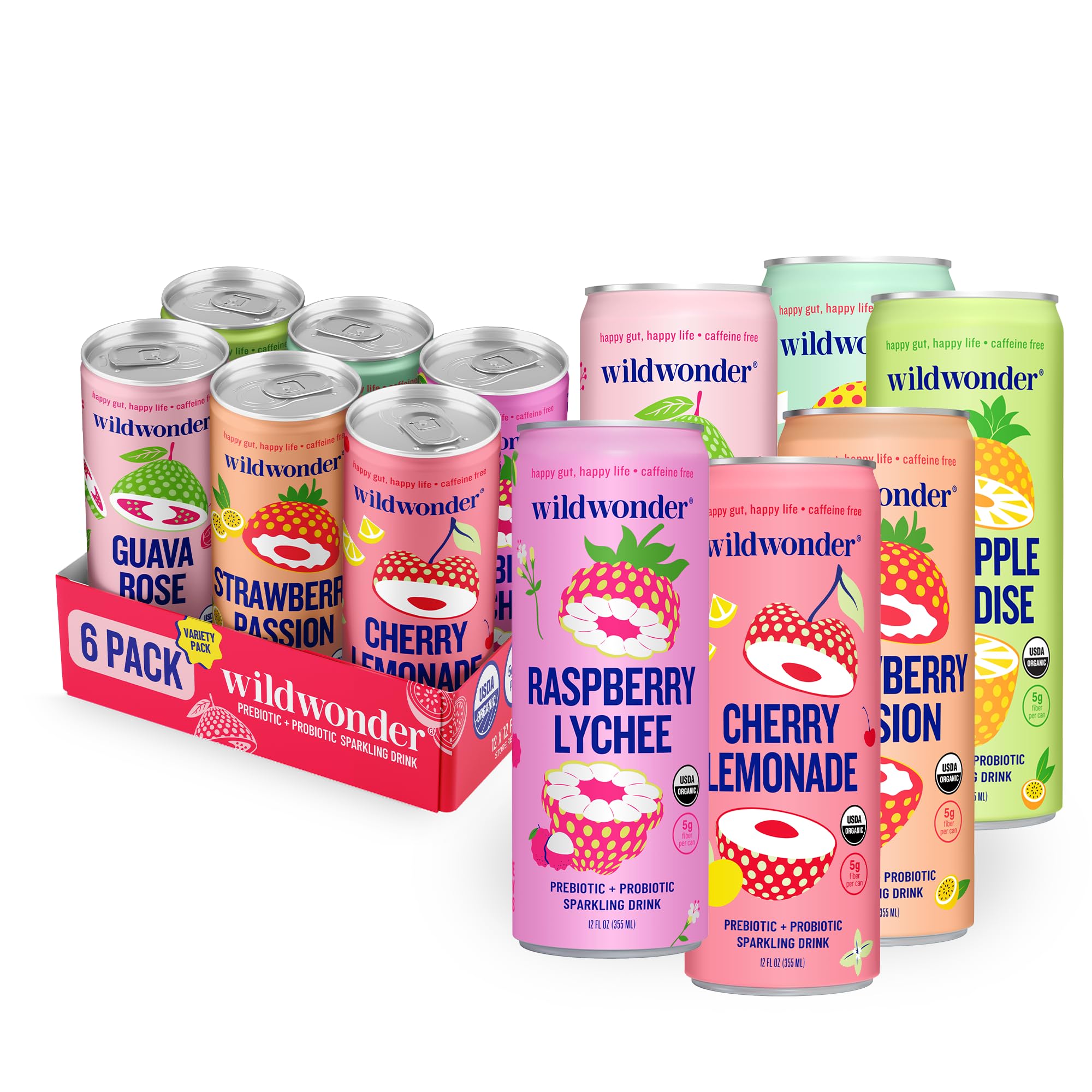
Wildwonder is the rare drink that combines a full 1 billion CFUs of live probiotics with 5 grams of prebiotic plant fiber in every can, creating a true synbiotic effect. The flavors are brewed from real herbs—Guava Rose, Peach Ginger, and Mango Gold—giving each sip a sophisticated, grown-up profile that recalls a high-end mocktail rather than a functional soda.
Sweetened with agave and monk fruit, each can contains just 40 calories and 6 grams of sugar, with no refined sugar or fermented aftertaste. The fact that it is organic, vegan, and caffeine-free makes it an excellent afternoon or evening option. The live probiotics survive the canning process, meaning the gut benefit is present from the first sip.
Some reviewers were surprised that the variety pack delivers 2 cans of each flavor rather than 6 distinct ones, so read the description carefully. The Guava Rose has a pronounced floral note that not everyone will love, but Peach Ginger and Mango Gold are crowd-pleasers. The price point is premium, but for a dual prebiotic-probiotic formula, it is uniquely effective.
Why it’s great
- Contains both live probiotics and prebiotic fiber
- Sophisticated herbal flavors with no refined sugar
- Organic, vegan, and caffeine-free
Good to know
- Only 6 cans per pack; expensive per can
- Guava Rose flavor may be too floral for some
4. Humm Kombucha The Original Variety 12 Pack
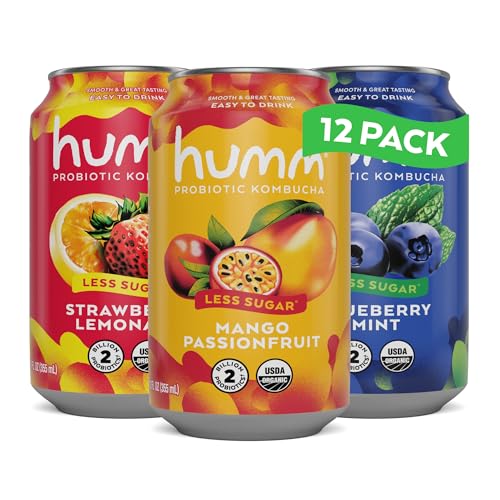
Humm brings 2 billion live probiotics per can along with added vitamin B12, making it the highest CFU count in this roundup. The 12-pack contains four cans each of Mango Passionfruit, Blueberry Mint, and Strawberry Lemonade—all of which deliver a pleasantly tart, fermented fizz that kombucha lovers expect, without being overly vinegary.
The sugar content is roughly 30% lower than many mainstream kombuchas, and the drink is USDA certified organic, non-GMO, and gluten-free. The Strawberry Lemonade is a standout for its balance of sweet and sour, while Blueberry Mint offers a uniquely refreshing twist. The B12 adds an energy-support element that sets Humm apart from standard fermented teas.
One practical consideration: kombucha requires refrigeration upon arrival, so ensure you have fridge space for 12 cans. Some reviewers noted that cans can expand slightly if stored warm, but flavor and probiotic potency remain intact. For the highest live-culture dose per serving, Humm is the clear leader.
Why it’s great
- Highest probiotic count at 2 billion CFUs
- Includes vitamin B12 for energy support
- Great flavor variety with no artificial sweeteners
Good to know
- Must be refrigerated from arrival
- Some cans may expand if stored warm
5. Liquid Remedy Kombucha Ginger Lemon 24-Pack

Liquid Remedy’s Ginger Lemon kombucha achieves a remarkable zero grams of sugar per can while still delivering a clean, tangy flavor profile. The 8.5-ounce slim cans are shelf-stable before opening, making this the most portable option for travel, office desks, or anywhere refrigerator space is tight.
Sweetness is provided by erythritol, a sugar alcohol that adds no-calorie sweetness without spiking blood sugar. Most reviewers find the ginger lemon taste fantastic—bright, slightly spicy from the ginger, and genuinely refreshing after exercise or a heavy meal. The low-calorie count makes it a guilt-free alternative to diet sodas.
However, erythritol can cause significant bloating and gas in sensitive individuals, as multiple reviews noted. If you have a history of reacting to sugar alcohols, sample a single can before committing to a 24-pack. For those who tolerate it, this is the only completely sugar-free kombucha that still tastes great and supports gut health on the go.
Why it’s great
- Zero sugar and zero calories per can
- Shelf-stable packaging for easy storage and portability
- Clean ginger lemon flavor with no chemical aftertaste
Good to know
- Erythritol can cause bloating in sensitive people
- Smaller 8.5-ounce cans may leave you wanting more
FAQ
Can gut health drinks replace a daily probiotic supplement?
Are prebiotic sodas like OLIPOP and Poppi healthier than diet soda?
Why do some kombuchas cause bloating even though they are good for gut health?
Final Thoughts: The Verdict
For most users, the drinks for gut health winner is the OLIPOP 6-Flavor Variety Pack because it delivers the highest fiber content per can with the lowest sugar, making it the easiest daily swap for soda drinkers. If you want live probiotics combined with prebiotics for a true synbiotic effect, grab the Wildwonder Classic Variety Pack. And for a zero-sugar, shelf-stable option that travels anywhere, nothing beats the Liquid Remedy Ginger Lemon Kombucha.

Mo Maruf
I created WellFizz to bridge the gap between vague wellness advice and actionable solutions. My mission is simple: to decode the research and give you practical tools you can actually use.
Beyond the data, I am a passionate traveler. I believe that stepping away from the screen to explore new environments is essential for mental clarity and physical vitality.