Our readers keep the lights on and my smoothie glass nicely filled. As an Amazon Associate, I earn from qualifying purchases.
The difference between a room that feels finished and one that feels flat often comes down to what hangs at the windows. Curtain fabric defines light filtration, thermal insulation, and the entire visual weight of a space — making the choice of material just as critical as the rod or the color.
I’m Mohammad Maruf — the founder and writer behind WellFizz. My approach to curtain fabric focuses on the measurable attributes that predict real-world performance: fabric weight in GSM, weave density, stretch recovery, thread count, and shrinkage behavior after washing.
This guide breaks down five distinct fabric options across velvet, linen blends, and woven cotton so you can match the material to your specific window treatment needs. Whether you prioritize light control, texture, or ease of sewing, understanding the structural differences is key to finding a truly best curtain fabric for your project.
How To Choose The Best Curtain Fabric
Curtain fabric is not a one-size-fits-all decision. The best material for a bedroom blackout curtain will differ from what works for a lightweight café window. You need to evaluate weight, stretch, weave, and care requirements before cutting a single yard.
Fabric Weight and GSM
GSM (grams per square meter) directly determines how the fabric hangs. Higher GSM means more density, better opacity, and a heavier drape. Lower GSM fabrics are lighter, more translucent, and ideal for layered or sheer applications. For curtain fabric, 180–250 GSM is a solid mid-range zone, while anything above 300 GSM is heavy enough to block most light and hold thermal mass.
Fiber Composition and Stretch
Polyester and spandex blends offer stretch recovery, which helps fabric conform to window shapes without sagging. Natural fibers like cotton and linen provide breathability and a crisp hand but may shrink 3–5% after washing. Linen-rayon hybrids balance breathability with a softer drape. If your curtain needs to hold a tailored pleat, a woven cotton or linen construct performs better than a stretchy velvet.
Care and Shrinkage
Pre-washing is non-negotiable for natural fiber curtain fabrics. Cotton ticking and linen blends can shrink enough to alter panel length and width. Polyester-spandex blends resist shrinkage and can be machine-dried on low. Velvet fabrics require gentle washing in a laundry bag and air drying to preserve the pile. Always account for residual shrinkage before cutting to final curtain dimensions.
Quick Comparison
On smaller screens, swipe sideways to see the full table.
| Model | Category | Best For | Key Spec | Amazon |
|---|---|---|---|---|
| Barcelonetta Natural Linen Fabric | Linen-Rayon Blend | Breathable layered curtains | 55″ wide, 70% linen, high GSM | Amazon |
| ROC-lon 100% Cotton Ticking | Woven Cotton | Structured café curtains | 44/45″ wide, CRF finish | Amazon |
| Barcelonetta Stretch Velvet Champagne | Stretch Velvet | Luxurious drapery with sheen | 60″ wide, 10% spandex | Amazon |
| MaiMaiSuan Crushed Velvet | Crushed Velvet | Soft, wrinkle-resistant panels | 60″ wide, 240 GSM, 6% spandex | Amazon |
| KKJIAF Red Stretch Velvet | Stretch Velvet | Budget-friendly velvet panels | 60″ wide, 5-yard precut | Amazon |
In‑Depth Reviews
1. Barcelonetta Natural Linen Fabric

This 70% linen and 30% rayon blend offers the breathable, textured hand of natural linen with a softer drape than pure flax. The 55-inch width gives generous coverage for standard windows, and the high-GSM construction adds heft without stiffness — exactly what you want for curtains that hang cleanly rather than collapsing into folds.
Customer feedback confirms the fabric softens considerably after one cold wash and low tumble dry, with the expected 3–5% shrinkage. The rayon component mitigates the scratchiness sometimes associated with pure linen, making it comfortable for panels that touch the floor. One reviewer specifically used it for curtains and praised its shape retention and ease of sewing.
The color “Natural” is an off-white, not pure bright white — a detail worth noting if you need a stark white curtain. The selvedge edges may ripple slightly after washing, but those edges are easily trimmed. For an entry-level-to-mid-range linen curtain option, this delivers a high-end look without the premium price tag.
Why it’s great
- High thread count and GSM give substantial drape
- Softens beautifully after first wash
- Versatile for both lined and unlined curtains
Good to know
- Shrinks noticeably — pre-wash before cutting to size
- Natural color is off-white, not pure white
- Longer shipping time compared to standard options
2. ROC-lon 100% Cotton Ticking
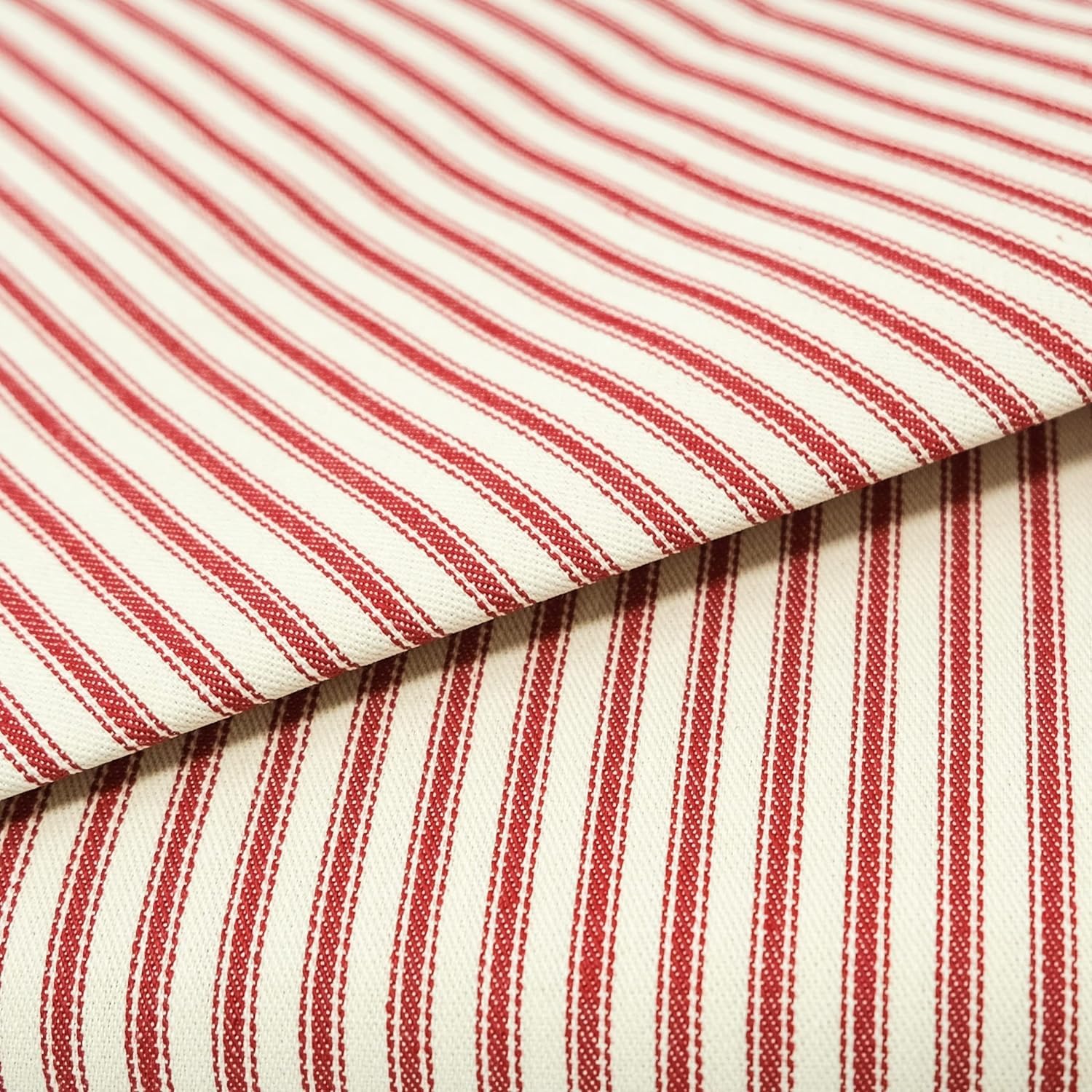
This 100% cotton ticking fabric with a crease-resistant finish is a standout choice if you want crisp, structured café curtains or tailored valances. The 44/45-inch width is narrower than standard decorator fabrics, so plan your yardage accordingly — the 5-yard precut gives you a generous starting point for two standard panels.
Multiple reviewers highlight the dense, heavy weave and the woven-in stripe pattern that stays clean and bold after washing. The cherry red with cream threads delivers strong color saturation without bleeding. The residual shrinkage of 3–5% is typical for cotton, and the CRF (crease resistant finish) helps the fabric hold its shape even after machine washing.
Because this is a woven cotton without stretch, it excels at maintaining sharp pleats and straight hems. The fabric feels stiff with starch initially, but softens slightly after washing while retaining its structure. Ideal for window treatments where you need the fabric to stand away from the glass and hold a crisp line.
Why it’s great
- CRF finish keeps creases sharp and fabric structured
- Durable heavy weave ideal for café curtains
- Stripe pattern is woven-in, not printed
Good to know
- Narrower width requires more yardage for wide windows
- Shrinks 3–5% — pre-wash thoroughly
- Stiff hand may feel rough until washed
3. Barcelonetta Stretch Velvet Champagne
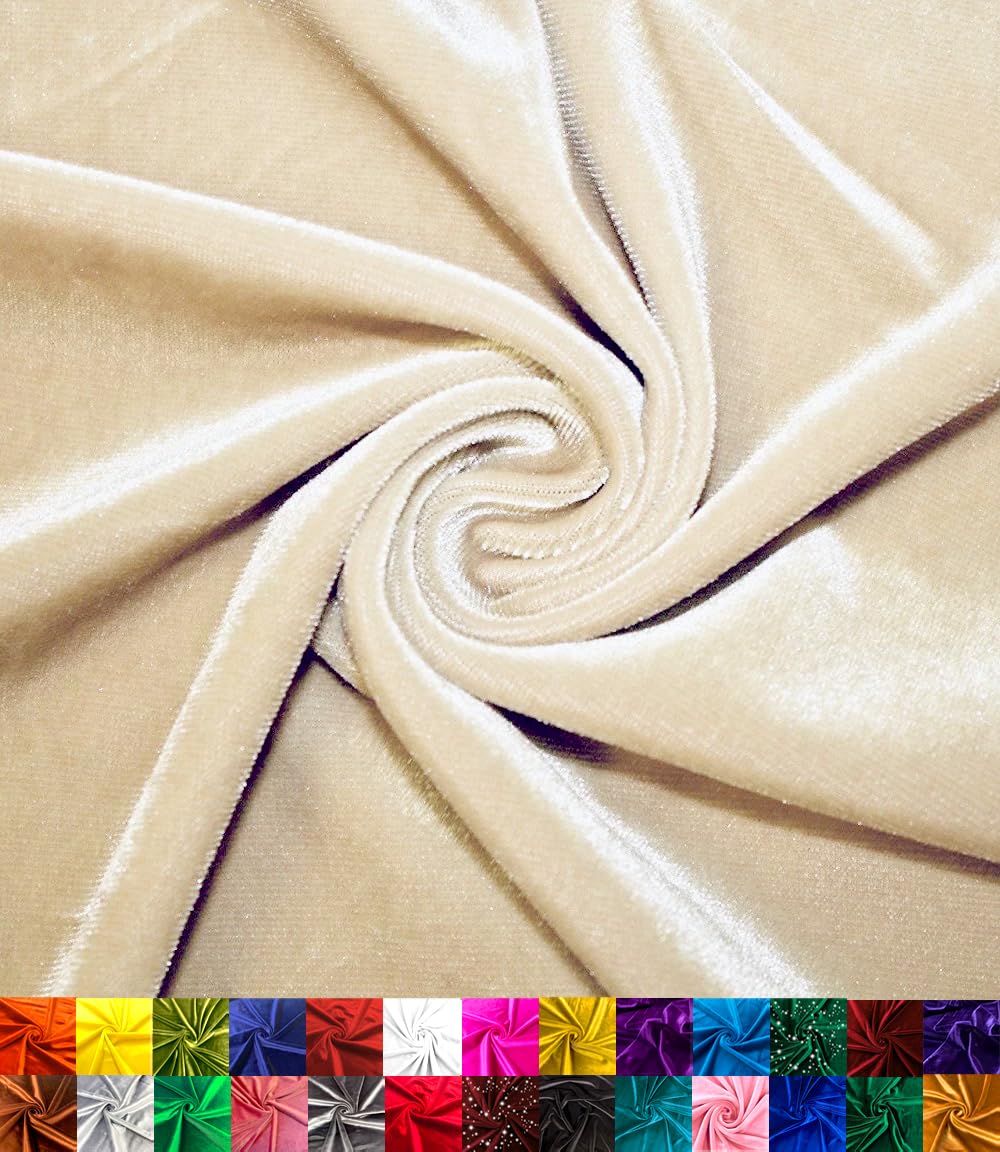
With 10% spandex content, this stretch velvet combines the rich sheen of traditional velvet with enough give to wrap around curtain rods and window contours without puckering. The 60-inch width provides generous coverage, and the medium weight (not overly thick) allows the fabric to fall in soft, natural waves rather than stiff folds.
Users report that the champagne color is true to listing photos, and the velvet pile is consistent with no bald spots or uneven sheen. One reviewer used 2 yards to create a Christmas tree skirt that draped beautifully, and another recovered a bench with a staple gun, noting the fabric was easy to pull taut without tearing.
This is a fine choice for floor-length drapery in a living room or bedroom where you want a touch of glamour without the extreme weight of upholstery-grade velvet. Machine wash on hand cycle and line dry to preserve the pile. The stretch recovery means panels will hang straight without sagging over time.
Why it’s great
- Luxurious sheen without being overly shiny
- Stretch recovery prevents sagging in panels
- Medium weight creates soft, natural draping
Good to know
- Thinner than classic upholstery velvet
- May need lining for full blackout effect
- Hand wash or gentle cycle only to protect pile
4. MaiMaiSuan Crushed Velvet Light Olive Green
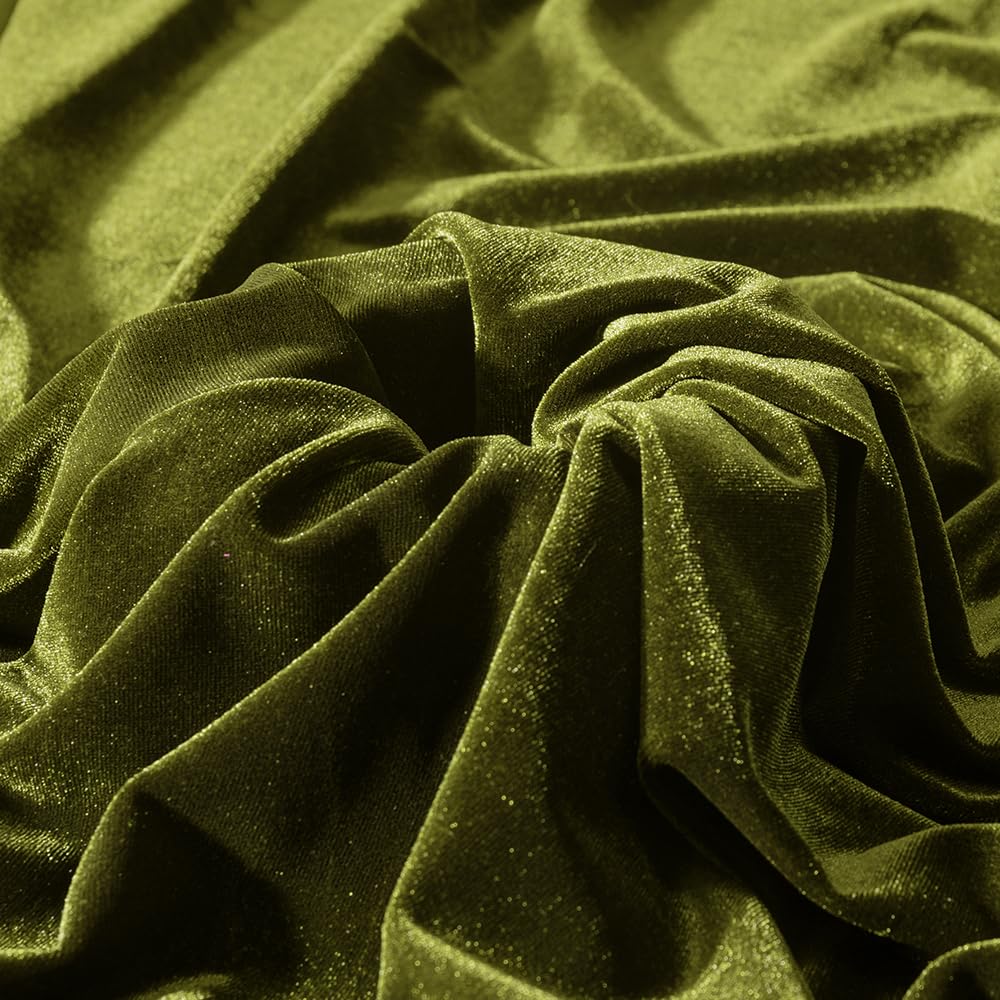
At 240 GSM with 94% polyester and 6% spandex, this crushed velvet hits a sweet spot between lightweight sheers and heavy drapery. The crushed texture adds visual dimension to the light olive green color, and the fabric’s firm hand resists the permanent creasing that can plague flat velvet.
Customer experiences are overwhelmingly positive, with multiple reviews referencing the elegant, non-costume look of the stretch velvet. One seamstress used it to redo a car headliner, while another covered ten large bouncy balls with a single sheet. The key caution — and it’s a real one — is that ironing leaves permanent marks regardless of technique. If your curtain project requires pressing, this may not be your fabric.
For curtain applications, the crushed texture works in your favor because it naturally conceals wrinkles and handling marks. The 3-yard option gives you 108 x 60 inches, enough for one standard panel or two smaller café curtains. Avoid direct sunlight exposure to prevent the color from fading over time.
Why it’s great
- Crushed texture hides wrinkles and handling marks
- Firm, wear-resistant hand suitable for daily use
- Generous 60-inch width for wide windows
Good to know
- Ironing causes permanent damage to the pile
- May not block light without a liner
- Dense fluff can trap dust — wash in laundry bag
5. KKJIAF Red Stretch Velvet

This 90% polyester and 10% spandex velvet is the most affordable option in the lineup, and the 5-yard precut gives you a full 180 x 60 inches of fabric — enough for multiple curtain panels or a long drape. The red color is saturated and true to the listing, with no blue or green undertones that sometimes plague budget velvets.
Users consistently praise the soft hand and the stretch that makes the fabric easy to work with. One reviewer upholstered booth seating in a kitchen nook and described the result as elegant and luxurious. Another used it for costumes and noted it looked convincing without appearing cheap. The fabric is not see-through at single-layer thickness, which is a positive for unlined curtain use.
The main trade-off with this entry-level velvet is that it is thinner than mid-range options, so it may not provide the same thermal insulation or heavy drape. Hand washing is recommended to preserve elasticity. For a temporary curtain solution, a pop of color, or a rental-friendly window treatment, this fabric delivers surprising quality for its cost tier.
Why it’s great
- True-to-photo color with no unwanted undertones
- Stretchy and easy to sew or staple
- Large 5-yard precut covers multiple panels
Good to know
- Thinner pile — less thermal insulation
- Hand wash only to maintain stretch recovery
- Fabric sold as separate precut pieces
FAQ
How much curtain fabric do I need for a standard window?
Should I line stretch velvet curtain fabric?
Can I machine wash cotton ticking curtain fabric?
Final Thoughts: The Verdict
For most users, the best curtain fabric winner is the Barcelonetta Natural Linen Fabric because it balances breathable linen texture with a soft, drapable hand and generous width for standard windows. If you want structured cotton with a crisp, tailored look, grab the ROC-lon 100% Cotton Ticking. And for a luxurious velvet drape with stretch recovery that prevents sagging, nothing beats the Barcelonetta Stretch Velvet Champagne.

Mo Maruf
I created WellFizz to bridge the gap between vague wellness advice and actionable solutions. My mission is simple: to decode the research and give you practical tools you can actually use.
Beyond the data, I am a passionate traveler. I believe that stepping away from the screen to explore new environments is essential for mental clarity and physical vitality.