Our readers keep the lights on and my smoothie glass nicely filled. As an Amazon Associate, I earn from qualifying purchases.
A cutdown duck call isn’t just a shorter barrel — it’s a weapon for close-range timber hunting. These compact calls produce a lower, raspier, more natural timber tone that greenheads respond to when they’re committed to the spread. The trade-off is that standard open-water hails lose range, so the wrong cutdown leaves you silent when you need to reach distant birds.
I’m Mohammad Maruf — the founder and writer behind WellFizz. I’ve spent hundreds of hours analyzing barrel geometries, reed tension, and material density across the cutdown market to isolate the calls that truly deliver that guttural, ducky finish without locking up in wet, cold conditions.
This guide breaks down the seven strongest contenders for the best cutdown duck call, comparing timber-specific tone, moisture resistance, and ease of blowing for hunters who hunt inside the trees.
How To Choose The Best Cutdown Duck Call
Cutdown calls prioritize a low, nasal, raspy tone that mimics a timber hen. You need to match barrel material to your climate, reed configuration to your air control, and overall construction to the abuse of mud, ice, and shotgun recoil.
Barrel Material: Wood vs. Acrylic vs. Polycarbonate
Wood (cedar, oak, diamonwood) delivers that classic warm, mellow timber tone but absorbs moisture and can crack if over-blown or stored wet. Acrylic is louder, brighter, and impervious to moisture — ideal for hunters who need a consistent tone in rain or sleet. Polycarbonate sits in between: durable, lightweight, and resistant to sticking when wet, but slightly less resonant than a quality wood barrel.
Reed Configuration: Double vs. Single
Double-reed calls are more forgiving for beginners because they require less air pressure to produce a raspy note, and they tend to have a built-in “ducky” rasp. Single-reed calls offer more tonal range and volume but demand precise air control — an experienced caller can manipulate a single reed for a wider vocabulary of feeds, quacks, and hail calls. For a cutdown timber call, double reeds are the safer bet because the short barrel already compresses the tone.
Quick Comparison
On smaller screens, swipe sideways to see the full table.
| Model | Category | Best For | Key Spec | Amazon |
|---|---|---|---|---|
| Duck Commander Pro Series | Premium Acrylic | All-purpose timber to field | 100% acrylic barrel | Amazon |
| Diamonwood Timbers | Premium Wood | Close-range timber only | Diamonwood barrel | Amazon |
| Duck Commander Classic | Mid-Range Wood | Classic timber tone | 4-piece riveted wood | Amazon |
| Buck Gardner Timber Pack | Mid-Range Combo | Mallard + wood duck combo | Spit-Tech toneboard | Amazon |
| Legend Calls LXM | Mid-Range Poly | Wet-weather grip | Insulating band grip | Amazon |
| Haydel’s T2 Combo | Budget Multi-Species | Teal & puddle duck variety | 5-in-1 double end | Amazon |
| Echo Timber Poly | Budget Poly | Budget-friendly timber | Polycarbonate double reed | Amazon |
In‑Depth Reviews
1. Duck Commander Phil Robertson Pro Series

The Pro Series is crafted from 100% acrylic, a material that cuts through timber mist with a volume and rasp that wood barrels cannot match. The poly-carbonate insert stabilizes the reed seat, ensuring every note — from the hail to the feed chuckle — stays consistent even when the temperature drops below freezing.
Hunters praise its “ducky” tone that feels natural to greenheads, yet the barrel remains lightweight enough for all-day lanyard carry. The black acrylic finish resists scratches and moisture, making it a reliable tool for wet hunts where polycarbonate calls sometimes stick.
For a hunter who wants one call that works in timber and open fields alike, this is the most versatile acoustic performer in the list. It has become the new favorite for experienced callers who previously relied on Duck Commander’s wood line.
Why it’s great
- Acrylic barrel delivers louder, raspier timber tone than wood
- Poly-carbonate insert keeps reed consistent in wet cold
- Lightweight and durable for all-day carry
Good to know
- Priced at the premium tier of the group
- Some users prefer a warmer wood tone for close timber only
2. Diamonwood Timbers Double Reed Duck Call

Echo Calls built the Diamonwood Timbers specifically for close-range timber hunting, and the wood barrel produces a warm, mellow tone that mimics a timber hen perfectly. The double-reed design is forgiving for less experienced callers while still offering the nuanced feed chuckle that serious guides demand.
Reviewers consistently note that this call sounds comparable to models costing two to three times as much, particularly in the lower register where the wood barrel resonates without being shrill. The natural diamonwood finish looks elegant and adds a traditional feel that acrylic calls lack.
Be aware that the high-end range is slightly compromised — this call is best when birds are inside 40 yards and committed. Under heavy pressure or in strong wind, the lower volume may not reach distant flocks as effectively as an acrylic alternative.
Why it’s great
- Warm, mellow timber tone outperforms calls at higher price points
- Forgiving double reed with excellent feed chuckle
- High-quality warranty and craftsmanship from Echo Calls
Good to know
- Lower volume limits effectiveness in open water or heavy wind
- Wood barrel requires careful drying after wet hunts
3. Duck Commander Classic Commander Double Reed
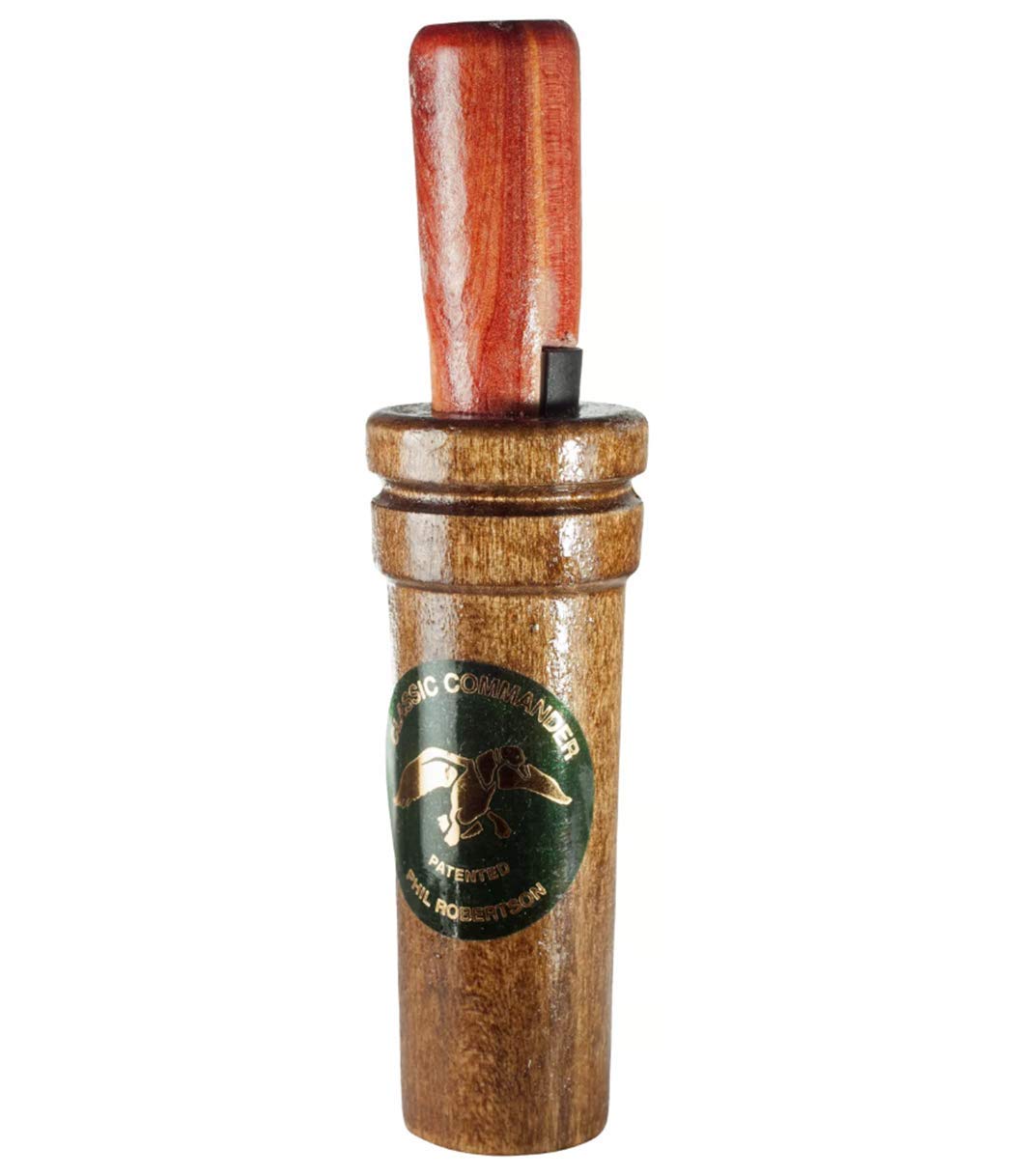
Phil Robertson’s original design remains a benchmark for timber calling. The 4-piece all-wood construction uses a friction-fit reed system that produces a low, nasally, raspy tone — precisely the sound that made Duck Commander famous. Because each call is made from natural wood, no two units sound exactly alike, giving experienced hunters a unique voice in the blind.
Blowers report that the call is easy to blow, producing realistic mallard sounds that outperform many modern acrylic models in blind tests. The wood barrel does require a slight break-in period, and the tight wedge fit means you should keep the call slightly exposed to avoid cracking the barrel during temperature shifts.
For hunters who value tradition and a proven tone over high-tech materials, this call delivers authentic timber performance. It is not the loudest call on this list, but its character is unmistakable.
Why it’s great
- Authentic Phil Robertson timber tone from a iconic all-wood design
- Easy to blow with a realistic mallard sound
- No two calls sound identical — gives you a unique voice
Good to know
- Wood barrel can crack if over-blown or stored wet
- Some units blow higher-pitched initially and require break-in
4. Buck Gardner Double Nasty & Wood Duck Combo

The Timber Pack gives you two calls in one kit: the Double Nasty mallard call with Buck Gardner’s Spit-Tech toneboard, which helps prevent reed sticking when moisture collects, plus a dedicated wood duck call. The Double Nasty is a double-reed call that runs loud and raspy for hails while staying soft enough for feed calls, making it a versatile timber tool.
Customers report that the Spit-Tech technology genuinely reduces freeze-ups in cold, wet conditions, though some users still experience sticking in extreme cold. The wood duck call reproduces the high-pitched whines and squeals that timber hunters need for wood ducks and teal, effectively giving you a two-species setup on one lanyard slot.
Durable polycarbonate construction keeps weight low and impact resistance high. For a mid-range price, this combo delivers two functional calls that cover the most common timber situations.
Why it’s great
- Spit-Tech toneboard reduces sticking in wet conditions
- Two calls cover mallard and wood duck/teal scenarios
- Loud, raspy tone from the Double Nasty for hails
Good to know
- Wood duck call can be very loud — may need finesse in tight timber
- Spit-Tech does not fully solve freeze-up in extreme cold
5. Legend Calls LXM Mallard Duck Call
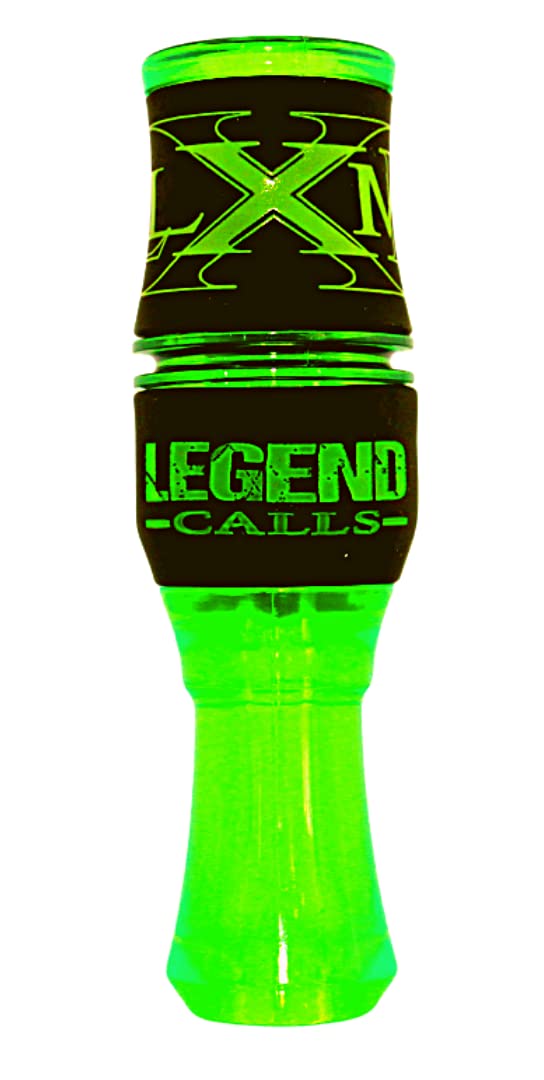
The LXM stands out for its Insulating Band Technology, which wraps the barrel in a textured rubber grip. This is a practical advantage when your hands are wet, gloved, or shaking from cold — you maintain a secure hold without fumbling. The J-Frame double-reed design is easy to blow and produces a loud, clear tone that hunters find effective on public land.
Reviewers consistently mention that this call replaces custom models costing significantly more, praising its ease of use and ability to turn ducks with minimal effort. The extreme grip texture also provides insulation against cold barrels, which is a subtle benefit during long sits in a timber hole.
The polycarbonate construction is durable and resistant to moisture, though some users note the grip band can collect debris if the call is dropped in mud. Overall, this is a practical, high-value call for hunters who prioritize grip and simplicity.
Why it’s great
- Textured insulating band provides excellent wet-weather grip
- Easy to blow with loud, effective tone for public land
- Replaces custom calls at a mid-range price point
Good to know
- Grip band can collect mud and debris
- Some users find the tone slightly less refined than premium wood
6. Haydel’s T2 Combo Teal Duck Call

The T2 is a dual-ended call that produces blue-winged and cinnamon teal quacks from one end, and green-winged teal, pintail, widgeon, and mallard drake whistles from the other. This 5-in-1 capability means you can cover a wide variety of puddle ducks without carrying multiple calls, which is especially useful for early-season teal hunters scouting mixed flocks.
Made in the USA with a double-reed system, the T2 is exceptionally easy to use — beginners report calling in birds on their first outing. The instructional video and 30-day warranty add peace of mind, and the compact size frees up lanyard space for other gear.
On the downside, the tone is tuned more for teal and whistling ducks than for deep mallard timber. If your primary target is greenheads in the timber, this call will feel limited in that low, raspy register that cutdown wood calls excel at.
Why it’s great
- Versatile 5-in-1 covers teal, pintail, widgeon, and mallard drake
- Extremely easy to blow — ideal for beginners
- Compact design saves lanyard space for early-season hunts
Good to know
- Not optimized for deep mallard timber tone
- Limited to teal and whistling species range
7. Echo Timber Poly Double Reed Duck Call

The Echo Timber Poly is designed specifically for close-in timber calling, using a polycarbonate barrel that resists moisture better than wood at this tier. The double-reed system is easy to blow and produces a “ducky” sound that reviewers consistently compare to calls costing much more. It works well in both open water (with louder blowing) and tight swamps (with softer pressure).
Hunters report that the call holds up in warm and icy conditions, though a few note that after extended use the reed can stick slightly — a quick tap against a shotgun stock resolves it. The 3.84-ounce weight barely registers on a lanyard, making it a practical backup or primary call for public-land hunts.
For the budget-conscious hunter who wants a reliable timber tone without spending premium money, this call delivers strong value. The sound range is versatile enough for hails and feed calls, though it lacks the refined nuance of higher-end wood or acrylic models.
Why it’s great
- Excellent value with tone comparable to premium calls
- Polycarbonate barrel resists moisture better than wood
- Lightweight and versatile for open water and timber
Good to know
- Reed can stick after extended use, requiring a quick tap
- Lacks the refined nuance of wood or acrylic at higher tiers
FAQ
What is a cutdown duck call good for?
Is a double reed or single reed better for a cutdown call?
Why does my cutdown call sound too high pitched?
Final Thoughts: The Verdict
For most users, the best cutdown duck call winner is the Duck Commander Phil Robertson Pro Series because its 100% acrylic barrel delivers the loudest, most consistent timber tone while resisting moisture and temperature swings. If you prefer the warm, classic timber resonance of wood, grab the Diamonwood Timbers. And for a value-driven two-call kit that covers mallard and wood duck scenarios, nothing beats the Buck Gardner Timber Pack.

Mo Maruf
I created WellFizz to bridge the gap between vague wellness advice and actionable solutions. My mission is simple: to decode the research and give you practical tools you can actually use.
Beyond the data, I am a passionate traveler. I believe that stepping away from the screen to explore new environments is essential for mental clarity and physical vitality.