Our readers keep the lights on and my smoothie glass nicely filled. As an Amazon Associate, I earn from qualifying purchases.
A bag of limp celery or a half-used cabbage rotting in the fridge is a kitchen failure you can fix without a single trip to the grocery store. Dried vegetables skip the spoilage cycle entirely—they sit in your pantry for years, rehydrate in minutes, and deliver concentrated flavor that fresh produce often lacks in the off-season. Whether you are building an emergency kit, lightening your backpacking load, or just tired of throwing away slimy greens, the right dried vegetable is a genuine kitchen shortcut that actually works.
I’m Mohammad Maruf — the founder and writer behind WellFizz. I’ve spent hundreds of hours cross-referencing shelf-stability data, rehydration ratios, and sodium levels across dozens of dried vegetable brands so you don’t have to guess which pouch delivers real crunch and which one turns to mush.
After comparing freeze-dried and air-dried options from the biggest names in the pantry-prep space, the best dried vegetables are the ones that keep their texture through a full boil, need no refrigeration, and actually taste like the vegetable they claim to be.
How To Choose The Best Dried Vegetables
Not all dried vegetables are created equal. A bag of mixed veggie flakes might work fine in a stew but turn into a pasty mess if you try to eat them straight as a snack. The three variables that separate a great dried vegetable from a mediocre one are the drying method, the cut size, and the packaging integrity.
Freeze-Dried vs Air-Dried: Which Matters More?
Freeze-drying removes moisture through sublimation, leaving the cellular structure mostly intact. That means the vegetable rehydrates faster and retains a firmer, closer-to-fresh bite. Air-dried vegetables go through heat dehydration, which shrinks the cell walls and makes them denser—they take longer to rehydrate and have a chewier texture. If you are snacking straight from the bag or adding crunch to a salad, freeze-dried wins. For long-simmered soups or emergency storage where shelf life is the priority, air-dried is perfectly fine and usually more affordable.
Cut Size and Density
A crosscut celery piece rehydrates faster than a thick broccoli floret, and a pea-sized dice integrates into a sauce better than a whole leaf. Thicker cuts work in stews and casseroles where there is time and liquid to soften them. Smaller flakes are better for ramen, dips, and quick rehydration in a thermos. Check the cut description before buying—some brands chop everything into indistinguishable dust, while others maintain recognizable shapes.
Packaging and Storage
Dried vegetables are only as good as the seal that keeps moisture out. Resealable pouches with zip closures are convenient for daily use. Mylar bags with oxygen absorbers are better for long-term storage. If the bag feels puffy or the seal is compromised, the vegetables have already started to degrade. Look for rigid packaging when possible, and always transfer to an airtight container after opening if the original bag lacks a reliable zipper.
Quick Comparison
On smaller screens, swipe sideways to see the full table.
| Model | Category | Best For | Key Spec | Amazon |
|---|---|---|---|---|
| Harmony House Celery | Air-Dried | All-purpose cooking & camping | Crosscut pieces, 3.25:1 rehydration yield | Amazon |
| Harmony House Cabbage | Air-Dried | Soups, stews & skillet meals | No additives, 2-year shelf life | Amazon |
| SavorSatch Mixed Flakes | Air-Dried Blend | Ramen, quick soups & emergency kits | 5-veg blend, 16oz resealable pouch | Amazon |
| Mother Earth Broccoli | Freeze-Dried | Backpacking meals & snacking | Freeze-dried, 25-year storage potential | Amazon |
| Mother Earth Peas | Freeze-Dried | Snacking & kid-friendly recipes | Freeze-dried, sweet flavor, crunchy texture | Amazon |
In‑Depth Reviews
1. Harmony House Dehydrated Celery, Crosscut
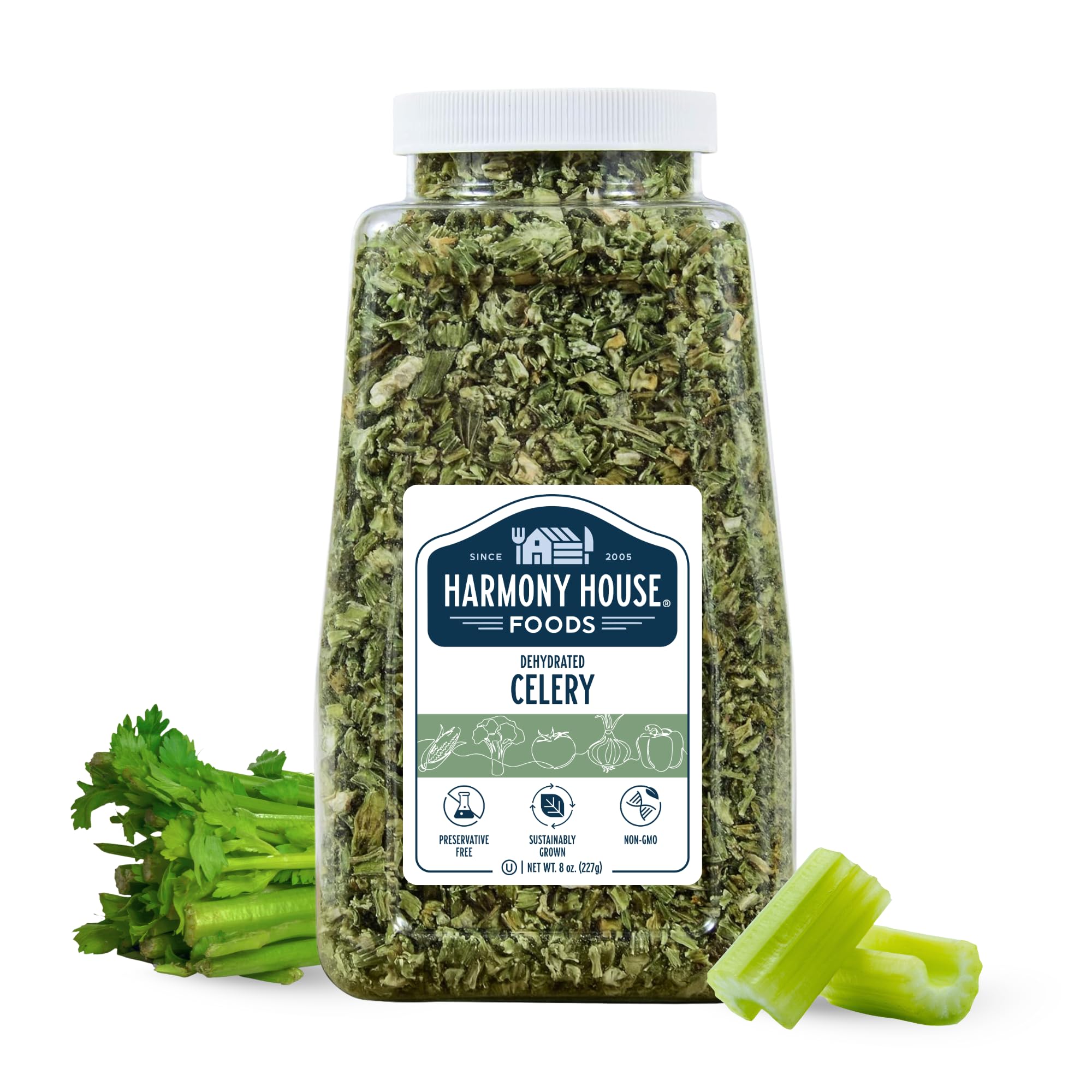
Harmony House has dialed in the air-drying process better than nearly anyone else in this category. The crosscut celery pieces are consistently sized—about a quarter-inch wide—which means they rehydrate evenly whether you toss them into a simmering soup or a cold pasta salad. One cup of dried yields just over three cups rehydrated, so a single pouch replaces multiple bunches of fresh celery that would otherwise wilt in your crisper drawer inside a week.
The flavor is the real surprise. Most dried celery tastes flat or hay-like, but these pieces retain a bright, grassy celery note that stands up to long cooking times. They work equally well as a crunchy ramen topping straight from the bag—something you cannot do with fresh celery without chopping. The 8-ounce jar is rigid and reusable, which keeps moisture out far better than a flimsy zip-pouch.
For campers and emergency preppers, the shelf life of 1-2 years is standard for air-dried vegetables, but the real advantage here is the yield-to-weight ratio. A single jar weighs half a pound but rehydrates to nearly two pounds of usable celery. That kind of weight savings matters when every ounce in your pack counts.
Why it’s great
- Crosscut shape rehydrates faster than standard diced pieces
- Bright, fresh flavor that holds up in simmered dishes
- Rigid jar packaging protects against crushing and moisture
Good to know
- No rehydration guidance printed on the label
- Requires extra liquid in casseroles to fully soften
2. Harmony House Foods Dehydrated Cabbage Flakes
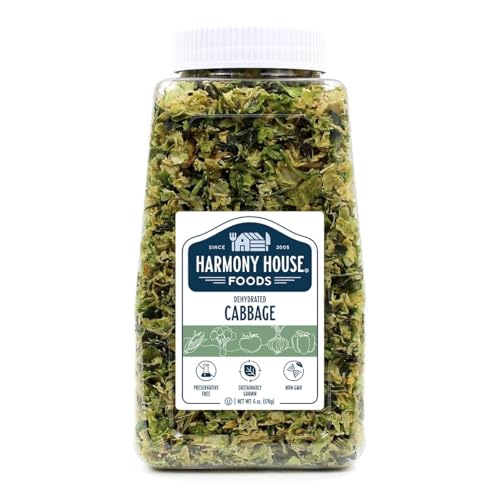
Cabbage is one of the trickiest vegetables to dry because it can turn bitter or develop a sulfurous edge if processed wrong. Harmony House sidesteps that entirely by air-drying at controlled temperatures that preserve the natural sweetness of the cabbage. The flakes are light, papery, and rehydrate to a texture that closely mimics fresh shredded cabbage—soft but with a tiny bit of resistance left in the core pieces.
This is a mid-range option that punches above its weight in versatility. You can add the flakes directly to a pot of simmering stew without any pre-soaking, and within five minutes they absorb enough liquid to blend in seamlessly. They also work as a crunchy topping for ramen if you sprinkle them on right before eating, though they do need a few minutes to soften fully compared to freeze-dried alternatives.
Reviewers consistently mention the reduction in food waste as a major benefit. A whole head of cabbage takes up half your fridge and often goes bad before you finish it. A 6-ounce jar of these flakes stores in a cabinet for up to two years and replaces multiple heads of fresh cabbage. The non-GMO and gluten-free certifications make it a safe bet for households with dietary restrictions.
Why it’s great
- Fresh, slightly sweet flavor with no bitterness
- Rehydrates in under five minutes in hot liquid
- Long 2-year shelf life reduces food waste significantly
Good to know
- Slower rehydration than freeze-dried options
- Needs pre-cooking if using as a dry crunchy topping
3. SavorSatch Dehydrated Mixed Vegetable Flakes
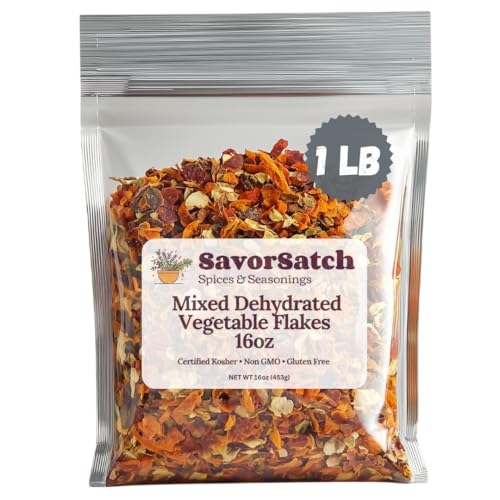
SavorSatch takes the guesswork out of dried vegetable blends by packing five distinct vegetables—carrot, onion, celery, tomato, and bell pepper—into a single 16-ounce pouch. The cut sizes are consistent enough that you do not end up with giant carrot chunks next to powdery onion flakes. Each vegetable retains its individual color, which is a good sign that the batch was dried fresh rather than sitting in a warehouse for months before packaging.
The flavor profile leans savory and slightly sweet thanks to the carrot and tomato content. The inclusion of bell pepper sets this blend apart from most competitors, who tend to skip pepper because it loses color quickly during dehydration. SavorSatch manages to keep the pepper pieces recognizable and aromatic. They are certified kosher and carry no added salt, which gives you full control over seasoning when building a soup base or a one-pot camping meal.
For the price-per-ounce, this is the most economical way to stock a pantry with a ready-to-use vegetable mix that covers the flavor bases of a classic mirepoix plus tomato. The resealable pouch is functional but not as durable as a jar—you will want to transfer it to an airtight container after opening if you are storing it beyond six months.
Why it’s great
- Five vegetables in one blend for instant soup base
- Minimal sediment or dust at the bottom of the pouch
- No added salt for complete seasoning control
Good to know
- Resealable pouch is less durable than a rigid jar
- Bell pepper pieces fade slightly after long storage
4. Mother Earth Products Freeze Dried Broccoli
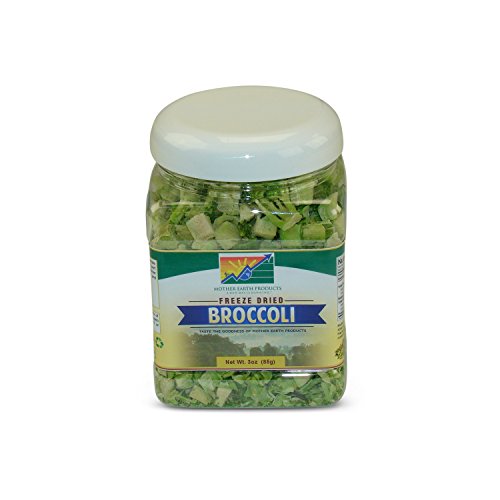
Mother Earth is one of the few brands that use true freeze-drying for a vegetable as structurally delicate as broccoli, and the difference is obvious the moment you open the jar. The florets are light, almost airy, and they snap cleanly between your fingers—no chewy stems or dusty bits. The slightly sweet, roasted-note flavor that customers mention comes from the freeze-drying process preserving the natural sugars that air-drying typically caramelizes or destroys.
This is an premium choice for backpackers who want to eat well on the trail without hauling fresh produce. A 3-ounce jar rehydrates to a full quart of broccoli that tastes closer to steamed than to canned. The chunks are large enough to feel substantial in a stir-fry or a pouch of instant mashed potatoes, which is rare for freeze-dried broccoli—most brands reduce it to crumbs. Reviewers also note that the 25-year storage potential when sealed properly makes this a go-to for long-term emergency food supplies.
The main trade-off for that premium freeze-dried texture is cost. You are paying for the sublimation process and the lightweight results. If your primary use is simmering in soups for hours, an air-dried option will work just as well. But if you want broccoli that crunches like fresh and rehydrates in under two minutes, this is the standard.
Why it’s great
- True freeze-dried texture that snaps and crunches
- Large, recognizable florets, not powdery crumbs
- 25-year storage potential in proper conditions
Good to know
- Smaller 3-ounce net weight per jar
- Higher price per ounce than air-dried options
5. Mother Earth Products Freeze Dried Peas

Peas are the gateway dried vegetable because they are naturally sweet and work as a snack straight out of the bag. Mother Earth’s freeze-dried peas are small, round, and crunchy with an interior that dissolves almost instantly on your tongue, releasing that concentrated pea sweetness. Kids and adults alike tend to eat them by the handful before they ever make it into a recipe, which is both a testament to the quality and a warning to buy extra.
In cooked applications, these peas shine because they rehydrate faster than any air-dried legume. Drop them into a bowl of hot ramen and they are tender within 60 seconds. Add them to the last five minutes of a stew and they plump up without turning mushy. Reviewers point out that the 8-ounce jar contains more volume than it appears to hold, because freeze-dried peas are so light that the jar feels half-empty when it is actually full by weight.
The main drawback is the same one that applies to all freeze-dried produce—the cost-per-serving is higher than frozen peas. For everyday use, frozen peas are cheaper and already blanched. But for backpacking trips, emergency kits, or households where picky eaters refuse to touch cooked vegetables, these peas solve a real problem without any negotiation.
Why it’s great
- Sweet, crunchy snack that appeals to picky eaters
- Rehydrates in under one minute in hot liquid
- More volume per ounce than frozen or canned alternatives
Good to know
- Higher cost per serving compared to frozen peas
- Jar appears half-empty despite full net weight
FAQ
How long do dried vegetables actually last in a pantry?
Can I eat dried vegetables straight from the bag without cooking them?
Final Thoughts: The Verdict
For most users, the best dried vegetables winner is the Harmony House Dehydrated Celery because it combines consistent cut size, bright flavor, and a rigid jar that keeps moisture out better than any pouch. If you want a ready-to-use blend for ramen and quick soups, grab the SavorSatch Mixed Vegetable Flakes. And for backpacking meals or snackable crunch that kids actually eat, nothing beats the Mother Earth Freeze Dried Peas.

Mo Maruf
I created WellFizz to bridge the gap between vague wellness advice and actionable solutions. My mission is simple: to decode the research and give you practical tools you can actually use.
Beyond the data, I am a passionate traveler. I believe that stepping away from the screen to explore new environments is essential for mental clarity and physical vitality.