Our readers keep the lights on and my smoothie glass nicely filled. As an Amazon Associate, I earn from qualifying purchases.
A fixed blade broadhead that fails to open on impact is a failure in the field. On the other hand, a Cut On Contact design ensures the blade begins slicing the instant it touches hide, creating a massive wound channel and a blood trail that ends fast. This is the gold standard for hunters who demand immediate, ethical kills without relying on mechanical deployment.
I’m Mohammad Maruf — the founder and writer behind WellFizz. My deep market research and analysis of hundreds of broadhead designs, blade geometries, and ferrule materials drive the recommendations in this guide.
Choosing the wrong head can mean a lost animal, but this guide will help you find the most reliable best cut on contact fixed blade broadhead for your setup and game.
How To Choose The Best Cut On Contact Fixed Blade Broadhead
A Fixed Blade Cut On Contact broadhead is a simple mechanical tool, but small differences in design have massive effects on flight and terminal performance. Use these criteria to narrow your choice.
Blade Count and Cutting Diameter
Two-blade designs create the largest, most reliable wound channels and offer the deepest penetration, but you sacrifice some blood trail width. Three-blade and four-blade heads increase cutting surface and bleed faster, though they may reduce penetration slightly on tough shots. Matching the diameter to your arrow’s kinetic energy ensures you don’t over-penetrate or under-cut.
Tip Profile and Point Material
A chisel point (like on Magnus Hornet) resists rolling on angled bone hits, while a sharp trocar point (Muzzy MX-3) drives deep by concentrating force on a small initial area. A solid one-piece body (like G5 Montec CS) eliminates assembly issues and delivers maximum strength but may be harder to sharpen. Replaceable-blade heads offer convenience but create a potential failure point at the blade lock.
Ferrule Construction and Weight
Aluminum ferrules keep overall arrow weight low and are common in the mid-range, but stainless steel or one-piece carbon steel (like G5 Montec CS) is nearly indestructible. Heavier heads (125 grains) deliver more momentum for heavy game at close range, while 100-grain heads fly faster and flatter. Choose based on your bow’s draw weight, arrow spine, and intended quarry.
Quick Comparison
On smaller screens, swipe sideways to see the full table.
| Model | Category | Best For | Key Spec | Amazon |
|---|---|---|---|---|
| G5 Montec CS | Premium Fixed Blade | Big Game, Bone Penetration | 1 1/16″ cutting, 100 gr | Amazon |
| Magnus 4 Blade Hornet Ser-Razor | Premium Fixed Blade | Versatile, All-Around Use | 4-blade, 125 gr | Amazon |
| RamCat Broadheads 100 Grain | Premium Fixed Blade | Field Point Accuracy, Quiet Flight | 1 3/8″ cutting, .032″ blade | Amazon |
| Muzzy MX-3 Fixed Blade | Mid-Range Fixed Blade | Budget-Conscious, High Speed Bows | 1 1/4″ cutting, 100 gr | Amazon |
| NAP Thunderhead Crossbow | Mid-Range Fixed Blade | Crossbow Durability | 1 3/16″ cutting, all steel | Amazon |
| Swhacker #219 Crossbow | Mid-Range Mechanical | Crossbow, Large Cut on Impact | 1.75″ expandable cut | Amazon |
| NAP Killzone 2 Blade | Mid-Range Mechanical | Maximum Cutting Diameter | 2″ cutting, spring-clip | Amazon |
In‑Depth Reviews
1. G5 Montec CS Broadheads 100 Grain
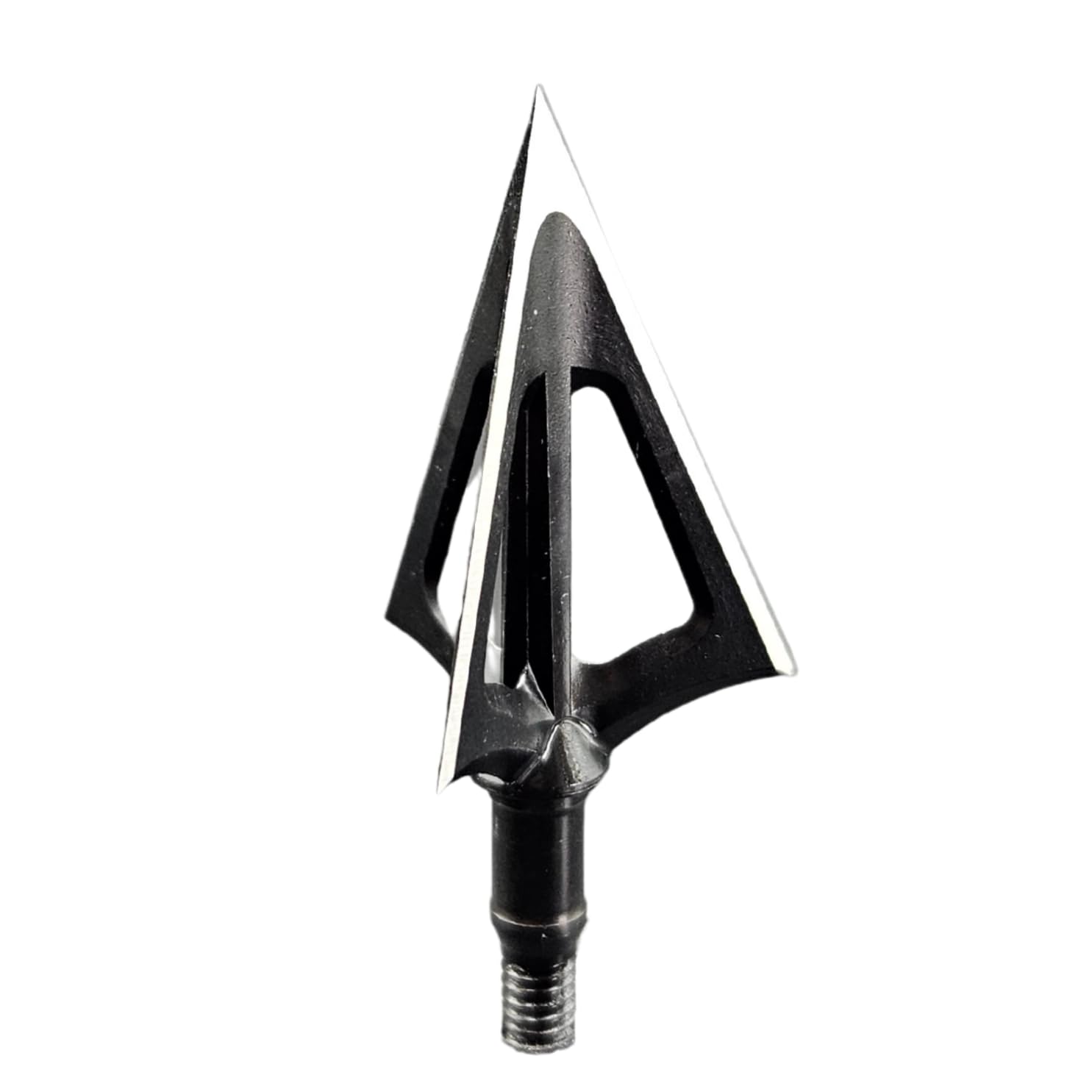
The G5 Montec CS is a one-piece Metal Injection Molded broadhead, meaning there are no blades to align, no inserts to fail, and no screws to back out. This single-body construction eliminates any mechanical weak point, making it the most durable fixed-blade option here. At 100 grains with a 1 1/16″ cutting diameter, it balances penetration depth with a solid wound channel.
Hunters report that this head passes through adult deer and even black bear shoulders with full exit wounds. The diamond-cut edge is razor sharp from the factory and can be touched up on a waterstone without disassembly. It requires a slight sight adjustment beyond 25 yards compared to field points, but alignment of the blades with your arrow fletchings yields excellent flight at 40+ yards.
The small cutting diameter is the trade-off — it produces less blood on the ground than wider heads, but the meat damage is minimal and the animal rarely runs far. For hunters who prioritize penetration and reliability over a massive cut, this is the definitive choice.
Why it’s great
- One-piece MIM carbon steel body — no assembly required
- Spin-tested for perfect accuracy out of the pack
- Excellent penetration through bone and thick hide
- Re-sharpenable without disassembly
Good to know
- Small cutting diameter limits blood trail width
- Requires sight adjustment beyond 25 yards for most bows
- Not suitable for low-poundage bows without tuned arrow spine
2. Magnus 4 Blade Hornet Ser-Razor Broadhead

The Magnus Hornet is a classic 4-blade fixed head that uses a tanto chisel tip to prevent the head from rolling on angled impacts. This tip profile makes it exceptionally forgiving on poor shot placement. At 125 grains, it delivers heavy momentum, making it a strong choice for larger game like elk or boar.
Customer reviews consistently mention that this head flies exactly like a field point out to 60 yards once the bow is properly tuned. The serrated razors on each blade create additional cutting surfaces that promote fast bleeding. The lifelong replacement policy from Magnus means if you damage a blade, you send it in and get a new one — no questions asked, which adds tremendous long-term value.
One minor trade-off: the wide 4-blade design generates slightly more wind drag than a 2-blade, and some users note it is marginally noisier in flight. But for a head that combines cut-on-contact reliability, field-point accuracy, and a lifetime warranty, the Hornet is a serious contender.
Why it’s great
- Lifetime free replacement warranty
- Chisel tip prevents rolling on bone impacts
- Flies like field points with proper tuning
- Easy to sharpen with standard tools
Good to know
- Wider profile may cause slight wind drift at long range
- Requires careful spine matching for compound bows
- Heavier 125-grain weight may drop faster at extreme distances
3. RamCat Broadheads 100 Grain
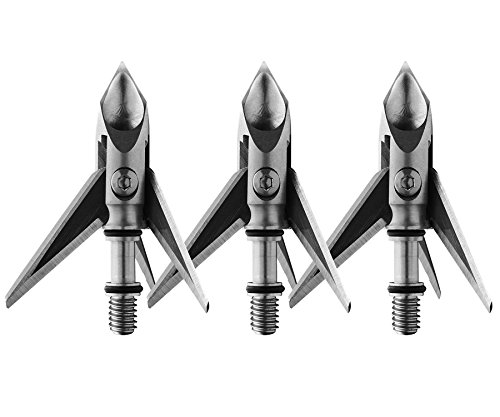
The RamCat uses a one-piece stainless steel body with offset blades that create an aerodynamic airfoil effect. Rather than fighting wind, the deep lobes in the cutting tip draft air over the blades, producing a flight that is both accurate and noticeably quieter than many competitors. This is a premium head built for speed and stealth.
At 1 3/8″ cutting diameter with .032″ thick blades, this head leaves a massive wound channel while still retaining enough blade thickness to resist bending on shoulder hits. Hunters report full pass-through on elk at 50 yards, with the head still usable after a hard impact on bone. The offset blade design also creates a double-edge cutting effect on entry and exit, accelerating blood loss.
Because RamCat uses a fixed, non-replaceable blade system, you need to sharpen the head as a unit if it dulls. Some users note that the very sharp factory edge can dull after multiple impacts, but the one-piece stainless construction makes the head nearly indestructible.
Why it’s great
- One-piece stainless steel body is extremely durable
- Offset blade design yields quiet, accurate flight
- Large 1 3/8″ cutting diameter
- Excellent blood trail thanks to double-edge cut
Good to know
- Non-replaceable blades require whole-head sharpening
- Heavy construction (2.4 oz per pack) may affect arrow balance
- Limited availability on some models
4. Muzzy MX-3 Fixed Blade Broadheads 100 Grain

The Muzzy MX-3 brings a proven 3-blade design with an aluminum ferrule and a trocar tip that crushes bone without deflection. At 1 1/4″ cutting diameter, it is wide enough to create a lethal wound channel while keeping the compact profile required for high-speed compound bows. The 0.025″ blade thickness keeps drag low, helping the head track true.
Hunters report that these heads fly identically to their field points after basic bow tuning. The replaceable blades cost a fraction of a new head, making the MX-3 one of the most cost-effective options for hunters who shoot often. The 100-grain weight is standard, but the shorter overall length compared to some competitors helps it stabilize faster on high-speed arrows.
Some users have noted that the machining of the blades is less refined than premium options, and occasional spin test failures occur out of the box. But for a value-driven head that consistently takes deer without breaking the bank, the MX-3 is a reliable workhorse.
Why it’s great
- Excellent price-to-performance ratio
- Replaceable blades keep long-term cost low
- Trocar tip drives deep through bone
- Short profile stabilizes on high-speed bows
Good to know
- Some out-of-box spin balancing issues
- Aluminum ferrule may bend on extreme impacts
- Blade sharpness varies between individual packs
5. NAP Thunderhead Crossbow Fixed Blade

The micro-grooved ferrule reduces friction on entry, allowing the head to penetrate deeper at crossbow velocities. The 1 3/16″ cutting diameter is modest but proven to produce quick, clean kills.
Crossbow users report that this head shoots accurately at standard crossbow ranges with minimal wind drift, and the replaceable blades are easy to swap without tools. The steel construction holds up to repeated impacts with bone, though the added weight may affect arrow trajectory on longer shots.
One noted issue is that the head flies approximately 7 inches low on some crossbow setups compared to field points, requiring a separate sight pin. But for hunters who value reliability over absolute field point match, the Thunderhead delivers decades-proven performance.
Why it’s great
- All-steel construction for maximum durability
- Proven design with decades of field success
- Replaceable blades without tools
- Micro-grooved ferrule reduces friction
Good to know
- May impact low on crossbows compared to field points
- Heavier construction increases arrow drop
- Limited cutting diameter for large game
6. Swhacker #219 Crossbow Broadheads 100 Grain
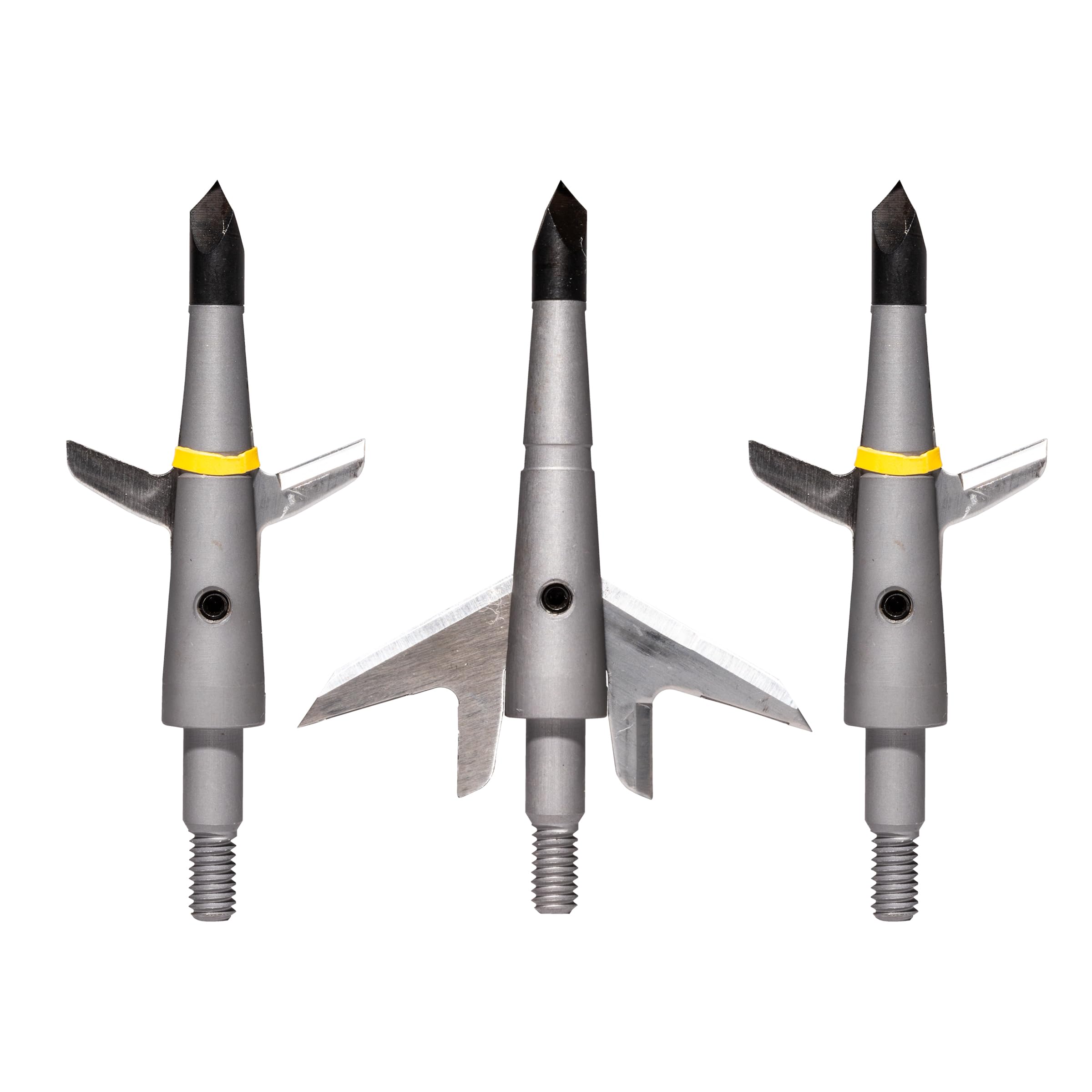
The Swhacker #219 uses patented Two-Slice Technology: wing blades deploy first on contact, then the primary blades slice through, creating a 1.75″ cutting diameter. Specially engineered for high-speed crossbow bolts, this head requires careful band setup to prevent premature opening. With fresh rubber bands and proper installation, it flies like a field point and delivers devastating blood trails.
Customer reports confirm that these heads produce pass-through shots on deer at 30 yards with large exit holes. The practice tip included allows you to sight in safely. However, users warn that pre-installed bands may fail on crossbows shooting over 400fps, so replacing them with fresh bands is mandatory.
While the Swhacker is a mechanical expandable head and not a true fixed blade, its cut-on-contact tip and reliable deployment make it a strong option for crossbow hunters who demand a large wound channel without sacrificing flight accuracy.
Why it’s great
- Large 1.75″ cutting diameter
- Patented Two-Slice Technology for controlled energy transfer
- Includes practice tip for sight-in
- Flights accurately with proper setup
Good to know
- Pre-installed bands may fail on high-speed crossbows
- Requires careful band replacement for reliability
- Not a true fixed blade; mechanical parts can fail
7. NAP Killzone 2 Blade Mechanical Broadhead

The NAP Killzone is a 2-blade rear-deploying mechanical broadhead with a massive 2″ cutting diameter. The spring-clip design eliminates the need for o-rings or rubber bands, relying on a mechanical clip to keep blades closed during flight and deploying them on impact. This gives bowhunters a cut-on-contact tip that creates entry and exit wounds large enough to leave an unmistakable blood trail.
Customers report that this head opens every time and creates a wide wound channel that drops deer within 60 yards. The 125-grain weight provides good momentum for compound bows, and the rear-deploying design ensures the blades do not interfere with arrow flight. The heads are sharp from the factory and come in a 3-pack with replacement blade options.
Because the Killzone is a mechanical head, it is not as strong as a true fixed blade when hitting heavy bone. The spring-clip mechanism adds complexity, and some users worry about snow or debris jamming the mechanism. For hunters who want the largest possible cut from a mechanical package, this is a top-tier choice.
Why it’s great
- Massive 2″ cutting diameter for huge wound channels
- No o-rings or rubber bands to fail
- Rear-deploying design flies like a field point
- Consistent deployment on impact
Good to know
- Mechanical mechanism can fail on heavy bone impacts
- May be affected by snow or debris
- Not as durable as a one-piece fixed blade
FAQ
Do Cut On Contact fixed blades fly exactly like field points?
How many blades is best for a Cut On Contact broadhead?
Can I reuse a Cut On Contact fixed blade broadhead?
Final Thoughts: The Verdict
For most hunters, the best cut on contact fixed blade broadhead winner is the G5 Montec CS because its one-piece MIM carbon steel construction offers unmatched reliability, bone-shattering penetration, and the ability to be re-sharpened season after season. If you want a wider cutting diameter with a lifetime warranty, grab the Magnus 4 Blade Hornet Ser-Razor. And for the quietest flight with a massive wound channel, nothing beats the RamCat Broadheads.

Mo Maruf
I created WellFizz to bridge the gap between vague wellness advice and actionable solutions. My mission is simple: to decode the research and give you practical tools you can actually use.
Beyond the data, I am a passionate traveler. I believe that stepping away from the screen to explore new environments is essential for mental clarity and physical vitality.