Our readers keep the lights on and my smoothie glass nicely filled. As an Amazon Associate, I earn from qualifying purchases.
Trail running demands a shoe that protects your feet from sharp rocks and hard-packed roots without sacrificing the plush, shock-absorbing ride you need for miles of relentless terrain. The best cushion trail running shoes deliver high-stack midsoles with advanced foams that decouple impact absorption from ground feel, letting you float over obstacles rather than brace for every strike.
I’m Mohammad Maruf — the founder and writer behind WellFizz. For this guide, I spent dozens of hours cross-referencing midsole compounds, outsole lug patterns, stack heights, and weight specs across the leading trail-cushion platforms to identify the models that genuinely balance soft landings with trail-specific stability and traction.
Whether you are training for an ultramarathon, tackling technical singletrack, or simply want cloud-like comfort on uneven paths, the right shoe changes everything. This deep-dive review cuts through the marketing to find the true best cushion trail running shoes for every foot type, terrain preference, and budget.
How To Choose The Best Cushion Trail Running Shoes
The cushion trail runner category sits at the intersection of road-shoe plushness and trail-shoe durability. Choosing wrong means either feeling every pebble through the sole or losing traction on loose climbs. Here are the three specs that separate a great cushioned trail shoe from a mediocre one.
Midsole Foam Type and Stack Height
Not all foams are equal. Supercritical EVA blends (like Brooks DNA LOFT v3) are soft but resilient, while PEBA-based foams (used in premium ASICS and Mizuno models) offer higher energy return at a weight penalty. Stack height in trail shoes typically ranges from 25mm to 40mm. The taller the stack, the more rock protection you get, but you also lose ground feel and lateral stability. For technical terrain, aim for 30mm–34mm rearfoot stack. For fire roads and packed dirt, 35mm+ is acceptable.
Outsole Traction and Lug Pattern
A plush midsole is useless if the outsole slides out on wet roots. Look for Vibram Megagrip or equivalent branded rubber — standard blown rubber sheds water poorly. Lug depth should be 3.5mm–5mm for mixed terrain. Deeper lugs (5mm+) are designed for mud and loose scree, but they can feel clunky on hardpack. The tread pattern matters too: chevron-shaped lugs shed debris better than horizontal bars.
Drop Offset and Toe-Box Volume
Drop (heel-to-toe offset) determines your natural gait alignment on uneven ground. Zero-drop models force a midfoot strike and are favored by runners who want maximum proprioception, but they demand stronger calves. Shoes with 6mm–8mm drops ease the transition for heel strikers. Toe-box width is equally critical — a cramped forefoot leads to black toenails on descents. Brands like Altra and Topo Athletic prioritize anatomical toe boxes, while traditional brands offer wide sizing options in select models.
Quick Comparison
On smaller screens, swipe sideways to see the full table.
| Model | Category | Best For | Key Spec | Amazon |
|---|---|---|---|---|
| Brooks Ghost Trail | Premium | Road-to-trail transition, knee comfort | DNA LOFT v3 midsole, 8mm drop | Amazon |
| ASICS Trabuco Max 4 | Premium | Long-distance stability on rough terrain | 35mm stack, GUIDESOLE rocker | Amazon |
| ALTRA Lone Peak 9 (Men’s) | Mid-Range | Wide feet, zero-drop natural stride | 25mm stack, MaxTrac outsole | Amazon |
| The North Face Altamesa 500 | Premium | Maximum plushness for hiking and cruising | 35mm+ stack, SurfaceCTRL grip | Amazon |
| New Balance Hierro v9 | Mid-Range | Wet-rock traction with Fresh Foam X | Vibram Megagrip, 6mm drop | Amazon |
| Brooks Caldera 8 (Men’s) | Mid-Range | Ultra-distance maximal cushion | DNA LOFT v2, 6mm drop | Amazon |
| The North Face Altamesa 300 | Mid-Range | Lightweight daily trail runner | High-rebound midsole, 8mm drop | Amazon |
| ALTRA Lone Peak 8 (Women’s) | Value | Budget-friendly wide toe box | 25mm stack, MaxTrac outsole | Amazon |
| Mizuno Wave Sky 8 | Premium | Road-runner crossover, joint pain relief | Mizuno Enerzy core, 10mm drop | Amazon |
In‑Depth Reviews
1. Brooks Ghost Trail

The Brooks Ghost Trail is essentially a Ghost 17 with an off-road soul — and that is exactly what the road-to-trail runner needs. The DNA LOFT v3 midsole delivers a soft, marshmallow-like feel that absorbs impact on hardpack and gravel without feeling mushy or bottoming out on sharp rocks. Riders who suffer from knee pain during descents report a noticeable reduction in joint stress compared to stiffer trail shoes.
The outsole traction holds confidently on pavement, packed dirt, loose gravel, and even light mud, making this a genuine hybrid that eliminates the need to switch shoes mid-run. The stretchy engineered mesh upper creates a roomy toe box without slop, and the shoe breathes well even on warm days. At roughly 10 to 10.5 ounces, it is lighter than its tall midsole suggests.
Crucially, the Ghost Trail is true to size and requires zero break-in period. The plushness is dialed in to protect without isolating your feet from the terrain — you still feel the trail’s character, just without the punishment. This is the benchmark for cushioned hybrids in 2025.
Why it’s great
- DNA LOFT v3 manages maximal cushion without mushy landings
- Excellent road-to-trail versatility for daily training
- Roomy forefoot with secure heel lock
Good to know
- Lug depth is moderate — not ideal for deep mud or loose scree
- Upper mesh may show wear faster than burly trail shoes
2. ASICS Trabuco Max 4
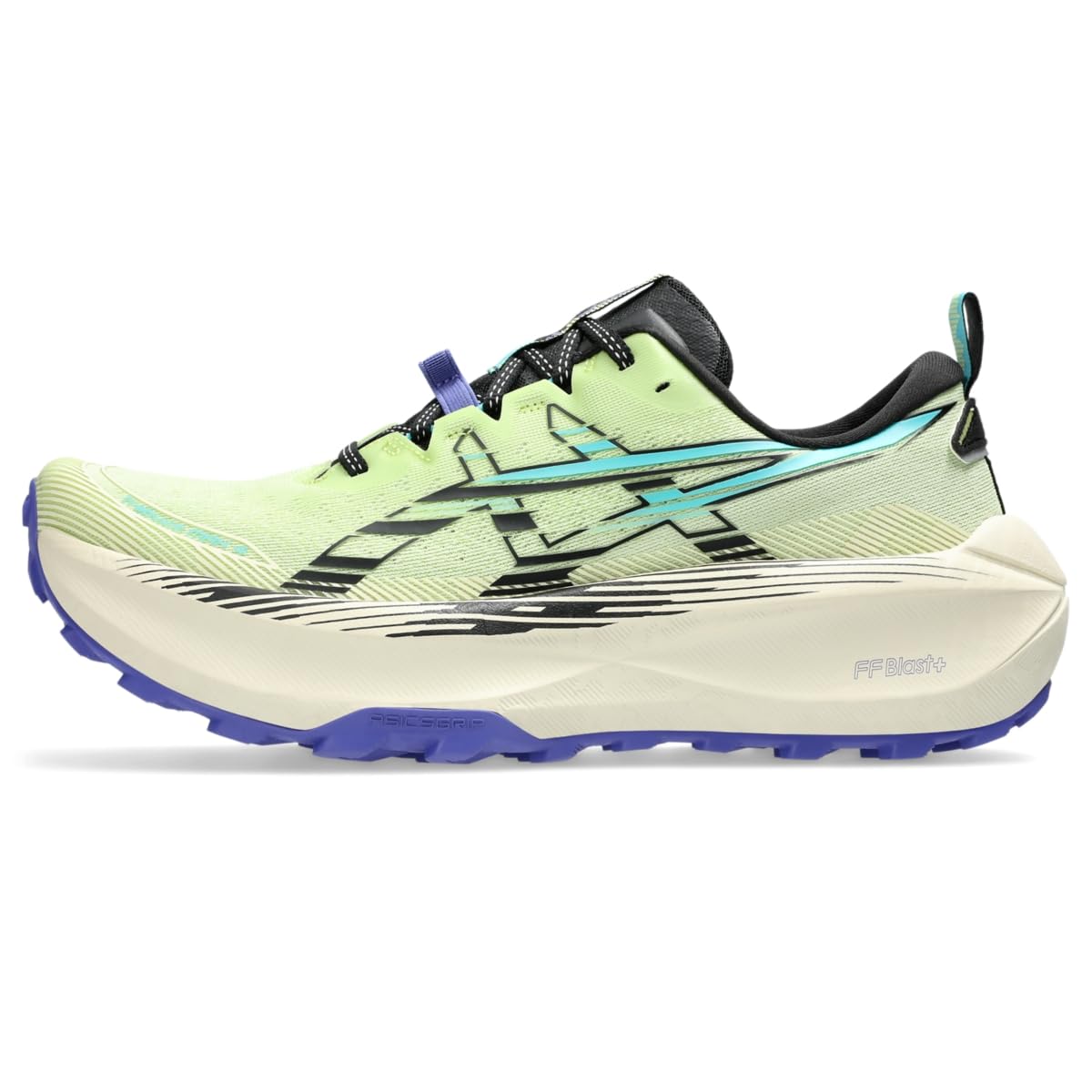
The Trabuco Max 4 redefines how much stability a high-stack trail shoe can offer. ASICS integrates its GUIDESOLE technology — a curved forefoot rocker — that shifts your momentum forward naturally, reducing ankle fatigue on long, rolling routes. The dual-layer midsole combines a firmer base with a softer top layer, so you get 35mm of cushion without the lateral wobble that plagues other max-cushion shoes.
Testers wore these on five-hour rainforest hikes with 850 feet of elevation gain and reported excellent wet and dry traction, plus noticeable water repellency. The lug pattern is aggressive enough for loose rock and scree yet compliant enough for fire road cruising. The toe box is generous without being Altra-wide, and the heel cup is snug enough to prevent lift on steep descents.
The only universal complaint is the laces — they come undone frequently, so plan to double-knot or swap them. The colorways look better in person than on screen, especially the more muted options. For runners who need max cushion with zero stability compromise, this is the pick.
Why it’s great
- 35mm stack with rock-solid lateral stability
- GUIDESOLE rocker reduces ankle fatigue over distance
- Exceptional wet and dry traction on varied terrain
Good to know
- Laces slip easily — budget for a lace lock or replacement
- Tongue can feel bulky for narrow-ankled runners
3. ALTRA Lone Peak 9 (Men’s)
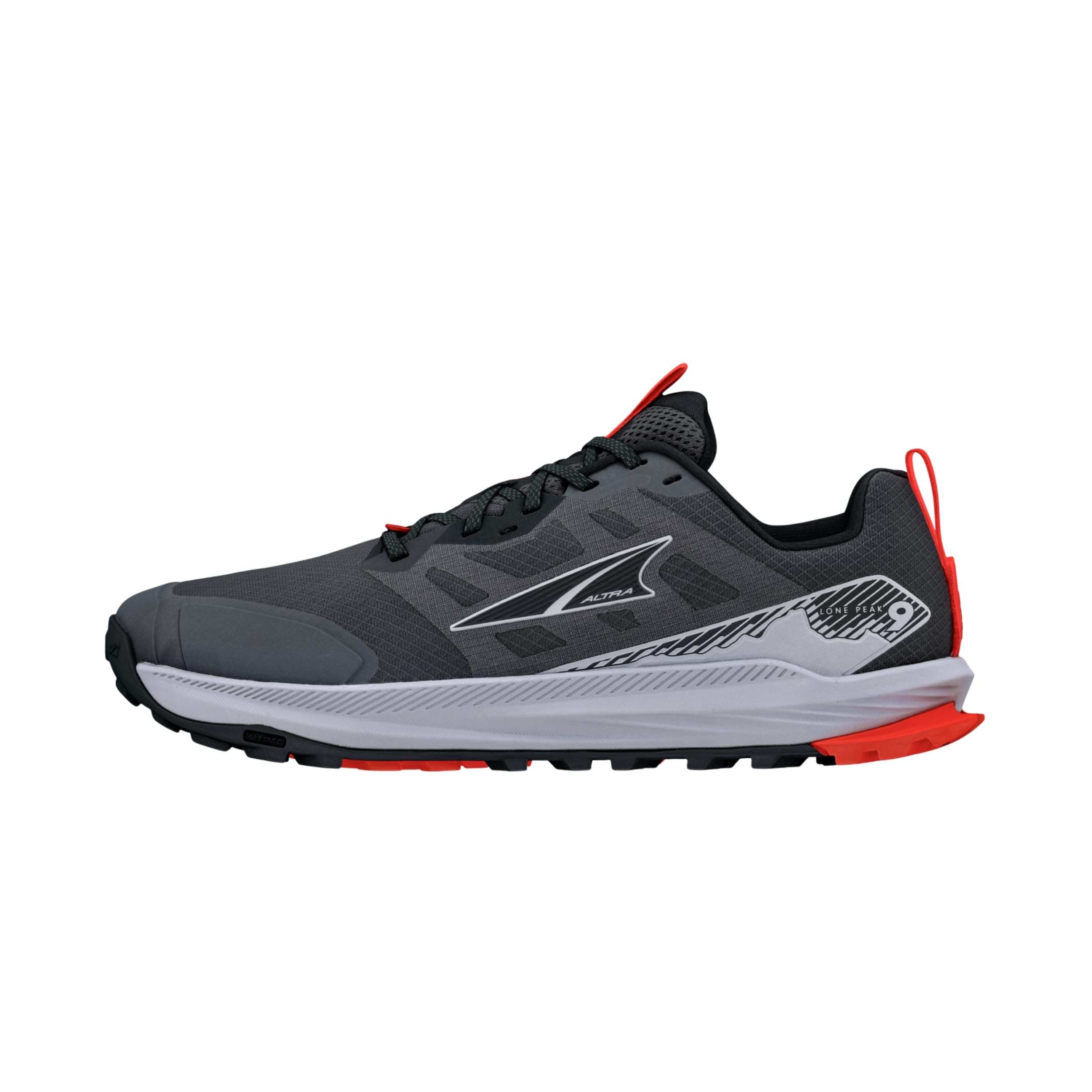
The Lone Peak 9 is the latest iteration of the shoe that defined the zero-drop trail runner category. With a 25mm stack and Altra’s signature FootShape toe box, this shoe lets your toes splay naturally — a critical feature for preventing black toenails on long descents. The MaxTrac outsole uses a sticky rubber compound that clings to dry rock, mud, and even light snow, and the 4mm lugs shed debris effectively.
Runners who have logged hundreds of kilometers in Colorado mountain terrain report that the Lone Peak 9 is more durable and breathable than the version 8, with an improved upper that resists abrasion. The zero-drop platform forces a midfoot strike, which some runners love for its proprioceptive feedback and others find demanding on the Achilles. Sizing runs slightly large — most users recommend going half a size down from your usual.
The shoe accepts orthopedic arch supports easily thanks to the flat footbed, and the included gaiter trap (Velcro at the heel) is a welcome touch for sandy or scree-filled trails. If you want natural foot mechanics with enough cushion to handle all-day efforts, the Lone Peak 9 is the gold standard.
Why it’s great
- Wide anatomical toe box eliminates forefoot pinching
- Zero-drop platform encourages natural midfoot strike
- Durable MaxTrac outsole with good wet-rock grip
Good to know
- Zero-drop requires Achilles adaptation for heel strikers
- Runs half size large — size down for precise fit
4. The North Face Altamesa 500
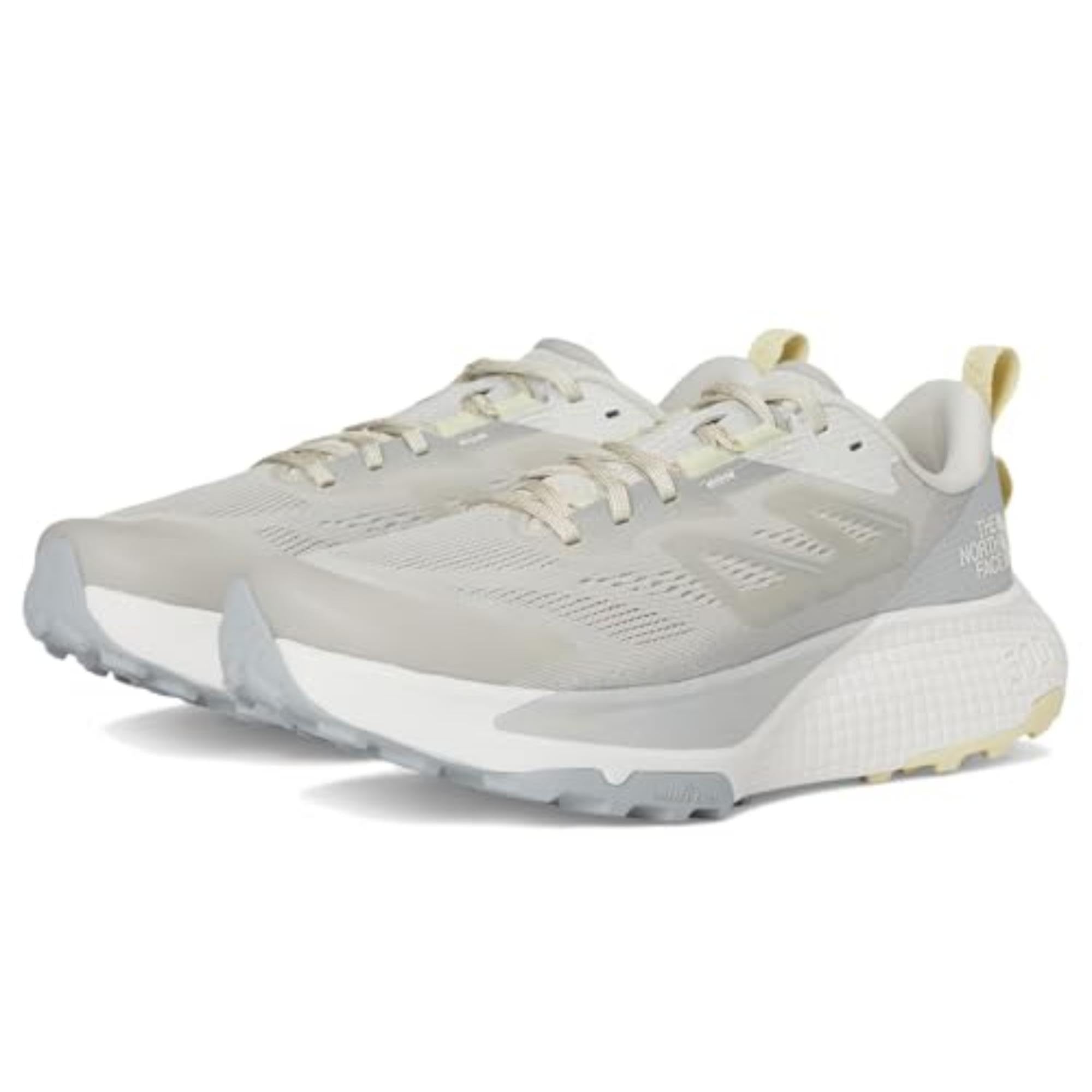
The Altamesa 500 is The North Face’s answer to the Hoka Speedgoat — a tall, generously cushioned shoe that prioritizes comfort without blowing up your wallet. The midsole uses a supercritical EVA blend that feels plush underfoot but doesn’t compress fully on impact, providing bounce-back that keeps your legs fresh over double-digit mileage. Users who previously owned the Altamesa 300 report that the 500 is noticeably plusher — they describe it as “twice as comfortable” for hiking and trail cruising.
The SurfaceCTRL outsole uses chevron-shaped 4.5mm lugs that grip well on loose dirt, grass, and wet rock. The toe cap is reinforced with a durable rubber overlay that protects against stubs, and the upper uses a tight-woven mesh that blocks fine debris without trapping heat. Breathability is adequate for warm-weather runs, though the shoe runs slightly warm in direct sun.
One notable detail: the 500 runs true to size and accommodates medium-width feet with room to spare in the toe box. The heel counter is structured enough to prevent slip but softens over the first few wears. For runners who want a budget-friendly max-cushion shoe that matches premium comfort, the Altamesa 500 is a standout.
Why it’s great
- Supercritical EVA midsole delivers plush yet responsive feel
- Reinforced toe cap adds durability on rocky trails
- Impressive value in the max-cushion segment
Good to know
- Runs slightly warm due to dense upper mesh
- Not ideal for muddy conditions — lugs can clog
5. New Balance Fresh Foam X Hierro v9
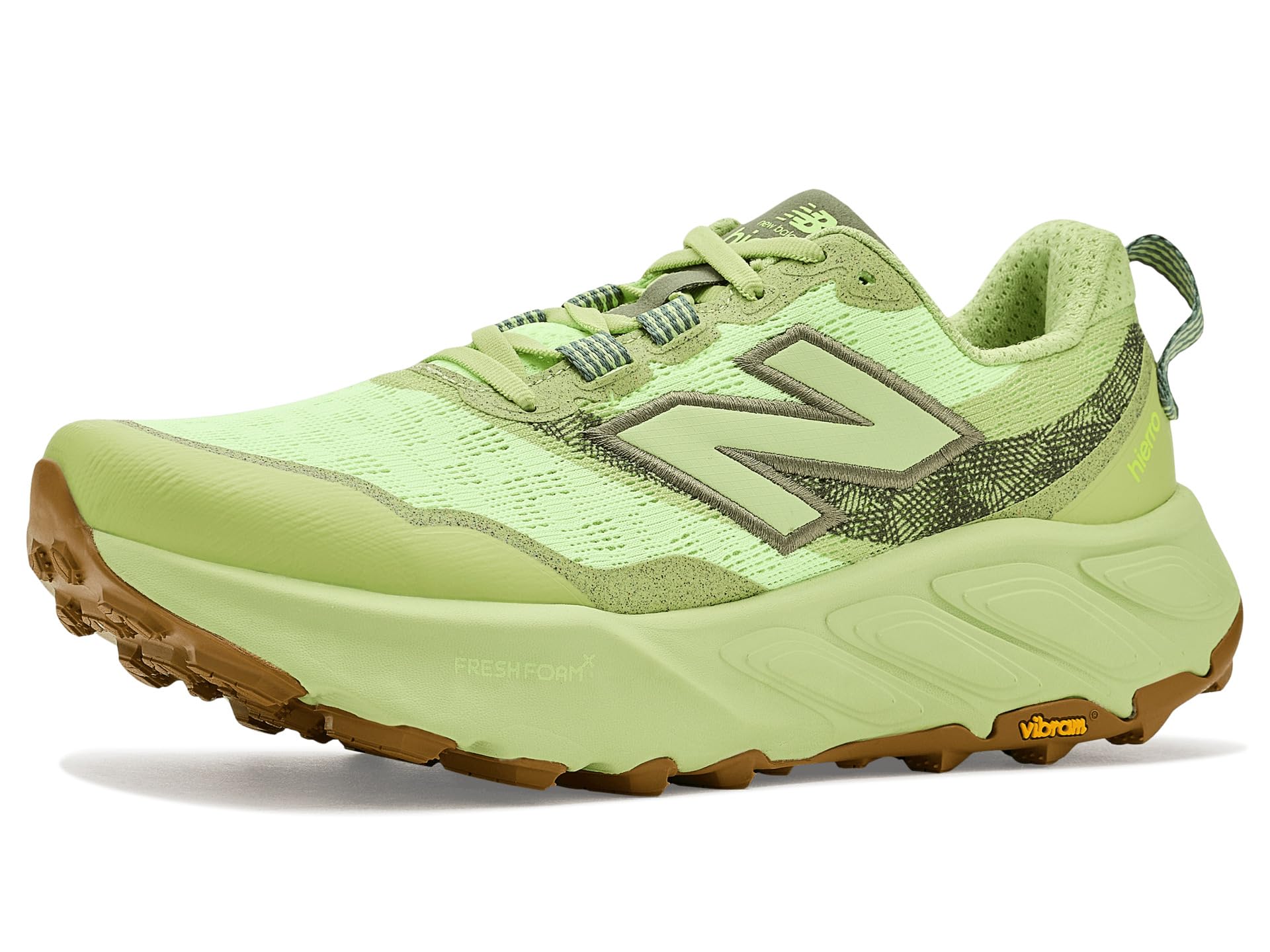
The Hierro v9 pairs New Balance’s beloved Fresh Foam X midsole with a full-coverage Vibram Megagrip outsole — a combination that gives you road-shoe plushness with trail-shoe bite. The Fresh Foam X is slightly firmer than Brooks’ DNA LOFT, providing a stable platform that doesn’t roll laterally on uneven ground. Testers in Utah report zero slipping on slickrock and loose gravel, thanks to the 4mm multi-directional lugs.
The upper uses a snug, supportive fit that some runners describe as “sock-like” — it locks the midfoot well but can feel tight across the forefoot, especially on wider feet. Multiple reviewers note that the shoe runs short in length; ordering half a size up is almost mandatory. The standard width is fairly narrow, so wide-footed runners should spring for the 2E or 4E options.
Despite the snug fit, the Hierro v9 breathes well and dries quickly after stream crossings. The toe bumper is moderate — enough to protect against stubs without adding bulk. For runners who value grip above all else and want a stable, responsive cushion, this is a strong mid-range contender.
Why it’s great
- Vibram Megagrip outsole provides best-in-class wet traction
- Fresh Foam X balances cushion with stability
- Wide sizing available for broader feet
Good to know
- Runs short and narrow — mandatory half-size up
- Fresh Foam X may feel too firm for pure plush seekers
6. Brooks Caldera 8 (Men’s)
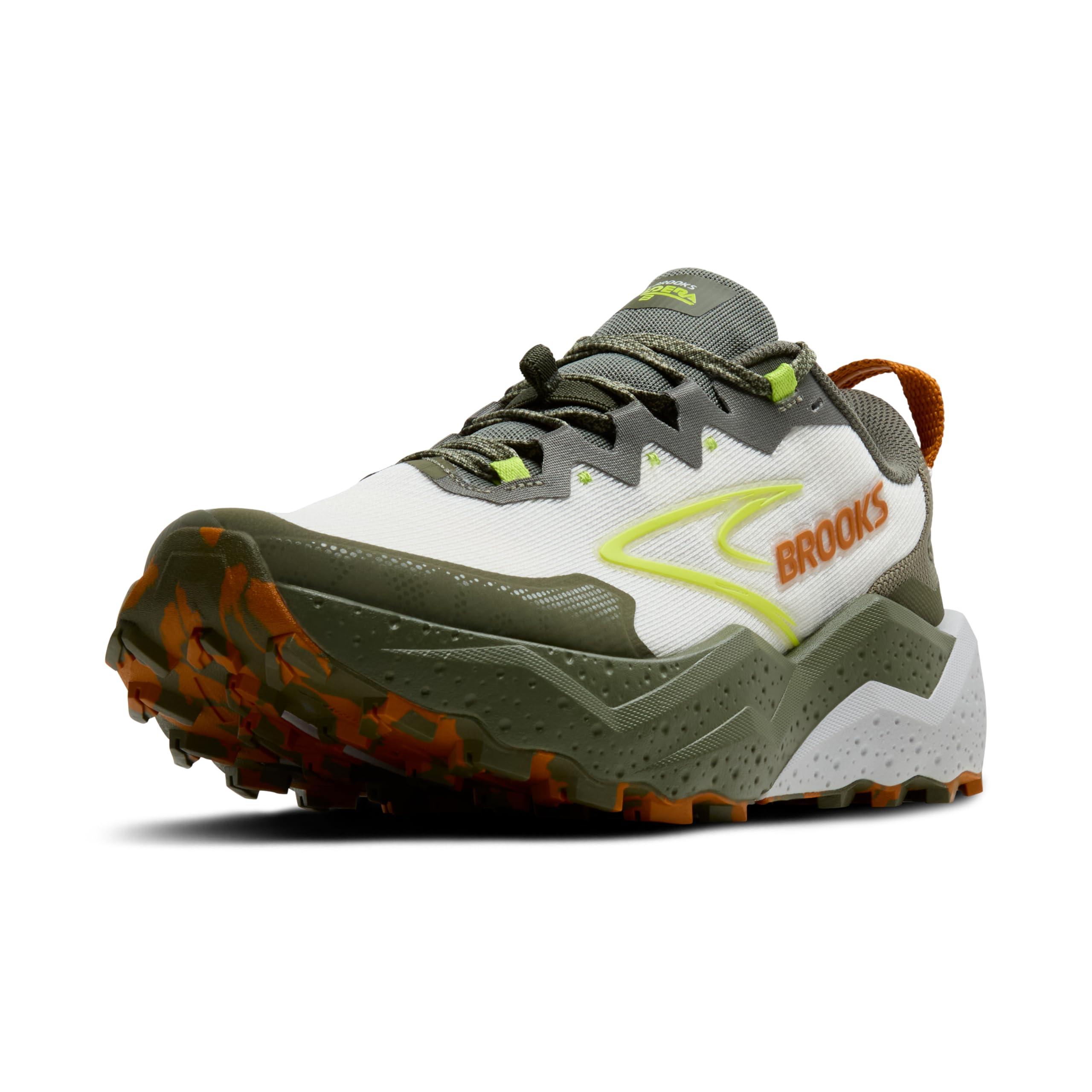
The Caldera 8 is Brooks’ maximalist trail shoe, engineered for long days on moderate terrain where pure cushion is the priority. The DNA LOFT v2 midsole is softer and more compliant than the Ghost Trail’s v3 foam — it feels like running on a memory foam mattress, absorbing every impact without rebound snap. The 6mm drop keeps the ride natural, and the wide base provides surprising stability for such a tall stack.
The outsole uses Brooks’ TrailTack rubber with 4mm lugs, which grips well on hardpack and loose gravel but struggles on wet, slimy rock. The upper is lightweight and breathable, with a roomy toe box that accommodates natural splay — a welcome departure from Brooks’ traditionally narrower lasts. Durability is a question mark: some users report tread wear after 200 miles on rocky terrain.
The Caldera 8 runs true to size and fits medium-to-wide feet comfortably. It is not a shoe for technical terrain or steep, loose climbs — the soft midsole masks trail feedback, making precise foot placement harder. But for fire roads, jeep trails, and ultra-distance training, the Caldera 8 delivers unrivaled plushness.
Why it’s great
- DNA LOFT v2 is among the plushest trail midsoles available
- Roomy toe box allows natural foot splay
- Lightweight for a max-cushion shoe
Good to know
- TrailTack outsole lacks grip on wet rock
- Soft midsole reduces trail feedback on technical terrain
7. The North Face Altamesa 300
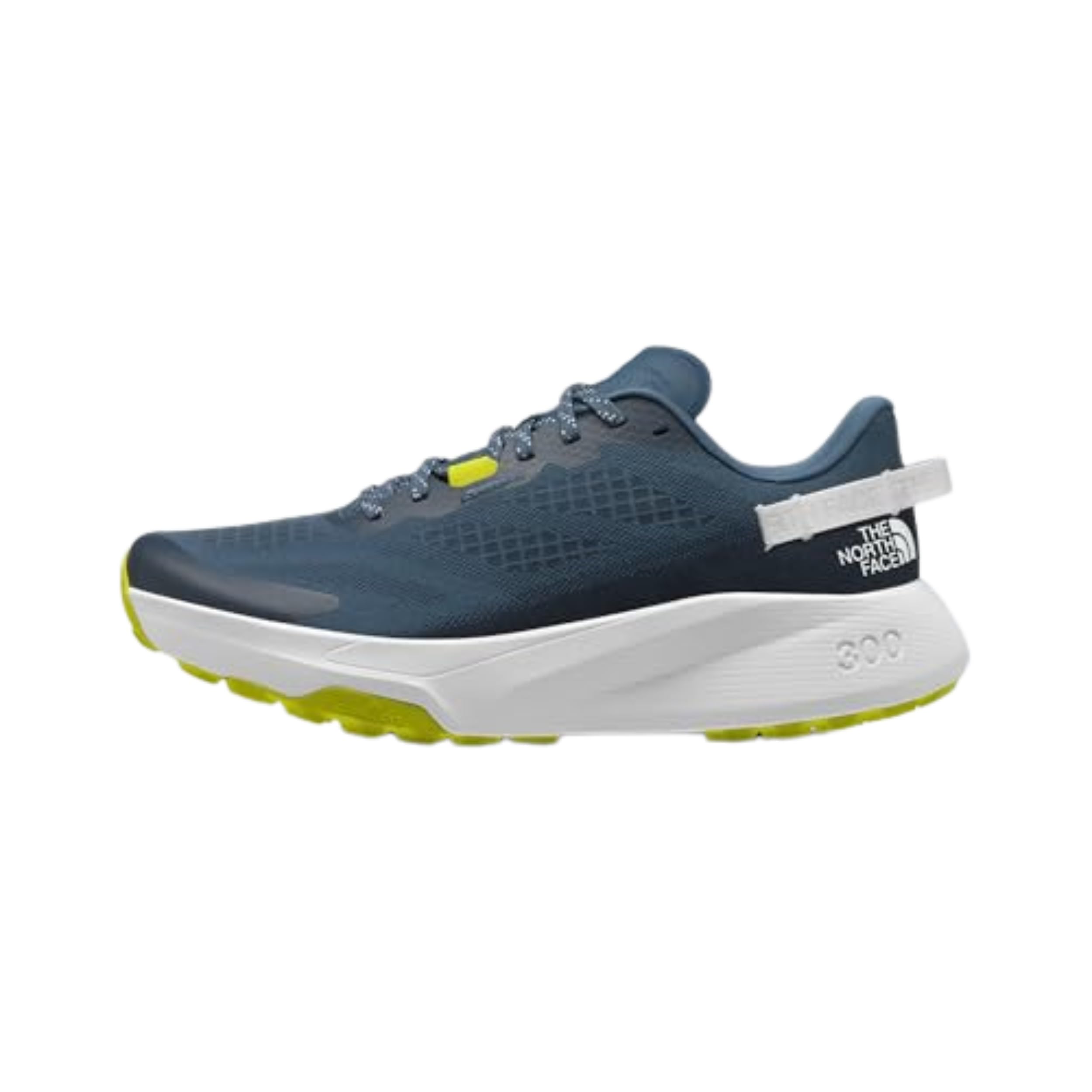
The Altamesa 300 is the leaner, lighter sibling of the 500, packing a high-rebound midsole that feels responsive without being harsh. It is an excellent choice for runners who want cushion but dislike the “sinking” sensation of max-stack shoes. The midsole uses a nitrogen-infused EVA that returns energy efficiently, making it a strong partner for tempo trail runs and mixed-surface training.
The outsole grip is reliable on dirt, gravel, and mild rock gardens, though the lug pattern is shallow (3mm) and can slip on wet roots or loose scree. The upper is a simple, breathable mesh that dries quickly, and the heel counter includes a subtle pull tab for easy entry. The toe box is moderate — narrower than Altra but roomier than older North Face trail shoes.
Multiple users report that the 300 works brilliantly as a travel shoe because it transitions seamlessly from trail to pavement to casual wear. The white colorway looks modern but shows dirt quickly, and the shoe lacks a gaiter trap. For runners who need a single shoe that does many things well, the Altamesa 300 is a versatile mid-range option.
Why it’s great
- Lightweight and responsive for tempo trail runs
- Versatile enough for travel and casual wear
- Quick-drying upper handles wet conditions well
Good to know
- Shallow lugs limit grip on slippery wet terrain
- White uppers show dirt and scuffs easily
8. ALTRA Lone Peak 8 (Women’s)
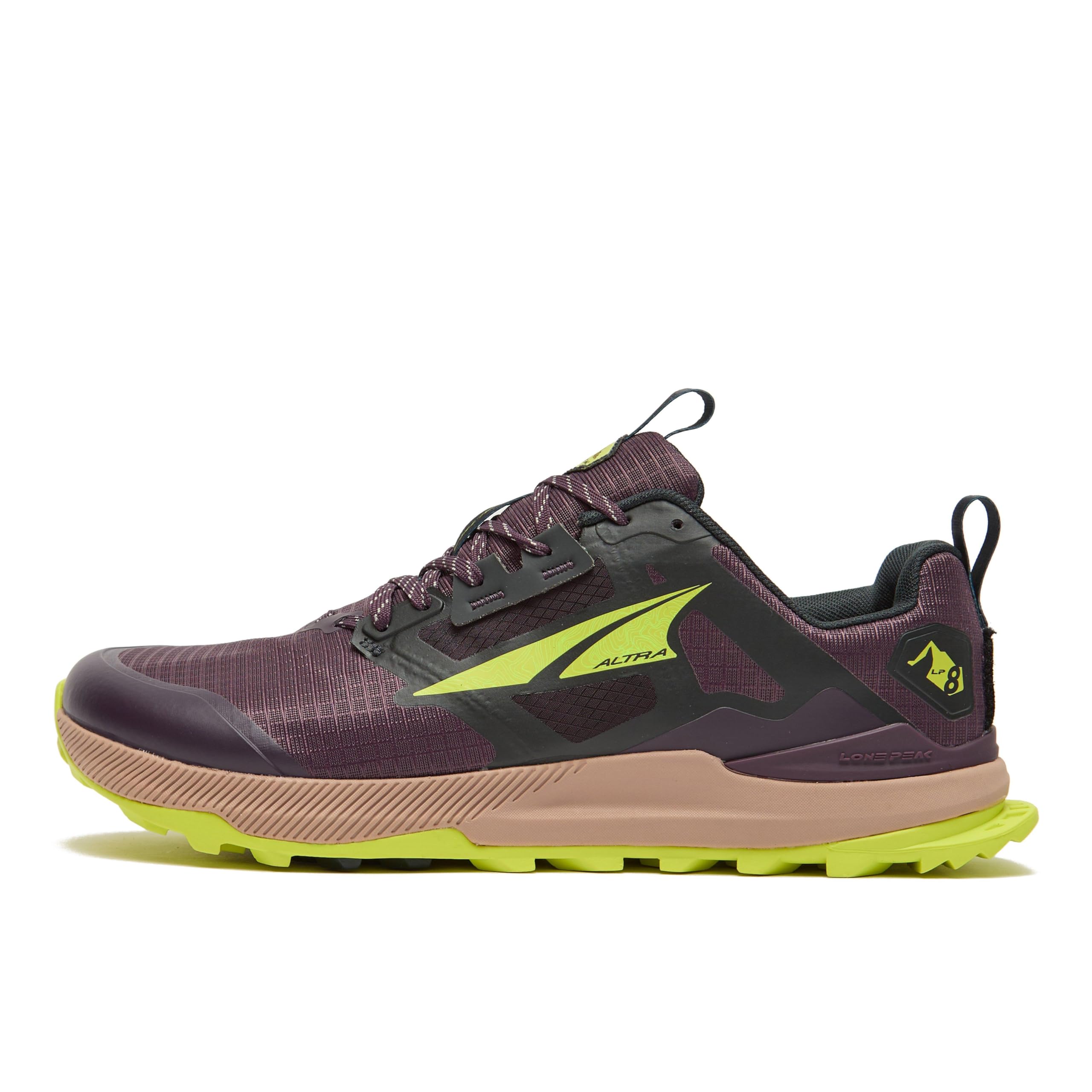
The Lone Peak 8 is the outgoing version of the iconic Lone Peak line, and it remains a superb value for runners who want Altra’s FootShape toe box at a reduced entry point. The 25mm stack and zero-drop geometry deliver the same natural ride as the version 9, with a slightly less refined upper that still breathes well and includes the same gaiter trap. The MaxTrac outsole provides solid traction on loose dirt and rocky trails, and the toe guard offers decent protection against stubs.
Women with wide feet consistently rate this shoe as the most comfortable trail option for excursions up to 4–5 miles, with no break-in required. The Blue Slate Denim colorway is subtle and stain-resistant, keeping the shoe looking fresh longer. The toe box is genuinely spacious — even runners with bunions or neuromas report zero forefoot pain.
The trade-off for the lower price is durability: the upper material is softer and may show wear faster than the version 9, especially around the toe cap. The cushion also compresses slightly quicker than the version 9’s foam, making the Lone Peak 8 better suited for moderate distances rather than ultra training. For cost-conscious runners who prioritize toe splay, this is still an excellent buy.
Why it’s great
- Spacious FootShape toe box eliminates forefoot pain
- Zero-drop platform encourages natural gait
- Great value for an entry-level wide trail shoe
Good to know
- Upper durability is lower than the version 9
- Cushion compresses faster on long runs
9. Mizuno Wave Sky 8
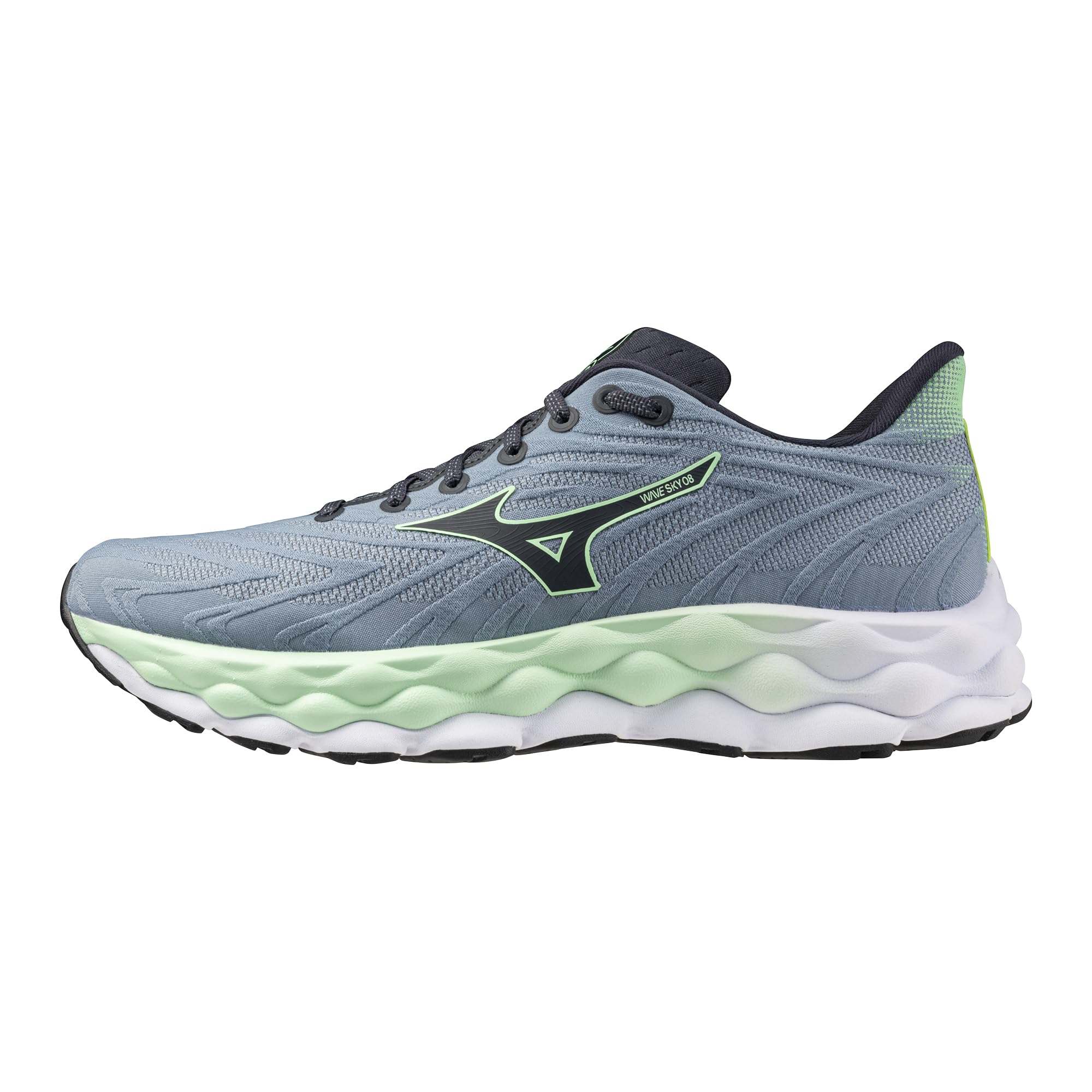
The Wave Sky 8 is Mizuno’s premium cushioned runner, and while it is technically a road shoe, its 10mm drop and generous midsole make it a popular crossover option for runners with joint sensitivities who also hit light trails. The Mizuno Enerzy core is a PEBA-based foam that delivers exceptional energy return — users report a 90% reduction in joint pain after switching to this model, citing its ability to absorb shock without feeling dead.
The Wave Sky 8 runs true to size and fits medium-width feet comfortably. The upper uses a plush, padded collar and a knit mesh that wraps the foot securely. The outsole is designed for pavement and packed dirt — the shallow lugs have minimal bite on loose terrain, so this shoe is not for technical trail running. On fire roads and towpaths, however, the cushioning is superb.
The durability of the Enerzy core is a mixed bag: some heavier runners report the foam bottoms out during extended efforts on uneven ground, leading to reduced support. The shoe is best reserved for recovery runs, cruising, and everyday wear where maximum shock absorption is the priority. For runners with bad knees or backs who occasionally stray from pavement, the Wave Sky 8 is a legitimate joint-saving option.
Why it’s great
- PEBA-based Enerzy core reduces joint impact dramatically
- Plush padded upper provides exceptional step-in comfort
- True to size with a secure midfoot wrap
Good to know
- Outsole lacks trail-specific traction for loose terrain
- Foam may bottom out under heavier runners on uneven ground
FAQ
Can I use max-cushion trail shoes for road running?
How do I know if a zero-drop trail shoe is right for my feet?
What is the best cushion trail shoe for wide feet?
Final Thoughts: The Verdict
For most runners, the best cushion trail running shoes winner is the Brooks Ghost Trail because its DNA LOFT v3 midsole delivers premium plushness without sacrificing trail responsiveness or hybrid versatility. If you prioritize rock-solid stability on technical terrain with max-cushion protection, grab the ASICS Trabuco Max 4. And for zero-drop purists who need a roomy toe box and natural ground feel, nothing beats the ALTRA Lone Peak 9.

Mo Maruf
I created WellFizz to bridge the gap between vague wellness advice and actionable solutions. My mission is simple: to decode the research and give you practical tools you can actually use.
Beyond the data, I am a passionate traveler. I believe that stepping away from the screen to explore new environments is essential for mental clarity and physical vitality.