Our readers keep the lights on and my smoothie glass nicely filled. As an Amazon Associate, I earn from qualifying purchases.
Small garden soil turns concrete-hard between seasons, and a shovel alone won’t break through compacted clay, tangled roots, or years of settled dirt. A dedicated cultivator powers through that crust without wrecking your back or spending an afternoon digging.
I’m Mohammad Maruf — the founder and writer behind WellFizz. I’ve spent hundreds of hours digging through spec sheets, motor ratings, tine configurations, and real user experiences to find the cultivators that actually deliver on their promises for tight garden spaces.
Whether you’re prepping raised beds, mixing compost, or reclaiming overgrown patches, the right tool saves time and effort. This guide cuts through the noise to deliver a clear, no-fluff look at the best cultivator for small garden use, ranked by real-world performance and category-specific specs.
How To Choose The Best Cultivator For Small Garden
Picking the wrong cultivator means fighting a machine that either bounces off hard clay or tears up your flower bulbs. For small garden work, you need a balance of power, control, and the right tine design for your soil type and bed size.
Power Source: Corded vs. Battery
Corded electric models deliver consistent 2.5 to 10.5 amp power without runtime limits — ideal for medium gardens with outlet access. Battery-powered units offer freedom of movement and quieter operation, but runtime and torque depend heavily on voltage (21V to 40V) and battery amp-hour capacity. For small raised beds, cordless models with dual batteries provide enough juice for most sessions.
Tine Design and Material
Steel tines are non-negotiable for breaking compacted soil. Models with 4 to 6 heavy-duty steel tines work well for standard garden beds, while 48-tine rotor designs distribute cutting force more evenly and reduce vibration. Count matters less than durability — thin stamped tines bend on buried rocks, while forged or heat-treated alloy steel tines hold up season after season.
Width and Depth Requirements
Tilling width between 6 and 12 inches suits most small gardens — narrower widths maneuver between established plants, while wider cuts cover open ground faster. Tilling depth of 6 to 8 inches reaches root zone depth for most vegetables and flowers. Adjustable depth settings give you control for shallow weeding versus deep soil prep.
Quick Comparison
On smaller screens, swipe sideways to see the full table.
| Model | Category | Best For | Key Spec | Amazon |
|---|---|---|---|---|
| IncwBo 10.5 Amp | Premium Corded | Heavy clay & roots | 12 in width / 8 in depth | Amazon |
| TaskStar 40V TT12 | Premium Cordless | Long runtime & mobility | 12 in width / 8 in depth | Amazon |
| Westinghouse 6-Inch | Mid-Range Corded | Tight spaces & flower beds | 6.3 in width / 6 in depth | Amazon |
| IncwBo 8.5 Amp | Mid-Range Corded | Root cutting & rock beds | 12 in width / 8 in depth | Amazon |
| Saker 22V Cordless | Premium Cordless | Lightweight daily weeding | 9 in width / 6.3 in depth | Amazon |
| SOARFLY 48-Tine | Mid-Range Cordless | Post-planting weeding | 9 in width / 6.6 in depth | Amazon |
| TaskStar TH4000 | Entry-Level Cordless | Raised beds & existing soil | 9 in width / 7 in depth | Amazon |
In‑Depth Reviews
1. IncwBo 10.5 Amp Electric Tiller Cultivator

The IncwBo 10.5 Amp model sits at the top because it combines the widest tilling width in this class with genuine overload protection — a rare safety feature that automatically shuts the motor when the tines hit buried rocks or roots. Its 12-inch cutting width and 8-inch depth match what most premium gas-powered units deliver, but without the fuel mixing or pull-start hassle. The four rust-resistant steel tines handle compacted clay, tree roots, and stony ground without bending, which is exactly what you need when reclaiming neglected garden beds.
What sets this unit apart from cheaper corded options is the integrated equipment spur. That spur digs into the soil and controls forward thrust, so the tiller doesn’t pull you forward aggressively — a common complaint with lighter 2.5 amp models. At roughly 24 pounds, it’s heavy enough to stay planted in hard soil but light enough to lift over raised bed frames. Assembly takes under 10 minutes, and the green metal housing feels far more durable than the plastic shells found on entry-level battery models.
Owners report that this tiller plows through NC hard-packed clay “like splitting water” and chews up 4-inch rocks without stalling. The only trade-off is the tine guard coverage — some users note that the rear guard could be more extensive to prevent debris kickback. For a mid-range corded unit that outperforms its price tier, this is the cultivator most small-garden owners should start with and likely never replace.
Why it’s great
- Overload protection prevents motor burnout on rocks and roots
- Equipment spur controls forward lunge for safer operation
- Rust-resistant steel tines hold up in heavy clay soil
Good to know
- Handle hardware may loosen during extended use without thread locker
- Rear guard allows some debris to kick toward operator
2. TaskStar 40V Cordless Tiller Cultivator
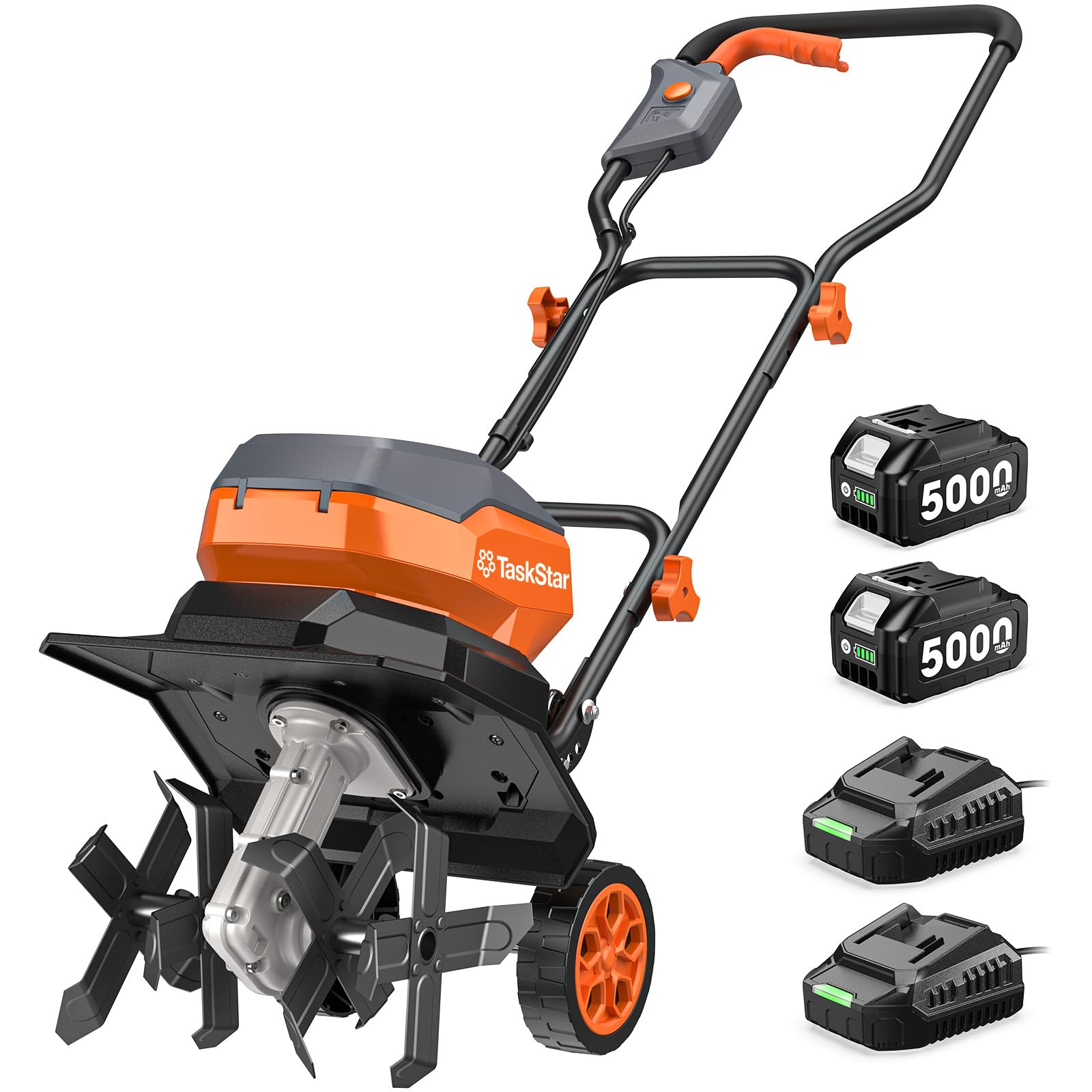
The TaskStar TT12 Air delivers the highest voltage in this lineup at 40V paired with two 5.0Ah batteries, giving it roughly double the runtime of standard 21V dual-battery systems. Owners report tilling a 30×40 foot garden on a single charge — a feat most cordless units in this price bracket can’t match. The 12-inch tilling width and 8-inch depth put it on par with the top corded models while offering untethered freedom around the yard.
Four adjustable depth settings let you switch from light surface weeding down to deep soil cultivation without swapping tools. The wheeled design makes it easier to maneuver than tine-forward cultivators, especially for users with limited strength or mobility. The dual-switch safety lock prevents accidental startup during transport, which matters when the batteries hold enough charge to spin the tines dangerously fast. Metal and polypropylene construction keeps the weight manageable while resisting rust and impact.
User reports highlight how well this tiller handles hard, compacted soil that a shovel can’t crack. The machine is quiet enough to use early morning without disturbing neighbors, and the batteries charge fully in about an hour. The trade-off is that the plastic housing components feel less robust than an all-metal frame, and tall grass or creeping weeds can tangle around the tines. For gardeners who want maximum cordless runtime and don’t mind occasional tine-clearing, this is the premium battery option worth the investment.
Why it’s great
- 40V system with dual 5.0Ah batteries provides class-leading runtime
- Adjustable depth wheels for precise control from weeding to deep tilling
- Quiet operation and no cord tether
Good to know
- Plastic components feel less premium than full-metal builds
- Tines tangle easily in tall grass and heavy weed growth
3. Westinghouse 6-Inch Corded Mini Tiller
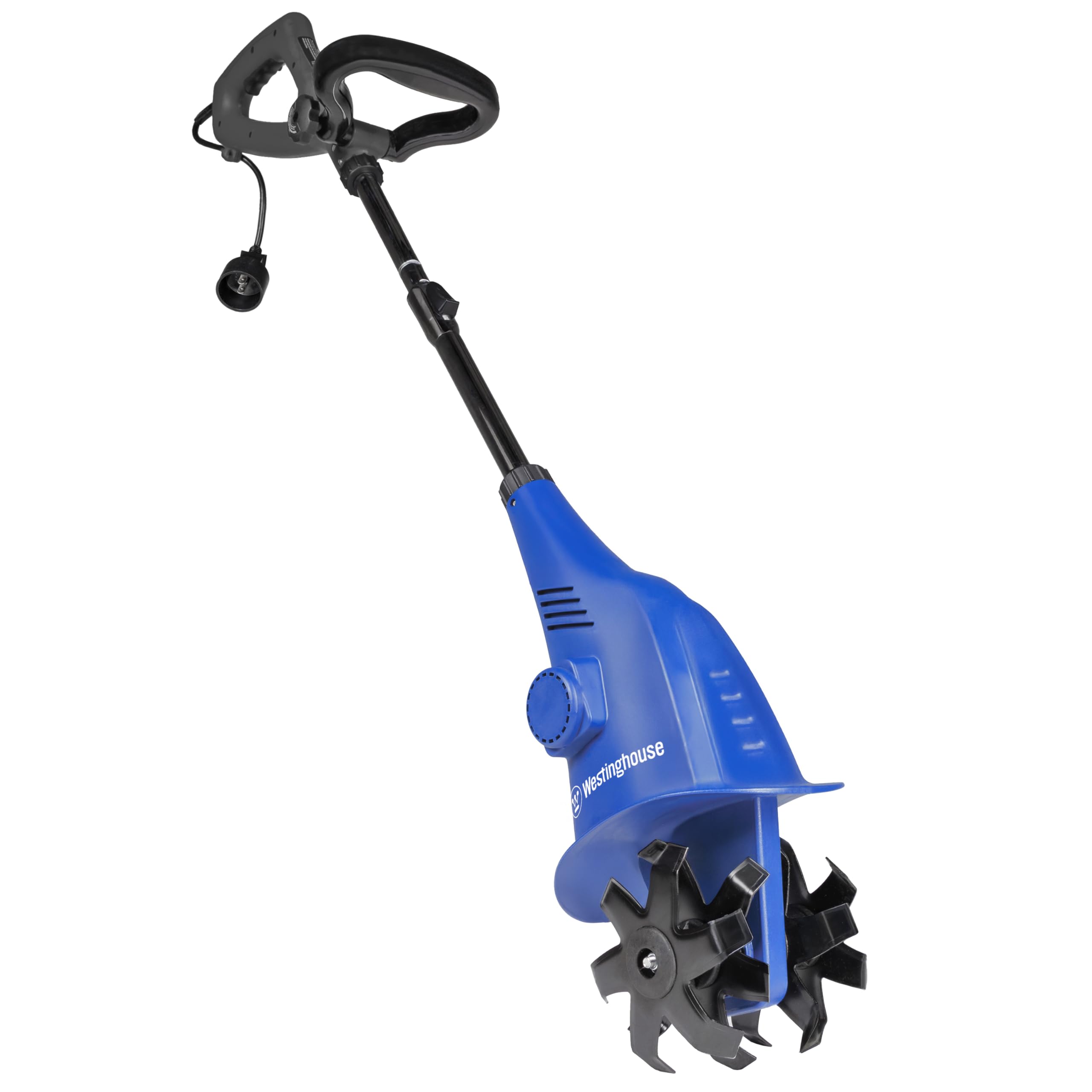
At under 10 pounds with a 6.3-inch tilling width, the Westinghouse W6TCAC is the lightest cultivator in this roundup and the most maneuverable option for tight flower beds, raised vegetable boxes, and spaces between established shrubs. The 2.5 amp motor delivers 300 RPM — enough to break up light-to-moderate soil and surface weeds without the vibration fatigue that plagues heavier units. Four heavy-duty steel tines cut a 6-inch depth, which is sufficient for most flower and vegetable root zones.
This cultivator’s real strength is its size. The 53-inch handle height works for standing operation, while the narrow tine housing slips between plants you don’t want to disturb. Owners report it shreds grassy areas on the first pass and cuts through red clay with surprising authority for a 2.5 amp motor. The 2-year limited warranty and lifetime technical support add peace of mind that cheaper mini-tillers lack. It requires no assembly — just attach the handle and plug in.
The obvious trade-off is the narrow cutting width. You’ll make more passes to cover open ground, and the middle gap between the tine sets leaves a small untilled strip that requires a second pass. The extension pole uses chrome-plated steel that may rust if left damp, and the safety trigger layout is not ambidextrous — left-handed users will find the trigger-and-safety combo awkward. For precision work in tight garden geometry, this is the right tool; for wide-open beds, step up to a 12-inch model.
Why it’s great
- Ultra-light 9.9-pound design reduces fatigue during extended use
- Narrow 6.3-inch width fits between established plants
- 2-year warranty with lifetime technical support
Good to know
- Middle tine gap leaves a narrow untilled strip
- Not ambidextrous — safety trigger is right-hand biased
- Extension pole chrome finish may rust in damp storage
4. IncwBo 8.5 Amp Corded Tiller Cultivator

The IncwBo 8.5 Amp model stands apart for its automatic stop mechanism, which instantly cuts power to the motor when the tines strike a large root or buried hard object. This safety-first approach protects both the user from violent kickback and the gearbox from sudden shock loads. The 12-inch cutting width and 8-inch depth match the larger IncwBo 10.5 amp unit, making this a strong choice for gardeners who need wide coverage but prioritize safety in rocky or root-heavy soil.
Weighing 16.1 pounds, this tiller is 8 pounds heavier than the Westinghouse mini but distributes weight well — the motor sits low and centered for stable operation. Owners report it cuts through 1-inch tree roots without stalling and pulverizes rocky bed soil that would stop a 2.5 amp unit cold. Assembly takes under 5 minutes, and the yellow metal housing stays visible in low-light garden conditions. The rubber cord clamp prevents the extension cord from pulling loose during aggressive tilling.
The catch is that this model lacks a depth adjustment mechanism; you control depth by lifting or pushing down on the handle, which works fine but requires more effort than wheel-adjustable units. Some users also note that the tines lack weight near the blade tips, causing the tiller to bounce on extremely hard-packed ground on the first pass. For second-pass breaking of pre-tilled soil or for cutting through root networks in established beds, this safety-first cultivator delivers peace of mind and power in equal measure.
Why it’s great
- Automatic stop mechanism prevents injury and gearbox damage on roots
- Wide 12-inch cutting path covers ground quickly
- Simple 5-minute assembly with no special tools
Good to know
- No depth adjustment wheel requires manual handle control
- Bounces on first pass through extremely compacted virgin soil
5. Saker 22V Cordless Garden Tiller Cultivator
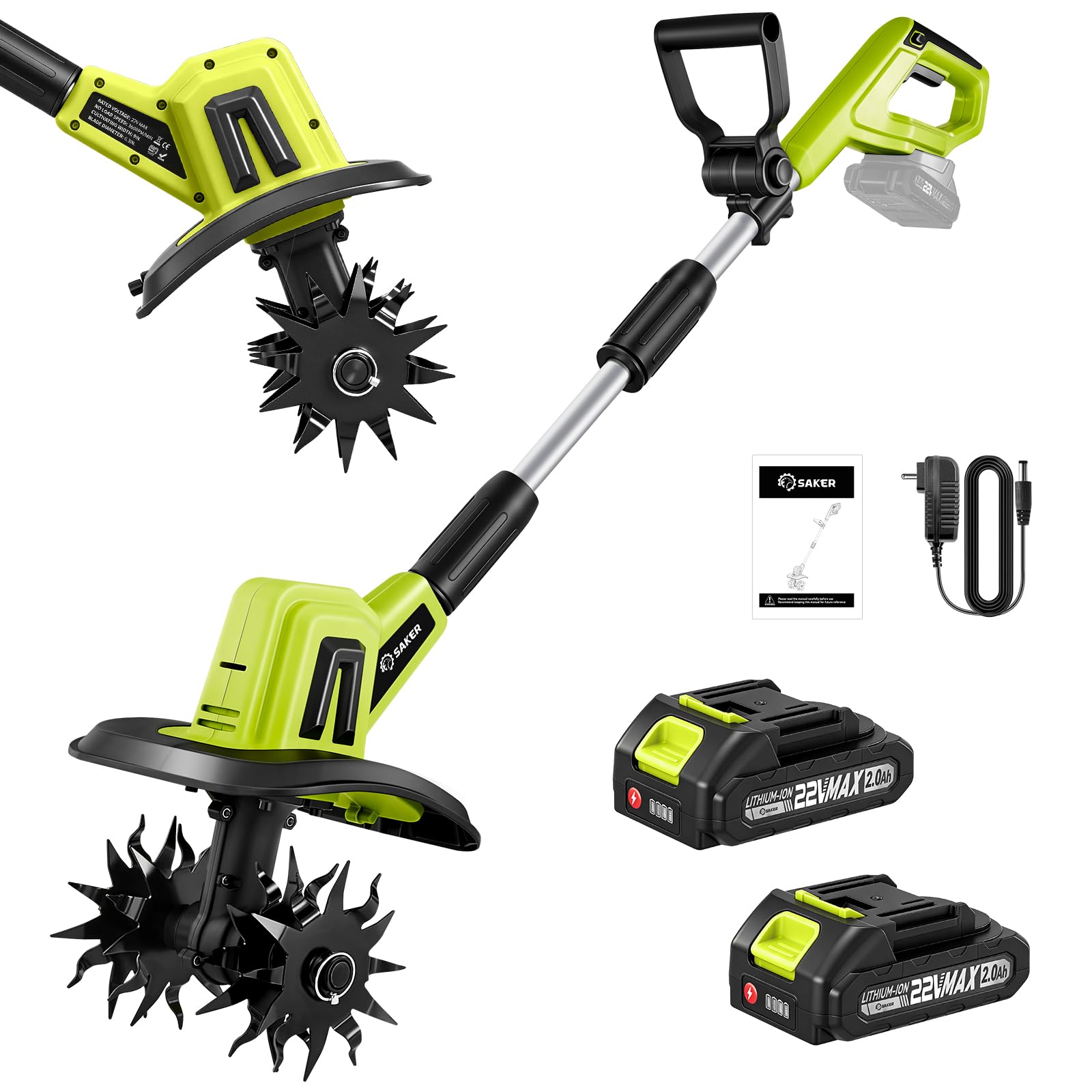
The Saker SK-TC18B fills the gap between entry-level battery tillers and premium cordless models with a refined weight distribution and genuinely ergonomic handle design. At 15 pounds, it’s light enough for one-handed operation during light weeding, yet the 22V motor spins four durable steel tines at 360 RPM — fast enough to break up sandy or loamy soil on the first pass. The 9-inch tilling width and 6.3-inch depth fit raised beds and flower borders perfectly without overshooting into pathways.
Dual safety triggers require both buttons to be pressed simultaneously, preventing accidental startup that could damage nearby plants or limbs. The adjustable auxiliary handle lets taller and shorter users find a comfortable grip angle, reducing wrist strain during longer sessions. Each 2.0Ah battery delivers about 25-30 minutes of runtime, and swapping batteries takes seconds. Owners consistently praise how easy it is for older gardeners and those with limited hand strength to operate this machine effectively.
The Saker performs beautifully on established garden soil but struggles when breaking new ground with heavy clay content. Users report that it churns up 4-inch rocks and provides excellent control around fragile plants, but tall grass and weeds wrap around the tine shaft and require manual removal. The lack of a rear debris guard means soil and small stones can kick back toward the operator’s legs. For regular maintenance weeding and light soil turnover in already-worked beds, this is the most comfortable cordless option in the lineup.
Why it’s great
- Ergonomic adjustable handle reduces fatigue during extended weeding
- Dual safety triggers prevent accidental start-up
- Quick-swap battery system with 25-30 minute runtime per pack
Good to know
- Not effective for initial breaking of heavy clay soil
- No rear guard allows debris kickback
- Tall grass tangles around tine shaft
6. SOARFLY Upgraded Cordless Electric Tiller
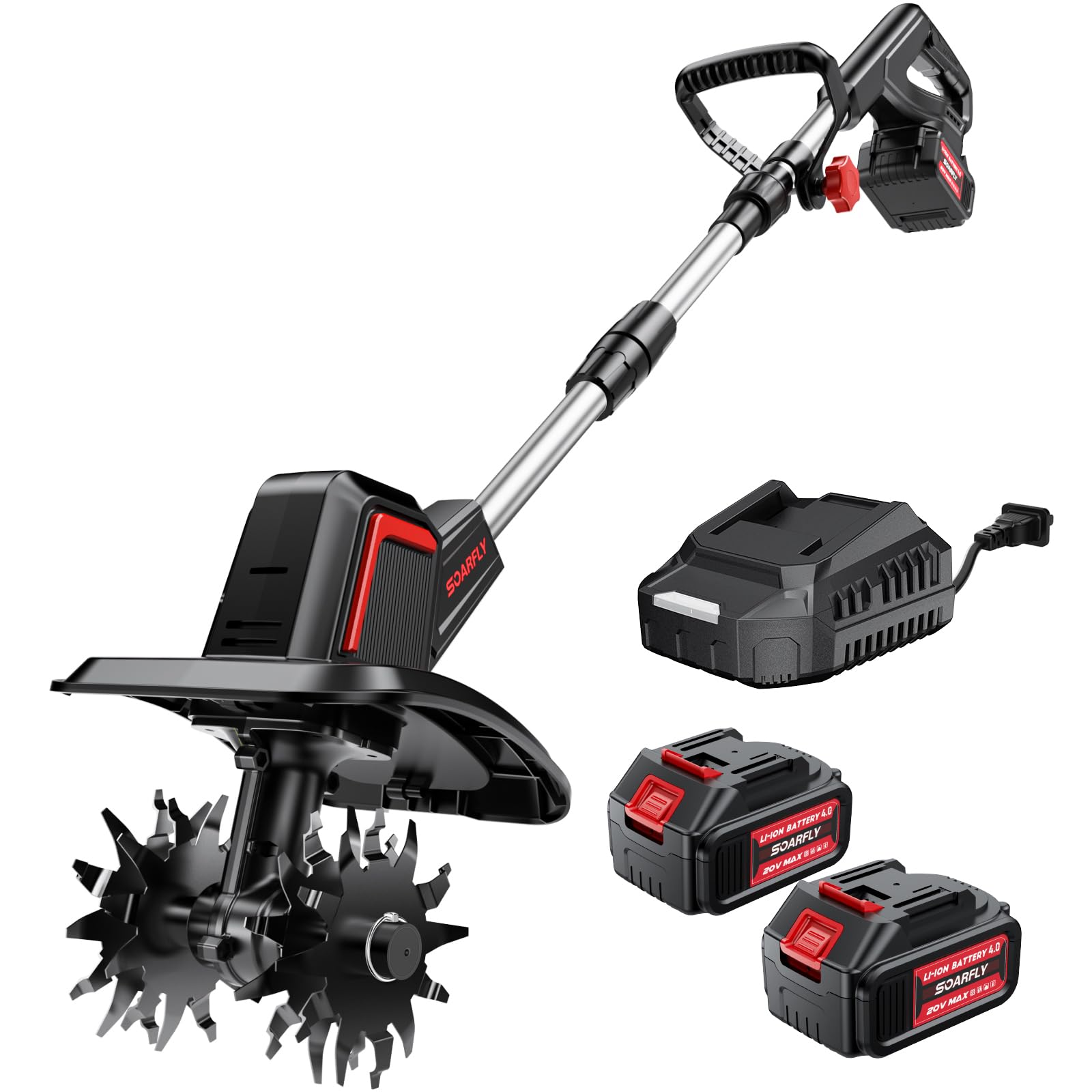
SOARFLY’s upgraded GT-02 model packs 48 alloy steel tines — more than any other unit in this guide — and two 4.0Ah batteries for a combined 8.0Ah capacity. That battery capacity translates to up to 120 minutes of runtime, which is double what most 2.0Ah dual-pack systems offer. The 48 tines distribute cutting force across a wider surface, reducing the vibration that makes smaller cultivators tiring to use. The 9-inch width and 6.6-inch depth are ideal for weeding between rows and turning compost in small garden beds.
The adjustable height system and ergonomic auxiliary handle improve comfort significantly over fixed-handle competitors. Owners report that the machine handles creeping Charlie and other stubborn weeds effectively, and the tines break up compacted soil without bogging down. The dual-switch safety lock adds protection during battery swaps and transport. At roughly 15 pounds, this cultivator is light enough for a 70-year-old gardener to lift and maneuver, yet the 48 tines provide enough bite to feel connected to the soil rather than bouncing across it.
The main limitation is performance on dry, crusted ground that hasn’t been watered. Multiple users note that the tiller struggles on baked-hard soil and is best suited for previously tilled beds or post-rain conditions. Battery run time drops noticeably in thick, matted weed coverage — creeping Charlie can drain a 4.0Ah pack in under 30 minutes. The plastic housing feels durable but not indestructible. For gardeners who maintain existing beds and want the longest cordless runtime at a budget-friendly price, this cultivator delivers exceptional battery value.
Why it’s great
- 48 steel tines provide smooth, low-vibration tilling
- 8.0Ah total battery capacity offers up to 2 hours runtime
- Adjustable height system reduces back strain
Good to know
- Struggles on dry, crusted soil that hasn’t been pre-watered
- Heavy weed cover drains batteries faster than expected
- Plastic housing less impact-resistant than metal frames
7. TaskStar TH4000 Cordless Tiller Cultivator
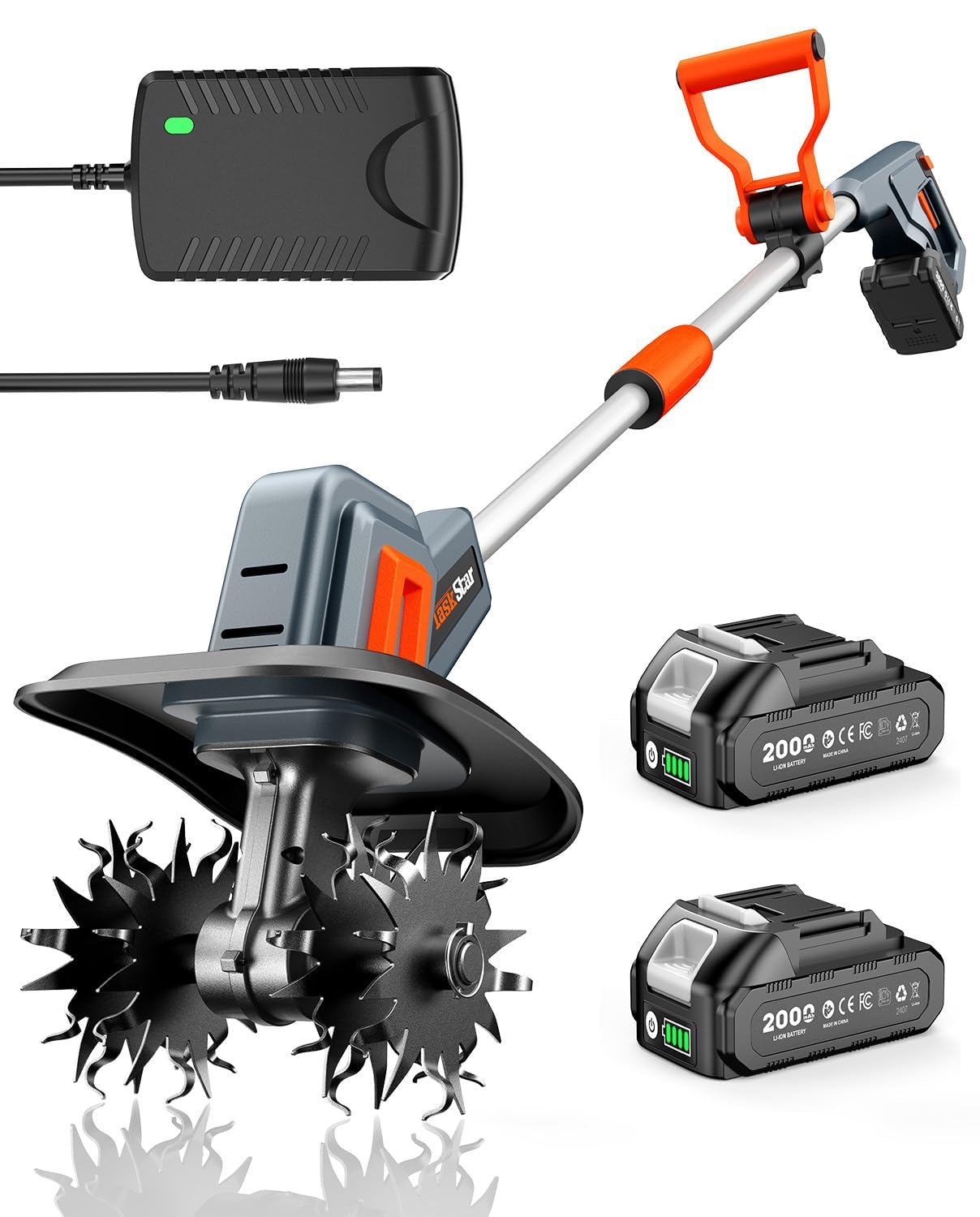
The TaskStar TH4000 is the most accessible entry point into cordless cultivation, combining 48 steel tines with a 21V dual-battery system at a price that undercuts most competitors. Its 9-inch tilling width and 7-inch depth are well-suited for raised beds, flower borders, and garden plots that have been turned in previous seasons. The 360 RPM motor provides enough speed to break through loose-to-moderate soil and chop through surface weed roots effectively.
At 12.8 pounds, this is one of the lightest battery-powered cultivators with 48 tines, making it an excellent choice for smaller gardeners or those with limited upper body strength. The 4000mAh total battery capacity (two 2.0Ah packs) provides enough runtime to weed a 30×40 foot garden in about an hour according to user reports. Assembly takes roughly 5 minutes with no special tools, and the orange frame is easy to spot if left in the garden. The 3-year manufacturer warranty is the longest coverage in this group, adding confidence for first-time buyers.
The trade-offs are typical for budget-tier cordless tillers. The plastic housing and lightweight frame mean the tines bounce off unbroken hard clay rather than digging in, requiring multiple passes or pre-watering. Tall grass and weeds wrap around the tine shaft and must be cleared manually — a common issue across most cordless models. The motor lacks overload protection, so hitting a large root can stall the tines completely. For gardeners with established, reasonably loose soil who want a cordless option without spending premium money, the TH4000 delivers capable performance with a strong warranty backup.
Why it’s great
- Lightest 48-tine cordless model at 12.8 pounds
- 3-year manufacturer warranty provides long-term coverage
- Easy 5-minute assembly with no complex steps
Good to know
- Bounces off unbroken hard clay on first pass
- No overload protection — motor stalls on large buried objects
- Tall grass wraps around tines during use
FAQ
Can a cultivator break up hard clay soil or do I need a tiller?
Is a corded or cordless cultivator better for a small garden?
How deep should a small garden cultivator till?
Final Thoughts: The Verdict
For most users, the best cultivator for small garden winner is the IncwBo 10.5 Amp Electric Tiller Cultivator because it combines the widest 12-inch cutting width with overload protection and genuine steel construction at a mid-range price. If you want cordless freedom with the longest battery runtime, grab the TaskStar 40V Cordless Tiller Cultivator. And for precision work in tight flower beds, nothing beats the Westinghouse 6-Inch Corded Mini Tiller.

Mo Maruf
I created WellFizz to bridge the gap between vague wellness advice and actionable solutions. My mission is simple: to decode the research and give you practical tools you can actually use.
Beyond the data, I am a passionate traveler. I believe that stepping away from the screen to explore new environments is essential for mental clarity and physical vitality.