Our readers keep the lights on and my smoothie glass nicely filled. As an Amazon Associate, I earn from qualifying purchases.
When a skin tear happens, standard adhesive bandages can do more harm than good, ripping the fragile epidermis further with every change. The right dressing acts as a protective second skin, allowing the wound to heal without causing additional trauma or pain during removal. Selecting a dressing that balances gentle adhesion with reliable coverage is the single most important decision for anyone managing thin, delicate skin at home.
I’m Mohammad Maruf — the founder and writer behind WellFizz. I’ve spent countless hours analyzing clinical wound care protocols and comparing the adherence, absorption, and removal characteristics of modern dressings to identify what truly protects vulnerable skin.
This guide breaks down the essential features, materials, and sizing considerations to help you confidently choose the right dressing for skin tear based on your specific wound type and skin sensitivity.
How To Choose The Best Dressing For Skin Tear
Selecting the wrong dressing can worsen a skin tear, delay healing, and cause unnecessary pain. The best dressing for this injury must prioritize atraumatic removal, moisture balance, and infection protection. Here are the key factors to evaluate.
Adhesive Type: Gentle Touch Matters Most
Silicone-based adhesives are the gold standard for fragile skin. Unlike acrylic adhesives that bond aggressively, silicone forms a gentle seal that holds the dressing in place but releases with minimal trauma. Look for dressings explicitly labeled “silicone” or “gentle adhesive” to avoid ripping new skin growth during changes.
Pad Material: Foam vs. Gauze
Foam dressings are highly absorbent and ideal for moderate exudate; they cushion the wound and maintain a moist environment. Gauze-based options, like petrolatum-impregnated pads, are better for dry or lightly exuding wounds and provide a non-adherent barrier that prevents the wound bed from drying out. Match the pad material to your wound’s moisture level.
Border vs. Borderless Design
Dressings with an adhesive border create a secure seal around the wound, reducing the need for additional tape and protecting against contamination. Borderless contact layers require a secondary dressing to stay in place, which can be beneficial for irregular wound shapes but adds complexity. For skin tears on flat body surfaces, a bordered dressing is often more convenient and secure.
Size and Conformability
Skin tears often occur on bony prominences or curved areas like the shin, forearm, or elbow. A dressing must conform well to these contours without lifting at the edges. Thin, flexible materials like silicone foam or fine mesh gauze conform more effectively than stiff, thick pads. Choose a size that extends at least 1 inch beyond the wound edges.
Quick Comparison
On smaller screens, swipe sideways to see the full table.
| Model | Category | Best For | Key Spec | Amazon |
|---|---|---|---|---|
| Carbou Xeroform Petrolatum Dressing | Premium | Non-stick barrier for sutures & dry wounds | 25-count, petrolatum mesh gauze | Amazon |
| Mepilex Border Flex 4×4 | Mid-Range | Multi-day waterproof foam protection | Silicone foam, 7-day wear | Amazon |
| 20Pcs Silicone Foam Dressing 4×4 | Mid-Range | High absorbency for draining wounds | 20-pack, waterproof backing | Amazon |
| Dimora Silicone Contact Layer | Budget-Friendly | Preventing secondary dressing adherence | 10-pack, perforated transparent film | Amazon |
| Hysimedy Silicone Bandages | Budget-Friendly | Fragile skin & pain-free daily changes | 40-count, fabric silicone strips | Amazon |
In‑Depth Reviews
1. Carbou Medical Xeroform Petrolatum Dressing
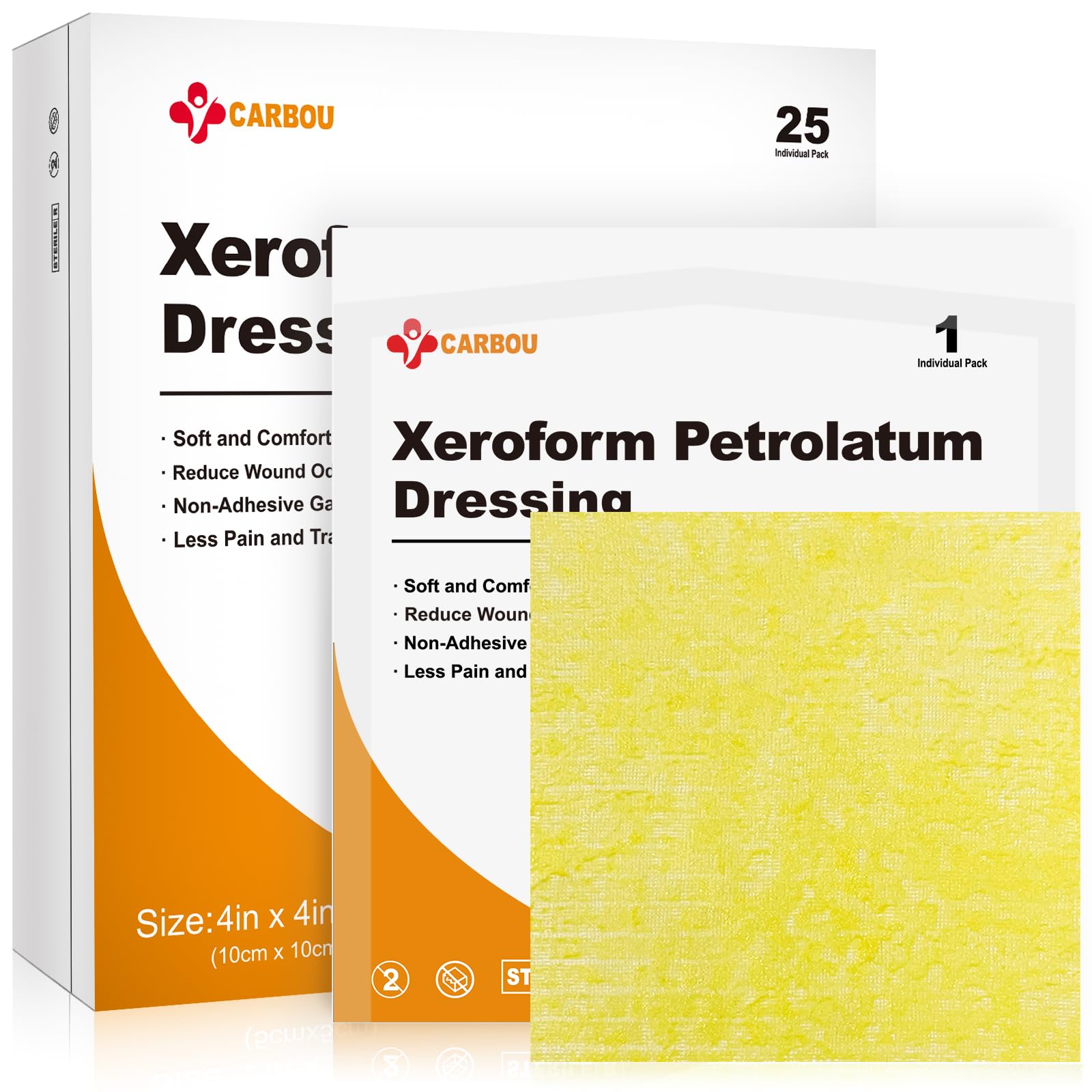
This premium petrolatum-impregnated gauze delivers the gold standard for non-adherent wound care. The 3% Bismuth Tribromophenate helps reduce wound odor while maintaining a moist healing environment, which is critical for skin tears where new tissue is fragile. The fine mesh conforms closely to irregular wound beds without sticking, making dressing changes completely painless.
Users with sutures, lacerations, and skin grafts consistently report that this dressing prevents pulling off healing skin, a common complaint with standard gauze. Each of the 25 pads is individually sterilized, allowing for multiple dressing changes without cross-contamination. The generous 4×4 size is large enough to cover most skin tear areas, and the pad can be cut to shape if needed.
One reviewer noted that the dressing dries out faster than the hospital-grade version they were used to, requiring more frequent changes for wounds with higher exudate. However, for dry or lightly exuding skin tears, the petrolatum formula provides exceptional protection and comfort without the need for a secondary dressing in many cases.
Why it’s great
- Truly non-stick pad protects fragile healing skin
- Bismuth component helps control wound odor
- High count per box for extended care
Good to know
- May dry out within 24 hours on draining wounds
- Requires secondary tape or wrap to secure
2. Mepilex Border Flex 4×4

Made by Mölnlycke Health Care, this silicone foam dressing is the workhorse of hospital wound care. The Border Flex design integrates a gentle silicone adhesive border that seals the wound while allowing the foam core to absorb moderate exudate. It is showerproof and engineered to stay in place for up to seven days, significantly reducing the frequency of painful dressing changes.
Clinical reviews highlight its effectiveness for post-surgical incisions, amputee skin breakdown, and skin tears. The foam pad provides excellent cushioning, which is especially valuable for skin tears located on the shin or elbow where pressure and friction are constant. Users with adhesive allergies report that the silicone border causes far less irritation than standard acrylic tapes.
A few customers have noted that despite being marketed as waterproof, the dressing can loosen with extended shower exposure, particularly if the border is not fully sealed. The premium price per pad is a consideration for long-term use, but for critical wounds that require reliable, multi-day protection, this dressing is a top performer.
Why it’s great
- Long 7-day wear time reduces painful changes
- Showerproof for daily hygiene routines
- Trusted and proven in hospital settings
Good to know
- Adhesion may weaken in prolonged showering
- Individual pads are expensive per unit
3. 20Pcs Silicone Foam Dressing 4×4 Gentle Border

This 20-count box of silicone foam dressings offers a strong value proposition for caregivers managing skin tears with high exudate. The 4×4 inch size features a 2.4 inch absorbent pad that pulls moisture away from the wound while the silicone border creates a waterproof seal. Multiple reviewers confirm the dressing remains intact through showers, protecting the wound from contamination.
Wound care nurses specifically praise the absorbent foam core for handling heavy drainage without leaking. The gentle silicone adhesive allows the dressing to be repositioned if the initial application is imperfect, which is a common need when caring for uncooperative patients or irregular wound shapes. The entire pad surface is sticky, providing consistent adhesion even on slightly curved body parts.
Some users have reported batch-to-batch inconsistency in adhesion strength, with the second order being less sticky than the first. Additionally, a few customers found small bugs inside the box, though the individual packaging of each dressing mitigated contamination risk. For the price per pad, this is an excellent budget-friendly choice for high-volume wound care.
Why it’s great
- Super absorbent for heavily draining wounds
- Waterproof backing holds up to full showers
- Individual sterile packaging for safety
Good to know
- Border adhesion quality can vary between batches
- May leak if the border is not applied flush
4. Dimora Silicone Wound Contact Layer

This transparent contact layer is designed to sit directly on the wound bed while allowing exudate to pass through into a secondary absorbent dressing. The perforated silicone structure minimizes pain and trauma during changes because it only adheres one side, leaving the wound-facing side non-stick. This design is ideal for shallow skin tears where you want to protect the new epithelial tissue.
Users with diabetic foot wounds report excellent results when using this layer under a standard gauze or foam secondary dressing. The transparency enables visual inspection of the wound without removing the dressing, which reduces the risk of disturbing the healing process. The conformability to body contours makes it comfortable on curved areas like the knuckles or toes.
A notable concern is that the adhesive is only on one side, which can make initial placement tricky. Users with sensitive skin to adhesives have also noted reactions to the border layer. This product requires a secondary dressing to stay in place, adding cost and complexity, but for very fragile skin with low exudate, it provides the gentlest possible interface.
Why it’s great
- Transparent pad allows wound inspection
- Perforated structure for healthy exudate flow
- Minimizes pain during dressing changes
Good to know
- One-sided adhesive can be tricky to place
- Always needs a secondary absorbent dressing
5. Hysimedy Silicone Bandages for Sensitive Fragile Skin

These fabric silicone bandages are purpose-built for the elderly and children with fragile, thin skin. The 1.63×4 inch size is perfect for linear skin tears or small abrasions, and the gentle silicone adhesive seals four sides around a non-stick central pad. Users consistently report that these bandages leave no purple marks or raw skin upon removal, even after days of wear.
The non-woven fabric with a PU film outer layer allows oxygen and water vapor to pass through while maintaining a sealed wound environment. This breathability reduces maceration risk for low-exuding wounds. The bandages can be lifted and repositioned for wound inspection without losing adhesion, which is a significant advantage for caregivers monitoring healing progress.
Each bandage is individually wrapped in plastic, which some users find wasteful and difficult to open, especially for those with arthritis. The strip shape is less effective on highly curved surfaces like the knuckles or heels compared to foam pad dressings. For everyday minor skin tears on flat body parts, however, this is an exceptional and cost-effective solution for fragile skin.
Why it’s great
- Pain-free removal for fragile, thinning skin
- Can be lifted and resealed for wound checks
- Breathable fabric prevents moisture buildup
Good to know
- Individual plastic packaging is hard to open
- Strip shape not ideal for curved joints
FAQ
Can I use a standard adhesive bandage on a skin tear?
How often should a skin tear dressing be changed?
Is a waterproof dressing necessary for skin tears?
What is the difference between foam and gauze dressing?
Final Thoughts: The Verdict
For most users, the dressing for skin tear winner is the Carbou Xeroform Petrolatum Dressing because it provides the most reliable non-stick barrier for fragile healing skin. If you want a waterproof foam dressing with multi-day wear, grab the Mepilex Border Flex 4×4. And for everyday minor skin tears on sensitive skin, nothing beats the value and gentle removal of the Hysimedy Silicone Bandages.

Mo Maruf
I created WellFizz to bridge the gap between vague wellness advice and actionable solutions. My mission is simple: to decode the research and give you practical tools you can actually use.
Beyond the data, I am a passionate traveler. I believe that stepping away from the screen to explore new environments is essential for mental clarity and physical vitality.