Our readers keep the lights on and my smoothie glass nicely filled. As an Amazon Associate, I earn from qualifying purchases.
That faint hiss, the missing texture in a snare hit, the way a crowded passage turns into a wall of noise instead of a layered stage — your current setup is robbing you of the performance your speakers or headphones can deliver. A dedicated digital-to-analog converter cleans up that noise and hands your amplifier a signal that sounds like the studio intended, not like a compromised facsimile.
I’m Mohammad Maruf — the founder and writer behind WellFizz. After hundreds of hours analyzing circuit designs, DAC chip implementations, and output stage topologies across the entire consumer audio spectrum, I’ve mapped exactly where each DAC category delivers value and where the diminishing returns start.
This guide walks through seven distinctly different units — from feature-rich Bluetooth bridges to reference-grade desktop converters — to find the precise best dac audiophile match for your system, your headphones, and your musical priorities.
How To Choose The Best DAC Audiophile
Picking a DAC isn’t about buying the most expensive chip or the highest sample rate. The real differentiators come down to the analog output stage, your headphone impedance, and whether your system needs balanced signaling. Here are the three critical filters every buyer should run.
Delta-Sigma vs. R2R Architecture
Delta-sigma chips (ESS, AKM) measure spectacularly — ultra-low distortion, ruler-flat frequency response, stellar dynamic range. They deliver a clean, detailed, and often neutral presentation. R2R (resistor ladder) DACs, on the other hand, produce a warmer, more analog-like tonality with a natural roll-off in the treble that many listeners find less fatiguing. If your priority is resolving every micro-detail and transient, go delta-sigma. If you want a lush, musical, “vinyl-like” listen, look for R2R.
Output Power and Headphone Impedance Matching
A DAC/amp combo must have enough current to drive your headphones. Planar magnetic headphones (e.g., Audeze LCD series) need much higher voltage than low-impedance IEMs. Look for power ratings in milliwatts at a given impedance (e.g., 2000mW at 32 ohms). High-impedance dynamic headphones (e.g., Sennheiser HD 600 series) require voltage swing — a spec like 560mW at 300 ohms is a good benchmark. The wrong match leads to a thin, lifeless sound or a noisy background.
Connectivity and System Integration
Your DAC must physically fit your chain. If you stream from a Mac or PC, USB input with UAC2 (plug-and-play on Mac, driver needed on Windows) is standard. Home theater users benefit from HDMI ARC. TV or set-top box users need optical or coaxial SPDIF. If you rely on your phone or a tablet, Bluetooth with LDAC or aptX HD is essential for high-resolution wireless. And if your amplifier has XLR inputs, a balanced DAC with both XLR and RCA outputs halves noise from long cable runs.
Quick Comparison
On smaller screens, swipe sideways to see the full table.
| Model | Category | Best For | Key Spec | Amazon |
|---|---|---|---|---|
| aune S9c Pro | Desktop Reference | End-game all-in-one | 5W output, 10MHz Clock input | Amazon |
| FiiO K13 R2R | Desktop R2R | Analog warmth & NOS mode | 192 x 0.1% resistors, 2400mW | Amazon |
| TOPPING DX5 II | Desktop Powerhouse | Raw power & PEQ tuning | 7600mW x2, dual ES9039Q2M | Amazon |
| FiiO K7 | Desktop Mid-Range | Value balanced DAC/amp | 2000mW, dual AK4493SEQ | Amazon |
| iFi Zen DAC 3 | Desktop Minimalist | USB-C desktop simplicity | PCM 768kHz/DSD512 | Amazon |
| Fosi Audio ZD3 | Desktop DAC Preamp | HDMI ARC + preamp duty | ES9039Q2M, XLR/RCA out | Amazon |
| 1Mii DS220 | Bluetooth Bridge | Budget LDAC streaming | LDAC/aptX HD, OLED | Amazon |
In‑Depth Reviews
1. aune S9c Pro

The aune S9c Pro is a no-compromise desktop unit that marries a dual ES9068 DAC section with a discrete JFET amplifier stage fed by a massive 50W toroidal linear power supply and a 23900 µF capacitor bank. The result is 5W of headphone output — enough to drive the most power-hungry planars like the DCA Expanse or Meze 109 Pro with absolute control. The second-generation PLL core locks jitter to vanishingly low levels, and the dedicated 10MHz clock input (compatible with aune S1c or SC1 external clocks) gives you an upgrade path that most all-in-ones simply don’t offer.
Customers consistently rank this as the best all-in-one under . The sound is analytical and dynamic, not warm — with exceptional texture, slam, and resolution. The digital preamp mode offers perfect channel matching, and the dual tuning modes (Standard and Pure) let you toggle between a slightly forward and a more relaxed presentation. The headphone amplifier is genuinely reference-grade; you can drive high-impedance Sennheisers and low-impedance IEMs alike without hearing the noise floor.
The only practical downsides are the size — the unit weighs nearly 10 pounds — and a few minor gripes about remote control range. But those are trivial at this performance level. If you want a single box that can anchor a serious speaker setup and drive any headphone, the aune S9c Pro is the current benchmark.
Why it’s great
- 5W output drives every headphone with authority.
- 10MHz external clock input for future upgrades.
- Discrete JFET output stage sounds rich and detailed.
Good to know
- Heavy (nearly 10 lbs) — not travel-friendly.
- Remote control range is limited to about 4 feet.
2. FiiO K13 R2R
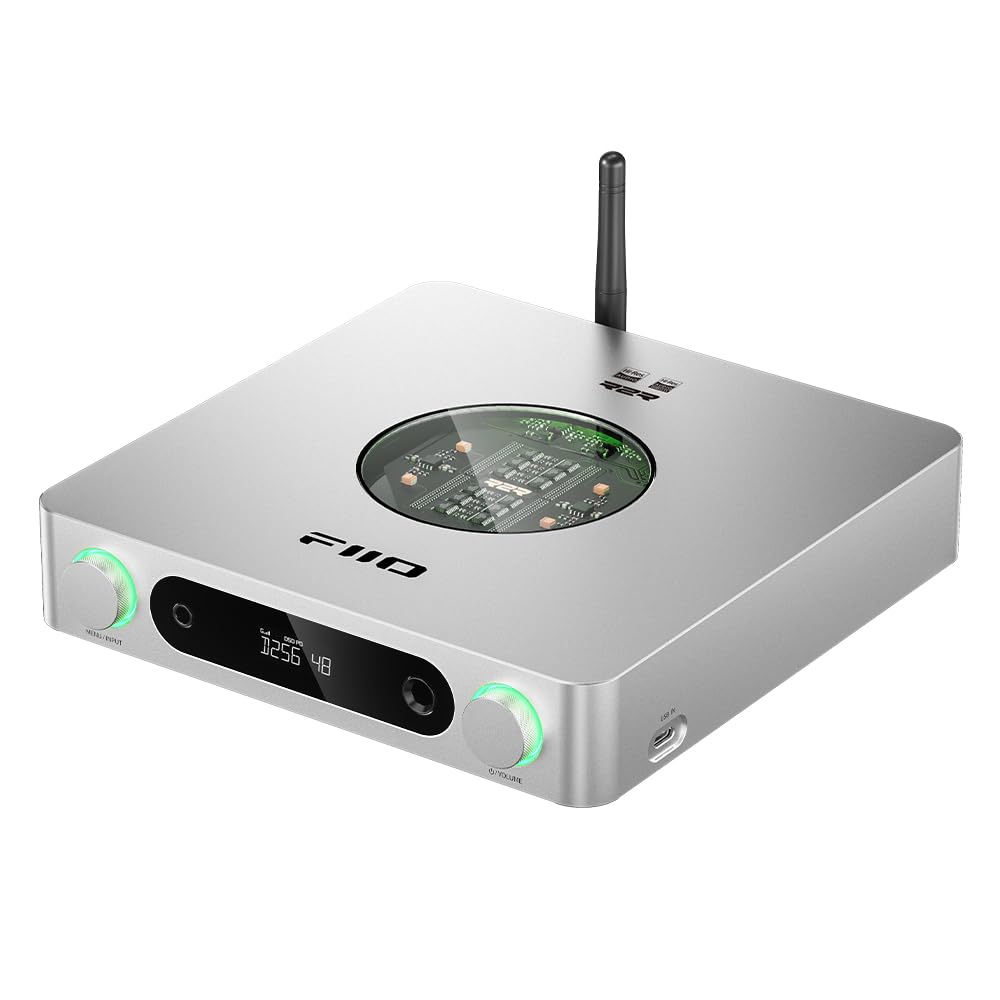
The FiiO K13 R2R is built around a proprietary fully-differential 24-bit R2R DAC core using 192 ultra-precise 0.1% resistors. This is the natural antidote to cold, analytical delta-sigma chips. In NOS (Non-Oversampling) mode, the K13 preserves the original sample rate without digital filtering, producing a smooth, organic timbre that many listeners describe as “vinyl-like” — with a warm midrange, natural treble, and a sense of body that makes instruments feel physically present. The headphone amp delivers 2400mW through the balanced 4.4mm output, which easily drives HD 600s and Hifiman planars to satisfying levels.
OS (Oversampling) mode upsamples to 384kHz for those who want cleaner measurements, but the magic really happens in NOS. Owners report the K13 reveals layers of detail and depth in well-mastered recordings that even the excellent FiiO K7 missed. The 10-band PEQ is fully adjustable via FiiO’s mobile app or web interface, with Auto EQ presets that let you correct or customize headphone response. The preamp output is superb — reviewers say it sounds even better than the RME ADI-2 DAC FS through studio monitors.
Setup quirks include needing USB DAC driver V5.74.2 and a manual PEQ correction for gain matching to prevent clipping. The aluminum chassis is solid, though some find the knobs slightly wobbly. If you crave that analog warmth and a non-fatiguing listen, the K13 R2R delivers a tonality no delta-sigma DAC can replicate.
Why it’s great
- R2R architecture provides natural, analog-like warmth.
- NOS mode preserves original sampling rate for pure sound.
- 2400mW balanced output drives most headphones easily.
Good to know
- Requires driver v5.74.2 — not plug-and-play on Windows.
- Knob wobble detracts from otherwise premium build.
3. TOPPING DX5 II
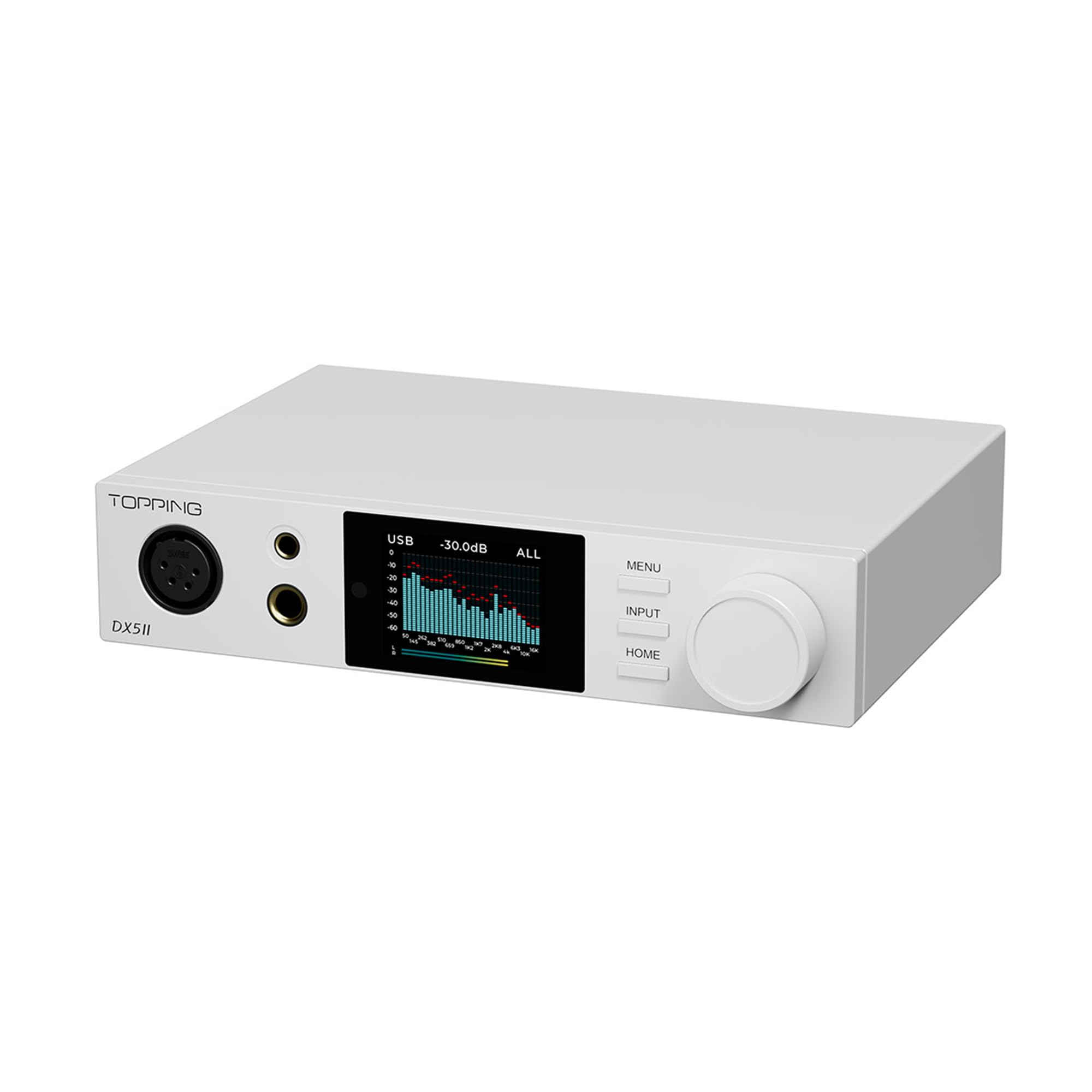
The DX5 II is TOPPING’s current flagship all-in-one, leveraging dual ES9039Q2M chips in a fully balanced quad-channel amplifier circuit to produce an astonishing 7600mW per channel into 32 ohms. That’s enough current to drive even the most inefficient planar magnetic headphones to concert levels without breaking a sweat. The sound is transparent and neutral — every recording artifact, every microphone placement, every harmonic is laid bare. The ESS chips deliver ultra-low distortion and a wide dynamic range, making this an ideal tool for critical listening and mastering.
Beyond brute force, the DX5 II offers a 10-band high-precision PEQ that’s adjustable through the bright 2.0-inch Aurora UI display. You can dial in a target curve or correct room modes with surgical accuracy. Bluetooth 5.1 with LDAC lets you stream high-resolution audio from your phone. The XMOS XU316 USB interface handles DSD512 and PCM 768kHz with ease. The preamp mode with 12V trigger makes it a seamless fit in a home theater chain.
Not everyone needs 7600mW. For ultra-sensitive IEMs, the noise floor on USB/optical is very low, though some users report that hot-swapping headphones can cause the unit to fail — a known TOPPING sensitivity. If you want a transparent powerhouse that disappears into the music and gives you PEQ control, the DX5 II is a top-tier choice.
Why it’s great
- 7600mW per channel — drives any headphone on the market.
- 10-band PEQ for precise room or headphone correction.
- Bluetooth 5.1 with LDAC for high-res wireless.
Good to know
- Hot-swapping headphones can damage the unit.
- Neutral presentation isn’t for those seeking warmth.
4. FiiO K7

The FiiO K7 occupies the sweet spot of value and performance. It uses two AKM AK4493SEQ DAC chips in a six-stage audio circuit derived from FiiO’s high-end line, coupled with dual THX AAA 788+ amplifier modules. That combination yields 2000mW of balanced output at 32 ohms — enough to drive most full-size headphones, including the Focal Elegia and Hifiman Sundara, with clarity and dynamics. The soundstage is notably wider and more layered than the entry-level K5 Pro, making the K7 a genuine step-up for under .
Inputs cover USB, optical, coaxial, and AUX, while outputs include 4.4mm balanced, 6.35mm single-ended, and 3.5mm. The volume knob has a dedicated mute zone that’s great for sensitive IEMs. The RGB indicator light changes color by sampling rate, a nice visual cue. Customers consistently call this “the best bang-for-buck” balanced DAC/amp — it improves on the K5 Pro in every dimension without demanding a big jump in investment.
Some users moving from the K7 to the K9 ESS report only minor gains in clarity and soundstage, meaning the K7 already extracts most of the performance available from well-mastered files. The titanium finish is attractive, and the unit runs cool. It’s a no-brainer upgrade for anyone coming from motherboard audio, a budget USB DAC, or a gaming sound card.
Why it’s great
- Great price-to-performance ratio in balanced DAC/amps.
- THX AAA 788+ delivers clean, dynamic amplification.
- Dedicated volume mute zone protects sensitive IEMs.
Good to know
- No Bluetooth — wired connection only.
- Upgrading to K9 ESS yields only minor gains.
5. iFi Zen DAC 3
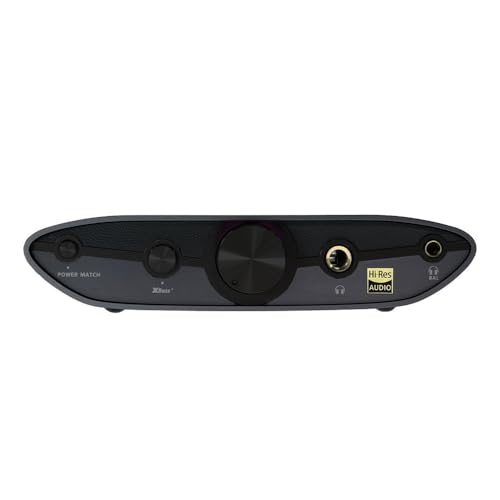
The iFi Zen DAC 3 is a sleek, compact, USB-C-powered converter that strips away complexity without sacrificing sound quality. Inside is a Burr-Brown True Native chipset that handles PCM up to 768kHz and DSD512 natively. The sound signature is neutral with a slight, pleasant warmth in the bass — the TrueBass feature (now called Xbass in the v3) adds palpable heft without muddying the mids. The matte black aluminum chassis is dense and modern, and the volume dial has a satisfying weight.
Outputs include 4.4mm balanced and 6.3mm single-ended for headphones, plus a fixed/variable line-out for connecting to speakers. The PowerMatch feature adjusts gain to match different headphone impedances, and the USB-C input keeps the cable clutter minimal. Listeners report a noticeable improvement over PC motherboard audio and praise the DAC’s ability to resolve detail across all ranges. The balanced output handles low-impedance IEMs with a black background.
The Zen 3 does have a quirk — audio plays to all connected outputs simultaneously; there is no way to mute one output while using the other. And the headphone output (210mW unbalanced, 300mW balanced) is less powerful than the v2 version, so it’s not ideal for very power-hungry planars. For desktop users who value small size, clean design, and excellent DAC performance with a warm touch, the Zen 3 is a near-perfect companion.
Why it’s great
- USB-C powered — truly plug-and-play for desktop audio.
- Neutral-to-warm signature with excellent detail.
- Xbass adds deep, textured low end without muddying mids.
Good to know
- Headphone output less powerful than v2 version.
- Simultaneous output to all connections — no output muting.
6. Fosi Audio ZD3

The Fosi Audio ZD3 is a versatile desktop DAC preamp that bridges the gap between home theater and stereo audio. Its standout feature is HDMI ARC input — allowing you to connect directly to your TV and send audio from streaming apps, Netflix, or game consoles into your amplifier without separate cables. The chipset is the ES9039Q2M, paired with the XMOS XU316 USB controller and LME49720 op-amps. It supports DSD512 and PCM up to 768kHz, delivering clear, detailed sound with excellent channel separation.
Connections are generous: USB, optical, coaxial, Bluetooth (QCC3031), and HDMI ARC feed into balanced XLR and RCA outputs. The 1.5-inch OLED display shows the selected input and volume. There’s a preamp bypass switch for connecting directly to a power amp, plus a 12V trigger for synchronized power on/off with other Fosi gear. Owners consistently praise its ability to eliminate PC noise and RF interference — the separate power supply design isolates the analog stage from dirty USB power.
The ZD3 doesn’t have a headphone output, so it’s purely a DAC/preamp for speakers. The stock LME49720 op-amps sound clean and clear, but swapping them for Sparkos SS3602s tightens the bass and opens the soundstage further. If you are building a desktop speaker system with a Fosi ZA3 amplifier, the matching design language and 12V trigger make the ZD3 the logical partner.
Why it’s great
- HDMI ARC input streamlines TV-audio connection.
- Balanced XLR outputs eliminate ground-loop noise.
- 12V trigger enables synchronized power with amps.
Good to know
- No headphone output — speaker-only preamp DAC.
- HDMI is ARC only, not eARC (limited bandwidth).
7. 1Mii DS220

The 1Mii DS220 is a compact Bluetooth receiver that brings LDAC, aptX HD, and an audiophile-grade DAC to your legacy stereo system for very little money. It connects over Bluetooth 5.3 with dual antennas for a range up to 100 feet, and it outputs to your amp via optical, coaxial, or RCA. The built-in DAC decodes LDAC (990kbps) and aptX HD, granting wireless playback of high-resolution files — a major leap over the compressed SBC/AAC that most budget receivers use. The OLED display shows connection status, codec, and volume.
Sound quality is excellent for the price range. Customers report a broader soundstage and clearer detail than sub- Bluetooth receivers, with no dropouts even through multiple walls. The 7 EQ modes (Bass, Jazz, Classical, Rock, Pop, etc.) let you tweak the sound profile to match your speakers or taste. The automatic reconnection feature is handy — power it on and it grabs the last paired device within seconds.
The DS220 lacks balanced XLR outputs, so it’s not for a fully balanced chain. And it’s always scanning for Bluetooth when powered, meaning there’s no true battery-saving off mode — you must hold the M button for 10 seconds to disconnect a paired device. But if you want to stream LDAC from your phone or tablet to a vintage amp or powered speakers, the DS220 is the best entry point to high-resolution wireless.
Why it’s great
- LDAC and aptX HD support for high-res wireless streaming.
- 100-foot Bluetooth range with stable connection.
- Very affordable entry into wireless hi-fi.
Good to know
- No balanced XLR outputs.
- Always scanning for Bluetooth — must hold button to disconnect.
FAQ
Do I need a DAC if I already have a good sound card?
What’s the real advantage of balanced (XLR/4.4mm) output?
Does a more expensive DAC always sound better?
What does “NOS” mode do in an R2R DAC?
Can I use a desktop DAC without an amplifier for my headphones?
Final Thoughts: The Verdict
For most users, the best dac audiophile winner is the aune S9c Pro because it combines a discrete, high-current amplifier with a fully-featured DAC, external clock input, and superb build quality in a single chassis that genuinely serves as an end-game unit. If you want the warmth and organic timbre of R2R with PEQ flexibility, grab the FiiO K13 R2R. And for a straightforward, no-fuss desktop DAC that prioritizes elegance and USB-C simplicity, nothing beats the iFi Zen DAC 3.

Mo Maruf
I created WellFizz to bridge the gap between vague wellness advice and actionable solutions. My mission is simple: to decode the research and give you practical tools you can actually use.
Beyond the data, I am a passionate traveler. I believe that stepping away from the screen to explore new environments is essential for mental clarity and physical vitality.