Our readers keep the lights on and my smoothie glass nicely filled. As an Amazon Associate, I earn from qualifying purchases.
A broadhead that fails to open or deflects off a rib can turn a perfect shot into a long, heart-wrenching track. In hunting, the margin between a clean ethical kill and a wounded animal lost in the brush often comes down to a few millimeters of blade deployment and impact energy transfer. Cut-on-contact broadheads are engineered to solve this exact problem by beginning their cut the instant the tip touches hide, rather than relying on a mechanical delay or a chisel point that pushes tissue aside before slicing.
I’m Mohammad Maruf — the founder and writer behind WellFizz. For this guide, I’ve analyzed thousands of customer field reports, blade geometry specs, and deployment system patents to separate the broadheads that consistently deliver devastating wound channels from those that let hunters down when it matters most.
After reviewing seven of the most popular models on the market, I’ve identified the top performers in penetration, flight accuracy, and reliability. This is the definitive guide to finding the best cut on contact broadheads for your specific hunting setup and game size.
How To Choose The Best Cut On Contact Broadheads
Selecting a cut-on-contact broadhead isn’t just about picking a brand you recognize. The blade deployment mechanism, ferrule material, and tip profile all determine how the head performs on impact. Here’s what to prioritize before you buy.
Fixed Blade vs. Mechanical vs. Hybrid: Which Deployment Style Fits Your Bow?
Fixed-blade broadheads like the G5 Montec CS cut from the moment they touch hair, making them the most reliable choice for low-poundage bows or tough game where bone penetration is critical. Mechanicals like the Rage Chisel Tip SC stay compact in flight for field-point accuracy but rely on impact energy to deploy — they can fail on slow arrows or glancing hits. Hybrid models like the Muzzy Trocar HB blend one set of fixed blades with mechanical wings, offering a large cutting diameter without sacrificing the instant-contact benefit of a fixed tip. Your bow’s kinetic energy (ideally over 50 foot-pounds for mechanicals) dictates which style will deploy reliably.
Cutting Diameter and Blade Thickness: The Wound Channel Trade-Off
A 2-inch cutting diameter like the G5 Megameat creates a massive blood trail and quick kills, but the wider blades generate more drag in flight and require more energy to penetrate deep. Thinner blades (0.030 inches or less) slice easier but are prone to bending on shoulder blades. Thicker blades (0.035 inches or more, as seen on the Rage Chisel Tip) hold their edge through bone but may reduce total cut width. For whitetail, a 1.5-to-1.75-inch cut with 0.035-inch blades offers the best balance. For elk or bear, prioritize a narrower cut around 1.125 inches with a stout tip and thicker blades to guarantee pass-through penetration.
Grain Weight, Ferrule Material, and Arrow Tuning
Most cut-on-contact broadheads come in 100 or 125 grains. Heavier heads (125 or 150 grains) deliver more momentum for deep penetration but drop faster — verify your arrow’s spine rating can handle the extra front weight. Aluminum ferrules are lightweight and cost-effective, while stainless steel ferrules (like the Excalibur Boltcutter) add durability and corrosion resistance for crossbow speeds. Always spin-test your assembled broadhead on the arrow shaft: any wobble at the insert will magnify into erratic flight past 30 yards. If the head doesn’t spin true, adjust the washer or try a different insert.
Quick Comparison
On smaller screens, swipe sideways to see the full table.
| Model | Category | Best For | Key Spec | Amazon |
|---|---|---|---|---|
| Swhacker #219 Crossbow | Mechanical | Crossbows under 400 fps | 1.75″ cut, 2-blade | Amazon |
| Rage 3 Blade Chisel Tip SC | Mechanical | High-energy compound bows | 1.6″ cut, 0.035″ blades | Amazon |
| Magnus 4 Blade Hornet | Fixed Blade | All-around hunting | 4-blade, serrated edge | Amazon |
| G5 Montec CS | Fixed Blade | Low-poundage bows | 1.0625″ cut, one-piece steel | Amazon |
| Muzzy Trocar HB | Hybrid | Large game with tough bone | 2.625″ total cut, 2 fixed + 2 mech | Amazon |
| G5 Megameat | Mechanical | Whitetail close-range | 2″ cut, 3-blade rear deploy | Amazon |
| Excalibur Boltcutter | Fixed Blade | High-speed crossbows | 1.0625″ cut, stainless steel | Amazon |
In‑Depth Reviews
1. RAGE 3 Blade Chisel Tip SC Mechanical Broadhead, 100 Grain, 1.6″ Cut – 3 Pack
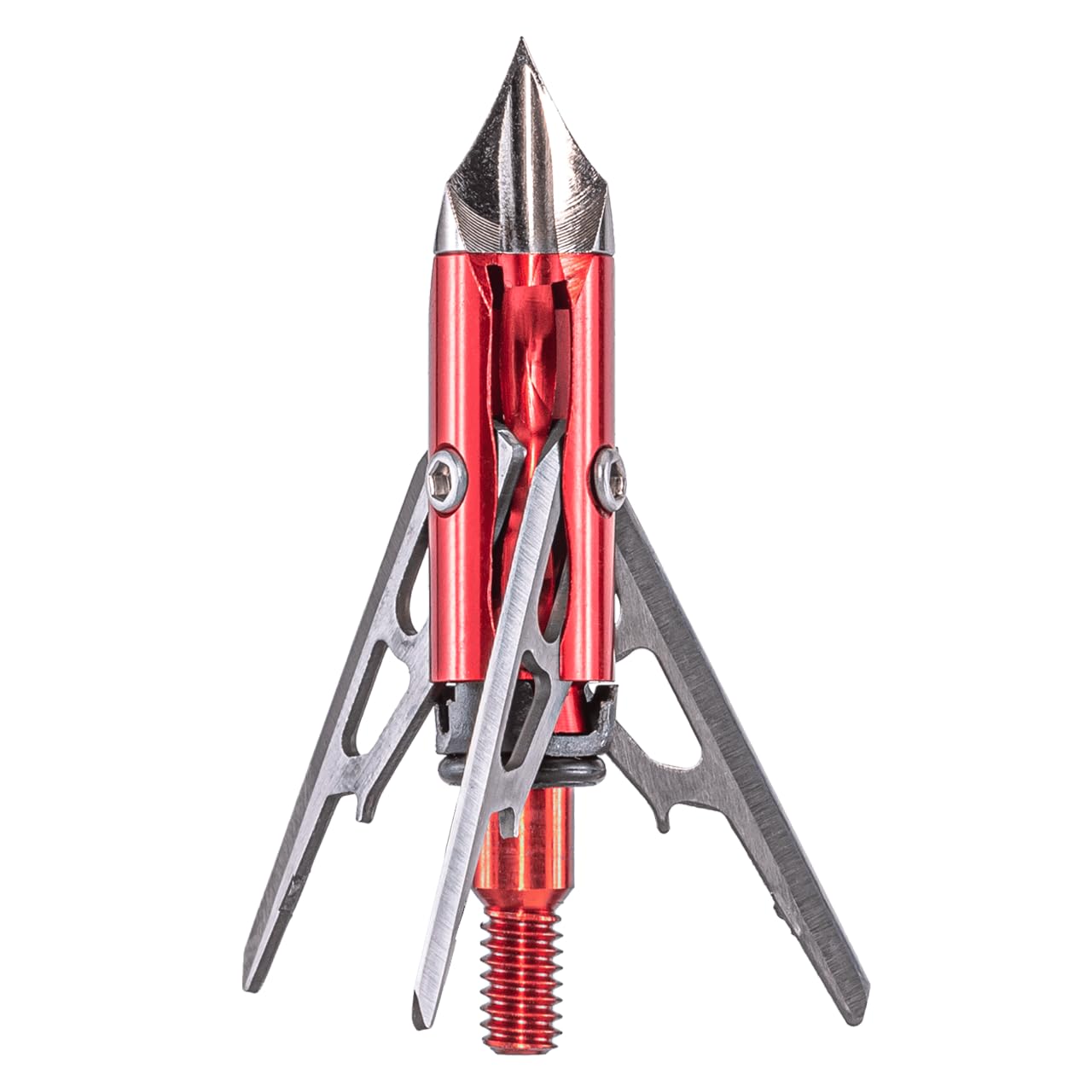
Rage has dominated the mechanical broadhead market for years, and the Chisel Tip SC demonstrates exactly why. The steel chisel tip is the standout feature — it punches through heavy shoulder bone and ribcage without the tip rolling over, a failure point common on softer pointed mechanicals. The Slip Cam deployment system ensures all three 0.035-inch blades open on contact rather than during flight, which keeps arrow drag consistent and accuracy tight out to 60 yards.
Customer field reports consistently describe pass-through penetration on whitetail at moderate draw weights, with the swept-back blade design reducing deployment resistance enough to maintain deep wound channels even on quartering shots. The Shock Collar retention system prevents the blades from cracking open mid-air, a critical reliability feature when hunting from a treestand at 20 yards where a premature deployment would ruin both the shot and the hunt. The reinforced aluminum ferrule keeps the overall head weight at 100 grains without sacrificing impact strength.
On the downside, the blades are not designed for reuse after heavy bone contact — most hunters replace the head after each kill to guarantee sharpness and structural integrity. The 1.6-inch cutting diameter is slightly smaller than some competitors, but the chisel tip’s ability to breach heavy bone compensates by ensuring the blades actually get inside the chest cavity rather than bouncing off. For compound bow hunters running 55 pounds or more, this is the most confidence-inspiring mechanical on the market.
Why it’s great
- High-strength chisel tip crushes heavy bone without rolling
- Shock Collar prevents blade deployment during flight
- Flies identical to field points with a properly tuned bow
Good to know
- Not designed for reuse after large-game impact
- Requires sufficient bow kinetic energy for reliable blade deployment
2. Muzzy Trocar HB Hybrid Broadheads 100 Grain 4-Blade Fixed/Mechanical Archery (3-Pack)

The Muzzy Trocar HB solves one of the oldest problems in bowhunting — how to get a large cutting diameter without sacrificing flight accuracy. By combining two fixed blades that create a 1-inch cut with two mechanical blades that open to a 1.625-inch cut, the Trocar HB delivers a total wound channel of 2.625 inches. The fixed blades act as a cutting guide on entry, ensuring the mechanical wings deploy inside the body cavity rather than deflecting off hide or hair.
Offset fixed blades generate spin stabilization during flight, which means this head flies more like a fixed-blade than a pure mechanical, even at longer ranges. The chisel tip construction on the ferrule provides the same bone-breaking confidence as dedicated chisel-point heads, and the 0.035-inch stainless steel blades are thick enough to survive shoulder blade impacts without folding. Hunters using the Trocar HB on whitetail report complete pass-through even on quartering-to shots, with the mechanical blades opening reliably every time.
The trade-off is weight — at 100 grains with all that steel, the Trocar HB is on the heavier end of the hybrid category, which may require re-sighting your bow if you’re switching from lighter field points. A few customers noted that initial blood trails were sparse for the first few yards because the fixed blades seal the entry hole slightly, but once the mechanical wings cut internally, the blood trail becomes heavy and consistent. For hunters who want the penetration of a fixed head and the wound channel of a mechanical, this is the best bridge design available.
Why it’s great
- Fixed blades guarantee cut-on-contact even if mechanicals fail
- Massive 2.625-inch total cutting diameter
- Offset blades provide spin-stabilized flight accuracy
Good to know
- Heavier head may require sight adjustment from field points
- Initial blood trail can be sparse before mechanical blades cut internally
3. Magnus 4 Blade Hornet Ser-Razor Broadhead (3-Pack)

The Magnus 4 Blade Hornet represents everything a fixed-blade cut-on-contact broadhead should be: simple, durable, and backed by a lifetime free replacement warranty. The four-blade configuration uses a tanto-style chisel tip that bites into bone rather than skating off, and the serrated blade edges create additional tissue damage that improves blood trail quality. At 125 grains (also available in 100), the Hornet delivers enough momentum for deep penetration even from slower compound bows or recurve setups.
Customer reviews consistently highlight how the Hornet flies identically to field points out to 60 yards with minimal tuning — a rare feat for a four-blade fixed head. The steel construction is tough enough to survive multiple impacts: hunters report re-sharpening the same head season after season, with the serrations still catching on hide and muscle. Magnus’s warranty policy is a significant value add — if you bend a tip or break a blade, the company replaces the head at no cost, making the per-use cost lower than almost any mechanical on the market.
The main limitation is cutting diameter. The Hornet doesn’t create the massive 2-inch holes that mechanicals do, so blood trails can be less dramatic if the shot doesn’t pass through both lungs. However, the reliability advantage of a fixed blade — zero moving parts, zero deployment failure — makes this the smart choice for hunters who prioritize penetration over wound channel size, or who hunt thick-bodied game like hogs or bear where mechanicals sometimes fail to open fully.
Why it’s great
- Lifetime free replacement warranty lowers long-term cost
- Flies like field points with minimal bow tuning required
- Serrated edges improve tissue damage during penetration
Good to know
- Cutting diameter is smaller than mechanical alternatives
- Serrated blades are harder to re-sharpen than straight edges
4. G5 Montec CS Archery Hunting Durable Sharp Fixed Blades Carbon Steel 100 Grain 1 1/16″ Cutting Diameter
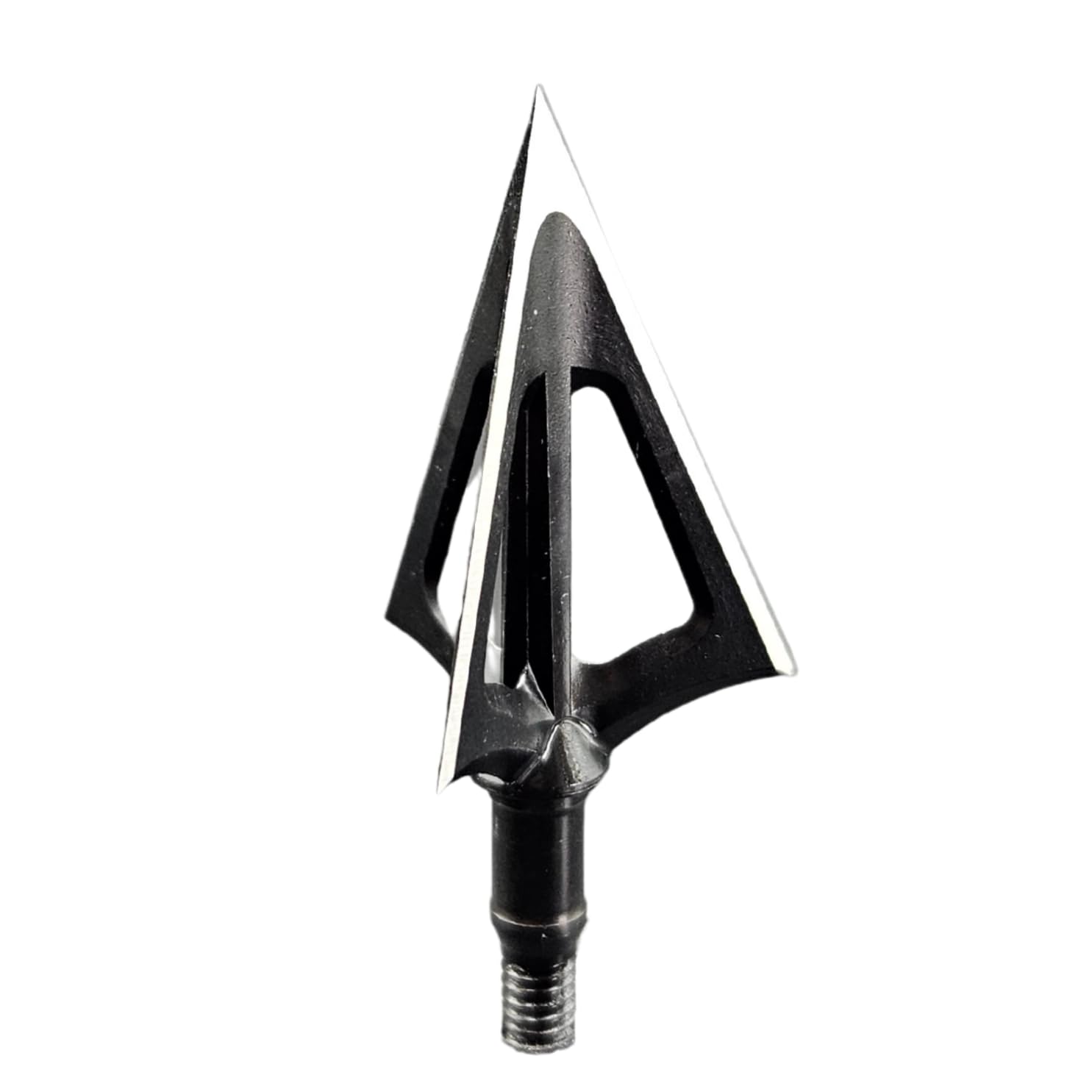
The G5 Montec CS is engineered around a single-sentence philosophy: a broadhead that can’t break can’t fail to penetrate. The Metal Injection Molding (MIM) process creates one continuous piece of carbon steel — no separate ferrule, no replaceable blades, no joints that can separate on impact. This monolithic construction means the Montec CS transfers 100 percent of the arrow’s energy directly into the target, rather than wasting energy on component separation or blade flex.
Hunters using low-poundage bows (45 to 55 pounds) report complete pass-through on whitetail and black bear, a feat that many mechanicals cannot achieve at those energy levels. The 1.0625-inch cutting diameter is narrow by modern standards, but the diamond-cut sharpness and the trocar tip geometry create a wound channel that bleeds efficiently because the entry and exit holes are clean and round rather than ragged. The spin-tested manufacturing ensures every head is true out of the box — no frustrating tuning sessions to get a fixed blade flying straight.
The biggest adjustment for new users is that the Montec CS impacts roughly 2 inches lower than field points at distances past 25 yards due to its heavier tip profile. This is a predictable ballistic difference that can be corrected with sight pin adjustment. The one-piece design also means you can’t replace individual blades — if you hit a rock or a fence post, the entire head is a loss. But for sheer penetration reliability, especially on tough quartering shots, the Montec CS remains the gold standard among fixed-blade cut-on-contact heads.
Why it’s great
- One-piece MIM carbon steel construction eliminates failure points
- Superior penetration on low-poundage bows
- 100% spin-tested for out-of-box accuracy
Good to know
- Impact point differs from field points past 25 yards
- Entire head must be replaced if damaged; no blade swaps
5. G5 Megameat 3-Blade Expandable Broadheads | 3-Pack | 100/125 Grains | Razor Sharp 2″ Cutting Diameter
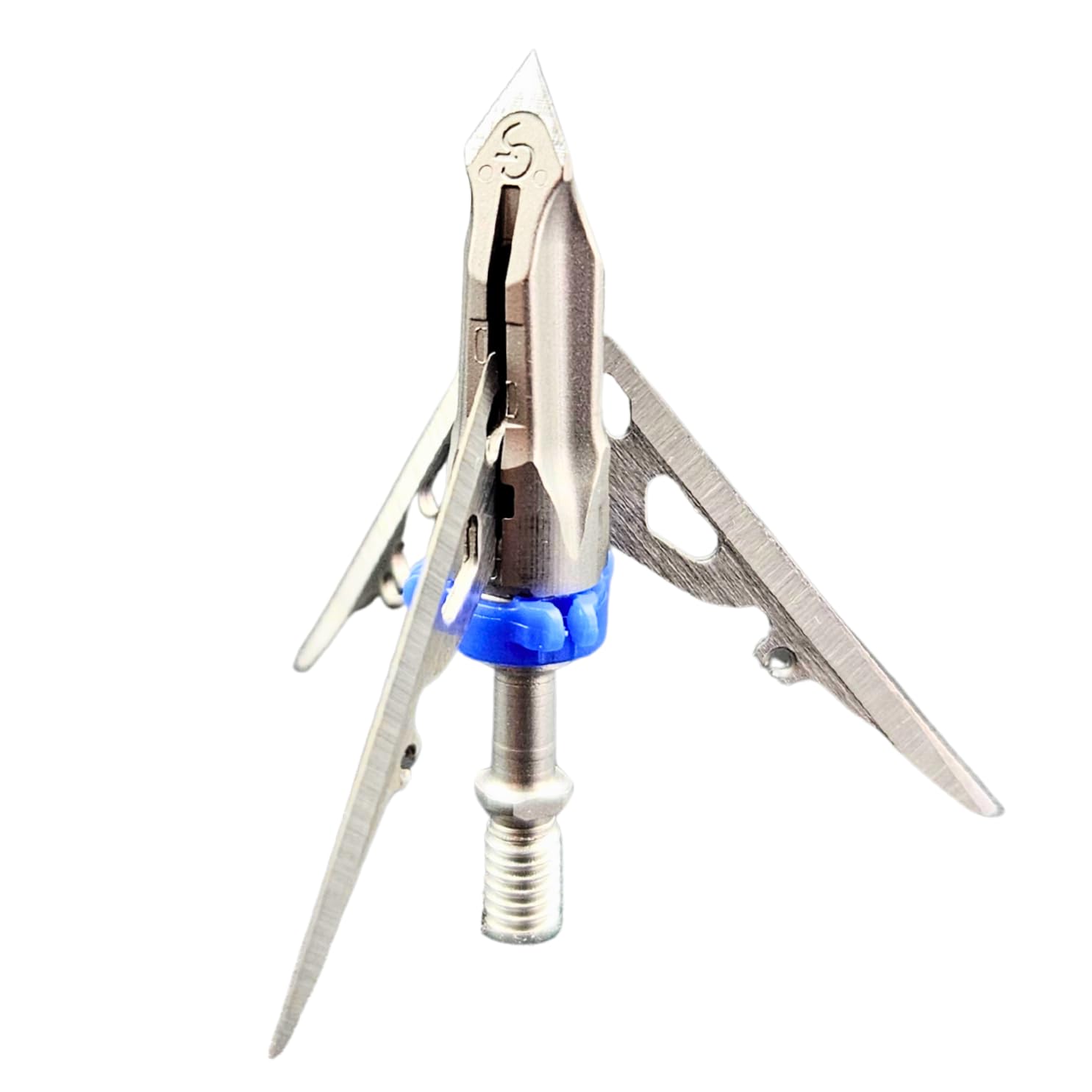
The name “Megameat” is not hyperbolic — this broadhead creates a 2-inch cutting diameter from three rearward-sliding steel blades that deploy upon impact. When properly placed through both lungs, the resulting wound channel produces fist-size entrance and exit holes that translate into dramatically short tracking distances. Hunters using the Megameat on whitetail report almost every deer expiring within 40 yards of the shot, often in sight of the stand, due to the massive blood loss the head creates.
The SnapLock collar system is the engineering highlight — it secures the blades in the closed position during flight, eliminating the risk of premature deployment, then releases on impact to allow the blades to slide rearward as they cut. The chisel tip is designed to bust through the sternum or shoulder blade before the blades deploy, which ensures the mechanical portion of the head is cutting inside the chest cavity rather than being blocked by bone. The rear-deploying blade mechanism also means the blades are less likely to hang up on the exit side of the ribcage, improving pass-through percentage.
The Megameat’s weakness is durability: the blades are sharp enough to slice through hide and muscle with minimal resistance, but they are not built for repeated impacts. After a single large-game kill, the blades are often bent or dulled to the point where replacement is necessary. The head also extends further forward than some quivers can accommodate, so check your quiver’s hood depth before buying. If maximizing blood trail and minimizing tracking distance is your primary goal, the Megameat delivers results that few other broadheads can match.
Why it’s great
- 2-inch cutting diameter creates massive, fast-bleeding wound channels
- SnapLock collar prevents blade opening during flight
- Rear-deploying blades improve pass-through on ribcage exit
Good to know
- Blades are not reusable after large-game impact
- Extended head length may not fit all quiver hoods
6. Swhacker #219 Crossbow Broadheads 100 Grain, 2-Blade Mechanical Expandable, 1.75″ Cut, 3 Pack
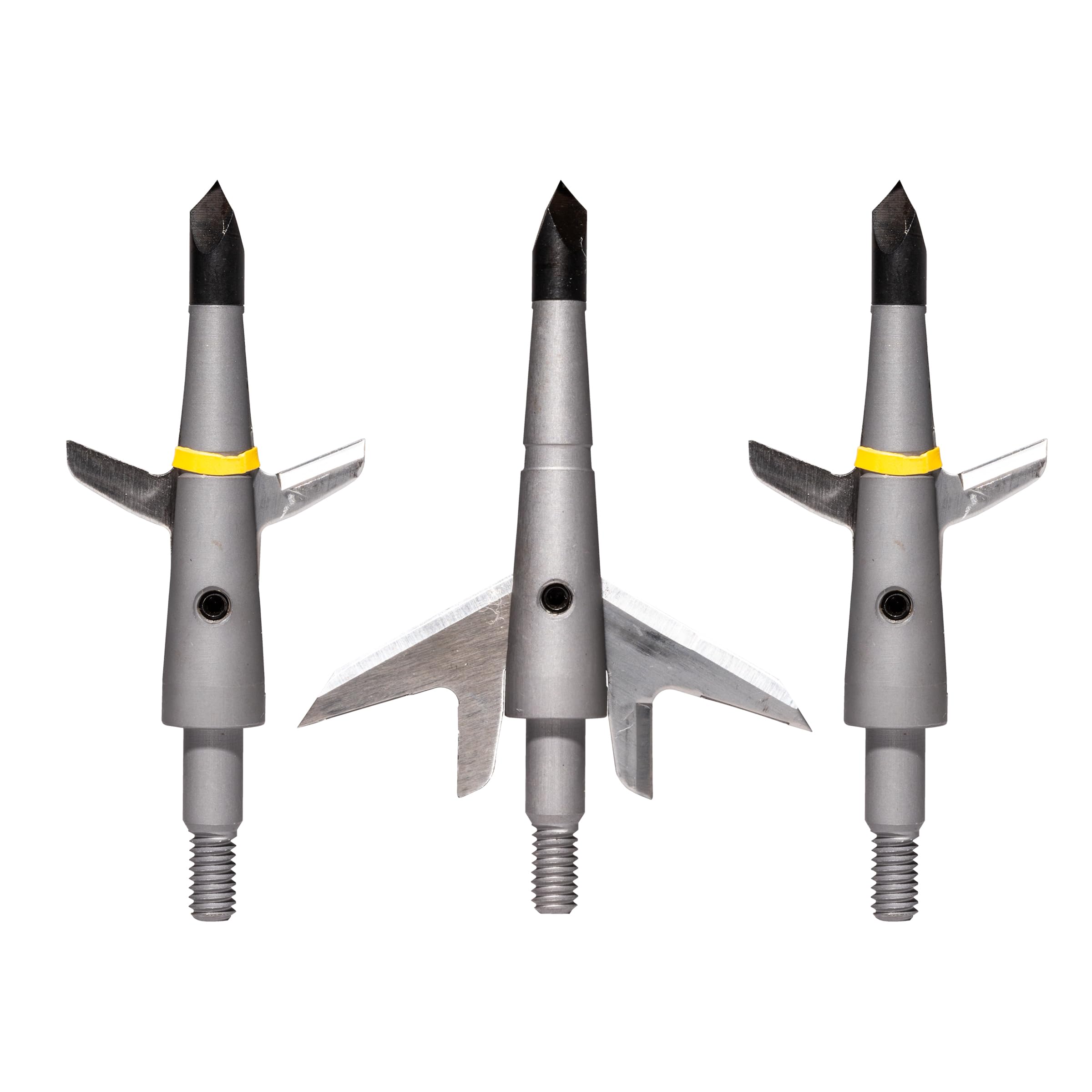
Crossbow hunters face a unique challenge: the higher velocities (350 to 450 fps) common to modern crossbows can cause mechanical broadheads to deploy in flight if the blade retention system isn’t robust enough. The Swhacker #219 is purpose-built to handle this environment, using a patented Two-Slice Technology where the wing blades engage first while the primary blades remain closed, then deploy sequentially on impact. This staged deployment reduces the shock load on the arrow and ensures deep penetration even at crossbow speeds.
The 1.75-inch cutting diameter from the two-blade design is generous for a mechanical, and the aircraft-grade aluminum ferrule keeps the head light enough at 100 grains to maintain flat trajectory from a crossbow. Customers shooting from Ravin and Excalibur platforms report that the Swhacker flies dead-on with field points out to 40 yards after replacing the pre-installed rubber bands with fresh ones — a crucial step because the factory bands can degrade and allow blades to crack open mid-flight. The hardened steel tip and stainless blades handle the extreme energy of crossbow impacts without bending.
The primary drawback is the band sensitivity issue. Several customers noted that the pre-installed bands are too weak for crossbows shooting over 400 fps, and recommend applying two fresh bands per head for reliable blade retention. Once that modification is made, the heads are extremely accurate and effective. The practice tip included in the pack is a nice touch, but some users found it flies differently than the actual broadhead, requiring a separate sight-in session. For the price, the Swhacker #219 offers crossbow-specific reliability that general-purpose mechanicals can’t match.
Why it’s great
- Two-Slice Technology prevents blade deployment during high-speed crossbow flight
- Large 1.75-inch cutting diameter for quick kills
- Includes practice tip for sight-in convenience
Good to know
- Factory rubber bands may need replacement for speeds over 400 fps
- Practice tip may not fly identically to the broadhead
7. Excalibur Boltcutter 150 Grain 1 1/16″ Cutting Diameter Stainless Steel Durable Accurate Hunting Crossbow Arrow Broadheads

When Excalibur set out to make the most accurate fixed-blade broadhead for high-speed crossbows, they went with an all-stainless steel construction and a three-blade design that prioritizes aerodynamic stability over cutting diameter. The Boltcutter’s 1.0625-inch cutting diameter is modest compared to mechanicals, but the trade-off is extreme accuracy: in testing with Excalibur’s fastest crossbow models, the Boltcutter consistently shot sub-4-inch groups at 40 yards when paired with the company’s Firebolt arrows. For crossbow hunters who value tight groups at long range, this is the most accurate head in the review.
The stainless steel ferrule and blades resist corrosion from rain and blood exposure, a meaningful advantage for hunters who don’t want to strip and oil their broadheads after every outing. The 150-grain weight delivers substantial momentum for deep penetration, and the three-blade design creates a clean, triangular wound channel that bleeds efficiently. Hunters using the Boltcutter on whitetail from Excalibur Matrix and Bulldog crossbows report deer rarely traveling more than 30 yards after a double-lung shot, with pass-through penetration on almost every broadside or quartering-away presentation.
Two things limit the Boltcutter’s appeal to a broader audience. First, it is explicitly designed for crossbows — the 150-grain weight and blade geometry may not tune well with compound bows shooting lighter arrows. Second, the narrow cutting diameter means blood trails are less dramatic than what you’d get from a 2-inch mechanical, so shot placement needs to be precise. For crossbow shooters who have their arrow-broadhead-bow system dialed in, the Boltcutter delivers unmatched group consistency and penetration reliability at an entry-level-friendly price point for a six-pack.
Why it’s great
- Sub-4-inch groups at 40 yards with matched crossbow arrows
- Full stainless steel construction resists corrosion
- Six-pack packaging offers excellent per-head value
Good to know
- Designed specifically for crossbows; may not perform on compounds
- Narrow 1.0625-inch cut requires precise shot placement
FAQ
Can I use mechanical cut-on-contact broadheads with a low-poundage bow under 50 pounds?
Will a 2-inch cutting diameter broadhead affect my arrow flight compared to a 1-inch head?
How many times can I reuse a cut-on-contact broadhead after killing a deer?
Final Thoughts: The Verdict
For most hunters, the best cut on contact broadheads winner is the Rage 3 Blade Chisel Tip SC because its chisel tip reliably breaches bone and the Slip Cam deployment system ensures consistent blade opening across a wide range of bow energies. If you want the most massive blood trail possible, grab the G5 Megameat and enjoy tracking distances under 40 yards on whitetail. And for low-poundage bows or hunters who refuse to tolerate any deployment failure risk, nothing beats the Magnus 4 Blade Hornet with its lifetime warranty and field-point-like flight characteristics.

Mo Maruf
I created WellFizz to bridge the gap between vague wellness advice and actionable solutions. My mission is simple: to decode the research and give you practical tools you can actually use.
Beyond the data, I am a passionate traveler. I believe that stepping away from the screen to explore new environments is essential for mental clarity and physical vitality.