Our readers keep the lights on and my smoothie glass nicely filled. As an Amazon Associate, I earn from qualifying purchases.
Making the switch from plastic cutting boards means choosing a surface that won’t leach microplastics into your food, stays gentler on your knife edges, and simply looks better sitting on your counter. But the world of wood and bamboo is full of traps — boards that split after a few washes, surfaces treated with questionable glues, or dimensions that look generous in photos but shrink your workspace in reality. You need a board that stays flat, resists odors, and withstands daily chopping without splintering.
I’m Mohammad Maruf — the founder and writer behind WellFizz. For this guide, I’ve spent dozens of hours combing through technical specifications, reading verified buyer experiences, and analyzing the construction methods of seven non-plastic cutting boards to separate the lasting performers from the soon-to-warp disappointments.
Whether you want a budget-friendly set for everyday meal prep or a single showpiece butcher block for weekend roasts, here is the definitive breakdown of the best cutting boards not plastic on the market today.
How To Choose The Best Cutting Boards Not Plastic
Dropping plastic means committing to a material that breathes, absorbs moisture, and demands a fraction more care. But the payoff is a surface that stays sanitary, lasts years longer, and actually protects your knife edges. Here is what separates a smart buy from a regrettable one.
Material matters more than you think — bamboo, teak, walnut, or acacia
Bamboo is a grass, not a wood, and it is harder than most hardwoods — that hardness keeps it warp-resistant but can dull knives slightly faster. Teak contains natural oils that resist moisture and mold, making it an excellent choice if your kitchen runs humid. Black walnut offers a softer end-grain surface that self-heals after knife cuts, though it stains more easily. Acacia brings striking grain patterns and density comparable to teak but can be prone to splitting if the wood is not properly dried before construction.
Construction type — edge-grain, end-grain, or glue-free
Edge-grain boards (strips glued on their sides) are the most common and offer decent durability at a lower cost. End-grain boards (wood blocks arranged like a checkerboard) absorb knife cuts into the wood fibers instead of splitting them, keeping the board smoother over time and preserving blade sharpness. The newest innovation, glue-free surface technology, eliminates formaldehyde-based adhesives from the cutting surface entirely — the top layer uses mechanical compression rather than glue, which matters if you chop raw proteins directly on the board.
Thickness, juice grooves, and stability features
Boards thinner than 1.5 centimeters tend to warp, cup, or crack after repeated washing. Look for a minimum thickness of 1.5 centimeters for bamboo and 3.5 centimeters for end-grain wood. A deep juice groove around the perimeter prevents pooling liquids from running onto your counter, and rubber feet underneath keep the board from sliding during heavy chop work. Handles or cutout notches make it easy to lift and transfer ingredients, but they also create weak points if the board is too thin.
Care commitment — hand wash, oil, and never soak
Every non-plastic board requires hand washing — dishwashers warp wood and strip natural oils. You also need to apply food-grade mineral oil or beeswax every two to four weeks to prevent the surface from drying out and cracking. If you are not willing to add that five-minute routine to your kitchen maintenance, a sealed bamboo board with a factory-applied finish will be more forgiving than an unfinished end-grain walnut board.
Quick Comparison
On smaller screens, swipe sideways to see the full table.
| Model | Category | Best For | Key Spec | Amazon |
|---|---|---|---|---|
| BABILONIA Black Walnut | Premium End-Grain | Knife preservation and self-healing surface | 1.7-inch thick end-grain walnut | Amazon |
| Ironwood Gourmet Carolina Acacia | End-Grain Acacia | Durable square board with deep juice well | 14×14 inch acacia, 1.5-inch thick | Amazon |
| Socisen Teak Wood Set | Premium Teak | Moisture resistance and mold prevention | 17-inch longest board, teak wood | Amazon |
| Socisen Bamboo Set | Thick Bamboo | Heavy-duty chopping with non-slip grip | 5-layer compressed bamboo, rubber feet | Amazon |
| Greener Chef Bamboo Set | Glue-Free Bamboo | Non-toxic surface for raw proteins | 18-inch largest board, glue-free surface | Amazon |
| Royal Craft Wood Bamboo Set | Value Bamboo Set | All-in-one set with side handles and juice groove | 15×10-inch largest board, 0.6-inch thick | Amazon |
| Farberware Extra-Large Bamboo | Large Budget Board | Maximum chopping area on a budget | 14×20-inch single board, 0.75-inch thick | Amazon |
In‑Depth Reviews
1. BABILONIA American Black Walnut Cutting Board
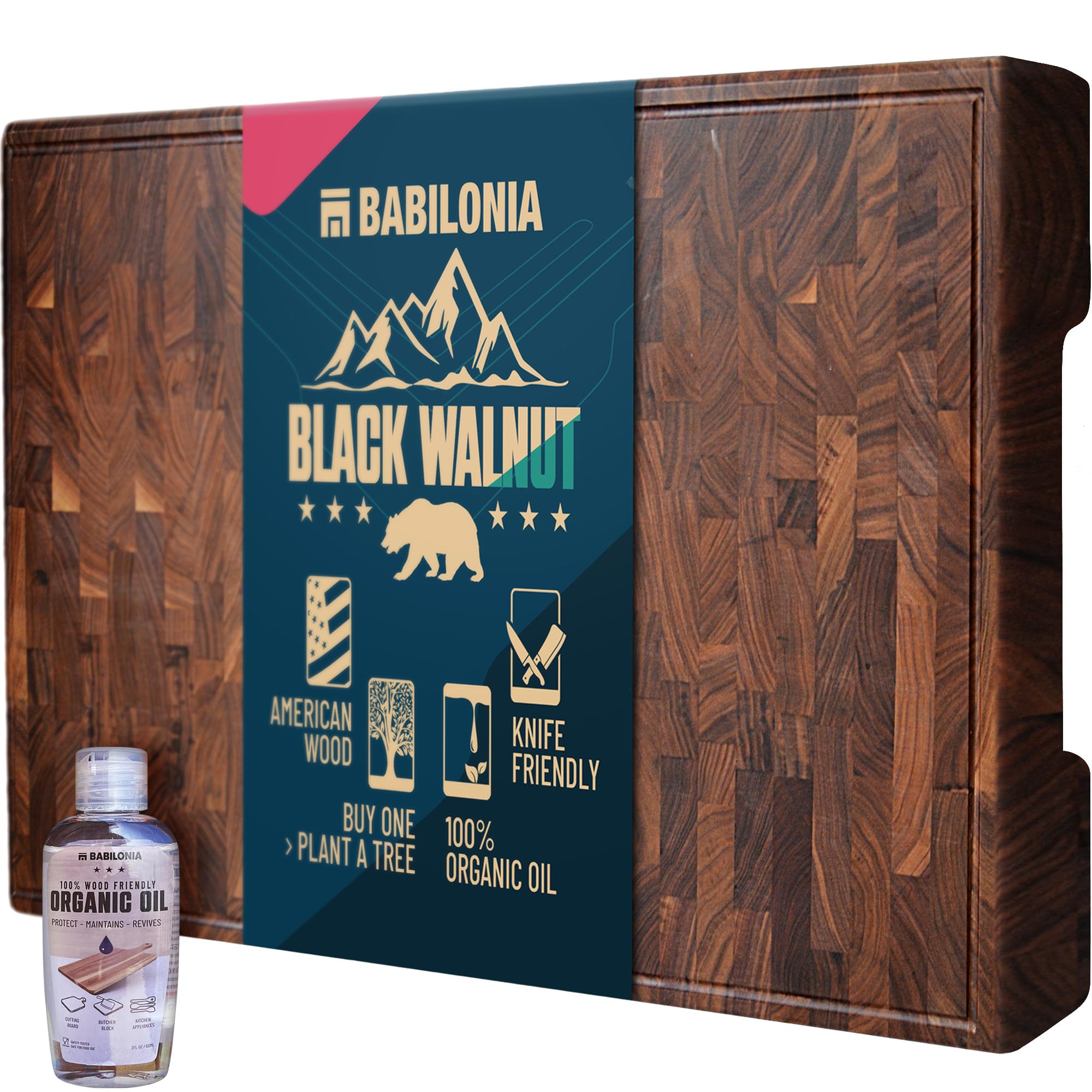
At 1.7 inches thick and constructed from solid American black walnut using the end-grain technique, this board delivers the most forgiving cutting experience of any option here. End-grain fibers open and close around knife blades instead of splitting, which means your chef’s knife stays sharp noticeably longer and the board surface never develops those permanent sliced-through grooves that plague edge-grain boards. The 15.7 x 10.2 inch surface is large enough for a full roast chicken prep but compact enough to leave on the counter permanently.
The design includes a clever undercut notch that holds a small plate or bowl, letting you sweep chopped ingredients directly into it without lifting the board — a small detail that genuinely changes your workflow when you are dicing onions or mincing garlic. It ships pre-oiled and ready to use, with a free bottle of organic mineral oil included, plus a pair of rubber feet that keep the board planted firmly on granite or butcher block surfaces. Several verified buyers noted the board arrived with a smooth, sanded finish that required no additional conditioning before first use.
One reviewer reported a split after two months, though the company responded with a replacement and investigated the cause. That single durability concern, combined with the fact that walnut stains more easily than teak or bamboo, means this board demands consistent oiling — skip it for two weeks and you may see dark juice marks from tomatoes or berries. For anyone who prioritizes knife health and wants a board that doubles as a serving piece for charcuterie, this is the strongest option in the premium tier.
Why it’s great
- End-grain construction self-heals knife marks and keeps blades sharper
- Included oil and plate make it ready to use out of the box
- Under-cut notch lets you sweep ingredients into a bowl without lifting
Good to know
- Walnut stains more easily than bamboo or teak — consistent oiling is necessary
- One documented splitting case, though vendor replacement was smooth
- Single board only — no secondary smaller board for quick tasks
2. Ironwood Gourmet Carolina Acacia Wood Chopping Board

This square 14 x 14 inch board uses acacia wood in an end-grain configuration, giving it one of the most visually striking checkerboard patterns of any board in this lineup. Acacia is naturally dense, with a Janka hardness rating around 2,300 — harder than walnut but slightly softer than bamboo — which makes it highly resistant to scratching while still being gentler on knives than glass or stone. The 1.5-inch thickness gives it heft without being unwieldy, and multiple reviewers mentioned using it as a permanent prep station for hefty tasks like spatchcocking poultry or cubing butternut squash.
The juice groove is deeper than average and sits closer to the edge, which means a carved roast or a pile of sliced tomatoes won’t send liquid cascading onto your counter. A clever tipping groove on one side lets you tilt the board to drain juices directly into a pan or sink — a feature that disappears on most competitor boards. Ironwood Gourmet includes a care card recommending weekly mineral oil treatments, and their customer support team has been praised for replacing boards that develop raised grain after the first wash.
Raising grain after the initial wash appears to be a minor but recurring issue — several users noted that the surface felt rough after the first drying cycle, though a light sanding and oiling resolved it completely. The grooved end-grain pattern also creates more surface texture than a flat bamboo board, making it fractionally harder to wipe clean. But for durability and the ability to handle heavy meat prep without wobbling, this board competes well against options costing considerably more.
Why it’s great
- End-grain acacia is dense, durable, and self-healing on knife marks
- Deep juice groove with tipping design prevents countertop messes
- Exceptional customer support — replacements offered when grain raises
Good to know
- Grain may raise after first wash — initial light sanding recommended
- Textured end-grain surface is harder to wipe clean than flat bamboo
- Single board only and slightly heavy for frequent counter-to-sink trips
3. Socisen 3 Pack Teak Wood Cutting Board Set
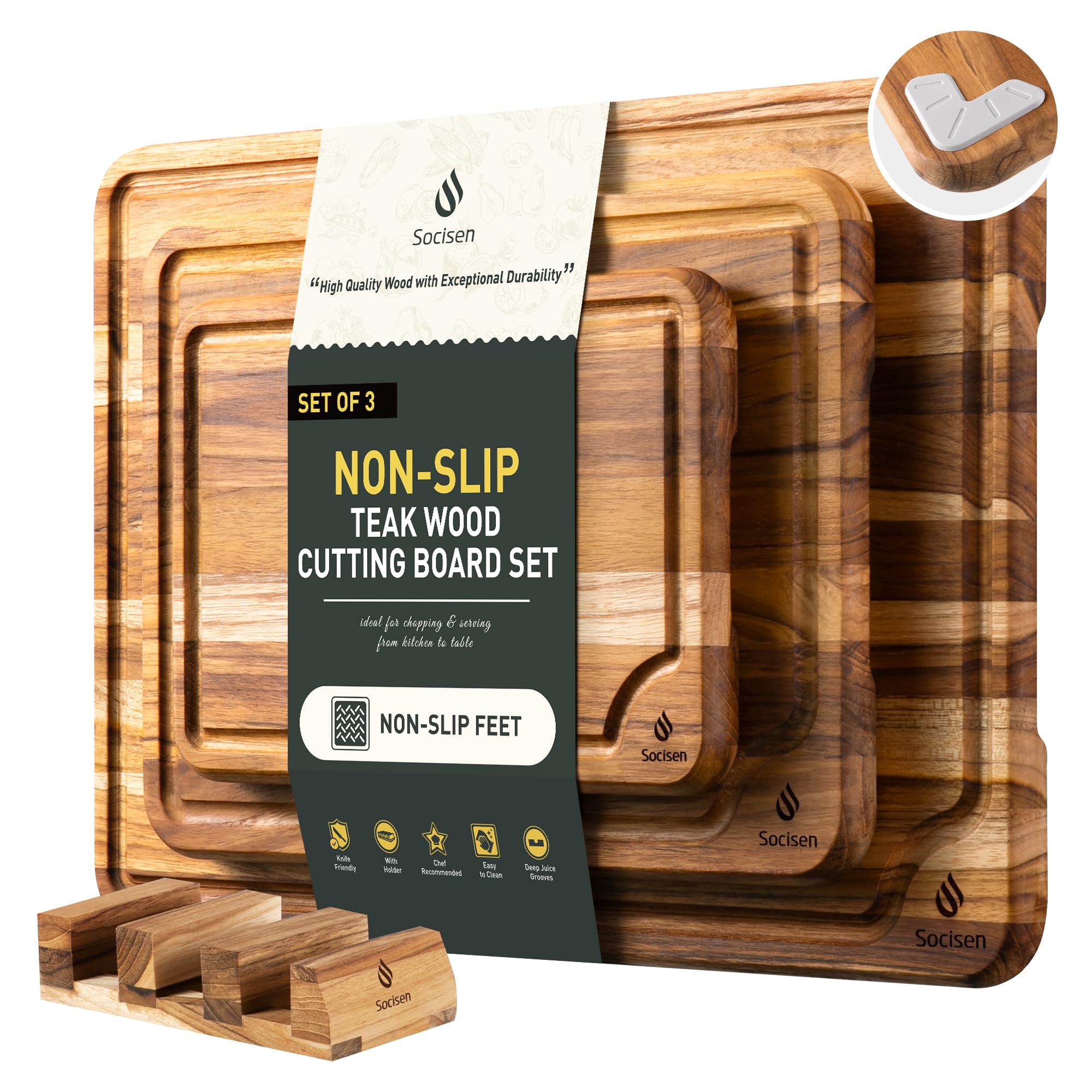
Teak contains naturally occurring rubber and oil compounds that make it one of the most water-resistant woods available — it is the same reason teak is used for boat decking. This three-piece set from Socisen capitalizes on that property, giving you boards in 10, 13, and 17 inch lengths that resist mold, mildew, and warping even if you live in a humid coastal climate. The raised non-slip rubber grips on the bottom create a small air gap underneath the board, which prevents moisture from getting trapped between the wood and the countertop — a design choice that matters more than most buyers realize.
The board surfaces are sanded smooth and sealed with a food-safe finish, so they do not require the same intense oiling schedule as unsealed walnut or acacia boards. Several buyers who had previously used plastic boards noted that the teak set felt notably heavier and more stable during chopping, with no sliding even on smooth quartz countertops. The included wooden stand keeps the boards upright and allows air to circulate on all sides, which speeds drying and prevents the sour smell that develops when wet wood sits flat on a counter.
Teak is dense enough that the chopping sound is louder than bamboo or walnut — one reviewer described it as a “loud thwack” every time the blade contacts the board. That acoustic difference may be a non-issue for most users, but if you prep early in the morning while others sleep, a bamboo board would be quieter. Also, the three sizes are generous but the largest board at 17 inches is a hair shorter than the Farberware single board, so if you need an enormous surface for rolling dough or carving a full brisket, this set may feel slightly cramped.
Why it’s great
- Teak’s natural oils resist moisture, mold, and warping better than other woods
- Raised non-slip grips create airflow underneath, preventing trapped moisture
- Three sizes with stand cover all daily prep needs without taking excess counter space
Good to know
- Dense teak produces louder chopping sounds than bamboo or walnut
- Largest board at 17 inches may be too small for very large roasts or dough rolling
- Occasional oiling still recommended despite factory seal for long-term durability
4. Socisen 3 Pack Heavy Duty Bamboo Cutting Board Set

What sets this bamboo set apart from the countless bamboo boards on the market is the five-layer splicing construction. Instead of a single thin bamboo slab that can cup and warp over time, Socisen presses five layers of bamboo strips together, creating a board that is approximately twice as thick as standard entry-level boards. The result is a set that feels solid under the knife, with no flex or bounce even when you are putting weight into a heavy chop through a sweet potato or a butternut squash.
Each board comes with non-slip rubber feet that grip the counter effectively, and the rounded edges make handling comfortable even when the board is loaded with prepped ingredients. The set includes three progressively smaller boards, making it easy to use one for raw proteins and another for produce without cross-contamination. Several buyers specifically mentioned that the denser bamboo construction resisted staining deeply — one user reported chopping raw beets and washing the board within 15 minutes with no lasting pink discoloration.
The juice groove works adequately for moderate liquid volumes, but one reviewer noted that when resting a medium-rare steak with significant pooling juices, the groove could overflow. For heavy meat carving, a deeper juice channel would be preferable. Additionally, the boards arrived with a factory finish that buyers described as dry — a thorough initial oiling before first use is non-negotiable if you want to prevent the surface from cracking within the first month.
Why it’s great
- Five-layer bamboo construction resists warping significantly better than single-layer boards
- Non-slip feet keep the board stable during aggressive chopping
- Dense surface resists deep staining even from pigmented foods like red cabbage
Good to know
- Factory finish is dry — first-time oiling is essential to prevent cracking
- Juice groove can overflow with very juicy meats like a resting steak
- Bamboo hardness will dull knives slightly faster than end-grain walnut or teak
5. Greener Chef Luxury Bamboo Cutting Board Set
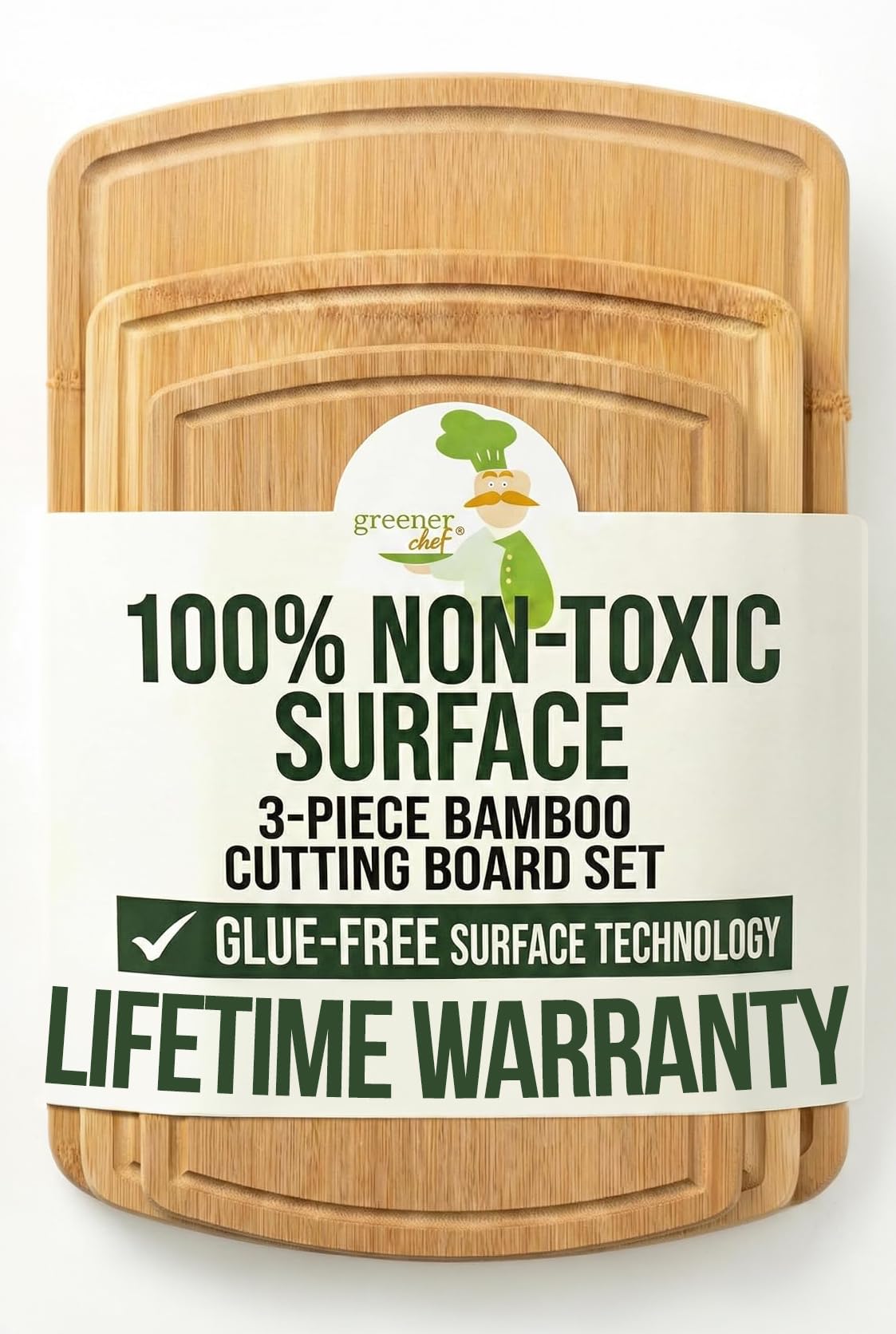
The standout feature of this Greener Chef set is the patented glue-free surface technology — the top layer of each board is formed through mechanical compression rather than adhesive bonding, which eliminates formaldehyde and other glue-derived toxins from the cutting surface entirely. For anyone who uses a board for raw poultry or fish and worries about chemical leaching into the porous surface, this is the most defensible choice on the list. Each board in the three-piece set (18 x 12.5, 15 x 11, and 12 x 9 inches) is a single continuous piece of bamboo with no glued seams on the food-facing side — the adhesive is only present at the outer edges where the boards are bound together.
The 0.6-inch thickness keeps these boards noticeably lighter than any other option here, which is a deliberate tradeoff. You can lift and clean the largest board with one hand, and moving ingredients from the board to a pan or bowl requires no awkward balancing. The set covers essentially every kitchen task — the smallest board handles quick fruit prep, the medium board is ideal for vegetables, and the large board accommodates meal-sized meat portions. Several users reported that the bamboo surface was very smooth to the touch and that the boards dried quickly after washing, with no musty odor developing over time.
The lack of rubber feet on these boards is the most significant functional compromise. On a smooth countertop, the board can slide forward during vigorous chopping unless you place a damp paper towel underneath. Also, the thin profile means the board may cup slightly over time if you consistently wash it in hot water — hand washing in warm water and towel drying immediately is the only safe method. The lifetime replacement guarantee from Greener Chef does provide a safety net, but you would rather not use it.
Why it’s great
- Glue-free surface eliminates formaldehyde exposure from the cutting area
- Lightweight construction makes handling and cleaning easy even for the largest board
- Includes three well-proportioned sizes that cover all common prep tasks
Good to know
- No rubber feet — board can slide on smooth surfaces during hard chopping
- Thin 0.6-inch profile risks cupping if regularly exposed to hot water
- Requires hand washing and immediate drying — no dishwasher or soaking
6. Royal Craft Wood Bamboo Cutting Board Set

Royal Craft Wood’s set of three bamboo boards (15 x 10, 12 x 8, and 9 x 6 inches) hits the sweet spot between functionality and price by including features that are usually reserved for more expensive boards: built-in side handles on each board and a deep juice groove on the largest board. The handles are cut out from the bamboo itself rather than being attached plastic or metal add-ons, which means there is nothing to rust, break, or sanitize separately. The handles make it easy to slide the board from counter to table, and several reviewers mentioned using the largest board as a DIY charcuterie platter during gatherings.
The bamboo is carbonized, which gives it a darker, richer color than natural bamboo and adds resistance to moisture absorption. The sealed surface does an admirable job of repelling liquid — one reviewer tested the board by letting diced tomatoes sit on it for ten minutes and reported no visible staining. The boards are also reversible, so you can use the ungrooved side for dry tasks like slicing bread and the grooved side for wet tasks like carving a roasted chicken.
A small but notable number of buyers mentioned that the boards require diligent oiling to prevent the surface from drying out and developing small splinters around the edges. The 0.6-inch thickness is adequate for general prep but flexes slightly when you apply serious force, such as breaking down a whole pineapple or spatchcocking a chicken. For standard vegetable prep, light meat cutting, and serving, this set works well, but it is not built for commercial-grade abuse.
Why it’s great
- Built-in side handles on all three boards make transferring ingredients to the table effortless
- Deep juice groove on the largest board effectively captures liquid from cut meats and fruits
- Carbonized bamboo resists moisture absorption and looks more premium than natural bamboo
Good to know
- Edges may develop splinters if the boards are not oiled consistently
- 0.6-inch thickness flexes under heavy cutting tasks like breaking down large squash
- Hand wash only and not suitable for dishwasher or extended soaking
7. Farberware Extra-Large Bamboo Cutting Board
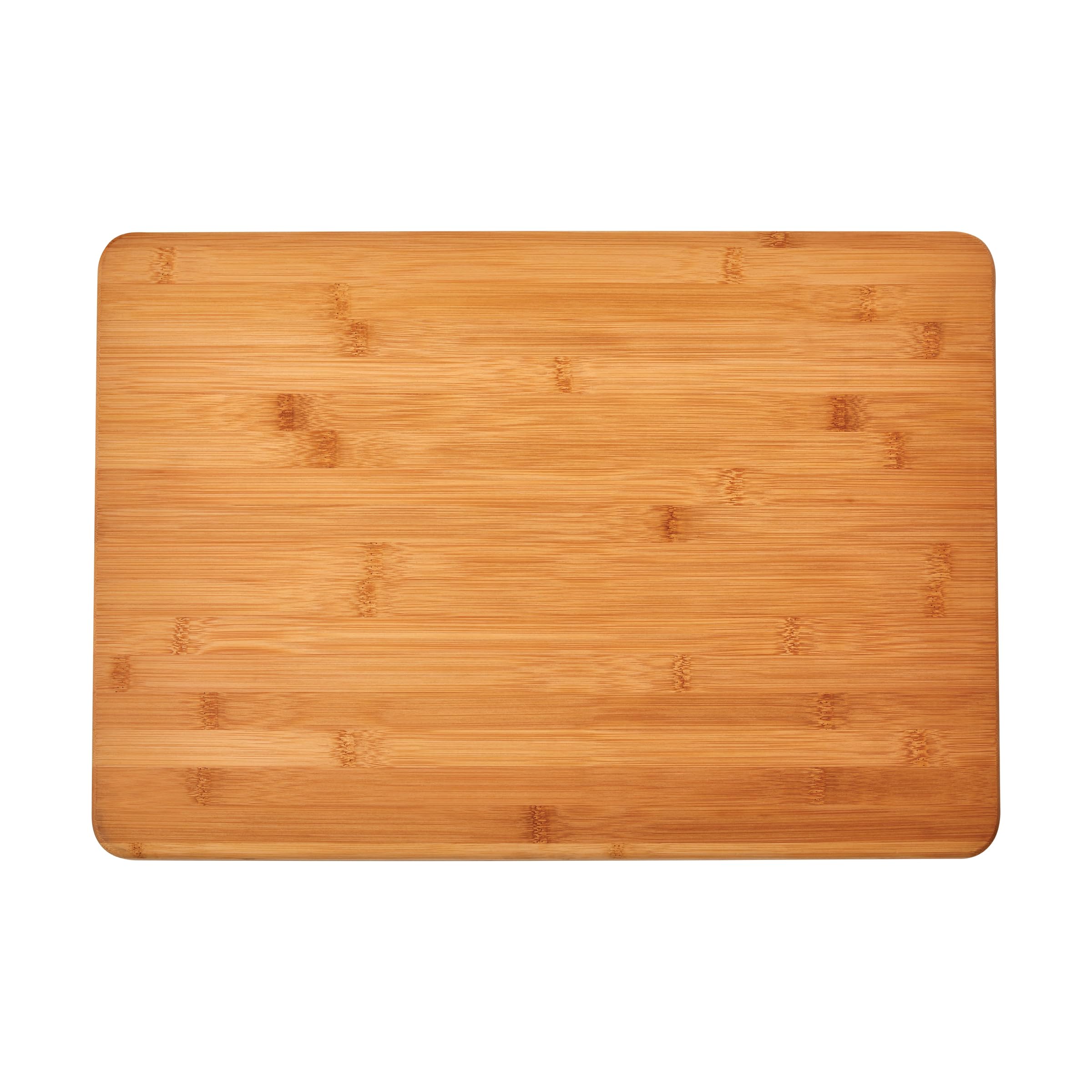
At 14.17 inches by 20.08 inches, this Farberware board delivers the largest continuous cutting surface in this entire lineup — large enough to fit a full sheet of rolled pizza dough, a standing rib roast, or a dozen prepped burger patties side by side. The 0.75-inch thickness is moderate, but the sheer surface area means you will rarely run out of workspace during marathon cooking sessions. It is built from Moso bamboo, which is one of the denser bamboo species, and the board arrives flat and square with no visible cupping out of the box.
The board is reversible, offering two identical cutting surfaces that effectively double the usable lifespan before you need to sand or refinish. Since it lacks a juice groove or rubber feet, you can flip it without worrying about alignment, though the lack of a groove means any liquid from meats or fruits will run directly to the edges of the board and onto your counter. Several buyers noted this as the single biggest operational downside — if you are slicing a large heirloom tomato, you will need a towel at the edge to catch the runoff.
The board is also noticeably heavier than the Greener Chef or Royal Craft Wood sets at 4.8 pounds, though the large dimensions make it awkward to carry anyway. Reviewers consistently mention that the board requires mineral oiling every week or two to prevent the bamboo from drying out and staining, and that it is not suitable for electric knife use because the blades create deep grooves that are difficult to sand out. For bakers who need a massive clean rolling surface or home cooks who regularly prep large quantities of vegetables, this board is unmatched in sheer capacity — just plan for the liquid management issue.
Why it’s great
- Largest cutting surface in this guide — 14×20 inches fits full dough sheets and large roasts
- Reversible design doubles the usable surface before refinishing is needed
- Dense Moso bamboo resists warping and knife penetration better than cheaper bamboo boards
Good to know
- No juice groove or rubber feet — liquid runs off the edge and the board slides on smooth counters
- Heavier than other bamboo boards, at 4.8 pounds, and awkward to carry at this size
- Not recommended for electric knives — blade action creates deep, hard-to-sand grooves
FAQ
How often should I oil my non-plastic cutting board?
Can I use a bamboo or wood cutting board for raw chicken?
What is the difference between carbonized and natural bamboo?
Final Thoughts: The Verdict
For most users, the best cutting boards not plastic winner is the BABILONIA Black Walnut because end-grain construction keeps your knives sharp longer and the board self-heals from daily use. If you want a moisture-resistant set that will never warp or mold, grab the Socisen 3 Pack Teak Wood Set. And for a budget-friendly oversized surface that handles everything from dough rolling to holiday roasts, nothing beats the Farberware Extra-Large Bamboo Board.

Mo Maruf
I created WellFizz to bridge the gap between vague wellness advice and actionable solutions. My mission is simple: to decode the research and give you practical tools you can actually use.
Beyond the data, I am a passionate traveler. I believe that stepping away from the screen to explore new environments is essential for mental clarity and physical vitality.