Our readers keep the lights on and my smoothie glass nicely filled. As an Amazon Associate, I earn from qualifying purchases.
Drilling into concrete is a fundamentally different challenge than drilling into wood or drywall. A standard drill spins fast but delivers minimal impact, which means the bit skates across the surface or the motor bogs down immediately. Concrete demands a hammering action — a rapid, percussive force that pulverizes the aggregate while the bit rotates to clear the dust. A rotary hammer or a true hammer drill combines these two actions into a single mechanical process, applying thousands of blows per minute directly into the material. The difference between the right tool and the wrong one is the difference between finishing a single hole in ten seconds versus fighting the tool for ten minutes.
I’m Mohammad Maruf — the founder and writer behind WellFizz. I’ve spent dozens of hours analyzing rotary hammer specifications, impact energy ratings, motor amperage, vibration control systems, and real-world user performance data to separate tools that actually deliver on their concrete-drilling claims from those that overheat the first time they hit a rebar.
This guide breaks down the key specs, real trade-offs, and seven tested models that cover the full range of needs — from light anchoring through poured foundations to demolition-scale chipping. By the time you finish reading, you’ll know exactly which best drill for concrete fits your specific job and budget.
How To Choose The Best Drill For Concrete
Choosing a concrete drill means matching the tool’s impact energy, chuck system, and weight to the specific scale of your project. A light-duty anchor job in a block wall requires far less power than cutting through a 6-inch reinforced foundation slab. Here are the key factors to evaluate.
Chuck System: SDS-Plus vs SDS-Max
All serious concrete drills use an SDS (Slotted Drive System) chuck. SDS-Plus is the standard for 1/4-inch up to 1-1/8-inch diameter holes in residential and light commercial work. It uses a two-groove bit shank that locks into the chuck with a spring-loaded mechanism, allowing the bit to slide back and forth within the chuck for the hammering action. SDS-Max uses a larger, four-groove shank designed for bits above 1-1/8-inch diameter and for heavier demolition work. The SDS-Max system transfers more impact energy and is the standard for heavy rotary hammers and breaker tools. Check the diameter of holes you plan to drill — for anything above 1-1/8 inches, you need an SDS-Max tool.
Impact Energy Measured in Joules
Impact energy is the single most important performance spec for concrete penetration. Measured in Joules (ft-lbs), it represents the force delivered per blow by the hammer mechanism. A tool delivering 2.6 Joules will drill through standard brick and block easily but will struggle or stall against high-psi concrete with rebar. Tools in the 5-7 Joule range are suitable for most poured concrete applications up to moderate reinforcement. Tools above 7 Joules, especially those in the 10 Joule range, can handle heavy demolition, chipping, and drilling through layered concrete and rock. Choose a tool with the lowest impact energy that will reliably complete your specific job — excessive power adds weight and cost.
Quick Comparison
On smaller screens, swipe sideways to see the full table.
| Model | Category | Best For | Key Spec | Amazon |
|---|---|---|---|---|
| DOVAMAN RH15A | Rotary Hammer | All-Around Heavy Drilling | 5.2 ft-lbs / 7 Joules | Amazon |
| BOSCH RH328VC | Rotary Hammer | All-Day Comfort & Precision | 2.6 ft-lbs Impact Energy | Amazon |
| Berserker 42M | Heavy Rotary | Demolition & Chipping | 10 Joules Impact Energy | Amazon |
| DEWALT DW130V | Spade Handle Drill | Mud Mixing & Low-Speed Torque | 550 RPM / 9 Amp | Amazon |
| Berserker 26FA | Rotary Hammer | Mid-Range Masonry Drilling | 3.3 ft-lbs / 4.5 Joules | Amazon |
| WORKPRO 7.5Amp | Rotary Hammer | Entry-Level Budget Drilling | 5100 BPM Impact Frequency | Amazon |
| DEWALT DW511 | Hammer Drill | Light Concrete & Brick | 7.8 Amp Motor / 4.3 lbs | Amazon |
In‑Depth Reviews
1. DOVAMAN RH15A 12.5Amp Rotary Hammer
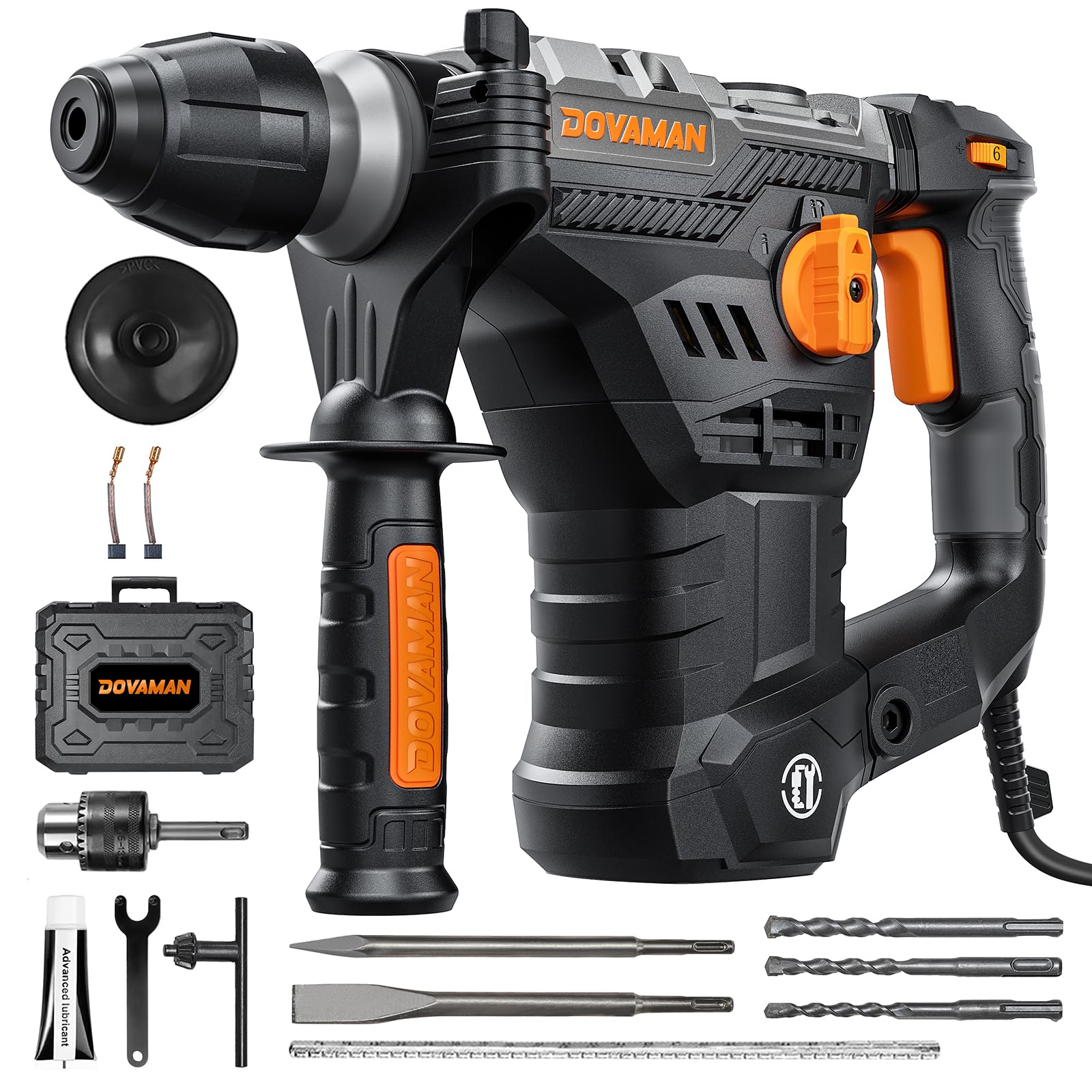
The DOVAMAN RH15A sits in a sweet spot where impact energy, feature set, and build quality converge without the premium price tag of flagship brands. Delivering 5.2 ft-lbs (7 Joules) of impact energy from its 12.5 Amp motor, it drills 1-1/4 inch holes in concrete and can handle 1-9/16 inch bits in wood. The four-function selector — chiseling, hammer drill, drill only, and chisel position adjustment — gives you the versatility to switch between demolition and precise drilling without swapping tools. The included Vibration Damping Technology (VDT) reduces hand fatigue noticeably compared to older rotary hammers at this power level.
The safety clutch is a critical feature at this impact energy level. When the bit catches on rebar or binds in the hole, the clutch disengages the drive to prevent the tool from twisting your wrist. The SDS-Plus chuck accepts standard masonry bits and allows tool-free changes with automatic locking. The kit includes three SDS-Plus bits (8mm, 10mm, 12mm), a flat chisel, a point chisel, an SDS-Plus adapter for standard chucks, and a carrying case — enough accessories to start most concrete projects immediately.
At 12.3 pounds bare weight, this is a tool you notice after extended overhead work. The auxiliary handle adjusts 360 degrees, which helps distribute the load across different grip positions, but the rubber overmold grip is texturized enough for secure handling even with gloves. The heat dissipation system and anti-dust structure around the motor vents extend service life on job sites with airborne concrete dust. Some users report that the auxiliary handle can loosen during heavy side-load applications — periodic re-tightening is advisable.
Why it’s great
- High 7 Joule impact energy punches through reinforced concrete quickly
- Four-function selector covers drilling, hammering, and chiseling without a mode switch
- Safety clutch protects wrists during bit binding events
Good to know
- Auxiliary handle may loosen during heavy side-load drilling applications
- At 12.3 lbs, overhead work causes faster arm fatigue than lighter models
2. BOSCH RH328VC 1-1/8 Inch SDS-plus Rotary Hammer

The BOSCH RH328VC prioritizes operator comfort without sacrificing drilling capability. Its 8.0 Amp motor delivers 2.6 ft-lbs of impact energy — sufficient for most residential concrete anchoring, block wall drilling, and light chipping tasks. The standout feature is Bosch’s Active Vibration Control, which isolates the hammer mechanism from the main handle and adds a rubber dampener in the grip area. This system reduces the cumulative strain that typically makes rotary hammers tiring after drilling a dozen 5/8-inch anchor holes. The variable-speed three-finger trigger provides precise control for bit starting, minimizing the bit walking that plagues single-speed tools on smooth concrete surfaces.
The multifunction selector offers three modes: rotation only (standard drilling in wood and metal), rotary hammer (concrete drilling), and hammer only (chipping and light demolition). The Vario-Lock feature allows the user to rotate the hammer mechanism to 12 different positions relative to the chisel, making the tool adaptable to tight spaces. The integral clutch helps reduce torque reaction when the bit binds, a real safety benefit during high-torque applications. At only 7.7 pounds, this is one of the lightest SDS-Plus rotary hammers available, making it ideal for overhead anchor installation.
The rubber cushion on the SDS-Plus chuck has been reported to crack over extended heavy use, though the chuck function remains unaffected. The tool is louder than typical household drills — expect to use hearing protection, especially in enclosed spaces. It ships with an auxiliary handle, depth gauge, and a hard carrying case but no bits, so budget for an SDS bit set separately. Users consistently report drilling 1/2-inch rebar holes in under 15 seconds, which is fast for an 8 Amp tool in this weight class.
Why it’s great
- Active Vibration Control dramatically reduces hand fatigue during extended drilling sessions
- Lightweight 7.7 lb design excels for overhead concrete drilling tasks
- Variable-speed trigger allows precise bit starting without walking
Good to know
- No bits or chisels included in the package
- Rubber chuck cushion may crack under very heavy use, though function is unaffected
3. Berserker 42M 1-9/16 Inch SDS-Max Rotary Hammer

The Berserker 42M transitions into a different category of tool — one designed for demolition and heavy chipping rather than precision drilling. This extra power lets it handle 1-9/16 inch diameter bits in concrete and chisel through 5-inch thick slabs with the hammer-only mode. The tool uses an SDS-Max chuck, which accepts larger bits than SDS-Plus and transfers more force. Note that the 42M does not have a drill-only rotation mode — it operates in hammering-with-rotation and hammering-only modes.
The overload clutch protection is essential at this power level. Without it, a bit catching on rebar at 10 Joules of impact could break your wrist or cause a serious fall. The six-speed transmission allows you to match the RPM and BPM to the material, from soft brick to heavily reinforced concrete. The upgraded Anti-Vibration Technology is effective enough to allow extended chipping sessions, though at 16 pounds, the weight itself becomes a limiting factor for overhead work. The kit includes an SDS-Max flat chisel, point chisel, a 7/8-inch drill bit, an SDS-Max to SDS-Plus adapter, and three SDS-Plus bits for smaller work.
The carrying case is notably flimsy given the tool’s weight — it will not survive abuse on a job site. Users report that the rotatable handle requires significant force to adjust. The two-prong plug (non-grounded) is a concern for a 13 Amp tool, and some users recommend using a grounded adapter or replacing the cord end. Despite these compromises, the drilling speed is genuinely impressive: users drill 5/8-inch holes through 4-inch concrete in under 10 seconds, and the hammer-only mode tears through tile and mortar with ease. For budget-conscious buyers who need demolition-grade power, this is a strong contender.
Why it’s great
- 10 Joule impact energy crushes through reinforced concrete and demolition work
- Includes chisels, starter bits, and an adapter for SDS-Plus accessories
- Safety clutch prevents wrist injury during high-torque bit snags
Good to know
- 16 lb weight is very fatiguing for overhead drilling
- Non-grounded two-prong plug is a safety limitation for a 13 Amp tool
4. DEWALT DW130V 9-Amp Spade Handle Drill

The DEWALT DW130V takes a different approach to drilling into concrete. Instead of a hammering mechanism, it relies on high torque delivered at a low speed of 550 RPM. This design makes it an excellent mud mixer and hole saw driver, but for concrete drilling, you will need carbide-tipped masonry bits and patience — it is a high-torque rotational tool, not a rotary hammer. The spade handle configuration provides two-handed control, reducing the risk of the tool twisting during heavy drilling. The 9 Amp motor at 550 RPM produces significantly more torque than a standard 0-2500 RPM drill because of the gear reduction.
The three-position side handle and two-position rear handle allow the user to configure the grip for two-handed drilling or one-handed operation. This is a heavy-duty tool built for job site abuse rather than precision work. The soft grip rear handle provides comfort during extended mixing of thinset or drywall mud. Included accessories are minimal: a chuck key with holder and the auxiliary handles — no bits, no chisels, no carrying case. The chuck is a standard keyed 1/2-inch chuck, meaning it accepts standard round-shank bits but not SDS bits without an adapter.
The DW130V is not the first choice for concrete drilling because it lacks a hammer action. To drill concrete with this tool, you must apply constant, heavy pressure while the bit rotates slowly, which generates significant heat. For occasional anchor holes in block or brick, it can get the job done with a sharp masonry bit, but it is far slower than any SDS rotary hammer on this list. Where it excels is stirring buckets of mortar or cutting large holes with hole saws — tasks that require sustained low-speed torque. If your primary need is concrete drilling, look elsewhere. If you mix mud and occasionally drill into masonry, this tool covers both.
Why it’s great
- 550 RPM gearing produces massive torque for mixing and hole saw applications
- Spade handle design offers two-handed control and reduces twisting risk
- Lightweight 3.8 lb body decreases user fatigue during mixing
Good to know
- No hammer action means it drills concrete slowly by rotational force alone
- Only includes basic handles and chuck key — no bits or case
5. Berserker 26FA 9 Amp SDS-Plus Rotary Hammer

The Berserker 26FA occupies the mid-range power tier with 9 Amps producing 4.5 Joules of impact energy and a 9.5 pound weight that balances power with manageability. It drills up to 1-1/8 inch diameter in concrete and includes a dual-function switch design — one switch for the hammer/rotation modes and a separate switch for drill-only mode — which simplifies the control layout and extends switch life compared to single-switch designs. The hammering-with-rotation, hammer-only, and rotation-only modes cover the three most common operations: concrete drilling, tile removal/chipping, and standard wood/metal drilling.
The all-aluminum housing adds rigidity and survives drops better than plastic-shell tools. The overload clutch engages effectively when the bit binds, protecting the user’s wrist and the motor. The 360-degree adjustable handle locks firmly into position, allowing the user to find a comfortable grip angle. Included accessories are generous: three SDS-Plus bits (1/2, 3/8, 5/16 inch), a flat chisel, a point chisel, a depth gauge, replacement carbon brushes, and a carrying case. This makes it a complete starter kit for concrete drilling and light chipping, with no immediate need to buy additional bits.
The tool heats up noticeably after 15-20 consecutive holes in high-psi concrete, a common limitation among lower-amperage rotary hammers. The drill-only mode selector position is not clearly marked, causing some confusion during mode changes. Users report successful drilling of 50 holes through 8,000 psi concrete for structural anchors, describing the action as like drilling into vibrating butter. The chisel mode works well for removing ceramic tile and thinset, though it is not powerful enough for heavy demolition. For homeowners and contractors who need a versatile rotary hammer that handles most residential concrete tasks without breaking the budget, the 26FA is a solid mid-range option.
Why it’s great
- 4.5 Joules of impact energy drills through standard concrete efficiently
- Includes full accessory kit with bits, chisels, case, and spare carbon brushes
- Aluminum housing provides drop durability over plastic alternatives
Good to know
- Heats up after 15-20 consecutive holes in high-density concrete
- Drill-only mode selector marking is unclear from some angles
6. WORKPRO 7.5Amp SDS-Plus Rotary Hammer

The WORKPRO 7.5Amp SDS-Plus Rotary Hammer is the entry-level option that doesn’t compromise on essential features. Its 7.5 Amp motor delivers 5100 BPM and reaches 1150 RPM, enough for drilling 1-inch diameter holes in concrete and 1/2 inch in steel. The four-function selector (hammer drill, hammer only, drill only, and chisel angle adjust) matches the versatility of tools costing twice as much. The 7.5 pound bare weight is notably light for a rotary hammer, making it the best choice on this list for overhead soffit drilling or working from a ladder.
The kit includes five SDS-Plus bits, covering the most common anchor and through-hole sizes up to 1 inch. A depth gauge rod, dust collector, and 360-degree rotatable handle are all included. The replaceable carbon brush system extends the tool’s lifespan — when the brushes wear out, you can replace them instead of buying a new tool. The WORKPRO passes a one-meter drop test with no functional issues, suggesting the housing and internal structure are built tougher than the price point implies. Environmentally friendly materials and heavy metal testing compliance add reassurance for indoor use.
The 7.5 Amp power level is the limiting factor. It will drill concrete effectively, but it operates noticeably slower than the 9 Amp and 12 Amp models. Users report drilling 100 holes through a concrete foundation with the included bit surviving the entire job, so the performance is adequate for most DIY and light contractor work. The variable speed trigger with lock-on button helps reduce fatigue during extended drilling. For anyone tackling their first concrete anchor project or occasional concrete repairs, this is the most cost-effective entry point without missing critical features like the SDS-Plus chuck and hammer-action modes.
Why it’s great
- Lightweight 7.5 lb design reduces fatigue during overhead drilling
- Includes five SDS-Plus bits, dust collector, and depth gauge in the box
- Passes one-meter drop test for job site durability
Good to know
- 7.5 Amp motor drills slower than higher-amperage competition
- Chisel mode effective only for light tile removal, not heavy demolition
7. DEWALT DW511 1/2-Inch Hammer Drill
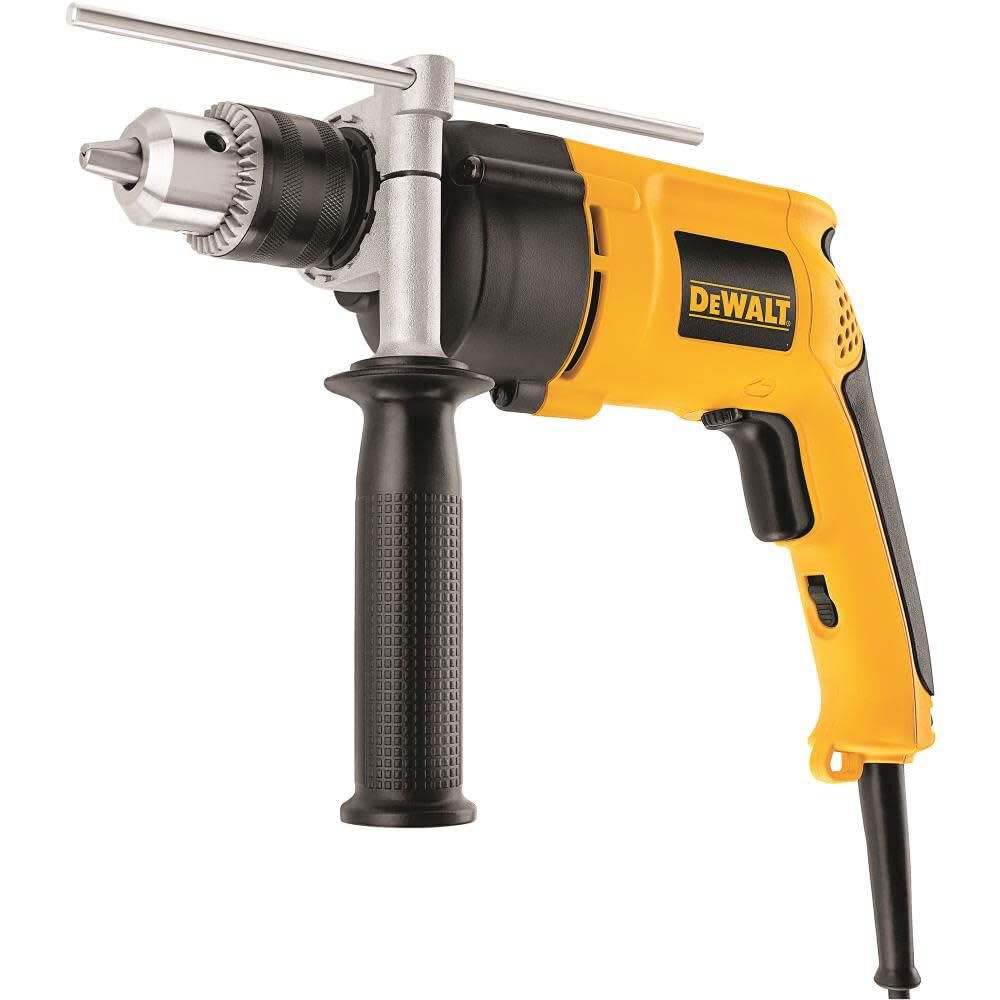
The DEWALT DW511 is a traditional hammer drill, not a rotary hammer. The distinction matters: a hammer drill uses a cam-action mechanism that vibrates the entire tool, while a rotary hammer uses a piston-driven mechanism that delivers concentrated impact through the bit. The DW511’s 7.8 Amp motor drives the hammer drill mechanism, which works well for brick, block, and thin concrete up to about 3/8-inch diameter holes. For thicker concrete or larger bits, the tool slows significantly and the vibration transfers into your hands. At 4.3 pounds, it is considerably lighter than any rotary hammer, making it suitable for multi-material work where you occasionally drill into masonry.
The dual-mode selector switches between standard drilling and hammer drilling. The 360-degree side handle with depth rod gives good control for depth-critical anchor holes. The variable speed trigger allows precise hole starting, reducing bit walking on smooth surfaces. The chuck is a standard 1/2-inch keyed chuck, meaning you can use standard twist drills, spade bits, and hole saws — not just SDS bits. This makes the DW511 a general-purpose drill that happens to have a hammer function, rather than a dedicated concrete drilling tool. The included chuck key holder clips onto the cord to prevent loss.
Users report a burning oil smell during extended use. It is not designed for drilling into rebar or through poured foundations. For drilling into block for shelf anchors or installing a TV mount into a brick wall, it performs well. For any larger concrete task, a dedicated rotary hammer is the appropriate tool. Consider the DW511 if you need a single versatile drill for wood, metal, and light masonry — but keep expectations realistic for concrete performance.
Why it’s great
- Lightweight 4.3 lb design reduces fatigue during all-purpose drilling tasks
- Dual-mode selector allows one tool for wood, metal, and light masonry
- Standard keyed chuck accepts all common round-shank bits without adapters
Good to know
- Hammer drill mechanism overheats with more than a few concrete holes
- Not designed for large masonry bits or reinforced concrete drilling
FAQ
Can I drill concrete with a standard cordless drill?
How do I drill through rebar in concrete?
What size rotary hammer do I need for a concrete foundation?
Final Thoughts: The Verdict
For most users, the best drill for concrete winner is the DOVAMAN RH15A because it delivers 7 Joules of impact energy, a four-function selector, and a safety clutch at a price that undercuts comparable tools from established brands. If you want all-day comfort and vibration control for precision anchor work, grab the BOSCH RH328VC. And for demolition-grade chipping and large-diameter drilling through reinforced concrete, nothing beats the Berserker 42M.

Mo Maruf
I created WellFizz to bridge the gap between vague wellness advice and actionable solutions. My mission is simple: to decode the research and give you practical tools you can actually use.
Beyond the data, I am a passionate traveler. I believe that stepping away from the screen to explore new environments is essential for mental clarity and physical vitality.