Our readers keep the lights on and my smoothie glass nicely filled. As an Amazon Associate, I earn from qualifying purchases.
Drilling into rock is a different beast than penetrating wood or drywall. Standard twist bits dull almost instantly against the abrasive, dense structure of stone, blunting before they break the surface. The right bit uses either a sintered diamond matrix or a brazed tungsten carbide tip to fracture and remove material, not scrape at it. Choosing between these two technologies determines whether your project finishes in minutes or stalls out in frustration.
I’m Mohammad Maruf — the founder and writer behind WellFizz. I’ve spent hundreds of hours studying the metallurgy, segment designs, and shank geometries that separate a one-job bit from a reliable tool that survives multiple rock encounters.
This guide cuts through the marketing to help you find a drill bit for rock that matches your hammer’s power, the hardness of your material, and the diameter you need without wasting money on overkill or underperformance.
How To Choose The Best Drill Bit For Rock
Rock drilling demands you match the bit’s cutting edge material to your specific stone type, the diameter of the hole, and the depth you need to reach. Here are the three factors that matter most.
Carbide vs. Diamond Cutting Edges
Carbide-tipped bits fracture concrete, brick, and soft stone by impacting and crushing the material. They excel in limestone or sandstone but dull quickly on granite or quartzite. Diamond segments use a metal bond embedded with industrial diamonds that grind through any rock hardness. For hard, abrasive stone, diamond is the only reliable option.
Shank Type and Hammer Compatibility
SDS Plus shanks lock into rotary hammer chucks with grooves that allow the bit to rotate and hammer independently, transferring full impact energy without slipping. Hex shanks work for lighter hammer drills but can twist under load in dense rock. For holes larger than 1/2 inch, an SDS Plus connection is essential for efficient power transfer.
Wet vs. Dry Drilling
Dry drilling relies on the hammer action to break material and flutes to clear dust, but in hard rock the heat can glaze the bit tip. Wet drilling uses water to cool the diamond segments and flush out slurry, preventing overheating and dramatically extending bit life. Core bits larger than 2 inches almost always require water for safe operation.
Quick Comparison
On smaller screens, swipe sideways to see the full table.
| Model | Category | Best For | Key Spec | Amazon |
|---|---|---|---|---|
| Sabre Tools 4-Piece 12″ SDS Plus Set | Mid-Range | Anchor holes in brick and concrete | 4-piece set from 5/8″ to 1″ | Amazon |
| SALI Diamond Core 2″ | Premium | Large clean cores in concrete | 2″ diameter, 10″ depth | Amazon |
| Sabre Tools 1/2″ x 39″ SDS Plus | Mid-Range | Deep through-holes in stone | 39″ overall length | Amazon |
| Sabre Tools 5/8″ x 39″ SDS Plus | Mid-Range | Deep through-holes in concrete | 5/8″ diameter, 39″ length | Amazon |
| EDiamondTools 4″ Wet Core Bit | Premium | Large cores in reinforced concrete | 4″ diameter, 14″ depth | Amazon |
| DaduoRi 10″ Wet Core Bit | Pro | Massive cores in thick slabs | 10″ diameter, 14″ depth | Amazon |
| WildBossy Carbide Set 10PCS | Budget | Light-duty masonry and tile | 10 bits, 5/32″ to 1/2″ | Amazon |
In‑Depth Reviews
1. Sabre Tools 4-Piece 12″ SDS Plus Drill Bit Set

This four-bit set covers the most common anchor diameters from 5/8 inch up to 1 inch, each with a 12-inch usable length that reaches through standard foundation walls. The self-centering carbide tip keeps the bit walking to a minimum during the first few seconds of contact, which reduces the need for a separate pilot hole on concrete and block.
The two-flute design clears dust efficiently, preventing binding in deep holes. Users consistently report drilling through poured concrete foundations without the bit overheating or losing edge retention, even after multiple uses. The SDS Plus shank locks securely into any rotary hammer from Bosch or Milwaukee without chuck wobble.
For a mid-range set, the value is strong because you get four useful sizes that suit everything from shelf anchors to utility conduit runs. The bits show some wear on the carbide tip after extensive use in very hard aggregate concrete, but the performance per dollar easily beats buying individual bits at a hardware store.
Why it’s great
- Covers four standard masonry diameters in one purchase
- Self-centering carbide tip reduces walking on smooth concrete
Good to know
- Not designed for hard natural rock like granite
- 12-inch length may be short for extra-thick walls or deep through-holes
2. SALI Diamond Core Drill Bit 2″

When you need a precise 2-inch hole through reinforced concrete or hard masonry without spending on a dedicated core rig, this diamond core bit delivers. The laser-welded segments bond diamond grit to a steel barrel, cutting through aggregate and even light rebar with steady water cooling. The included adapters let you switch between a hex shank for a standard hammer drill and an SDS Plus adapter for a rotary hammer.
Real-world users have reported cutting through 8-inch thick concrete walls from the 1960s, which contain large, hard aggregate, in about 30 minutes with the bit still holding its edge. The 10-inch drilling depth is enough for most foundation passes and pipe runs. The barrel design includes chip removal holes that help clear slurry when used wet.
For DIY enthusiasts and light contractors who need occasional large-diameter holes, this bit hits a sweet spot between affordability and cutting speed. It is not built for continuous production work, but for a few critical holes it outperforms carbide-tipped spade bits that would overheat and fail.
Why it’s great
- Laser-welded diamond segments cut through tough aggregate concrete
- Includes both hex and SDS Plus adapters for wide compatibility
Good to know
- Not intended for heavy daily professional use
- Requires water cooling for best performance and bit life
3. Sabre Tools 1/2″ x 39″ SDS Plus Rotary Hammer Drill Bit

When you need to drill a hole that goes all the way through a thick stone foundation or a cinder block wall for a cable or grounding rod, standard 12-inch bits simply cannot reach. This 39-inch SDS Plus bit extends through 37 inches of material with a 1/2-inch diameter, offering the length required for deep utility passes. The two-flute carbide tip centers itself and clears dust effectively along the entire flute length.
User reports confirm that this bit drilled an 18-inch thick cinder block wall in about five minutes using a rotary hammer, and successfully passed a Starlink cable connector through the gap. Another reviewer drilled through dirt and rock for a grounding rod installation, noting the bit flexed under pressure but returned to true without cracking the carbide tip. The black oxide finish resists corrosion on the steel shaft.
This is a specialist tool for situations where depth is the primary constraint. It works best with a full-size SDS Plus rotary hammer that can deliver enough impact energy through the long shaft. For standard anchor depths, a shorter bit would be more efficient, but for that rare deep pass, nothing else in this price range competes.
Why it’s great
- Full 39-inch length reaches through thick walls and foundations
- Carbide tip stays sharp after drilling rock and concrete
Good to know
- Only 1/2-inch diameter limits use to smaller cables or rods
- Requires a powerful rotary hammer; weaker drills may struggle
4. Sabre Tools 5/8″ x 39″ SDS Plus Rotary Hammer Drill Bit

Where the half-inch version reaches deep but narrow, this 5/8-inch diameter bit offers the same 39-inch overall length with a wider bore for larger anchor bolts or conduit. The titanium nitride finish reduces friction during drilling, helping the bit run cooler in hard stone. The self-centering carbide tip maintains a straight entry point, which is critical when drilling deep holes by hand without a guide.
Users have reported drilling through 18-inch thick cinder block walls to pass Starlink cabling, and successfully boring through rock and dirt for grounding rod installation. The bit handled unexpected flexing on uneven rock surfaces without the tip fracturing. The two-flute geometry clears aggregate dust efficiently, preventing the bit from jamming in deep holes.
For anyone who needs both extra length and a wider diameter, this bit fills a gap that standard masonry sets ignore. It is heavier than the half-inch version, so your rotary hammer should be at least a 1-1/2 joule class tool to maintain good penetration speed through hard stone.
Why it’s great
- 5/8-inch diameter accommodates larger anchors and fittings
- Titanium nitride finish reduces heat buildup in dense materials
Good to know
- Heavier than standard bits; requires a rotary hammer with decent torque
- Not suitable for hammer drills without SDS Plus chuck
5. EDiamondTools 4″ Wet Drill Core Bit
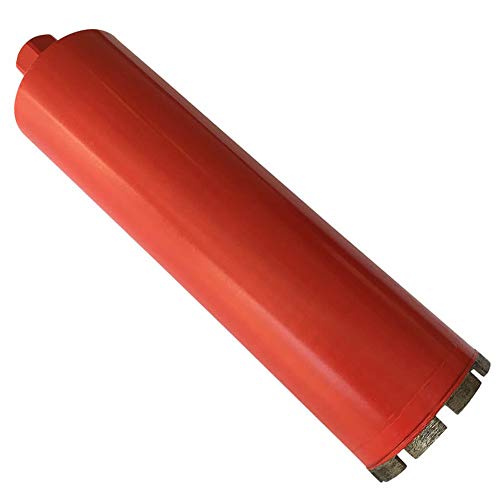
For drilling 4-inch diameter holes through heavily reinforced concrete, this wet-only core bit uses a high diamond concentration embedded in a metal matrix that survives contact with rebar. The 14-inch drilling depth handles most foundation and slab applications, and the 1-1/4-inch to 7-thread arbor fits dedicated core drill rigs and handheld units. The 10mm segment height provides substantial diamond material before the bit wears down.
Users consistently report clean cuts through 8-inch thick concrete walls with light steel reinforcement. One reviewer drilled 6 holes through 3000 PSI sidewalk concrete with minimal segment wear. The bit requires a steady water feed to cool the diamonds and flush out the slurry, which dramatically extends cutting life compared to dry operation.
This is a serious tool for contractors and experienced DIYers who need large, clean holes in structural concrete. The wet-only requirement adds setup complexity with a water source, but the cutting speed and hole quality justify the extra effort. For occasional use, the cost is far below renting a bit from a tool supplier.
Why it’s great
- High diamond concentration handles rebar and hard aggregate
- 14-inch depth covers thick slabs and foundations
Good to know
- Wet-only operation requires a water source and feeder
- Heavy bit requires a sturdy core drill rig for stability
6. DaduoRi 10″ Wet Core Drill Bit
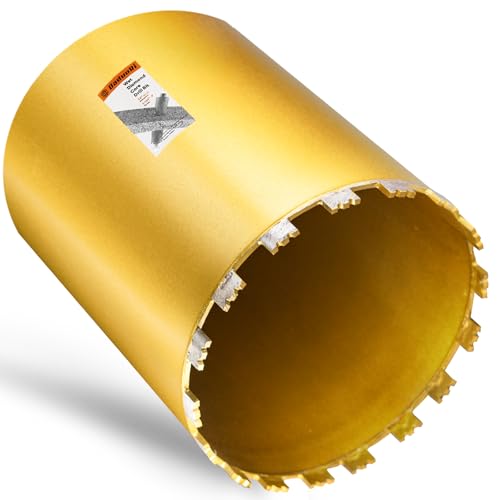
When the job requires a 10-inch diameter hole through thick reinforced concrete, this core bit delivers the cutting capacity of professional rental equipment at a fraction of the purchase cost. The cobalt steel barrel and diamond grit coated cutting head grind through concrete with rebar, masonry, block, and stone. The 14-inch drilling depth accommodates most slab and wall penetrations.
User reports confirm that this bit drilled 18 holes through an 8-inch solid poured block wall with teeth still at 50% life. Another reviewer cut 26 holes ranging from 6 to 9 inches deep in concrete with rebar before needing replacement. The universal 1-1/4-inch to 7-thread arbor fits most handheld core drills and rig stands. Water cooling is essential to prevent overheating at this diameter.
This is a heavy, premium investment meant for serious masonry work. The diamond segments wear predictably, and the steel barrel resists warping under torque. If you are cutting large-diameter cores regularly, this bit pays for itself quickly versus repeated rentals.
Why it’s great
- Massive 10-inch diameter for large pipe and vent holes
- Cobalt steel barrel withstands torque without deforming
Good to know
- Requires a powerful core drill rig with a water feed system
- Heavy weight makes handheld operation difficult for long periods
7. WildBossy Concrete Carbide Drill Bits Set 10PCS
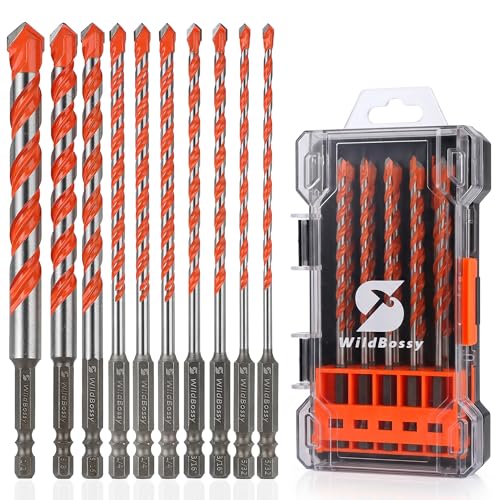
If your drilling needs are limited to brick, mortar, tile, and lightweight concrete block, this 10-piece carbide-tipped set provides the most size variety at a budget-friendly entry point. Sizes range from 5/32 inch up to 1/2 inch, covering the full spectrum of wall anchor installations. The hex shank design reduces slippage in standard drill chucks compared to round shanks.
User reviews consistently note that the bits drill through concrete and ceramic tile with no issues when used at the correct speed and without hammer mode on tile. The tungsten steel carbide tips hold an edge through multiple holes in cement board and brick. Some users observed that the actual diameter runs slightly smaller than the labeled size, so precise holes may require test drilling on scrap.
This set is ideal for homeowners doing light renovation work. It is not designed for hard natural rock, deep concrete foundations, or heavy-duty rotary hammer use. The hex shank limits compatibility with SDS Plus chucks, but that also keeps the price low for occasional users who just need to hang shelves or install fixtures.
Why it’s great
- Ten common sizes cover most home anchor and shelf installations
- Hex shank locks securely in standard drill chucks
Good to know
- Not designed for hard natural rock or deep concrete
- Actual diameter may be slightly under the labeled size
FAQ
Can I use a standard masonry bit on hard rock like granite?
Do I need to use water when drilling rock?
What is the difference between a core bit and a solid drill bit for rock?
Final Thoughts: The Verdict
For most users, the drill bit for rock winner is the Sabre Tools 4-Piece 12″ SDS Plus Set because it offers the widest useful size range and reliable carbide-tipped performance for concrete, brick, and block at a fair mid-range cost. If you need large clean cores in hard concrete, grab the SALI Diamond Core Bit. And for deep through-holes through thick stone walls, nothing beats the extra length of the Sabre Tools 39-inch SDS Plus.

Mo Maruf
I created WellFizz to bridge the gap between vague wellness advice and actionable solutions. My mission is simple: to decode the research and give you practical tools you can actually use.
Beyond the data, I am a passionate traveler. I believe that stepping away from the screen to explore new environments is essential for mental clarity and physical vitality.