Our readers keep the lights on and my smoothie glass nicely filled. As an Amazon Associate, I earn from qualifying purchases.
Scar tissue is stubborn by design — collagen builds up or breaks down unevenly, leaving behind discolored, raised, or pitted marks that can linger for years unless you use the right active ingredients. The difference between a cream that merely hydrates and one that actually remodels scar tissue comes down to three things: silicone concentration, occlusivity, and the ability to penetrate without irritation. This guide cuts through the marketing so you know exactly what your scar needs and which formula delivers it.
I’m Mohammad Maruf — the founder and writer behind WellFizz. My research process for this guide involved cross-referencing dermatological recommendations, analyzing ingredient lists against clinical studies, and reading through hundreds of verified buyer reports to isolate which scar creams actually flatten, fade, and soften scars rather than just moisturizing the surface.
A focused review of the top contenders reveals the most effective cream for fading scars combines medical-grade silicone, fragrance-free formulation, and targeted active ingredients for both old and new marks.
How To Choose The Best Cream For Fading Scars
Scar creams are not interchangeable — a formula designed for a fresh C-section scar will perform differently on an old burn mark or a cluster of acne spots. The most important factor is whether the active ingredient targets the scar’s specific structure: raised, flat, or pitted. Silicone is the dermatologist-recommended gold standard for raised and hypertrophic scars because it creates a protective film that hydrates the stratum corneum, signaling fibroblasts to stop producing excess collagen. For pigmented flat scars or post-acne marks, you need exfoliating agents like salicylic acid or brightening compounds like hexylresorcinol that accelerate cell turnover and disperse melanin clusters. A cream that tries to do everything often does nothing well — pick the formula engineered for your scar type.
Silicone Concentration and Delivery System
Not all silicone scar products are created equal. Medical-grade silicone gels with a high polymer content form a semi-occlusive layer that mimics the skin’s natural barrier, which is the mechanism proven to flatten and soften scar tissue over time. The delivery method matters too — a fast-drying gel that forms an invisible film works better on joints and facial contours than a bulky sheet, while a balm with silicone suspended in a beeswax base may sit thicker but lasts longer on hard-to-reach areas. Look for dimethicone or cyclomethicone listed early in the ingredient deck, paired with a clear instruction to apply twice daily for a minimum of eight weeks. Creams that evaporate or rub off within an hour simply cannot maintain the hydration gradient required for scar remodeling.
Fragrance, Irritants, and Skin Sensitivity
Scar tissue is inherently more reactive than normal skin because its nerve endings and blood supply are disrupted. A formula loaded with synthetic fragrance, essential oils, or botanical extracts — while pleasant-smelling — can trigger inflammation that actually worsens discoloration and raises the risk of hyperpigmentation, especially on darker skin tones. The safest route is a fragrance-free, paraben-free, and oil-free formula that prioritizes barrier support over sensory appeal. Ingredients like squalane, peptides, and shea butter provide hydration without clogging pores or causing contact dermatitis. If you have sensitive skin or are treating a facial scar, prioritize brands that explicitly disclose “100% fragrance-free” and “dermatologist-tested for sensitive skin.”
Scar Age and Treatment Timeline
The age of your scar dictates realistic expectations and product choice. New scars (under six months) respond best to silicone-based treatments that prevent collagen overproduction, flattening the tissue before it hardens. Old scars (over a year) have fully matured and are less likely to flatten completely, but they can still improve in color, texture, and firmness with consistent use of a hydrating, occlusive formula. Some creams combine silicone with exfoliating acids or retinoids to address both texture and pigmentation in older marks. Be wary of any product promising “complete” scar removal in under four weeks — the skin’s natural remodeling cycle takes at least 90 days, and visible results from topical treatment typically require two to four months of uninterrupted twice-daily application.
Quick Comparison
On smaller screens, swipe sideways to see the full table.
| Model | Category | Best For | Key Spec | Amazon |
|---|---|---|---|---|
| Rejuvaskin RejuvaSil | Silicone Gel | New & old surgical scars | 30ml, semi-occlusive silicone barrier | Amazon |
| Mederma PM Overnight | Overnight Cream | Nighttime scar remodeling | Tripeptol Complex with collagen | Amazon |
| Medical Grade Silicone Gel | Silicone Gel | Raised & hypertrophic scars | Fragrance-free, fast-drying, 1.7oz | Amazon |
| Dermalogica Post-Breakout Fix | Acne Spot Treatment | Post-acne dark spots | 2% Salicylic Acid + Hexylresorcinol | Amazon |
| Better Shea Butter Scar Eraser | Butter Balm | Stretch marks & dry scarred skin | Unrefined cocoa butter, 4oz | Amazon |
In‑Depth Reviews
1. Rejuvaskin RejuvaSil Silicone Scar Gel
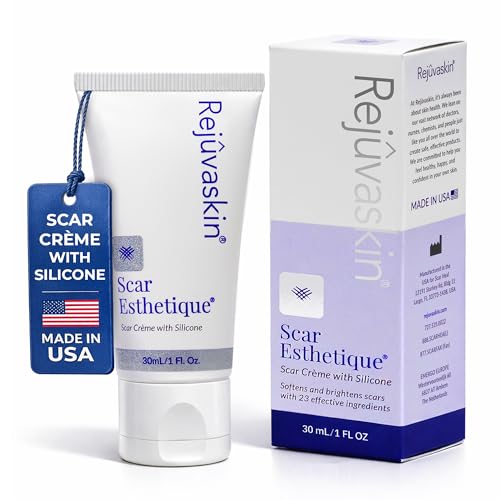
RejuvaSil uses a high-grade dimethicone formulation that creates a semi-occlusive barrier known to flatten and soften scar tissue over consistent wear. Its lightweight gel texture dries into an invisible film, making it practical for both facial scars and body scars on moving joints like knees or elbows. The 30ml tube is compact but concentrated — a pea-sized amount covers a 3-inch scar, so a single tube typically lasts six to eight weeks of twice-daily application. Customer reports show noticeable flattening and redness reduction within four to five weeks on surgical scars, with continued improvement beyond the two-month mark.
What sets RejuvaSil apart from standard silicone sheets is its ability to conform to uneven surfaces. Raised or bumpy scars that peel off sheet adhesives stay fully covered under this gel. The formula is fragrance-free and non-irritating, which earns it recommendations from plastic surgeons for post-operative use. Users with darker skin tones particularly appreciate that it does not cause contact dermatitis or worsen hyperpigmentation the way some adhesive strips can. The gel also supports older scars — one reviewer used it for over two years on a three-year-old scar revision and saw the tissue go from firm and red to flat and soft.
For anyone treating a surgical scar, burn, or keloid who wants the dermatologist-gold-standard silicone delivery in a flexible, sheet-free format, RejuvaSil delivers reliable, measurable results. It is not a quick-fix — patience and daily consistency are required — but the structural improvement it produces is the closest you can get to topical scar remodeling without a prescription.
Why it’s great
- Dermatologist-recommended silicone formulation proven to flatten raised tissue
- Invisible, non-sticky film conforms to joints and face
- Fragrance-free and safe for sensitive skin types
Good to know
- 30ml tube requires frequent reordering for large or multiple scars
- Results on very old scars may be limited to texture and color improvement
2. Mederma PM Intensive Overnight Scar Cream
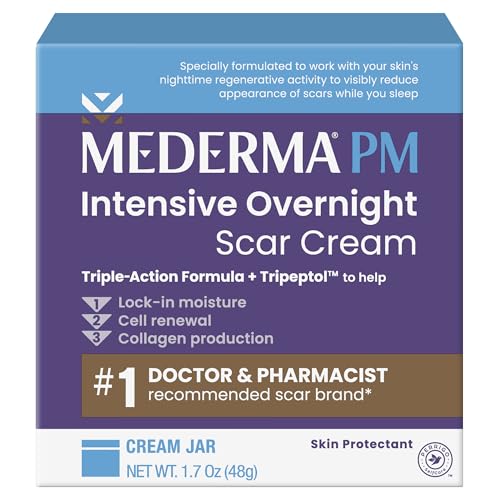
Mederma PM is engineered around the skin’s natural circadian rhythm — it uses a proprietary Tripeptol complex that combines peptides, collagen, and antioxidants to support overnight collagen remodeling while you sleep. The cream formula is thicker than a silicone gel but absorbs fully within minutes, leaving no sticky residue on bedsheets. The 1.7oz tube is HSA/FSA-eligible and is frequently recommended by plastic surgeons for post-breast augmentation and neck surgery scars because it addresses both the structural thickness and the redness simultaneously. Multiple verified reviews note significant flattening and a visible reduction in scar color after six to eight weeks of nightly use.
Unlike many overnight treatments that rely on heavy occlusives, Mederma PM is surprisingly light on the skin. The mild, clean scent fades quickly, and the formulation is gentle enough for sensitive skin — a major advantage for those who react to silicone tape adhesives. One reviewer with a six-month-old neck surgery scar reported that the cream “significantly lessened” the scar’s appearance, making it flatter and less noticeable. The clinically tested claim is backed by survey data showing Mederma is the most recommended scar brand among U.S. physicians and pharmacists. It also works on superficial scars — kitten scratches and minor cuts healed noticeably faster during use.
If you prefer a once-daily, set-and-forget routine that leverages your body’s own regenerative cycles, Mederma PM is a premium option that merges dermatological science with practical convenience. It is not designed for deep, pitted acne scars — its strength lies in flattening raised tissue and fading erythema on surgical and injury scars. The trade-off is the cost per ounce, which is higher than basic silicone gels, but the Tripeptol technology justifies the premium for those seeking accelerated overnight repair.
Why it’s great
- Tripeptol complex works with nighttime skin regeneration for faster scar remodeling
- Non-greasy, fast-absorbing cream safe for sensitive skin
- Doctor and pharmacist-recommended brand with clinical backing
Good to know
- Premium price for a small tube; frequent reordering needed for large areas
- Less effective on deep pitted acne scars or stretch marks
3. Medical Grade Silicone Scar Gel
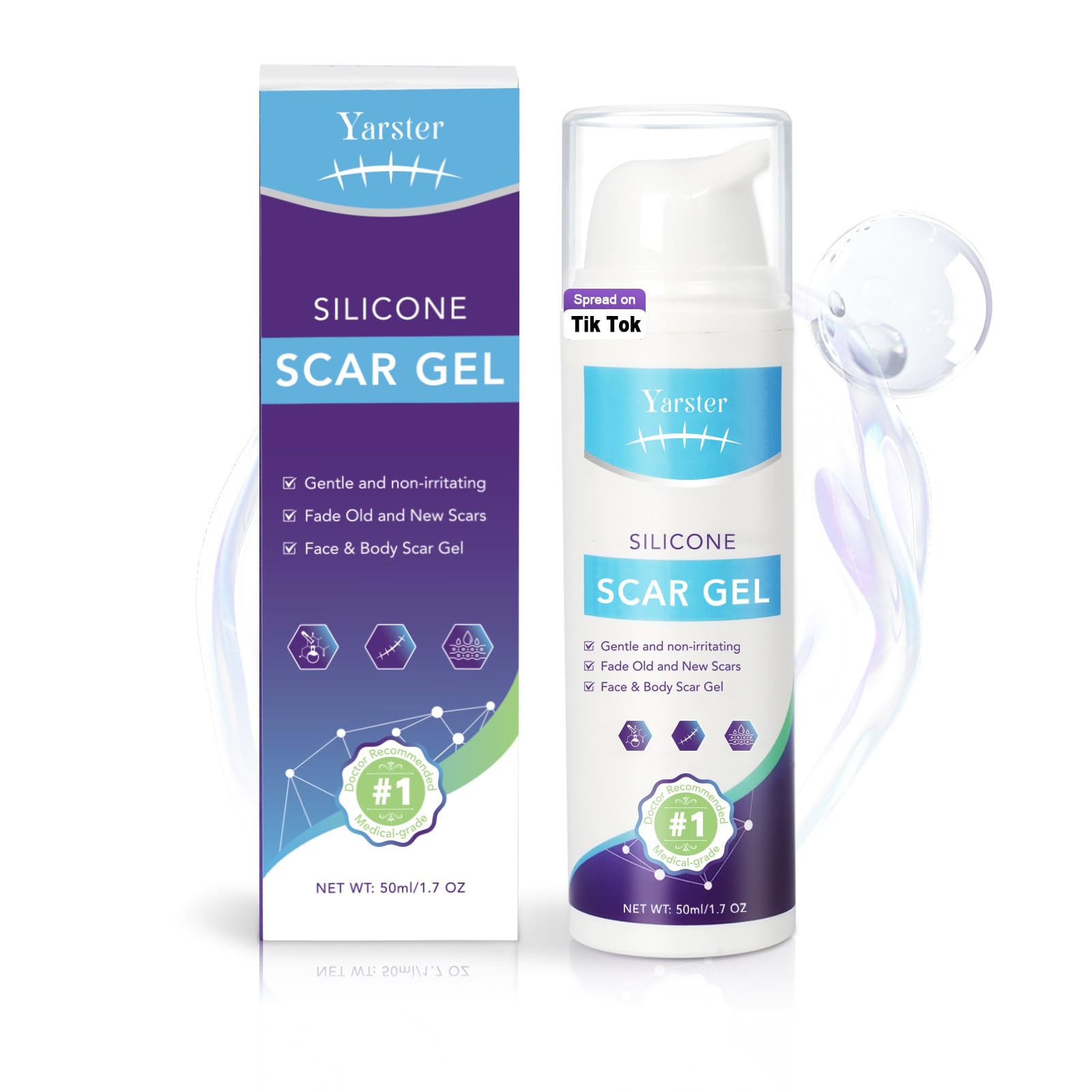
This medical-grade silicone scar gel strikes an excellent balance between clinical efficacy and everyday practicality. Its formula is 100% fragrance-free, oil-free, and paraben-free, which makes it suitable for post-surgical facial scars, C-section incisions, and acne-prone skin alike. The gel dries quickly into an invisible, breathable shield that stays active for up to 24 hours without staining clothes or sheets. Unlike bulkier silicone sheets that peel off on curved skin, this gel conforms perfectly to the face, knees, and elbows, making it a practical choice for active lifestyles. Users report noticeable flattening and redness reduction within two weeks on surgical scars, with continued improvement over the recommended five to six week period.
What gives this gel an edge over competitors at a similar price point is its triple-action design — it targets hydration, cell renewal, and collagen regulation simultaneously. The non-greasy texture means you can layer makeup or sunscreen over it during the day without pilling. Verified reviews highlight its effectiveness on burn scars, with one reviewer noting that a bad sourdough burn scar protected and healed significantly after consistent use. Another user with a husband’s surgery scar found it outperformed the expensive prescription gel provided by their surgeon. The feedback consistently praises the quick absorption and absence of irritation, even on fresh wounds that are still in the early healing phase.
For anyone seeking a universal scar treatment that works across multiple scar types — surgical, hypertrophic, C-section, acne, and burns — this gel offers the most compelling combination of medical-grade performance, clean formulation, and everyday usability. The only catch is that the fast-drying property means you need to apply a generous layer and rub it in thoroughly for larger areas. But given the visible results reported in under a month, this is a minor adjustment for a major outcome.
Why it’s great
- Fragrance-free, oil-free, and paraben-free — safe for sensitive and reactive skin
- Fast-drying invisible film that stays active 24/7 without staining
- Visible flattening and redness reduction in as little as two weeks
Good to know
- Requires generous application on large scars to maintain occlusivity
- Newer brand with fewer long-term reviews compared to established names
4. Dermalogica Clear Start Post-Breakout Fix
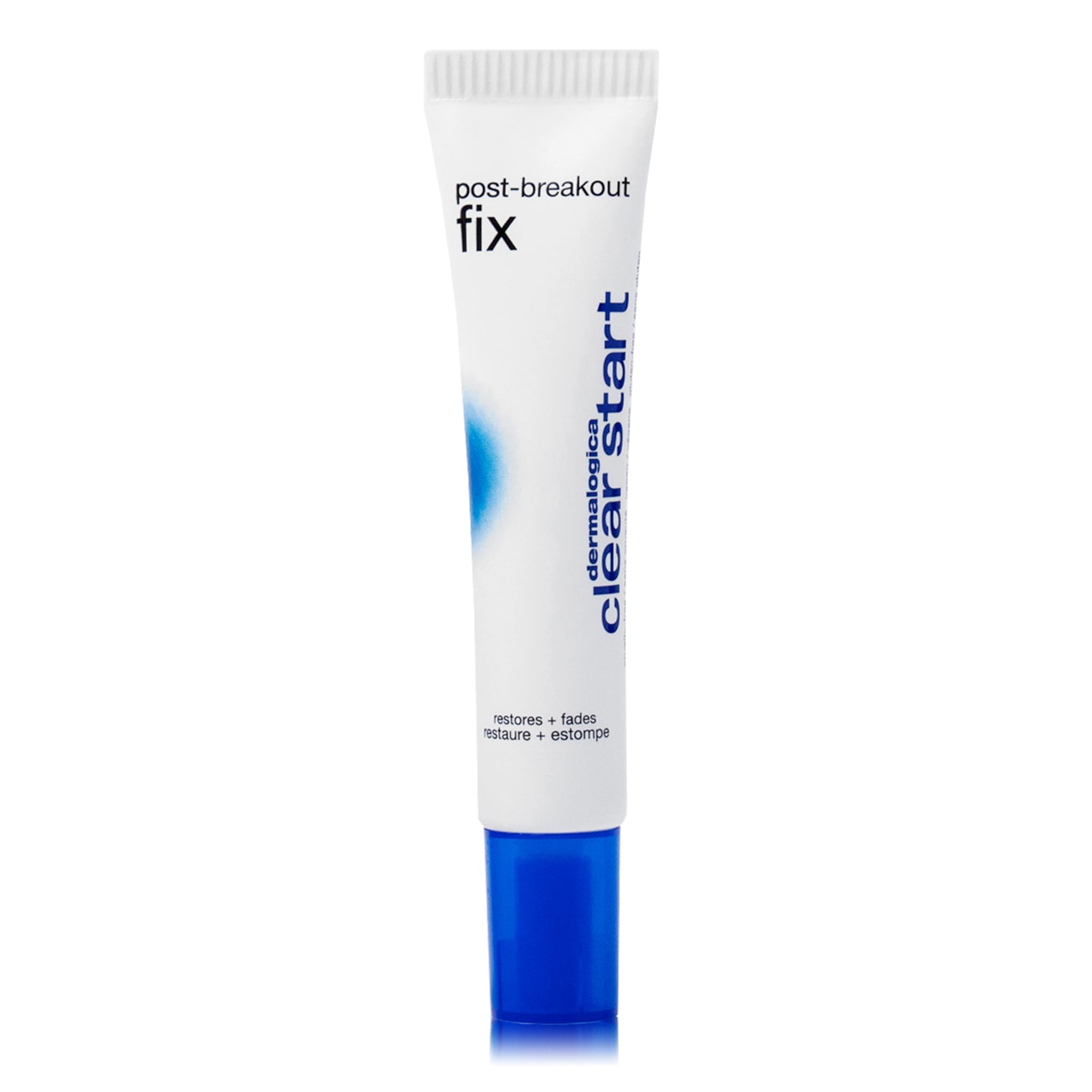
Dermalogica’s Post-Breakout Fix is a targeted spot treatment specifically engineered for the unique challenge of post-inflammatory hyperpigmentation left behind by acne. Its dual-active system combines salicylic acid to gently exfoliate the upper layers of skin while hexylresorcinol works to disperse clustered melanin and visibly brighten dark marks. The cream texture is lightweight and quickly absorbs without leaving a greasy film, making it suitable for daytime wear under makeup. Squalane and carob seed extract provide barrier support and natural renewal, which helps prevent the irritation that can make post-acne marks worse. Users consistently report that dark spots begin to lighten within two to four weeks of twice-daily application, with significant fading by week seven.
This product occupies a different category than the silicone-based scar creams above — it is not designed to flatten raised tissue but to fade the discoloration that remains after a pimple has healed. The targeted formula means a little goes a long way; a single tube lasts seven to eight weeks when applied only to individual spots. Some users note a mild tingling or slight peeling sensation in the first few days, which is a normal sign that the salicylic acid is accelerating cell turnover. One reviewer with hormonal acne scars saw their marks fade and skin texture normalize by week five after an initial purge in week two. The formula is free of artificial fragrance, which reduces the risk of irritation on already inflamed post-acne skin.
If your primary concern is fading dark spots and evening out skin tone after breakouts — rather than flattening raised scars — this is the most effective option in this guide. It is not intended for large body scars or raised hypertrophic marks. The small tube and relatively higher per-ounce cost make it a premium choice, but the clinical results reported by users justify the investment for those serious about post-acne hyperpigmentation.
Why it’s great
- Hexylresorcinol targets melanin for visible lightening of post-acne dark spots
- Salicylic acid gently exfoliates while squalane maintains the skin barrier
- Fast-absorbing, non-greasy texture suitable for daily use
Good to know
- Small tube runs out quickly if used over large areas rather than individual spots
- Mild peeling or itching in the first week as skin adjusts to the acid
5. Better Shea Butter Scar Eraser Balm
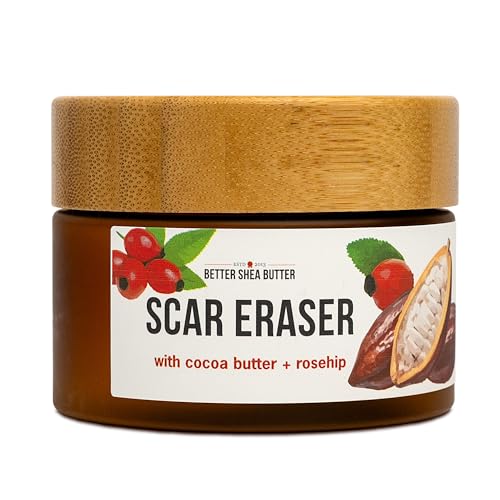
Better Shea Butter Scar Eraser Balm takes a fundamentally different approach to scar fading — it relies on the deep moisturizing power of unrefined cocoa butter, shea butter, avocado oil, and organic rosehip seed oil rather than synthetic silicones or acids. This 4oz balm is made in small batches with zero preservatives or synthetic ingredients, making it one of the cleanest formulations available. The buttery texture melts on contact with skin and delivers intense hydration that helps restore elasticity, soften scar tissue, and gradually improve skin tone. While it lacks the clinical flattening mechanism of silicone, it excels at improving the appearance of stretch marks, C-section scars, and dry, itchy scarred skin through sustained moisture and nutrient delivery.
The feedback from users is overwhelmingly positive for specific use cases: pregnant women using it to prevent and fade stretch marks, individuals with C-section scars noticing smoother texture and returning skin color within weeks, and those with severely dry, cracked skin finding relief from itching and flaking. The natural vanilla scent is pleasing without being overpowering, and the balm absorbs thoroughly without leaving a greasy residue — a few users note that a small amount goes a long way, making the 4oz tub an excellent value. However, it is important to understand what this balm cannot do: it will not flatten raised hypertrophic scars or rapidly fade dark post-acne spots the way silicone gels or acid-based treatments can.
For those who prioritize a 100% natural ingredient list and prefer to treat scars with deep nutrition rather than synthetic barriers, this balm is a standout choice. It is particularly well-suited for large body areas like the abdomen, thighs, and arms where stretch marks or dryness are the primary concerns. If your scars are raised, thick, or need structural remodeling, you will see better results with the silicone-based products earlier in this guide. But for maintenance, prevention, and gentle improvement of skin tone and texture, the Scar Eraser Balm delivers with honesty and zero questionable chemicals.
Why it’s great
- 100% natural ingredients — no preservatives, synthetics, or fillers
- 4oz tub provides excellent value for large body area application
- Deeply moisturizes and softens dry, itchy scarred skin
Good to know
- Does not contain silicone — will not flatten raised or hypertrophic scars
- Works slowly on pigmented marks; better for texture and elasticity than rapid fading
FAQ
How long should I use a scar cream to see results?
Can I use scar cream on an open wound or fresh incision?
Does scar cream work on old scars that are several years old?
Is fragrance-free really necessary for scar treatment?
Final Thoughts: The Verdict
For most users, the cream for fading scars winner is the Medical Grade Silicone Scar Gel because it combines dermatologist-recommended silicone technology with a fragrance-free, fast-drying formula that works across surgical, burn, and acne scars without irritation. If you want an overnight treatment that leverages your skin’s natural regeneration cycle for faster results, grab the Mederma PM Intensive Overnight Scar Cream. And for fading stubborn post-acne dark spots on the face, nothing beats the targeted precision of the Dermalogica Clear Start Post-Breakout Fix.

Mo Maruf
I created WellFizz to bridge the gap between vague wellness advice and actionable solutions. My mission is simple: to decode the research and give you practical tools you can actually use.
Beyond the data, I am a passionate traveler. I believe that stepping away from the screen to explore new environments is essential for mental clarity and physical vitality.